
Obituaries, op-eds and statements: Reactions to the passing of Larry Langford
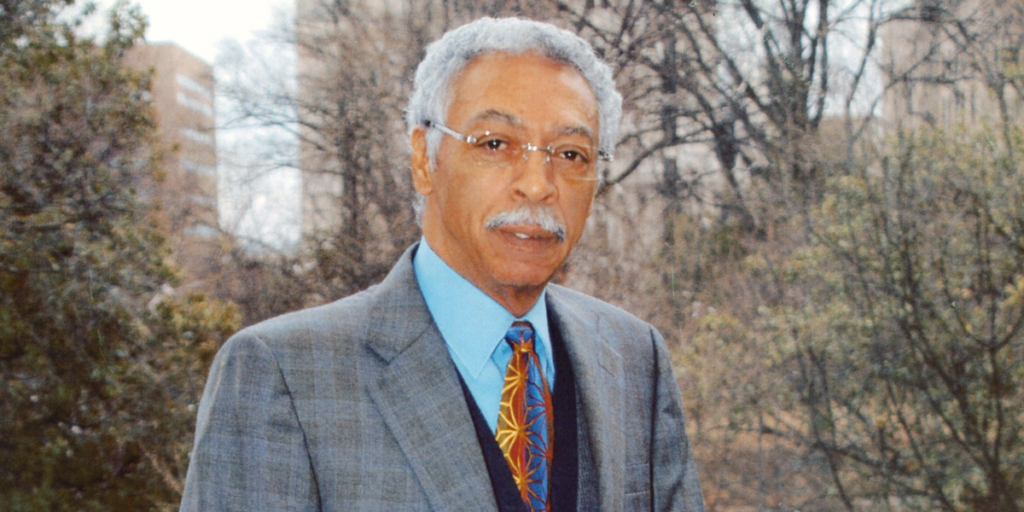
Larry Langford, the former Birmingham mayor passed away in Birmingham’s Brookwood Princeton Hospital yesterday, January 8, 2019 after years battling chronic illness. The following are statements made in reaction to the news. The City of Birmingham posted a press release announcing his death and highlighting his career. According to an obituary provided by his family, Langford is survived by his wife, Melva Langford; son, Ronald Strothers; niece, Lena Powe McDonald; brother, Oliver Nance; sister-in-law, Casi Ferguson; grandchildren, Ronald Strothers III and Jared Daniel Strothers; and a host of other nieces, nephews, friends and supporters. Randall Woodfin, Birmingham Mayor (Via FaceBook) “It’s with a heavy heart that I announce the passing of Mayor Larry Langford. Our hearts go out to the Langford family during this time of loss. Mayor Langford had an unmatched love for his community – a love he expressed through his boldness and creativity. During all of our interactions, one thing was always clear – Mayor Langford was an unabashed advocate for the city he served. His fire for change and passion for people will be a lasting part of his legacy. Above all else, Mayor Langford loved this city. Please keep Mayor Langford’s loving wife Melva, family members and friends in your prayers during this difficult time. May he be remembered for his boundless ingenuity and as a fervent voice for the people.” Congresswoman Terri Sewell (2 separate FaceBook posts) “I am deeply saddened tonight with the news that we have lost Mayor Larry Langford. My prayers are with his wife, Melva, and their family as they honor his life and legacy in the days and weeks ahead.” “Here in Birmingham, Mayor Langford will be remembered for his dedication to serving the community he grew up in and for his fight to bring greater opportunities to people in Jefferson County. He was a man of faith, and he put his faith into action by campaigning to reduce violence and promote investments in education for our city’s young people. Mayor Langford will be deeply missed, and I was happy to see him return home to Magic City to be with family before he passed. My prayers are with his family.” Birmingham City Council (Via their FaceBook page) “The Birmingham City Council wishes to extend our deepest sympathies and condolences to the family and friends in the loss of our former Mayor Larry Langford. We are deeply grateful for his countless contributions to the City, County and the State of Alabama as a whole. Our prayers are that God will comfort all of those that knew and loved him as a dynamic leader and force of change in our communities.” From his Obituary in the New York Times “With a showman’s touch and a penchant for defiance, Mr. Langford was a proudly unorthodox political figure in a state full of them. In and around Birmingham, where he was a public figure for more than four decades, he was regarded with an intriguing mix of admiration — for his creativity, zeal and unstinting confidence — and derision, which flowed from his reputation as a politician who dealt in himself and in spectacularly unrealistic ideas.” From a column by Al.Com’s Kyle Whitmire: “Larry Langford was someone you could never really know. He was funny, personable and the sort of politician that, if you let your guard down, would murder the truth right in front of you. I wrote about him for years, and I still wonder how much of what I reported was accurate”
Email Insights: Senate releases 2019-2022 committee assignments
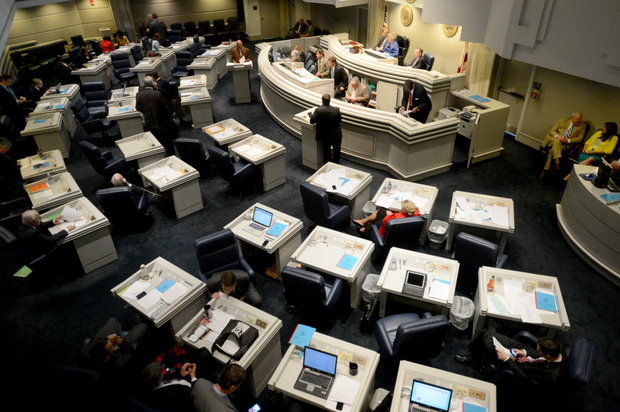
Today the Alabama State Senate sent out the email below announcing that the Committee on Assignments made the following Senate Standing Committee appointments for the 2019-2022 quadrennium: Committee on Rules Jabo Waggoner (Chair)Clay Scofield (Vice Chair)Gerald AllenLinda Coleman-MadisonVivian FiguresJimmy HolleySteve LivingstonJim McClendonTim MelsonArthur OrrGreg ReedRodger Smitherman Committee on Finance & Taxation Education Arthur Orr (Chair)Tim Melson (Vice Chair)Greg AlbrittonGerald AllenDonnie ChesteenPriscilla DunnVivian FiguresGarlan GudgerJim McClendonClay ScofieldDavid SessionsBobby SingletonRodger SmithermanJabo WaggonerTom Whatley Committee on Finance & Taxation General Fund Greg Albritton (Chair)Gerald Allen (Vice Chair)Billy BeasleyTom ButlerClyde ChamblissLinda Coleman-MadisonJimmy HolleySteve LivingstonJim McClendonArthur OrrMalika Sanders-FortierLarry StuttsJabo WaggonerCam Ward Committee on Confirmations Clay Scofield (Chair)Jabo Waggoner (Vice Chair)Gerald AllenWill BarfootDavid BurketteVivian FiguresSam GivhanAndrew JonesGreg ReedDavid SessionsRodger SmithermanLarry StuttsCam WardTom WhatleyJack Williams Committee on Judiciary Cam Ward (Chair)Will Barfoot (Vice Chair)Greg AlbrittonLinda Coleman-MadisonVivian FiguresSam GivhanArthur OrrMalika Sanders-FortierBobby SingletonRodger SmithermanLarry StuttsTom Whatley Committee on Government Affairs Jimmy Holley (Chair)Chris Elliott (Vice Chair)Greg AlbrittonClyde ChamblissLinda Coleman-MadisonSam GivhanGarlan GudgerArthur OrrDan RobertsMalika Sanders-FortierShay Shelnutt Committee on Education Policy Tim Melson (Chair)Donnie Chesteen (Vice Chair)David BurketteTom ButlerPriscilla DunnChris ElliottVivian FiguresJim McClendonRandy PriceShay Shelnutt Committee on Agriculture, Conservation & Forestry Tom Whatley (Chair)David Sessions (Vice Chair)Billy BeasleyChris ElliottGarlan GudgerAndrew JonesSteve LivingstonTim MelsonRandy PriceClay ScofieldBobby SingletonLarry StuttsJack Williams Committee on Banking & Insurance Shay Shelnutt (Chair)Jack Williams (Vice Chair)Will BarfootDavid BurketteDonnie ChesteenChris ElliottAndrew JonesSteve LivingstonRandy PriceDan RobertsClay ScofieldBobby SingletonRodger SmithermanJabo WaggonerTom Whatley Committee on Fiscal Responsibility and Economic Development Steve Livingston (Chair)Garlan Gudger (Vice Chair)Will BarfootTom ButlerClyde ChamblissPriscilla DunnArthur OrrDan RobertsMalika Sanders-FortierClay ScofieldShay ShelnuttCam Ward Committee on Transportation & Energy Gerald Allen (Chair)Dan Roberts (Vice Chair)David BurketteTom ButlerDonnie ChesteenPriscilla DunnChris ElliottSam GivhanAndrew JonesSteve LivingstonRandy PriceGreg ReedDavid Sessions Committee on Healthcare Jim McClendon (Chair)Larry Stutts (Vice Chair)Billy BeasleyTom ButlerDonnie ChesteenLinda Coleman-MadisonTim MelsonGreg ReedDan RobertsCam WardTom WhatleyJack Williams Committee on Children, Youth & Human Services Larry Stutts (Chair)Andrew Jones (Vice Chair)Greg AlbrittonWill BarfootBilly BeasleyClyde ChamblissLinda Coleman-MadisonSam GivhanJimmy HolleyDan RobertsMalika Sanders-FortierShay ShelnuttJack Williams Committee on Tourism Del Marsh (Chair)Randy Price (Vice Chair)Billy BeasleyPriscilla DunnChris ElliottGarlan GudgerAndrew JonesTim MelsonDavid SessionsBobby SingletonRodger Smitherman Committee on Veterans & Military Affairs Tom Butler (Chair)Sam Givhan (Vice Chair)Will BarfootBilly BeasleyDavid BurketteDonnie ChesteenJimmy HolleyMalika Sanders-Fortier Committee on Local Legislation (LL1) Clyde Chambliss (Chair)Del MarshGreg Reed Senate President Pro Tem Del Marsh (R-Anniston) thanked the committee for their work. “I want to thank the Committee on Assignments for their work on these committees, they did a fantastic job of matching Senators with the committee that best takes advantage of their strengths and abilities,” Marsh said. “I look forward to working with these members in the upcoming session. There are some tough issues facing the state and I believe these committees and their members are best equipped to address these issues in a way that benefits the people of Alabama.” Senate Majority Leader Greg Reed (R-Jasper) was excited to see the new committees in action. “Committees are the backbone of the legislative process, a place where bills are refined and improved and ideas are vigorously debated,” Senator Reed said. “Like the entire Senate, the committee chairmen come from all walks of life and include small business owners, doctors, farmers, former teachers, and attorneys from every region of our state. The 4.8 million citizens of Alabama deserve the best leadership possible, and I am confident that these citizen-lawmakers will ably lead the Senate’s fifteen committees during the new legislative term.” Senate Minority Leader Bobby Singleton (D-Greensboro) praised the way committee assignments were handled. “Because we are in the minority we’re only going to get so many seats on committees. However, I think what has been done was fair based on the percentage of people that we have,” said Senator Singleton. “There were only two committees that we didn’t get seats, the Committee on Assignment and the Local Legislation Committee, but I would have liked to have representation on those as well, and of course we would love some chairmanships.”
Rep. Kyle South drafts oversight legislation in wake of Maori Davenport-AHSAA controversy

Fayette-Republican, State Rep. Kyle South has drafted legislation that would provide government oversight over the Alabama High School Athletic Association (AHSAA). South drafted the bill in response to a controversial decision by the AHSAA regarding the eligibility of Charles Henderson High School basketball standout Maori Davenport. AHSAA ruled Davenport ineligible for amateur status, which is necessary to play high school sports in Alabama, because of a clerical oversight associated with her play on the Team USA basketball team. Davenport had self-reported the oversight, and immediate actions were taken to rectify the situation. South said the bill will be pre-filed for consideration in the 2019 regular session, and, currently, 87 of the 105 members of the Alabama House have already signed on as co-sponsors. “Rather than taking special circumstances into consideration and impartially considering the facts at hand, the Alabama High School Athletic Association has created an unnecessary national controversy and callously ruled in a manner that adversely affects an innocent young woman’s eligibility,” South said. “Time and time again, the AHSAA has engaged in behavior and ruled in a manner that clearly calls for more oversight of its actions. Considering the AHSAA receives a majority of its funds from taxpayer-funded public schools and the athletic activities of public school students, there is ample justification for government oversight of its operations.” Under the provision’s of South’s legislation: The State Board of Education would be required to review and approve any rules relating to student participation and eligibility before being adopted by AHSAA. Would require 25 percent of the AHSAA governing members to be appointed by the state superintendent of education or the state board of education. Would require the Department of Examiners of Public Accounts to audit AHSAA in the same manner as a state agency in Alabama.
White House tries to hold jittery GOP in line on shutdown
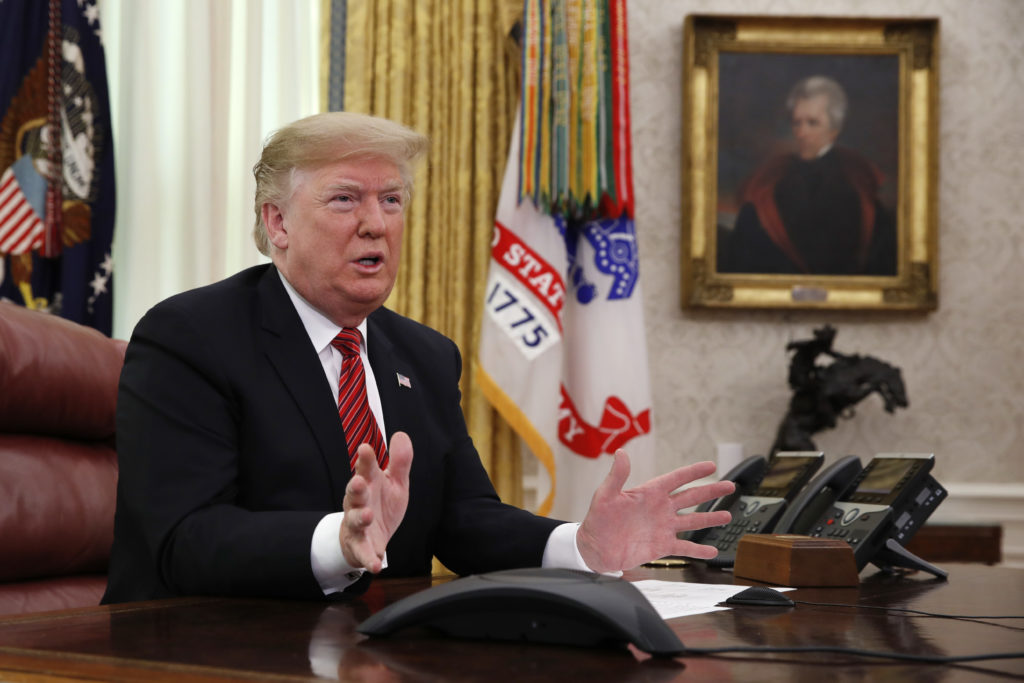
The White House is trying to hold jittery congressional Republicans in line on the 19th day of the partial government shutdown, with no end in sight to the impasse over President Donald Trump‘s demand for a wall at the U.S.-Mexico border. There’s growing concern about the toll the shutdown is taking on everyday Americans, including disruptions in payments to farmers and trouble for home buyers who are seeking government-backed mortgage loans — “serious stuff,” according to Sen. John Thune, the No. 2 Senate Republican. Sen. Lisa Murkowski, R-Alaska, urged colleagues to approve spending bills that would reopen various agencies, “so that whether it’s the Department of the Interior or it is the IRS, those folks can get back to work. I’d like to see that.” Sen. John Cornyn, R-Texas, called the standoff “completely unnecessary and contrived. People expect their government to work. … This obviously is not working.” Trump was to get a personal sense of the concern —and perhaps questions about his strategy — from those in his own party at the U.S. Capitol on Wednesday. But there was no sign that he was backing down from his demand for $5.7 billion for the border wall in exchange for ending the shutdown. Late in the day, Democratic and Republican congressional leaders were to return to the White House to meet with him and renew negotiations that have shown no apparent progress in the past week. Tuesday night, speaking to the nation from the Oval Office for the first time, Trump argued that the wall was needed to resolve a security and humanitarian “crisis.” He blamed illegal immigration for what he said was a scourge of drugs and violence in the U.S. and asked: “How much more American blood must we shed before Congress does its job?” Democrats in response accused Trump appealing to “fear, not facts” and manufacturing a border crisis for political gain. The White House was trying to shore up GOP support even before Trump spoke. At a private meeting with House Republicans, Vice President Mike Pence cited a C.S. Lewis quote calling courage a virtue, and he said Trump has no plans to retreat. “That pickup ain’t got reverse in it,” Pence said, according to people familiar with the conversation. But a growing number of Republicans are uncomfortable with the toll the partial shutdown is taking, and Trump’s response to it. They are particularly concerned about the administration’s talk of possibly declaring a national emergency at the border, seeing that as an unprecedented claim on the right of Congress to allocate funding except in the most dire circumstances. “I prefer that we get this resolved the old-fashioned way,” Thune said. Trump did not mention that idea Tuesday night. Trump plans a visit to the border Thursday as he continues to argue for the wall that was a signature promise of his 2016 presidential campaign. He addressed the nation as the shutdown stretched through its third week, with hundreds of thousands of federal workers going without pay. He claimed the standoff could be resolved in “45 minutes” if Democrats would just negotiate, but previous meetings have led to no agreement. For now, Trump sees this as winning politics. TV networks had been reticent about providing him airtime to make what some feared would be a purely political speech. And that concern was heightened by the decision Tuesday by Trump’s re-election campaign to send out fundraising emails and text messages to supporters trying to raise money off the speech. Their goal: a half-million dollars in a day. “I just addressed the nation on Border Security. Now need you to stand with me,” read one message sent out after his remarks. In their own televised remarks, Democratic House Speaker Nancy Pelosi and Senate Minority Leader Chuck Schumer accused Trump of misrepresenting the situation on the border as they urged him to reopen closed government departments and turn loose paychecks for federal workers. Negotiations on wall funding could proceed in the meantime, they said. Schumer said Trump “just used the backdrop of the Oval Office to manufacture a crisis, stoke fear and divert attention from the turmoil in his administration.” In his dire address, Trump ticked off a string of statistics and claims to make his case that there is a crisis at the border, but a number of his statements were misleading, such as saying the new trade deal with Mexico would pay for the wall, or suggesting through gruesome examples that immigrants are more likely to commit crimes. Trump, who has long railed against illegal immigration at the border, has recently seized on humanitarian concerns to argue there is a broader crisis that can only be solved with a wall. But critics say the security risks are overblown and the administration is at least partly to blame for the humanitarian situation. Trump used emotional language, referring to Americans who were killed by people in the country illegally, saying: “I’ve met with dozens of families whose loved ones were stolen by illegal immigration. I’ve held the hands of the weeping mothers and embraced the grief-stricken fathers. So sad. So terrible.” The president often highlights such incidents, though studies over several years have found immigrants are less likely to commit crimes than people born in the United States. Republished with permission from the Associated Press.
Mo Brooks introduces ‘No Work Without Pay Act’ amid government shutdown

It is the 19th day of the government shutdown and roughly 420,000 federal employees are currently working without timely pay or even the guarantee of getting paid, ,according to a report from the Senate Appropriations Committee. An additional 380,000 would be furloughed — meaning sent home without pay — the committee estimates. With no end in site, the shutdown could put these federal workers in dire financial straits. Which is why Alabama 5th District U.S. Rep. Mo brooks on Tuesday introduced H.R. 271, the No Work Without Pay Act — a bill that would ensure timely pay all employees who work during a government shutdown. “During a federal government shutdown, federal employees are treated in two different ways. Roughly 380,000 federal workers[1] are ‘furloughed’ (sent home without pay until the shutdown ends). Roughly 420,000 other federal employees (like TSA agents or border patrol agents) are ordered to work without timely pay or even the guarantee of getting paid,” explained Brooks. “Ordering a federal employee to work without timely pay is morally wrong and runs counter to every economic principle on which a free enterprise system is based. I have today introduced the No Work Without Pay Act to correct this wrong by requiring that federal employees who are ordered to work are timely paid for their work.” Brooks concluded, “Frankly, Washington should never have put federal employees in this position. When you consider that illegal aliens are a net tax loss of $116 billion annually[4] and that each year there are thousands of Americans who are dead at the hands of illegal aliens, $5 billion for a border wall is a paltry investment and a significant compromise down from the $25 billion needed to help secure America’s porous southern border. Unfortunately, too many Washington elected officials have made it clear that their thirst for political power is more important than the lives of American citizens. In a similar vein, I hope Democrats will rise to the occasion and treat federal workers better than they have treated American victims of illegal alien criminal conduct.” To date, the longest government shutdown occurred under President Bill Clinton‘s tenure, lasting 21 days.
Alabama House approves operating rules after partisan feud
Republicans in the Alabama House of Representatives approved new procedural rules Tuesday over the objections of Democrats, who argued that would further diminish their ability to exert influence in the GOP-dominated chamber. The House approved the rules on a partisan 74-27 vote after spending much of its first day of an organizational session in a dispute on the rules that will govern how the chamber operates for the next four years. Republicans described the changes as modest attempts to focus attention of actual bill debate while Democrats said it further cemented the control of the GOP supermajority. Republicans hold a 77-28 majority in the 105-member House. “You want to limit my speech,” said Rep. Thomas Jackson, D-Thomasville. The House ended a longstanding policy of allowing two hours of debate on the special order calendar, which lists which bills will get floor votes that day. Lawmakers voted 92-5 for a compromise that would allow one hour of debate. Democrats said the debate time is their opportunity to express their opinion and sometimes negotiate, in a chamber where Republicans’ lopsided majority allows them to cut off bill debate and to largely control what gets approved. “Why are y’all changing the rules to the game you are already winning? …. You don’t have the right to tell me I can’t speak on behalf of those 45,000 people,” Rep. Napoleon Bracy, D-Mobile, said. Republican Rules Chairman Mike Jones, R-Andalusia, said the goal is to focus on bills instead of “burning two hours” on the daily agenda. “The effort is to try to move to a point where we can spend more time debating those actual bills and issues and less time at the front end,” Jones said. Another approved change would allow the speaker of the House to adjust the speed of the computerized reading of bills. Asking for a bill to be read aloud in the chamber is a common filibuster tactic. There would also be no floor debate on House resolutions dealing with local issues. Another rules dealt with the discipline of House members, including allowing the speaker to remove members from the building for a full legislative day for disorderly conduct. Republished with permission from the Associated Press.
Steve Flowers: Alabama’s 1940’s Congressional Delegation

Recently I came across a copy of an old congressional directory from 1942. It is always fun for me to read about this era in American political history. Franklin Delano Roosevelt had been first elected in 1932 in the depths of the Great Depression. He would go on to be reelected in 1936, 1940 and 1944 and would have been reelected into perpetuity. However, he died in Warm Springs, Georgia in April of 1945, only four months into his fourth term. He was the closest thing we Americans have ever had to having a king. Nobody has or ever will serve four terms as President. After FDR’s omnipotent reign, the Constitution was changed to limit our presidents to two four-year terms. Roosevelt brought the country out of the Depression with his New Deal. However, he did not do it alone. He worked closely with a Democratic Congress. They congruently changed the nation and it’s government. Our Alabama delegation was an integral part of that transformation. Our delegation in Washington was seniority laden and very much New Dealers. A cursory perusal of Tom Brokaw’s book, The Greatest Generation, reveals that a standard prerequisite for being successful in politics in Alabama during that time was to have been a military veteran. All of our congressmen had been veterans of World War I, unless they were too old to have served. In the 1940’s we had nine congressmen, whereas today we have seven. All nine members of our congressional delegation were men and all were Democrats. Today, we have six Republicans and one token Democrat. There are several differences in our delegation on the Potomac today and our group of gentlemen congressmen of over 70 years ago. Obviously, their partisan badges have changed as have Alabamians. Another observation is the tremendous difference in power and seniority of the 1940s group versus our group today. Of that group of men, which included Frank Boykin, George Grant, Henry Steagall, Sam Hobbs, Joe Starnes, Pete Jarman, and John Sparkman, many of them had been in Congress for decades and wielded significant influence. Indeed, from the mid 1940s through 1964 ours was one of the most powerful delegations in the nation’s capital. They had risen to power through their seniority and their allegiance to Franklin Delano Roosevelt’s New Deal policies. Henry Steagall from Ozark in the 3rd Congressional District was Chairman of the prestigious Banking Committee. He was instrumental in the passage of much of FDR’s New Deal banking laws which were revamped in the wake of the collapse of America’s banks in 1929 and the subsequent Great Depression. He was the sponsor of the Glass-Steagall Banking Act, which was a lynchpin foundation of FDR’s Banking Resurrection Plan coming out of the Depression. One of the monumental differences in that era’s delegation and today’s is their philosophical voting records. As mentioned, that group of men were witnesses to and participants of the Great Depression. Every one of them had been born in the late 1800s, therefore, they were in the prime of their life when the Great Depression struck. They witnessed the devastation of the country. These men voted lockstep with FDR’s liberal agenda to transform America. Given this partisan progressive loyalty to FDR and the New Deal, this delegation’s voting record was one of the most liberal in the nation. Because of their loyalty to FDR’s programs, coupled with this group’s seniority, no state benefited from the New Deal agenda more than Alabama. Through the Works Progress Administration and the creation of the Tennessee Valley Authority, Alabama progressed. The Tennessee Valley of North Alabama was especially transformed. Later John Sparkman would create the Redstone Arsenal in Huntsville, which made this North Alabama city one of the most prosperous and progressive areas of the country. To the contrary, our delegation today is one of the most conservative in America. It was a different era. See you next week. Steve Flowers is Alabama’s leading political columnist. His weekly column appears in over 60 Alabama newspapers. He served 16 years in the state legislature. Steve may be reached at www.steveflowers.us.
