
Blue Origin launches construction of $200M Ala. rocket engine plant

Space flight company Blue Origin this morning kicked off construction on a $200 million plant in Huntsville that will produce the BE-4 rocket engine for future national security and other missions. The 200,000-square-foot facility will be built on 46 acres at Explorer Boulevard and Pegasus Drive in Cummings Research Park. The project will create more than 300 jobs in Huntsville. Executives from Blue Origin and rocket maker United Launch Alliance joined Alabama Gov. Kay Ivey and community leaders for a groundbreaking ceremony at the plant site this morning. “It’s a great day here in Rocket City,” said Bob Smith, CEO of Blue Origin. “Thanks to the votes of confidence from United Launch Alliance, from the Air Force for national security missions, and from Huntsville and the state of Alabama, we are breaking ground on a facility to produce our world-class engines and power the next generation of spaceflight.” He told the crowd at the event: “Blue Origin is all in on Alabama.” The Huntsville manufacturing plant is expected to open in 2020, and the first flight test of the new engine is expected in 2021. “Blue Origin is a welcome addition to Alabama’s roster of world-class aerospace firms, and its new rocket engine facility in Huntsville will expand the state’s already robust capabilities in space flight,” Ivey said. Powering ULA’s next rocket Using the latest design and manufacturing techniques, the BE-4 is made for both commercial and government missions. The BE-4 uses oxygen-rich staged combustion of liquid oxygen and liquefied natural gas to produce 550,000 pounds of thrust. It’s undergoing full-scale engine development testing in company facilities in Van Horn, Texas. At today’s event, Smith said Blue Origin also plans to produce a variant of its BE-3 rocket engine at the Huntsville facility. He added that the company is in discussions with NASA to test the engines on the historic test stands at Marshall Space Flight Center. ULA selected the BE-4 to power its next-generation rocket, the Vulcan Centaur, the successor to the Atlas V and Saturn IV launch vehicles now assembled in Alabama. ULA’s production facility is in Decatur, just miles away from the site selected by Blue Origin. “I am pleased that Blue Origin has chosen to join the more than 200 ULA suppliers doing business here in Alabama,” ULA CEO Tory Bruno said. “The state of Alabama knows how to attract and help business grow and I could not be more thrilled to be part of the resurgence of rocket and engine development in the Tennessee Valley.” The production of the BE-4 engine is seen as critical to ending U.S. dependence on Russia for access to space for critical national security space systems. The BE-4 will also power Blue Origin’s reusable New Glenn launch system, which has been selected by the U.S. Air Force for future national security missions. ‘Perfect home’ Kent, Washington-based Blue Origin, founded by Amazon CEO Jeff Bezos, announced plans for the state-of-the-art production facility in Huntsville in June 2017. At the time, Blue Origin said it chose Huntsville for this project because of its high-tech aerospace manufacturing workforce and ecosystem, including NASA’s Marshall Space Flight Center, nearly 300 private aerospace and defense contractors, and the University of Alabama in Huntsville, a top university for NASA research funding. “Blue Origin selected the perfect home for this new rocket engine manufacturing because Huntsville has been a center of innovation in rocket propulsion for decades,” said Greg Canfield, secretary of the Alabama Department of Commerce. “I look forward to seeing the lofty heights the partnership between this dynamic space flight company and Alabama’s historic Rocket City can reach in the future.” Mayor Tommy Battle said Huntsville is “ready to deliver” for Blue Origin, which he called “an innovative commercial space company that is changing what we think is possible in space.” “These BE-4 engines will power launch systems to put everything from satellites and products into orbit to space tourists and perhaps even space settlers into the final frontier,” he said. “You truly can’t get to space and explore all of its untold promise without going through Huntsville first.” He added: “We will produce the greatest rocket engines in the world right here in Huntsville.”
Donald Trump, Congress leaders reach deal to end shutdown
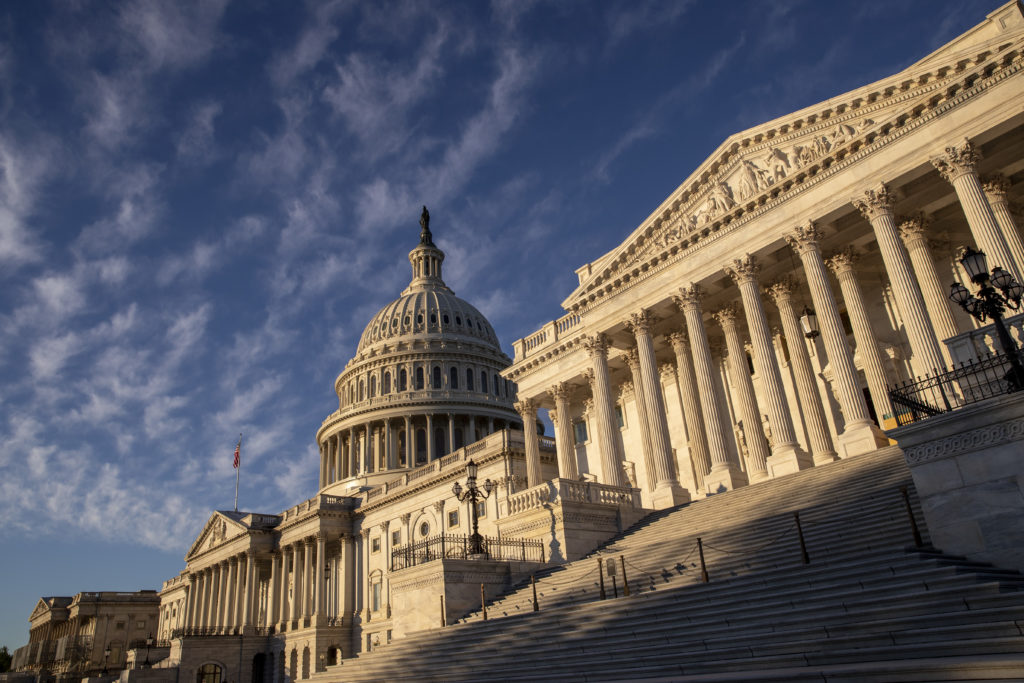
Yielding to mounting pressure and growing disruption, President Donald Trump and congressional leaders on Friday reached a short-term deal to reopen the government for three weeks while negotiations continue over the president’s demands for money to build his long-promised wall at the U.S.-Mexico border. Trump announced the agreement to break the 35-day impasse as intensifying delays at the nation’s airports and widespread disruptions brought new urgency to efforts to resolve the standoff. “I am very proud to announce today that we have reached a deal to end the shutdown and reopen the federal government,” he said from the Rose Garden. The Senate was set to approve the deal, with the House following later Friday, according to lawmakers and aides on Capitol Hill. The legislation would include back pay for some 800,000 federal workers who have gone without paychecks. After saying for weeks that he would not reopen the government without border wall money, Trump said he would soon sign a bill to re-open the government through Feb. 15 without additional money for his signature campaign promise. He said that a bipartisan committee of lawmakers would be formed to consider border spending before the new deadline. “They are willing to put partisanship aside, I think, and put the security of the American people first,” Trump said. He asserted that “barrier or walls will be an important part of the solution.” But he hinted that he was still considering taking unilateral action if efforts to come up with money for his wall fail. “I have a very powerful alternative, but I didn’t want to use it at this time,” he said. Overnight and into Friday, at least five Republican senators had been calling Trump, urging him to reopen the government and have the Senate consider his request for border wall money through regular legislation, according to a person familiar with the situation who was not authorized to discuss the private talks publicly. The breakthrough came as LaGuardia Airport in New York and Newark Liberty International Airport in New Jersey both experienced at least 90-minute delays in takeoffs Friday due to the shutdown. And the world’s busiest airport — Hartsfield-Jackson Atlanta International Airport — was experiencing long security wait times, a warning sign the week before it expects 150,000 out-of-town visitors for the Super Bowl. Trump and the Democrats in Congress had remained at odds over his demand that any compromise include money for his coveted border wall. The standoff became so severe that, as the Senate opened with prayer, Chaplain Barry Black called on high powers in the “hour of national turmoil” to help senators do “what is right.” Senators were talking with increased urgency after Thursday’s defeat of competing proposals from Trump and the Democrats. The bipartisan talks provided a glimmer of hope that some agreement could be reached to halt the longest-ever closure of federal agencies, at least temporarily. “There are discussions on the Senate side,” House Speaker Nancy Pelosi told reporters Friday morning as she entered the Capitol. “We are in touch with them.” Asked about Trump’s demands for border security measures as part of a bill temporarily reopening government, Pelosi said, “One step at a time.” Pelosi was referring to a meeting Thursday between Senate Majority Leader Mitch McConnell, R-Ky., and Minority Leader Chuck Schumer, D-N.Y., to explore next steps for solving the vitriolic stalemate. Pressure has been building among both parties to reopen agencies immediately and pay hundreds of thousands of beleaguered federal workers while bargainers hunt for a deal. Monday is the start of federal tax filing season. But fewer than half of the furloughed IRS employees recalled during the shutdown to handle tax returns and send out refunds reported for work as of Tuesday, according to congressional and government aides. The employees had been told to work without pay. At the White House Thursday, Trump told reporters he’d support “a reasonable agreement” to reopen the government. He suggested he’d also want a “prorated down payment” for his long-sought border wall with Mexico but didn’t describe the term. He said he has “other alternatives” for getting wall money, an apparent reference to his disputed claim that he could declare a national emergency and fund the wall’s construction using other programs in the federal budget. Contributing to the pressure on lawmakers to find a solution was the harsh reality confronting 800,000 federal workers, who on Friday faced a second two-week payday with no paychecks. In an embarrassment to Trump, a Democratic proposal to end the shutdown got two more votes in the Senate on Thursday than a GOP plan, even though Republicans control the chamber 53-47. Six Republicans backed the Democratic plan, including freshman Sen. Mitt Romney, R-Utah, who’s clashed periodically with the president. The Senate first rejected a Republican plan reopening the government through September and giving Trump the $5.7 billion he’s demanded for building segments of that wall, a project that he’d long promised Mexico would finance. The 50-47 vote for the measure fell 10 shy of the 60 votes needed to succeed. Minutes later, senators voted 52-44 for a Democratic alternative that sought to open padlocked agencies through Feb. 8 with no wall money. That was eight votes short. It was aimed at giving bargainers time to seek an accord while getting paychecks to government workers who are either working without pay or being forced to stay home. Thursday’s votes came after Vice President Mike Pence lunched privately with restive GOP senators, who told him they were itching for the standoff to end, participants said. Sen. Roy Blunt, R-Mo., said their message to Pence was, “Find a way forward.” Throughout, the two sides issued mutually exclusive demands that have blocked negotiations from even starting: Trump has refused to reopen government until Congress gives him the wall money, and congressional Democrats have rejected bargaining until he reopens government.
Martha Roby: Prayers for Wetumpka during this time of recovery

On the afternoon of Saturday, January 19, a powerful tornado hit the City of Wetumpka in Elmore County, ripping through the beautiful downtown area and inflicting heartbreaking and significant damage. By the grace of God, no lives were lost, and only minor injuries have been reported. Still, the destruction is extreme, and the road to recovery is long. The Monday following the tornado, I joined Governor Kay Ivey and other local officials to spend time on the ground with those impacted. I had the opportunity to see the devastation firsthand, and it was heartbreaking, to say the least. The beautiful, historic First Presbyterian Church was destroyed, and First Baptist Church of Wetumpka sustained terrible damage. The Wetumpka Police Station, senior citizens center, and recreation center were also lost in the tornado. More than 35 homes and dozens of businesses were damaged or destroyed. Wetumpka and its residents are in the midst of determining the extent of damages and planning for what needs to be rebuilt, and we must do our very best to help however possible. I am deeply grateful to the local leaders and first responders who immediately jumped to action to begin securing the area and putting the pieces back together for the people who have lost so much. During this very challenging time, it has also been encouraging to see the community come together and begin the rebuilding process like a family. Mere hours after the storm, the Elmore County Emergency Management Agency (EMA) heard from more than 1,000 individuals who signed up to volunteer their time and resources to the clean-up efforts. If you are local and personally interested in helping out with clean-up in downtown Wetumpka or in Elmore County, please contact the Elmore County EMA by calling (334) 567-6451. The Elmore County Commission and City of Wetumpka are tremendously appreciative of volunteers who are willing to assist, but they ask that volunteers please call ahead and follow instructions to ensure proper coordination in order to maximize recovery efforts and resources. If you are a resident of Wetumpka or Elmore County and need non-emergency assistance related to the tornado, please call 211 until further notice. Any emergency calls should still be directed to 911. Call the Elmore County EMA with any damage reports. I would like to take this opportunity to directly address the people impacted by this tornado: My office stands ready to assist in whatever ways we are able. My staff and I work for you, and we want to be a resource for you during this challenging time. The rebuilding process won’t be easy, but if we continue to work together and help each other out whenever possible, we will get through this. In the meantime, my family and I will continue to pray for all those impacted by this devastating event. • • • Martha Roby represents Alabama’s Second Congressional District. She lives in Montgomery, Alabama, with her husband Riley and their two children.
BCRI reverses decision, reaffirms award for controversial activist Angela Y. Davis
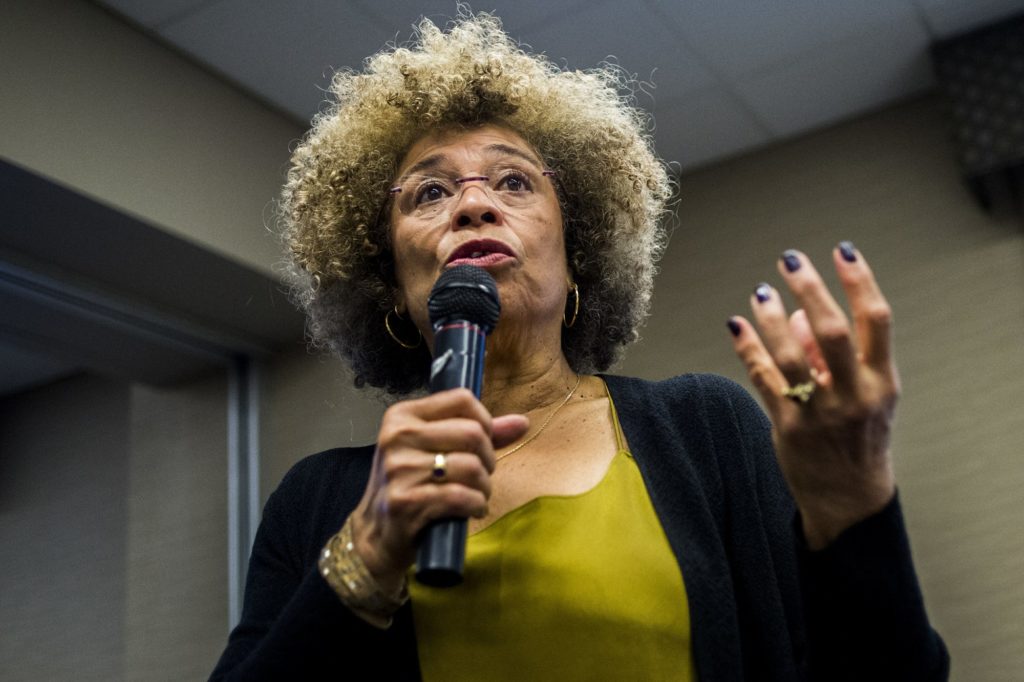
In an attempt to right what they are now calling a wrong, the Birmingham Civil Rights Institute (BCRI) is reversing a recent decision they made to rescind an award for controversial, political activist Angela Davis. That latest move comes in the wake of public outcry over the BRCI’s decision to rescind the award following complaints from the Jewish community. On Jan. 14, the BCRI issued a public apology to Davis for “its missteps in conferring, then rescinding, its nomination” of her for the BCRI’s 2018 Reverend Fred L. Shuttlesworth Human Rights Award. Immediately after that public apology, the Board voted to reaffirm Dr. Davis as the recipient. “Dr. Angela Davis, a daughter of Birmingham, is highly regarded throughout the world as a human rights activist,” said BCRI President and CEO Andrea L. Taylor. “In fact, the Schlesinger Library at Harvard University’s Radcliffe Institute of Advanced Study acquired her personal archives in 2018, recognizing her significance in the movement for human rights, her involvement in raising issues of feminism, as well as her leadership in the campaign against mass incarceration. Her credentials in championing human rights are noteworthy,” she said. Reverend Thomas L. Wilder, interim BCRI Board Chair, said “at the end of the day, we stand for open and honest dialogue on issues. It is only through our ability to talk openly and honestly with one another that we can achieve true understanding and appreciation for one another’s perspectives. We look forward to continuing the Institute’s legacy as we foster dialogue and open communications, improve our Board governance and policies, and stay focused on our Vision 2020 strategic plan.” BCRI’s Vision 2020 Strategic Plan Wilder said that BCRI’s Vision 2020 strategic plan is based on four guiding goals: To accelerate the reach of the Institute by doubling the number of visitors by 2020, by building greater awareness, and by attracting significantly larger audiences, year over year; To promote the success of the newly designated Civil Rights National Monument; To facilitate superb programming that optimizes the Institute’s own educational, curatorial and archival assets; and, To build a healthy, adaptive and sustainable institution that is both financially self-sufficient and nationally significant. “We ask everyone to partner with us to rebuild trust in the Institute and its important work,” Wilder said.
Libertarian Party of Alabama sues state for discrimination against third parties

The Libertarian Party of Alabama has sued the state, claiming they discriminate against third parties trying to get ballot access. According to the Alabama Political Reporter, the federal lawsuit was filed Thursday against Alabama Secretary of State John Merrill. For both the Republican and Democrat parties, obtaining a list of registered voters is free. For other parties, the cost is one cent per name which, Alabama Political Reporter calculates, comes out to about $34,000 plus an additional $850 fee if a credit card is used. The lawsuit reads, “Having a copy of Alabama’s statewide voter registration list provides a distinct advantage to any political party trying to obtain access to the ballot in Alabama and trying to transmit its political message to Alabama voters in order to obtain their support for ballot access, increase their ability to associate with others who share their political philosophy and goals and, ultimately to obtain additional votes.” It continues, saying that Alabama law “unconstitutionally discriminates between major political parties and minor political parties, in an effort to, and with the direct effect of … creating obstacles which make it more difficult for a minor political party like the LPA to establish itself and grow, garner support, gain access to the ballot in Alabama, and obtain votes in order to grow and have its members and followers hold public elective office.” In addition to needing more than 50,000 signatures to get on the ballot, the lawsuit says that this is “just one more obstacle Alabama places in the way of minor parties to try to prevent them from growing and to gaining access to the ballot.” Ballot access barriers have been ruled unconstitutional in both Michigan and Georgia, according to Alabama Political Reporter, decisions which give Alabama libertarians hope for success in federal court. Currently, Libertarian candidates have to run on write-in campaigns. Ron Bishop ran against Roy Moore and Doug Jones in 2017. “The two choices that we have now, they don’t conform to what I think America needs to be,” Bishop told AL.com, “I’m hoping we that we can give voters out there a third option.” In Alabama, nearly two-thirds of voters cast straight party tickets. In the 2018 election, about 1.1 of the 1.7 million ballots cast were straight-ticket votes, in which voters checked one box to vote for every candidate one party ran. In some cases, a third-party candidate can split the vote from a major party’s base, clearing the way for their opponent to win. The Libertarian Party is the third largest party in the United States according to the Libertarian Party of Alabama. They believe “the answer to America’s political problems is the same commitment to freedom that earned America its greatness: a free-market economy and the abundance and prosperity it brings; a dedication to civil liberties and personal freedom; and a foreign policy of non-intervention, peace, and free trade as prescribed by America’s founders. We are the only political organization which respects you as a unique and competent individual.”
Donald Trump associate Roger Stone arrested in Russia investigation
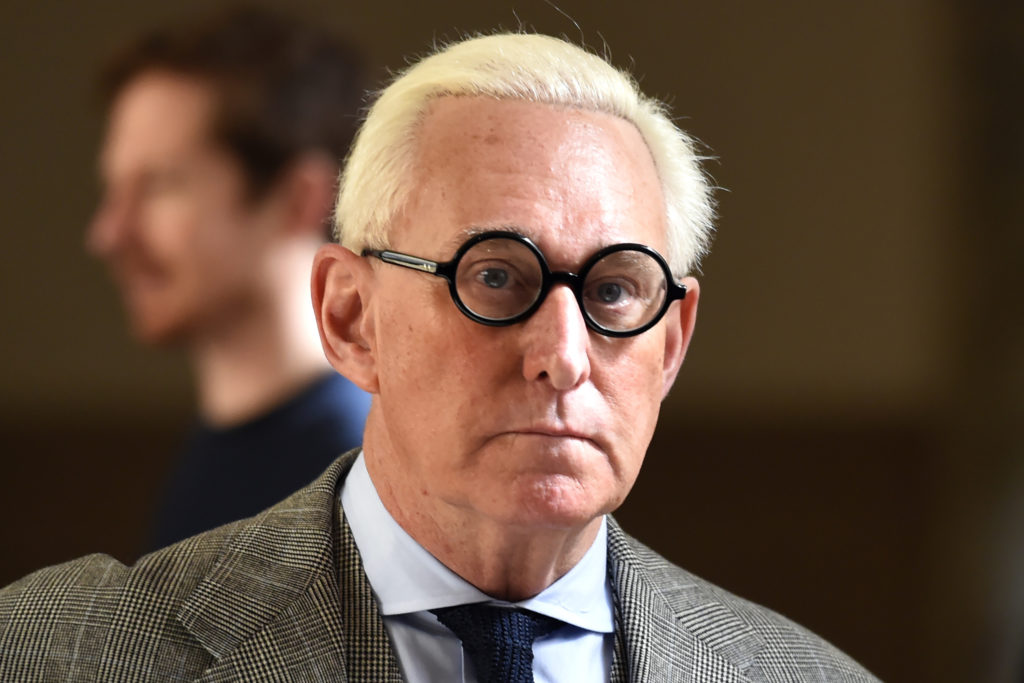
Roger Stone, a confidant of President Donald Trump, was arrested in the special counsel’s Russia investigation in a pre-dawn raid at his Florida home Friday on charges that he lied to Congress and obstructed the probe. The seven-count indictment against Stone, a self-proclaimed “dirty trickster,” is the first criminal case in months from special counsel Robert Mueller. It provides the most detail to date about how Trump campaign associates in the summer of 2016 were actively seeking to politically benefit from the release of hacked material damaging to Hillary Clinton’s campaign. It alleges that unnamed senior Trump campaign officials contacted Stone to ask when stolen emails relating to Clinton might be disclosed. The indictment does not charge Stone with conspiring with WikiLeaks, the anti-secrecy website that published the emails, or with the Russian officers Mueller says hacked them. Instead, it accuses him of witness tampering, obstruction and false statements about his interactions related to WikiLeaks’ release. Some of those false statements were made to the House intelligence committee, prosecutors allege. CNN aired video of the raid at Stone’s Fort Lauderdale home, showing FBI agents in body armor using large weapons and night-vision equipment, running up to the home and banging repeatedly on the door. “FBI open the door!” one shouts. “FBI, warrant!” Stone could then be seen in the doorway in his sleepwear before he was led away. He is expected to appear in court later Friday. Stone is the sixth Trump aide charged in Mueller’s investigation into potential coordination between Russia and the Trump campaign and the 34th person overall. The investigation has laid bare multiple contacts between Trump associates and Russia during the campaign and transition period and efforts by several to conceal those communications. The case against Stone comes weeks after Trump’s former national security adviser, Michael Flynn, was castigated by a judge in open court and just hours before Paul Manafort, his ex-campaign chairman, was due in court on allegations that he had lied to Mueller’s prosecutors. In referring to Trump campaign officials and their desire to leverage hacked emails, the criminal case brings Mueller’s investigation into the president’s inner circle but it does not accuse the president of any wrongdoing or reveal whether he had advance knowledge of the WikiLeaks trove. Sarah Huckabee Sanders, Trump’s press secretary, told CNN Friday the charges brought against Stone “don’t have anything to do with the president.” Well-known for his political antics and hard ball tactics, Stone has reveled in being a Washington wheeler-dealer dating back to the Nixon administration. He has also pushed several conspiracy theories and was an early and vocal supporter of Trump’s candidacy. Stone was one of Trump’s earliest political advisers, encouraging both his presidential runs. He briefly served on Trump’s 2016 campaign, but was pushed out amid infighting with then-campaign manager Corey Lewandowski. Stone continued communicating with Trump on occasion and stayed plugged into the circle of advisers — both formal and informal — who worked with and around Trump. According to the indictment, many of Stone’s conversations during the campaign involved WikiLeaks. The indictment lays out in detail Stone’s conversations about stolen Democratic emails posted by the group in the weeks before Trump, a Republican, beat Clinton. Mueller’s office has said those emails, belonging to Clinton campaign chairman John Podesta, were hacked by Russian intelligence officers. The document says that by June and July 2016, Stone had told senior Trump campaign officials that he had information indicating that WikiLeaks had obtained documents that could be damaging to Clinton’s campaign. After the July 22, 2016, WikiLeaks release of hacked emails from the Democratic National Committee, the indictment says a senior Trump campaign official “was directed” to contact Stone about additional releases and “what other damaging information” WikiLeaks had “regarding the Clinton campaign.” The indictment does not name the official or say who directed the outreach to Stone. Another Trump campaign official cited in the indictment is Steve Bannon, who later became Trump’s chief strategist in the White House. Bannon, referred to as a “high-ranking Trump Campaign official,” exchanged emails with Stone in October 2016 about WikiLeaks’ plans for releasing hacked material. The indictment quotes from those emails, which had previously been made public by news outlets. While the indictment provides some new insight into the Trump campaign, it deals largely with what prosecutors say were Stone’s false statements about his conversations with conservative writer and conspiracy theorist, Jerome Corsi, and New York radio host, Randy Credico. Corsi is referred to as Person 1 in the indictment, and Credico as Person 2. The indictment accuses Stone of carrying out a “prolonged effort” to keep Credico from contradicting his testimony before the House intelligence committee. During that effort, prosecutors note that Stone repeatedly told Credico to “do a ‘Frank Pentangeli,’” a reference to a character in “The Godfather: Part II” who lies before a congressional committee. Stone is also accused of threatening Credico. The indictment cites several messages, some of which have already been public, that Stone sent to Credico last year. On April 9, Stone called Credico a “rat” and a “stoolie” and accused him of backstabbing his friends. Stone also threatened to “take that dog away from you,” a reference to Credico’s dog, Bianca. “I am so ready. Let’s get it on. Prepare to die (expletive),” Stone also wrote to Credico. The indictment had been expected. Stone has said for months he was prepared to be charged, though he has denied any wrongdoing. A grand jury for months had heard from witnesses connected to Stone. And the intelligence committee last year voted to release a transcript of Stone’s testimony to Mueller as a precursor to an indictment. On Thursday, hours before his arrest, Stone posted on Instagram a photo of himself with Trump and the caption, “Proud of my President.” He also posted a screen shot of a CNN segment and complained that the network had found the “worst photo of me possible.” Attorney Grant Smith, who represents Stone, did not return phone messages
Senate rejects rival plans for ending shutdown; talks start
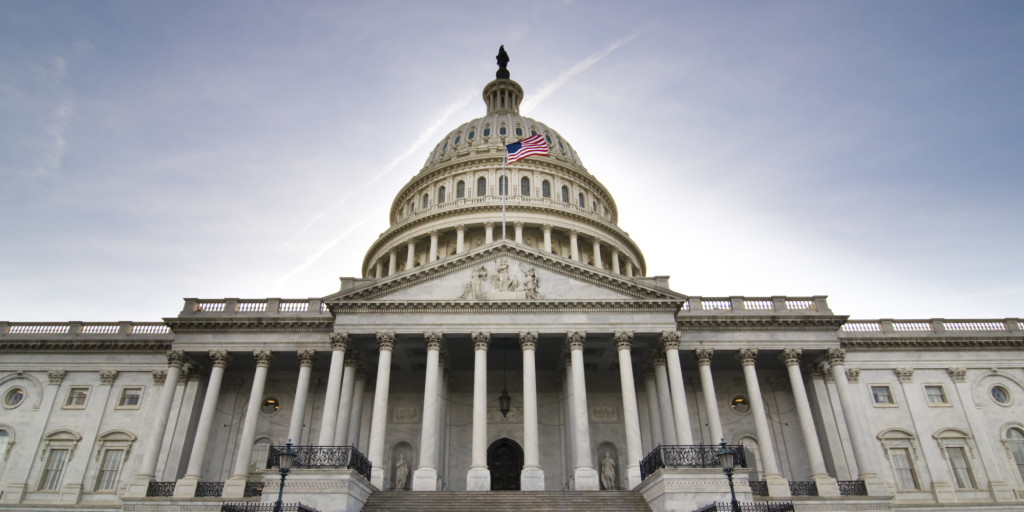
A splintered Senate swatted down competing Democratic and Republican plans for ending the 34-day partial government shutdown on Thursday, but the twin setbacks prompted a burst of bipartisan talks aimed at temporarily halting the longest-ever closure of federal agencies and the damage it’s inflicting around the country. In the first serious exchange in weeks, Senate Majority Leader Mitch McConnell, R-Ky., quickly called Minority Leader Chuck Schumer, D-N.Y., to his office to explore potential next steps for solving the vitriolic stalemate. Senators from both sides floated a plan to reopen agencies for three weeks and pay hundreds of thousands of beleaguered federal workers while bargainers hunt for a deal. At the White House, President Donald Trump told reporters he’d support “a reasonable agreement.” He suggested he’d also want a “prorated down payment” for his long-sought border wall with Mexico but didn’t describe the term. He said he has “other alternatives” for getting wall funding, an apparent reference to his disputed claim that he could declare a national emergency and fund the wall’s construction using other programs in the federal budget. “At least we’re talking about it. That’s better than it was before,” McConnell told reporters in one of the most encouraging statements heard since the shutdown began Dec. 22. Even so, it was unclear whether the flurry would produce results. House Speaker Nancy Pelosi, D-Calif., whose relationship with Trump seems to sour daily, told reporters a “big” down payment would not be “a reasonable agreement.” Asked if she knew how much money Trump meant, Pelosi said, “I don’t know if he knows what he’s talking about.” Schumer spokesman Justin Goodman said Democrats have made clear “that they will not support funding for the wall, prorated or otherwise.” Contributing to the pressure on lawmakers to find a solution was the harsh reality confronting 800,000 federal workers, who on Friday face a second two-week payday with no paychecks. Underscoring the strains, Sen. Michael Bennet, D-Colo., angrily said on the Senate floor that Sen. Ted Cruz, R-Texas, had forced a 2013 shutdown during which “people were killed” in Colorado from flooding and shuttered federal agencies couldn’t help local emergency workers. Moments earlier, Cruz accused Democrats of blocking a separate, doomed bill to pay Coast Guard personnel during this shutdown to score political points, adding later, “Just because you hate somebody doesn’t mean you should shut the government down.” Thursday’s votes came after Vice President Mike Pence lunched privately with GOP senators, who told him they were itching for the standoff to end, participants said. Sen. Roy Blunt, R-Mo., said their message to Pence was, “Find a way forward.” In an embarrassment to Trump, the Democratic proposal got two more votes Thursday than the GOP plan, even though Republicans control the chamber 53-47. Six Republicans backed the Democratic plan, including freshman Sen. Mitt Romney, R-Utah, who’s clashed periodically with the president. The Senate first rejected a Republican plan reopening the government through September and giving Trump the $5.7 billion he’s demanded for building segments of that wall, a project that he’d long promised Mexico would finance. The 50-47 vote for the measure fell 10 shy of the 60 votes needed to succeed. Minutes later, senators voted 52-44 for a Democratic alternative that sought to open padlocked agencies through Feb. 8 with no wall money. That was eight votes short. It was aimed at giving bargainers time to seek an accord while getting paychecks to government workers who are either working wihout pay or being forced to stay home. Flustered lawmakers said Thursday’s roll calls could be a reality check that would prod the start of talks. Throughout, the two sides have issued mutually exclusive demands that have blocked negotiations from even starting: Trump has refused to reopen government until Congress gives him the wall money, and congressional Democrats have rejected bargaining until he reopens government. Thursday’s votes could “teach us that the leaders are going to have to get together and figure out how to resolve this,” said Sen. John Thune of South Dakota, the No. 2 Senate GOP leader. He added, “One way or another we’ve got to get out of this. This is no win for anybody.” Initially, partisan potshots flowed freely. Pelosi accused Commerce Secretary Wilbur Ross of a ”‘Let them eat cake’ kind of attitude” after he said on television that he didn’t understand why unpaid civil servants were resorting to homeless shelters for food. Even as Pelosi offered to meet the president “anytime,” Trump stood firm, tweeting, “Without a Wall it all doesn’t work…. We will not Cave!” As the Senate debated the two dueling proposals, McConnell said the Democratic plan would let that party’s lawmakers “make political points and nothing else” because Trump wouldn’t sign it. He called Pelosi’s opposition “unreasonable” and said, “Senate Democrats are not obligated to go down with her ship.” Schumer criticized the GOP plan for endorsing Trump’s proposal to keep the government closed until he gets what he wants. “A vote for the president’s plan is an endorsement of government by extortion,” Schumer said. “If we let him do it today, he’ll do it tomorrow, and tomorrow, and tomorrow.” McConnell’s engagement was viewed as a constructive sign because he has a history of helping resolve partisan standoffs. For weeks, he’d let Trump and Democrats try reaching an accord and, until Thursday, had barred any votes on legislation Trump would not sign. In consultation with their Senate counterparts, House Democrats were preparing a new border security package that might be rolled out Friday. Despite their pledge to not negotiate until agencies reopened, their forthcoming proposal was essentially a counteroffer to Trump. Pelosi expressed “some optimism that things could break loose pretty soon” in a closed-door meeting with other Democrats on Wednesday evening, said Rep. John Yarmuth, D-Ky. The Democratic package was expected to include $5.7 billion, the same amount Trump wants for his wall, but it would be used instead for fencing, technology, personnel and other measures. In a plan the rejected Senate GOP
Belt buckles and beer: federal shutdown hits businesses hard
From power restaurants in Washington and a belt-buckle maker in Colorado to a brewery in California, businesses that count heavily on federal employees as customers are feeling the punishing effects of the government shutdown. In many cases, it’s forcing them to cut workers’ hours and buy less from suppliers — measures that could ripple through the larger U.S. economy. “It’s a fog with no end in sight,” Michael Northern, vice president of a company that owns three restaurants in the Huntsville, Alabama, area near a huge Army base that houses some 70 federal agencies, including NASA. He said business is down 35 percent. “People are just going home and nesting, trying to conserve resources.” Western Heritage Co. in Loveland, Colorado, which makes buckles for uniformed employees of the National Forest Service and other outdoor agencies, has seen sales plummet 85 percent this month and laid off 12 of its 13 workers. In the nation’s capital, Clyde’s Restaurant Group, which owns the Old Ebbitt Grill restaurant down the street from the White House and 10 other dining spots, reported a 20 percent drop in sales and is cutting hours for waiters and kitchen staff. So far, the broader economic impact of the shutdown is not clear — because, well, many agencies that compile such data are closed. The Labor Department, which is open, said Thursday that the number of people seeking unemployment benefits fell last week to the lowest level since 1969, a sign the job market is still strong. But most economists are forecasting slower growth in the first three months of this year. Analysts estimate gross domestic product shrinks 0.13 percentage points for each week the shutdown lasts. Those estimates reflect the loss of government spending and lost paychecks for federal employees. What is not known is how much the shutdown will reverberate through the rest of the economy. When waiters at restaurants that serve federal employees lose income, for example, will they also cut back spending? And will that then harm other companies? Among the hardest hit are the owners of restaurants, hotels and gift shops near federal agencies and national parks around the country. In Mariposa, California, just outside Yellowstone National Park, tourism has dropped sharply and most of the 6,000 county residents who work in the park have not been paid for a month. “For my business personally it’s been absolutely devastating,” said Hanna Wackerman, owner of the 1850 Restaurant and Brewing Company. “Usually January is a pretty busy month for us. With the new snow being in Yosemite, that tends to bring new tourists to the park.” Instead, business is down 80 percent, she said. Mike Lynch, owner of Western Heritage, saw online orders collapse almost immediately after the government shut down Dec. 22. The company sells buckles, keychains, commemorative coins and badges to employees of the Fish and Wildlife Service, the Forest Service, the Bureau of Land Management and other agencies. It also sells patches and some clothing. Most of the purchases are discretionary and customized. For example, if a BLM employee is retiring, co-workers might order a plaque from Lynch’s company. His online orders went from thousands of dollars a week before Christmas to just $78 in the first week of January. On Jan. 7, Lynch laid off nearly everyone, leaving one person to answer the phone “in case someone wants to buy something.” They were the first job cuts in the company’s 43-year history. With business so slow, Lynch isn’t ordering any of the bronze, silver or pewter he uses and isn’t replenishing other inventory. Larger companies are also affected, though it is typically easier for them to weather the impact. Airlines like Delta and Southwest, for example, are losing tens of millions of dollars in business, but that’s out of billions in revenue. David Moran, director of operations for Clyde’s, the restaurant chain in Washington, worries what will happen if the shutdown extends into February, when events like Valentine’s Day typically give a boost to business. “My fear is that it is getting worse, because people are getting panicky,” he said. Republished with permission from the Associated Press
Southern Research moving ‘green chemistry’ team to new Birmingham lab

Southern Research has moved a team of scientists working to develop promising clean-energy technologies from North Carolina to a new state-of-the-art laboratory it is opening on the organization’s downtown Birmingham campus. The research team, led by Amit Goyal, Ph.D., has devised cost-efficient, environmentally friendly methods to produce valuable industrial chemicals from sources such as waste materials and harmful carbon dioxide. “These leading-edge technologies hold significant potential for commercialization, and relocating our talented scientists to an ultra-modern laboratory in Birmingham will help them advance their important work,” said Art Tipton, Ph.D., president and CEO of Southern Research. “We are committed to supporting the research being conducted by Amit’s team because it fully aligns with Southern Research’s core mission – finding innovative solutions to make the world a better place,” Tipton said. Southern Research is investing $1 million to outfit an existing 7,200-square-foot building on its Southside campus as the Sustainable Chemistry and Catalysis Laboratory. Work is under way to install pilot-scale chemical reactors and other equipment at the facility. Funds raised through the recent Change Campaign effort are also helping to drive this important project forward. The lab is expected to be operational by mid-February, and Goyal’s team, comprising eight researchers, is already working full time in Birmingham, according to Corey Tyree, Ph.D., senior director in Energy & Environment (E&E) at Southern Research. “This will be a world-class lab where brilliant inventors are creating new technologies that offer a better way of manufacturing everyday products,” Tyree said. “This group is doing award-winning work, and now that work will be carried out right here in Birmingham, where Southern Research has made many groundbreaking discoveries in its history.” Green technologies Goyal and his team have developed a method to convert biomass sugars into acrylonitrile, the chemical building block of carbon fiber, which is increasingly used in airplanes, automobiles and other manufactured products because of its strength and light weight. The Southern Research process to produce acrylonitrile for high-performance carbon fiber is around 20 percent cheaper than conventional production methods and sustainable, lowering greenhouse gas emissions by nearly 40 percent. Goyal’s team has also developed a process to transform CO2 into high-value chemicals known as olefins, which are used to make a sweeping range of products such as packaging, plastics, textiles, paints and electronics. Energy-intensive methods are currently used to produce ethylene and other widely used chemicals in the olefin family, so the Southern Research technology could yield significant environmental benefits while also converting a greenhouse gas. “This relocation represents an exciting and important opportunity to capitalize on significant Southern Research infrastructure and the scientific community in Birmingham,” said Goyal, director of Sustainable Chemistry and Catalysis for Southern Research. “This puts science at the heart of everything we do because our long-term success depends on improving R&D productivity and achieving scientific leadership.” Expanding capabilities Mayor Randall Woodfin welcomed Goyal’s team to the city where Southern Research works to discover and develop new medicines, tackles engineering challenges for major government agencies, and researches energy and environmental technologies. “Birmingham is increasingly becoming a key location for world-class research and a place where important discoveries are being made on almost a daily basis,” Woodfin said. “Southern Research’s decision to move its ‘green chemistry’ scientists to a new lab in the city will add to this momentum. I look forward to seeing their work advance in Birmingham.” As a result of the team’s relocation, Southern Research has closed its office in Durham, North Carolina. The organization’s Environmental Technology Verification team, led by Tim Hansen, P.E., will continue to operate from the city, evaluating new clean technologies around the world. Tyree said the decision to close the Durham office will yield cost savings and increase efficiency for the nonprofit organization. The move also unites the Sustainable Chemistry team with other E&E researchers in Birmingham, who focus on issues such as energy storage systems and solar panel durability. Southern Research opened the Durham office in 1992 to support work for the U.S. Environmental Protection Agency, which at the time operated a major research and development facility in Research Triangle Park. In recent years, the work in Durham has focused primarily on various green energy technologies from the U.S. Department of Energy and other customers, making the location in North Carolina less necessary than when it was tied to the EPA work. Republished with permission from Alabama NewsCenter
Rachel Blackmon Bryars: Four myths to dispel during Alabama School Choice Week

Gov. Kay Ivey recently proclaimed this “Alabama School Choice Week” and thousands of families are celebrating reforms created by the Alabama Accountability Act, including scholarships so low-income parents can transfer their children from under-performing schools. Critics of the program, however, will likely respond by repeating some of the many myths about the law. Here are four you’ll probably hear: Myth #1: Scholarships steal money from public schools The Alabama Accountability Act “has directly siphoned more than $140 million from Alabama’s cash-strapped K-12 classrooms,” wrote the Alabama Education Association in a September 2018 edition of the teacher’s union magazine. But public school systems aren’t actually losing money. They are now collecting more money to educate fewer students with the biggest budget in a decade. Overall, the state’s multi-billion dollar education trust fund has grown since the scholarships were first offered, even while enrollment has steadily decreased. Last year alone, tax revenue that funds the education budget grew by nearly half a billion dollars– about three times as much as the scholarship program has spent in six years combined. Also, it costs roughly $9,500 annually to educate a student in public school, according to budget data. But it only costs about $6,500 to educate the same child in private school, which includes the costs of administering the scholarships, according to Warren Callaway, executive director of Scholarships For Kids, one of the largest scholarship granting organizations in the state, and a member of the recently formed Alabama Accountability Act Coalition. “It’s a great deal for taxpayers,” Callaway said. “They’ve given us $146 million and we’ve provided $200 million in education. The cost of education is not fixed because [public schools] don’t have to educate the child we have taken off their hands.” Myth #2: Even high performing schools that don’t have any students transferring out on scholarship still “lose money” “The highest performing school districts lose revenue at the same rate as all other districts,” according to the teachers’ union article. “It does not matter if you have no failing schools in your district. It does not matter if you have no scholarship recipients in your district. All school systems are still penalized under the [program].” Callaway says this is “bogus.” “The AEA tells Mountain Brook City, arguably the best system in the state, that they’ve lost $834,956 due to the Accountability Act,” Callaway said. “That’s hogwash. They haven’t lost a dollar.” Callaway examined state budget data showing Mountain Brook enrollment has largely been static, while state spending on students has gone up. In effect, they’ve received more money than years prior despite the AEA’s claims they’ve lost money. Myth #3: A University of Alabama study proves school choice doesn’t work A state-commissioned study conducted by the University of Alabama’s Institute for Social Science Research found that students using the scholarships performed about as well, on average, as their public school peers. Critics believe this proves school choice doesn’t help students improve academically. But advocates claim this indicates a huge achievement since research shows poverty strongly correlates with poor academic performance – a fact highlighted by the recent release of this year’s failing schools list. “In 72 of the 76 [failing] schools, more than nine out of 10 students are in poverty,” reports Al.com’s Trisha Powell Crain. “Even in the other four, more than half of the students are poor. In every one of the nine K-5 and K-6 elementary schools on the list, every student is poor. The University of Alabama study also showed low-income scholarship students often did better academically than their low-income public school counterparts. “We’ve taken kids who you would predict would be on the bottom side of the bell curve of achievement and we’ve gotten them to the mean,” Callaway said. “I would put the headline of that study, instead of ‘They scored average, ho-hum,’ I would say ‘They scored average, exclamation point!’” Myth #4: The program should be repealed because not all scholarship recipients are zoned for failing schools Students zoned for failing schools are awarded the scholarships first, and any remaining funds are then given to other disadvantaged families in schools that are generally close to the bottom 6th percentile — the state’s definition of a failing school. “Would you want to send your child to a 7th percentile school or an 8th percentile school?” Callaway asked. “The answer is no. Those are still low performing schools.” Overall, there’s a lot about education besides school choice that Alabamians can celebrate this week. Our recently released state report card revealed district and school improvement last year, with more As, Bs and Cs than the year before. Our First Class Pre K program continues to succeed and draw national attention. And Montgomery will open its first charter school this year. None of these achievements, including school choice, would have happened without new ideas and reform. “The Accountability Act wasn’t an initiative to take the place of public education, it was just intended to show there is an alternative way of doing things and to upset the status quo,” Callaway said. No doubt the families celebrating their life-changing opportunity this week thank God that it did. ••• Rachel Blackmon Bryars is a senior fellow at the Alabama Policy Institute. Email her at Rachel@alabamapolicy.org or connect with her on Instagram @rbryars.
