
Confidentiality, infrastructure key targets for Alabama economic developers
Alabama’s economic developers say they will support two legislative measures this year that will address significant issues that affect recruitment and retention of industry in the state. Most pressing is a bill to prevent site consultants from having to register as lobbyists under the state’s ethics laws. A bill was passed in the final hours of last year’s session offered this exemption for one year, but it is scheduled to sunset April 1. Alabama Commerce Secretary Greg Canfield said ethics are important to everyone in economic development, but site consultants must operate with a degree of confidentiality. Not offering that degree of secrecy early in the process will prevent Alabama from being considered for most major projects, he said. “Confidentiality, particularly in the earliest stages of economic development and working projects, remains important,” Canfield said. “It’s a competitive world out there. Companies, for a variety of reasons, don’t want the world to know when they’re thinking about investing in a new location. There are lots of reasons for that, but the main thing is they don’t want their competitors to know what they are doing.” Jim Searcy, executive director of the Economic Development Association of Alabama, said often a site search will not lead to a project coming to fruition. Making the initial search public would not be prudent. “They don’t want to create undue issues or undue concerns for their existing industries or for their existing workforce,” Searcy said. “They’ve got a responsibility to stockholders that they cannot disclose some things that could impact their stock price.” The EDAA announced its priorities for the upcoming legislative session at its winter conference in Hoover this week. The 2019 legislative session begins March 5. (Read more from Canfield at the conference here and from Gov. Kay Ivey at the conference here.) Canfield said not being able to guarantee confidentiality will put the state at a competitive disadvantage. “We’ve been very successful in maintaining that degree of confidentiality,” he said. “We’ve won our fair share of projects. We want to win more. But in order to do that, we’ve got to continue to try to protect the privacy and the confidentiality so that we can move forward with new projects in time.” Even though confidentiality is crucial at the early stages of a project, Searcy said information is eventually made public when a project is announced. “Once the project progresses, once they announce, all of the incentives, all of the development agreements are public information,” he said. “So, there is nothing you can’t find out about what was the incentive or the development agreement – what that entails for the state’s investment and what the company is going to do.” Another proposal the economic development community is supporting is an increase in the gas tax to support infrastructure improvements in the state. “We’ve had great success in bringing great companies into the state,” Canfield said. “That, in turn, means that there’s an awful lot of products and goods and supplies and raw materials that have to flow in and out of our state. We’ve got to be able to accommodate that by having the best roads and bridges we can.” Searcy said apart from workforce, infrastructure is the greatest concern companies have when considering sites in the state. “We’ve been very neglectful in the state for decades and it is starting to impact companies’ consideration of Alabama as a location,” Searcy said. “Until we can show a plan and the resources to execute that plan, then I think we are going to be at a disadvantage in the economic development process.” Republished with permission from Alabama Newscenter
Democrats make opening offer, with no money for Donald Trump’s wall
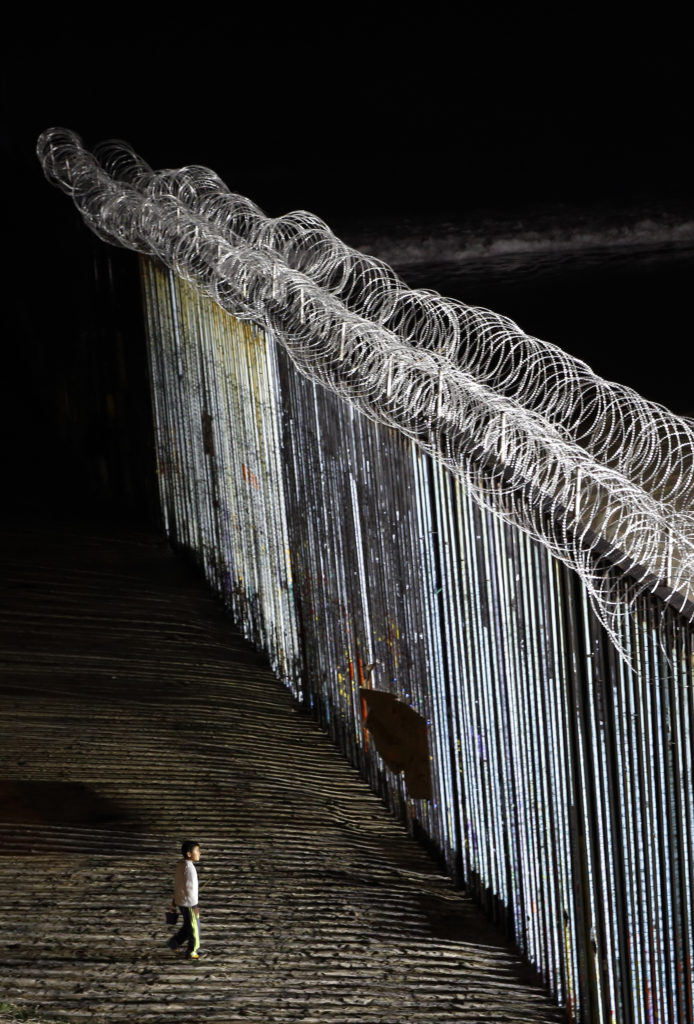
Democrats in the House offered a border security plan on Wednesday that would not provide a penny for Donald Trump’s border wall, ignoring — for now — an early-morning warning from the president that they’d be “wasting their time” if they don’t come up with wall money. The Democratic offer is just a starting point in House-Senate talks on border security funding that kicked off in a basement room in the Capitol. A top Democrat acknowledged that “everything is on the table,” including the border barriers demanded by Trump. Lawmakers on both sides flashed signs of flexibility, eager to demonstrate willingness to compromise in hopes of resolving the standoff with Trump that sparked the just-ended 35-day partial government shutdown. The high-stakes talks are taking place against the backdrop of another possible shutdown in mid-February — an outcome Trump’s GOP allies in the Senate are especially eager to avoid. But while Trump’s rhetoric has cooled, he’s proven to be an unpredictable force in the shutdown debate, often veering back to his original demands for the wall. Lawmakers negotiating the bill are well aware that he could move to quash an agreement at any time, plunging them back into crisis. Still, Trump’s request for $5.7 billion to build about 234 miles of barriers along the U.S. border with Mexico faces uphill odds. Even Trump’s GOP allies acknowledge he may only get a fraction of it. The Democratic plan includes new money for customs agents, scanners, aircraft and boats to police the border, and to provide humanitarian assistance for migrants. “Democrats are once again supporting strong border security as an essential component of homeland security. Border security, however, is more than physical barriers; and homeland security is more than border security,” said Rep. Lucille Roybal-Allard, Democrat, Calif. Senators revisited a bipartisan $1.6 billion proposal for 65 miles of fencing in the Rio Grande Valley in Texas that passed a key committee last year. The panel of old-school lawmakers from the powerful appropriations committees has ample expertise on homeland security issues, as many of them helped finance fence built over the years that stretches across much of the 1,954-mile border. “Because of the work we did years ago we’ve already built almost 700 miles of fencing on our nation’s border,” said Rep. David Price, Democrat, N.C. “Whatever the president may say it is far from an open border. Meanwhile, the number of undocumented immigrants crossing our border or attempting to cross remain not at alarming highs but at historic lows.” Republican allies of the president said there will have to be some money to meet Trump’s demands. But they also predict privately that the White House is eager to grab an agreement and declare victory — even if winning only a fraction of Trump’s request. “The components of border security are people, technology and a barrier. And everybody has voted for all three,” said Sen. John Hoeven, Republican, N.D. “To get to an agreement we’ve got to have all three in there.” But as talks on the homeland security budget open, Trump and Republicans are in a weakened position just 17 days before the government runs out of money again without a deal. Democrats won back the House in a midterm rout and prevailed over Trump in the shutdown battle. “Smart border security is not overly reliant on physical barriers,” House Appropriations Committee Chairwoman Nita Lowey, Democrat, N.Y., said as the session began. She said the Trump administration has failed to demonstrate that physical barriers are cost effective compared with better technology and more personnel. The comments at once served notice that Democrats weren’t ruling out financing physical structures, but would do so only on a limited basis. Sen. Richard Shelby, Republican,Ala., who chairs the Senate Appropriations Committee, said that while Republicans favor improved border security technology, “Smart technology alone does not actually stop anyone from crossing into the U.S. illegally.” Shelby said physical barriers are needed “not from coast to coast, but strategically placed where traffic is highest.” That echoed recent remarks by Trump as he’s retreated from his more strident comments from the 2016 presidential campaign. The president surrendered last Friday and agreed to reopen government for three weeks so negotiators can seek a border security deal, but with no commitments for wall funds. If negotiations on the 17-member panel falter, one option would be to enact another temporary government funding measure to replace the current one, which expires Feb. 15. Trump tweeted Wednesday morning, hours before the negotiators were to sit down for their first meeting, that the group of Republicans and Democrats is “Wasting their time!” if they aren’t “discussing or contemplating a Wall or Physical Barrier.” Prospects for broadening the scope of the talks to include broader immigration issues such as providing protection against deportation to “Dreamer” immigrants brought illegally to the country as children — or even must-do legislation to increase the government’s borrowing cap — appeared to be fading. “It’s just a matter of border security at this moment,” Democrat Lowey said. Republished with permission from the Associated Press
Alabama prisons seek funding for 500 more officers, raises
The Alabama Department of Corrections (ADOC) Commission Jeff Dunn on Wednesday told state lawmakers it is seeking a $42 million funding increase to hire 500 new correctional officers and a 20 percent pay increase in in hopes of tackling the state’s perennial understaffing issues at state prisons. The request represents a roughly 8.8 percent increase for the next fiscal year, which starts Oct. 1. “The Department of Corrections is undergoing unprecedented change,” Dunn told legislators. The ADOC is, “transforming the department into the most respected and trusted law enforcement agency in the state…. Although our recruiting efforts have increased, we still are down to 50 percent or lower staffing levels in many of our major facilities. And there is a direct correlation between the shortage of officers in our prisons and the increase in violence.” According to Dunn, the 2018 occupancy rate is now 163 percent of capacity. His goal is to reduce that to 145 percent capacity. The overcrowding has led to violence within the state’s prisons and prison officers and inmates have been killed and injured in a series of violent crimes behind bars. Under federal order for improvement U.S. District Judge Myron Thompson ruled in 2017 that mental health care in Alabama’s prisons was “horrendously inadequate” and ordered the state to improve conditions. Since then the ADOC has been under federal court order to improve its mental health care and increase its security staff.
Daniel Sutter: Politics and the economics of the Carbon Tax
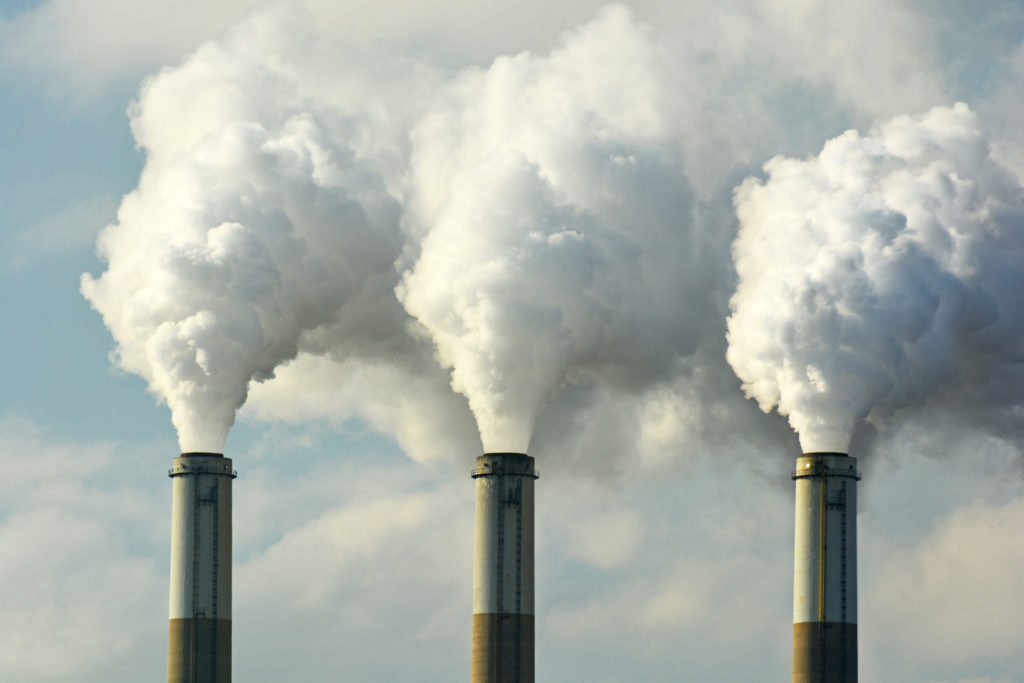
A carbon tax involves some good economics and is probably the best way to address global warming. And yet I think that adopting the tax represents bad policy. My reservations involve the politics of policy implementation as examined by Nobel prize-winning economist James Buchanan. Before getting to my concerns, let’s consider two other arguments against limiting greenhouse gas (GHG) emissions. The first is that reducing U.S. emissions will have little effect on global temperatures. The Clean Power Plan’s emissions cuts, for instance, were projected to prevent 0.02 degrees Celsius warming by 2100. This just reflects the global nature of the challenge. The U.S. will likely generate 10 to 20 percent of global GHG emissions through 2100. We cannot stabilize atmospheric carbon dioxide alone. Whether leading by example or conditioning our actions on other nations’ efforts makes more sense is a matter of international diplomacy, not economics. Another argument is the overestimation of the costs of warming by economists’ Integrated Assessment Models (IAMs). This could happen for two reasons. First, future GHG emissions may produce less warming than currently forecast. Second, the projected warming may occur and not prove extremely costly. Climate models are a crucial component of an IAM; the costs of warming come entirely from predicted climate impacts. The Intergovernmental Panel on Climate Change’s (IPCC) climate models have been running hot: since 1990, only about half of the predicted warming has been observed. This raises questions about the models.Humans will adapt to higher temperatures and rising sea levels. Inadequate modeling of adaptation means that IAMs will overestimate the costs of warming. And climate engineering could potentially remove carbon dioxide from the atmosphere, allowing continued use of fossil fuels while limiting warming. And yet these climate and economic concerns, I think, recommend a smaller tax than currently estimated as opposed to no tax. Unrestrained use of fossil fuels over 200 or 300 years may eventually produce dramatic and costly warming, even if emissions through 2100 merely constitute a nuisance. James Buchanan pioneered the integration of economic and political analysis. He criticized policy recommendations based exclusively on economics. Such advice implicitly assumes government by a benevolent despot who does exactly what economists recommend. Ignoring politics leads to useless and potentially harmful policy recommendations. Economists advocating for initiating carbon taxation based on the benefits from an optimal tax are committing the error Buchanan warned against. The IPCC in 2018 announced a new goal of keeping global temperatures from rising more than 1.5 degrees Celsius. Attainting this goal will essentially require ending the use of fossil fuels by mid-century. IAM pioneer William Nordhaus’ model estimates an optimal tax of almost $50 per ton, or $0.50 per gallon of gas. The optimal tax increases over time but not enough to halt use of fossil fuels anytime soon. Ending fossil fuel use might require a tax of as much as $5,000 per ton. The debate is now whether to end the use of fossil fuels. If the U.S. begins taxing GHG, we will almost certainly within a few years end up with a tax set well above $50 a ton. Why? After we initiate taxation of GHGs, politicians would then need to set and adjust the tax. Politicians will likely balance the views of tax supporters in setting a rate, having resigned themselves to losing the votes of tax opponents. All proponents other than a handful of economists will want a tax much in excess of $50. The IAMs underlying economists’ support for a carbon tax show that costs rise sharply if we limit GHG emissions more than optimally. The IPCC’s new 1.5 degrees of warming goal would, according to Professor Nordhaus’s model, produce net losses for the global economy even relative to no limits on GHGs. An optimal carbon tax may well be sound economically. But if we enact carbon taxation, politics will likely produce a very costly tax rate. Economists should not let the allure of an optimal tax create an impression that carbon taxation will benefit the economy. … Daniel Sutter is the Charles G. Koch Professor of Economics with the Manuel H. Johnson Center for Political Economy at Troy University and host of Econversations on TrojanVision. The opinions expressed in this column are the author’s and do not necessarily reflect the views of Troy University.
