
Martha Roby: New Congress brings new opportunities for the Second District
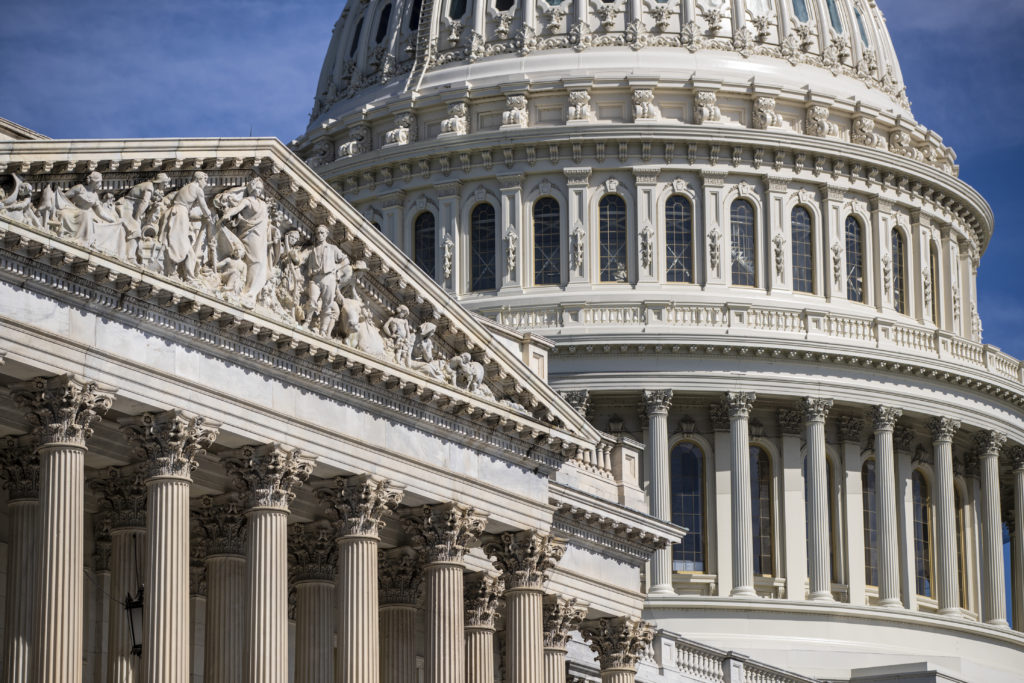
Last month, the 116th Congress was sworn-in, and I was honored to take the oath and begin my fifth term serving Alabama’s Second District. A new Congress often brings new committee and subcommittee opportunities, and I am excited to share with you my new responsibilities as I continue to work on your behalf. For the 116th Congress, I will continue to serve on the House Appropriations and Judiciary Committees. On Appropriations, I have been assigned seats on the Military Construction and Veterans Affairs Subcommittee, the State and Foreign Operations Subcommittee, and the Commerce, Justice, and Science Subcommittee. The Military Construction and Veterans Affairs Subcommittee has jurisdiction over some programs at the Department of Defense and the full range of funding for the Department of Veterans Affairs. The State and Foreign Operations Subcommittee has jurisdiction over diplomacy and development funding – perhaps most importantly supporting the operations carried out at the Department of State, exports and trade, the Department of the Treasury, and more. The Commerce, Justice, and Science Subcommittee has jurisdiction over funding for the Departments of Commerce and Justice and science agencies, including the National Aeronautics and Space Administration (NASA). I am thrilled to continue serving on the Appropriations Committee as it gives me an important opportunity to advocate for conservative funding and have oversight over the spending that affects most every area of our federal government. These subcommittee assignments give me a seat at the table to advocate for the priorities that are important to those of us who live and work in Alabama’s Second District, including properly supporting our national security interests at home and abroad, ensuring adequate resources to care for our nation’s veterans, and more. On the Judiciary Committee, I am honored to report that I have been selected to serve as the top Republican, formally known as Ranking Member, of the Subcommittee on Courts, Intellectual Property, and the Internet. As an attorney, I am excited to work closely on the important issues this subcommittee touches and to be a stronger voice in this leadership capacity on behalf of our district and state. As you may know, in Congress, the process of debating and amending legislation begins in committee. That’s why it is so important for me, as your Representative, to secure assignments to committees and subcommittees that handle legislation directly impacting our district and state. Being assigned to two major committees is rare, and I am grateful to have this opportunity on your behalf. While the 116th Congress will hold new challenges with a Democrat majority in the House, I will continue to use my committee positions to be a strong voice for Alabama and the Second District. I am excited about the possibilities these assignments will bring, and I will keep fighting for the conservative ideals we share. ••• Martha Roby represents Alabama’s Second Congressional District. She lives in Montgomery, Alabama, with her husband Riley and their two children.
DNC sets hearings on Alabama Democratic Party
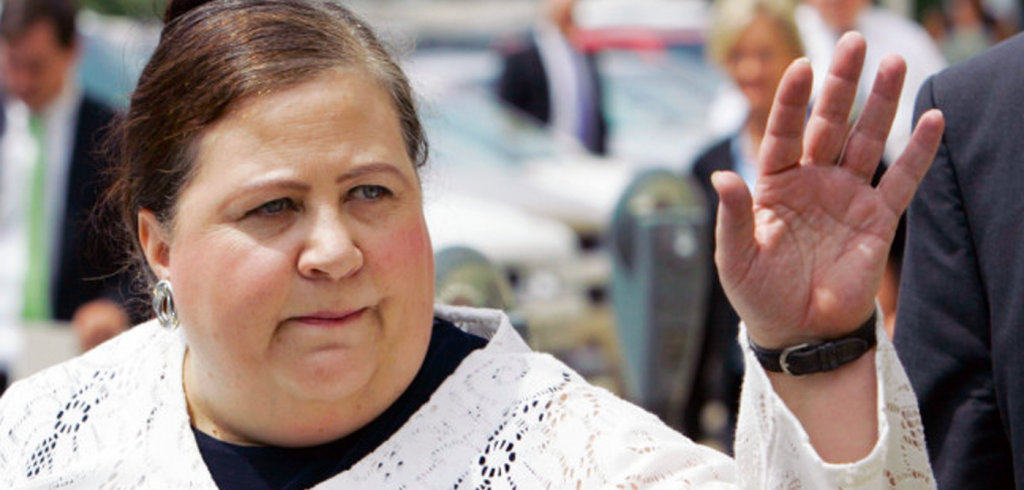
The Democratic National Committee has announced that evidentiary hearings will take place regarding the election of Alabama Democratic Party Chairwoman Nancy Worley, the Associated Press reports. Two separate challenges were filed saying that the election of Chairwoman Worley and and Vice Chairman Randy Kelley was was the result of unfair practices after years of infighting. “With (Worley) and (Kelley) presiding over the meeting,” one complaint read, “the elections were conducted in a sloppy and haphazard manner that was easily susceptible to manipulation. The elections were deliberately manipulated in order to favor Worley, Kelley and all other incumbent SDEC officers.” Worley won re-election in August by a narrow margin of 101-89 against a challenger who was backed by U.S. Sen. Doug Jones. According to the AP, one challenge alleges that, while these 190 votes were recorded only 142 state committee members signed in to the meeting. Days after the election, Ralph Young of the Jefferson County Democratic Party filed a complaint on the election process. He alleged that Worley did not follow proper procedures when calling the meeting that led to her re-election. Young claims she gave inadequate notice and failed to comply with diversity requirements for officers. “I’m a bit of a rules wonk and I have concerns about how the election was done,” Young told the Montgomery Advertiser. “I don’t believe it was done in a fair fashion. I think there are a number of procedural issues that could have decided differently.” Former Chief Justice and gubernatorial candidate Sue Bell Cobb called for Worley’s resignation in September. In an Opinion-Editorial published by the Anniston Star, Cobb says that Worley and Alabama party conference leader Joe Reed should “make a sacrifice worthy of their lifelong dedication to racial and gender equality and their decade-long contributions to the party,” and step down from their positions so that new leaders may recruit and support “qualified, electable Democratic candidates.” Worley thinks that those arguing the validity of her election need to put this behind them and move forward, the AP reports. She said “The complainants need to stop re-fighting the Civil War and focus on helping Democrats win elections.” An evidentiary hearing will be held by the national party on February 11 and, unless a resolution is reached by mediation, the Credentials Committee will hear challenges on February 14.
Cory Booker launches 2020 bid
U.S. Sen. Cory Booker on Friday declared his bid for the presidency in 2020 with a sweeping call to unite a deeply polarized nation around a “common purpose.” The New Jersey Democrat, who is the second black candidate in a primary field that’s already historically diverse, delivered his message of unity amid an era marked by bitter political division. He announced his run on the first day of Black History Month, underscoring his consequential status as America’s potential second black president after Barack Obama. “I believe that we can build a country where no one is forgotten, no one is left behind; where parents can put food on the table; where there are good-paying jobs with good benefits in every neighborhood; where our criminal justice system keeps us safe, instead of shuffling more children into cages and coffins; where we see the faces of our leaders on television and feel pride, not shame,” Booker said in a video message to supporters, subtly jabbing at President Donald Trump. “It is not a matter of can we, it’s a matter of do we have the collective will, the American will?” he added. “I believe we do.” Booker enters what’s shaping up to be a crowded presidential primary, with three of his fellow Democratic senators — Elizabeth Warren of Massachusetts, Kamala Harris of California and Kirsten Gillibrand of New York — already either declared or exploring a run. But he’s spent months telegraphing his intentions to join the race, visiting the early-voting states of Iowa, New Hampshire and South Carolina to build connections with key powerbrokers. He already has slated trips back to those states later this month. Booker began reaching out to key constituencies Friday, calling in to three radio shows popular with black and Hispanic listeners. He spoke in fluent Spanish during his interview with Univision, vowing to work closely with “the Latino community,” and discussed his support for marijuana legalization in another interview. Later on Friday, Booker will be a guest on “The View,” a TV talk show popular with female viewers, where his mother plans to sit in the audience. A former mayor of Newark, New Jersey’s largest city, Booker won a special Senate election in 2013 to replace Democrat Frank Lautenberg and then won a full Senate term in 2014. He will be able to run for a second full Senate term in 2020 while running for president, thanks to a law that New Jersey’s governor signed in November. But that doesn’t mean the 49-year-old’s path to the nomination will be easy. As many as five more Democratic senators could soon mount their own primary bids, creating a competition for voters’ attention, and several of Booker’s rival presidential hopefuls bring higher name recognition to a race that may also feature popular former Vice President Joe Biden. The affable Booker, known for his fluency in connecting with voters during an age of selfies and social media, also could face some difficulty winning the hearts of the Democratic base due to his past financial ties to banking and pharmaceutical interests. Booker said he would stop taking contributions from pharmaceutical companies in 2017, the year that he partnered with potential presidential rival Sen. Bernie Sanders of Vermont on a bill that would allow importation of prescription drugs from Canada. He also likely will stand alone as an unmarried candidate, though he brings a compelling personal biography that could help elevate his message that “the only way we can make change is when people come together.” Booker’s father grew up in a low-income community in North Carolina, and the senator has recalled his family’s later struggle to settle in suburban New Jersey amid discrimination against black homebuyers. The senator has brought a heartfelt and passionate style to his achievements in the Senate, at times fusing his personal spirituality with policy proposals that focus on social justice. Booker played a key role in the bipartisan criminal justice reform bill that Trump supported last year, for example, helping strike that deal two months after sparring with Republicans during the battle over Supreme Court Justice Brett Kavanaugh’s confirmation. In his announcement video, Booker invoked the fight against slavery and the role of immigration in building the nation’s character. “The history of our nation is defined by collective action; by interwoven destinies of slaves and abolitionists; of those born here and those who chose America as home; of those who took up arms to defend our country and those who linked arms to challenge and change it,” he said. Born in the nation’s capital but raised in New Jersey, Booker made a name for himself as Newark mayor by personally shoveling the snow of residents. He has $4.1 million left in his campaign coffers that could also be used to assist his presidential run. Rather than opening an exploratory committee to test the waters, Booker took the direct step to open a campaign seeking the Democratic nomination. Booker is aligning with many other prominent Democratic White House contenders by forswearing all donations from corporate political action committees and federal lobbyists to his campaign, dubbed Cory 2020. A prominent Booker supporter, San Francisco attorney Steve Phillips, says he is working on millions of dollars in committed donations to a so-called super PAC that would boost the senator’s candidacy, but Booker’s campaign is openly against super PACs playing any role in the presidential race. Booker visited his local congregation at Metropolitan Baptist Church in Newark on Thursday night for prayers ahead of his Friday announcement, a decision that underscores the role his faith will play in his campaign. He has attended service at the church since moving to Newark in 1996. Booker’s campaign manager will be Addisu Demissie, who managed California Democratic Gov. Gavin Newsom’s campaign last year and previously worked on Hillary Clinton’s 2016 presidential bid. His deputy campaign manager, Jenna Lowenstein, is also a veteran of Clinton’s 2016 campaign, while his current Senate chief of staff, Matt Klapper, will serve as a senior campaign adviser.
Doug Jones, colleagues reintroduce Paycheck Fairness Act to close gender wage gap

Alabama U.S. Sen. Doug Jones joined his colleagues on Wednesday to reintroduce the Paycheck Fairness Act, a bill that would strengthen the Equal Pay Act of 1963 and guarantee that women can challenge pay discrimination and hold employers accountable. Jones first sponsored the legislation, which Democrats have tried to pass for 20 years, last year when he first joined the Senate. The legislation endeavors to strengthen and close loopholes in the Equal Pay Act of 1963 by holding employers accountable for discriminatory practices, ending the practice of pay secrecy, easing workers’ ability to individually or jointly challenge pay discrimination, and strengthening the available remedies for wronged employees. “Despite the strides we’ve taken since the Equal Pay Act of 1963, millions of women, and particularly women of color, still face wage discrimination,” said Jones. “It is long past time to level the playing field for America’s workforce and to fulfill the vision Congress laid out over fifty years ago. We took an important step forward a decade ago thanks to the courage and persistence of Lilly Ledbetter, but as long as women still face a wage gap with their peers, we must continue to fight for equal pay.” According to Senator Patty Murray, the bill’s sponsor, women “still only make 80 cents for every dollar men make.” “For women of color—the pay gap is even worse. African American women working full-time only make 61 cents for every dollar white men make and Latinas on average are paid 53 cents for every dollar their white male colleagues make,” Murray explained. “The gender wage gap doesn’t just hurt women—it hurts families, communities, and our economy. So I’m proud to introduce the Paycheck Fairness Act today to make important updates to the Equal Pay Act and reaffirm that every worker in America has the right to receive equal pay for equal work.”
Alabama’s Medicaid agency says it needs less money

The head of Alabama’s Medicaid agency says it will need less money in the coming year. News outlets reported Medicaid Commissioner Stephanie Azar told state lawmakers Wednesday that Medicaid is asking for $715 million for the coming year. That’s $40 million less than the current year. Azar said it has about $106 million to take into the 2020 budget year, avoiding the need for extra money next year while still meeting the $821 that will be needed. She says benefits from the federal budget have helped the state, citing drug rebates, Medicare Part B and the tobacco trust fund. “Things have just been really going well as far as things we have limited control over, plus we’re driving a lot of efficiencies in our program,” Azar said. “That was some good news from Medicaid today, with some carry-over money they’re going to have,” House General Fund budget chairman Steve Clouse, Ozark-Republican, said. “Less expenditures on pharmacy cost. Enrollment has stabilized, continuing to stabilize and even go down a little bit.” The federal government pays 70 percent of the cost of Medicaid. The state has to come up with 30 percent share and state lawmakers have used some of the BP oil spill settlement to cover part of the cost previously. Medicaid covers more than 1 million people in Alabama, mostly children, the elderly and the disabled. The program plays a major role in funding hospitals and the offices of pediatricians. The legislative session begins March 5. Republished with permission from the Associated Press.
Trump breaks brief public silence during border negotiations

After days sequestered behind closed doors, President Donald Trump let loose Thursday, holding forth on border security negotiations, North Korea and other topics from the Oval Office. Trump invited reporters in for the 40-minute session, which broke a five-day stretch with no public events from the typically media-hungry leader. Up to that point, Republicans and Democrats alike seemed just fine with Trump hanging back as legislators try to work out a deal to keep the government open and resolve a standoff over funding for the president’s long-sought wall at the southern border. The president’s comments underscored the feeling among lawmakers that Trump was not always helpful in the negotiations. Trump accused House Speaker Nancy Pelosi of “playing games” and said he was not expecting much from Congress. “I’m not waiting for this committee and I’ve told a lot of people I don’t expect much coming out of the committee because I keep hearing the words that ‘we’ll give you what you want but we’re not going to give you a wall,’” Trump said. “And the problem is if they don’t give us a wall it doesn’t work. Without a wall, it doesn’t work.” Trump also started the morning with a flurry of tweets weighing in on the House-Senate talks that kicked off Wednesday during which House Democrats offered a plan without a penny for his long-promised wall. “Republicans on the Homeland Security Committee are wasting their time,” Trump tweeted Thursday. “Democrats, despite all of the evidence, proof and Caravans coming, are not going to give money to build the DESPERATELY needed WALL. I’ve got you covered. Wall is already being built, I don’t expect much help!” Trump’s flurry of activity followed a lull with no public events for five days. The White House had said the president had made his demands for border wall funding clear and was letting the committee process play out on Capitol Hill. One official, speaking on the condition of anonymity to discuss private talks, still stressed that Trump was “engaged at every level” on border security, including receiving a lengthy briefing on the topic Wednesday, and has continued to get his message out, including doing an interview with The Daily Caller. The official added that the White House has also been heavily involved at a staff level. Democrats were more pointed about the positive aspects of less Trump. “When the president stays out of the negotiations, we almost always succeed,” said Senate Minority Leader Chuck Schumer, a New York Democrat. “When he mixes in, it’s a formula for failure. So I’d ask President Trump, ‘Let Congress deal with it on its own.’” Asked about Schumer’s comment, Trump told The Daily Caller, “I don’t blame him.” But the Republican president added that “without our involvement, a deal is not going to get done.” While Trump had been avoiding public appearances, he continued dishing out his practiced blend of bluster and blame on Twitter, including contradicting his intelligence chiefs and slamming a former staffer for writing a White House tell-all. Trump will be speaking up more in the coming days. He’ll do an interview with CBS that will air during the Super Bowl on Sunday, his State of the Union address is Tuesday and the White House is weighing travel options for after the speech to drive home his message on border security. Going quiet after the fractious fight with Democrats raised questions about whether Trump was missing an opportunity to publicly frame the debate and push his border security arguments. But some Republicans said Wednesday it was the right move. “I think it’s smart for him to hang back here,” said Marc Short, former White House director of legislative affairs. “I do think he should still be traveling to vulnerable districts to put pressure on (Democrats) politically. But I think it’s fine for him not to be at the center of the negotiations.” Trump’s allies also noted that he has been working on a variety of other issues throughout this period. He called Venezuelan opposition leader Juan Guaido to offer his support Wednesday. He attended a political function at the Trump International Hotel on Monday night. He hosted Republican Sen. David Perdue of Georgia for lunch at the White House on Sunday. “There’s a ton going on. It’s Venezuela, China, North Korea. It’s not the public event stuff,” former Trump campaign aide Barry Bennett said. Bennett argued that giving Congress some space made sense for Trump, adding: “If I was him, I would see what they offer. If they don’t solve it, then solve it yourself.” Republished with permission from the Associated Press
