
Game on for the mayors: Randall Woodfin bets on Birmingham Iron in wager with Memphis mayor

Birmingham Mayor Randall Woodfin is publicly announcing his support of the Magic City’s new Alliance of American Football (AAF) team, the Birmingham Iron. Woodfin took to Twitter on Friday in support of the team ahead of their first game against the Memphis Express on Sunday while simultaneously proposing a friendly wager with Memphis Mayor Jim Strickland. “Hey @MayorMemphis. Up for a challenge? If the @aafiron picks up a W this Sunday, the @aafexpress gets lunch for the A.G. Gaston Boys and Girls Club. Y’all win and the Iron donates to the @MSouthFoodBank. #ForgeOn #BeatMemphis,” Woodfin tweeted. Hey @MayorMemphis. Up for a challenge? If the @aafiron picks up a W this Sunday, the @aafexpress gets lunch for the A.G. Gaston Boys and Girls Club. Y’all win and the Iron donates to the @MSouthFoodBank. #ForgeOn #BeatMemphis — Randall Woodfin (@randallwoodfin) February 8, 2019 “Challenge accepted, @randallwoodfin! Hope the @aafiron bring their A-game against the @aafexpress because in Memphis—we don’t bluff. #memphishasmomentum #wedontbluff,” Strickland responded. Challenge accepted, @randallwoodfin! Hope the @aafiron bring their A-game against the @aafexpress because in Memphis—we don’t bluff. #memphishasmomentum #wedontbluff — Mayor Jim Strickland (@MayorMemphis) February 8, 2019 “See y’all on the field Sunday 😎 #ForgeOn,” Woodfin said wrapping up the back-and-forth with a final Iron-related pun. See y’all on the field Sunday 😎 #ForgeOn https://t.co/hFBOoTWSWW — Randall Woodfin (@randallwoodfin) February 8, 2019 If you would like to support Woodfin or Strickland’s charities of choice, you can donate to them below: The A.G. Gaston Boys & Girls Club The Mid-South Food Bank
Advocacy group: Alabama has prison suicide crisis
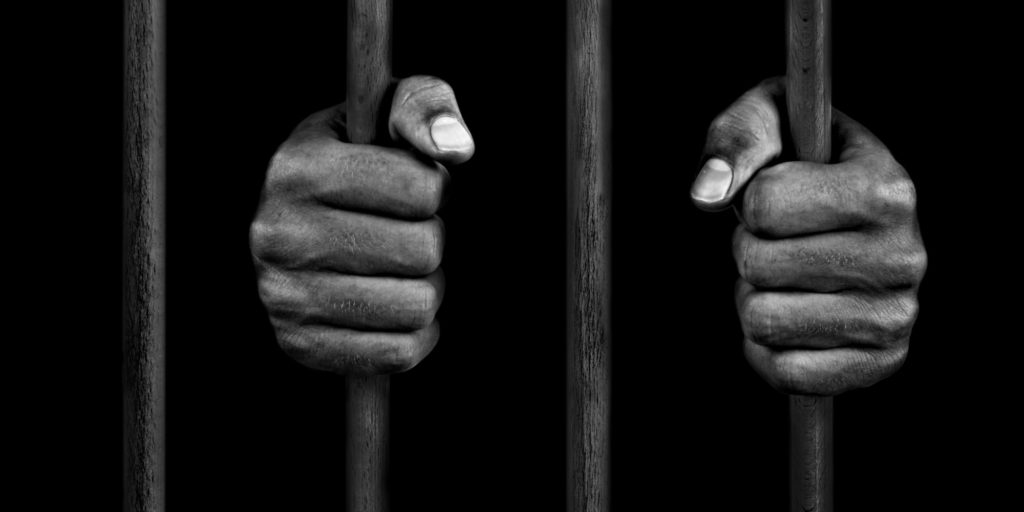
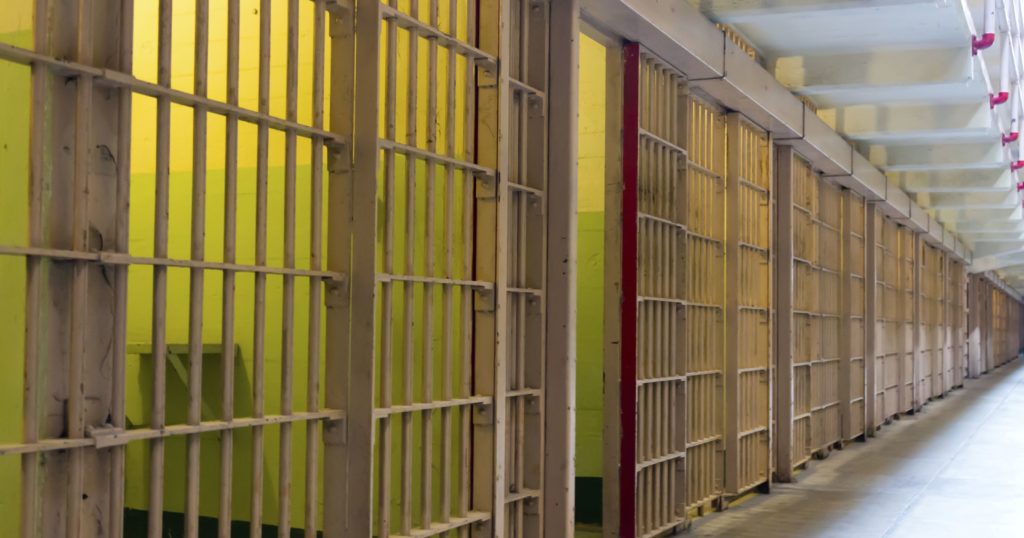
An advocacy group charged Friday that Alabama officials have failed to address a rising suicide rate in state prisons despite a federal court order to improve conditions for mentally ill inmates. Attorneys representing inmates in an ongoing lawsuit over mental health care argued state officials have done “precious little” to address inmate suicides. “People are killing themselves in our prisons because conditions are horrendous,” Southern Poverty Law Center President Richard Cohen said at a news conference outside the Alabama Statehouse. The organization said there have been 13 suicides in 14 months, the latest one on Wednesday. Alabama Gov. Kay Ivey’s office and the prison system did not immediately react to the allegations. A prison system spokesman said the department was working on a response. However, a state lawmaker said the prison system is working to improve conditions, but cautioned it will take time. “There is no question the suicide rate is higher than it should be. The data speaks for itself,” said state Sen. Cam Ward, who chairs a prison oversight committee. Alabama Department of Corrections monthly reports list that they were four inmate suicides in fiscal year 2017 and six in 2018. In late December and January, there were three suicides within four weeks in the state prisons. With their 8-year-old granddaughter beside her, Jerri Ford wiped away tears as she described the loss of her husband, Paul Ford. “He was our everything, everything and we don’t have him anymore. And it’s not right,” Jerri Ford said. Paul Ford, 49, was found hanging last month from a bed sheet in his cell at Kilby Correctional Facility. He was serving a sentence of life in prison without parole following a murder conviction. In court filings, the SPLC said, Ford had a prior suicide attempt and spent much of the past year in a restrictive setting or on some form of crisis watch. Jerri Ford said in the months before his death, she began to worry about her husband’s mental state. “He was seeing things, hallucinating. … He was scared to go to sleep,” she said. Inmate lawyers have asked a federal judge to block the state from placing prisoners with serious mental illnesses into segregation units or similar settings, where they said the extreme isolation becomes an incubator for worsening mental health symptoms. The judge responded by asking for the state to provide information on how many inmates are in such settings. U.S. District Judge Myron Thompson in 2017 ruled that mental health care in Alabama prisons was “horrendously inadequate.” In court filings, the state contends it has added mental health staff and is working to increase the number of corrections officers working in state prisons. Corrections Commissioner Jeff Dunn told lawmakers last month that the department is seeking a funding increase to hire 500 additional corrections officers, what he called a “down payment” amid plans to eventually add 2,000 correctional officers Ivey is expected to announce a proposal soon to replace state prisons, possibly leasing facilities built by private firms. The SPLC criticized the push for prison construction, saying the plan will be costly when the state faces a staff shortage. “Jamming thousands of people into some shiny new building will not solve the constitutional violations,” Maria Morris, an attorney with the SPLC, said. Republished with permission from the Associated Press
Border security bargainers trade offers as deadline nears

Congressional bargainers traded offers and worked toward a border security compromise Friday that would avert a fresh federal shutdown and resolve a clash with President Donald Trump that has dominated the opening weeks of divided government. differences Both sides’ negotiators expressed optimism that an accord could be reached soon on a spending package for physical barriers along the Southwest border and other security measures. Participants said the agreement would all but certainly be well below the $5.7 billion Trump has demanded to build his proposed wall, and much closer to the $1.6 billion that was in a bipartisan Senate bill last year. “That’s what we’re working toward,” said Rep. Lucille Roybal-Allard, Democrat-Calif., one of the bargainers. Besides the dollar figure, talks were focusing on the type and location of barriers, participants said. Also in play were the number of beds the federal Immigration and Customs Enforcement agency could have for detained migrants, and how much aid for natural disaster relief would be included. Money for high-tech surveillance equipment and more personnel was also expected to be included. No one ruled out that last-minute problems could emerge, especially with Trump’s penchant for head-snapping turnabouts. But the momentum was clearly toward clinching an agreement that Congress could pass by next Friday. The next day, government agencies would have to close again for lack of money, if no deal is reached. Negotiator Rep. Chuck Fleischmann, Republican-Tenn., said the latest Democratic offer was “much more reasonable.” And Democratic bargainer Rep. Pete Aguilar of California said, “Each time an offer and a counter is going back and forth the number of open items is reducing. That is progress.” Rep. Mark Meadows, Republican-N.C., who leads the hard-right House Freedom Caucus, said he spoke Thursday night to Trump, who he said was in “wait and see” mode. Meadows said he expects an agreement to provide something closer to $1.6 billion. “I’m not optimistic it’ll be something the president can support,” Meadows said. A conservative House GOP aide said to back a deal, Freedom Caucus members wanted at least $2 billion for barriers and no restrictions on new construction, land acquisition or new types of barriers that could be built. The aide also said the agreement need not contain the term “wall” — a word that was a premier plank of Trump’s presidential campaign, and which Trump has lately alternated between embracing and abandoning. The person would talk only on condition of anonymity to describe private talks. Meadows’ assessment of Trump’s view clashed with one expressed Thursday by Sen. Richard Shelby of Alabama, the chief GOP bargainer. He described the emerging deal to Trump in the Oval Office and told reporters the session was “the most positive meeting I’ve had in a long time.” Shelby said that if the final agreement followed the outline currently under discussion, he believed Trump “would sign it.” Trump has modest leverage in the battle. Besides facing unified Democratic opposition, there is virtually no GOP support in Congress for another shutdown. When congressional talks began, Trump called them a “waste of time.” “They’ve got to come to a solution that actually does what they promised they would do, which is protect the American people,” White House spokesman Hogan Gidley said on Fox News. Trump faces an aggressive, Democratic-led House that is ramping up investigations into Russian involvement in his campaign and businesses and trying to get access to his income tax returns. But ending the border security fight would close one chapter that’s bruised him, including his surrender after a 35-day partial federal shutdown that he started by unsuccessfully demanding taxpayer money to build the border wall. Even with a deal, it was possible Trump might try using claims of executive powers to reach for more wall funding. That could spark votes by Congress to block him, which Trump could veto but would still inflict political damage. Sen. Lindsay Graham, Republican-S.C., said Thursday that an accord could be “a good down payment” and added, “There are other ways to do it and I expect the president to go it alone in some fashion.” Acting White House Chief of Staff Mick Mulvaney said on Fox News Channel’s “Hannity” on Wednesday, “If Congress won’t participate or won’t go along, we’ll figure out a way to do it with executive authority.” Members of both parties have expressed opposition to Trump bypassing Congress by declaring a national emergency at the border, a move that would be certain to produce lawsuits that could block the money. Lawmakers have grown accustomed to expecting the unexpected from Trump. Before Christmas, both parties’ leaders believed he’d support a bipartisan deal that would have prevented the recently ended shutdown, only to reverse himself under criticism from conservative pundits and lawmakers. “There’s a small light at the end of the tunnel,” said Sen. Pat Roberts, Republican-Kan. “We just hope it’s not a train coming the other way.” Republished with permission from the Associated Press
Martha Roby: Reflecting on the President’s State of the Union and pro-life call to action
Every year, the State of the Union address provides an important opportunity for the sitting President to speak directly to Congress and the American people and offer an update on his priorities and plans to accomplish them. I recently attended President Trump’s second State of the Union address, and I was glad to hear what he had to say. In this year’s State of the Union address, President Donald Trump highlighted the economic success hardworking Americans are experiencing thanks to the implementation of pro-growth policies, including the historic tax reform overhaul. I was also pleased to hear more about his plans to work with Congress to secure our border, reinvigorate our badly aging infrastructure, strengthen our military, bolster our national security efforts, improve care for veterans, and defend the unborn. The last item on that list has received a lot of attention lately due to the heartbreaking news that has come out of New York and Virginia in recent weeks. If you’ve not heard, the legislature in the State of New York recently cheered loudly upon their passage of a bill that would significantly loosen restrictions on late-term abortions. In Virginia, the Democratic Governor Ralph Northam is facing severe backlash over his support for a similar state measure. He said: “Third trimester abortions are done in cases where there may be severe deformities… If a mother is in labor, I can tell you exactly what would happen. The infant would be delivered. The infant would be kept comfortable. The infant would be resuscitated if that’s what the mother and the family desired.” These comments are a horrific defense of born-alive abortions – infanticide. No matter your position on abortion generally, I hope we can all agree that if an abortion fails and a child is born alive, the child must be given the same care that any other living, breathing infant would otherwise be given. I truly never dreamt I would see the day America would have government officials who openly support legal infanticide. It is stunning, appalling, and heartbreaking. During this challenging time for the pro-life movement in this country, I am very glad that President Trump utilized his platform during the State of the Union address to offer a call to action: We must put legal protections in place for babies who are born alive during botched abortions. I remain unapologetically pro-life. I believe life begins at conception and am opposed to abortion at any stage. I understand that not everyone shares my views, but still, I am severely disturbed that this country now requires written legal provisions to protect a living baby. Sadly, in the aftermath of the news coming out of New York and Virginia, it is clear that this step is immediately necessary. In the House, Republicans wasted no time in responding to the President’s demand for action. Two of my colleagues in particular, Congressman Steve Scalise from Louisiana, who is our House Minority Whip, and Congresswoman Ann Wagner of Missouri, are leading efforts to force a vote on the Born-Alive Abortion Survivors Protection Act, a bill I cosponsor that would protect babies who are born alive during abortion procedures. I cannot express how strongly I support this commonsense measure, and I cannot fathom how any person would oppose it. We must swiftly advance legal protections for these newborns and punish any doctor who allows an infant to die. I also support our Republican leadership’s efforts to quickly bring up a vote on this legislation. Every single member of Congress should be forced to vote either for or against infanticide. The American people deserve to know where each of us stands on this humanitarian issue. The challenges we face with a divided Congress have been made abundantly clear. I was encouraged by President Trump’s remarks during his State of the Union address, and I was especially glad that he stood in strong defense of the unborn and rallied our pro-life community to action. I am eager to continue working with his Administration and my colleagues in Congress to deliver results on this important issue and others. The American people and Alabama’s Second District deserve nothing less. ••• Martha Roby represents Alabama’s Second District. She lives in Montgomery, Alabama, with her husband Riley and their two children.
Ivanka Trump project seeks to help women in developing world
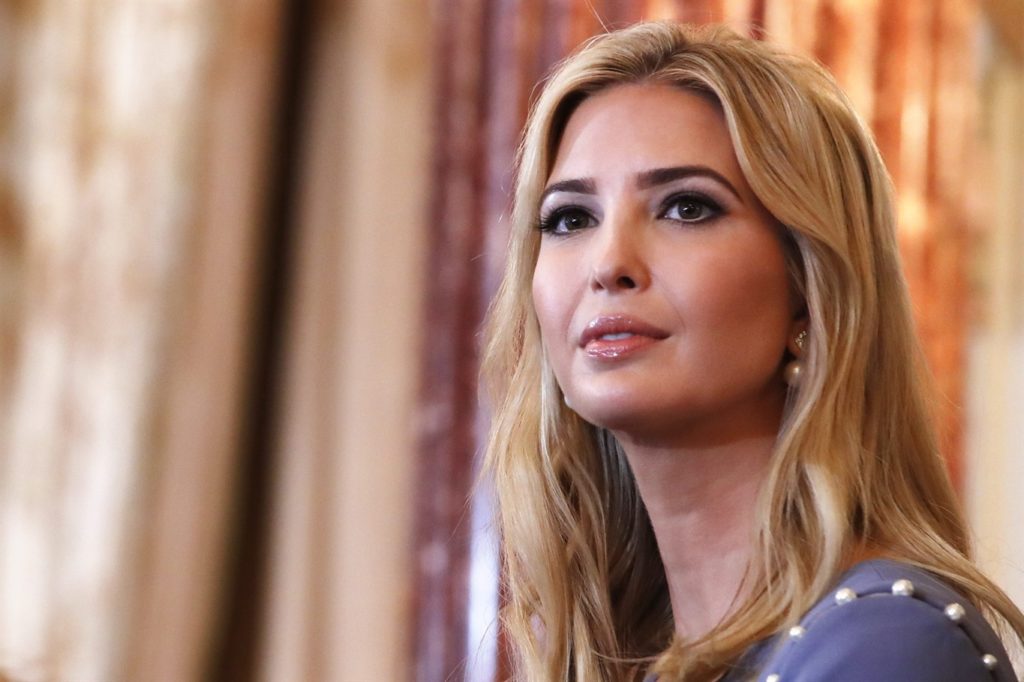
President Donald Trump threw his weight behind his daughter’s latest White House effort Thursday, backing her initiative to provide an economic boost to women in the developing world. The president on Thursday launched the Women’s Global Development and Prosperity Initiative, a governmentwide project led by senior adviser Ivanka Trump. The initiative involves the State Department, the National Security Council and other agencies. It aims to coordinate current programs and develop new ones to assist women in areas such as job training, financial support, and legal or regulatory reforms. Calling it a “historic step,” he signed a national security memorandum to officially launch the effort, framing it as a way to promote stability around the world. He was joined in the Oval Office by Ivanka Trump, elected officials, Cabinet members, business leaders and women who have benefited from such programs. The initiative aims to help 50 million women in the developing world get ahead economically over the next six years. It will draw on public and private resources, with the U.S. Agency for International Development initially setting up a $50 million fund, using already-budgeted dollars. Trump has twice tried unsuccessfully to slash USAID’s budget by a third, and his “America first” foreign policy has sought to limit the United States’ role as an international leader. But his daughter told The Associated Press that the women’s initiative was in keeping with administration goals, arguing it was a strategic investment that promoted security. “We’re proud of our legacy of being a generous nation, looking to uplift others around the world. But we want to do so in a fiscally responsible way,” she said, promising “rigorous” efforts to track progress. Among those she has consulted for the project is former Secretary of State Henry Kissinger. Ivanka Trump, who will attend the Munich Security Conference next week to promote the project, stressed that she sees this as a national security priority. “We think women are arguably the most under-tapped resource in the developing world for accelerating economic growth and prosperity,” she said. As part of the launch, USAID and Pepsi Co. announced a partnership aimed at women in India, and USAID and UPS an agreement designed to help female entrepreneurs export goods. The initiative builds on previous White House efforts to help women internationally. The Obama administration established an Office of Global Women’s Issues at the State Department and established an ambassador-at-large for global women’s Issues. That position has been vacant since Trump took office — drawing criticism from some advocates — but the White House said it now has a candidate lined up for the job. Since she joined the administration in early 2017, Ivanka Trump has focused on women’s economic issues. She previously led an effort to launch a World Bank fund to help drive women’s entrepreneurship. And she recently advocated for the Women’s Entrepreneurship and Economic Empowerment Act, which bolsters efforts focused on women by USAID. Ivanka Trump said her hope is that this effort has staying power beyond the current administration. Past global initiatives she has studied include the U.S. President’s Emergency Plan for AIDS Relief, started under President George W. Bush in 2003. “This is not an initiative that we think should stop at the culmination of the administration,” she said. “We think it’s something that should sustain itself over time, and we’re going to work really hard to show that this is a great use of foreign development assistance.” Republished with permission from the Associated Press
Montgomery Co. Probate Judge Steven Reed announces run for Montgomery mayor
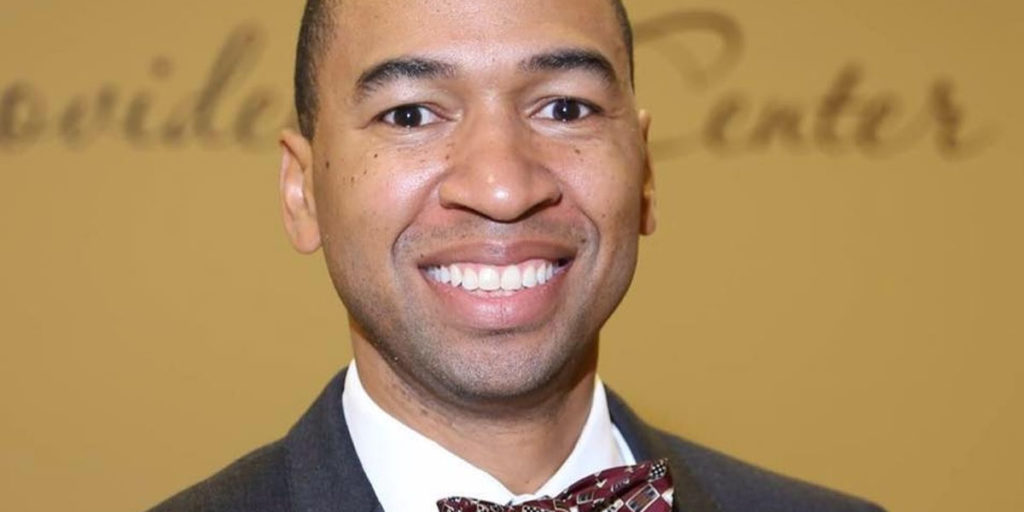
Another candidate has thrown their hat in the ring for Montgomery mayor. Montgomery Co. Probate Judge Steven Reed made the announcement on Wednesday. “I have decided to run for mayor of Montgomery,” Reed announced in an email. “I reached this decision after much prayer and many discussions with family, friends, and members of the community.” Reed continued, “We have to be proactive and seek out new ideas on economic development, education and public safety. As a city, our goal must be to thrive and not merely survive. We’ve done that in the Probate Court, and the Mayor’s office will give me the opportunity to formulate and drive a positive agenda to move Montgomery forward.” Reed joins a growing field of candidates who have publicly announced that they are running including former U.S. Rep. Artur Davis, Montgomery County Commission Chairman Elton Dean, along with first-time candidate Marcus McNeal. About Reed Reed was elected Montgomery County Probate Judge in November 2012, the first African American in that position. In February 2015, he was the first probate judge in the state of Alabama to begin issuing same-sex marriage licenses, defying former Alabama Chief Justice Roy Moore. Born and raised in Montgomery, Ala. he earned his Bachelor of Arts degree, cum laude, from Morehouse College and a Master of Business Administration from Vanderbilt University’s Owen Graduate School of Management. Reed began his professional career as a financial analyst in the Marketing Performance department at American Airlines corporate headquarters in Ft. Worth, Texas. After making the decision to enter politics, Judge Reed started a government relations firm to advocate issues before the Alabama legislature. He then went on to serve as Senior Aide to Lieutenant Governor Jim Folsom, Jr. Judge Reed and his wife, Tamika, are the proud parents of three children.
Richard Shelby: Border security meeting with Donald Trump ‘the most positive I’ve had in a long time’

President Donald Trump appears to be taking a more positive view of Capitol Hill talks on border security, according to negotiators who struck a distinctly optimistic tone after a White House meeting with a top Republican on the broad parameters of a potential bipartisan agreement. Appropriations Committee Chairman Richard Shelby of Alabama said Thursday’s session in the Oval Office was “the most positive meeting I’ve had in a long time” and that the president was “very reasonable.” Down Pennsylvania Avenue at the Capitol, the mood among negotiators was distinctly upbeat, with participants in the talks between the Democratic-controlled House and GOP-held Senate predicting a deal could come as early as this weekend. There’s a Feb. 15 deadline to enact the measure or a stopgap spending bill to avert another partial government shutdown, which neither side wants to reprise. Republicans are especially eager to avoid another shutdown after they got scalded by the last one. Trump had previously called the talks a “waste of time,” and he’s threatened to declare a national emergency to bypass Congress and build a wall on the U.S.-Mexico border. But Shelby said Trump during their meeting “urged me to get to yes” on an agreement. Publicly on Thursday Trump took a wait-and-see approach. “I certainly hear that they are working on something and both sides are moving along,” Trump said. “We’ll see what happens. We need border security. We have to have it, it’s not an option. Let’s see what happens.” The White House is committed to letting the negotiations play out, with some saying they are “cautiously optimistic” about getting a deal they could live with, said a senior administration official who lacked authorization to publicly discuss internal deliberations and spoke on condition of anonymity. The new openness comes after Trump delivered a well-received State of the Union speech in which he preached the value of bipartisanship. Despite the newfound optimism, Trump continues to threaten to declare a national emergency to circumvent Congress if lawmakers fail to reach a deal he can stomach. Still, Sen. Lindsay Graham, Republican-S.C., a close ally of Trump, said Thursday that the deal could be a good starting place — suggesting Trump could take additional action if needed to secure more wall funding without congressional approval. “I would recommend that this will probably be a good down payment and what else is lacking, the delta between what you want and what you get, there are other ways to do it, and I expect the president to go it alone in some fashion,” Graham told reporters. Shelby said he and Trump didn’t discuss whether Trump still might use an emergency declaration even if there’s a deal, saying: “The president’s got constitutional powers. … I would think he wouldn’t, but I don’t know what the situation” will be. Beyond the border security negotiations, the measure is likely to contain seven appropriations bills funding domestic agencies and the foreign aid budget, as well as disaster aid for victims of last year’s hurricanes and western wildfires. “I’m hopeful,” said Senate Majority Leader Mitch McConnell, R-Ky. “I do like the idea of getting all of last year’s work finished, and I hope that’s where it ends up.” Any move by Trump to fund a border barrier by executive fiat, however, would roil many Republicans on Capitol Hill, raising the likelihood that both House and Senate could pass legislation to reverse him. Trump could veto any such measure, but he’s also certain to face a challenge in the courts. “If Congress won’t participate or won’t go along, we’ll figure out a way to do it with executive authority,” Acting White House Chief of Staff Mick Mulvaney said on Fox News Channel’s “Hannity” on Wednesday. Mulvaney said that the administration has identified well more than $5.7 billion to transfer to wall construction, saying they would try to avoid legal obstacles. “Find the money that we can spend with the lowest threat of litigation, and then move from that pot of money to the next pot that maybe brings a little bit more threat of litigation,” Mulvaney said. It’s clear that Trump won’t get anything close to the $5.7 billion he’s demanded for wall construction, just as House Speaker Nancy Pelosi, Democrat-Calif., will have to depart from her view that there shouldn’t be any wall funding at all. Last year, a bipartisan Senate panel approved $1.6 billion for 65 miles of pedestrian fencing in Texas — in line with Trump’s official request. The negotiations aren’t likely to veer very far from that figure, aides involved in the talks said, and newly empowered House Democrats were looking to restrict use of the money. A key negotiator, Sen. Dick Durbin, Democrat-Ill., said details on nettlesome border wall issues haven’t been worked out. Sen. Roy Blunt, Republican-Mo., another participant, said both sides are showing flexibility, including Democrats who insisted during the recently-ended 35-day shutdown on no wall funding at all. “They are not opposed to barriers,” Blunt said about Democrats. “And the president, I think, has embraced the idea that there may actually be something better than a concrete wall would have been anyway.” Pelosi told reporters Thursday that she was hopeful of an agreement that would “protect our borders as we protect our values.” Rep. Lucille Roybal-Allard, Democrat-Calif., another negotiator, acknowledged that Democrats could possibly lose votes on any final deal and that it’s “unrealistic” to think there would be no funding at all for any physical barriers. “Like in any negotiation — if the Republicans and the White House are saying they need barriers, wall, whatever you want to call it, and that is an absolute objective, and we’re saying we want some other things — like in anything else, it’s a trade off,” she said. Among the things Democrats are battling against are higher levels of funding for detention beds to hold migrants crossing into the U.S. illegally. ___ This story has been corrected to reflect the White House meeting was between Trump and Shelby, not between
Supreme Court: Execution of Muslim inmate can proceed
he U.S. Supreme Court on Thursday rejected claims from a Muslim inmate who said his religious rights were being violated, clearing the way for the lethal injection to go forward Thursday night. In a 5-4 decision, justices vacated a stay issued by a lower court that had been blocking the execution of Dominique Ray, 42. Ray argued Alabama’s execution procedure favors Christian inmates because a Christian chaplain employed by the prison typically remains in the execution chamber during a lethal injection, but the state would not let his imam be present. Justice Elena Kagan wrote in a dissent that the dissenting justice considered the decision to let the execution go forward “profoundly wrong.” Attorneys for the state said Ray had ample opportunity to visit with his imam before his scheduled execution, that only prison employees are allowed in the chamber for security reasons, and that the imam can visit him before he’s led to the execution chamber and witness the execution from an adjoining room. Prison system spokesman Bob Horton said Ray was visited by his imam both Wednesday and Thursday and that Ray again renewed a request to have the adviser present — the request that has been denied. Other states generally allow spiritual advisers to accompany condemned inmates up to the execution chamber but not into it, said Robert Dunham, executive director of the Death Penalty Information Center, which studies capital punishment in the United States. Durham said did not know of any other state where the execution protocol calls for a Christian chaplain to be present in the execution chamber. Ray was sentenced to death for the slaying of 15-year-old Tiffany Harville. The girl disappeared from her Selma home in July 1995, and her decomposing body was found in a cotton field a month later. Ray was convicted in 1999 after another man, Marcus Owden, confessed to his role in the crime and implicated Ray. Owden told police that they had picked the girl up for a night out on the town and then raped her. Owden said that Ray cut the girl’s throat. Owden pleaded guilty to murder, testified against Ray and is serving a life sentence without parole. A jury recommended the death penalty for Ray by an 11-1 vote. Ray’s attorneys had also asked in legal filings to stay the execution on other grounds. Lawyers say it was not disclosed to the defense team that records from a state psychiatric facility suggested Owden suffered from schizophrenia and delusions. The Supreme Court also rejected that claim Thursday. Republished with permission from the Associated Press
