
Stop the madness: SCOTUS didn’t rule against Muslims when they said Dominique Ray’s imam couldn’t be in execution chamber with him
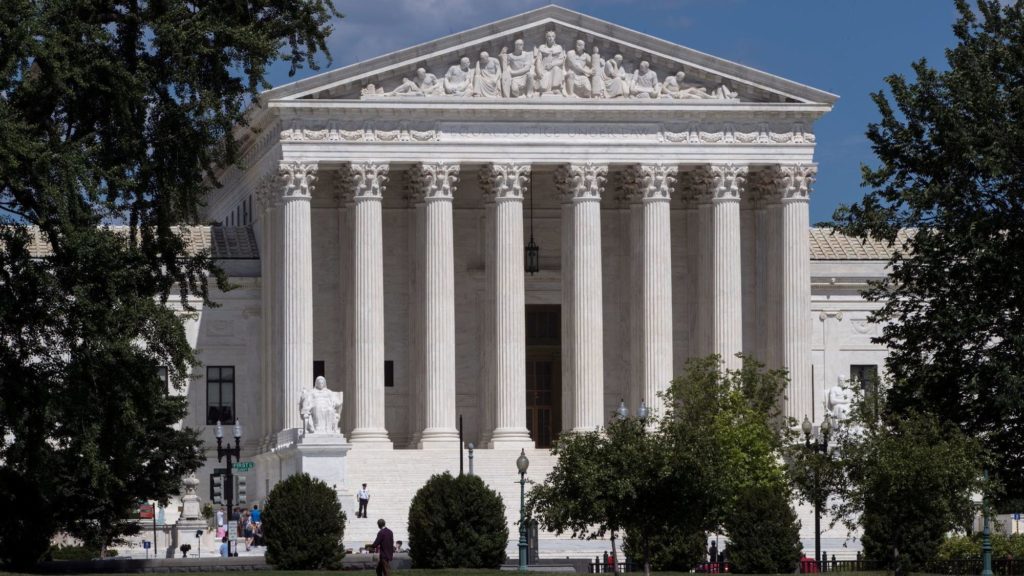
If you were to just read the headlines about the recent death row execution of Alabama Department of Corrections (ADOC) inmate Dominique Ray you’d think he was executed without the presence of his imam. The fact is his imam was in attendance and saw him just before he was led into the execution chamber. The imam was just not authorized to be IN the chamber. Period. That’s the issue at hand. Let me break down the timeline of this case based on court filings: 1995: Ray and a friend picks up and murders Tiffany Harville. The crime as described by Alabama Attorney General Steve Marshall in a statement released following the execution: “In 1995, Ray brutally deprived young Tiffany Harville of her life, repeatedly stabbing and raping her before leaving her body in a cotton field. A jury gave him a death sentence for this heinous crime. A year before, Ray had also taken the lives of two teenage brothers, Reinhard Mabins and Earnest Mabins. Tonight, Ray’s long-delayed appointment with justice is finally met.” July 28, 1999: Ray is convicted. The next day a jury sentences him to death. 2006: Ray converts to Muslim faith 2015: Ray starts worshiping with current imam Yusef Maisonet of Masjid As Salaam November 9, 2018: DOC sets Ray’s February January 23, 2019: Ray makes his first request to warden Cynthia Stewart, to have imam at his side during execution Jan. 28, 2019: Ray files suit to stay his execution. Feb. 06, 2019: 11th Court of Appeals issues an order to stay execution Feb. 07, 2019 U.S. Supreme Court rules in 5-4 decision to vacate the stay of execution and Ray is executed First, let me start with this: I agree with the SCOTUS decision and resent the fact that its being misrepresented as an attack on the first amendment or the Muslim faith. The issue here is not Ray’s religion. This is a cut and dry case of the state following its procedures for carrying out an execution. Procedures it’s important to note experts say are nearly universal in that clergy aren’t allowed in chambers in most places. The state very well may need to review their procedures for executions, rarely have I seen up to date regulations or procedures for a government agency that reflect all possible situations. True those changes may need to be reflect policies that would allow clergy of other faiths to be trained and authorized to be in the execution chambers of an inmate their the death penalty carried out. It was right of SCOTUS to say that the state should not be forced or rushed to do so. Ray’s rights to exercise his religion were not thwarted as many are claiming. His clergy man of choice was allowed to see him before the execution and attend just not be at his side. He was also able to ask that the Christian minister who had attended every execution since 1990 also not be there and that request was granted. If they would not have allowed his imam to see or give him late rites at all his rights surly would have been infringed upon. He could have asked about procedures at any time. It’s not as though the rules were arbitrary. His imam has been visiting the prison for three years, he could have inquired on behalf of those he leads. It wasn’t a matter of religion it was a matter of department policy and security clearance and specialized training. Again, should the imam want to receive that the state should not be able to refuse it but the burden wasn’t on the state to rush a new guideline or to halt an execution over it.
US Steel cites Donald Trump in resuming Fairfield Works construction project

U.S. Steel Corp. will restart construction on an idled manufacturing facility in Alabama, and it gave some of the credit to President Donald Trump’s trade policies in an announcement Monday. Trump’s “strong trade actions” are partly responsible for the resumption of work on an advanced plant near Birmingham, the Pittsburgh-based company said in a statement. The administration’s tariffs have raised prices on imported steel and aluminum. The manufacturer also cited improving market conditions, union support and government incentives for the decision. Work will resume immediately, the company said, and the facility will have an annual capacity of 1.6 million tons (1.5 million metric tons). U.S. Steel said it also will update other equipment and plans to spend about $215 million, adding about 150 full-time workers. The furnace is expected to begin producing steel in late 2020. The 16,000-member United Steelworkers praised the decision to resume work, which followed an agreement with the union reached last fall. “This decision paves the way for a solid future in continuing to make steel in Alabama and the Birmingham region,” Leo W. Gerard, the president of the international union, said in a statement. U.S. Steel shut down its decades-old blast furnace at Fairfield Works in 2015, idling about 1,100 employees, and said it would replace the operation with an electric furnace. The company then blamed conditions in the steel, oil and gas industries as it suspended work in December 2015 on an electric arc furnace at its mill in Fairfield, located just west of Birmingham. The project stalled until the announcement Monday. Trump imposed tariffs of 25 percent on steel imports and 10 percent on imported aluminum on June 1, 2018. The move was to protect U.S. national security interests, he said, but other countries said the taxes break global trade rules, and some have imposed tariffs of their own. Republished with permission from the Associated Press
Ahead of gas tax debate, API proffers three guiding imperatives to Alabama policymakers

With the 2019 Legislative Session less than a month away, and it’s no secret the sessions is expected to be dominated by discussions of how to fund Alabama’s road and infrastructure needs. One of the big proposals expected to considered this session is the gas tax, which is why on Monday the state’s right-leaning Alabama Policy Institute (API) released it’s tax position paper on said tax. In the position paper, API lays out their position on the gas tax by first asserting their support for increased investment in Alabama’s infrastructure. US Supreme Court Justice Oliver Wendell Holmes famously said that “taxes are what we pay for a civilized society.” The Alabama Policy Institute freely acknowledges that infrastructure is neither free nor is it unwanted. No rational voice would debate the need for a strong system of roads, bridges, ports and e-commerce. API also acknowledges with candor that there is no question that the cost of maintenance and construction of vital infrastructure has increased over time while Alabama’s chief source of state generated infrastructure revenue, the gas tax, has not increased one cent since 1992. But none of these candid admissions should be construed to mean that API suggests that conservatives should propose or accept a bare-bones tax increase as the only solution. The current governing majority must consider how best to govern in this revenue-depleted environment in such a way as to inspire confidence in their constituent consumers. API suggests that such confidence can be generated by considering certain conservative imperatives in the gas tax debate. The three imperatives for conservative policymakers API is referencing are: Taxes should always be the last resort: API believes that government should always look first to the goal of realigning the existing balance between current expenditures and resources before asking for taxpayers to sacrifice more. Taxes should never be raised without reforms: API believes that government should always strive to better its processes, increase its transparency, and mitigate waste. No tax should ever be raised without an equal decrease in other taxes: API acknowledges that government cannot provide essential services without the revenue to pay for those services. At the same time, however, there is a responsibility to be measured in the collection of revenue from the public. To further display their imperatives in action, API proffered two examples of “revenue enhancing legislation,” which follow them: Proposed bill #1 Would address reform measures that API deems “desperately needed” to stop a siphoning of funds from the current Road and Bridge Fund. Stop the practice of rebating gas taxes to organizations that use Alabama roads and bridges. Legislatively create an offset to the taxpayers by reducing the state portion of the existing grocery tax. Alabama is one of only seven states nationwide that fully taxes grocery sales, and one of only twelve that taxes groceries at any level. Allow for the general public to see where and how infrastructure dollars are spent. The Joint Legislative Transportation Committee should be given the ability to review and approve 5-10 year infrastructure plans that are set by well-reasoned criteria. Proposed bill #2 According to API, bill number two “represents the long game in infrastructure funding.” “The public should made aware of the little known fact that Alabama has a trust fund that currently holds in excess of $3.2 billion generated by offshore oil and gas exploration,” explained API. “The Alabama Trust Fund belongs to no one else but the people of this state.” Should be an immediate lobbying of the Trump administration to extend the State’s offshore boundaries by an additional 5-10 miles. The extended maritime limits would create additional revenues from oil and gas. Revenues from extended limits could then be appropriated, by a vote of the citizens of this State in the form of a constitutional amendment, to fund infrastructure. “It is possible to be a conservative and still debate an increase in taxes,” API explained.
Donald Trump-Kim Jong Un summit to focus on North Korea nuke complex

When President Donald Trump and North Korean leader Kim Jong Un first met in Singapore last year, there was pomp, there was circumstance, but there wasn’t much substance. Before they meet again in Vietnam on Feb. 27-28, there’s growing pressure that they forge a deal that puts them closer to ending the North Korean nuclear weapons threat. But what could that look like? Kim may be willing to dismantle his main nuclear complex. The U.S. may be willing to cough up concessions, maybe remove some sanctions. The question, however, is whether what’s on offer will be enough for the other side. Here’s a look at what each side could be looking for as Trump and Kim try to settle a problem that has bedeviled generations of policymakers. ___ DESTROYING A NUKE COMPLEX The North’s Yongbyon (sometimes spelled Nyongbyon) nuclear complex, located about 100 kilometers (60 miles) north of Pyongyang, has facilities that produce both plutonium and uranium, two key ingredients in nuclear weapons. North Korea’s state media have called the complex of a reported 390 buildings “the heart of our nuclear program.” After a September meeting with Kim, South Korean President Moon Jae-in told reporters that Kim promised to dismantle the complex if the United States takes unspecified corresponding steps. Stephen Biegun, the U.S. special representative for North Korea, recently said that Kim also committed to the dismantlement and destruction of North Korea’s plutonium and uranium enrichment facilities when he met visiting Secretary of State Mike Pompeo last October. Since fresh diplomatic efforts began last year, the North has suspended nuclear and missile tests and dismantled its nuclear testing site and parts of its long-range rocket launch facility. But destroying the Yonbgyon complex would be Kim’s biggest disarmament step yet and would signal his resolve to move forward in negotiations with Trump. There is worry among some, however, that the complex’s destruction won’t completely dispel widespread skepticism about North Korea denuclearization commitments. It would still have an estimated arsenal of as many as 70 nuclear weapons and more than 1,000 ballistic missiles. North Korea is also believed to be running multiple undisclosed uranium-enrichment facilities. “We could call (Yongbyon’s destruction) a half-deal or a small-deal,” said Nam Sung-wook, a professor at Korea University and a former president of the Institute for National Security Strategy, a think tank affiliated with South Korea’s main spy agency. “It’s really an incomplete denuclearization step” that matches past tactics meant to slow disarmament steps so it can win a series of concessions. ___ U.S. REWARDS To get the North to commit to destroying the Yongbyon complex, some experts say Trump needs to make important concessions. Those would likely need to include jointly declaring an end of the 1950-53 Korean War, opening a liaison office in Pyongyang, allowing North Korea to restart some economic projects with South Korea and possibly easing some sanctions on the North. Kim may most want sanctions relief to revive his country’s dilapidated economy and bolster his family’s dynastic rule. “For North Korea, abandoning the Yongbyon complex is a fairly big (negotiating) card … so the North will likely try to win some economic benefits,” said Chon Hyun-joon, president of the Institute of Northeast Asia Peace Cooperation Studies in South Korea. At the Singapore summit, Kim and Trump agreed to establish new relations between their countries and build a lasting peace on the Korean Peninsula. But they didn’t elaborate on how to pursue those goals. North Korea has since complained about the lack of action by the United States, saying it already took disarmament steps, and returned American detainees and the remains of American war dead. The U.S. for its part suspended some of its military drills with South Korea, a concession to North Korea, which calls the exercises dress rehearsal for invasion. Kim and Moon agreed at the first of their three summits in 2018 to settle an end-of-war declaration. Moon said last month it could ease mutual hostility between Washington and Pyongyang, and accelerate North Korea’s denuclearization. But some worry that a declaration ending the Korean War, which was stopped by an armistice and has yet to be replaced with a peace treaty, might provide North Korea with a stronger basis to call for the withdrawal of 28,500 U.S. troops in South Korea. In his New Year’s address, Kim also said he was ready to resume operations at a jointly run factory park in the North Korean border town of Kaesong and restart South Korean tours to the North’s Diamond Mountain resort. Those are two of the now-dormant inter-Korean projects that supplied badly needed foreign currency for the impoverished North. ___ A BREAKTHROUGH? To make the Vietnam summit a blockbuster, Trump will likely need more than Yongbyon. A bigger deal would see a detailed accounting of North Korea’s nuclear assets, and possibly shipping some North Korean nuclear bombs or long-range missiles out of the country for disabling. That would be costly. North Korea would likely demand a drastic easing of sanctions and a resumption of exports of coal and other mineral resources. A North Korean declaration of its nuclear program would provide invaluable information, if verified by U.S. intelligence, to Washington and others. It would offer looks at hidden nuclear fuel facilities and missile deployments, which is why Pyongyang has been reluctant to provide it. According to South Korean and other assessments, Yongbyon alone is estimated to have 50 kilograms (110 pounds) of weaponized plutonium, enough for six to 10 bombs, and a highly enriched uranium inventory of 250 to 500 kilograms (550 to 1,100 pounds), sufficient for 25 to 30 nuclear devices. Undisclosed uranium enrichment facilities would up the stockpile. Because of the difficulty involved, Trump may want to focus on the North’s long-range missiles, which could, when perfected, pose a direct threat to the U.S. mainland. But such a partial deal would rattle many in South Korea and Japan, which are well within striking distance of North Korea’s short- and medium-range missiles. If lower level officials can’t lay
Alabama House Democrats announce statewide Town Hall and Listening Tour
Over the next month, members of the Alabama House Democratic Caucus will be hosting a statewide Town Hall & Listening Tour where caucus members across the state will hold meetings with local constituents to hear about their priorities and concerns ahead of the upcoming legislative session. “With so many issues and challenges facing us in the upcoming session, these meetings provide a great opportunity to ensure we are prioritizing our citizens concerns,” said Huntsville-Democrat, House Minority Leader Anthony Daniels. The Town Hall and Listening Tour schedule: Feb. 12: Rep. Thomas Jackson’s Clarke County Town Hall meeting (in Thomasville) Feb. 18: Rep. Prince Chestnut’s Dallas County Town Hall meeting (in Selma) Feb. 21: Rep. Adline Clarke, Rep. Napolean Bracy Jr., Rep. Sam Jones, Rep. Barbara Drummond, Sen. Vivian Figures host in Mobile, Ala. Feb. 23: Reps. Jeremy Gray and Barry Forte‘s Russell County Town Hall meeting (in Phenix City) Feb. 28: Rep. Jeremy Gray and Rep. Pebblin Warren‘s Lee County Town Hall meeting (in Opelika) Additional events to be held in Huntsville, Montgomery and Birmingham.
Report: Poverty and crime put 5 Alabama cities on list of 50 worst places to live
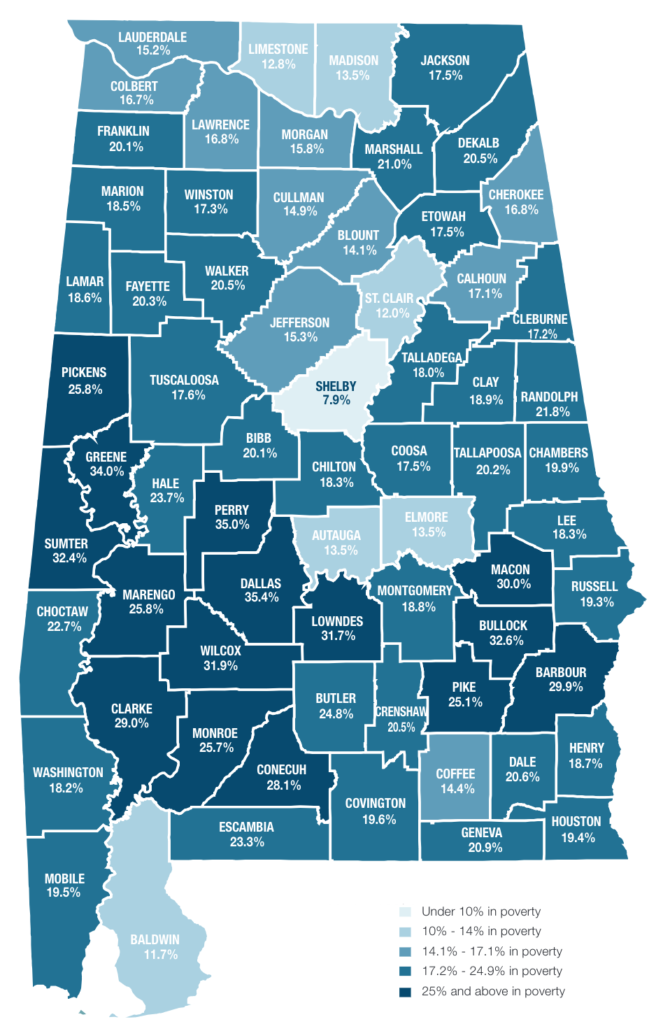
A list of the 50 worst cities in America to live in has been compiled by 24/7 Wall Street, and five Alabama cities have made the list. 24/7 is a web based news source which according to their website that has seen articles “republished by many of the largest news sites and portals, including MSN Money, Yahoo! Finance, MarketWatch, Time.com, USAToday, and The Huffington Post”. According to the study’s authors the list was determined metrics that rank “high crime rates, widespread poverty, weak job markets, and little in the way of entertainment options or cultural attractions.” California had the most cities on the list with ten. You can view the entire methodology here. Lowest on the list is Arab, located in Marshall County. With a population of around 8,200, the poverty rate is more than 17 percent. With 549 violent crimes per 100,000 people, it is in the top 25 percent of cities for that measure.That is more than double the national average. 24/7 Wall Street says “Few U.S. cities are shedding jobs faster than the northern Alabama city of Arab. In the last five years, the number of people working in the city declined by 9.8%, even as employment across the U.S. as a whole climbed by 6.1%.” Next is Fairfield, which comes in just one place higher, at 34th. Part of the Birmingham metropolitan area, Fairfield has a population of nearly 11,000 with just over 25 percent living below the poverty line. Their violent crime rate of 1,905 per 100,000 people puts them in the top 10 percent, while the median home value of $96,000 puts that in the bottom 25 percent. Like Arab, unemployment is a major problem. While national unemployment is 4.1 percent, Fairfield comes in at 7 percent. Pritchard ranks 12th on the list. A key factor in this is job loss, losing 17 percent of their jobs in the last five years, one of the highest rates in the country. Over that same period, employment nationally went up 6.1 percent. Perhaps because of this job loss, the median salary in Pritchard is $25,000 (less than half of the U.S. median), and their population dropped by 3.4 percent. Pritchard’s poverty rate (35.1 percent) and violent crime rate (1,826 per 100,000) are in the top 10 percent nationwide and the median home value ($67,400) is in the bottom ten percent. Anniston comes in at ninth place. Anniston has the most violent crimes per 100,000 people (3,434) of any city in the country, 24/7 Wall Street reports. The poverty rate of nearly 30 percent is in the top ten percent nationally, and the city’s population has declined nearly five percent in the last five years. At the same time, the number of people working within that city is just over 10 percent. Coming in as the sixth worst city in America in which to live, and the worst in Alabama, is Bessemer. Just behind Anniston, Bessemer comes in second for violent crimes per 100,000 people (2,986) according to 24/7 Wall Street. “Nearly 30% of residents live in poverty, and more than one in three residents have low access to grocery store or super markets. The typical Bessemer home earns less than $32,000 a year, well below the U.S. median annual household income of $57,652,” the site reads. Changes on the way? Things could be changing. Gov. Kay Ivey has made workforce development a key initiative, and companies and government entities are moving into Alabama or expanding, bringing tens of thousands of jobs with them. Ivey won the Business Council of Alabama‘s (BCA) 2018 Chairman’s Award for pro-business initiatives which had, at that time, already brought an $8 billion investment and 16,000 jobs to the state. “Governor Ivey’s support of a thriving business climate has been key to landing coveted economic projects including the new Toyota-Mazda plant and its 4,000 anticipated jobs to north Alabama,” said BCA chairman Gary Hand. “Governor Ivey supports a business environment which grows tech companies and she continues to be a strong recruiter of companies in the automotive, aviation, and aerospace sectors.”
ADOC responds to SPLC’s claim state has prison suicide crisis
The Alabama Department of Corrections (ADOC) has responded to claims by the the Southern Poverty Law Center (SPLC) that the state has a suicide crisis that demands immediate action. The ADOC said the recent spike in suicides in an “on-going concern” and the department is actively working on a solution. As reported by a number of media outlets today, 13 inmates in the custody of the Alabama Department of Corrections have died by suicide in the past 14 months. While the total number of recent suicides is significant, each suicide within an ADOC facility is a tragic and unfortunate event. Each of these 13 suicides represents a different person who faced individual struggles and challenges that led to their death. Nevertheless, the ADOC investigates every suicide and the circumstances surrounding each suicide to evaluate ways in which the Department can improve its existing suicide prevention program. … The recent spike in suicides within ADOC is an on-going concern and will be addressed by the ADOC. On March 8, 2019, an expert retained by the ADOC will issue a report (jointly authored with an SPLC expert) on recommendations on additional suicide prevention measures. Once we receive this report, the ADOC intends to fully implement those measures that will ensure a long-term solution in the prevention of suicides. The ADOC is referring to the deaths of 13 inmates in state custody have committed suicide in the last 14 months. In fact, in 2018 the suicide rate in ADOC facilities was higher than any previous year. And since since November 21, 2018, there has been an average of one suicide every 11.4 days in the ADOC, with two of those having been completed in 2019 – just eighteen days into the year. Which is what led the SPLC to take action on Friday. The group, along with victims’ families and their attorney, met at the Alabama State House where they called on the ADOC, Governor Kay Ivey, and state legislators to immediately address the systemic mental health crisis and need for comprehensive criminal justice reform. “Since a federal court found that mental health care in ADOC facilities was grossly inadequate in the summer of 2017, ADOC has continued to fail to provide adequate protection for suicidal people in its custody,” said Maria Morris, senior supervising attorney for the SPLC. “The result is that Alabamians under the supervision of ADOC, many of whom suffer from mental illness, hopelessness, and despair and are not receiving the resources they need, have taken their own lives. ADOC should take action. They need to step up and treat this like what it is – a life and death emergency.” On staffing, ADOC’s previous analysis provided to a federal court states it must hire 2261 new corrections officers and 130 new corrections supervisors by February 2022 to meet basic legal and safety standards for both officers and prisoners, which will add over $100 million annually to the ADOC budget. According to the SPLC, there is little evidence that ADOC is on a path to meet those benchmarks. Meanwhile, press reports indicate that the governor and ADOC staff are preparing to build three mega-prisons at a cost of a billion dollars or more. “These men died senselessly from suicide because they did not get adequate care from the Alabama Department of Corrections,” added Mitch McGuire, attorney for many of the victims’ families. “That’s unacceptable and immoral, and their families will never replace them.” “The Legislature must solve this emergency because Governor Ivey and Commissioner Dunn have been derelict in their duty,” said Richard Cohen, president of the SPLC. “Every year without action, the crisis deepens and grows more expensive and harder to fix. The costs to the state of Alabama will grow and we will continue to mourn the deaths of incarcerated people who did not receive constitutionally-required care. Despite the SPLC’s complaints ADOC Commissioner Jeff Dunn says he is focused on solving this problem. “Our department is committed to providing appropriate care for those with mental illness and we have plan to address the conditions inside our prisons that hinder our ability to meet that commitment,” Dunn said. “In addition to increasing our mental health staff, we also are developing a prison revitalization plan that will consolidate the delivery of mental and medical health care in a new state-of-the-art health care facility. More information about the plan will be made public in the coming days. I am focused on solving this problem.” Suicides in ADOC from Dec. 2017 to Feb. 2019 (supplied by the SPLC):
Alabama editorial roundup: Feb. 10, 2019 edition

Recent editorials from Alabama newspapers: ____ Feb. 9 The Dothan Eagle on the recent execution in Alabama: The State of Alabama put a man to death Thursday. He was the 217th person to die under the state’s death penalty – the 64th execution since a moratorium on executions in Alabama was lifted in 1983. Dominique Ray’s execution is troubling. Not because there was any question about his guilt. Debates about the moral failings of the death penalty aside, there was no reason why Ray should not see the sentence imposed on him for the murder of 15-year-old Tiffany Harville almost 25 years ago carried out at long last. What’s troubling about Ray’s execution is the constitutional question it raises. Ray, who embraced Islam while incarcerated, wanted an imam present with him in the death chamber. Prison officials refused, saying they could provide a Christian prison chaplain. Ray’s attorneys sued, and a stay of execution was issued to sort it all out. Prison officials argue that only corrections system employees are allowed in the execution chamber as a matter of security, which is reasonable. In an earlier editorial, we suggested the prison system work to create a pool of spiritual leaders from other faiths, and vet them accordingly. That seems reasonable as well. However, Ray’s position was that he was receiving unequal treatment because he, a Muslim, did not have the same opportunity in the execution chamber as a Christian prisoner would. And he’s right – the constitutional religious protections suggest that a condemned inmate of any stripe should have the same access to a representative of their chosen faith. Read the rest online: dothaneagle.com ______ Feb. 10 The Gadsden Times on the U.S. cancelling nuclear weapons treaty with Russia: Tangible is defined by “Webster’s New World Dictionary” as 1. corporeal and able to be appraised for value; 2. can be understood; definite; objective. Those are simple definitions for a wonderful word, which is just the opposite of innuendo and gossip. I prefer to deal in tangibles, but sometimes let tradition and “it has always been that way” overcome my thought process. A good example is the Russian/United States Strategic Arms Limitation Talks signed in 1972. The agreement was intended to restrain the arms race in strategic ballistic missiles armed with nuclear weapons. SALT I was followed by SALT II, which basically never took effect. Both sides have indicated nullification of the first accord. At first blush, I thought the consequences of calling a halt to the treaty could be disastrous for the populations of the U.S. and Russia. However, I came to the conclusion that the U.S. cancelling the treaty is essential to maintaining substantial military superiority over not only Russia, but our No. 1 adversary, China. While we have been limited in developing and modernizing the U.S. military by the SALT agreement with Russia, the Chinese government has been modernizing and expanding its military exponentially. The SALT agreement was an excellent deterrent to nuclear war between the then-Soviets and the U.S., but the agreement allowed China to develop a formidable nuclear military, one that has become a threat to U.S. global dominance. Read the rest online: Gadsdentimes.com _____ Feb. 9 Anniston Star on the relationship between journalists and law enforcement: An article in Friday’s Anniston Star drew the ire of the Anniston Police Department and its supporters on social media. The article reported on statistics provided by city officials detailing the frequency of police stops and arrests, breaking those numbers down according to race — black, white and other. Facebook commenters describe the article as a hit piece, fake news and an obvious attempt to attack police and sell newspapers. To the contrary, The Anniston Star works closely with Anniston PD and applauds its efforts to address crime through community policing, including the creation of a community-based committee tasked with following up on complaints from residents. No, we’re not out to get the police. Here’s what actually happened. A week ago, the NAACP held a meeting at the Anniston City Meeting Center where residents accused APD of disproportionately making traffic stops on African-Americans. Their evidence, however, was all anecdotal. Coverage of that story also provided the response from city officials and police denying any notion of racial profiling. As journalists, our aim is always to pursue truth, and collecting and reporting actual numbers is a non biased way to do that. It’s what we did when Councilman Ben Little claimed that his district’s requests for work orders consistently failed to get response from the city. An examination of the work orders, however, showed that Ward 3 actually had almost twice as many completed work orders as any of the other wards. Read the rest online: annistonstar.com ____ Feb. 8 Montgomery Advertiser on poverty It was cruel to force unemployment upon millions of Americans over a political dispute borne of a foolish promise that has nothing to do with them. It is shameful that the president showed little if any empathy for these citizens — many of whom supported him — and acquiesced via his silence to assessments made by his economic adviser, Kevin Hassett, and billionaire Commerce Secretary Wilbur Ross. Hassett said that furloughed federal workers are “better off” because “they have the vacation but they don’t have to use their vacation days.” Ross said there is no “good excuse why there … should be a liquidity crisis” and that he didn’t “understand why” federal employees with no income were going to food banks and homeless shelters. Ross incredibly advised those employees — already indebted beyond their ability to pay — to get a bank loan to cover expenses. Notwithstanding these contemporary echoes of “let them eat cake,” the previous, (un)presidential shutdown of the federal government — and the one that may reoccur next week — may force us to rethink some common misunderstandings. This third and final edition of my “start-at-the-beginning series” focuses on poverty. Next to race relations, poverty is the longest rhetorical highway along which people begin their expository
Richard Shelby: Border security talks ‘stalled’ as clock ticks
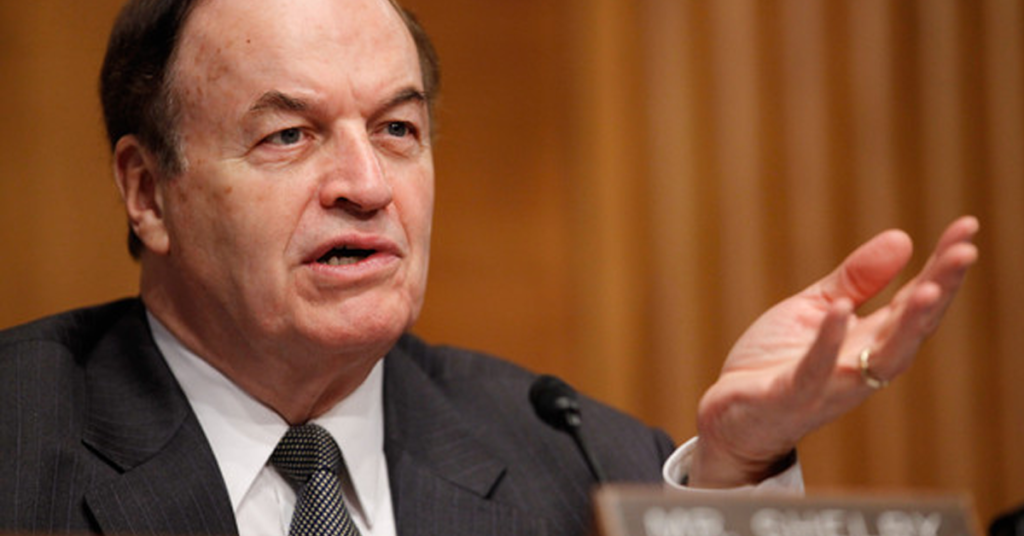
Bargainers clashed Sunday over whether to limit the number of migrants authorities can detain, tossing a new hurdle before negotiators hoping to strike a border security compromise for Congress to pass this coming week. The White House wouldn’t rule out a renewed partial government shutdown if an agreement isn’t reached. With the Friday deadline approaching, the two sides remained separated by hundreds of millions of dollars over how much to spend to construct President Donald Trump’s promised border wall. But rising to the fore was a related dispute over curbing Customs and Immigration Enforcement, or ICE, the federal agency that Republicans see as an emblem of tough immigration policies and Democrats accuse of often going too far. Acting White House chief of staff Mick Mulvaney, in appearances on NBC’s “Meet the Press” and “Fox News Sunday,” said “you absolutely cannot” eliminate the possibility of another shutdown if a deal is not reached over the wall and other border matters. The White House had asked for $5.7 billion, a figure rejected by the Democratic-controlled House of Representatives, and the mood among bargainers has soured, according to people familiar with the negotiations not authorized to speak publicly about private talks. “You cannot take a shutdown off the table, and you cannot take $5.7 (billion) off the table,” Mulvaney told NBC, “but if you end up someplace in the middle, yeah, then what you probably see is the president say, ‘Yeah, OK, and I’ll go find the money someplace else.’” A congressional deal seemed to stall even after Mulvaney convened a bipartisan group of lawmakers at Camp David, the presidential retreat in northern Maryland. While the two sides seemed close to clinching a deal late last week, significant gaps remain and momentum appears to have slowed. Though congressional Democratic aides asserted that the dispute had caused the talks to break off, it was initially unclear how damaging the rift was. Both sides are eager to resolve the long-running battle and avert a fresh closure of dozens of federal agencies that would begin next weekend if Congress doesn’t act by Friday. “I think talks are stalled right now,” Sen. Richard Shelby, Republican-Ala., said Sunday on “Fox News Sunday.” ″I’m not confident we’re going to get there.” Sen. Jon Tester, Democrat-Mont., who appeared on the same program, agreed: “We are not to the point where we can announce a deal.” But Mulvaney did signal that the White House would prefer not to have a repeat of the last shutdown, which stretched more than a month, left more than 800,000 government workers without paychecks, forced a postponement of the State of the Union address and sent Trump’s poll numbers tumbling. As support in his own party began to splinter, Trump surrendered after the shutdown hit 35 days without getting money for the wall. This time, Mulvaney signaled that the White House may be willing to take whatever congressional money comes — even if less than Trump’s goal — and then supplement that with other government funds. “The president is going to build the wall. That’s our attitude at this point,” Mulvaney said on Fox. “We’ll take as much money as you can give us, and we’ll go find the money somewhere else, legally, and build that wall on the southern border, with or without Congress.” The president’s supporters have suggested that Trump could use executive powers to divert money from the federal budget for wall construction, though it was unclear if he would face challenges in Congress or the courts. One provision of the law lets the Defense Department provide support for counterdrug activities. But declaring a national emergency remained an option, Mulvaney said, even though many in the administration have cooled on the prospect. A number of powerful Republicans, including Senate Majority Leader Mitch McConnell, Republican-Ky., have also warned against the move, believing it usurps power from Congress and could set a precedent for a future Democratic president to declare an emergency for a liberal political cause. The fight over ICE detentions goes to the core of each party’s view on immigration. Republicans favor tough enforcement of immigration laws and have little interest in easing them if Democrats refuse to fund the Mexican border wall. Democrats despise the proposed wall and, in return for border security funds, want to curb what they see as unnecessarily harsh enforcement by ICE. People involved in the talks say Democrats have proposed limiting the number of immigrants here illegally who are caught inside the U.S. — not at the border — that the agency can detain. Republicans say they don’t want that cap to apply to immigrants caught committing crimes, but Democrats do. In a series of tweets about the issue, Trump used the dispute to cast Democrats as soft on criminals. He charged in one tweet: “The Border Committee Democrats are behaving, all of a sudden, irrationally. Not only are they unwilling to give dollars for the obviously needed Wall (they overrode recommendations of Border Patrol experts), but they don’t even want to take muderers into custody! What’s going on?” Democrats say they proposed their cap to force ICE to concentrate its internal enforcement efforts on dangerous immigrants, not those who lack legal authority to be in the country but are productive and otherwise pose no threat. Democrats have proposed reducing the current number of beds ICE uses to detain immigrants here illegally from 40,520 to 35,520. But within that limit, they’ve also proposed limiting to 16,500 the number for immigrants here illegally caught within the U.S., including criminals. Republicans want no caps on the number of immigrants who’ve committed crimes who can be held by ICE. As most budget disputes go, differences over hundreds of millions of dollars are usually imperceptible and easily solved. But this battle more than most is driven by political symbolism — whether Trump will be able to claim he delivered on his long-running pledge to “build the wall” or newly empowered congressional Democrats’ ability to thwart him. Predictably each side blamed
Bradley Byrne: Choosing greatness
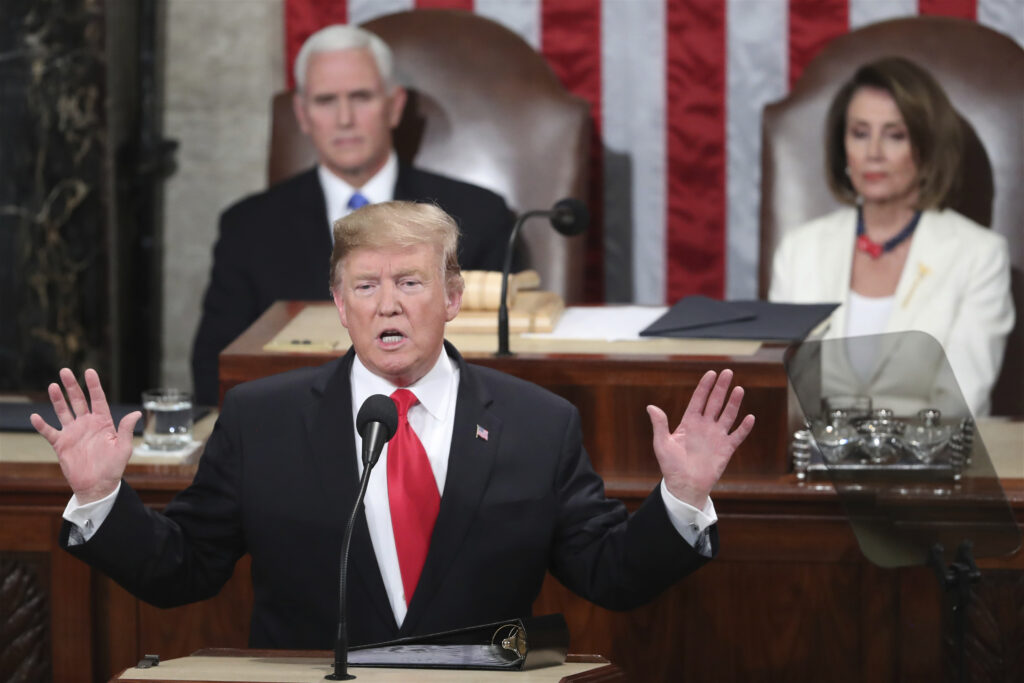
Last week, President Donald Trump gave the State of the Union address to the nation. I can say that in all my time in Washington, this was the best State of the Union I have had the honor of attending, and it seems most Americans agree. The President’s message was clear: if we stop with the political games and focus on solutions, American Greatness knows no bounds. By supporting President Trump’s clear and bold agenda, the American people will be stronger, safer, and more prosperous. He began by charging us to choose greatness in all that we do as lawmakers and as Americans. The guests the President and First Lady invited to the speech – including war heroes of World War II, relatives of victims of illegal immigration, and those who suffered from drug abuse – were expertly woven throughout the address to demonstrate the greatness that resides in our country. It takes these reminders of our greatness to underscore the need to come together to work on issues that matter most to the American people. Most notably, President Trump again outlined a commonsense strategy to secure our border. After decades of inaction by both parties, it is time we finally fix our broken immigration system, restore the rule of law, and keep the American people safe. He also outlined many issues important to Alabama. From strengthening our military to expanding rural broadband to lowering prescription drug costs, under President Trump’s agenda the people of Alabama stand to benefit, and our state will become even stronger. I appreciated the President’s call to rebuild American infrastructure. As we know in Alabama, the need for a stronger infrastructure system is vitally important to the overall success of our economy. With better roads, bridges, and waterways, we can unlock the extraordinary potential of our economic future. Rural broadband access is something that folks throughout the state will benefit from. People in rural areas deserve the same economic opportunities as those in urban areas when it comes to Internet access, and I will continue to advocate for greater access to rural broadband in any infrastructure bill put forward by Congress. Similarly, President Trump is dedicated to the American workforce, something Congress echoed last year through a number of laws to protect workers and. In the same vein, as the President mentioned, lowering the cost of healthcare and prescription drugs will benefit our workforce as well. With month after month of continued growth and positive economic news, it is clear that our conservative policies continue to pay off. I was thrilled President Trump mentioned the importance of protecting the unborn in his speech. As he said, “Let us reaffirm a fundamental truth: all children — born and unborn — are made in the holy image of God.” I couldn’t agree more. Lastly, President Trump’s call for protecting America’s national security in conjunction with safe and legal immigration is a commonsense approach we as a nation can get behind. Border security is national security. It only makes sense that we should advocate for greater national security and strong borders. Recently, Democrats have obstructed what is best for the American people: opposing border security measures, supporting infanticide, and proposing ill-thought-out and costly plans for our environment. It is time to stop with the politics of resistance and instead focus on realistic solutions to the problems facing our country. President Trump is right when he said that great bipartisan achievements in this Congress are possible, especially when we rally behind a commonsense agenda building American Greatness. Let’s get it done. • • • Bradley Byrne is a member of U.S. Congress representing Alabama’s 1st Congressional District.
Alabama church removes pew honoring Confederate president

An Alabama church has removed a pew honoring Confederate President Jefferson Davis, saying the memorial had no place at a time when rebel symbols have been adopted by white supremacists. The pastor of St. John’s Episcopal Church, Robert C. Wisnewski Jr., posted a message on the church website last week saying the wooden pew was dedicated more than 90 years ago at a service featuring a pro-lynching segregationist. After learning of the pew’s history at a recent planning retreat, church leaders discussed it and then voted to remove the pew from the sanctuary and place it in the church archive, he wrote. “Confederate monuments and symbols have increasingly been used by groups that promote white supremacy and are now, to many people of all races, seen to represent insensitivity, hatred, and even evil,” Wisnewski wrote. “The mission of our parish is diametrically opposed to what these symbols have come to mean.” The mostly white church is in Montgomery, where Davis lived briefly before the Confederacy moved its national capital to Richmond, Virginia, in 1861. Church lore maintained that a pew marked with a bronze plaque honoring Davis dated to the start of the Civil War, the pastor wrote. The pew actually wasn’t installed until decades after the war, when whites were trying to maintain control in the South, Wisnewski wrote. Tennessee writer John Trotwood Moore, who supported segregation and opposed an anti-lynching law, spoke at the dedication service in 1925. “Davis was a political figure, not a church figure, nor even a member of the parish. Acting to remove the pew and plaque is the correction of a political act,” the pastor’s message said. A St. John’s Episcopal online history says the congregation dates to the 1830s. Southern churches that supported secession by the slave-holding states met at the congregation’s former building in 1861, and the current church was built after the war ended. A star marks the spot on the steps of Alabama’s Capitol were Davis took the oath as Confederate president. Across the street from the Capitol stands the “First White House of the Confederacy,” where Davis lived for about three months in Montgomery. Republished with permission from the Associated Press
