
Rising costs of health care leads to another rural Alabama hospital closure
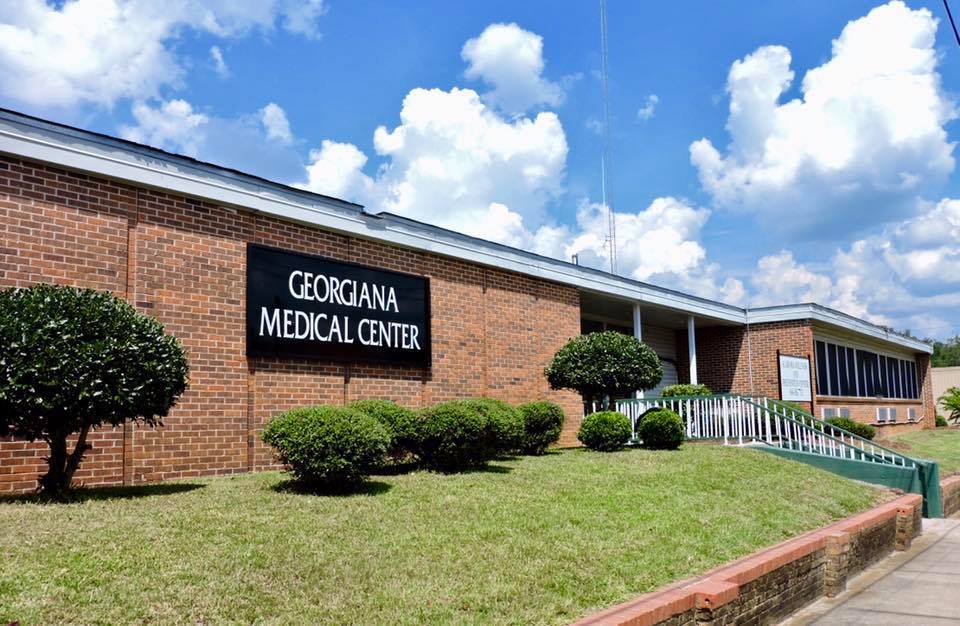
Due to the rising costs of health care, the Georgiana Medical Center in Georgiana, Ala. will be closing on March 31. The hospital’s owner, Ivy Creek of Butler, made the announcement Monday afternoon that they would close the facility. “The rising costs of healthcare coupled with the cuts in reimbursement have made it impractical to maintain financial viability with two hospitals operating in Butler County,” CEO of Ivy Creek, Mike Bruce, said in a statement. Butler County’s other hospital, LV Stabler in Greenville, Ala. will join with Ivy Creek and combine their home health agencies to manage its rural health clinics. “The partnering of the two organizations is the optimal way to continue to provide overall high-quality healthcare for the residents of Butler County, as well as the surrounding areas,” Bruce added. “Small hospitals, in particular those in Alabama’s underserved, rural counties, are under tremendous financial pressure,” said LV Stabler Interim CEO Connie Nicholas. “We’ve seen other hospitals across the state forced to close their doors.” The Andalusia Star-New reports the closing of the Georgiana Medical Center will be the state’s 13th hospital to close in eight years, and the seventh rural hospital among those to close. According to Danne Howard, Policy Director at the Alabama Hospitals Association, about 88 percent of the state’s rural hospitals are operating “in the red” and aren’t currently receiving reimbursements that can cover the cost of delivering care. Doug Jones reacts Alabama U.S. Sen. Doug Jones says, this should be a wake-up call – actually, another wake up call.” “For years, our rural hospitals have been warning public officials about the financial cliff they faced in large part as a result of unfair Medicare reimbursement rates and the refusal to expand Medicaid in Alabama. Thirteen hospitals have closed in our state since 2011. Seven of those have been in rural areas. How many more rural health care providers need to close for meaningful action to be taken? This should be a wake-up call – actually, another wake up call. We all have a responsibility to take action – to expand Medicaid, to fight for wage index reform, to find opportunities to lower the cost of health care – and to find common ground to best serve our communities,” said Jones, who was recently honored by the National Rural Health Care Association for his commitment to rural health providers.
Kay Ivey: An Alabama solution to an Alabama problem: rebuilding the Alabama corrections system
In order to correct a problem, you must first admit there is a problem. In Alabama, we have a problem. Our problem is our state’s corrections system. Like many other states, issues of violence, poor living conditions and mental illness persist within our system. These issues, and others, are exacerbated by a crowded inmate population, correctional and health care staffing challenges, and aging prison infrastructure – each piece compounding the others. We have a problem in Alabama, and we have waited far too long to address it. The path forward to resolve these problems is clear and obvious. However, this path is neither quick nor simple. First, we must increase our correctional staffing levels by improving the pay scale for correctional officers and expanding our recruiting efforts. Second, we must construct prison facilities that meet the needs of a criminal justice system in the 21st century. We have already started making strides toward reducing our prison population and increasing staffing levels. In 2015, the Alabama Legislature passed historic criminal justice reform legislation that greatly reduced the number of inmates in Alabama prisons. Thanks to members of the Legislature, the state’s prison population has decreased from nearly 200 percent of capacity to approximately 160 percent, still too large but an important step in the right direction. Also in 2018, the Legislature helped improve our system by increasing funding for correctional and health services staffing. An additional $86 million was appropriated for the state’s 2018 and 2019 fiscal years to retain new staffing for medical and mental health services and to reduce the turnover rate of correctional staffing. For the upcoming Regular Session, my budget proposal will include an additional $31 million to hire 500 new correctional officers and increase the pay scale for all security personnel to make their salary competitive given current market conditions in Alabama. Alabama currently sits under a federal court order requiring the state to roughly double the number of correctional officers in the next two years. Although I disagree with many aspects of the lawsuit that led to this order, the fact of the matter is that it compels us to make staffing levels a necessary and vital part of the solution to our problem. In December, we saw our first increase in the number of correctional officers in years. With a rising retention rate, we can begin adding to our officer ranks, rather than simply maintaining our current staffing levels. This is a difficult task, but because of the commitment from members of the Legislature, we are now well on our way to addressing our staffing challenges. Next, we must improve the conditions in which we house inmates. “Deplorable”, “horrendous”, and “inadequate” are words which have been used to describe them. Our existing facilities need $750 million in maintenance alone. Last year, we closed the Draper Correctional Facility, a 79-year-old prison, because it was simply too costly to repair. Without costly maintenance, many other facilities may require closing as well. Repairing these facilities that do not meet the needs of today’s criminal justice system would be wasteful and ineffective. We must put aside politics of the past and fix this problem for the betterment of our state. Alabama must have new prison facilities because we must have better conditions, we must have better safety, and we must have better programs. The Department of Corrections hired a project management team that recommended we build three new regional men’s prisons. Of the three new facilities, one will have additional space centralizing services for special needs populations: the aged, the infirmed and those with mental health conditions. Additionally, there will be space in each new facility for educational and vocational training programs. These facilities will be a valuable and lasting investment in the future of our state. On average, 95 percent of our inmates, once they have completed their sentence and are eligible for release, will be returning to the cities, towns, communities and neighborhoods within Alabama. This investment will secure our opportunity to release these individuals back into society as more educated and more productive, law-abiding citizens. The investment in these new facilities will also ensure that we retain control of our correctional system. Across this nation, federal courts are intervening in unprecedented ways into the operations of correctional systems. In 2009, three federal judges ordered the release of thousands of inmates in the California prison system. Some estimate this order resulted in the release of more than 40,000 inmates. Following the release of these inmates, one study into the impact of this mass release called the increases in crime rates “alarming.” So, our public safety also demands this investment. Today, the Department of Corrections is preparing a “request for proposals” for distribution to contractors in Alabama and across the nation, asking for bids to build these new prisons. By taking this step, we will – for the first time – receive the most accurate view of the real cost of building these new facilities. Some opponents of this plan say that it is too costly. Here in Alabama and across our country, we have a set of laws to which every person must adhere. However, no matter what crime was committed, every human being deserves a certain level of care. I say to you that it is and will continue to be costly to provide adequate living conditions and health care for the more than 20,000 adults in our corrections system, to maintain aging facilities, and to sustain public safety. Others say special interests have a hand in this plan; that could not be further from the truth. In fact, I make a promise to you that part of this next step is to publicly provide the real costs we receive from contractors and to work closely with the Legislature to determine the most cost-effective way of moving forward. Whatever we do will be the best and most fiscally responsible decision for the state of Alabama. A tough decision will have to be made in
Kay Ivey unveils proposal to build new prisons
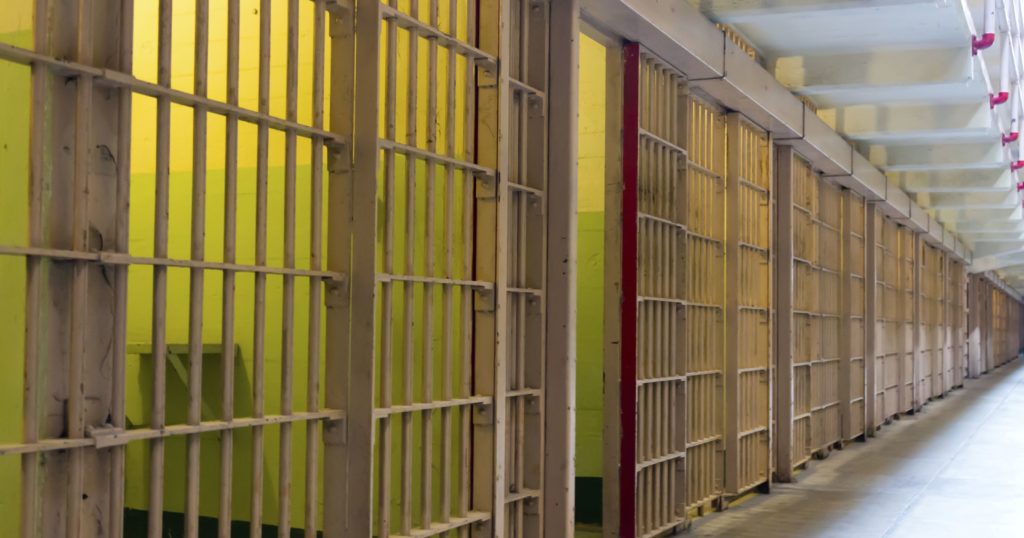
Saying Alabama needs a solution to its ongoing prison crisis, Gov. Kay Ivey is seeking bids to build three large new prisons. Ivey made the announcement during a Tuesday news conference. Ivey said Alabama has a “major problem” with prison conditions and overcrowding, and must have a solution. She said the prison system is seeking proposals from contractors. Ivey said the administration will then decide how to proceed. Options include borrowing money to build them or leasing them from private companies. Corrections Commissioner Jeff Dunn said two prisons would house about 3,000 male inmates each and another would be a specialty facility for inmates with medical and mental health needs. The administration estimated construction would cost about $900 million, but Dunn said they think consolidation savings would cover the cost. Republished with permission from the Associated Press
Rauf Bolden: Council districting in Orange Beach
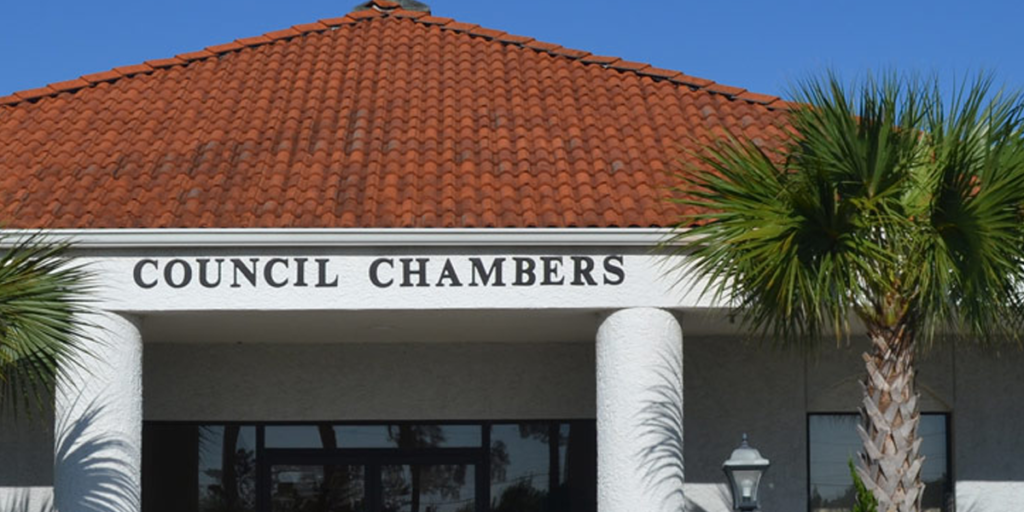
“I want to know who the [elected] representative for my area is,” said Brett Holk, a 50-year resident of Orange Beach. “I went to school in Foley, riding the school bus from Orange Beach. I learned to swim on Terry Cove, and water ski on Cotton Bayou. Then I lived 30 years in this one house as an adult.” He still does not know who is the elected official for his area. Chairman of the Baldwin County Commission, Charles Gruber said a change of government to districting might depend on population. Can we achieve more effective neighborhood governance by proposing districted council seats? Originally founded in 1984 the city’s council members serve at-large in Orange Beach, meaning each elected official is responsible for the whole city. This inefficiency is easy to see. Imagine your congressman representing all the people in the United States at the same time, instead of just his or her home district. Districting is more practical. When a constituent has a problem he or she contacts their elected representative, not someone who is responsible for the whole city. The beach road has a much different set of problems than the back bays. Elected officials chosen by district can propose legislative solutions for a geo-specific set of problems, like flood drainage in Bear Point, or beach erosion on the Gulf. When officials serve at-large problems are deflected to the department heads. The downside is employees cannot bring bills to the floor. Districting council seats gives council members more legislative muscle, initiating effective options about expenditures to resolve problems like flood drainage. Orange Beach is a municipality, defined by law, designating the Mayor as its chief election official. The city council must decide if they want a change to the city’s form of government, enacting ordinances, and districting the city. The change of government from at-large to districts can only happen with the consent of the sitting council, according to David Brewer, Chief of Staff for the Alabama Secretary of State. “The laws regulating the governance of municipalities can be found in Alabama Code Title 11, Section 11-43-63 addresses changes in government. The City of Orange Beach is a Class 8 municipality with a population of under 12,000 that operates under a mayor-council form of government,” said Renee Eberly, Orange Beach’s City Clerk in an email. The statute is clear. “Any city or town council of this state not currently electing its members from single-member districts pursuant to state law may, not less than six months prior to the regular general municipal election, by ordinance adopted by a majority of the membership of the council, divide the municipality into single-member districts (wards) of not less than five nor more than seven districts (wards),” according to a report on the Justia US Law web site. Poor geo-specific problem solving is the reason for petitioning council, changing our form of government. This idea will encounter headwinds from Mayor Tony Kennon, but doing our how-to homework helps. “I would recommend that the City hire an outside consultant or have their city attorney guide them through the step.The districting proposal must satisfy federal civil rights statutes, which will likely require population breakdowns by race in the various proposed districts. This will likely require detailed studies of the city’s current demographics. While the statutes are fairly easy to comply with, it can take a great deal of time to gather the correct information needed to develop a valid districting proposal,” said Ken Smith, Executive Director of the Alabama League of Municipalities in an email. AL Code § 11-43-63 (2013) describes the process, ”The ordinance establishing the districts shall describe the territory composing the district by metes and counts, or census tracts, and the municipal clerk, within five days after the adoption of the ordinance, shall file with the judge of probate of the county or counties in which the municipality lies a certified copy of such ordinance accompanied, by a map or plat of the city or town, showing the boundaries of all such districts,” according to a report on the Justia US Law web site. Council must be very careful drawing the district maps. An ethics violation would occur if redistricting were done for profit. “That issue [districting] involves laws outside the Ethics Act which is concerned with use of office for personal gain,” said Thomas Albritton, Executive Director, Alabama Ethics Commission in an email. The key issue is the will of the council. Obviously, petitioning for a referendum to change the form of government with a thousand signatures is paramount. Even then the chance of winning the day is very small. “At the local level, citizens certainly have the right to make requests of the governing body, and the number of signatures on a petition has a practical political effect. In most cases, however, a council may deny a petitioner’s request,” said Renee Eberly, Orange Beach’s City Clerk in an email. “The City of Fairhope’s vote for change in government failed. The way it was done and after an Attorney General’s Opinion, it was for districts,” said Lisa Hanks MMC, City Clerk for the City of Fairhope in an email. Mayor Kennon will fight against a vote changing the form of government with hammer and tongs, maintaining control over the policy and legislative apparatus he has built over the past ten years. You will see the strange case of a political machine, moving the goalposts to maintain the status quo, blocking the change that is needed to make government better for local people. He will counter that we have done things at-large since 1984, and we are doing fine without the change. That’s the thing about power. People who have it don’t want to share. A petition for districting would require council members to live in their districts, serving their constituents, not the body politic. “The ordinance [districting] shall provide that candidates for election for a place on the council, where the council has been divided into districts, shall reside within
Kemira investing $71 million to expand Alabama operation, creating 20 jobs

Finland-based Kemira announced it is investing $70.8 million to expand production at its Mobile facility. The company is a polymer producer serving the pulp and paper, oil and gas, and water treatment industries. The project will create an additional 20 jobs, growing Kemira’s Mobile workforce by 32 percent, to handle new process operations, increased logistics and the support functions at the site. “For Kemira this investment is an important step toward the growth objectives outlined in our strategy. It also secures our position as a leading global polymer producer and demonstrates our continued commitment to the oil and gas industry,” said Pedro Materan, senior vice president, Oil & Gas, at Kemira. Richard Ryder, Kemira’s Mobile plant manager, said construction will begin this year and the expanded plant will be operational in 2021. “We are expanding on our current footprint and will significantly increase production to meet our customers’ demand in the oil and gas industry,” Ryder said. ‘Renewing a relationship’ The existing site first opened in 1938, initially focused on the area’s lumber and pulp and paper businesses. Over time, Kemira said, the site began serving the wider industrial water treatment industry and, more recently, the oil and gas industry. Kemira utilizes chemistry to add optimal quality, functionality and strength to paper and board products, ensure the safety and hygiene of water and food packaging, and maximize yield from energy resources. Mobile is one of three Kemira facilities in the U.S., with others in Columbus, Georgia, and Aberdeen, Mississippi. Kemira’s parent company, Kemira Oyj, is based in Helsinki, Finland, with its Americas headquarters in Atlanta. “There has been significant growth in the area’s manufacturing and chemical sectors, whose companies historically and continue to provide high-paying jobs for our community,” said Shelby Glover, the Mobile Area Chamber’s senior project manager of economic development. “I look forward to seeing what the future holds for Kemira as they continue to excel in Mobile,” Local officials welcomed Kemira’s decision to expand its Mobile operation. “This expansion by Kemira is about more than just jobs – it’s about a global company reinvesting in our city and renewing a relationship that dates back more than 80 years. When existing businesses are thriving in combination with new jobs and investment, that’s a winning formula,” Mobile Mayor Sandy Stimpson said. “We are very excited about Kemira’s decision to expand operations in Mobile County to meet customer demand. Their additional $70 million capital investment and 20 jobs further demonstrates Mobile’s growing attraction for foreign direct investment,” said Mobile County Commission President Connie Hudson. Republished with permission from Alabama NewsCenter
Budget deal allows far less money than Donald Trump wanted for wall

Congressional negotiators reached agreement to prevent a government shutdown and finance construction of new barriers along the U.S.-Mexico border, overcoming a late-stage hang-up over immigration enforcement issues that had threatened to scuttle the talks. Republicans were desperate to avoid another bruising shutdown. They tentatively agreed Monday night to far less money for President Donald Trump’s border wall than the White House’s $5.7 billion wish list, settling for a figure of nearly $1.4 billion, according to congressional aides. The funding measure is through the fiscal year, which ends on Sept. 30. It’s not clear whether Trump will support the deal, although GOP negotiators said they were hopeful. The agreement means 55 miles (88 kilometers) of new fencing — constructed through existing designs such as metal slats instead of a concrete wall — but far less than the 215 miles (345 kilometers) the White House demanded in December. The fencing would be built in the Rio Grande Valley in Texas. “With the government being shut down, the specter of another shutdown this close, what brought us back together I thought tonight was we didn’t want that to happen” again, said Senate Appropriations Committee Chairman Richard Shelby, Republican-Ala. Details won’t be officially released until Tuesday, but the pact came in time to alleviate any threat of a second partial government shutdown this weekend. Aides revealed the details under condition of anonymity because the agreement is tentative. “Our staffs are just working out the details,” said House Appropriations Committee Chairwoman Nita Lowey, Democrat-N.Y. The pact also includes increases for new technologies such as advanced screening at border entry points, humanitarian aid sought by Democrats, and additional customs officers. This weekend, Shelby pulled the plug on the talks over Democratic demands to limit immigrant detentions by federal authorities, frustrating some of his fellow negotiators, but Democrats yielded ground on that issue in a fresh round of talks on Monday. Asked if Trump would back the deal, Shelby said: “We believe from our dealings with them and the latitude they’ve given us, they will support it. We certainly hope so.” But Fox News Channel’s Sean Hannity, a Trump ally, said the barrier money in the agreement was inadequate. He warned late Monday that “any Republican that supports this garbage compromise, you will have to explain.” Trump traveled to El Paso, Texas, for a campaign-style rally Monday night focused on immigration and border issues. He has been adamant that Congress approve money for a wall along the Mexican border, though he no longer repeats his 2016 mantra that Mexico will pay for it, and he took to the stage as lawmakers back in Washington were announcing their breakthrough. “They said that progress is being made with this committee,” Trump told his audience, referring to the congressional bargainers. “Just so you know, we’re building the wall anyway.” Democrats carried more leverage into the talks after besting Trump on the 35-day shutdown but showed flexibility in hopes on winning Trump’s signature. After yielding on border barriers, Democrats focused on reducing funding for detention beds to curb what they see as unnecessarily harsh enforcement by Immigration and Customs Enforcement, or ICE. The agreement yielded curbed funding, overall, for ICE detention beds, which Democrats promised would mean the agency would hold fewer detainees than the roughly 49,000 detainees held on Feb. 10, the most recent date for which figures were available. Democrats claimed the number of beds would be ratcheted down to 40,520. But a proposal to cap at 16,500 the number of detainees caught in areas away from the border — a limit Democrats say was aimed at preventing overreach by the agency — ran into its own Republican wall. Democrats dropped the demand in the Monday round of talks, and the mood in the Capitol improved markedly. Trump met Monday afternoon with top advisers in the Oval Office to discuss the negotiations. He softened his rhetoric on the wall but ratcheted it up when alluding to the detention beds issue. “We can call it anything. We’ll call it barriers, we’ll call it whatever they want,” Trump said. “But now it turns out not only don’t they want to give us money for a wall, they don’t want to give us the space to detain murderers, criminals, drug dealers, human smugglers.” The recent shutdown left more than 800,000 government workers without paychecks, forced postponement of the State of the Union address and sent Trump’s poll numbers tumbling. As support in his own party began to splinter, Trump surrendered after the shutdown hit 35 days, agreeing to the current temporary reopening without getting money for the wall. The president’s supporters have suggested that Trump could use executive powers to divert money from the federal budget for wall construction, though he could face challenges in Congress or the courts. The negotiations hit a rough patch Sunday amid a dispute over curbing ICE, the federal agency that Republicans see as an emblem of tough immigration policies and Democrats accuse of often going too far. According to ICE figures, 66 percent of the nearly 159,000 immigrants it reported detaining last year were previously convicted of crimes. Reflecting the two administration’s differing priorities, in 2016 under President Barack Obama, around 110,000 immigrants were detained and 86 percent had criminal records. Few convictions that immigrants detained last year had on their records were for violent crimes. The most common were for driving while intoxicated, drugs, previous immigration convictions and traffic offenses. The border debate got most of the attention, but it’s just part of a major spending measure to fund a bevy of Cabinet departments. A collapse of the negotiations would have imperiled another upcoming round of budget talks that are required to prevent steep spending cuts to the Pentagon and domestic agencies. Republished with permission from the Associated Press
Iowa Democrats propose ‘virtual’ caucuses in 2020

The Iowa Democratic Party on Monday proposed the biggest changes to the state’s famed caucuses in nearly 50 years by recommending Iowans be able to participate virtually. If approved, the measure would allow people to caucus using telephones or smart devices during the days leading up to the Feb. 3 caucus night. It’s a dramatic shift from the current system in which caucusgoers have to physically show up at a site — often a school, church or community center— and show their support for presidential candidates by standing in groups. If the group doesn’t meet an established threshold, the participants have to select another candidate. It’s an often chaotic process that plays out before banks of television cameras on an evening that formally ushers in the presidential primary season. But proponents say it will help address criticism that the caucuses are difficult to attend for single parents, people who work at night and the elderly. “Through this additional process we’re going to be able to give more Iowans a chance to participate in this process,” Iowa Democratic Party Chairman Troy Price said. “Whether someone is a shift worker, a single parent, in the military, living overseas or experiencing mobility issues, this process will now give these individuals a voice in selecting the next president of the United States.” And while Price says the proposed changes are the state party’s effort to open the process often described by critics as antiquated, it was also required by the Democratic National Committee. The results are Iowa Democrats’ attempt at threading the needle of complying while maintaining the essence of the caucuses, which are real-time meetings of fellow partisans. Presidential candidates are already beginning to swarm the state — three were here this weekend. They’ll likely try to determine whether a virtual caucus would help them turn out more of their supporters. “I suspect presidential campaigns who we’ve shared this information with are going to be trying to figure out how to get their members to participate in this,” Price added. Party officials said they didn’t know how many people would take advantage of the new format or how campaigns might seek to capitalize on it. A key element of the proposal, which now goes before Iowa Democrats to comment on for 30 days, is that, no matter how many Iowans participate virtually, their contribution will be factored as a flat 10 percent of the total turnout, apportioned by congressional district. Price said officials reached 10 percent as a starting point, uncertain of how many people might join virtually. “This is a new system so we don’t have any data to tell if this number is too high or too low,” Price said. “And so we are starting the conversation at the 10 percent threshold, and if it goes gangbusters this year, then we will have conversations in subsequent years about if we need to make adjustments.” Hillary Clinton, the 2016 Democratic presidential nominee who narrowly beat Vermont Sen. Bernie Sanders in Iowa that year, criticized the caucus process for deterring late-shift workers and others less able to steal away for an evening of political wrangling. “Campaigns must decide how to organize for that 10 percent,” said veteran Iowa Democratic caucus operative Jeff Link, who did not work for Clinton in 2016 and is not affiliated with a candidate heading into 2020. In another noteworthy development, the state party said it would release the raw data of preferences by caucusgoers, information that is typically kept confidential. The caucuses are a series of preference tests in which candidates without a certain level of support are rendered unviable. This data would give a first glimpse of the candidates’ support before caucusgoers abandon their first choices to side with more viable contenders. The Iowa caucuses are scheduled for February 3, 2020. The proposal won’t be finalized until the spring. Republished with permission from the Associated Press
Judge: Alabama has been ‘indifferent’ to isolated inmates
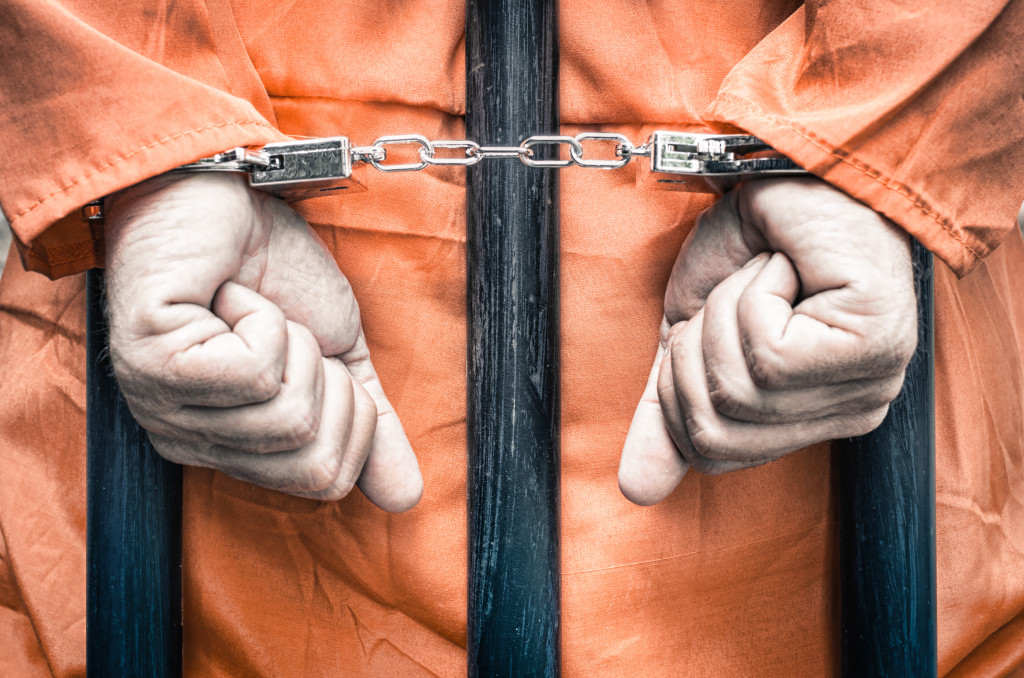
A federal judge said Monday that Alabama has been “deliberately indifferent” about monitoring the mental health of state inmates placed in the isolation of segregation cells. U.S. District Judge Myron Thompson issued the ruling days after attorneys for inmates said the suicide rate in state prisons has reached a crisis level. “The court finds that the (Alabama prison system’s) failure to provide adequate periodic mental-health assessments of prisoners in segregation creates a substantial risk of serious harm for those prisoners,” Thompson wrote in the 66-page order. Thompson wrote that prison officials have been “deliberately indifferent with regard to their failure to provide adequate periodic evaluations of mental health to prisoners in segregation.” Alabama Department of Corrections spokesman Bob Horton said the department is reviewing the decision. Thompson in 2017 wrote that mental health care in state prisons was “horrendously inadequate” and violated the Eighth Amendment’s prohibition on cruel and unusual punishment. In his Monday order, Thompson said the failure to adequately monitor inmates in segregation contributes to the unconstitutional conditions. Thompson directed the prison system and attorneys for inmates to confer on how to proceed. The Southern Poverty Law Center, which is representing inmates in the ongoing class-action lawsuit over prison mental health care, praised the decision. “It has been evident for years that ADOC has failed to identify, monitor, and properly care for people who have serious mental illnesses and who develop them in ADOC custody. That systematic failure has led to needless suffering, especially for people in segregation,” said Maria Morris, senior supervising attorney at the SPLC. The advocacy organization said Friday that there have been 13 suicides in 14 months. “People are killing themselves in our prisons because conditions are horrendous,” Southern Poverty Law Center President Richard Cohen said at a news conference with the families of inmates. The prison system said in a response Friday that it was working to address the issue, and said the suicide spike “calls into question the long-term effectiveness of the suicide prevention measures proposed by the SPLC” during the litigation. Republished with permission from the Associated Press
