
Bipartisan congressional delegation tours Alabama civil rights site
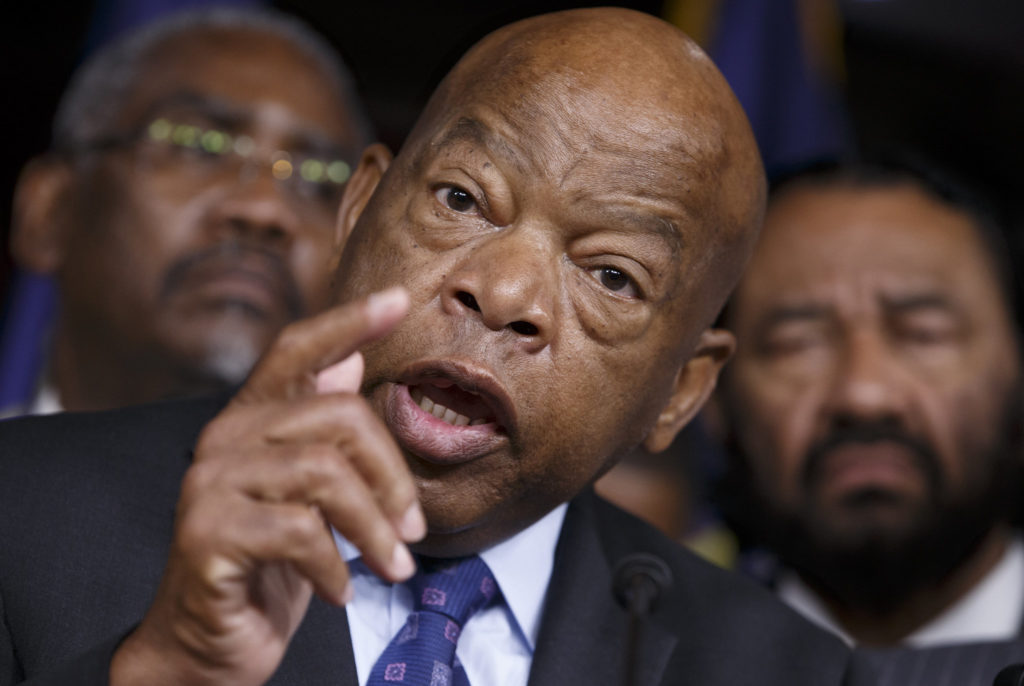
A bipartisan delegation of U.S. Congress members visited Birmingham on Friday as part of a three-day tour of the state’s civil rights history. The 2019 Congressional Civil Rights Pilgrimage is organized by the nonprofit Faith and Politics Institute, which offers tours, retreats, forums and reflection groups to members of Congress and their staffs. Since 1998, Rep. John Lewis (D-Ga.) has led close to 300 members of the U.S. House and Senate, as well as Presidents Barack Obama and George W. Bush in 2015, through Alabama each spring. This year, 45 members of Congress made the trip. This year’s pilgrimage includes stops in Birmingham, Montgomery and Selma. In addition to Lewis, honorary co-hosts include Sen. Doug Jones of Alabama as well as Rep. Martha Roby and Rep. Terri Sewell. Rep. Bradley Byrne is also part of this year’s group. “This is a bipartisan delegation of Democrats and Republicans, and they say there is no civility in Washington. We are here to prove that wrong,” Sewell said. “What I love about Faith & Politics is it’s an opportunity for us to shed the R and the D, the blue and the red … for pink, for colors of unity,” she said, alluding to the jacket she was wearing. A native of Selma, Sewell said it’s an honor to visit places important in civil rights history with Lewis, who led the Bloody Sunday march in her hometown as a 25-year-old alongside the Rev. Hosea Williams. Lewis was also one of the 13 original Freedom Riders working to integrate transportation in the South and spoke at 1963’s March on Washington. “I think it’s so important that we not only acknowledge our history, but we have to pay it forward as well, to really come together and get to know each other as we travel through time with our distinguished colleague John Lewis,” Sewell said. “To have an opportunity to walk in the footsteps of John Lewis with John Lewis is an honor.” On Friday, the delegation visited 16th Street Baptist Church, where they were greeted by Pastor Arthur Price and the Carleton Reese Memorial Unity Choir singing “This Little Light of Mine.” Students from Montgomery Public Schools and the Alabama Shakespeare Festival performed parts of “Four Little Girls,” which portrays the lives of 16th Street Baptist Church bombing victims Denise McNair, Carole Robertson, Cynthia D. Morris Wesley and Addie Mae Collins before that tragic day in September 1963 and imagines the impact they would have made in the world if their lives hadn’t been cut short. “You’re speaking truth,” Lewis told the students after the production. “You’re making it real. I remember coming to this church after the bombing and standing outside.” Jones, a former U.S. district attorney, discussed prosecuting two of the men, Thomas Edwin Blanton Jr. and Bobby Frank Cherry, decades later for their roles in the bombing. On Saturday, the delegation visits Selma, where the group will walk across the Edmund Pettus Bridge and visit the Selma Interpretive Center and Brown Chapel AME Church. That afternoon, they will tour Dexter Avenue King Memorial Church in Montgomery, the Southern Poverty Law Center Civil Rights Memorial, the Rosa Parks Museum and Alabama State Capitol. The pilgrimage finishes Sunday with a service at First Baptist Church Montgomery. Republished with permission from Alabama NewsCenter. Alabama Today Editors Note: We encourage you to visit the original post Alabama NewsCenter to see all of the photos and video of this important tour as covered by Justin Averette.
Email Insights: Governor Kay Ivey’s one-page outline of gas tax increase plan
On Friday afternoon Governor Kay Ivey’s office sent out the proposed bill to increase the gas tax along with a one-page summary. Here is that summary in full: The Rebuild Alabama Act Summary New Revenue · 6 Cents, Effective October 1, 2019 · 2 Cents, Effective October 1, 2020 · 2 Cents, Effective October 1, 2021 Distribution of New Revenue · State – 66.67% · Counties – 25% · Municipalities – 8.33% Use of New Revenue ALDOT, Counties, and Municipalities cannot use the new revenue for:– Salaries or other compensation that are not direct project costs, purchase or maintenance of equipment, or building structures or buildings that are not installed as part of a road or bridge project. ALDOT, Counties, and Municipalities can only use the new revenue for: · Maintenance or construction of roads and bridges, match funds for federal road or bridge projects, or the payment of any debt, subject to certain limits in the Act, associated with road or bridge projects. All new revenue paid to ALDOT and separately to counties and municipalities shall be deposited into a separate fund. · ALDOT’s proceeds flow to the Rebuild Alabama Fund that will be audited annually and ALDOT will annually report to the Joint Transportation Committee itemized specific projects. · County and municipality proceeds shall also be audited and reported by the Examiners of Public Accounts. Index Beginning June 1, 2023, and every other year thereafter: · The Department of Revenue will calculate the National Highway Construction Cost Index (NHCCI) issued by the US Federal Highway Association for the current year compared against the previous year. · Cannot increase OR decrease by more than 1 cent. Electric/Hybrid Fees · $250 license and registration fee on elective vehicles (EVs), $125 on hybrid-electric vehicles (HEVs). · Distribution of the first $150 on EVs, and first $75 on HEVs, shall be distributed 66.67% to the state, 25% to the counties, and 8.33% to municipalities. · Remainder shall be deposited in the Rebuild Alabama Fund to support the Electric Transportation Infrastructure Grant Program until 2% of the total vehicle registrations in AL are EVs and HEVs. Port Funding Up to $10,200,000 annually will be distributed for the purpose to finance the improvement of the ship channel providing access to the facilities of the Alabama State Docks. · Such funds to service bond indebtedness not to exceed $150,000,000. Will terminate at the earlier of June 1, 2035 or when the debt is repaid. TOTAL COST OF BILL TO AVERAGE ALABAMA DRIVER: $55 a year, $4.58 a month (Source: Alabama Transportation Institute based on 12,000 annual miles and 22MPG).
Gas tax supporters optimistic as bill goes to divided House
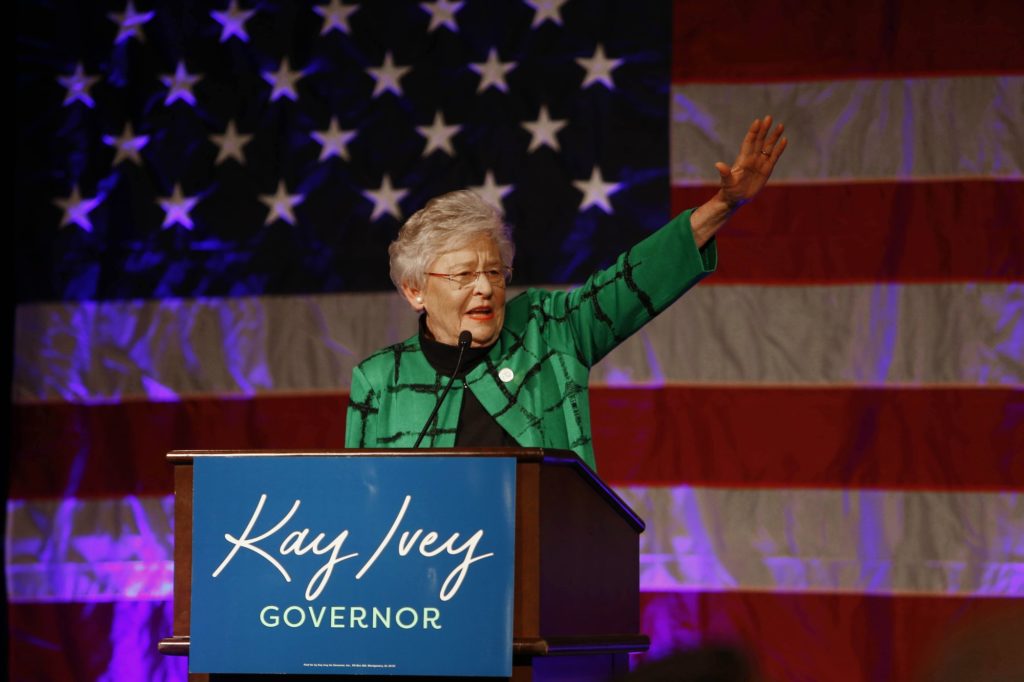
As she stakes out an agenda for her first full term as governor, one of Republican Gov. Kay Ivey’s initiatives is a proposed 10-cent-a-gallon gas tax increase to fund road and bridge construction. But to be successful, she first must clear attempted roadblocks from some members of her own party. Republican leaders in the GOP-dominated Alabama Legislature lined up in support of Ivey’s proposal, and said they are optimistic it will win approval. But the Alabama Republican Party executive committee passed a resolution opposing the increase and some Republican lawmakers say they are opposed. Ivey pitched the issue as a necessity to address crumbling infrastructure, holding a press conference by an aging rural bridge that local officials say could soon be closed because of safety concerns. “This is an issue that is felt by every Alabamian,” Ivey said. Rep. Bill Poole, the sponsor of the gas tax legislation, said he is “optimistic we will be able to secure the support that will be necessary to pass it.” “It’s a hard issue. It’s is going to be a passionate debate. It is perfectly fine for folks to disagree on options, but at the end of the day this is the best option that we have to address this issue in my opinion,” Poole said. The proposed 10-cent gas tax increase would be phased in over three years. The tax would then be indexed to construction costs so it could be adjusted up to a penny every two years without legislative approval. Alabama’s current state gas tax of 18 cents a gallon has been unchanged since 1992 and is among the lowest in the nation, according to comparisons from the American Petroleum Institute. Lawmakers anticipate that Ivey will call a special session to focus attention on the bill and bypass a tough procedural hurdle that requires a three-fifths vote to bring bills up for debate before state budgets in a regular session. Debate on the bill will begin in the 105-member House of Representatives where lawmakers appear divided. Rep. Tommy Hanes, a Republican from Bryant, said he will vote no. “I will be a no simply because working people with families and senior citizens on fixed incomes cannot live with new taxes,” Hanes said. Hanes said the people of his district are telling him to vote against the gas tax increase. Additionally, the Alabama Republican Party Executive Committee last week approved a resolution opposing the increase because it would increase people’s total tax burden unless there is a tax cut somewhere else. The resolution opposing the gas tax increase passed with 61 percent approval. The 105-member House has 27 freshmen members. House Speaker Mac McCutcheon said during the election that he had counseled Republican candidates that this is an issue they could see in their first session. McCutcheon expressed optimism about the bill’s chances. “I’m getting responses and they are all positive from the members in the House. They are beginning to study the bill,” McCutcheon said. House Minority Leader Anthony Daniels said House Democrats have mixed views. Daniels said some lawmakers support the tax because of the need to improve local road and bridge conditions, particularly in rural areas. Others are opposed or can’t commit until they see the legislation. “I don’t think anybody disagrees that there is a need for infrastructure and support for infrastructure. I don’t think anyone is disputing that. There is also a need for Medicaid expansion to save our rural hospitals,” Daniels said. The legislative session begins Tuesday at noon. Republished with permission of the Associated Press
