
Michael Cohen’s lawyer says Donald Trump advisers were ‘dangling’ pardons
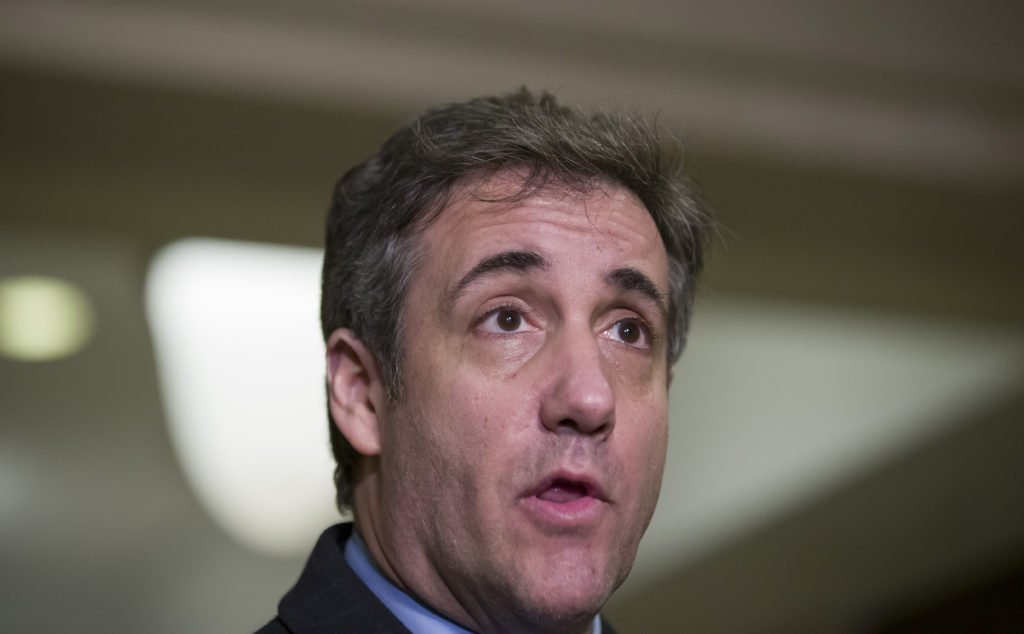
President Donald Trump‘s advisers dangled the possibility of a pardon for his former personal lawyer Michael Cohen last year, Cohen’s attorney said Thursday, as congressional investigators zero in on the president’s pardon power. The issue of pardons has emerged as a key line of inquiry as Democrats launch a series of sweeping investigations into Trump’s political and personal dealings. Lanny Davis, Cohen’s lawyer, said in a written statement Thursday that his client was “open to the ongoing ‘dangling’ of a possible pardon by Trump representatives privately and in the media” in the months after the FBI raided Cohen’s home, office and hotel room in April 2018. Davis, who was not Cohen’s lawyer at the time, said Cohen “directed his attorney” to explore a possible pardon with Trump lawyer Rudy Giuliani and others on Trump’s legal team. The statement appears to contradict Cohen’s sworn testimony last week at a House Oversight Committee hearing that he had never asked for, and would not accept, a pardon from Trump. Davis’ comment raises questions about whether Cohen — who is slated to begin a three-year prison sentence in May for crimes including lying to Congress — lied to Congress again last week. Cohen’s legal team argued that his statement was correct because Cohen never asked the president himself for a pardon. In a statement, Giuliani called Cohen a “serial liar.” “Let’s hope Congress and DOJ are outraged at Cohen’s disrespecting them by perjuring himself repeatedly,” Giuliani said. There is nothing inherently improper about a subject in a criminal investigation seeking a pardon from a president given the president’s wide latitude in granting them. But investigators want to know if the prospects of presidential pardons were somehow offered or used inappropriately. It is hard to untangle the conflicting narratives given the unreliability of some of the central characters. Cohen, for instance, has pleaded guilty to lying to Congress and saw his credibility attacked last week by Republican lawmakers. Davis has had to walk back at least one bombshell assertion over the last year — that his client could tell investigators that Trump had advance knowledge of a Trump Tower meeting with a Russian lawyer during the 2016 campaign — and Giuliani has fumbled facts and repeatedly moved the goalposts about what sort of behavior by the president would constitute collusion or a crime. Congressional investigators, meanwhile, appear to be focusing on presidential powers as a significant line of questioning in their probes. The House Judiciary Committee, which is conducting a probe into possible obstruction of justice, corruption and abuse of power, sent letters to the FBI, the Justice Department and others for documents related to possible pardons for Cohen, former national security adviser Michael Flynn and former Trump campaign chairman Paul Manafort. All three have been charged in special counsel Robert Mueller‘s investigation into possible coordination between Russia and Trump’s presidential campaign. Congressional investigators are also looking into whether anyone on Trump’s legal team tried quietly to reach out to Cohen last year before he turned on the president and as his legal problems mounted. According to a person familiar with the matter, two New York attorneys who claimed to be in contact with Giuliani reached out to Cohen after the raids on his office and hotel room. The attorneys said they could join his legal team in order to be a conduit to Trump’s lawyers, the person said. The person was not authorized to discuss the matter publicly and spoke to The Associated Press on condition of anonymity. The attorneys did not explicitly discuss a potential pardon, but investigators are looking into whether it was an implicit communication that Cohen’s chances of a pardon could be increased if he hired the attorneys, the person said. The lawyers later sent Cohen a bill for their legal service, which he didn’t pay, according to the person. Giuliani, who did not immediately return a call for comment, has raised the prospect of pardons in the past. In June, he said the president might pardon Manafort and others who were ensnared in the Russia investigation if he believed they were treated “unfairly.” But, he said, that would happen only after Mueller’s work wraps up. “The president is not going to issue pardons in this investigation,” Giuliani said. “Because you just cloud what is becoming now a very clear picture of an extremely unfair investigation with no criminality involved in it of any kind.” But, he added, “When it’s over, hey, he’s the president of the United States. He retains his pardon power. Nobody is taking that away from him. He can pardon, in his judgment.” Cohen has become a key figure in congressional investigations since turning on his former boss and cooperating with the special counsel. During last week’s public testimony, he called Trump a con man, a cheat and a racist. Trump, in turn, has said Cohen “did bad things unrelated to Trump” and “is lying in order to reduce his prison time.” In his statement on Thursday, Davis tried to downplay the contradiction between his statement and Cohen’s testimony. He said when he was brought on to Cohen’s legal team in June, his client “authorized me as a new lawyer to say publicly Mr. Cohen would never accept a pardon from President Trump even if offered.” “That continues to be the case,” Davis said. “And his statement at the Oversight Hearing was true — and consistent with his post joint defense agreement commitment to tell the truth.” Davis did not immediately respond Thursday to text messages and emails seeking additional information. Separately on Thursday, Cohen filed a lawsuit in New York City claiming the Trump Organization broke a promise to pay his legal bills and owes at least $1.9 million to cover the cost of his defense. Cohen alleges the company breached a contract when it stopped paying his mounting legal fees after he began cooperating with federal prosecutors in their investigations. The Trump Organization didn’t immediately respond to messages seeking comment, and Cohen’s attorneys
With possible gas tax hike on the horizon, Senate committee approves ALDOT oversight bill
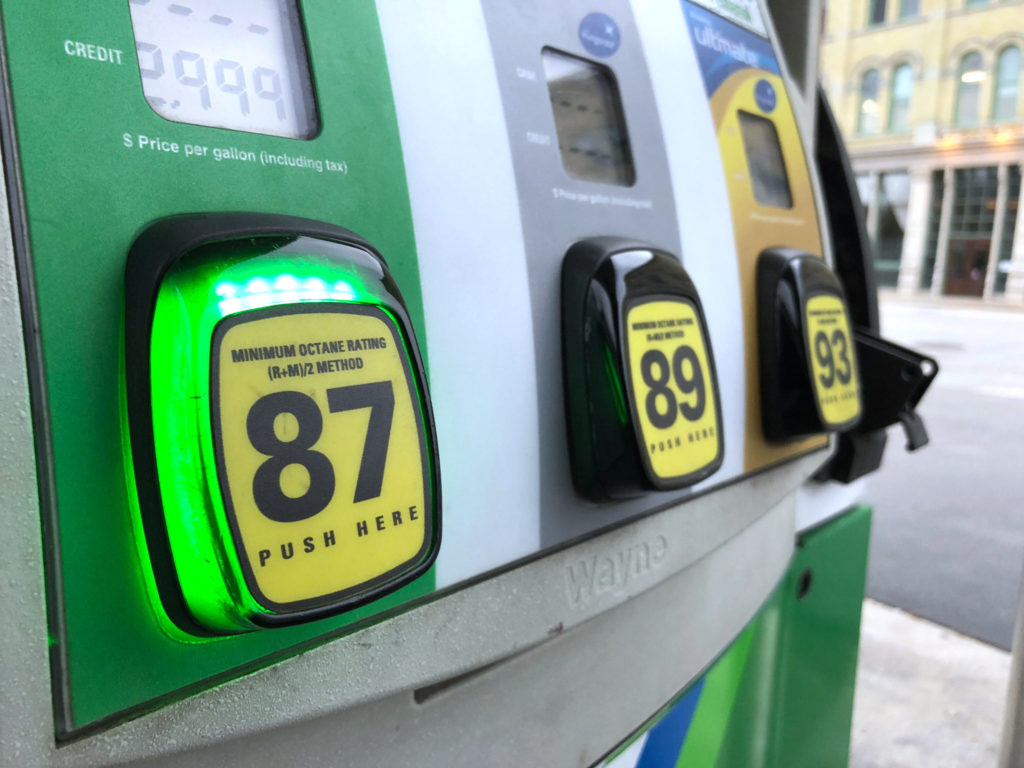
With a possible gas tax hike on the horizon, some lawmakers are hoping new Alabama Department of Transportation (ALDOT) oversight and transparency measures make the voting for the tax hike easier to stomach. Which is why the Alabama Senate Transportation Committee on Thursday approved a bill that would do just that. “We’re getting some of the accountability and transparency back, and that’s important. I needed that to be able to support (the bill),”Athens-Republican, State Rep. Danny Crawford told The News Courier. The committee passed Pratville-Republican, State Sen. Clyde Chambliss‘ S.B. 2, which requires that the Statewide Transportation Improvement Program (STIP), ALDOT’s long-range plan of road and bridge projects in Alabama, be constantly available on ALDOT’s website, along with any updates of the STIP plan. “This bill dramatically increases oversight and accountability for the Department of Transportation,” Chambliss said. “Governor Ivey has put forward her Rebuild Alabama plan for modernizing Alabama’s infrastructure, and I support her proposal. At the same time, the Legislature is tasked with making sure tax dollars are being spent in a transparent, efficient, and accountable manner.” Increasing transparency, accountability Gov. Kay Ivey‘s 10-cent gas tax increase proposal is part of her Rebuild Alabama Infrastructure Plan. It would be implemented over a three-year period to fund the state’s infrastructure improvements. Ivey’s plan appropriates 66.67 percent of the funds raised from the gas tax to the ALDOT, leaving many lawmakers looking for more transparency and accountability before a final vote on the tax increase. “At the end of the year, they would have to show where the money was spent and it will be audited,” Crawford told The News Courier. “We don’t want any dollars going to equipment or employee raises. “Accountability is an important piece of Governor Ivey’s Rebuild Alabama plan. We still have work to do but I believe that at the end of the day we will have a piece of legislation that holds ALDOT accountable for the work they do and the money they spend,” explained Anniston-Republican, Senate President Pro Tem Del Marsh. “This measure of oversight must be approved to show the taxpayers how money is been used to improve roads and bridges in Alabama. I want to thank the Transportation Committee for their work on this important piece of legislation.” S.B. 2 also reorganizes the Alabama Legislative Joint Transportation Committee, which has responsibility for reviewing the long-term plans and budget for the Department of Transportation. Chambliss’ plan specifies the Joint Transportation Committee will meet four times per year at the Statehouse, and mandates that members will be automatically removed if they miss two meetings in a calendar year. Apparent bipartisan support When Chambliss’ proposal was introduced in the Senate last week, Greensboro-Democrat, Senate Minority Leader Bobby Singleton welcomed the legislation as something both sides of the aisle could support. “Accountability is a bipartisan issue and I will continue to work with my colleagues to ensure that our transportation dollars are spent wisely and efficiently. Infrastructure is important to our future and we must make the most of every dollar,” Singleton said.
Gas tax increase one step closer to reality, bill clears House committee

Gov. Kay Ivey‘s plan to raise the state’s gas tax by 10 cents as a means to fund infrastructure improvements cleared its first hurdle on Thursday. The House Transportation, Utilities and Infrastructure Committee approved the legislation by voice vote, which now moves the bill to the full House of Representatives for further consideration. The full House could vote on the bill as early as Friday. Ivey’s plan The state currently imposes a flat excise tax of 18 cents-per-gallon on gas and 19 cents-per-gallon on diesel, without adjusting for inflation and other construction and maintenance costs. This combined fuel tax revenue generates 80 percent of Alabama’s transportation funding. The plan’s 10-cent increase will be phased in over the next three years. New revenue generated by the increase will be dispersed between state, county, and municipal governments in Alabama. According to Ivey, these funds are to be used for transportation infrastructure improvement, preservation and maintenance projects. A separate portion of the revenues will go to pay a bond to be issued to finance improvements to the ship channel providing access to the facilities of the Alabama State Docks. “My Rebuild Alabama Infrastructure Plan is a comprehensive approach to a glaring issue affecting citizens in every corner of the state,” Ivey said announcing her plan last week. “After 27 years of stagnation, adequate funding is imperative to fixing our many roads and bridges in dire need of repair. By increasing our investment in infrastructure, we are also making a direct investment in public safety, economic development, and the prosperity of our state.”
A different kind of freshman marks Nancy Pelosi’s new majority
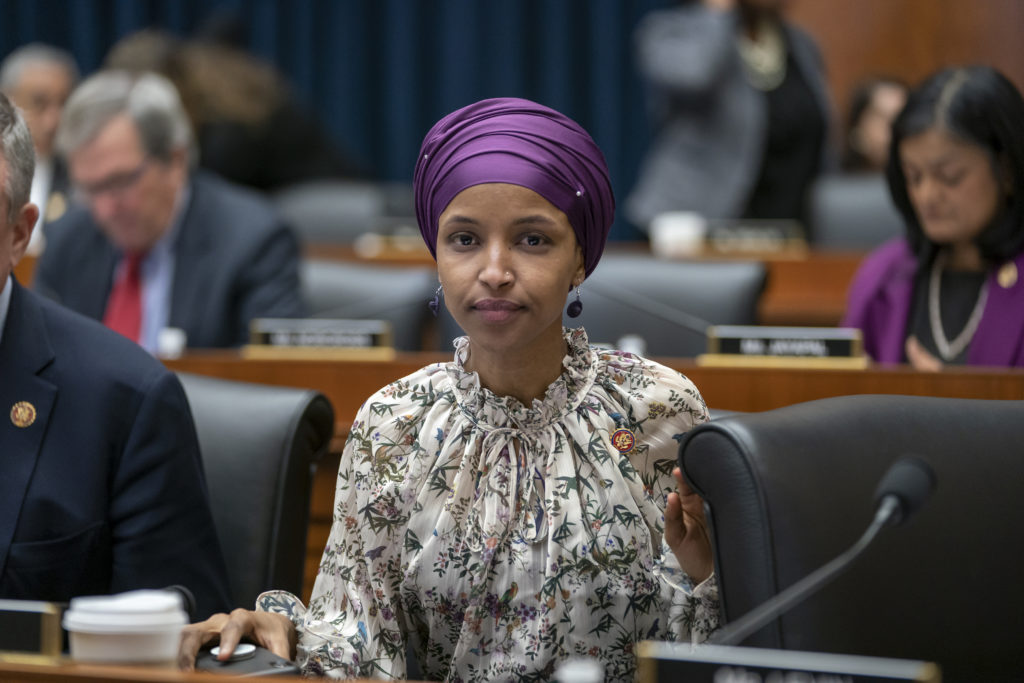
It wasn’t exactly a mic-drop moment. But when House Speaker Nancy Pelosi abruptly ended a conversation as a freshman lawmaker no longer seemed to be listening, it showed just how far the Democratic leader and the new majority have to go in getting used to each other. A lot has changed in the 12 years since Pelosi last ran the House. The California Democrat is finding a freshman class whose members seem more eager to lead than be led. Part of a younger generation of lawmakers, mostly women and minorities, they bring perspectives and expectations different from some who have walked the halls for decades. A few, like New York’s Alexandria Ocasio-Cortez, carry their own starpower in real-time on social media. Their willingness to question the protocols of Congress is exposing Pelosi’s leadership team to high-profile stumbles. Leaders could not hold their majority in line on a routine procedural vote last week. And this week, a debate spilled into the open over a leadership plan for a resolution condemning anti-Semitism and Islamophobia largely in response to remarks made by Minnesota’s Ilhan Omar. “So, we have some internal issues,” Pelosi acknowledged Wednesday during a private caucus meeting. It was during that behind-closed-doors session that another newly elected Democrat, Jahana Hayes of Connecticut, stood to speak about the resolution, according to those in the room. Hayes wanted more input on the process. Others worried that their legislative agenda had drifted way off track. Some questioned why Omar’s actions were being singled out when others — namely President Donald Trump and Republicans in Congress — had repeatedly made offensive comments on race and religion. When Pelosi addressed her, Hayes turned to walk away. Exasperated, Pelosi said if Hayes wasn’t going to listen, the conversation was over. She set down the microphone. Hayes later told reporters that she didn’t realize Pelosi was talking to her. But, she said, she’s ready to speak up again, every time she needs to. “I don’t want to wait two years before I raise my voice,” she said. “I know that looks different or feels different to people. … But I didn’t come here to just sit quietly and fall in line.” Hayes said, “I don’t mean that to be disrespectful. But the people in my district deserve a voice. These are important decisions.” She added, “A new crop of freshmen, I guess.” Every new majority has its growing pains. GOP Speaker John Boehner never really figured out a way to control the tea party Republicans who ultimately forced his retirement. And Pelosi’s predecessor, Republican Paul Ryan, called it quits rather than try to do much better. Pelosi, who made history in 2007 as the first female speaker, has always been seen as a particularly strong leader. She fended off attempts to topple her return this year, and her stock soared among some Democrats as she took on Trump during the 35-day partial government shutdown. But Pelosi faces a changed media environment that is rapidly chronicling every move of the historic freshmen class in real-time and a president in the White House eager, with his GOP allies in Congress, to capitalize on the divisions. Trump tweeted Wednesday about the resolution debate, saying it was “shameful” Democrats wouldn’t take a stronger stand against anti-Semitism in their conference. Democrats also returned a veteran leadership team, House Majority Leader Steny Hoyer of Maryland and Majority Whip Jim Clyburn of South Carolina, who, along with up-and-comers, have made no secret of their interest in Pelosi’s job. They are responsible for setting the floor schedule and counting the votes, and share some responsibility — and blame — for the leadership’s early pitfalls. While Democrats had a larger majority 12 years ago, the caucus was not as racially and ethnically diverse the first time Pelosi was speaker. There was a sense Wednesday among Democrats that Pelosi and her leadership team may have underestimated the anger and opposition that a resolution dealing only with anti-Semitism would inflame among progressives, who now include the first two Muslim women to serve in Congress. Rep. Katie Hill, D-Calif., a freshman liaison to Democratic leaders, said Pelosi is juggling several dynamics. Managing the social media and instantaneous reaction that turned the issue “into this massive explosion … is one of the biggest challenges,” she said. In fact, it wasn’t Pelosi’s idea to put forward the resolution on anti-Semitism, according to those familiar with the situation. They and others spoke about private conversations on condition of anonymity. But after fielding some 100 calls over the weekend from other lawmakers, some proposing it as a response to Omar’s comments about Israel, Pelosi agreed to the idea and suggested they broaden the resolution to include a rejection of anti-Muslim bigotry. Omar is Muslim-American and faces criticism, including by GOP lawmakers, and public threats. The early drafts, though, went too far for some lawmakers, but not far enough for others. Jewish lawmakers, in particular, preferred the more narrow approach to anti-Semitism. Others wanted a more sweeping statement against other forms of racism and bigotry that, as Clyburn put it, was “anti-hate.” After Wednesday’s session, Pelosi pivoted, shelving the issue that had already drained Democrats of much of their focus on the week’s agenda. “This is a distraction,” said Rep. Bonnie Watson Coleman, D-N.J., who made similar remarks during the private session. “We came in promising a rigorous agenda for the people.” Others, though, said Democrats needed to remind Americans, and others, of the dangers of anti-Semitic tropes. Omar last week suggested the Jewish state’s supporters are pushing lawmakers to pledge “allegiance” to a foreign country. “It’s important for us to have this conversation and for people to understand the history,” said Rep. Juan Vargas, D-Calif. He faced his own run-in after Ocasio-Cortez tweeted about his views in what would have been seen as a rare display of intra-party disagreement. Rep. Hank Johnson, D-Ga., said Pelosi is adroit at being able to “adapt to the reality once that reality becomes clear to her.” He
Revised gas tax bill filed in the House, first vote scheduled

A revised version of Gov. Kay Ivey‘s proposed 10-cent gas tax increase was filed in the State House of Representatives Wednesday addressing concerns within in the bill. The changes made address a provision specific to hybrid and electric car fees. In the original version of the bill, a new $250 license and registration fee was created for electric vehicles and a $125 fee on hybrid-electric vehicles. The bill has been revised so the annual fee for electric cars is now $200 and hybrid owners will pay $100 each year. First vote The House Transportation, Utilities and Infrastructure Committee has scheduled 10:30 a.m. vote on Ivey’s proposal on Thursday. The entire bill is available online.
Daniel Sutter: Is economic freedom killing people?

I frequently extol the virtues of economic freedom, which generally produces prosperity and rising standards of living. However, could economic freedom possibly be contributing to America’s opioid crisis and its tragic deaths? Fox News’ Tucker Carlson suggests so in his book Ship of Fools. The argument deserves a hearing, especially with proponents of free markets. The costs of today’s malaise are undeniable. As Mr. Carlson writes, “If you’re a middle-aged American man, you probably know at least one peer who has killed himself in recent years, and maybe more than one.” The statistics are grim: a 43 percent increase in suicides among middle-aged men, a quadrupling of opioid-related overdose deaths, ten percent of men between 25 and 54 out of the workforce. Suicides and overdoses are reducing life expectancy. The loss of jobs in manufacturing and mining provides a plausible economic cause. Academic research links job loss with a loss of self-esteem, depression, and family breakup. It is a short step to addiction, and the geographic concentration of job loss coincides with opioid addiction. The role of international trade, automation, and immigration specifically implicates economic freedom. Businesses have moved jobs overseas, automated jobs, and hired inexpensive immigrants, boosting profits while eliminating jobs supporting middle class families. Is economic freedom truly to blame? In one sense we must say no, because economic freedom enabled the factories which lifted families into the middle class. The effect must be through interaction with other economic forces. As Mr. Carlson writes, “Someone needs to protect workers from the terrifying power of market forces, which tend to accelerate change to intolerable levels and crush the weak.” Globalization and automation may be occurring too fast for people to cope due to economic freedom. Some economists would contend that displaced workers just need to learn new skills and find new jobs. Artificial intelligence will not end work and unemployment is at record lows. This may be the best time to ever have to switch careers. Yet I agree with Mr. Carlson that this response is lame. It’s like telling someone not to get depressed over the death of a family member. People inevitably have difficulty accepting that what they have done for years is no longer needed, and the new job almost surely won’t pay as much as the factory. Something more fundamental seems to be happening. The failure of numerous manufacturers over the decades – like Studebaker, Packard, and Pullman – never produced such dramatic consequences. What we are witnessing is the end of the need for thousands of jobs in steel or auto plants for decades. Smart robots will be doing any new job long before employers need to hire thousands of workers. Work will be fleeting. This has, I think, broken down a long-standing informal deal. I’ve previously called this the “Allentown economy,” in honor of Billy Joel’s awesome and prescient 1982 song. One line went, “For the promises our teachers gave, If we worked hard, If we behaved.” Do as authority figures (teachers and later bosses) ask and life will be good. A middle-class standard of living was never gifted to workers; their work in factories helped make America prosperous. The implicit deal’s breakdown explains the extent of today’s malaise and the inadequacy of retraining. People willing to follow direction and work hard are no longer so needed. The Allentown economy was not created as part of anyone’s grand design. The deal worked and so people went along. Is there a solution to the breakdown of the deal? Unfortunately, the complex social problems rarely admit easy solutions. Our economy is much more complicated than, say, a derailed train. Any solution may excessively curtail market forces. Economic freedom allows people to craft lives they want to live. America today almost surely has more prosperity and innovative ways to earn a living than ever. Yet millions of Americans cannot find a life worth living. This is a tragedy, whether attributable to economic freedom or not. Daniel Sutter is the Charles G. Koch Professor of Economics with the Manuel H. Johnson Center for Political Economy at Troy University and host of Econversations on TrojanVision. The opinions expressed in this column are the author’s and do not necessarily reflect the views of Troy University.
