
Email Insights: Del Marsh files animal protection bill
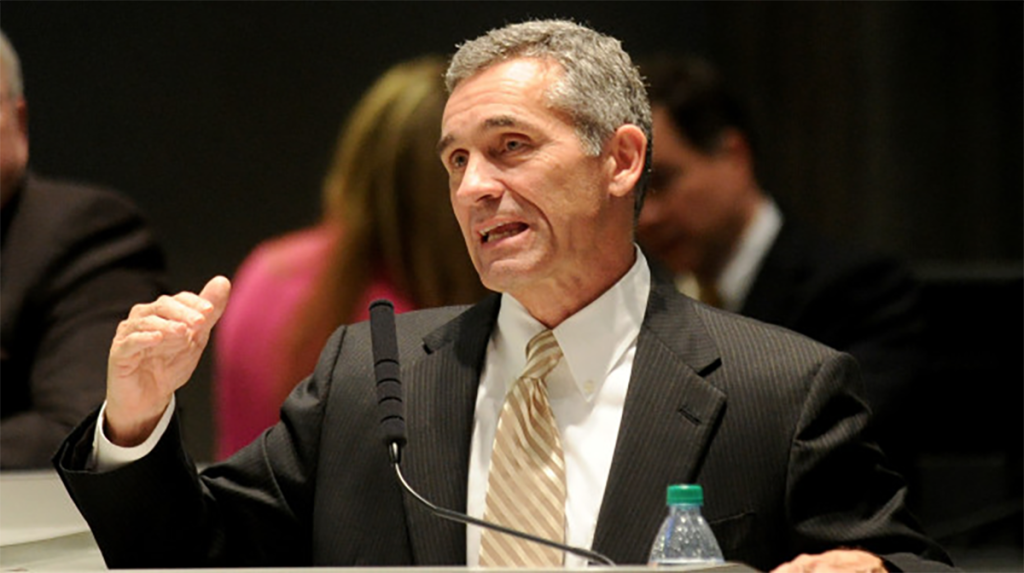
From the office of the Senate President Pro Tempore Del Marsh. Below you will find a press release from Marsh’s office regarding Senate Bill 61 which was filed March 05, 2019. The bill summary says, “This bill would provide that a person who rescues a domestic animal from a motor vehicle when the person holds a good faith belief that the domestic animal is in imminent danger of suffering bodily harm unless removed from the motor vehicle is immune from liability for property damage or injury under certain circumstances.” , “This bill would provide that a person who rescues a domestic animal from a motor vehicle when the person holds a good faith belief that the domestic animal is in imminent danger of suffering bodily harm unless removed from the motor vehicle is immune from liability for property damage or injury under certain circumstances.” Senate President Pro Tempore Del Marsh announced today that he has filed a bill that would give immunity to a person who rescues an animal from a car if they believe that the life of the animal is at risk. If enacted, this bill would only allow for immunity from prosecution if a person believes the life of the animal in a hot car is in danger and breaks into the car to rescue them. Before attempting the rescue, a person must contact police or animal control to inform them of the situation, and remain at the scene until authorities arrive to investigate. “This is a simple bill, but one that is critical especially as the weather begins to warm up here in Alabama,” Marsh said. “As I travel around my district and even across the state, I have heard from many people that this is an issue that is very important to them.” “This bill is to protect people who are doing the right thing and trying to rescue an animal whose life is in danger.”
Supreme Court rules against immigrants in detention case
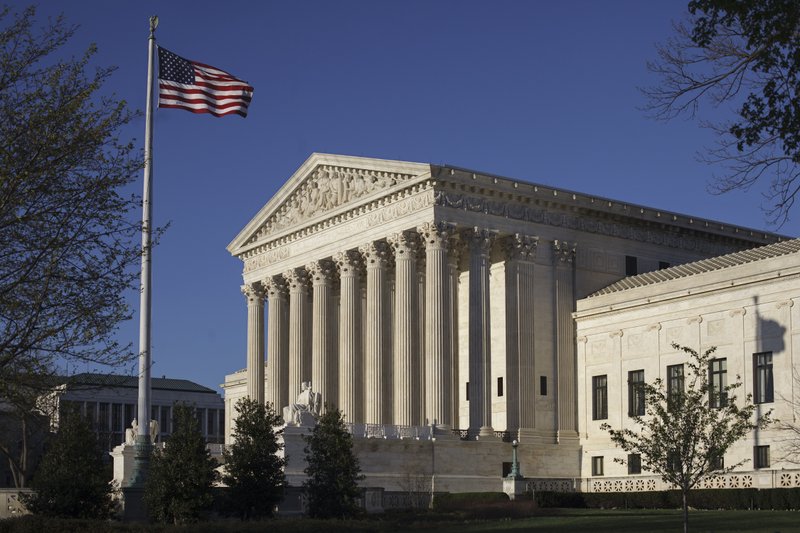
A divided Supreme Court ruled Tuesday against a group of immigrants in a case about the government’s power to detain them after they’ve committed crimes but finished their sentences. The issue in the case before the justices had to do with the detention of noncitizens who have committed a broad range of crimes that make them deportable. Immigration law tells the government it must arrest those people when they are released from custody and then hold them while an immigration court decides whether they should be deported. But those affected by the law aren’t always picked up immediately and are sometimes not detained until years later. In the case before the Supreme Court, a group of mostly green card holders argued that unless they’re picked up essentially within a day of being released, they should be entitled to a hearing where they can argue that they aren’t a danger to the community and are not likely to flee. If a judge were to agree, they would not have to remain in custody while their deportation case goes forward. That’s the same hearing rule that applies to other noncitizens the government is trying to deport. But the Supreme Court disagreed with the immigrants’ interpretation of federal law in a 5-4 ruling that divided the court along ideological lines. Looking at a statutory provision enacted by Congress in 1996, Justice Samuel Alito wrote that “neither the statute’s text nor its structure” supported the immigrants’ argument. The court’s conservative justices sided with the Trump administration. The administration argued, as the Obama administration did, that those affected by the law aren’t entitled to a hearing where they can argue for their release, regardless of whether they are arrested immediately after being released from custody or not. Department of Justice spokeswoman Kerri Kupec said the administration was “pleased with the decision.” Justice Stephen Breyer, in a dissent he read aloud in court, said that the larger importance of the case has to do with the power his colleagues’ ruling gives the government. “It is a power to detain persons who have committed a minor crime many years before. And it is a power to hold those persons, perhaps for many months, without any opportunity to obtain bail,” Breyer said. He wrote that in his view the law requires immigrants who have committed crimes to be detained “within a reasonable time after their release” from custody, “presumptively no more than six months.” If the person is not detained within that time, they should get a hearing where they can argue for their release, Breyer wrote. The American Civil Liberties Union represented the immigrants in the case before the Supreme Court. ACLU attorney Cecillia Wang, who argued the case, said after the decision that the ACLU will call on Congress to clarify the law and will continue to pursue options in court. Tuesday’s ruling was based on the text of the statute, and Wang said the ACLU will argue that the statute, as interpreted by the justices, is unconstitutional. Wang also called the decision an “extreme waste of taxpayer money,” saying it locks up individuals who are not a danger to the community. The case before the justices involved a class-action lawsuit brought by noncitizens in California and a similar class-action lawsuit brought in the state of Washington. In those cases, the U.S. Court of Appeals for the 9th Circuit sided with the immigrants, but other appeals courts had sided with the government in similar cases. One of the lead plaintiffs involved in the California case, Mony Preap, has been a lawful permanent resident of the United States since 1981 and has two convictions for possession of marijuana. He was released from prison in 2006 but was not taken into immigration custody until 2013. Preap has since won his deportation case, allowing him to remain in the country. The case is 16-1363 Nielsen v. Preap. Republished with permission of the Associated Press
Personnel Note: Managing Editor Elizabeth Patton leaves Alabama Today

A personnel update I’ve known was coming, but am still dreading writing. After starting with Alabama Today shortly after the site launched, writer/managing editor Elizabeth Patton is in her final days with us. Please join me and wish her well as she embarks on a new journey in her life and career. There have been late nights and early mornings, blood, sweat and tears, several moves, a marriage and some kids added between us since she started; alas it has come time for a new chapter for Patton. Our loss is BL Harbert‘s gain as she starts a position as a part of their marketing team this week. Patton managed and wrote for Alabama Today during many wild adventures; from the Mike Hubbard trial, through numerous election cycles (including the special election for U.S. Senate) and right through this crazy gas tax increase/mess. Patton has kept readers and the site up to date and helped boost posts to relevant audiences throughout the way. She’s overseen almost a dozen different writers/reporters over the years joining me in the constant refrain and repeated goal “straight down the middle.” Patton grew our social media presence on Facebook and Twitter, made sure posts were “made pretty,” and did much more than I could write about here. By the end of her time here, she could understand my cryptic emails and text, and is fluent in “Apryl Marie” — a foreign language skill that one can’t put on a resume, but is yet notable . I wish her all the best and am grateful for all her hard work over the years.
Rauf Bolden: Government revisiting fiber-to-the-home in Orange Beach

Here we go again, resurrecting the same old plan when so many new options are on the table. “Once we get the marketing materials together and get the name out there in the area we are going to start marketing ourselves as a fiber to the home provider [in Orange Beach],” said WhiteSky’s Matt Amick. “Within the next month or two we’re really going to start working on it.” This prepaid enrollment plan failed before, and it will fail again. “An effort last year through CenturyLink fell through mainly because of a lack of consumer confidence,” said Councilman Jerry Johnson in a report on the obawebsite. I guess consumers will have more confidence in a company they never heard of before today. The premier fiber-to-the-home (FTTH) city in Alabama is Sylacauga, “The Utilities Board of the City of Sylacauga is the sole provider. We are a gigabit city and we offer service within our electric service area and a few areas outside of same. We bring the service to customers on demand. We did not run fiber to every brick and mortar hoping for a subscription,” said Reay Culp, Network Administrator for the Utilities Board of the City of Sylacauga in an email. The Sylacauga model is exemplary because their municipality is heavily invested, believing in the idea. Orange Beach Mayor Tony Kennon should take a posse north, putting boots on the ground, seeing why Sylacauga is the shining light, perhaps returning with elements from their playbook before rolling out another doomed proposal. Doing more onsite research, traveling to see what works in other fiber communities like Bristol, Va.; Dalton, Ga.; Chelan County, Wash.; Grant County, Wash.; Jackson, Tenn.; Kutztown, Pa.; and Reedsburg, Wis. will help focus the lens. Orange Beach must do a better job the second time around instead of trotting out the same old prepaid subscription chestnut as before. Senator Mitch McConnell (R-Ky) says there is no education in the second kick of the mule. Why do we have this problem? Quite simply said, the world is changing. Internet access and generous bandwidth are as indispensable to local families as air. Today’s economy cannot function without both. Getting Internet is the easy part, having enough bandwidth to support families with children, operating multiple devices, and businesses with an online presence are where fiber connectivity comes in. Orange Beach needs young families to move here, supporting our economy. High bandwidth homes will give the city the potential to market itself to professionals who do not need to report to their offices every day, possibly moving their families to Orange Beach, raising their children in a safe environment, attending our schools, worshiping in our churches, and participating in local government. A fiber infrastructure will attract a class of resident that is technologically savvy, having more years in front of them than they have behind them. Building out the network with city funds ensures the future survival of this vibrant community. That’s what’s important here, investing for familial continuity. Do we really have to connect every home in Orange Beach with fiber in order to achieve high-bandwidth connectivity? The answer is no, because the city owns several strands of dark fiber, supplied by Harbor Communications. Harbor has fiber traversing every arterial road in the city, and they already supply all city facilities with Internet service and VoIP phones. When coupled with a Verizon partnership, perhaps a fiber operator is best suited, helping Orange Beach create the first 5G city in Alabama. “5G is reaching speeds that are twenty times faster than 4G LTE,” according to a report on the Droid Guy. Alternatively, residents needing immediate increases in bandwidth can purchase a small Internet device (JetPack) from a Verizon store. This 3”x5”x1” box offers a choice of several “4G LTE [no unlimited]” plans, allowing simultaneous connections on several devices. So you see, high-speed Internet in terms of bandwidth already exists in Orange Beach through a wireless carrier. It is just a matter of deciding if you want to go wired with fiber or wireless without. I do not make this statement lightly. Verizon powers the city’s cell phones, Police mobile, and Fire mobile. These “JetPack” devices have proven to be very reliable for our first responders, and department heads. Communications between essential personnel in the City of Orange Beach cannot be down, per Mayor Kennon. Outlining 4G availability options to our constituents as a realistic alternative to wired connections will help cut Internet provider complaints to city hall, perhaps gaining traction for a city financed upgrade to the next generation of 5G wireless service. 5G requires a build out, combining buried fiber optic cables and electrical power, interconnecting the poles along the rights-of-way into an integrated infrastructure network. The build will look something like this. Each pole is set approximately one-quarter of a mile apart along Canal Road, Hwy 161, and the Beach Road. I know this is possible with fiber already in the ground, because I have the fiber maps, but I cannot share them here, because they are proprietary. Attached to these poles is a 5G antenna, being cylindrical in shape about the size of an electrical transformer you see on generic power poles. I argue the city should finance the build out of a 5G network, guided by technology from Verizon’s engineers, creating a telecommunications model that will carry Orange Beach into the 22nd century, bringing high speed Internet to every family and business that wants it. “The initial cities that will support Verizon 5G home broadband are: Indianapolis, Indiana; Los Angeles, California; Sacramento, California; and Houston, Texas,” according to a report on 9to5Mac. Being first in the market has its drawbacks. “Verizon has been in a cutthroat competition with AT&T to be the first carrier to offer 5G, and it already claimed that title — sort of. The telecom giant launched a pre-standard 5G network in the fall of 2018, deciding to move forward with its own technology rather than wait for slow-moving standards bodies to
