
Lawsuit challenges Alabama’s method of electing judges
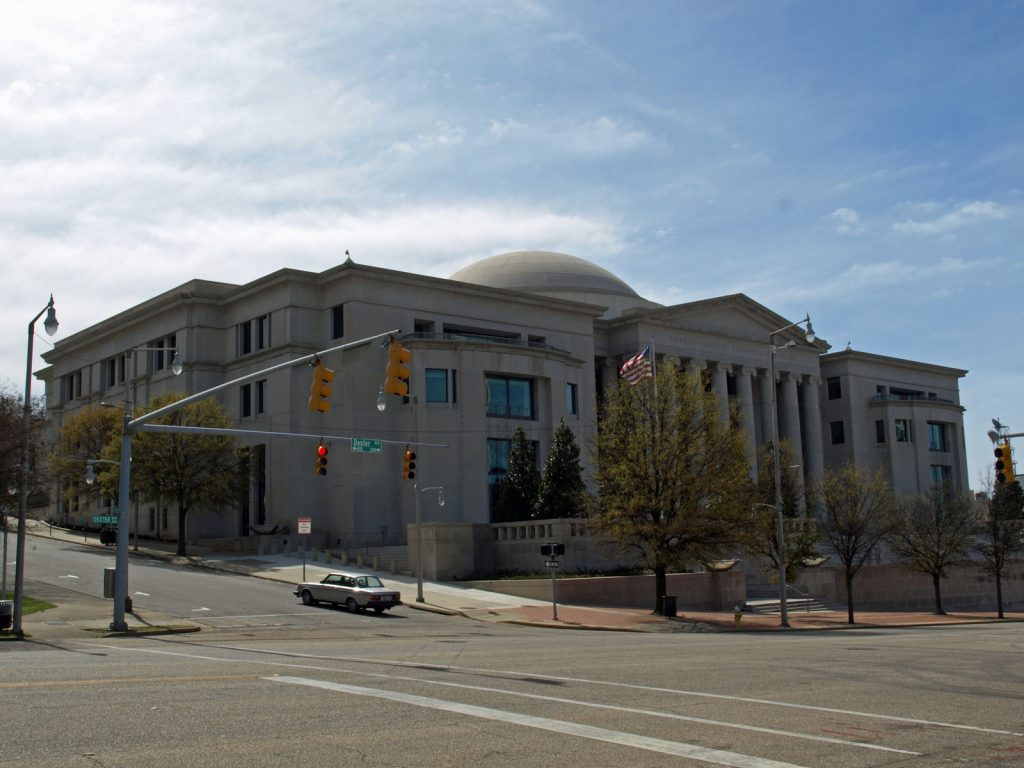
Alabama’s practice of picking its appellate judges in statewide elections results in all-white courts in a state where one in four people is African-American, civil rights activists claim in a lawsuit that will soon come before a federal judge. Oral arguments are scheduled next month in Montgomery in the 2016 lawsuit filed by the Alabama State Conference of the National Association for the Advancement of Colored People (NAACP) and four black voters. The lawsuit contends the at-large method of electing judges violates the Voting Rights Act and the U.S. Constitution because it dilutes the voting power of African Americans in the state and keeps them from electing their preferred candidates. “Today, in 2019, all 19 of Alabama’s most powerful judges are white. This is the colorline in Alabama: a racially segregated judiciary where Blacks can be elected only to lower court positions,” lawyers for plaintiffs in the case wrote in a brief filed Monday. Plaintiffs are asking a judge to order the state to switch to elections by districts, or another method. The state will file its closing brief later this month. In earlier court filings the state argued that judges should be accountable to all Alabama voters, and not just certain districts, and that political party preference, not race, is the overriding factor. Plaintiffs argued that Alabama’s history “shows that its shift to one-party Republican control was driven principally by race.” The oral arguments next month will be the culmination of the lawsuit filed in 2016. A federal judge heard evidence in a bench trial that ended in November. Alabama’s appellate judges run in statewide partisan elections, just like the governor, attorney general and other top officials. The appellate courts in Alabama are all-white and all-Republican and have been for years. There has never been a black judge on the criminal and civil appeals courts. There have been three black judges on the Alabama Supreme Court but all were first appointed by governors. “No African American has won an election for the Alabama Supreme Court without first being appointed to office by the Governor_and that has only occurred three times in almost 200 years,” lawyers for plaintiffs wrote in their closing brief. The lawsuit is similar to one in Texas filed on behalf of several Hispanic voters. A judge in September ruled in favor of the state in that case. Republished with the permission of the Associated Press.
Colorful self-made billionaire Henry Ross Perot dies at 89
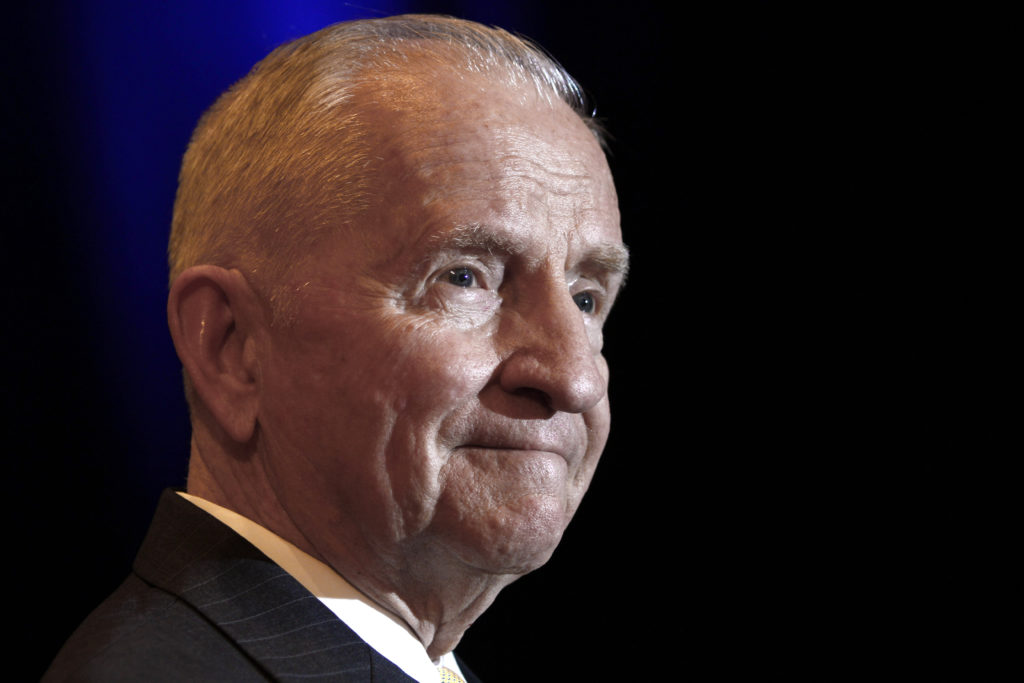
H. Ross Perot, the colorful, self-made Texas billionaire who rose from a childhood of Depression-era poverty and twice mounted outsider campaigns for president, has died. He was 89. The cause of death was leukemia, a family spokesman said Tuesday. Perot, whose 19 percent of the vote in 1992 stands among the best showings by an independent candidate in the past century, died early Tuesday at his home in Dallas surrounded by his family, said the spokesman, James Fuller. As a boy in Texarkana, Texas, Perot delivered newspapers from the back of a pony. He earned his billions in a more modern fashion, however. After attending the U.S. Naval Academy and becoming a salesman for IBM, he went his own way — creating and building Electronic Data Systems Corp., which helped other companies manage their computer networks. The most famous event in his business career didn’t involve sales and earnings, however. In 1979, he financed a private commando raid to free two EDS employees who were being held in a prison in Iran. The tale was turned into a book and a movie. “I always thought of him as stepping out of a Norman Rockwell painting and living the American dream,” said Tom Luce, who was a young lawyer when Perot hired him to handle his business and personal legal work. “A newspaper boy, a midshipman, shaking Dwight Eisenhower’s hand at his graduation, and he really built the computer-services industry at EDS.” “He had the vision and the tenacity to make it happen,” Luce said. “He was a great communicator. He never employed a speechwriter — he wrote all his own speeches. He was a great storyteller.” Perot first attracted attention beyond business circles by claiming that the U.S. government left behind hundreds of American soldiers who were missing or imprisoned at the end of the Vietnam War. Perot fanned the issue at home and discussed it privately with Vietnamese officials in the 1980s, angering the Reagan administration, which was formally negotiating with Vietnam’s government. Perot’s wealth, fame and confident prescription for the nation’s economic ills propelled his 1992 campaign against President George H.W. Bush and Democratic challenger Bill Clinton. In June of that year, a Gallup poll showed Perot leading his major-party rivals, but he dropped out in July, then rejoined the race less than five weeks before the election. Perot spent $63.5 million of his own money, much of it on 30-minute television spots during which he used charts and graphs to make his points, summarizing them with a line that became a national catchphrase: “It’s just that simple.” His homespun quips were a hallmark of his presidential campaign. Other memorable lines included his take on negative campaigning (“let’s get off mud wrestling”) and on getting things done (“don’t just sit here slow dancing for four years”). Some Republicans blamed Perot for Bush’s loss to Clinton, as Perot garnered the largest percentage of votes for a third-party candidate since former President Theodore Roosevelt’s 1912 bid. Perot’s second campaign four years later was far less successful. He was shut out of presidential debates when organizers said he lacked sufficient support. He got just 8 percent of the vote, and the Reform Party that he founded and hoped to build into a national political force began to fall apart. However, Perot’s ideas on trade and deficit reduction remained part of the political landscape. He blamed both major parties for running up a huge federal budget deficit and allowing American jobs to be sent to other countries. The movement of U.S. jobs to Mexico, he said, created a “giant sucking sound.” Perot continued to speak out about federal spending for many years. In 2008, he launched a website to highlight the nation’s debt with a ticker that tracked the rising total, a blog and a chart presentation. In Dallas, Perot left his mark by creating the Perot Museum of Nature and Science, helping finance the Morton H. Meyerson Symphony Center, and being a major benefactor of The University of Texas Southwestern Medical Center. He also provided help to families dealing with medical expenses or other challenges, according to those who knew him. “He gave a lot to other people in public ways, but he also did it in private ways that nobody saw. There were thousands of stories just like that,” said Meyerson, a longtime senior executive in Perot’s companies. Henry Ross Perot was born in Texarkana on June 27, 1930. His father was a cotton broker; his mother a secretary. Perot said his family survived the Depression relatively well through hard work and by managing their money carefully. Young Perot’s first job was delivering papers in a poor, mostly black part of town from his pony, Miss Bee. When the newspaper tried to cut his commission, he said he complained to the publisher — and won. He said that taught him to take problems straight to the top. From Texarkana, Perot went to the U.S. Naval Academy, never having been on a ship or seen the ocean. After the Navy, Perot joined International Business Machines in 1955 and quickly became a top salesman. In his last year at IBM, he filled his sales quota for the year in January. In 1962, with $1,000 from his wife, Margot — they met on a blind date — Perot founded Electronic Data Systems. Hardware accounted for about 80% of the computer business, Perot said, and IBM wasn’t interested in the other 20%, including services. Many of the early hires at EDS were former military men, and they had to abide by Perot’s strict dress code — white shirts, ties, no beards or mustaches — and long workdays. Many had crew cuts, like Perot. The company’s big break came in the mid-1960s when the federal government created Medicare and Medicaid. States needed help running the programs, and EDS won contracts — starting in Texas — to handle the millions of claims. EDS first sold stock to the public in 1968, and overnight, Perot was
Federal court: Donald Trump can’t ban critics from Twitter account
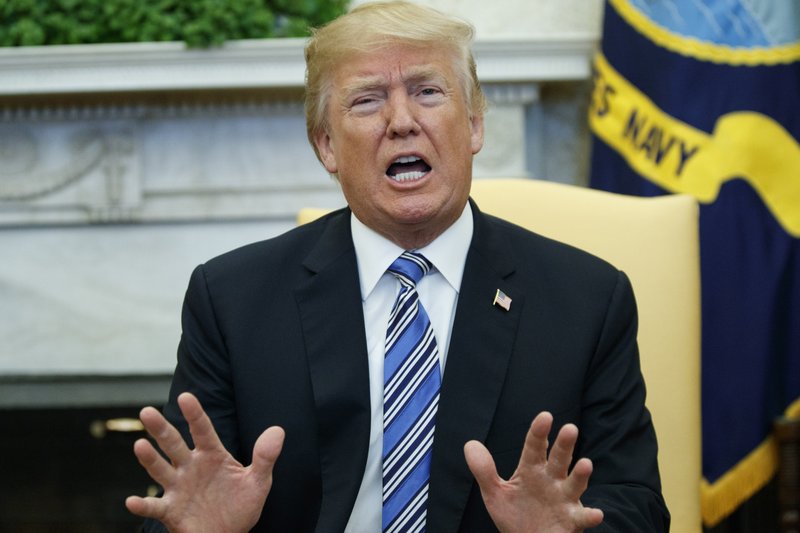
President Donald Trump can’t ban critics from his Twitter account, a federal appeals court ruled Tuesday, saying the First Amendment calls for more speech, rather than less, on matters of public concern. The 2nd U.S. Circuit Court of Appeals in Manhattan upheld a lower court judge who said Trump violates the Constitution when he blocks critics. “The irony in all of this is that we write at a time in the history of this nation when the conduct of our government and its officials is subject to wide-open, robust debate,” Circuit Judge Barrington D. Parker wrote on behalf of a three-judge panel. The debate generates a “level of passion and intensity the likes of which have rarely been seen,” the court’s decision read. “This debate, as uncomfortable and as unpleasant as it frequently may be, is nonetheless a good thing,” the 2nd Circuit added. “In resolving this appeal, we remind the litigants and the public that if the First Amendment means anything, it means that the best response to disfavored speech on matters of public concern is more speech, not less.” The Justice Department did not comment. The ruling came in a case brought by the Knight First Amendment Institute at Columbia University. It had sued on behalf of seven individuals blocked by Trump after criticizing his policies. Jameel Jaffer, the institute’s director, said in an email that public officials’ social media accounts are now among the most significant forums for discussion of government policy. The ruling “will ensure that people aren’t excluded from these forums simply because of their viewpoints,” he said. “It will help ensure the integrity and vitality of digital spaces that are increasingly important to our democracy.” Trump has over 60 million followers of his @realDonaldTrump Twitter account. During oral arguments earlier this year, attorney Jennifer Utrecht argued for the president, saying that the account was created long before Trump became president and that he was acting in a private capacity when he blocks individuals. Parker was critical during those arguments, foreshadowing Tuesday’s decision. “Are you seriously urging us to believe that the president is not acting in his official capacity when he is tweeting?” Parker said, noting that Trump subtracts from robust public discussion by blocking critics. “Why isn’t that just a quintessential First Amendment violation?” The appeals court ruled that the First Amendment does not permit a public official using a social media account for “all manner of official purposes” to exclude people from an otherwise open online dialogue because they disagree with the official. “The President violated the First Amendment when he used the blocking function to exclude the individual plaintiffs because of their disfavored speech,” Parker wrote. The 2nd Circuit said it didn’t matter that blocked individuals could still engage in dialogue through “workarounds” such as logging out to view Trump’s tweets or searching for tweets by other users about the president to engage in conversations. “And burdens to speech as well as outright bans run afoul of the First Amendment,” it said. The ruling Tuesday upheld a decision last year by U.S. District Judge Naomi Reice Buchwald, who did not order Trump to unblock users but said people have a right to reply directly to politicians who use their accounts as public forums to conduct official business. Trump has been a social media pioneer among politicians, earning daily headlines from tweets that often start early in the morning. His Twitter account has become a must-read forum for other world leaders and critics and fans, who witness Trump boasting of accomplishments, belittling opponents and blasting critical media coverage as “fake news.” Among individuals who were blocked from the account were author Stephen King and model Chrissy Teigen. Republished with the permission of the Associated Press.
Lt. Governor Will Ainsworth’s appointments: Infrastructure/IT related (January 2019 – July 2019)
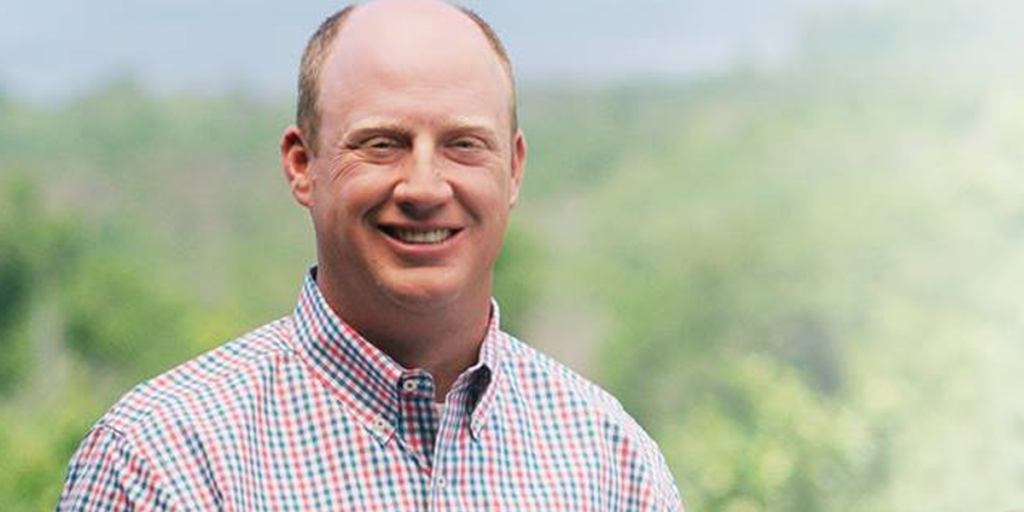
Below you will find Lt. Governor Will Ainsworth’s infrastructure and information related appointments from January to July, 2019. Joint Transportation Legislative Committee (Made February 20) · Senator Gerald Allen · Senator Arthur Orr · Senator Clay Scofield · Senator Tom Whatley · Senator Cam Ward · Senator Vivian Figures · Senator Donnie Chesteen Joint Transportation Legislative Committee · Senator Jabo Waggoner (Made March 12) · Senator Tom Butler (Made March 12) · Senator Clyde Chambliss (Made March 12) · Senator David Sessions (Made March 12) · Senator Bobby Singleton (Made March 12) · Senator Rodger Smitherman (Made June 19) Home Builders Licensure Board · Randy Cunningham (Made March 18) · Don Spurlin (Made April 18) Manufactured Housing Committee Advisory Board (Made April 24) · Senator Clay Schofield Alabama Commission on Artificial Intelligence and Associated Technologies · Nathanael Jones (Made May 29) · Dr. Vicki Karolewics (Made June 05) Alabama Construction Recruitment Institute (Made June 13) · Donald Stanley
Lt. Governor Will Ainsworth’s appointments: Agriculture and Natural Resources related (January 2019 – July 2019)

We are please to present Lt. Governor Will Ainsworth’s agriculture and natural resources related appointments from January to July. Additional appointments in judicial and criminal justice, education and child welfare, It/infrastructure and healthcare are to follow. Alabama Forever Wild Land Trust Board (Made January 23) · Dr. Salem Saloom Alabama Onsite Wastewater Board (Made January 29) · Dr. Kevin White · Michael Dansby Energy Council · Senator Steve Livingston (Made February 08) · Senator Randy Price (Made February 08) · Senator Clay Scofield (Made February 08) · Senator David Sessions (Made February 08) · Senator Jack Williams (Made May 07) · Senator Bill Beasley (Made May 07) Joint Legislative Committee on State Parks (Made February 12) · Senator Andrew Jones · Senator Bill Beasley Southern States Energy Board (Made February 19) · Senator Tom Whatley Alabama Permanent Joint Legislative Committee on Water Policy and Management (Made February 20) · Senator Andrew Jones · Senator Bill Beasley Permanent Joint Legislative Committee on Energy Policy (Made February 20) · Senator David Sessions Alabama Water Resources Commission (Made March 04) · Steve Forehand · Bill Henderson Nuclear Energy Activities and Hazardous Chemical Toxic Waste Oversight Committee (Made March 20) · Senator Jabo Waggoner · Senator Bobby Singleton · Senator Steve Livingston Alabama Trails Commission (Made March 11) · Senator Cam Ward · Senator Clay Scofield Chemical Testing Training and Equipment Trust Fund Advisory Board (Made April 03) · Senator Tom Whatley Alabama Agricultural and Conservation Development Commission (Made April 11) · Senator Clay Schofield · Senator Greg Albritton Alabama Oil and Gas Study Committee (Made April 24) · Senator Greg Albritton · Senator Chris Elliot · Senator Greg Reed
Jill Biden says American people know Joe Biden isn’t racist
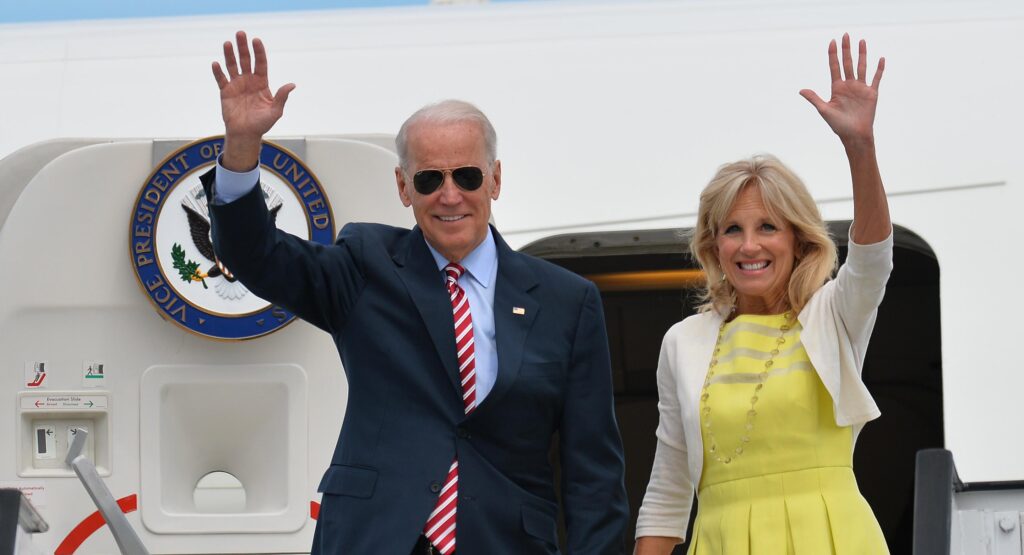
Jill Biden says the American people “didn’t buy” any insinuation during the Democratic presidential debate that her husband, former Vice President Joe Biden, is racist. In an interview that aired Monday on CNN, the former second lady was asked about Sen. Kamala Harris’ comments last month. The California senator started out by saying she didn’t think Joe Biden was racist, but she criticized him for defending his work with segregationist senators and for opposing mandatory busing of students to desegregated public schools.Jill Biden says as soon as she heard the words “I do not believe you are a racist,” she thought, “Uh oh, what’s coming next?” She says, “The American people know Joe Biden. They know his values. They know what he stands for. And they didn’t buy it.” Republished with the permission of the Associated Press.
Climate change champion and Donald Trump impeachment advocate Tom Steyer launches 2020 campaign
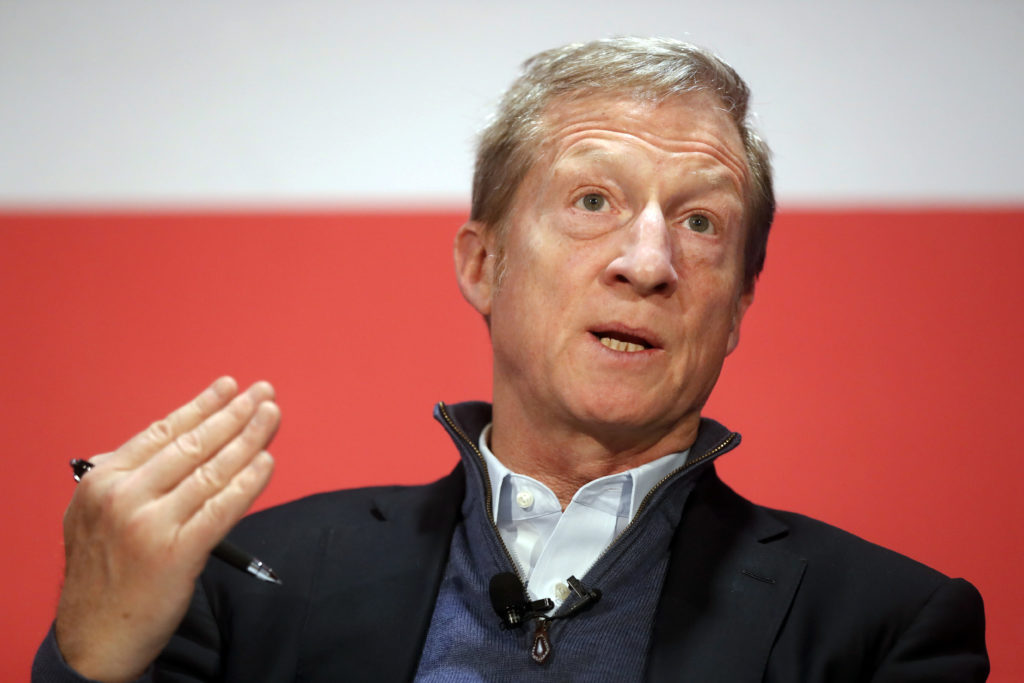
Tom Steyer, the billionaire investor and activist, said Tuesday he’s joining the race for the Democratic presidential nomination, reversing course after deciding earlier this year that he would forgo a run. Steyer, 62, is one of the most visible and deep-pocketed liberals advocating for President Donald Trump’s impeachment. He surprised many Democrats in January when he traveled to Iowa, home to the nation’s first presidential caucus, to declare that he would focus entirely on the impeachment effort instead of seeking the White House. Since then, Steyer, of California, has said he’s grown frustrated at the pace at which the Democratic-controlled House is approaching Trump. Roughly half of the Democratic presidential contenders, seeking to appeal to the party’s progressive base, have called on House Democrats to start an impeachment inquiry. But Speaker Nancy Pelosi has resisted, warning that Democrats need to collect the facts and that a rush to impeachment could ultimately help Trump politically. Despite becoming a national voice on the impeachment issue, Steyer made no mention of it in his campaign announcement. Instead, he said his campaign will focus on reducing the influence of corporations in politics. He also plans to target climate change, which is the focus of the Steyer-backed advocacy group NextGen America. Washington Gov. Jay Inslee, another Democratic presidential contender, also has made climate change the central issue of his campaign. “The other Democratic candidates for President have many great ideas that will absolutely move our country forward, but we won’t be able to get any of those done until we end the hostile corporate takeover of our democracy,” Steyer said in a statement. Citing issues including climate change and the opioid crisis, Steyer said that in nearly every “major intractable problem, at the back of it, you see a big money interest for whom stopping progress, stopping justice is really important to their bottom line.” “Americans are deeply disappointed and hurt by the way they’re treated by what they see as the power elite in Washington, D.C., and that goes across party lines and it goes across democracy,” Steyer said in a video his campaign was releasing Tuesday. “We’ve got to take the corporate control out of our politics.” As he seeks the presidency, Steyer is resigning his leadership positions in both NextGen America and Need to Impeach. He says he has committed more than $50 million through 2020 to the two organizations. Steyer joins the race three weeks before the next presidential debates , and he could struggle to get a spot on the stage. He likely won’t meet polling requirements to participate but could clear a fundraising threshold.There are 20 spots at the debate for a field that includes two dozen candidates . If more than 20 people qualify, the Democratic National Committee will hold a tiebreaker to determine who gets on stage. Steyer also could potentially face challenges hiring staff. Several of his former NextGen America staffers have joined Inslee’s campaign. A former Steyer spokeswoman, Aleigha Cavalier, recently joined Beto O’Rourke’s 2020 campaign. The sprawling Democratic field is in flux as Steyer becomes the newest contender. Some lower-tier candidates are facing increasingly dire prospects if they don’t secure spots on the debate stage this fall.California Rep. Eric Swalwell exited the race on Monday , and former Colorado Gov. John Hickenlooper’s campaign has undergone a shake-up after his debate performance last month, with some staffers encouraging him to consider a Senate campaign instead. This is not the first time Steyer has considered running for office. He eyed bids for governor of California in 2018 and the Senate in 2016. His net worth, according to Forbes, is estimated at $1.6 billion. Republished with the permission of the Associated Press.
Protestors and city leaders rebuke Mark Chambers, Mayor of Carbon Hill for hate filled Facebook comments

Two leaders of an Alabama city have resigned after their mayor posted a comment on Facebook about “killing out” socialists, “baby killers” and gay and transgender people. But mayor Mark Chambers refused to step down and told residents of Carbon Hill that he plans to run for reelection. Protesters staged a die-in and then confronted Chambers during Monday’s meeting, where he sat between two empty chairs. Some asked just how he would like to kill them. One carried a sign saying “if you kill me, my ghost will haunt you.” The meeting soon ended, with Chambers walking out past a gantlet of people calling for him to resign. Chambers met privately beforehand with a small group of protesters. Resident Rawsy McCollum said the mayor apologized, saying his comments shouldn’t have been public. But McCollum said he shouldn’t have voiced hatred at all, and it’s time for him to go. “If you can impeach the president of the United States, you should be able to move the mayor in this little 1-red-light town,” she said. Chambers accepted the resignations of council members McClain Burrough and Chandler Gann without explanation. McCollum said they had expressed embarrassment over the mayor’s comments. Resident Savannah Miles says diversifying the council to better represent the community would be a step in the right direction. Republished with permission of the Associated Press.
