
Donald Trump puts his stamp on nation’s immigration courts
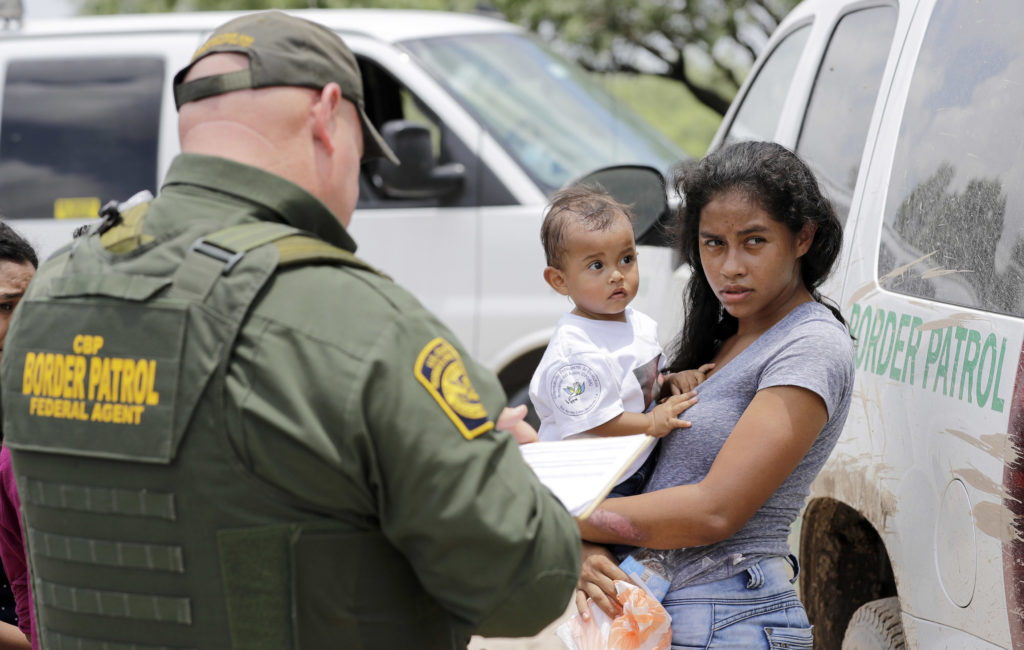
In just 2½ years, the Trump administration has put its stamp on the nation’s immigration court system, appointing more than 4 in 10 judges while dramatically expanding the bench and issuing new rules that make it harder for migrants to win their cases and stay in the country. An Associated Press analysis shows that President Donald Trump’s administration has appointed at least 190 immigration judges, accounting for 43 percent of the total. The hires helped expand the immigration bench by more than 100 since September 2016; by comparison, President Barack Obama had a net gain of fewer than 50 judges from 2010 to 2016. The AP analysis also found that Trump has continued a trend from past administrations in hiring large numbers of former military lawyers and Immigration and Customs Enforcement attorneys as judges. Nearly 1 in 5 sitting judges appointed under Trump was a military lawyer, and half previously worked for ICE. The administration has ramped up staffing in a bid to reduce enormous delays in the overwhelmed immigration court system, which has nearly 900,000 cases. Immigrants seeking to stay in the country often wait years for a hearing, let alone a decision. Critics say Trump’s selections are no coincidence at a time when the president is trying hard to curtail immigration, especially for the tens of thousands of Central Americans arriving at the border in hopes of winning asylum. “My thinking is they want to bring in people who they think have the professional experience that will lead them to interpret the law in the way the attorney general wants it to be interpreted, which is, basically, Central American domestic violence and gang claims are not valid asylum claims,” said Jeffrey Chase, a former immigration judge. Immigration judges — who are employed by the Justice Department, not the judicial branch — make critical decisions about who gets asylum and green cards to stay in the United States and who must return to their home countries, shaping the lives of immigrants and their families and the fate of Trump’s crackdown. The judges have been taking a harder line under Trump than in the previous administration, denying 65 percent of asylum cases during the 2018 fiscal year, compared with 55 percent two years earlier, according to data from the Transactional Records Access Clearinghouse at Syracuse University. Last year, then-Attorney General Jeff Sessions issued guidance narrowing the scope of asylum claims, though it was later blocked by a judge. Other new rules set performance targets for judges and bar them from shelving cases. The number of immigration judges stood at 444 in April, according to records provided by the Executive Office for Immigration Review, which runs the courts. And the hiring is expected to continue. The administration wants to add 100 in the next fiscal year, said Kathryn Mattingly, a spokeswoman for the office. The latest additions include a Navy-deep sea diver who worked more than a decade as a military attorney, a Los Angeles prosecutor who tried federal drug cases and held posts in Nigeria and Pakistan, and an attorney who worked more than two decades for ICE.Tapping military lawyers and immigration trial attorneys for these positions isn’t a new phenomenon. Of those appointed during the Obama administration who remain on the bench, about 13 percent have military law experience and more than half worked for ICE, the AP’s analysis shows. Mattingly said the system’s judges are hired through an open, merit-based process, and she rejected “insinuations that its judges lack integrity or competence based on the clients they may have represented prior to becoming judges.” Judge A. Ashley Tabaddor, who heads the immigration judges’ union, said the group welcomes new hires to help with the massive dockets but worries they will feel more pressured by case quotas set by the courts. On computer screens, color-coded graphics constantly remind judges of how close they are to meeting or missing performance targets.“We are now seeing a super majority with prosecutorial or military background experience,” said Tabaddor, whose group has long called for more diverse hires and wants the courts to become independent of the Justice Department. “Any court that wants to have the integrity and respect of the community needs to reflect the demographics of the community.”Immigrant advocates have long pressed for more judges. Some have joined with the judges’ union in calling for independent immigration courts to reduce the administration’s influence. Former Rep. Robert Goodlatte, a Republican who was chairman of the House Judiciary Committee, said more judges have long been needed to keep up with the surge in asylum cases. But the hires, he said, are only part of the solution so long as large numbers of migrants continue to arrive on the southern border. “As long as those numbers are still exploding, even with the addition of the judges, they’ll still be bailing water, if you will,” said Goodlatte, himself a former immigration attorney.Some immigration lawyers said they found the new judges to be more thoughtful than those who have managed the dockets for years. Others said they worry that less-experienced judges with military or government background are more likely to defer to federal authorities in their rulings. Some critics have accused the Trump administration of letting politics affect hiring decisions. Heidi Burakiewicz, a Washington employment lawyer, said she represents four candidates for immigration judge and appeals board jobs who received offers during the Obama administration and saw them rescinded after Trump took office. In Los Angeles, more than a dozen immigration judges have been added by the Trump administration, including Leon Francis, who worked for decades in the military as an attorney and judge. Recently, Francis heard a Guatemalan woman recount how she came to the U.S. with her partner and year-old daughter after gang members tried to extort money from them at their grocery store. The partner was shot a month later, she said. Francis asked why the couple didn’t report the threat to police or prosecutors. After a 50-minute recess, he turned down the
ATF says “felons and other prohibited individuals” have been issued CCP’s in Alabama
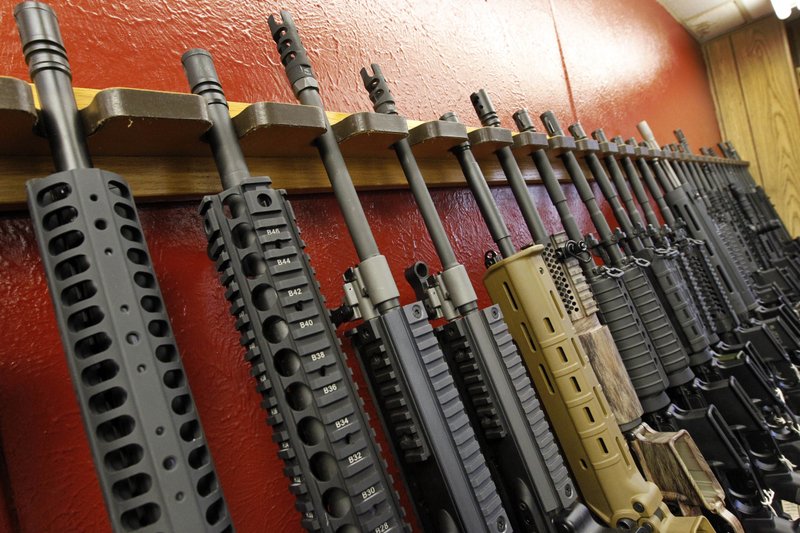
As of yesterday, if you’re buying a firearm in Alabama you’re going to be required to have a background search at the time of purchase, with or without a concealed carry permit. According to a notice to gun sellers in Alabama, the federal Bureau of Alcohol, Tobacco, Firearms and Explosives counties have been issuing concealed carry licenses to individuals not qualified to own firearms. See below for their letter. We will update this story as more information becomes available. July 22, 2019 U.S. Department of Justice Bureau of Alcohol, Tobacco, Firearms and Explosives Enforcement Programs and ServicesWashington, DC 20226 www.atf.gov PUBLIC SAFETY ADVISORY TO ALL ALABAMA FEDERAL FIREARMS LICENSEES The purpose of this public safety advisory is to notify you of an important change to the procedure you may follow to comply with the Brady Handgun Violence Protection Act (Brady Act), codified at 18 U.S.C. § 922(t), when transferring a firearm to an unlicensed person. The permanent provisions of the Brady Act took effect on November 30, 1998. The Brady Act generally requires Federal firearms licensees (FFLs) to initiate a National Instant Criminal Background Check System (NICS) check before transferring a firearm to an unlicensed person. However, the Brady Act contains exceptions to the NICS check requirement, including an exception for holders of certain state permits to possess, carry, or acquire firearms. The law and implementing regulations provide that permits issued within the past 5 years may qualify as alternatives to the NICS check if certain other requirements are satisfied. Most importantly, the authority issuing the permit must conduct a NICS background check and must deny a permit to anyone prohibited from possessing firearms under federal, state, or local law. On February 24, 2016, ATF issued an Open Letter to All Alabama FFLs informing them that ATF had reviewed Ala. Code § 13A-11-75 and determined that Alabama’s CCP permits issued on or after August 1, 2013, qualified as an alternative to a NICS check. ATF’s determination was based on the understanding that a full NICS check would be conducted by an authorized government official pursuant to Ala. Code § 13A-11-75(b) and, if the check revealed that the individual was prohibited from possessing a firearm under federal or state law, the applicant would be denied pursuant to Ala. Code § 13A-11-75(a)(1).1 ATF also based this determination inherent in this decision was the understanding that an Immigration Alien Query (IAQ) would be conducted if a non-U.S. citizen applied for a CCP permit, and that all CCP permit application forms, regardless of the county of issuance, required the applicant’s place/country of birth and an alien or admission number pursuant to Ala. Code §13A-11-75(e). Otherwise, the IAQ cannot be conducted. Based on recent information received from the Federal Bureau of Investigation, Criminal Justice Information Services Division Audit Unit, and upon results of inspections conducted by ATF field offices, ATF has determined that, notwithstanding the express requirements of Ala. Code§ 13A-11-75, Alabama CCP permits have been, and continue to be, issued to individuals without completion of a NICS check, or after a NICS denial. At least some of these permits were issued 1 See also Ala. Code § 13A-11-75(a)(6) (“Nothing is this section shall be construed to permit a sheriff to disregard any federal law or regulation pertaining to the purchase or possession of a firearm.”). -2- PUBLIC SAFETY ADVISORY TO ALL ALABAMA FEDERAL FIREARMS LICENSEES (cont.) to felons and other federally prohibited persons who used them to purchase firearms from Alabama FFLs without a NICS check. In addition, ATF has determined that some Alabama counties have not been requiring non-U.S. citizen CCP permit applicants to submit the information necessary to run the IAQ, specifically, the place/country of birth and an alien registration or admission number. Because county sheriffs have issued CCP permits s without completing a full NICS check, firearms have been transferred to felons and other prohibited individuals in violation of federal law, thereby creating a substantial public safety concern. For this reason, the standards set forth in the Brady law require us to find that Alabama’s CCP permits no longer qualify as a NICS check alternative. In the interest of public safety, and effective immediately, FFLs in Alabama may no longer accept CCP permits as an alternative to a NICS check. Unless another exception applies, a NICS check must be conducted whenever you transfer a firearm to an unlicensed person even if the individual presents an unexpired CCP permit. If you have any questions about Alabama’s Permit to Carry Pistol in Vehicle or Concealed on Person qualifying as an alternative to the NICS check, please call ATF’s Firearms Industry Programs Branch at (202) 648-7190. Marvin G. Richardson Assistant Director Enforcement Programs and Services
Alabama: Keep statewide elections for appellate courts
In a Monday court filing, Alabama asked a federal judge to uphold the state’s 150-year-old practice of electing appellate judges by statewide vote and reject a lawsuit’s claims that it is racially discriminatory. A federal judge will hear arguments next month in a lawsuit that seeks to switch the judicial selections to elections by districts, or another method. The lawsuit contends the current method dilutes the voting power of black voters in Alabama and keeps them from electing their preferred candidates. Alabama appellate courts are all-white and all-Republican and have been for a number of years. In a closing brief ahead of the oral argument, lawyers said appellate judges should be accountable to all Alabamians because they consider cases that “have a profound impact on the lives of all Alabamians.” The state suggested politics, and the state’s shift to the GOP, has led to the current all-white court. “The record shows that to the extent that black candidates or black-supported candidates are unsuccessful, it is not on account of race but instead because those candidates are running as Democrats in a red state,” lawyers for the state wrote. The state wrote that there is no evidence that the statewide method is rooted in racial discrimination. “For 150 years, Alabama has used statewide popular elections to choose appellate judges. That choice was made in 1868 without the slightest hint of racial discrimination,” lawyers for the state wrote. The oral arguments next month will be the culmination of the lawsuit filed in 2016 by the Alabama State Conference of the NAACP and four black voters. A federal judge heard evidence in a bench trial that ended in November. Alabama’s appellate judges run in statewide partisan elections, just like the governor, attorney general and other top officials. Currently, the courts are all-white in a state where one in four people is African American. There has never been a black judge on the criminal and civil appeals courts. There have been three black judges on the Alabama Supreme Court but all were first appointed by governors. “Today, in 2019, all 19 of Alabama’s most powerful judges are white. This is the colorline in Alabama: a racially segregated judiciary where blacks can be elected only to lower court positions,” lawyers for plaintiffs in the case wrote in a brief filed earlier this monthThe Alabama lawsuit is similar to one in Texas filed on behalf of several Hispanic voters. A judge in September ruled in favor of the state in that case. Republished with permission of the Associated Press.
Kay Ivey says Alabama ‘working’ to avoid a federal lawsuit over prison problems

As Alabama tries to address its troubled corrections system, Gov. Kay Ivey convened a new criminal justice study commission Monday and said the state is working to avoid a Department of Justice lawsuit over prison conditions. Ivey said the Governor’s Study Group on Criminal Justice, which held its first meeting Monday, will “study possible solutions for our longstanding prison problems.” The group will gather data on sentencing reform, recidivism and policies and make recommendations ahead of the 2020 legislative session. “I respectfully submit we need to be tough on crime, but I also submit we need to be smart on crime,” said former Alabama Supreme Court Justice Champ Lyons, Ivey’s representative on the study commission. The panel was convened as the state faces continued criticism of prison conditions, a federal court order to boost prison staffing and improve mental health care and the threat of a lawsuit by the Department of Justice. The Justice Department in April issued a scathing report about what it called excessive levels of violence and inmate deaths in Alabama’s prisons for men. The report listed a chilling litany of examples of violence and said a critical staff shortage was one of the significant factors behind what it called unconstitutional conditions. It also threatened to sue the state unless conditions improve. Ivey said Alabama is continuing negotiations with the Justice Department on how to address the concerns. “We are working hard to avoid litigation. They have clearly stated they do not want to have to pursue that. My team is working with their team and we are making progress,” Ivey told reporters Monday. Bill Lunsford, an attorney for the state, told the panel that the settlement discussions with the Justice Department have been fruitful, but noted they will be lengthy. Lunsford said that in the “best case scenario” a settlement agreement might be reached by the end of the year. Corrections Commissioner Jeff Dunn said the department has taken some immediate measures recommended by the Justice Department. The department has conducted a series of searches to seize weapons, drugs and other contraband that fuel prison violence. The state has raised correctional officer pay in an effort to boost staff. Alabama prisons in April held about 20,000 inmates in facilities originally designed to house about 12,400. That puts the state at about 165 percent of capacity. Lunsford said he did not think the level of crowding violated the Constitution. Some lawmakers on the study commission questioned that assessment. “I really do believe we have an overcrowding problem,” said Senate Minority Leader Bobby Singleton. Ivey’s administration is exploring a plan to build four new prisons. Alabama faces a separate directive to boost prison staffing under a federal judge’s order in an ongoing lawsuit over prison mental health care. A federal judge in 2017 ruled that the state has provided “horrendously inadequate” care to mentally ill inmates and ordered changes, including increasing staff. The Justice Department said it also wanted to see the state meet the staffing orders in that litigation. “If anybody says we don’t have a problem, they are like an ostrich with their head in the sand. They are just not paying attention,” said Sen. Cam Ward, a commission member who also chairs the legislature’s prison oversight committee. The Department of Justice findings grew out of an investigation started in 2016, although federal investigators have not completed one area of the probe. The Justice Department has an ongoing investigation related to use of “force and sexual abuse by staff,” according to a May court filing. Republished with the permission of the Associated Press.
