
William Perry Pendley picked to oversee public lands
An ardent critic of the federal government who has argued for selling off almost all public lands has been named the Trump administration’s top steward over nearly a quarter-million federally controlled acres, raising new questions about the administration’s intentions for vast Western ranges and other lands roamed by hunters, hikers and wildlife. Interior Secretary David Bernhardt on Monday signed an order making Wyoming native William Perry Pendley acting head of the Bureau of Land Management. The bureau’s holdings are sweeping, with nearly one out of every 10 acres nationally, and 30% of minerals, under its dominion, mostly across the U.S. West. Pendley, a former midlevel Interior appointee in the Reagan administration, for decades has championed ranchers and others in standoffs with the federal government over grazing and other uses of public lands. He has written books accusing federal authorities and environmental advocates of “tyranny” and “waging war on the West.” He argued in a 2016 National Review article that the “Founding Fathers intended all lands owned by the federal government to be sold.” In tweets this summer, Pendley welcomed Trump administration moves to open more federal land to mining and oil and gas development and other private business use, and he has called the oil and gas extraction technique known as hydraulic fracturing, or fracking, “an energy, economic, AND environmental miracle!” Conservation groups called the Pendley appointment an alarming choice, while Western ranchers called it a welcome move that shows the Trump administration is serious about opening public lands to all uses, including mining and ranching. The Trump administration already has moved to weaken some protections for public lands. It downsized two national monuments in Utah to scale back protections on sacred tribal lands and signed a land exchange deal to build a road through a national wildlife refuge home to migrating waterfowl near the tip of the Alaska Peninsula. And in what it called a money saving move, the administration moved BLM headquarters from Washington to Colorado and dispersed staff among Western states. Environmentalists feared that this was a first step in dismantling the agency. After appointing Pendley as the bureau’s policy chief in mid-July, the Interior Department confirmed late Monday it had newly elevated him to acting director. Pendley’s “ascending to the top of BLM just as it is being reorganized strongly suggests the administration is positioning itself to liquidate our shared public lands,” said Phil Hanceford, conservation director for the Wilderness Society. Western Values Project executive director Chris Saeger said in a statement that the appointment could lead public lands to being handed over to the Trump administration’s “special interest allies.” Interior spokeswoman Molly Block disputed that, saying in an email, “This administration has been clear that we are not interested in transferring public lands.” Block said agency management plans are developed to allow for a range of uses including energy development, cattle grazing, recreation and timber harvest while protecting scientific, historical, ecological, environmental, air and atmospheric, water resource, and archaeological values. An analysis of six new BLM proposed management plans by the Pew Charitable Trust, which calls itself a nonpartisan research center, for parts of six Western states found they significantly reduce protections that have been in place for decades and open up new land for mining and oil and gas. They include Alaskan lands known as nesting habitat for peregrine falcons and Montana rivers homes to the westslope cutthroat trout. The plans would peel back the label of “critical environmental concern” for nearly all of the 3,125 square miles (8,100 square kilometers) of lands that currently hold that distinction, said Ken Rait, the project director for U.S. public lands and rivers conservation at Pew Charitable Trusts. He called it “a total reversal for how the agency has operated in the past.” In a letter to the agency, Colorado’s Department of Natural Resources said the management plan for public lands in the southwest corner of the state don’t do enough to protect the Gunnison sage grouse , which is a threatened species, or migrating wildlife. But Utah cattle rancher and county commissioner Leland Pollock said the Pendley appointment is the latest indication that the Trump administration is returning BLM to its original mission of ensuring that public lands are open to multiple uses. That includes mining, ranching, cattle grazing, ATV riding, hunting mountain biking and hiking, he said. He said the administration has made clear to him and others who had pushed for state control of federal lands that it has no intention of going that route. The 55-year-old is a commissioner in Garfield County in southern Utah, which has 93% federally owned lands. “He’s going to manage this thing just simply the way it was supposed to be managed,” Pollock said about Pendley. Utah was among several Western states that explored suing to compel the federal government to hand over control of federal lands, arguing the state would manage them better. The state hired an outside consulting firm in 2014 to prepare a lawsuit, but it has never been filed. Idaho rancher and county commissioner Kirk Chandler still thinks states should manage the lands but knows that’s unlikely to ever happen. In the meantime, he’s just happy the Trump administration is choosing leaders who will listen to his concerns. He wants to see more logging and forest thinning to prevent fires. “I think it will be a good thing, a real good thing,” said Chandler about Pendley. By Ellen Knickmeyer and Brady McCombs Associated Press. McCombs reported from Salt Lake City. Associated Press writer Dan Elliott contributed to this report from Denver. Republished with permission of the Associated Press.
J. Pepper Bryars: Alabama must build more prisons but taxpayers don’t have to foot the bill
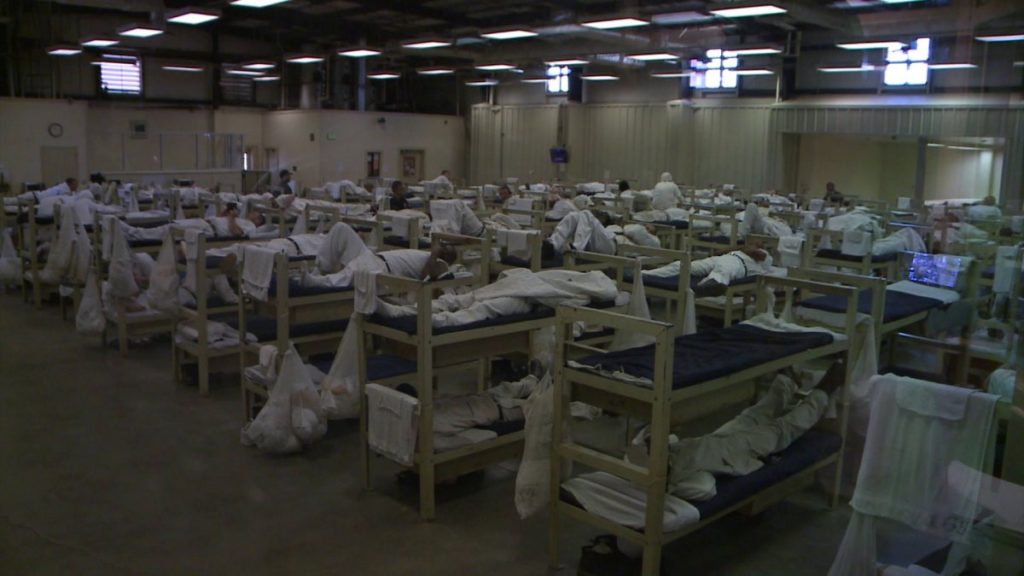
Vicious assault. Brutal rape. Cold-blooded murder. These are some of the crimes that will get you thrown into prison, but what if they’re also what could happen to you once you get there? Sadly, a federal investigation found this is happening in Alabama’s prison system, and part of the problem is we’ve simply run out of room. “Our investigation revealed that an excessive amount of violence, sexual abuse, and prisoner deaths occur within Alabama’s prisons on a regular basis,” wrote the authors of the report from the U.S. Department of Justice, adding that that one of the major factors is “severe overcrowding” and that the state doesn’t “provide adequate humane conditions of confinement.” “These are human beings,” said one mother of an inmate who was repeatedly threatened with violence at the state prison near Atmore. “I feel like our society is getting too numb when it comes to human lives.” Alabama’s prison system was designed for about 9,900 inmates but it’s currently holding more than 16,000 – an occupancy rate of more than 165 percent, according to data published by the Alabama Department of Corrections. It gets worse in some places. The investigation found that the medium-security prison in Elmore County was at 272 percent occupancy, holding nearly 1,400 inmates in a facility designed to hold about 500. And Kilby Correctional Facility outside Montgomery was designed to hold 440 but currently has more than three times that amount. While some were shocked by the details shared in the federal report and the graphic pictures from inside our prisons that were leaked to the press, others remain unconcerned. Alabama is a law-and-order state whose people believe in the adage that “if you do the crime, you do the time.” And a recent survey from the Public Affairs Research Council of Alabama found that a slight majority of us disagree with plans to build more prisons. But here’s the problem: if Alabama doesn’t get its act together than a federal court has said it may find us in violation of the Eighth Amendment and will force us to release thousands of these inmates before their sentences are complete. Do we really want that to happen? Of course not, and that’s why the Alabama Policy Institute has begun organizing with a coalition of concerned individuals and organizations who seek to promote, among other reforms, the construction of three new state-of-the-art prisons. The Ivey Administration released plans earlier this year calling for one facility to be a centralized location for medical and mental health care, housing for older inmates, and where prisoners first enter the system. It could house nearly 4,000 inmates. The other two would hold a little more than 3,000 prisoners each. Here’s the best part: Under the plan as currently proposed we wouldn’t have to raise taxes. Estimates show it’d cost $900 million, but through a creative public-private partnership, developers would fund construction up-front and then the state would lease the facilities for up to $78 million annually. That money would come from savings realized by consolidating services and closing old facilities that are expensive to maintain. “Alabama truly does have a major problem with our overcrowding of our prisons,” Gov. Kay Ivey said. “And it’s a challenge we Alabamians must solve, not the federal courts.” This plan would go a long way in meeting not only our constitutional responsibilities but our moral obligations, as well. The vast majority of Alabamians profess to be Christians, and as written in the thirteenth chapter of Hebrews, we’re called to be “as mindful of prisoners as if you were sharing their imprisonment.” When our State Legislature convenes early next year for what’s expected to be a special session to address prison reform, Alabamians should ask ourselves if we are honestly living up to that standard. And if we aren’t, it’s time to do something about it. J. Pepper Bryars is a senior fellow at the Alabama Policy Institute and host of the 1819 podcast. Follow him on Twitter at @jpepperbryars.
