
John W. Giles: The “gift” that keeps on giving – $4 million

I often find myself taking a life inventory at different weigh-points, assessing if I am adequately contributing to leave a positive mark in the world, on my watch. We can never give enough back. I was raised and I taught my children, whatever station assigned in life, or if we borrow something from our neighbor, always return it in better shape, than you received it. This mindset can be found in the “Parable of the Talents,” where Jesus spoke in Matthew 25: 14 – 30. One hallmark icon in my life, where I played a small role, was the approval and implementation of the “Choose Life” automobile tag in Alabama. These tags are a “Gift” that keep on giving, let me explain. As a little background on these tags, it all began in Florida. I was making a speech to the Christian Coalition of Florida about the Republican sweep in the 2000 Alabama Appellant Court races and what affect our Alabama Christian Coalition Judicial Voter Guides made. A nice gentleman, named Russ Amerling, with “Choose Life Florida,” who started the Pro-Life car tags in the country, nabbed me and encouraged us to do the same in Alabama. I told him I was on board with the concept, but needed a quarterback to research this and marshal it through. One week later, I received a call from Robert Burton, an attorney from Prattville, who volunteered to take on the assignment. Bob Foust, Eric Johnston, Bob Burton and I went before the Alabama Oversight Committee on License Plates (AOCLP) to present our tag idea. As a side note, we got this passed through the AOCLP by one vote. After passing this through the oversight committee, we all had to work within a specific time frame to presale 1000 tags before going into production. Thank God we made it, now to the good news. There has been an elevated interest and awareness of the abortion issue in America over the past couple of years. When President Donald Trump appointed Neil M. Gorsuch and Brett M. Kavanagh as Associate Justices to the U.S. Supreme Court, Planned Parenthood disgustingly showed out and spent millions attempting to block their confirmation as strict constructionist to the bench. Then, Virginia Governor Ralph Northam (Democrat), publicly detailed with his glowing approval of infanticide performed on babies after being born alive. If that was not enough, New York Governor Andrew Cuomo (Democrat) in a triumphant news conference celebrated signing into law the further expansion of Roe v. Wade in their state. Abby Johnson, a former employee of Planned Parenthood, was showcased in the film “Unplanned.” This film brought a heightened awareness to the horrifying truths about what happens in an abortion clinic, the way they mistreat vulnerable women and her personal quest to rescue others trapped in that industry of taking lives of unborn children. Currently, there are 24 Democrat candidates running for President in 2020, who are daily trying to out punt each other with outer-space, bazaar Planned Parenthood approved abortion measures. Alabama also banned all abortions with the Alabama Human Life Protection Act, which is now being tested in Federal court. People are now more than ever looking for ways to be supportive of a pro-life position. One of many ways to show support for the babies and expecting mothers, who find themselves in an unplanned crisis pregnancy, is to buy an Alabama Choose Life auto tag. These tags cost an extra $50.00, but a net $41.25 goes to approximately 67 pro-life agencies across the state. Personalized tags are an option as well. Going down the road, these tags serve as a testament of one being prolife. The roll out of the first tags were in 2003. Over the past 16 years, including 2019 we will have distributed right at $4 million. All of these funds are designated to bring assistance to women facing a crisis pregnancy, who choose to have their baby. In most cases, these prolife agencies help with pregnancy testing, ultrasounds, initial prenatal care, adoption, parenting education and so much more including basic nursery needs like a starter supply of diapers. Prolife volunteers truly care and are fully invested to help these mothers who chose to spare their baby from abortion. I am so fortunate to serve as a volunteer on the Board of Directors of the Alabama Prolife Coalition Education Fund (501(c)(3) (Non-Profit organization), which serves as the custodian for the Choose Life tag funds. All of our board members and one administrative assist are volunteers, so the $4.million at $41.25 a tag has an immeasurable impact to help these hurting women. At this weigh-point, my heart is full of gratitude for all of the fine, good-hearted Alabamians, who have purchased approximately 100,000 Choose Life Tags, funding $4 million in needs of women in crisis pregnancies. Choose Life, buy a tag and “Give” a gift that keeps on giving.
Martha Roby: A season of new beginnings
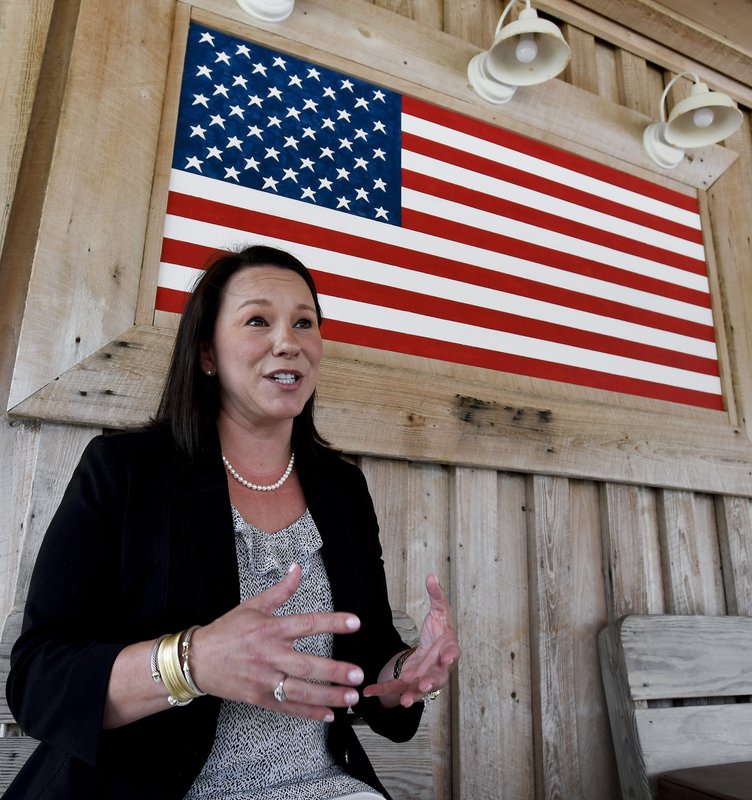
This time of year represents a season of new beginnings for many of us. Students across the country have gone back to school and are preparing to tackle another year of learning and growing. Teachers in every community throughout the nation are welcoming new faces to guide and mentor this school year. It’s also an important season for the agriculture community as these hardworking men and women are in the midst of a critical time for crops before harvest. If you are able, now is a great time to buy local and support our state’s farmers by purchasing Alabama-grown products. Fortunately, shoppers will soon have a new, easier way to identify Alabama products thanks to the newly-formed “Sweet Grown Alabama” non-profit foundation overseen by a group of leaders in the agriculture industry. Sweet Grown Alabama’s mission is to enhance marketing opportunities for our state’s farmers by connecting retailers and consumers to Alabama-grown foods and other agriculture products. Farmers will have the opportunity to join this program and brand their products with a special logo, so consumers have the option to buy local and support our state’s agriculture community. This is an exciting opportunity for both farmers and consumers throughout our state. You can learn more about the program here. Here in Alabama’s Second District, our agriculture community is facing an especially challenging time since Hurricane Michael made landfall during harvest last October. Now, more than ever, our district’s farmers need our support, and I have continued my efforts to help on the federal level. Earlier this month, I led my Alabama colleagues in sending a letter to USDA Secretary Sonny Perdue urging swift approval of the Alabama Agriculture Recovery Relief Program. This program will allow the State of Alabama to administer disaster aid to producers who were impacted by last year’s devastating hurricane. The program makes available disaster aid block grants, which are separate from the individual payments to farmers, and will help our agriculture industry get back on its feet after the severe setbacks. I am hopeful that this program finally helps farmers get the assistance they need to continue to feed Alabama and our entire country. During this time of year, as many people are going through different seasons of new beginnings, I offer my best wishes and strongest support. I will be praying for a productive and successful school year for our district’s students and educators, and I will always serve as a strong advocate for Alabama’s farmers and producers, especially as they work towards a new harvest season. It is an honor to serve Alabama’s Second District in Congress. Do not hesitate to reach out to my offices if I can ever be of assistance to you. Martha Roby represents Alabama’s Second Congressional District. She lives in Montgomery, Alabama, with her husband Riley and their two children.
Kay Ivey: The Cost of Doing Nothing is Too High Re: Mobile River Bridge and Bayway Project
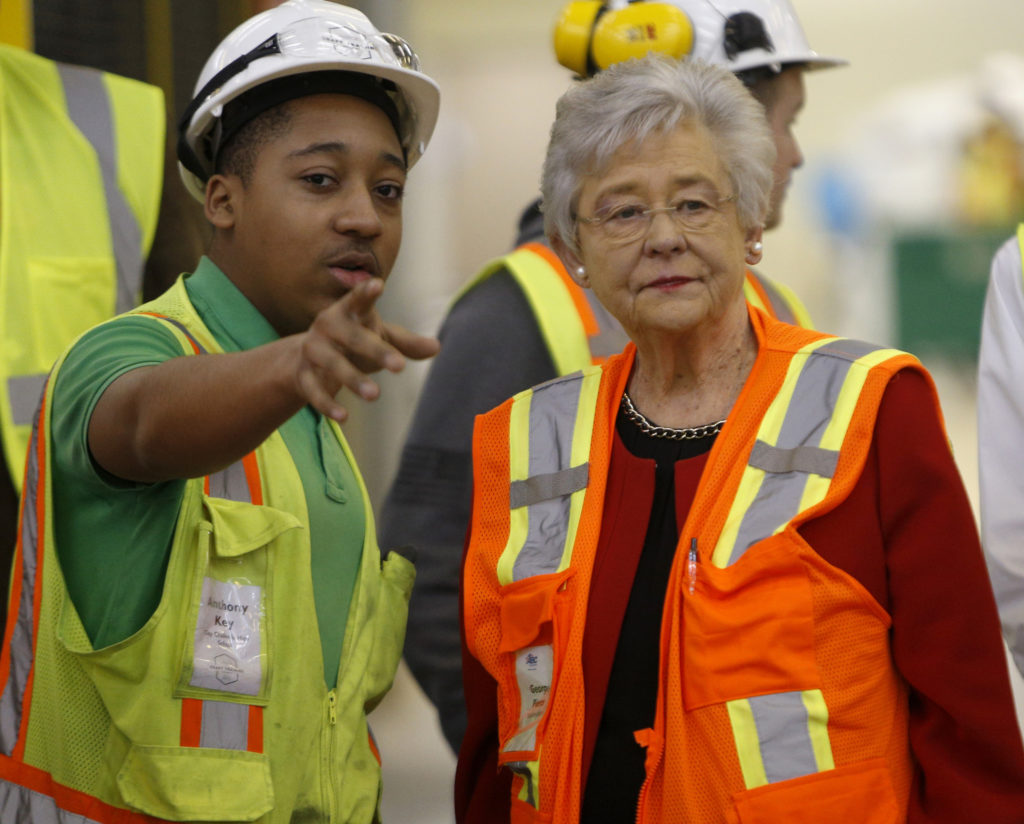
For the past 25 years, serious efforts have been underway to design and eventually build a new bridge along Interstate 10 that runs through Mobile and Baldwin counties. Once completed, this bridge would relieve the growing congestion along this busy corridor that runs from Florida to California. Building a bridge over a major shipping channel with an active waterfront, as is the case in downtown Mobile, was always going to be a challenge even when the price tag was projected to be $850 million. In recent months, the effort to consider a toll to help pay for this project – where the price tag has climbed to more than $2 billion – has only added to the challenge. Most people agree a new bridge is necessary. However, the most significant obstacle has always been how to pay for it. As governor, I am committed to looking at all reasonable solutions to move this project forward. In February, I told President Donald Trump that I strongly support his major new infrastructure package. However, we all know that waiting on Washington to agree on anything isn’t a realistic option. Besides, if additional federal funding comes, there would be provisions to lower the toll which, based on the current proposal, would be about $2.25 per vehicle for those who use the bridge on a regular basis. A little history… Tolls have been used since the 1920s to connect Alabama’s coastal counties. The old Cochrane Bridge had a $1 per car toll. And in 1941, a toll plaza for the Bankhead Tunnel was installed when it opened, charging motorists 25 cents per car. Almost one million vehicles traveled through the Bankhead Tunnel during its first year of use. This toll remained until the mid-1970s and would amount to $4.25 today if it had remained. Thirty-two years later, when the Wallace Tunnel opened in 1973, the capacity was approximately 36,000 vehicles. Today, almost 50 years later, the daily traffic count numbers are around 75,000 vehicles with holidays and summer traffic often seeing upwards of 100,000 vehicles per day. Throw in a wreck or breakdown — there were 132 crashes from June 2018 to May 2019 during peak travel times — and it is not uncommon for drivers to have delays of 75 minutes or more. One can only imagine how long the delays and backups will be when the daily traffic count is 100,000 in the not-too-distant future. Fast forward to today… One obvious reason for the congestion is the Wallace Tunnel and existing Bayway are only four-lanes wide. To meet our growing needs, the Bayway needs to become an eight-lane bridge. Because of anticipated growth of the metropolitan Mobile area, there will be added roadway congestion in this already-busy area. The plans to move Mobile Regional Airport to the Brookley Aeroplex is just one example of an already crowded area becoming even more so in years to come. Additionally, we have been told that the existing Bayway, which was is over 40 years old, cannot be widened without being raised, requiring a new structure if we are going to use the Federal dollars we are seeking. Since Hurricanes Ivan in 2004 and Katrina in 2005 washed away numerous roads and bridges, including some along I-10, new bridges along coastal regions are now required to meet a 100-year storm surge level. Another key factor that has added to the cost – perhaps one of the most important – is the required height of a new Mobile River Bridge. As you know, the State recently committed $100 million over the next decade to improving the Port of Alabama which has a $22 billion annual economic impact on our state. And by working closely with Senator Richard Shelby and the rest of the Alabama Congressional Delegation, efforts are already underway to ensure our port has an even greater impact in the future by being able to take the biggest cargo ships in the world. Planning for this growth – both cargo ships and even larger cruise ships – requires the bridge to be raised from its original design of 190 feet to 215 feet. We must position our state for the next 50 to 100 years as a world leader in trade and commerce. Some new Federal dollars are on the way Last month, Transportation Secretary Elaine Chao and our federal delegation announced that Alabama was selected for a $125 million Infrastructure for Rebuilding America (INFRA) Grant to help finance the Mobile River Bridge and Bayway Project. While we are grateful for this grant, it represents just six percent of the total estimated cost. Finding the money to pay for this project – the biggest infrastructure project in our state’s history – was never going to be easy. Be assured, we will continue to look to Washington for additional help that can make this project a reality. “No Toll or No Bridge” In recent weeks, some in the “No Toll or No Bridge” camp have suggested we ought to just “slow this down” and wait until after the next presidential election. Slowing down a project that is almost a quarter-century old seems unwise. The cost of doing nothing is too high and no one is suggesting it will get any cheaper if we just wait. Like others, I am sensitive to those legitimate concerns of what a toll would do to working families, lower and middle-class citizens, small businesses, students and the elderly. However, there are also countless individuals who would like the option of choosing a safer, less congested route across the Mobile River and Bay – even if it means that route will come with a toll. Keep in mind, there will always be “toll-free” options for anyone who wants or needs to cross Mobile Bay for free. To those who say the bridge can be built without a toll, I simply ask you to show us how. To that end, I am inviting all who have different suggestions to build the bridge to a meeting that
Myth-busting: Addressing 5 of the top lies told after ‘mass shootings’
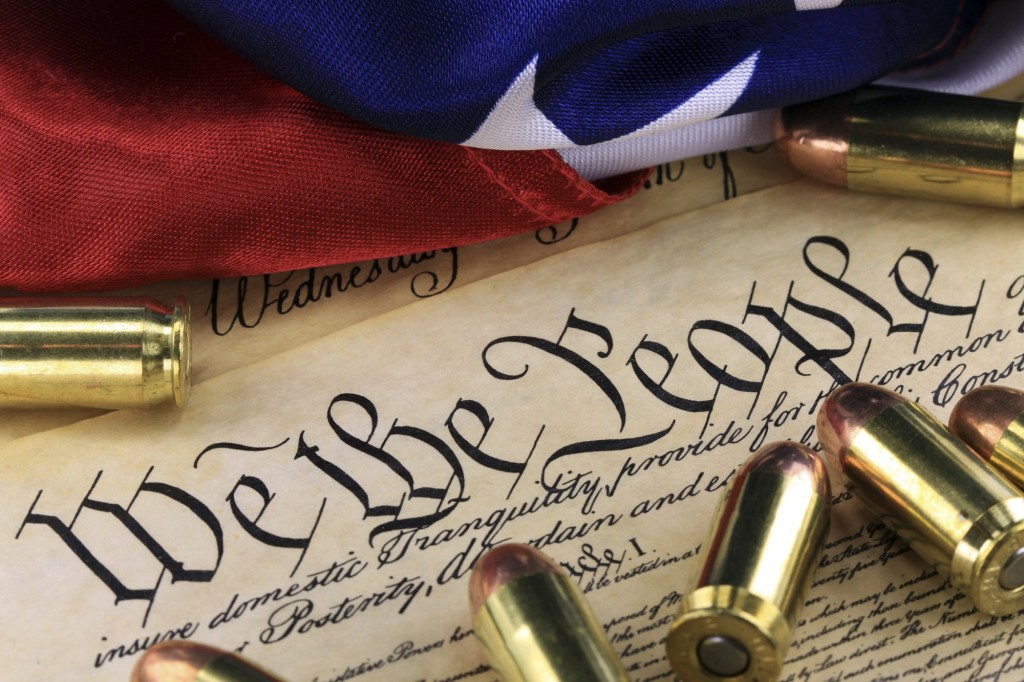
There are few narratives as well-honed as those on the side of gun-control in the aftermath of a mass shooting. The problem is that research, facts, and reason are frequently missing from the often-repeated talking points of those whose main goal is to limit the scope of the Second Amendment and see select cases of violence as their best opportunity for achieving that goal. I’ve put together the following fact sheet with as many non-biased sources as possible. Let’s start with the basics: Myth: Mass shootings are increasing exponentially. Objective findings: “The two figures below show trends in these types of mass shooting incidents and fatalities, respectively, using the data provided in Krouse and Richardson (2015). Extending the data back to the 1970s, two studies found evidence of a slight increase in the frequency of mass public shootings over the past three decades (Cohen, Azrael, and Miller, 2014; Krouse and Richardson, 2015). However, using an expanded definition that includes domestic- or felony-related killings, there is little evidence to suggest that mass shooting incidents or fatalities have increased (Cohen, Azrael, and Miller, 2014; Krouse and Richardson, 2015; Fox and Fridel, 2016).” Source: Mass Shootings: Definitions and Trends published by Rand Corp. March 2, 2008 Summary: There is no consistent definition of “mass shooting.” When you factor out incidents of domestic violence, gang violence, and other crime/drug violence to get to the cases of “mass public shootings” the incidence is so low it’s hard to track trends for them. Myth: Mental illness leads to violence against others. Objective findings: According to a journal article published in the J Epidemiol Community Health titled “Violence and mental illness: what is the true story?” “Patients with severe mental illness constitute a high-risk group vulnerable to fall victims to violence in the community. Symptoms associated with severe mental illness, such as impaired reality testing, disorganised thought processes, impulsivity and poor planning and problem solving, can compromise one’s ability to perceive risks and protect oneself and make them vulnerable to physical assault.10 ,11“ The Washington Post reported, “People with serious mental disorders are 3.6 times as likely to exhibit violent behavior, according to the National Epidemiologic Survey on Alcohol and Related Conditions. But they are far more likely to be the victims of violence — at 23 times the risk, compared with the general population. A study published in the journal Annals of Epidemiology found that “the large majority of people with mental disorders do not engage in violence against others, and that most violent behavior is due to factors other than mental illness.” Summary: Those who have untreated severe and persistent mental illness are more likely to be a victim of violence than to perpetrate it. They’re also more likely to harm themselves than others. Those with the highest likelihood of being violent are those who suffer from both mental illness and substance abuse disorders. Myth: Deaths by firearms are increasing, therefore, the danger of being a victim is increasing. Objective Findings: The Center for Disease Control released a cause of death report in December of 2018. Deaths by firearm contributed to around 12-13 percent of deaths in the United States in 2017. Firearm deaths from 1999 to 2017 increased less than 2 percent, with the largest number of those reported as suicides. Summary: Reports continue to show that most firearms deaths are self-inflicted. Suicide contributes to more than half of firearm deaths. The danger of being a victim of death caused by heart disease or cancer is more likely to occur than being the victim of a firearm death (CDC death stats). Myth: Our nation is becoming a more dangerous place. We should all live in fear. Objective Findings: “Half of America’s gun homicides in 2015 were clustered in just 127 cities and towns, according to a new geographic analysis by the Guardian, even though they contain less than a quarter of the nation’s population. Even within those cities, violence is further concentrated in the tiny neighborhood areas that saw two or more gun homicide incidents in a single year. Four and a half million Americans live in areas of these cities with the highest numbers of gun homicide, which are marked by intense poverty, low levels of education, and racial segregation. Geographically, these neighborhood areas are small: a total of about 1,200 neighborhood census tracts, which, laid side by side, would fit into an area just 42 miles wide by 42 miles long. The problem they face is devastating. Though these neighborhood areas contain just 1.5% of the country’s population, they saw 26% of America’s total gun homicides. Gun control advocates say it is unacceptable that Americans overall are “25 times more likely to be murdered with a gun than people in other developed countries”. People who live in these neighborhood areas face an average gun homicide rate about 400 times higher than the rate across those high-income countries.” The Guardian’s researchers went on to say, “58% of cities that saw a gun homicide in 2015 saw just a single one, and 95% of them saw fewer than ten.” Summary: Sweeping gun control that targets lawful gun owners throughout the country is not the solution. Random gun violence is rare in most parts of the nation. Myth: Making guns harder to legally purchase will lead to fewer deaths. Objective Findings: A 2016 Survey of Prison Inmates found that 1 in 5 prisoners used a gun during their offense, but only 7 percent of those inmates legally purchased the gun. “An estimated 287,400 prisoners had possessed a firearm during their offense. Among these, more than half (56%) had either stolen it (6%), found it at the scene of the crime (7%), or obtained it off the street or from the underground market (43%). Most of the remainder (25%) had obtained it from a family member or friend, or as a gift. Seven percent had purchased it under their own name from a licensed firearm dealer.” Summary: Implementing tougher gun laws will primarily affect a very
Grant announcements: Kay Ivey announces over a million awarded through 5 grants this week
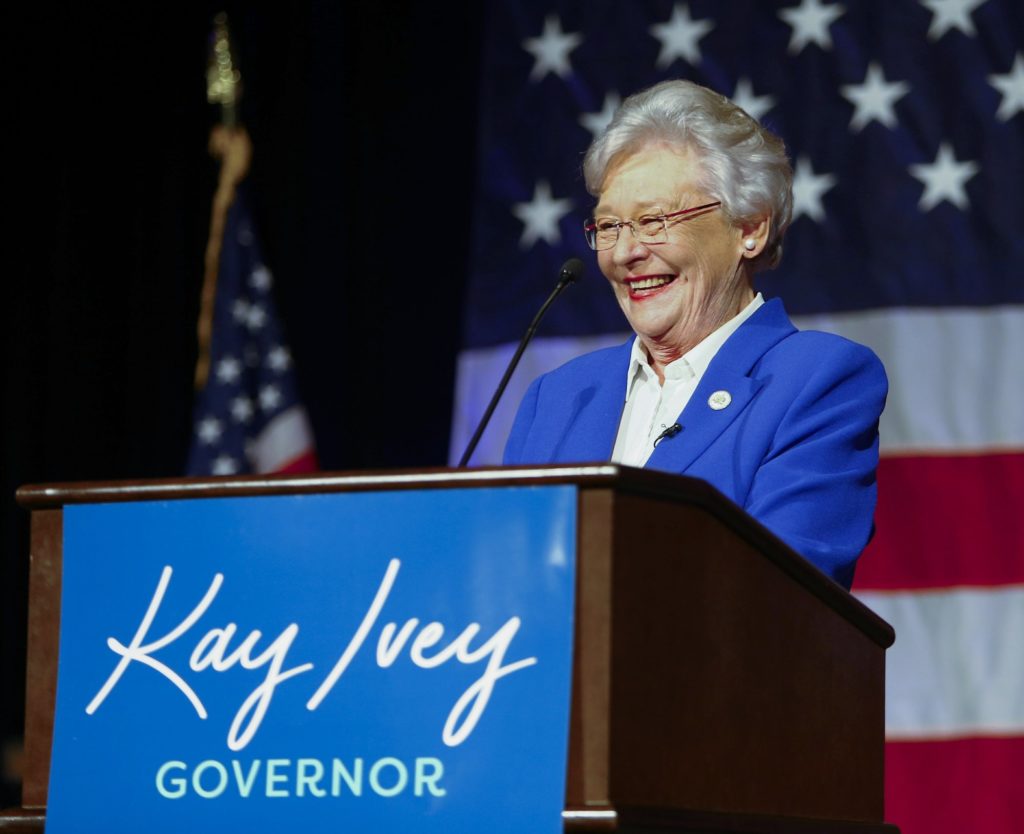
Money for law enforcement and for the victims of human trafficking and domestic violence. This week Governor Kay Ivey announced the following grants: Ivey has awarded a $165,405 grant to ensure that law enforcement and prosecutors are familiar with existing and new laws involving traffic safety. The Alabama Office of Prosecution Services will use the funds to help district attorneys and law enforcement officers stay up-to-date on traffic safety laws which could affect outcomes for traffic violation cases. “Law enforcement officers and prosecutors at all levels work together to enforce and uphold Alabama’s traffic laws,” Gov. Ivey said. “I am pleased to support this program which strengthens that partnership and makes sure drivers who break our laws and put others in danger are held accountable for their behavior.” The Office of Prosecution Services provides training for the state’s 42 district attorneys and their legal staff who prosecute traffic cases. The Office of Prosecution Services also provides needed research and technical assistance in traffic cases. The office also coordinates with other agencies to discuss methods and strategies to reduce impaired driving and other measures to improve safety on Alabama’s roads. The Alabama Department of Economic and Community Affairs is administering the grant from funds made available by the National Highway Traffic Safety Administration. “ADECA shares Gov. Ivey’s commitment to helping Alabama’s law enforcement officers and prosecutors fully enforce Alabama’s traffic codes and laws,” ADECA Director Kenneth Boswell said. Gov. Ivey notified Barry Matson, executive director of the Office of Prosecution Services, that the grant had been approved. ADECA administers an array of programs supporting law enforcement and traffic safety, economic development, energy conservation, water resource management and recreation development. 2. Gov. Kay Ivey has awarded $1.2 million in grants to provide extra enforcement of Alabama’s traffic safety laws and make the state’s roadways safer. The Alabama Law Enforcement Agency will use the grants to provide additional patrols and overtime in specific locations that are shown to be problem areas for speeding and drunken driving. “Obeying Alabama’s traffic laws – following speed limits, buckling up and not driving impaired or distracted – saves lives,” Gov. Ivey said. “I commend our state troopers at ALEA for the work they do to make our roadways safe for all drivers, and I am pleased to provide these funds for extra enforcement in problem areas.” While many people are familiar with nationwide enforcement campaigns such as “Click It or Ticket” or “Drive Sober or Get Pulled Over,” these grants allow ALEA to target these problem areas, known as “hot spots,” at various times throughout the year as needed. The Alabama Department of Economic and Community Affairs is administering the grants from funds made available by the National Highway Traffic Safety Administration. “ADECA stands with Gov. Ivey in commending our state troopers for their dedication and hard work to save lives on Alabama’s highways,” ADECA Director Kenneth Boswell said. ADECA administers a wide range of programs that support law enforcement, economic development, water resource management, energy conservation and recreation development. Gov. Ivey notified ALEA Secretary Hal Taylor that the grants had been approved. 3. Alabama’s focus to take dangerous drivers off the road just became a little sharper thanks to a $315,578 grant awarded by Gov. Kay Ivey. The Alabama Law Enforcement Agency will use the funds to continue its drug recognition expert program. Officers trained as drug experts can recognize motorists who are under the influence of prescribed medications or illegal drugs. “Drivers under the influence of drugs or other substances recklessly endanger lives when they get behind the wheel,” Gov. Ivey said. “This program gives us a valuable tool to take dangerous drivers off the road and hold them accountable.” Drug recognition training involves knowing when a motorist is driving under the influence of drugs and learning how to differentiate between drug substances and alcohol. Training also helps officers determine if an erratic motorist who has been stopped or is in a crash is suffering from a mental disorder or a medical condition. The Alabama Department of Economic and Community Affairs is administering the grant from funds made available to the state by the U.S. Department of Justice. “Gov. Ivey and ADECA are committed to providing the tools, knowledge and resources to keep our roads safe and ensure that drivers depart and arrive at their destinations safely,” ADECA Director Kenneth Boswell said. ADECA administers a wide range of programs that support law enforcement, victim programs, economic development, water resource management, energy conservation and recreation. 4) Gov. Kay Ivey has awarded $1 million to help victims of sex trafficking find safe shelter and receive the needed guidance to restore their lives. The WellHouse will use the funds to provide a safe residential haven for women who have been sexually exploited through human trafficking and are seeking help. The nonprofit agency based near Birmingham provides multiple services to help women escape trafficking situations. “Many women, no matter their background or upbringing, can become trapped in illicit sex trafficking,” Gov. Ivey said. “It important that our state supports efforts that help liberate these women caught in that unfortunate circumstance. I am proud to aid programs that help those women.” The agency provides a five-step recovery process that helps deliver women from being sexually exploited victims to becoming independent survivors. The WellHouse has a 24-hour availability and works with law enforcement agencies and other agencies to help women escape sex trafficking and obtain needed physical and mental health care, education and job skills and legal advocacy. The Alabama Department of Economic and Community Affairs is administering the grant from funds made available to the state by the U.S. Department of Justice. “Gov. Ivey and ADECA are committed to helping women escape the chains of human trafficking and receive the services and guidance they require to recover and regain their dignity,” ADECA Director Kenneth Boswell said. Gov. Ivey notified Al Worthington, The WellHouse board president, that the grant had been approved. The WellHouse also relies on private contributions to
Mitch McConnell wants to consider gun background checks in fall
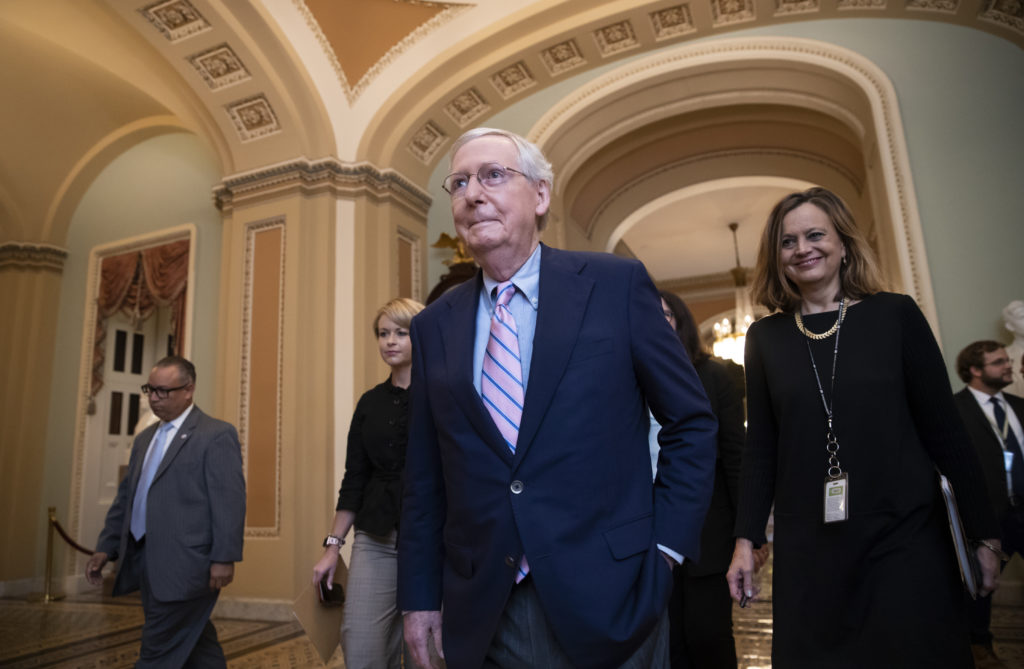
Shifting the gun violence debate, Senate Majority Leader Mitch McConnell says he now wants to consider background checks and other bills, setting up a potentially pivotal moment when lawmakers return in the fall. The Republican leader won’t be calling senators back to work early, as some are demanding. But he told a Kentucky radio station that President Donald Trump called him Thursday morning and they talked about several ideas. The president, he said, is “anxious to get an outcome, and so am I.” Stakes are high for all sides, but particularly for Trump and his party. Republicans have long opposed expanding background checks — a bill passed by the Democratic-led House is stalled in the Senate — but they face enormous pressure to do something after mass shootings in El Paso, Texas and Dayton, Ohio, that left 31 people dead. McConnell, who is facing protests outside his Louisville home, can shift attention back to Democrats by showing a willingness to engage ahead of the 2020 election. “What we can’t do is fail to pass something,” McConnell said. “What I want to see here is an outcome.” McConnell said he and Trump discussed various ideas on the call, including background checks and the so-called “red flag” laws that allow authorities to seize firearms from someone deemed a threat to themselves or others. “Background checks and red flags will probably lead the discussion,” McConnell told Louisville’s WHAS-AM. He noted “there’s a lot of support” publicly for background checks. “Those are two items that for sure will be front and center as we see what we can come together on and pass.” Trump has been interested in federal background checks before — and tweeted Monday about them — only to drop the issue later, a turnaround similar to his reversal on gun proposals after the 2018 high school shooting at Parkland, Florida. The powerful National Rifle Association and its allies on Capitol Hill have long wielded influence, but the gun lobby’s grip on Democrats started slipping some time ago, and it’s unclear how much sway the NRA and other gun groups still hold over Republicans in the Trump era. House Speaker Nancy Pelosi and Senate Democratic Leader Chuck Schumer said Trump assured them in phone calls Thursday he will review the House-passed bill that expands federal background checks for firearm sales. In a joint statement, they said Trump called them individually after Pelosi sent a letter asking the president to order the Senate back to Washington immediately to consider gun violence measures. Schumer and Pelosi said they told Trump the best way to address gun violence is for the Senate to take up and pass the House bill. Trump, they said, “understood our interest in moving as quickly as possible to help save lives.” The politics of gun control are shifting amid the frequency and toll of mass shootings. Spending to support candidates backing tougher gun control measures — mostly Democrats — surged in the 2018 midterms, even as campaign spending by the NRA declined. NRA chief Wayne LaPierre said in rare public statement Thursday that some federal gun control proposals “would make millions of law-abiding Americans less safe and less able to defend themselves and their loved ones.” The organization said proposals being discussed in Congress would not have prevented the mass shootings in Texas and Ohio that killed 31 people. McConnell has been under pressure from Democrats, and others, to bring senators back to Washington after the back-to-back weekend shootings. Earlier, more than 200 mayors, including those in Dayton and El Paso, urged the Senate to return to the Capitol. “Our nation can no longer wait,” they wrote. McConnell on Thursday rejected the idea of reconvening the Senate, saying calling senators back now would just lead to people “scoring points and nothing would happen.” Instead, the GOP leader wants to spend the August recess talking with Democratic and Republican senators to see what’s possible. Senators have been talking among themselves, and holding conference calls, to sort out strategy. “If we do it prematurely it’ll just be another frustrating position for all of us and for the public,” he said. The politics of gun violence are difficult for Republicans, including McConnell. He could risk losing support as he seeks reelection in Kentucky if he were to back restricting access to firearms and ammunition. Other Republicans, including those in Colorado, Maine and swing states, also would face difficult votes, despite the clamor for gun laws. GOP senators are also considering changes to the existing federal background check system, modeled on a law signed last year that improved the National Instant Criminal Background Check system, as well as increased penalties for hate crimes. While many of those proposals have bipartisan support, Democrats are unlikely to agree to them without consideration of the more substantive background checks bill. “We Democrats are not going to settle for half-measures so Republicans can feel better and try to push the issue of gun violence off to the side,” Schumer said Wednesday. Sen. Joe Manchin, a West Virginia Democrat who, along with Sen. Pat Toomey, Republican-Pennsylvania, is pushing a bill to expand background checks, said Trump’s support will be the determining factor in whatever gets done. “At this point in time leadership comes from President Trump,” Manchin said. By Lisa Mascaro and Matthew Daly Associated Press Associated Press writer Bruce Schreiner in Louisville, Kentucky, contributed to this report. Republished with permission of the Associated Press.
Daniel Sutter: The economic value of national unity
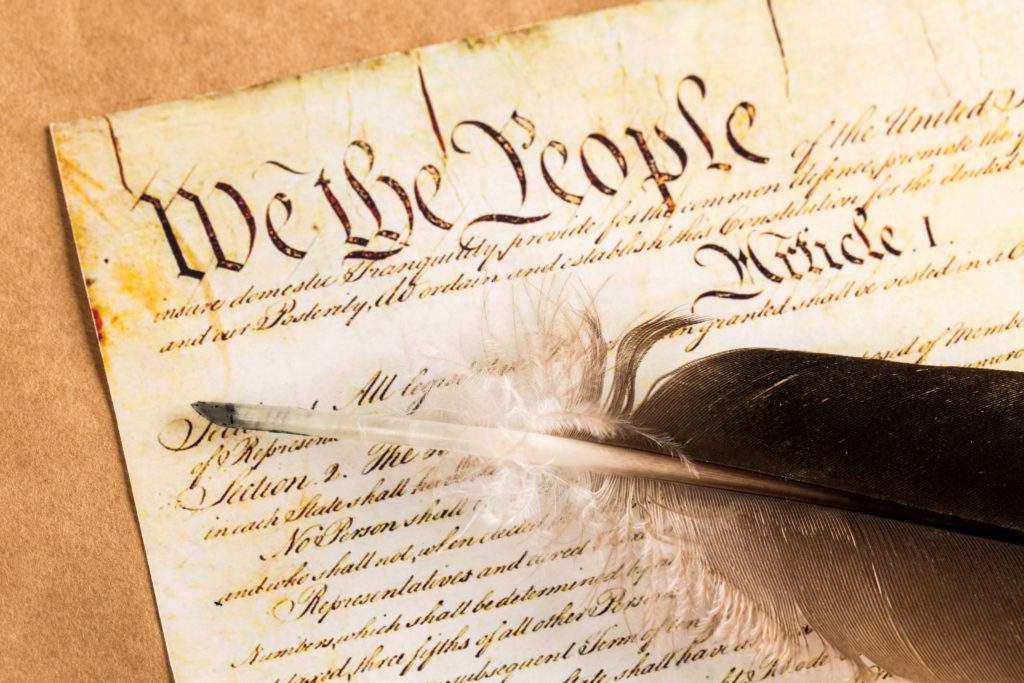
The Edmund Burke Foundation recently hosted the National Conservatism Conference which explored, among other questions, the meaning and importance of patriotic national unity. Conference organizer Yoram Hazony argued that conservatives need to break away from the libertarian and classical liberal idea of the “individual … as the only thing that matters in politics.” Politics is about citizens pursuing their common interests, and the bonds formed in this pursuit are important for the economy as well. America’s founders were liberals, or the classical liberals mentioned by Mr. Hazony. Liberalism maintained that governments were supposed to serve people, not the other way around. This idea was radical at the time, and had been established slowly in England over centuries. England’s “constitution” was never written down or formally adopted. In the 1770’s, King George III was pushing for more royal prerogative. Our founders’ decided to create a country based on an idea, not ethnicity or military conquest. And the idea was freedom. Founding a nation based on agreement among citizens follows naturally from the political theory of liberals like Hobbes, Locke and Montesquieu. The consent of the governed legitimates government, and the Declaration of Independence, the Constitution, and the Bill of Rights made this explicit. A nation can only have one set of institutions. Politicians will either have limited or unlimited power. Property rights and economic freedom will either be respected or not. Either people will be free to live, or must get permission to move, work, or worship. America’s institutions – limited government, markets, and personal freedom – achieve the founders’ values. Institutions significantly impact economic performance and prosperity. Physical capital (factories, mines, and farms) produces our goods and services, but secure property rights encourage people to make these investments. Limited government secured through representative democracy establishes the rule of law. The citizens of a nation must accept its institutions, and by implication, the values the institutions embody. Acceptance based on genuine agreement binds people together. Even if everyone agreed on fundamental values like life, liberty, and the pursuit of happiness, disagreements will arise on specifics or the form of government to best secure these values. No one gets exactly what they want. We agree to respect our differences and not let them tear us apart. Libertarians emphasize the universal nature of human rights. The Declaration of Independence’s rights to life, liberty, and the pursuit of happiness apply to all people, even when ignored by a dictator. Many libertarians’ internationalism, I think, offends conservatives’ strong sense of nationalism. Yet I think there should be common ground here. Not all people agree on fundamental human rights. People who believe in freedom can found a country based on this. A foundation in freedom has enabled America to accommodate so many immigrants historically. Americans’ shared values more than offset racial, religious and linguistic differences. The citizens of a free nation effectively bond together to protect these values and the institutions which secure them. This is how politics is about more than just individuals. And it must be, because many people and nations which do not accept freedom will act in criminal and imperial ways. Freedom isn’t free, and citizens must protect each other’s freedom. Shared values and the commitment to defend each other also produce trust, or a widespread belief that fellow citizens are not trying to take advantage of them. Research demonstrates the economic value of trust, even when controlling for institutions like the rule of law and economic freedom. Markets function better when employers trust employees, businesses trust customers, investors trust financial institutions, and so on. Politics is about more than individuals. In a free country, politics involves a shared commitment to protect our fellow citizens’ freedom. And freedom allows individuals to pursue their happiness in many different ways. Daniel Sutter is the Charles G. Koch Professor of Economics with the Manuel H. Johnson Center for Political Economy at Troy University and host of Econversations on TrojanVision. The opinions expressed in this column are the author’s and do not necessarily reflect the views of Troy University.
