
States oppose Alabama’s effort exclude migrants in Census
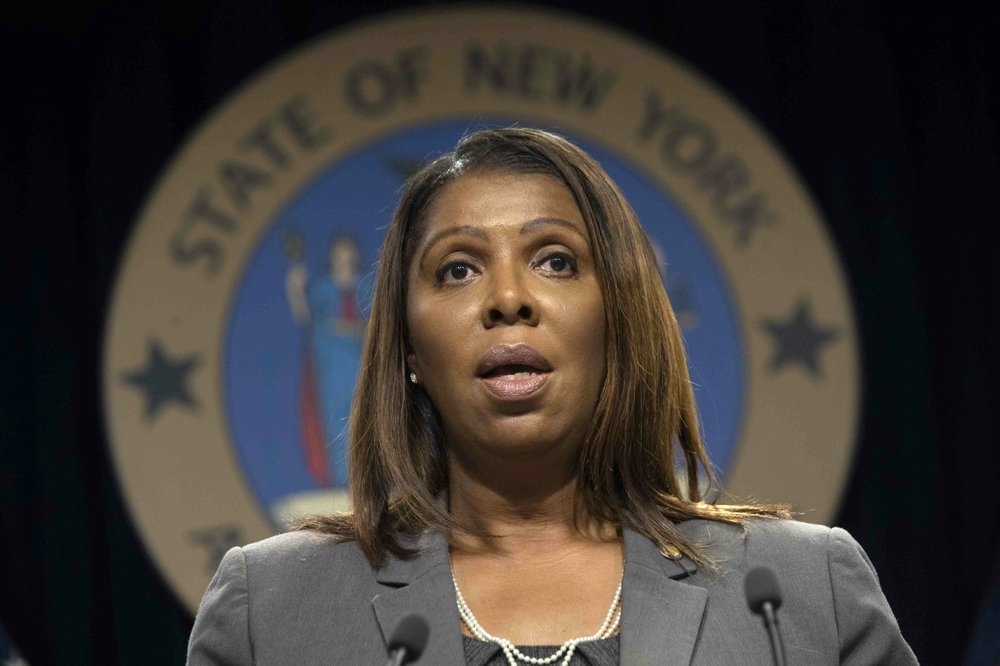
A coalition of 15 states and several major cities is opposing a lawsuit by the state of Alabama that would have the U.S. Census count only U.S. citizens and other legal residents in totals that play a key role in congressional representation and the distribution of federal funding. New York, California, Virginia, other states, the District of Columbia and some other cities have asked to intervene in Alabama’s federal lawsuit against the U.S. Census Bureau. The states and cities want to defend the longstanding practice of counting all U.S. residents regardless of immigration status, and oppose Alabama’s effort to have it declared illegal. Alabama’s 2018 lawsuit continues a battle over immigration status and the U.S. Census after President Donald Trump abandoned an effort to include a citizenship question on the 2020 Census. New York Attorney General Letitia James said in a statement that the coalition will fight to ensure all people are counted in the census “despite the Trump Administration’s previous racist and xenophobic attempts to tip the balance of power in the nation and Alabama’s endeavor to continue down that path.” “No individual ceases to be a person because they lack documentation. The United States Constitution is crystal clear that every person residing in this country at the time of the decennial census — regardless of legal status — must be counted, and no matter what President Trump says, or Alabama does, that fact will never change,” James said. The cities and states argued in a Monday court filing that the Constitution requires an actual enumeration of the population, which means all people regardless of their citizenship or legal status. Alabama Attorney General Steve Marshall and U.S. Rep. Mo Brooks of Huntsville filed the 2018 lawsuit that says counting all residents, regardless of immigration status, was not intended by the Constitution’s writers and the practice unfairly shifts political power and electoral votes from “states with low numbers of illegal aliens to states with high numbers of illegal aliens.” Alabama argued in the lawsuit that “illegal aliens have not been admitted to the political community and thus are not entitled to representation in Congress or the Electoral College.” Alabama has said it could lose a congressional seat as a result of the 2020 Census.Attorneys for the intervening states argued they too have a “significant stake in the outcome of this litigation” because it will affect their political representation in Congress and their eligibility for federal funds. In 2016, the U.S. Supreme Court in a similar case ruled against two Texas residents who argued their votes were diluted by the practice of using the “whole population” to draw legislative district lines. The Department of Justice is defending the Census Bureau in the lawsuit. However, the cities and states seeking to intervene in the case questioned the Trump’s administration commitment to defending the practice. U.S. District Judge David Proctor in December allowed others to intervene in the case, noting the federal government’s “rather halfhearted” argument to dismiss the lawsuit. The latest motion to intervene noted that Trump Attorney General William Barr had noted the “current dispute over whether illegal aliens can be included for apportionment purposes.”The states seeking to intervene in the lawsuit are: New York, California, Colorado, Connecticut, Illinois, Massachusetts, Minnesota, Nevada, New Jersey, New Mexico, Oregon, Rhode Island, Vermont, Virginia and Washington. The United States Conference of Mayors, the District of Columbia and nine other cities and counties, including Seattle and New York City, are also asking to join the lawsuit. The city of Atlanta also asked to intervene in a separate court filing. This story has been corrected to say the opponents include 15 states and several major cities, not 16 states. Republished with permission from the Associated Press.
Beto O’Rourke resuming presidential run with ‘major’ Texas speech
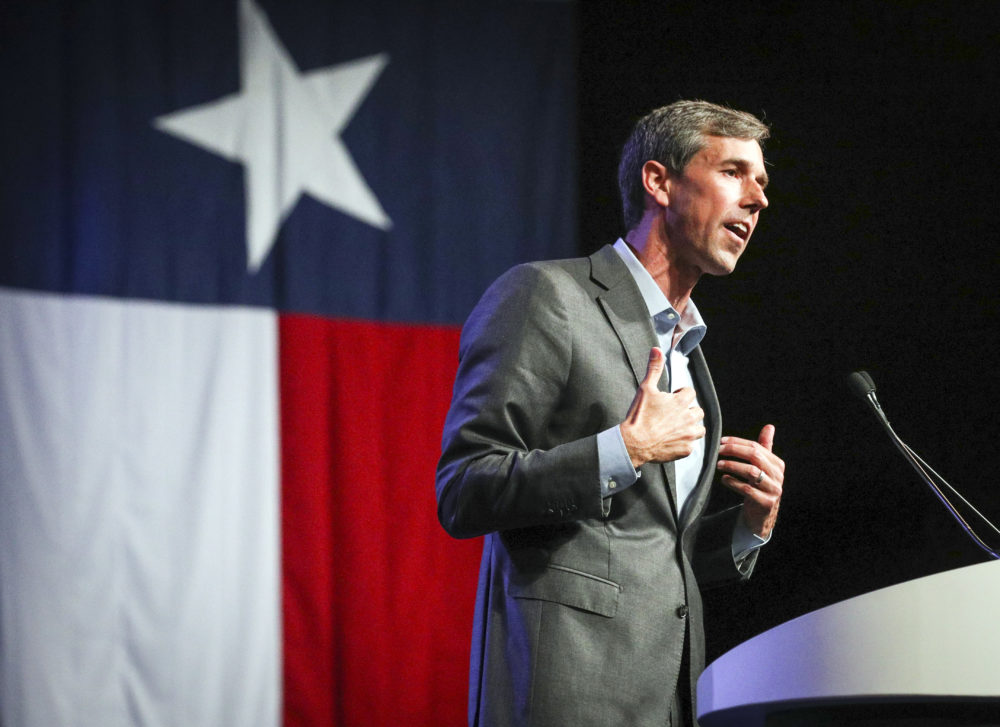
Beto O’Rourke will formally rejoin the presidential race on Thursday, resuming a campaign that has been suspended for nearly two weeks with what he promises will be a “major address to the nation” from his hometown of El Paso, Texas, where a mass shooting killed 22 people. The Democratic former congressman will outline “the path forward” for his presidential campaign “and for the future of the country.” He will then resume traveling the nation as a 2020 White House hopeful, though his advisers have yet to announce where he’ll go. O’Rourke was campaigning in Nevada on Aug. 3 when a gunman who denounced immigrants in an online screed opened fire at a Walmart in El Paso, a U.S.-Mexico border town. O’Rourke rushed home and has tried to help his city cope. He missed scheduled visits to California, Colorado and Iowa, forgoing the state that opens presidential primary voting during the state fair, when nearly every other Democrat in the crowded presidential field was there. Canceling a high-profile Iowa stop immediately began clamor in Texas and beyond that O’Rourke could scrap his presidential bid and return to Texas to challenge Republican Sen. John Cornyn, who is up for reelection next year. O’Rourke, who became a political star by nearly unseating Republican Sen. Ted Cruz last year, entered the race for the White House with strong buzz and fundraising but has seen both fade. Still, O’Rourke’s campaign manager, Jen O’Malley Dillon, dismissed that notion, saying in a statement to The Associated Press: “Now more than ever, this country needs the honest leadership Beto continues to demonstrate — and that is why he is running for president.”O’Rourke aides also say privately that the El Paso shooting only strengthened the candidate’s resolve to be president since he feels President Donald Trump helped cause it. In a CNN op-ed, O’Rourke noted that the shooting suspect drove more than 600 miles (965 kilometers) to “hunt and kill Hispanic people” and that he “followed a path of vile inspiration that reaches from the darkest chapters of our history and runs directly to the White House today,” despite the Republican president blaming mental illness and video games. “It is on all of us, individually and through the institutions of the press and Congress, to decide what this country will stand for at this defining moment of truth,” O’Rourke wrote in the op-ed. By Will Weissert Associated Press Republished with permission from the Associated Press.
Daniel Sutter: Why go to college?

More than three million students will begin college this year, many pursuing degrees needed for high paying jobs. Amazingly, bachelor’s degrees open economic doors despite little evidence of significant learning in college. How can students who retain so little knowledge make so much money? A college degree can identify people who employers want to hire. A recent book by George Mason University economist Bryan Caplan provocatively titled The Case Against Education argues that this signaling explains much of the college earnings premium. The college earnings premium is real. According to the Bureau of Labor Statistics, in 2018 college grads earned 64 percent more than high school grads who never attended college, and 39 percent more than associate’s degree holders. College grads are also less likely to be unemployed, with a 2.2 percent unemployment rate, versus 4.1 percent for high school grads. The earnings and unemployment differentials have both persisted for years. Businesses require bachelor’s degrees for many jobs. Every time a business chooses college grads, they pay more. Profit-hungry businesses should not hire more expensive workers unless they create more value. Economics offers two theories for education’s value. The first, called human capital, contends that learning makes workers more productive. In the human capital story, the college curriculum must be directly valuable to employers. High paying degrees, like economics, must teach skills businesses value more. Alternatively, college degrees might allow students to signal characteristics which businesses desire; the content of degrees may be largely irrelevant. Life offers many examples of signaling. Romance and courting involve numerous signals, like engagement rings. A diamond is of little practical value, but signals the willingness to make a life-long commitment. What does college signal? Professor Caplan argues three main traits: intelligence, conscientiousness, and conformity. Businesses desire workers who are smart, able to learn challenging material, and willing to follow rules. Conformity is probably becoming more important, as businesses can no longer afford workers who tell off-color jokes or express racial, religious or sexual intolerance. Intelligence and ability to learn are valuable because the details of jobs differ greatly across employers. Employers must train workers to do a job their way. Employees must be willing to turn off their cell phones and pay attention. How important is human capital versus signaling? Discussions of higher education policy generally presume human capital theory. Yet Professor Caplan contends that the college premium is about 80 percent signaling and 20 percent human capital. The content of education clearly has some relevance; engineering firms will not hire inexpensive social work majors over expensive engineers because they prefer graduates already familiar with engineering. Professor Caplan presents a wealth of statistical evidence in support of signaling. Yet several puzzles demonstrate signaling’s importance. Perhaps most telling is the one mentioned above, the lack of evidence on long-term learning. Knowledge forgotten – of Shakespeare, calculus, or supply and demand – cannot be generating productivity. Furthermore, a student who is one or two classes short of a degree has acquired perhaps 95 percent of a degree’s human capital, but will face a significant salary penalty. And attending classes allows acquisition of knowledge without earning college credit, and has essentially no market value. Signaling creates value for the economy even if course content is largely irrelevant. College helps employers find the workers they want. Yes, four years of college is costly, but everyone wants high paying jobs and would likely lie during an interview. Whether higher education provides efficient signaling depends on whether an alternative can separate high and low quality potential workers at a lower cost. The potential exists for excessive and wasteful signaling. Completing high school used to separate one from the crowd. Arguably we now use college degrees as a signal instead of high school diplomas. Credential inflation is potentially costly. For parents of college students, signaling offers some solace. Even if Sally or Johnny seem to forget everything after the semester ends, passing forgettable classes can readily signal employers their willingness to learn a boring job. Daniel Sutter is the Charles G. Koch Professor of Economics with the Manuel H. Johnson Center for Political Economy at Troy University and host of Econversations on TrojanVision. The opinions expressed in this column are the author’s and do not necessarily reflect the views of Troy University.
