
Phil Williams: Less outrage, more leadership
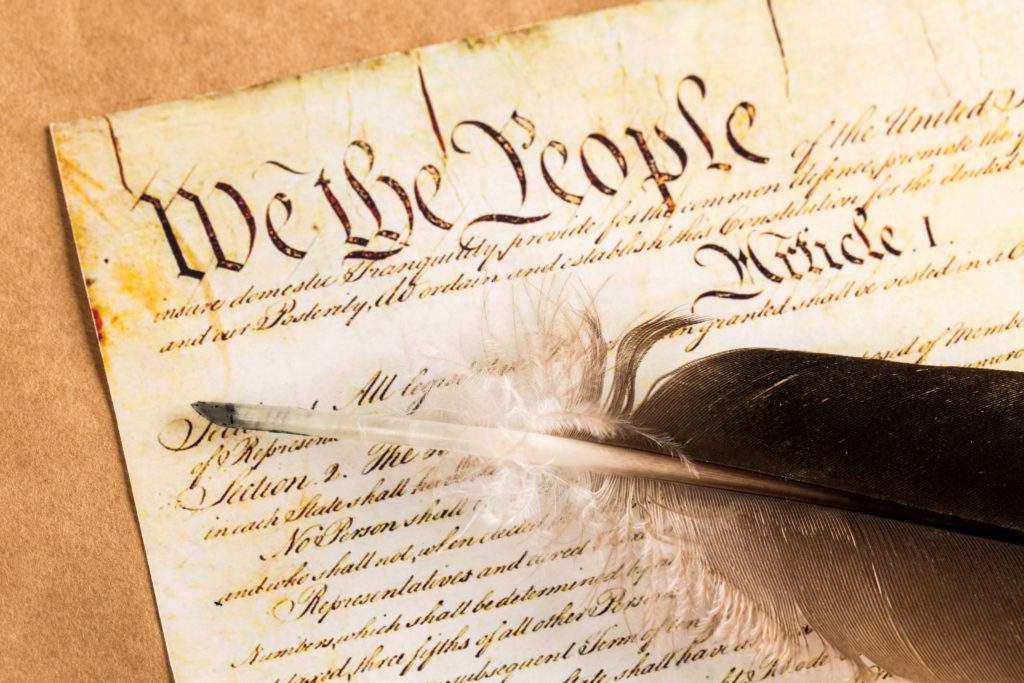
Time and again over the past few years, we have witnessed a disturbing trend among liberals, namely that if you don’t agree with their positions that you are to be silenced, boycotted, or removed. This past weekend, the Executive Committee of the Alabama Republican Party jumped into the liberal playbook feet first when it passed a resolution calling for Representative Ilhan Omar (Democrat-Minnesota) to be ousted from Congress. As I write this, I imagine that some of my GOP brethren around the State are slack-jawed that I would say such a thing. So, before you espouse my demise as a conservative, let’s be clear: I am an individual with unquestioned credentials as a conservative, a Christian and a Republican. I find Congresswoman Omar to be generally reprehensible, a fomenter of chaos, and a person with whom I have yet to find agreement. I also find her opinions to be protected under the First Amendment of the US Constitution……and that, my conservative friends, is what really matters. Winston Churchill, never one to mince words, said “Everyone is in favor of free speech. Hardly a day passes without its being extolled, but some people’s idea of it is that they are free to say what they like, but if anyone else says anything back, that is an outrage.” What we need is less outrage, and more leadership with willingness to debate. It wasn’t so long ago that In-and-Out Burger was threatened with a boycott for supporting Republicans. Chick-Fil-A has often faced criticism and threats for standing for their corporate Christian culture. Entire States, including the great State of Alabama, have been the subject of proposed travel bans and business exodus for daring to stand for the rights of the unborn. All of these examples, and more, exist in current lexicon and were rebuffed by conservatives, including the ALGOP. And then, in a fit of hypocrisy, members of the same party, who withstood those similar attacks, cast aside any notion of constitutional protection and called for a duly elected representative from Minnesota’s 5th Congressional District to be thrown out of Congress altogether for her liberal views. Justice Antonin Scalia, arguably one of the most conservative jurists of our time, considered the notion of content discrimination a matter of strict scrutiny on the question of freedom of speech. Referring to this principle as the “first axiom” of First Amendment law, Scalia stated, “The point of the First Amendment is that majority preferences must be expressed in some fashion other than silencing speech on the basis of its content.” Let’s be real here….conservatives don’t generally like Representative Omar. I get it. The answer to that is to debate on the merits of our own position. Say what you want on your social media, or around the water cooler. Heck, we can even travel to Minnesota and campaign for her opposition. I suspect her public image is actually going to implode on its own. But, the idea that a group of Alabama hecklers is going to have her thrown out of office is not only ludicrous, and beneath what we stand for, it is antithetical to the foundations of this great experiment we call a representative democracy. I’m not afraid of Ilhan Omar. I’d be proud to debate rings around her in a public forum. But, like many others, I swore an oath to uphold and defend the Constitution of the United States. And that same Constitution affords a voice to all, not just to some. Phil Williams, API Director of Policy Strategy, is a former State Senator from Gadsden. For updates, follow him on Twitter at @SenPhilWilliams and visit alabamapolicy.org.
10 democrats set for next debate as several others miss cut
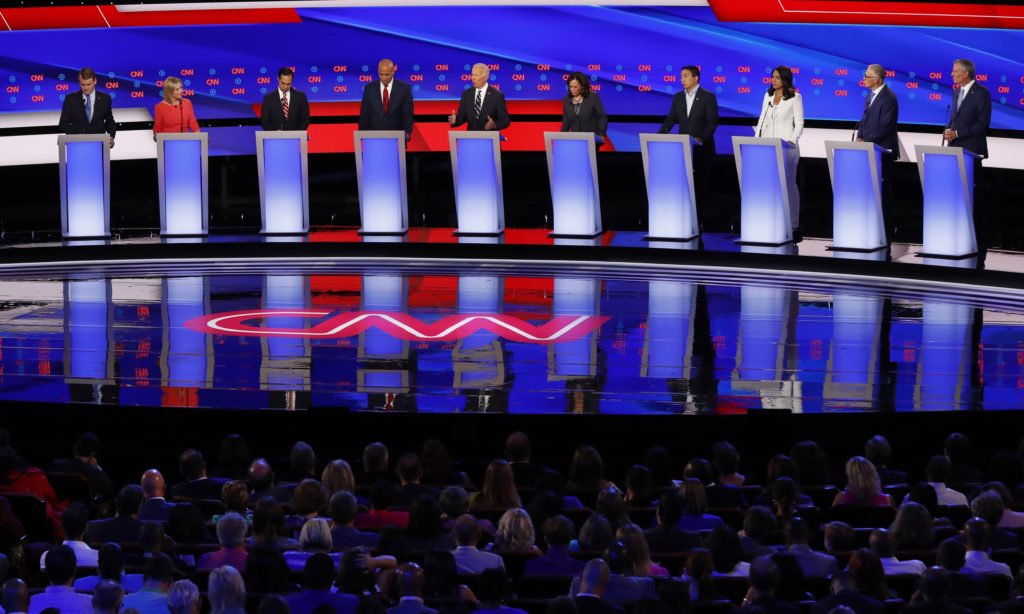
Struggling Democratic presidential candidates are facing the bad news that they are not among the 10 who have qualified for the next debate, a predicament that is likely to spell doom for their campaigns. Hours ahead of a midnight Wednesday deadline to qualify, New York Sen. Kirsten Gillibrand announced she was dropping out of the race after spending at least $4 million on advertising in recent months to qualify. Billionaire climate change activist Tom Steyer, Montana Gov. Steve Bullock and self-help guru Marianne Williamson were also among those missing September’s debate, as were Colorado Sen. Michael Bennet, Hawaii Rep. Tulsi Gabbard and a handful of others. To appear on stage in Houston next month, they had to hit 2 percent in at least four approved public opinion polls while securing 130,000 unique donors . Two new polls released Wednesday affirmed that they were all below the threshold. The question shifted from who would qualify for the following debate to who would stay in the race. “Our rules have ended up less inclusive … than even the Republicans,” Bullock said on MSNBC, referring to the thresholds set by the Democratic National Committee. “It is what it is.” The 10 candidates who qualified for September’s debate are Joe Biden, Cory Booker, Pete Buttigieg, Julián Castro, Kamala Harris, Amy Klobuchar, Beto O’Rourke, Bernie Sanders, Elizabeth Warren and Andrew Yang. In a still-crowded Democratic field, not qualifying for the debate was expected to severely cripple a candidate’s prospects. However, several have pledged to forge on in hopes of reaching the requirements in time for the next debate, in October. Although earlier debates had lower thresholds, the DNC raised the stakes for the fall debates. “We believe you need to show progress in your campaign,” said Democratic Party spokeswoman Xochitl Hinojosa. “There hasn’t been one candidate in 40 years who has polled under 2% the fall ahead of a primary and has gone on to be the Democratic nominee.” The DNC designed the requirements to bring order to an unwieldy field of more than 20 White House hopefuls, while elevating the role of online grassroots donors who are among the party’s most fervent supporters. In some ways, the party has succeeded. But the process has drawn complaints from those unlikely to make the cut. They argue that the rules are arbitrary and have forced candidates to pour money into expensive online fundraising operations that can sometimes charge as much as $90 for every dollar raised. Bennet said the threshold favored Steyer, and a memo by his campaign accused the billionaire of trying to buy his way into the debate. “Other candidates have had to spend millions to acquire donors on Facebook, instead (of) communicating with voters and laying the groundwork to beat” President Donald Trump, the Bennet campaign memo stated. Steyer, a late entry in the race, was the closest to qualifying but acknowledged Wednesday night that he too had fallen short. “While I’m disappointed that I won’t be on the debate stage in Houston this month, I’m excited by all the support you’ve shown us,” he tweeted to supporters. “We started this campaign to get corporate influence out of politics, and I won’t stop fighting until the government belongs to the people again.” In a separate letter to Democratic Party Chairman Tom Perez, Bennet’s campaign asked how the DNC decided which polls to allow and questioned why Democrats were trying to narrow the field months before Iowa caucuses. Yet Hinojosa, the DNC spokeswoman, said those who are upset have had ample time to build support and reach the thresholds. Instead, most have consistently polled at 1% or below. “We are asking Democratic candidates to hit 2 percent in four polls. That is not a high threshold,” said Hinojosa, who added the DNC is accepting the results from 21 polls. Steyer and Gillibrand both poured millions of dollars into Facebook and TV ads to boost their standing in recent months. While Steyer met the donor threshold, he was one poll shy. Gillibrand was three polls away and had yet to lock in enough donors. Gabbard was two polls away from qualifying, and Williamson was three polls away.Several others who struggled had already chosen to drop out. Washington Gov. Jay Inslee, Massachusetts Rep. Seth Moulton and former Colorado Gov. John Hickenlooper all recently ended their campaigns. With no more than 10 participants, the September debate would be the first of the cycle held on a single night. Earlier debates featured 20 candidates split across two nights.Biden, the race’s early front-runner, said he would like the field to winnow even further. “I’m looking forward to getting to the place, assuming I’m still around, that it gets down to a smaller number of people so we can have more of a discussion instead of one-minute assertions,” the former vice president said Wednesday while campaigning in Spartanburg, South Carolina. By Brian Slodysko Associated Press Associated Press writer Bill Barrow in Spartanburg, South Carolina, contributed to this report. Republished with the permission of the Associated Press.
Kay Ivey apologizes for participating in blackface skit over fifty years ago
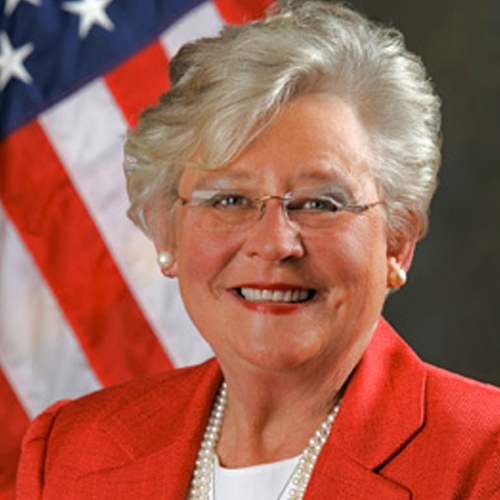
Alabama Gov. Kay Ivey is apologizing after a radio interview described her wearing blackface during a college skit in the 1960s. Ivey issued a statement and released a video apology Thursday saying that she does not remember the sketch or ever wearing blackface but wanted to “offer my heartfelt apologies for the pain and embarrassment this causes.” Ivey issued the apology and released the 1967 recording of an Auburn University college radio interview her then-fiance Ben LaRavia gave describing the skit. Ivey at the time was SGA vice-president. He describes her wearing “black paint all over her face” in a skit at the Baptist Student Union party. The skit was called “Cigar Butts.” LaRavia explained that “the skit didn’t require a lot of talent” those in it mainly crawled around the floor. Ivey said Thursday that she did not remember the skit, but “will not deny what is the obvious.” Ivey said “that is not who I am today.” Content by Associated Press’s Kim Chandler in included in this story.
