
Comedian Sacha Baron Cohen asks judge to dismiss Roy Moore lawsuit
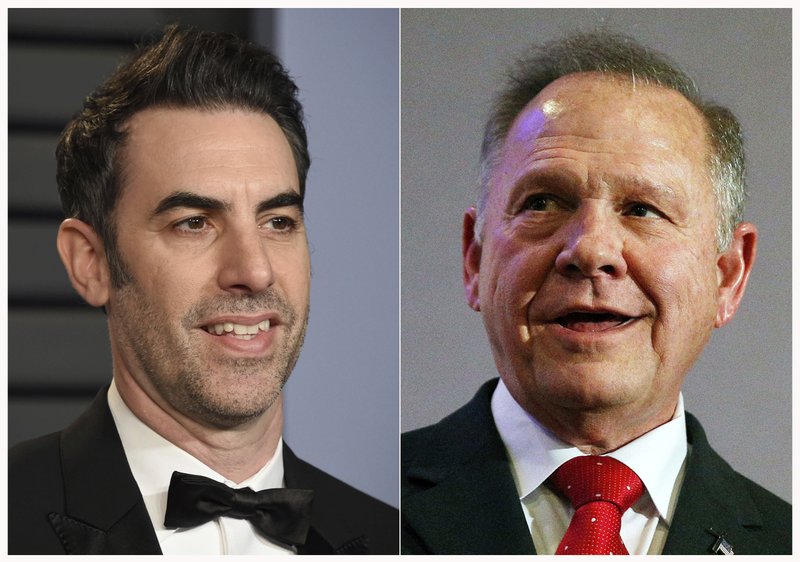
Comedian Sacha Baron Cohen asked a federal judge to dismiss Roy Moore’s defamation lawsuit over a television segment that lampooned Moore in the wake of sexual misconduct allegations. Lawyers for Baron Cohen, Showtime Networks and CBS wrote last week in a joint court filing that Moore signed an agreement waiving all legal claims before appearing on the “Who is America?” segment. They said in the agreement that Moore waived claims related to the program and anyone associated with it. They also said the segment was satire and is protected under the First Amendment. “This lawsuit conflicts directly with the long tradition of First Amendment protection for political parody and satire of public figures — especially where the satirical work ‘could not reasonably have been interpreted as stating actual facts about the public figure involved,’” lawyers wrote. The segment ran after Moore faced misconduct accusations during the 2017 Senate race in Alabama. He has denied the allegations and is running for Senate again in 2020. Moore said he was told he was receiving an award for supporting Israel when he agreed to appear on the show. Instead, Baron Cohen lampooned him as a possible pedophile. In the segment, Baron Cohen appeared as faux counterterrorism instructor “Col. Erran Morad,” discussing bogus military technology, including a supposed pedophile detector. The device repeatedly beeped as it got near Moore, who sat stone-faced. Moore argued that the waiver was fraudulently obtained because it did not disclose he was dealing with the comic. Baron Cohen has faced past lawsuits over similar pranks, but those actions were tossed because the individuals had signed releases. In 2008, a New York judge tossed out lawsuits brought by a driving instructor and two etiquette school teachers who said they were duped into appearing in the movie “Borat” in which Baron Cohen plays an awkward foreign journalist traveling the United States. The judge said they accepted money and signed agreements releasing the filmmakers from liability. Moore agreed to accept $200 for the charity of his choice, according to the agreement.Moore filed the lawsuit in Washington, D.C., but it was moved to New York, where the agreement mandates that disputes would be heard. Republished with the permission of the Associated Press.
Democrats push ahead with short-term bill to avoid shutdown
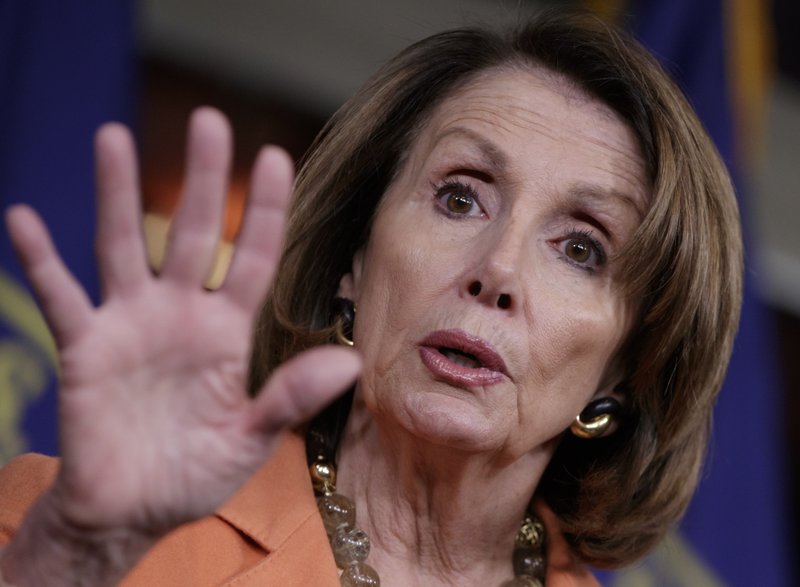
Democrats controlling the House are steering clear of controversy in a short-term, government-wide spending measure that’s needed to prevent a government shutdown at the end of September. House Speaker Nancy Pelosi has agreed to a White House request to replenish funds for bailout payments to farmers absorbing heavy losses as a result of President Donald Trump’s trade battles with China. She has also rejected suggestions from House liberals to try to use the must-pass stopgap measure to try to reverse the president’s controversial moves to raid military base construction projects to pay for the border wall, The temporary spending bill would keep the government running through Nov. 21 and is to be released Tuesday. House and Senate votes are expected well in advance of the Sept. 30 deadline to avert a shutdown, though its release remained held up over a relatively a relatively minor but complicated set of issues. The Senate, meanwhile, remains wrapped around the axle in its efforts to advance the 12 annual spending bills that would fill in the blanks of this summer’s bipartisan budget and debt deal. Majority Leader Mitch McConnell, Republican-Kentucky, has set up a procedural vote for Wednesday on a huge measure to fund the Pentagon, foreign aid, and domestic agencies like the energy and education departments, but Democrats appear likely to filibuster the measure to protest what they say is a raid on health and education programs to pay for more border wall projects. Next steps are unclear at best, and fears are growing that most of the government, including the Defense Department, will have to run on autopilot at current funding levels. “Of course Democrats oppose taking funds from Congress for our military to use on the president’s border wall. Everyone knows that,” Schumer said Tuesday. “McConnell has been accusing Democrats of threatening to block military funding because we don’t want to pass a bill that steals money from the military.” The maneuvering highlights the precarious nature of the summer’s bipartisan budget pact, which combined a two-year increase in the national debt with a set of new spending “caps” to prevent the return of automatic, across-the-board spending cuts to both the Pentagon and domestic federal agencies. In that agreement, both sides promised to steer clear of controversial provisions that, if included in the bills, would be so politically nettlesome that they would derail the entire process. But Sen. Patty Murray, Democrat-Washington, upset that education and health programs within her jurisdiction have been shortchanged and angry over a new Trump administration rule banning family planning providers that accept federal funds from counseling women about their abortion options, threatened an amendment to reverse the administration’s abortion “gag rule.” McConnell said Murray’s amendment — it would have likely passed the Appropriations Committee over opposition from GOP conservatives and the president — would violate the agreement to avoid politically toxic “poison pills,” and the typically bipartisan appropriations process in the Senate ran aground. A top Senate Democrat, Dick Durbin of Illinois, said that Democrats want allocations they consider to be fairer to social programs and agreements on plotting floor consideration of legislation so they are not at a disadvantage in fighting for their priorities. “We get those things and the poison pills start drifting away,” Durbin said. The Senate Appropriations Committee on Tuesday did approve three bipartisan bills funding transportation and housing, the IRS and the Treasury Department, and agriculture programs. The stopgap measure to fund the government is aimed at buying time for action and negotiations on $1.4 trillion in annual appropriations bills. Some items can’t wait and will be included, like accelerated funding for the 2020 census and $20 million to combat Ebola in Africa. Since the temporary spending bill is the only must-do legislation on the immediate horizon, lawmakers are using it as a locomotive to haul other priorities into law. That bundle of provisions, negotiated behind closed doors, offers plenty of evidence of Capitol Hill’s chronic dysfunction. It’s not just that the Democratic-controlled House and GOP-held Senate can’t agree on big issues like infrastructure, guns and health care. They also can’t agree on lower-tier items that typically pass by wide margins, such as short-term extensions of the federal flood insurance program and the Export-Import Bank, which helps finance export deals important to large manufacturers such as The Boeing Co. The House and Senate banking committees are responsible for legislation to reauthorize both the Export-Import Bank and the flood insurance program, which is particularly important to the real estate sector in coastal areas. But there’s been no progress, so temporary extensions of the two programs have been attached to the interim spending bill. Democrats are deferring a showdown over Trump’s border wall, which sparked a 35-day partial government shutdown at the turn of the year. Democratic leaders opted against trying to use the bill as a way to take on Trump controversies like cutting military base projects to pay for his U.S.-Mexico border wall. But they’re not granting Trump any favors, either, denying provisions such as the flexibility to build new border wall segments. A new bipartisan report by the Senate’s Permanent Subcommittee on Investigations released Tuesday found that this year’s shutdown and a more widespread 2013 shuttering of federal agencies cost taxpayers about $4 billion, mostly for back pay for workers who did not work during the shutdowns. Almost 57,000 years of worker productivity were lost, according to the report by Sens. Rob Portman, Republican-Ohio, and Tom Carper, Democrat-Delaware, contributing to piled-high trash at national parks, a suspension of consumer product safety inspections at U.S. ports, and delayed certifications for new aircraft. By Andrew Taylor Associated Press Republished with the permission of the Associated Press.
Donald Trump strains to balance diplomacy, military threat to Iran
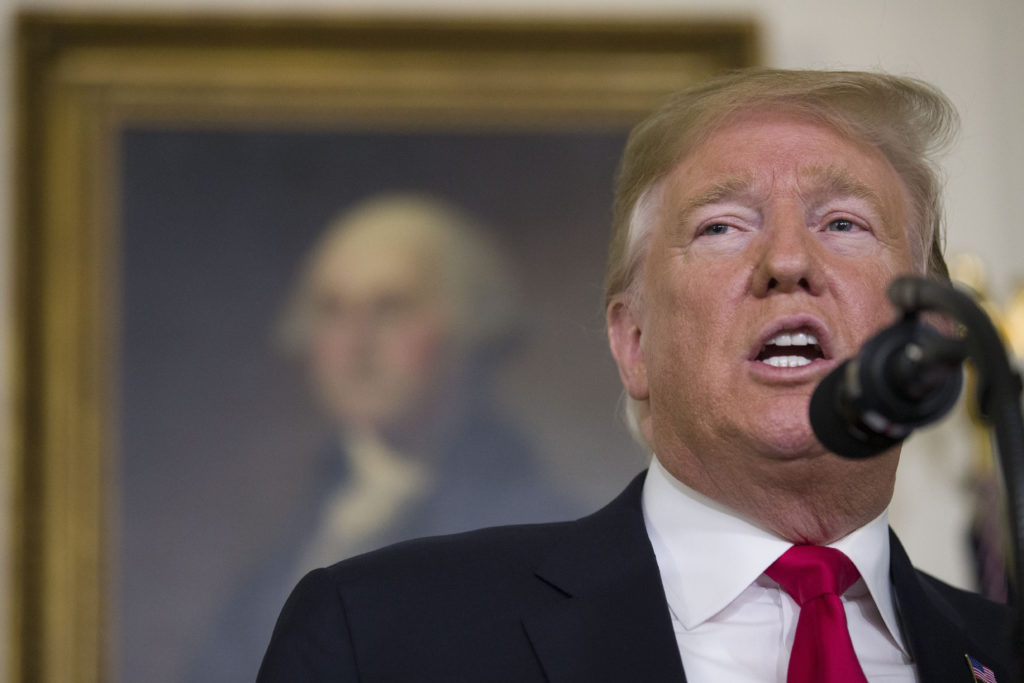
The Trump administration tried to balance diplomacy with fresh talk of military action Tuesday in response to the fiery missile and drone attack on the heart of Saudi Arabia’s oil industry — a strike marking the most explosive consequence yet of the “maximum pressure” U.S. economic campaign against Iran. Secretary of State Mike Pompeo was headed to Jiddah in Saudi Arabia to discuss possible responses to what U.S. officials believe was an attack coming from Iranian soil. President Donald Trump said he’d “prefer not” to meet with Iranian President Hassan Rouhani at next week’s U.N. session but “I never rule anything out.” Iran continued to deny involvement in last weekend’s attack on Saudi Arabia’s Abqaiq oil processing plant and its Khurais oil field, a strike that interrupted the equivalent of about 5 percent of the world’s daily supply. Saudi Arabia’s energy minister said Tuesday that more than half of the country’s daily crude oil production that was knocked out by the attack had been recovered and production capacity at the targeted plants would be fully restored by the end of the month. The Trump administration was moving cautiously as it navigated competing impulses — seeking to keep up a pressure campaign aimed at forcing Tehran to negotiate on broader issues with the U.S. while deterring any further Iranian attacks and avoiding another Middle East war. It all was occurring as the administration deals with a host of other foreign policy issues and has no national security adviser, following the recent ouster of John Bolton. Echoing Trump’s warning from earlier in the week, Vice President Mike Pence said American forces were “locked and loaded” for war if needed. But he also noted that Trump said he doesn’t want war with Iran or anyone else. “As the president said yesterday, it’s ‘certainly looking like’ Iran was behind these attacks,” Pence said. “And our intelligence community at this very hour is working diligently to review the evidence.” The analysts’ task was to connect the dots provided by satellite data and other highly classified intelligence with physical evidence from the scene of the attack, which American-provided Saudi defenses had failed to stop. Fourteen months before voters will decide on Trump’s reelection, he is increasingly mindful of his 2016 campaign promises, including his pledge to bring American troops home after nearly two decades of continuous war. But he also promised to apply fresh pressure on Iran, a pledge complicated by the latest apparent provocation. The at-times divergent messages from his administration, officials say, mirror internal staff divisions and even the president’s own hesitations. “You know, I’m not looking to get into new conflict,” Trump said Monday, “but sometimes you have to.” Aides say he’s taking a prudent pause. “The president’s being cautious, and if he were banging the gong today about Iran being the culprit, inevitably, without presenting the case to the American people, everyone would be saying he’s a warmonger,” said White House spokesman Hogan Gidley. The crisis comes amid upheaval in Trump’s national security team. His national security adviser, Bolton, departed earlier this month after policy clashes, including disagreements over how best to pressure Iran into returning to the negotiating table on its nuclear and missile programs. Iran’s alleged involvement in a recent series of provocations in the Gulf coincides with key moments in the unraveling of the country’s 2015 nuclear deal with world powers, from which Trump unilaterally withdrew the U.S. in May of last year. That was followed by a U.S. economic sanctions campaign, dubbed “maximum pressure,” that has cut off much of Iran’s international oil exports. Iran, in turn, has said that no one will be able to export oil from the region if Tehran can’t In effect, the country has answered Trump’s economic warfare with its own version — attacks on economic targets that have been audacious but thus far not caused casualties. Marine Gen. Joseph Dunford, chairman of the Joint Chiefs of Staff, said Tuesday that U.S. military experts were in Saudi Arabia working with counterparts to “do the forensics on the attack” — gleaning evidence that could help build a convincing case for where the weapons originated. Speaking to reporters in London, Dunford noted — as Trump had on Monday — that the attack was not aimed at the United States or U.S. forces. Therefore, he said, no steps were being taken to beef up the U.S. military presence in the Gulf region, which includes air defense forces and support troops at Prince Sultan Air Base south of the Saudi capital of Riyadh. The U.S. Navy has an aircraft carrier battle group in the area and fighter and bomber aircraft elsewhere in the Gulf. A senior administration official said the U.S. sees a role to play for the U.N. Security Council, which was created to address threats to international peace and security. The U.S. believes the attack meets that threshold, but the administration first needs to “gather the releasable” information and intelligence it has collected about the strike, according to the official, who was not authorized to publicly discuss the attacks and spoke only on condition of anonymity. The security council meets next week in New York. Jon Alterman, director of the Middle East program at the Center for Strategic and International Studies, said Trump must fashion a response to Iran that fits his administration’s stated priority of shifting from decades of insurgency warfare in Afghanistan and the Middle East to better position the U.S. for more serious international conflict. “The military’s instinct is increasingly that you can continue to pour resources into confronting Iran, but you’re never going to fix the problem and, most importantly, you’re taking resources away from confronting the real threats to the United States, which are China and Russia,” he said. Trump also faces a skeptical Congress. A bipartisan group of House members on Monday called for new language in 2020 defense spending bills that would prevent the president from starting a war with Iran without congressional authorization. Pence met behind
