
Cam Ward to challenge Greg Shaw for Alabama Supreme Court seat
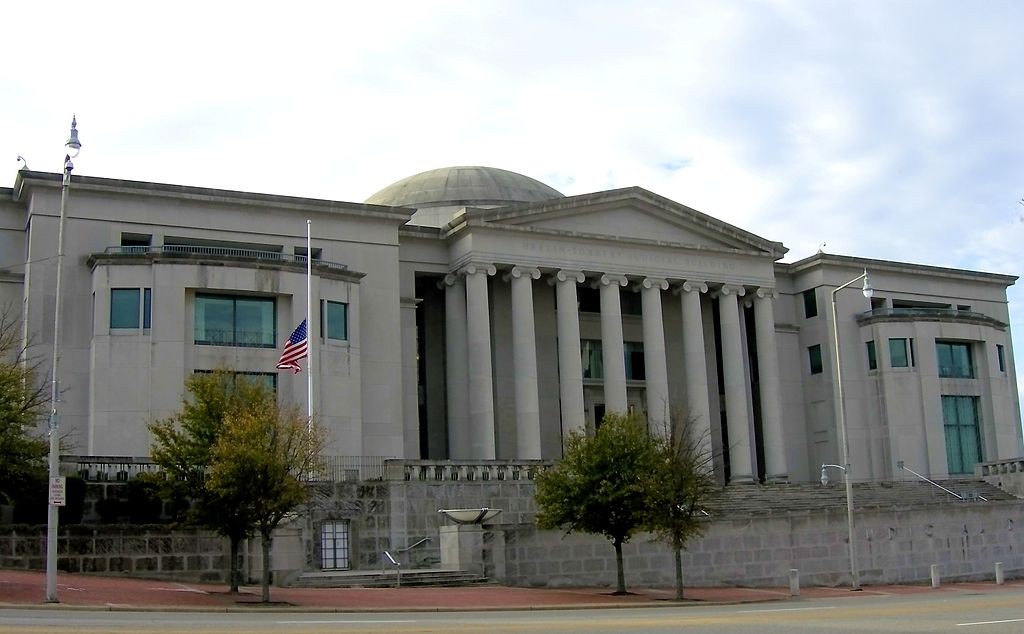
State Sen. Cam Ward announced Monday he will challenge two-term incumbent Justice Greg Shaw for a seat on the Alabama Supreme Court, setting up a significant Republican primary battle in 2020. Both men indicated they will file campaign paperwork with the Alabama Republican Party when qualifying opens this week. Shaw was first elected to the Supreme Court in 2008 and was re-elected in 2014. He previously served on the Alabama Court of Criminal Appeals from 2001-2009. He announced Friday that he would seek a third term. “I will once again ask the voters to place their trust in me to serve with integrity, impartiality and always place the law over politics,” Shaw said in a Friday statement. Shaw is a graduate of from Auburn University and Samford University’s Cumberland School of Law. His wife, Samantha Shaw, served two terms after being elected state auditor. A prominent member of the Alabama Senate, Ward is chairman of the Senate Judiciary Committee. He is best known for spearheading prison and criminal justice reform efforts and advocating for the autism community. “My judicial philosophy will be easy to understand. As a judge, my role will be to interpret the law exactly as it is written, not to write new ones,” Ward said in a statement. He is a graduate of Troy University and the Cumberland School of Law at Samford University. Ward was first elected to Alabama Legislature in 2002, serving first in the House of Representatives and later the Alabama Senate. Ward was arrested for driving under the influence in 2015 but completed a pretrial diversion program for first-time offenders. After his arrest, Ward issued a public apology and said he had been using alcohol as a “crutch.” The race will be one of several closely watched GOP primaries in March. Republished with the permission of the Associated Press.
Bradley Byrne: The consequences of impeachment
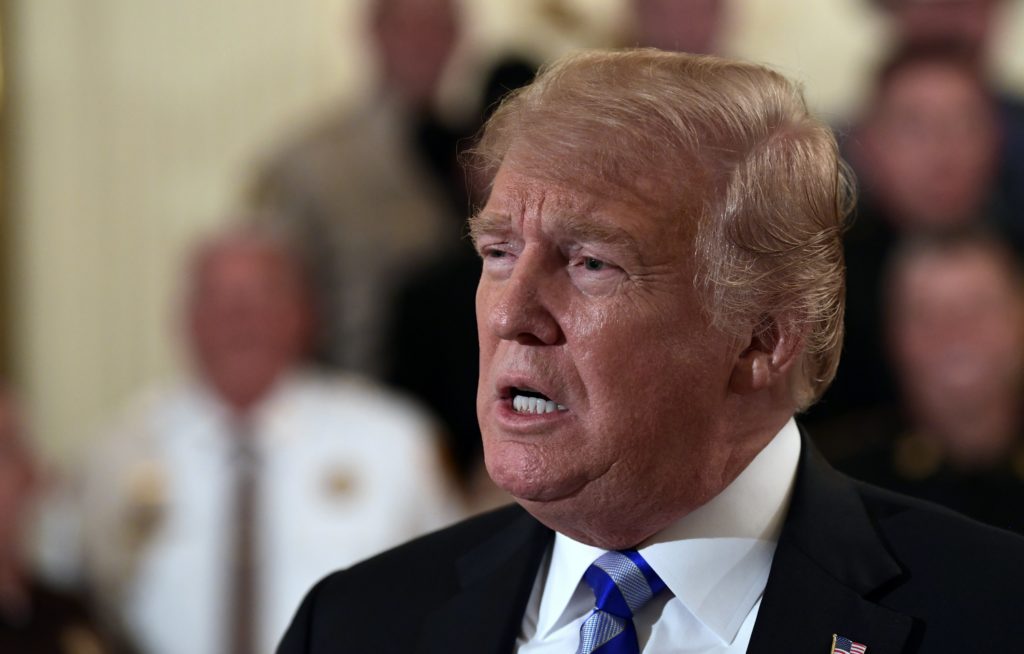
In the summer of 1973, as a student intern in Washington far from my home in Mobile, I got a firsthand view as the Senate held its Watergate hearings. For a young person, it was an amazing introduction to politics, and I was fascinated by what I saw. I followed the subsequent impeachment proceedings in 1974 carefully. Unfortunately, as the facts came out, it was clear President Nixon couldn’t continue in office. During the Clinton impeachment drama, I was a busy father, attorney, and part time state school board member. I could not pay as close attention, but I still watched everything unfold with great interest. Clinton was, and is, a perjurer and abused his office by having sexual relations with a young intern – literally in his office in the White House. Even so, I worried that the Republicans were overreaching with impeachment, and the voters told us we were. After the House impeached Clinton and he was acquitted by the Senate, Republicans lost seats in the House, and Newt Gingrich was forced to resign as Speaker. Fast forward to November 2016 and Donald Trump’s election as President. Since Day 1 of his Presidency, factions in our nation have called Donald Trump an illegitimate president. Many Democrats in elected office have publicly called for his impeachment for over two and a half years. They’ve tried almost every trick in the book to manufacture something worthy of the “high crimes and misdemeanors” our Constitution requires for impeachment. Look no further than Adam Schiff’s recent statement before the House Intelligence Committee. Schiff used his position as chairman of the committee to describe to a captive American audience a completely fabricated phone conversation between President Trump and the President of Ukraine. This is the same Adam Schiff who spent months on cable news networks promising some vague bombshell in the Mueller Report. By now, all his credibility is in shambles. I was proud to cosponsor a resolution to condemn and censure Schiff for his blatant attempt to mislead the public through lies and deception. The American people deserve better. The Ukrainian deal is just the latest impeachment flavor of the week after earlier attempts fell flat. As with all the manufactured scandals from Russia to Justice Brett Kavanaugh, Schiff and his allies in the national news media do not give the full truth in order to keep scandal in the headlines. With regards to the President’s phone call to President Zelensky of Ukraine, the Department of Justice reviewed all the evidence in August, found no evidence of a federal crime, and closed their case. What do Democrats in the House think they will find that our nation’s criminal division could not? The national news media won’t tell you that because it weakens the impeachment narrative. They are complicit with efforts to impeach at all cost. We must stand up during tough times like these. This process we are following now is unprecedented, bad for the country, and, ultimately for the Democrats, bad politics. The substantive basis for the present line of the impeachment “inquiry” is ludicrous. Today, I have a much closer seat for impeachment than I did as a student in 1973. I have followed it as closely as anyone. Next year, voters will have the opportunity to repudiate the Democrats for their baseless impeachment efforts. Speaker Pelosi, Schiff, the Squad and other Democrats would be wise to pay attention to history. If not, and Democrats continue their impeachment crusade, Speaker Pelosi might be looking for another job as President Trump is sworn in for his second term.
New whistleblower may give house democrats fresh information
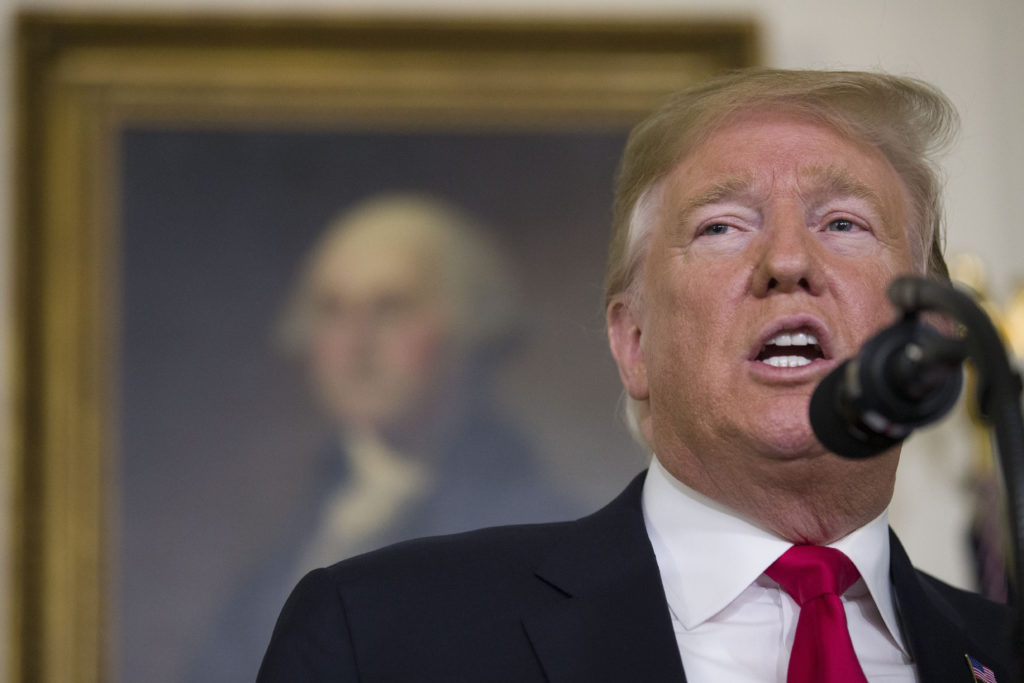
House Democrats leading an impeachment inquiry of President Donald Trump’s dealings with Ukraine may have fresh information to work with after a new whistleblower stepped forward with what the person’s lawyer said were firsthand knowledge of key events. With Congress out for another week and many Republicans reticent to speak out, a text from attorney Mark Zaid that a second individual had emerged and could corroborate the original whistleblower’s complaint gripped Washington and potentially heightened the stakes for Trump. Zaid, who represents both whistleblowers, told The Associated Press that the new whistleblower works in the intelligence field and has spoken to the intelligence community’s internal watchdog. The original whistleblower, a CIA officer, filed a formal complaint with the inspector general in August that triggered the impeachment inquiry. The document alleged that Trump had used a July telephone call with Ukraine President Volodymyr Zelenskiy to investigate a political rival, Joe Biden, and his son Hunter, prompting a White House cover-up. The push came even though there was no evidence of wrongdoing by the former vice president or his son, who served on the board of a Ukrainian gas company. Trump and his supporters deny that he did anything improper, but the White House has struggled to come up with a unified response. A second whistleblower with direct knowledge could undermine efforts by Trump and his allies to discredit the original complaint. They have called it politically motivated, claimed it was filed improperly and dismissed it as unreliable because it was based on secondhand or thirdhand information. A rough transcript of Trump’s call with Zelenskiy, released by the White House, has already corroborated the complaint’s central claim that Trump sought to pressure Ukraine on the investigation. Text messages from State Department officials revealed other details, including that Ukraine was promised a visit with Trump if the government would agree to investigate the 2016 election and a Ukrainian gas company tied to Biden’s son — the outline of a potential quid pro quo. Rep. Jim Himes, Democrat-Connecticut, a member of the House Intelligence Committee, said word of a second whistleblower indicates a larger shift inside the government. “The president’s real problem is that his behavior has finally gotten to a place where people are saying, ‘Enough,’” Himes said. Democrats have zeroed in on the State Department in the opening phase of their impeachment investigation. The Intelligence, Oversight and Foreign Affairs committees have already interviewed Kurt Volker, a former special envoy to Ukraine who provided the text messages, and least two other witnesses are set for depositions this week: Gordon Sondland, the U.S. ambassador to the European Union, and Marie Yovanovitch, who was abruptly ousted as the U.S. ambassador to Ukraine in May. Sen. Lindsey Graham, Republican-South Carolina, one of Trump’s most vocal backers, provided perhaps the strongest defense of the Republican president. He said there was nothing wrong with Trump’s July conversation with Zelenskiy and said the accusations look like a “political setup.” As for Trump, rather than visiting his nearby golf course in Sterling, Virginia, for a second day, he stayed at the White House on Sunday, where he tweeted and retweeted, with the Bidens a main target. “The great Scam is being revealed!” Trump wrote at one point, continuing to paint himself as the victim of a “deep state” and hostile Democrats. Aside from Trump’s attempt to pressure Zelenskiy, the July call has raised questions about whether Trump held back near $400 million in critical American military aid to Ukraine as leverage for an investigation of Burisma, a Ukrainian gas company. Hunter Biden served on the board of Burisma at the same time his father was leading the Obama administration’s diplomatic dealings with Ukraine. Though the timing raised concerns among anti-corruption advocates, there has been no evidence of wrongdoing by either Biden. Joe Biden, a leading candidate for the 2020 Democratic presidential nomination, wrote in The Washington Post that he had a message for Trump and “those who facilitate his abuses of power. … Please know that I’m not going anywhere. You won’t destroy me, and you won’t destroy my family.” Additional details about the origins of Trump’s July 25 call with Zelenskiy have emerged over the weekend. Energy Secretary Rick Perry had encouraged Trump to speak with the Ukrainian leader, but on energy and economic issues, according to spokeswoman Shaylyn Hynes. She said Perry’s interest in Ukraine is part of U.S. efforts to boost Western energy ties to Eastern Europe. Trump, who has repeatedly has described his conversation with Zelenskiy as “perfect,” told House Republicans on Friday night that it was Perry who teed up the July call, according to a person familiar with Trump’s comments who was granted anonymity to discuss them. The person said Trump did not suggest that Perry had anything to do with the pressure to investigate the Bidens. Himes appeared on CBS’ “Face the Nation” while Graham spoke on Fox News Channel’s “Sunday Morning Futures.” By Eric Tucker, Richard Lardner and Jill Colvin Associated Press Associated Press writers Alan Fram, Ellen Knickmeyer and Mary Clare Jalonick contributed to this report. Republished with the permission of the Associated Press.
Supreme Court begins election year term full of big cases
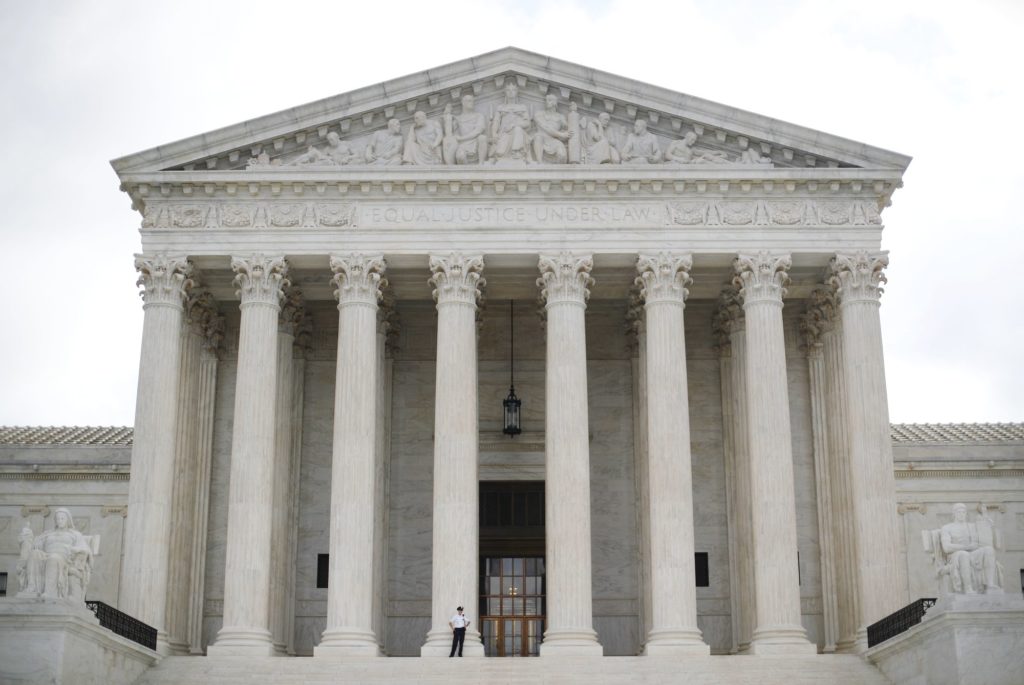
The justices are returning to the Supreme Court bench for the start of an election year term that includes high-profile cases about abortions, protections for young immigrants and LGBT rights. The court meets Monday morning for its first public session since late June. First up is a death penalty case from Kansas about whether states can abolish an insanity defense for criminal defendants. The justices also will hear arguments Monday in a challenge to a murder conviction by a non-unanimous jury in Louisiana. The term could reveal how far to the right and how fast the court’s conservative majority will move, even as Chief Justice John Roberts has made clear he wants to keep the court clear of Washington partisan politics. The court is beginning its second term with both of President Donald Trump’s Supreme Court appointees, Justices Neil Gorsuch and Brett Kavanaugh, on board. The justices could be asked to intervene in disputes between congressional Democrats and the White House that might also involve the possible impeachment of the Republican president. Roberts would preside over a Senate trial of Trump if the House were to impeach him.Its biggest decisions are likely to be handed down in late June, four months before the election. The court also could be front and center in the presidential election campaign itself, especially with health concerns surrounding 86-year-old Justice Ruth Bader Ginsburg.For now, though, the court has plenty of significant cases to deal with, including whether federal civil rights law that bars workplace discrimination on the basis of sex covers LGBT people. The justices will hear arguments Tuesday in two cases on that topic, their first foray into LGBT rights since the retirement of Justice Anthony Kennedy, who wrote all the court’s major gay-rights rulings. Next month, the fate of the Deferred Action for Childhood Arrivals program is in front of the justices. Lower courts have blocked Trump from ending the Obama-era program, which has shielded roughly 700,000 people from deportation and provided them with permits to work.During the winter, the justices will take up a challenge to a Louisiana law that would force abortion providers to have admitting privileges at local hospitals. It’s another test of whether the change in the court’s composition will result in a different outcome. With Kennedy in the majority, the court in 2016 struck down a virtually identical Texas law. By Mark Sherman Associated Press Republished with the permission of the Associated Press.
