
Democrats protest $200M in additional border wall transfers

President Donald Trump has quietly transferred more than $200 million from Pentagon counterdrug efforts toward building his long-promised wall along the U.S.-Mexico border, drawing protests from Democrats who say he is again abusing his powers. The move would shift $129 million to wall construction from anti-drug efforts in Afghanistan — the source of perhaps 90 percent of the world’s heroin — along with $90 million freed up by passage of a stopgap funding bill, top Democrats said in a letter to Secretary of Defense Mark Esper. The Defense Department “was faced with a simple choice: either additional funds be used for their intended purpose, to accelerate our military’s efforts to combat heroin production in Afghanistan; or divert these funds to pay for cost increases of a border wall project that does not have the support of the American people,” the Democrats wrote. Senator Dick Durbin of Illinois, Chuck Schumer of New York and Patrick Leahy of Vermont took the lead, noting that the heroin trade is a major funding source for the Taliban and urging the Pentagon to “redouble its efforts to starve the Taliban of a vital funding source and reduce the scourge of heroin abuse in this country and abroad.” Trump has shifted more than $6 billion from Pentagon accounts to pay for border fence construction, considerably more than lawmakers have provided through annual appropriations bills. Wall funding has been a major source of conflict between Capitol Hill Democrats and Trump as they negotiate agency funding bills each year. For instance, Trump was forced to settle for just $1.4 billion in wall funding in talks this winter. He issued a controversial declaration of a national emergency shortly afterward that allowed him to shift almost three times as much money from military construction accounts to wall building. A fight over the wall issue is tying up efforts to begin serious negotiations on wrapping up $1.4 trillion worth of agency appropriations by Thanksgiving. Separately, the Senate is expected to vote Thursday to sustain Trump’s veto Tuesday of legislation to reject his emergency declaration. By Andrew Taylor Associated Press Republished with the permission of the Associated Press.
Doug Jones leads fundraising in senate race
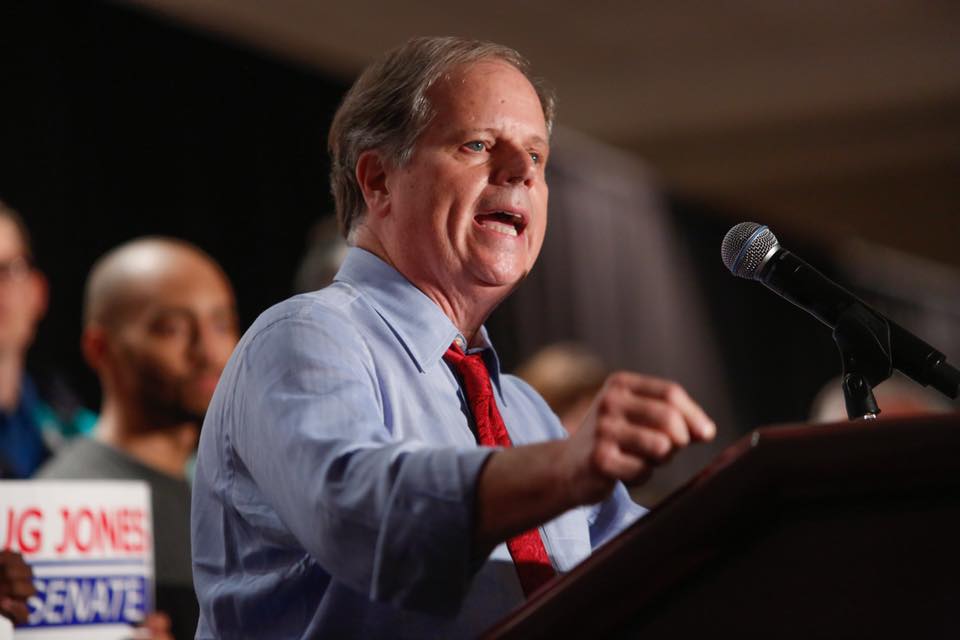
U.S. Senator Doug Jones of Alabama continues to lead in fundraising as he heads to a tough reelection fight. The Deep South Democrat raised $2 million last quarter, more than all the GOP primary candidates combined, according to the latest campaign fundraising reports. He has a campaign balance of $5 million. Jones won the 2017 special election to fill the Senate seat that belonged to Jeff Sessions. Now sometimes referred to as the Senate’s most endangered Democrat, he is facing a tough reelection battle in 2020, but fundraising numbers suggest he will be well-armed financially for the fight. A crowded GOP primary field is competing for the right to challenge Jones. Republican U.S. Rep. Bradley Byrne leads in overall fundraising with $2.5 million cash on hand. Byrne raised $408,000 in two separate accounts last quarter. Former Auburn University football coach Tommy Tuberville has $1.4 million on hand after raising $373,000 last quarter. Secretary of State John Merrill has $738,429 on hand after raising $378,020 last quarter and taking out a $250,000 loan. Legislator Arnold Mooney raised $242,738 last quarter. Businessman Stanley Adair raised $148.882 and loaned his campaign another $4,500 in the same time period. Former Chief Justice Roy Moore, who lost to Jones two years ago, is lagging most of the GOP field in cash. He has raised less than $100,000 total for his latest Senate bid. Moore ran for the Senate seat in 2017 but lost the special election after several women accused him of sexual misconduct. He denied the accusations. Other candidates in the race reported raising less than $10,000. Republished with the permission of the Associated Press.
Alabama releases copy of execution procedures
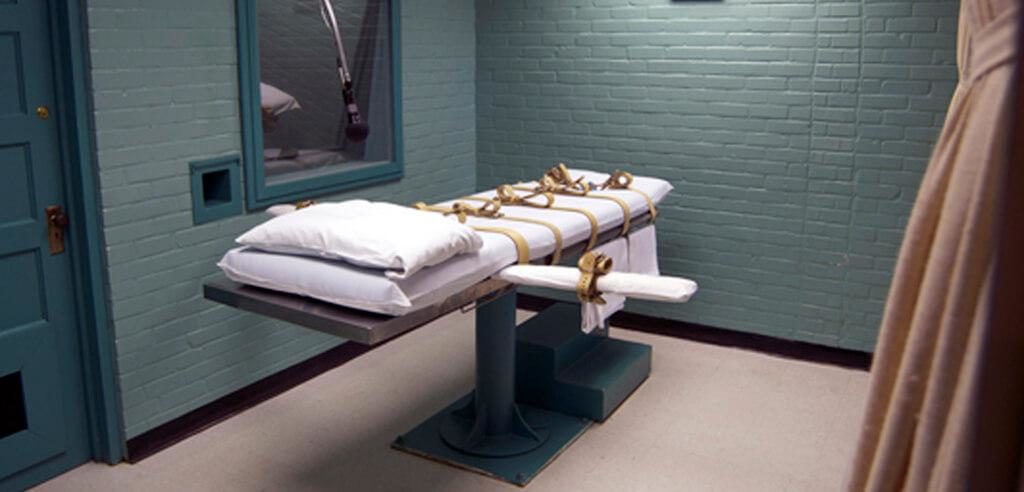
Alabama on Wednesday made its execution protocol public after being ordered to do so by a federal judge. The Alabama Department of Corrections filed a redacted copy of its execution procedure with the federal court following a legal fight with news outlets over the release of the information. A judge allowed the state to keep some of the information secret for security reasons. The 17-page document spells out procedures for before, during and after an execution. It includes information about the testing of equipment, inmate visitation, the consciousness test performed during lethal injections and a requirement to keep logs about each execution. Part of the released information was already known, such as the names of the drugs in the state’s lethal injection procedure, but the state had fought to keep the document secret.The document did not include information about where the state obtains lethal injection drugs or the job titles and training of people who connect the intravenous lines to deliver the drugs. Robert Dunham, executive director of the Death Penalty Information Center, said the document is more information than has been previously been released by Alabama. However, he said it does not tell the public some important details about how executions are carried out in the state. “It lacks critical information and redacts other important information that leaves Alabama executions secret and unaccountable,” Dunham said after briefly reviewing the document.Dunham noted that a section about execution logs was redacted and that it did not include information about the source of drugs. The Associated Press, The Montgomery Advertiser and the Alabama Media Group had asked the court last year to unseal the protocol and other records involved in a lawsuit brought by death row inmate whose execution was later halted because of problems. Alabama called off Doyle Lee Hamm’s execution last year after multiple failed attempts to insert a needle into his veins. A doctor hired by Hamm’s legal team wrote in a 2018 report that Hamm, who had damaged veins from illnesses and past drug use, had 11 puncture sites from the attempted execution. U.S. District Judge Karon Bowdre ruled the public has “a common law right of access” to the records. A federal appeals court agreed. “It may also help the public to understand how the same scenario might be repeated or avoided under the protocol as it currently stands,” Bowdre wrote of the release of the information. Alabama has also authorized execution with nitrogen gas, but has not announced the development of a protocol for using gas to carry out a death sentence. The state earlier this year cited security reasons for refusing to release a contract with an occupational safety firm. The head of the Alabama Legislature’s Contract Review Committee said the attorney general’s office indicated the contract was related to litigation over nitrogen gas as an execution method. Republished with the permission of the Associated Press.
Takeaways: Elizabeth Warren under fire, 70s club ignores the age issue
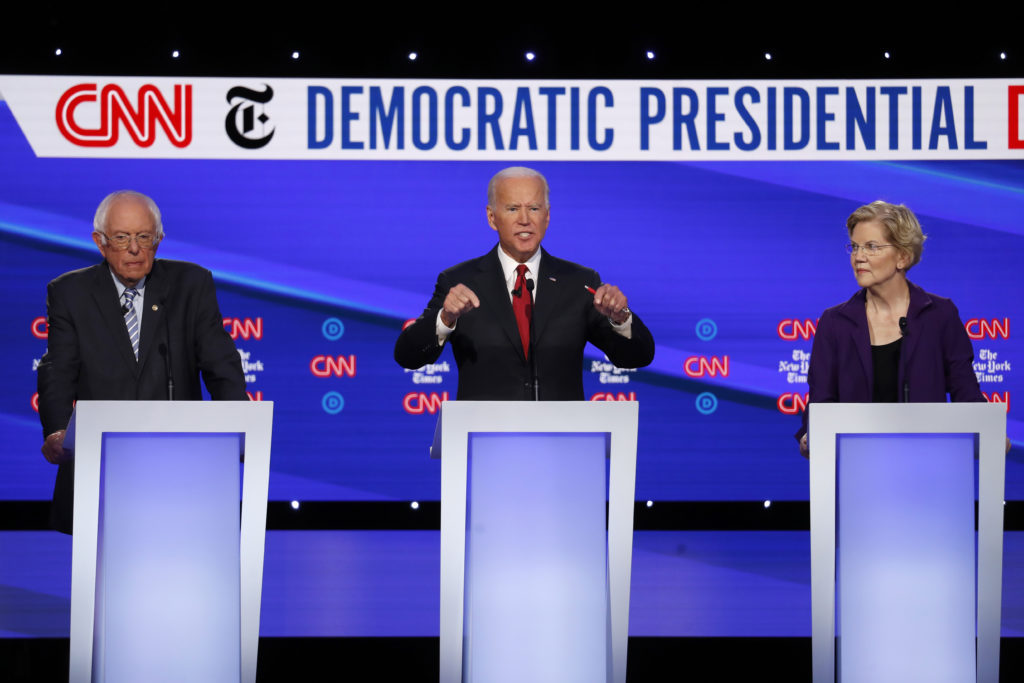
A dozen democratic presidential candidates participated in a spirited debate over health care, taxes, gun control and impeachment. Takeaways from the three-hour forum in Westerville, Ohio: WARREN’S RISE ATTRACTS ATTACKS Sen. Elizabeth Warren found Tuesday that her rise in the polls may come with a steep cost. She’s now a clear target for attacks, particularly from more moderate challengers, and her many plans are now being subjected to much sharper scrutiny. Minnesota Sen. Amy Klobuchar and South Bend, Indiana, Mayor Pete Buttigieg slammed her for not acknowledging, as Vermont Sen. Bernie Sanders has, that middle-class taxes would increase under the single-payer health plan she and Sanders favor. “At least Bernie’s being honest with this,” Klobuchar said. “I don’t think the American people are wrong when they say what they want is a choice,” Buttigieg told Warren. His plan maintains private insurance but would allow people to buy into Medicare. Candidates also pounced on Warren’s suggestion that only she and Sanders want to take on billionaires while the rest of the field wants to protect them. Former Texas Rep. Beto O’Rourke told Warren it didn’t seem as though she wanted to lift people up and she is “more focused on being punitive.” And they piled onto her signature proposal, a 2 percent wealth tax to raise the trillions of dollars needed for many of her ambitious proposals. Technology entrepreneur Andrew Yang noted that such a measure has failed in almost every European country where it’s been tried. Sen. Kamala Harris of California even went after Warren for not backing Harris’ call for Twitter to ban President Donald Trump. THAT 70s SHOW The stage included three 70-something candidates who would be the oldest people ever elected to a first term as president — including 78-year-old Sanders, who had a heart attack this month. Moderators asked all three how they could do the job. None really addressed the question. Sanders invited the public to a major rally he’s planning in New York City next week and vowed to take the fight to corporate elites. Biden promised to release his medical records before the Iowa caucuses next year and said he was running because the country needs an elder statesman in the White House after Trump. Warren, whose campaign has highlighted her hours-long sessions posing for selfies with supporters, promised to “out-organize and outlast” any other candidate, including Trump. Then she pivoted to her campaign argument that Democrats need to put forth big ideas rather than return to the past, a dig at Biden. ONE VOICE ON IMPEACHMENT The opening question was a batting practice fastball for the Democratic candidates: Should Trump be impeached? They were in steadfast agreement. All 12 of them. Largely with variations on the word “corrupt” to describe the Republican president. Warren was asked first if voters should decide whether Trump should stay in office. She responded, “There are decisions that are bigger than politics.” Biden, who followed Sanders, offered a rare admission: “I agree with Bernie.” The only hint of dissonance came from Rep. Tulsi Gabbard of Hawaii, who was one of the last Democratic House members to back an impeachment inquiry. She lamented that some Democrats had been calling for Trump’s impeachment since right after the 2016 election, undermining the party’s case against him. KLOBUCHAR: MINNESOTA NOT-SO-NICE Klobuchar has faded into the background in previous debates, but she stood out on the crowded stage. She also went on the attack. She chided Yang for seeming to compare Russian interference in the 2016 election to U.S. foreign policy. But her main barbs were reserved for Warren. “I appreciate Elizabeth’s work but, again, the difference between a plan and a pipe dream is something you can actually get done,” she said. After Warren seemed to suggest other candidates were protecting billionaires, Klobuchar pounced. “No one on this stage wants to protect billionaires,” Klobuchar said. “Even the billionaire doesn’t want to protect billionaires.” That was a reference to investor Tom Steyer, who had agreed with Sanders’ condemnation of billionaires and called for a wealth tax — despite the fact that his wealth funded his last-minute campaign to clear the debate thresholds and appear Tuesday night. Klobuchar also forcefully condemned Trump’s abandonment of the Kurds in Syria. BOOKER THE PEACEMAKER New Jersey Sen. Cory Booker has been trying to campaign on the power of love and unity. It hasn’t vaulted him to the top of the polls, but it drew perhaps the biggest cheers from the crowd Tuesday night. As candidates bickered over their tax plans, Booker shut it down. “We’ve got one shot to make Donald Trump a one-term president and how we talk about each other in this debate actually really matters,” he said. “Tearing each other down because we have a different plan is unacceptable.” Later, as candidates tussled over foreign policy and Syria, Booker again tried to bring the debate back to morals. “This president is turning the moral leadership of this country into a dumpster fire,” he said, before launching into a furious condemnation of Trump’s foreign policy. The New Jersey senator’s inability to break out of the pack has puzzled Democrats who long saw him as a top-tier presidential candidate. By Nicholas Riccardi Associated Press Republished with the permission of the Associated Press.
House democrats not easing up on their impeachment probe
The impeachment inquiry is revealing vivid new details about the high-level unease over President Donald Trump’s actions toward Ukraine and those of his personal lawyer Rudy Giuliani as the swift-moving probe by House Democrats shows no signs of easing. The testimony from the witnesses, mainly officials from the State Department and other foreign policy posts, is largely corroborating the account of the government whistleblower whose complaint first sparked the impeachment inquiry, according to lawmakers attending the closed-door interviews. One witness, former White House aide Fiona Hill, testified that national security adviser John Bolton was so alarmed by Giuliani’s back-channel activities in Ukraine that he described him as a “hand grenade who is going to blow everybody up.” Another, career State Department official George Kent, testified Tuesday he was told by administration officials to “lay low” on Ukraine as “three amigos” tied to the White House took over U.S. foreign policy toward the Eastern European ally. A former top aide to Secretary of State Mike Pompeo is scheduled to testify Wednesday.Speaker Nancy Pelosi, despite intensifying calls from Trump and Republicans to hold a formal vote to authorize the impeachment inquiry, showed no indication she would do so. She said Congress will continue its investigation as part of the Constitution’s system of checks and balances of the executive. “This is not a game for us. This is deadly serious. We’re on a path that is taking us, a path to the truth,” Pelosi told reporters after a closed-door session with House Democrats.With Ukraine situated between the United States’ Western allies and Russia, Pelosi noted the inquiry raises fresh questions about Trump’s relationship with Russian President Vladimir Putin. “All roads seem to lead to Putin with the president,” she said. Democratic leaders had been gauging support for a vote to authorize the impeachment inquiry after Trump and Republicans pushed them for a roll call. Holding a vote would test politically vulnerable Democrats in areas where the Republican president is popular. Trump calls the impeachment inquiry an “illegitimate process” and is blocking officials from cooperating. But several Democratic freshmen who are military veterans or had careers in national security before joining Congress spoke up during the meeting Tuesday, warning Pelosi and her leadership team a vote was unnecessary and would be playing into Republicans’ hands, according to a person granted anonymity to discuss the private session. The inquiry is moving quickly as a steady stream of officials appears behind closed doors this week, some providing new revelations about the events surrounding the July 25 phone call between Trump and Ukrainian President Volodymyr Zelenskiy. It is on that call that Trump urged Zelenskiy to investigate a firm tied to political rival Joe Biden’s family and Ukraine’s own involvement in the 2016 presidential election. In a daylong session Tuesday, House investigators heard from Kent, who was concerned about the “fake news smear” against the U.S. ambassador to Ukraine, Marie Yovanovitch, whom Trump recalled in May, according to emails obtained by The Associated Press. Kent told the lawmakers that he “found himself outside a parallel process” and had warned others about Giuliani as far back as March. He felt the shadow diplomacy was undermining decades of foreign policy and the rule of law in Ukraine and that was “wrong,” said Rep. Gerry Connolly, Democrat-Virginia. Connolly said Kent described the results of a May 23 meeting at the White House, organized by Trump’s acting chief of staff, Mick Mulvaney, where three administration officials — U.S. ambassador Gordon Sondland, special envoy Kurt Volker and Energy Secretary Rick Perry — declared themselves the people now responsible for Ukraine policy. “They called themselves the three amigos,” Connolly said Kent testified, and they said as much to Zelenskiy in Ukraine when they visited. Kent also told them that Trump, through the Office of Management and Budget, which Mulvaney previously led, was holding up military aid to Ukraine while pressing Zelenskiy to investigate a company linked to Biden’s son. “He was clearly bothered by the role Mr. Giuliani was playing,” Connolly said. In 10 hours of testimony Monday, Hill, the former White House aide who was a top adviser on Russia, recalled to investigators that Bolton had told her he was not part of “whatever drug deal Sondland and Mulvaney are cooking up,” an apparent reference to talks over Ukraine. She testified that Bolton asked her to take the concerns to National Security Council lawyer John Eisenberg. As White House lawyers now try to learn more about the handling of the Ukraine call, Eisenberg is coming under particular scrutiny, said one White House official. He was both the official who ordered that the memorandum of the call be moved to a highly-classified system, and the one who involved the Justice Department in a complaint from the CIA general counsel. The latter caught the attention of the president, according to the official.Giuliani said Tuesday he was “very disappointed” in Bolton’s comment. Bolton, Giuliani said, “has been called much worse.” Giuliani also acknowledged he had received payments totaling $500,000 related to the work for a company operated by Lev Parnas — who, along with associate Igor Fruman, played a key role in Giuliani’s efforts to launch a Ukrainian corruption investigation against Biden and his son Hunter. The two men were arrested last week on campaign finance charges as they tried to board an international flight. Trump’s team won’t comply with the Democratic inquiry. Giuliani and Vice President Mike Pence became the latest officials refusing to cooperate, saying through their lawyers they would not provide information requested by House Democrats as part of the impeachment inquiry. The chairman leading the impeachment investigation, Rep. Adam Schiff, D-Calif., said the stonewalling simply bolsters the charge that Trump is obstructing Congress. “The case for Congress continues to build,” Schiff said. He said Defense Secretary Mark Esper told investigators Sunday that he would comply with a subpoena request, only to be “countermanded” by a higher authority, likely Trump. Sondland, whose text messages with other diplomats are part of a
