
Martha Roby: An update on progress for afghan women
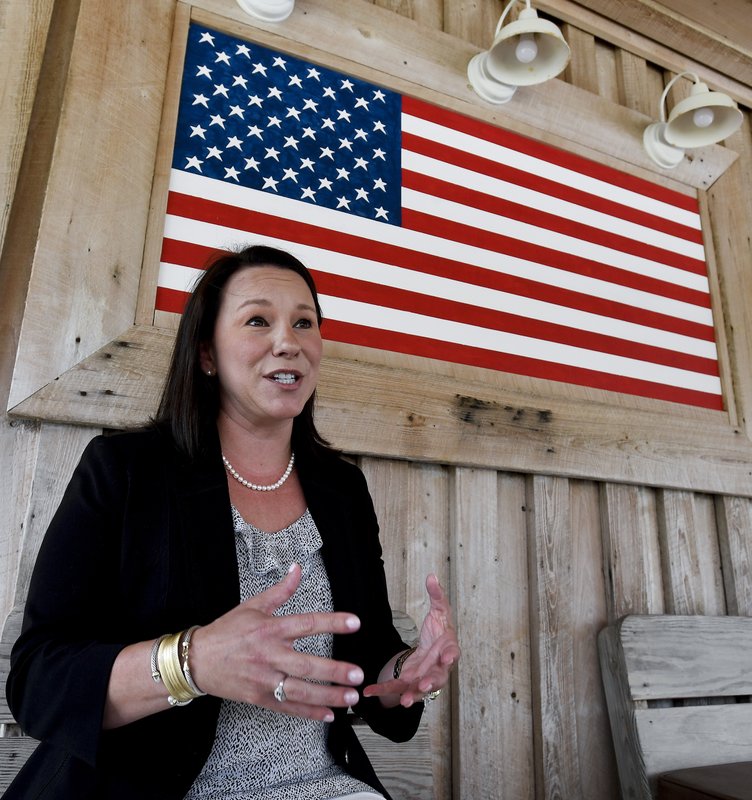
Throughout my time in Congress, I have had the privilege to serve on several committees that directly influence our country’s defense and foreign policy initiatives, namely the House Armed Services Committee and the House Appropriations Committee. Most recently, this Congress, I was asked to serve on the State and Foreign Operations Appropriations Subcommittee. In this role, I have been part of many negotiations regarding funding levels for the many important programs we have overseas. Over the years, I have also used Congress’ constitutional oversight to question members of the Executive Branch about our country’s strategy abroad. I believe that this process is deeply important, and we must remain committed to upholding our country’s system of checks and balances when making critical military and foreign policy decisions. On top of my committee-specific duties related to foreign policy, for the past eight years, my colleague, Congresswoman Susan Davis, and I have led an all-female Mother’s Day trip to Afghanistan. During these trips, we have been given the opportunity to meet with our servicemen and women who are away from their families on Mother’s Day. I believe it is so incredibly important for members of Congress to see firsthand how our policy decisions impact the lives of Americans at home and abroad. I have been able to use what I’ve learned during these trips to make more informed decisions about military spending and defense policy. Also, importantly, these trips have afforded me the opportunity to reaffirm my commitment to improving circumstances for those in Afghanistan, especially Afghan women. While gains have undoubtedly been made since 2001, it remains critical that American leaders stay engaged to ensure continued forward momentum for these women. I recently addressed a group at the United States Institute of Peace, and I told them that it is my belief that a peace deal – a true, lasting peace in Afghanistan – will not be reached until all facets of the Afghan community have a seat at the negotiating table. This means Afghan society must continue to see an increased number of women serving in all societal roles – in the military, police force, as educators, and more. During this time when the future of Afghanistan is uncertain, these conversations I have participated in are so vitally important, and I have been honored to be a part of them. We have made great strides towards improving life for Afghan women over the years, but we must keep moving the ball down the field. The country simply cannot truly move forward until all its citizens have a bettered quality of life, and I will remain engaged in this fight. Martha Roby represents Alabama’s Second Congressional District. She lives in Montgomery, Alabama, with her husband Riley and their two children.
Shifting explanations for withholding aid draw GOP alarm
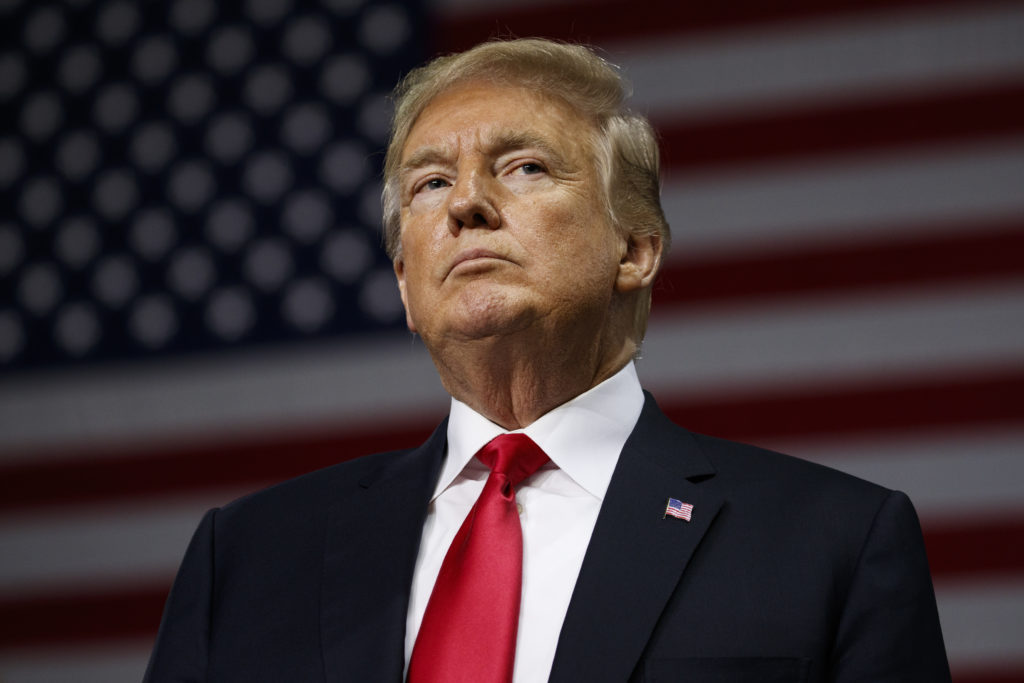
The shifting White House explanation for President Donald Trump’s decision to withhold military aid from Ukraine drew alarm Friday from Republicans as the impeachment inquiry brought a new test of their alliance. Trump, in remarks at the White House, stood by his acting chief of staff, Mick Mulvaney, whose earlier comments undermined the administration’s defense in the impeachment probe. Speaking Thursday at a news conference, Mulvaney essentially acknowledged a quid pro quo with Ukraine that Trump has long denied, saying U.S. aid was withheld from Kyiv to push for an investigation of the Democratic National Committee and the 2016 election. He later clarified his remarks. Trump appeared satisfied with Mulvaney’s clarification and the president dismissed the entire House inquiry as “a terrible witch hunt. This is so bad for our country.” But former Ohio Gov. John Kasich, who ran against Trump in the 2016 Republican primary, said he now supports impeaching the president. Mulvaney’s admission, he said, was the “final straw.” ”The last 24 hours has really forced me to review all of this,” Kasich said on CNN. In Congress, at least one Republican, Rep. Francis Rooney of Florida, spoke out publicly, telling reporters that he and others were concerned by Mulvaney’s remarks. Rooney said he’s open to considering all sides in the impeachment inquiry. He also said Mulvaney’s comments cannot simply be undone by a follow-up statement. “It’s not an Etch-A-Sketch,” said Rooney, a former ambassador to the Holy See under President George W. Bush. “The only thing I can assume is, he meant what he had to say — that there was a quid pro quo on this stuff,” he said. The tumult over Mulvaney’s remarks capped a momentous week in the impeachment investigation as the admission, from highest levels of the administration, undercut the White House defense and pushed more evidence into the inquiry. GOP leaders tried to contain the fallout. But four weeks into the inquiry, the events around Trump’s interaction with the Ukraine president, which are are at the heart of impeachment, have upended Washington. The Energy Secretary, Rick Perry, who has been caught up in the probe, announced his resignation. A beloved House chairman, Rep. Elijah Cummings, Democrat-Maryland, a leading figure in the investigation, died amid ongoing health challenges. The march toward an impeachment vote now seems all but inevitable, so much so that the highest-ranking Republican, Senate Majority Leader Mitch McConnell, privately told his GOP colleagues this week to expect action in the House by Thanksgiving with a Senate trial by Christmas. Speaker Nancy Pelosi has given no timeline for conclusion but wants the inquiry completed “expeditiously.” She said Thursday that facts of the investigation will determine next steps. “The timeline will depend on the truth line,” she told reporters. This week’s hours of back-to-back closed-door hearings from diplomats and former top aides appeared to be providing investigators with a remarkably consistent account of the run-up and aftermath of Trump’s call with Ukraine President Volodymy Zelenskiy. In that July call, Trump asked the newly elected Zelenskiy for a “favor” in investigating the Democratic National Committee’s email situation, which was central to the 2016 election, as well as a Ukraine gas company, Burisma, linked to the family of Trump’s 2020 Democratic rival, Joe Biden, according to a rough transcript of the phone conversation released by the White House. Republican leaders tried to align with Trump Friday, amid their own mixed messages as House Democrats, who already issued a subpoena to Mulvaney for documents, now want to hear directly from him. Rep. Kevin McCarthy, the House GOP leader, cited Mulvaney’s clarification as evidence that there was no quid pro quo. He said witnesses have also testified similarly behind closed doors in the impeachment inquiry. “We’ve been very clear,” McCarthy said. “There was no quid pro quo.” Lawmakers involved in the three House committees conducting the investigation want to hear more next week, which promises another packed schedule of witnesses appearing behind closed doors. Republicans want the interviews made open to the public, including releasing transcripts. Democrats in the probe being led by Rep. Adam Schiff, chairman of the Intelligence Committee, are keeping the proceedings closed for now, partly to prevent witnesses from comparing notes. Three House committees investigating impeachment have tentatively scheduled several closed-door interviews next week, including one with Bill Taylor, the current top official at the U.S. Embassy in Ukraine. Taylor’s interview, scheduled for Tuesday, is significant because he was among the diplomats on a text message string during the time around the July phone call. He raised a red flag and said it was “crazy” to withhold the military aid for a political investigation. It’s unclear whether all the witnesses will appear, given that the White House is opposing the inquiry and trying to block officials from testifying. The schedule includes a mix of State Department officials and White House aides. By Lisa Mascaro, Andrew Taylor, Mary Clare Jalonick Associated Press Republished with the permission of the Associated Press
38 people cited for violations in Hillary Clinton email probe
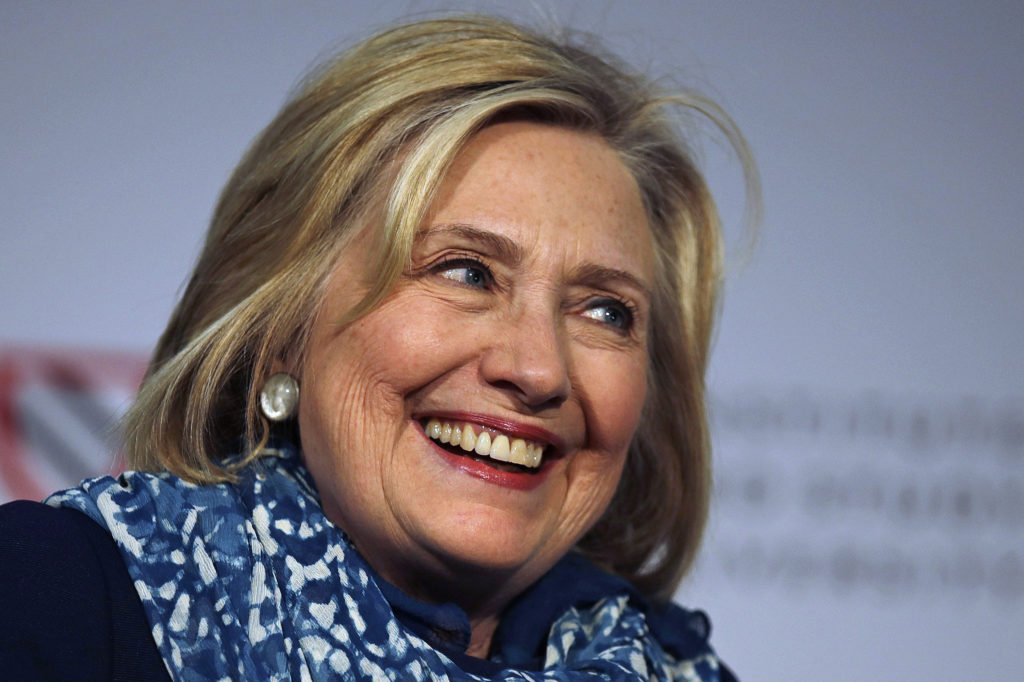
The State Department has completed its internal investigation into former Secretary of State Hillary Clinton’s use of private email and found violations by 38 people, some of whom may face disciplinary action. The investigation, launched more than three years ago, determined that those 38 people were “culpable” in 91 cases of sending classified information that ended up in Clinton’s personal email, according to a letter sent to Republican Sen. Chuck Grassley this week. The 38 are current and former State Department officials but were not identified. The investigation covered 33,000 emails that Clinton turned over for review after her use of the private email account became public. The department said it found a total of 588 violations involving information then or now deemed to be classified, but could not assign fault in 497 cases. For current and former officials, culpability means the violations will be noted in their files and will be considered when they apply for or go to renew security clearances. For current officials, there could also be some kind of disciplinary action. But it wasn’t immediately clear what that would be. The department began the review in 2016 after declaring 22 emails from Clinton’s private server to be “top secret.” Clinton was then running for president against Donald Trump, and the now-president made the server a major focus of his campaign. Then-FBI Director James Comey held a news conference that year in which he criticized Clinton as “extremely careless” in her use of the private email server as secretary of state but said the FBI would not recommend charges. The Justice Department’s inspector general said FBI specialists did not find evidence that the server had been hacked, with one forensics agent saying he felt “fairly confident that there wasn’t an intrusion.” Grassley started investigating Clinton’s email server in 2017, when he was chairman of the Senate Judiciary Committee. The Iowa Republican has been critical of Clinton’s handling of classified information and urged administrative sanctions. By Matthew Lee and Mary Clare Jalonick Associated Press Republished with the permission of the Associated Press
Alabama releases school report cards

Alabama public schools and school systems have been assigned letter grades for performance in new report cards released Friday by the State Department of Education. The latest report cards include enhanced graphics and features to make it easier to view data and compare school systems, state education officials said. This is the third academic year that the letter grades have been released. “We hope this can be used a catapult to jumpstart conversations about what is working in public schools as well as identifying areas that may need support and/or additional resources,” State Superintendent of Education Eric Mackey said in a statement. The grades are based not just on the latest test scores, but how much students improve in reading and math from one year to the next. The report cards include information about the percentage of students proficient in subjects, information on academic growth and chronic absenteeism at each school. The cards also include demographics about the school and school system and the credentials and experience of educators at the school. Legislators in 2012 voted to require A-F grades for schools and school systems.The school report cards can be viewed at the state department website . Republished with the permission of the Associated Press.
