
Alabama Democratic Party dispute heads to court
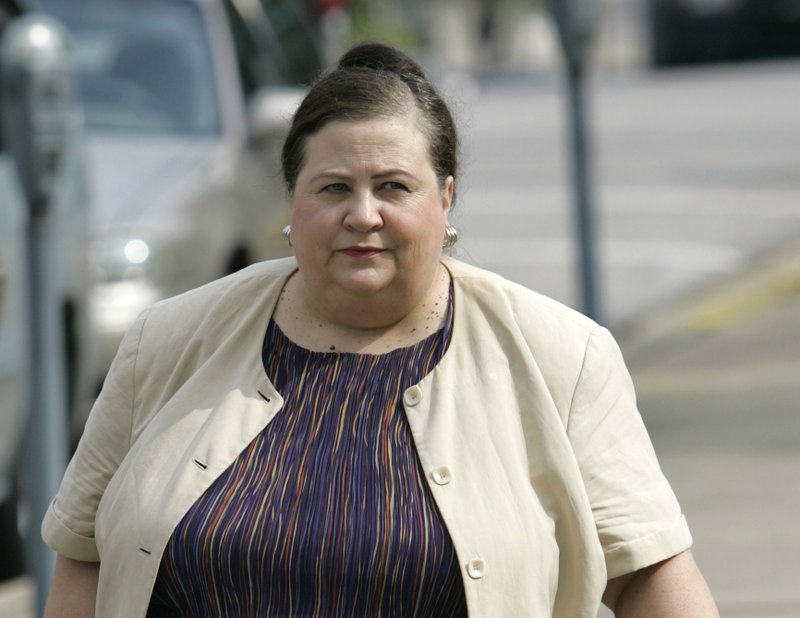
A dispute over control of the Alabama Democratic Party is headed to court. Alabama Democratic Party Chair Nancy Worley and others filed a lawsuit Wednesday seeking to stop a faction of the party’s governing committee from meeting this weekend to elect new leaders. The lawsuit contends the scheduled Saturday meeting, where the reform group intends to elect a new chair, is unauthorized and is being held “illegally.” “Plaintiffs contend that any officers and at-large members purportedly elected on Nov. 2, 2019, will have been improperly elected and may not serve,” the lawsuit states. Montgomery Circuit Judge Greg Griffin has scheduled a Thursday morning hearing on the request to block the meeting. The lawsuit is the latest twist in an ongoing struggle that has split the party’s executive committee into two factions. On one side is a reform group whose actions have been approved by the Democratic National Committee. On the other are members aligned with Worley and Joe Reed, the party’s vice chairman of minority affairs. Both sides had predicted the dispute would ultimately end up in court. The lawsuit names reform group organizers as defendants in the lawsuit. State Rep. Chris England, a defendant in the lawsuit, said he is comfortable the Nov. 2 meeting has been properly authorized. “I honestly don’t see how a court has jurisdiction to enjoin a meeting of this sort,” England said. The DNC directed the Alabama party to hold new elections for chair and vice chair and update bylaws to provide for the representation of more minorities and underrepresented groups in the party including Hispanics, LGBTQ individuals and young voters. State party leaders and the DNC have been engaged in a lingering dispute over those bylaws. The reform group held an Oct. 5 meeting in which about 78 of the more 200 executive committee members adopted new bylaws and scheduled the Nov. 2 meeting. The DNC has said those bylaws are binding on the party. The lawsuit argues the meeting was not properly called and the bylaws and the Nov. 2 meeting are invalid. Worley said Wednesday night that they had tried unsuccessfully to compromise with the “breakaway” group. “We believe the breakaway group has caused enough chaos in the Party; therefore, we hope the Court can take steps to remedy this problem,” Worley said. The dispute comes as the Nov. 8 deadline approaches for Democratic candidates to file paperwork with the state party to run in the 2020 elections. Republished with the permission of the Associated Press
Twitter bans all political advertisements
Twitter is banning all political advertising from its service, saying social media companies give advertisers an unfair advantage in proliferating highly targeted, misleading messages. “While internet advertising is incredibly powerful and very effective for commercial advertisers, that power brings significant risks to politics, where it can be used to influence votes to affect the lives of millions,” Twitter CEO Jack Dorsey tweeted Wednesday in a series of tweets announcing the new policy. Facebook has taken fire since it disclosed earlier in October that it will not fact-check ads by politicians or their campaigns, which could allow them to lie freely. CEO Mark Zuckerberg told Congress last week that politicians have the right to free speech on Facebook. The issue suddenly arose in September when Twitter, along with Facebook and Google, refused to remove a misleading video ad from President Donald Trump‘s campaign that targeted former Vice President Joe Biden, a leading Democratic presidential candidate. In response, Democratic Sen. Elizabeth Warren, another presidential hopeful, ran her own ad on Facebook taking aim at Zuckerberg. The ad falsely claimed that Zuckerberg endorsed President Donald Trump for re-election, acknowledging the deliberate falsehood as necessary to make a point. Critics have called on Facebook to ban all political ads. These include CNN chief Jeff Zucker, who recently called the company’s policy of allowing lies “absolutely ludicrous” and advised the social media giant to sit out the 2020 election until it can figure out something better. Google and Facebook did not have immediate comments on Twitter’s policy change.Montana Gov. Steve Bullock, who is running a 2020 Democratic presidential campaign, retweeted Dorsey’s announcement, adding the comment “Good. Your turn, Facebook.”Dorsey said the company is recognizing that advertising on social media offers an unfair level of targeting compared to other mediums. It is not about free expression, he asserted. “This is about paying for reach. And paying to increase the reach of political speech has significant ramifications that today’s democratic infrastructure may not be prepared to handle,” he tweeted. “It’s worth stepping back in order to address.” Twitter currently only allows certified campaigns and organizations to run political ads for candidates and issues. It will ban both types of political ads. The company said some exceptions will be made, including ads that encourage voter turnout. It will describe those in a detailed policy it plans to release on Nov. 15. Federal campaigns are expected to spend the majority of advertising dollars on broadcast and cable channels during the 2020 election, according to advertising research firm Kantar, and about 20% of the total $6 billion in spending on digital ads.Twitter’s policy will start on Nov. 22. Republished with the permission of the Associated Press.
As Jeff Sessions considers campaign, rivals emphasize Donald Trump feud
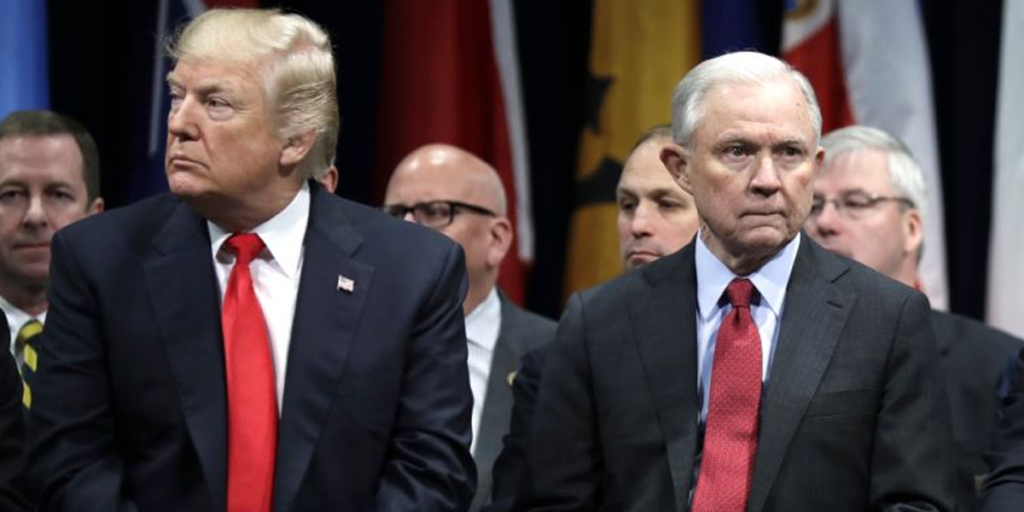
As Jeff Sessions explores a campaign to reclaim the Senate seat he held for 20 years, he’s finding much has changed since he left — namely, President Donald Trump.His potential Republican primary rivals said Tuesday that they would not clear the field for the former senator and signaled they were ready to use his tumultuous tenure as Trump’s attorney general against him. Trump has called Sessions “the biggest mistake” of his presidency and some candidates for the Senate seat have suggested they would not let voters forget it. Former Auburn University football coach Tommy Tuberville said in a statement that Sessions “had a chance to stand and defend the President and he failed.” “If the voters of Alabama want a career politician as their next U.S. Senator, then they have plenty of choices. If they want a political outsider who will stand with President Trump and fight the DC establishment when it matters the most, then I am the only choice,” Tuberville said. The Associated Press reported Monday that multiple Republican sources say Sessions is making calls exploring a possible run for his former Senate seat. The three Republicans spoke on condition of anonymity so they could speak more freely about closely held conversations. Sessions represented Alabama in the U.S. Senate from 1997 to 2017 and left the Senate to become Trump’s first attorney general. He was later ousted after enduring repeated public mocking from Trump for recusing himself from special counsel Robert Mueller‘s Russia investigation. In a state where the president is largely beloved, the bitter breakup between Sessions and the president could be a liability. U.S. Rep. Bradley Byrne told the AP that he will “absolutely” stay in the race if Sessions becomes a candidate. “The president does not want him to be the U.S. senator for Alabama. I know,” Byrne said. Asked if he has talked to Trump about this, Byrne replied: “I know. And I don’t think a state like Alabama that’s so pro-President Trump is going to react favorably to someone who’s running as the president’s opposition.” Byrne said he spoke to Sessions last week for less than 10 minutes but declined to disclose the subject of the private conversation. Former Alabama Chief Justice Roy Moore, who lost the 2017 special election to Sen. Doug Jones, said he will stay in the 2020 race regardless of what Sessions decides. Despite the criticism from Trump, Sessions has continued to praise the president. In a speech earlier this month at a Republican Party fundraiser in Huntsville, Sessions reiterated his support for Trump even as he joked about life after being “fired” from a job. Sessions praised Trump’s effort on trade, immigration and foreign policy. “That’s why I supported him and why I still do support him,” Sessions told the crowd of about 500. “He is relentlessly and actually honoring the promises he made to the American people.” Sessions has $2.4 million in a campaign account, according to campaign finance records. Byrne, the best-financed Republican in the race, has about $2.5 million cash on hand.Sessions, who was state attorney general before being elected to the Senate, also has more than two decades of support from Alabama voters. “I suspect Sessions would become an immediate front-runner if he were to enter the race,” said David Hughes, a political scientist at Auburn University in Montgomery.“We know from past experience in the 2017 U.S. Senate special primary that Republican voters are willing to buck the president’s preferences. And Sessions has done little to distance himself from Trump. I have no a priori reason to believe state Republicans have turned on Sessions,” Hughes said. Republished with permission from the Associated Press.
Will Dismukes withdraws from race to replace Martha Roby
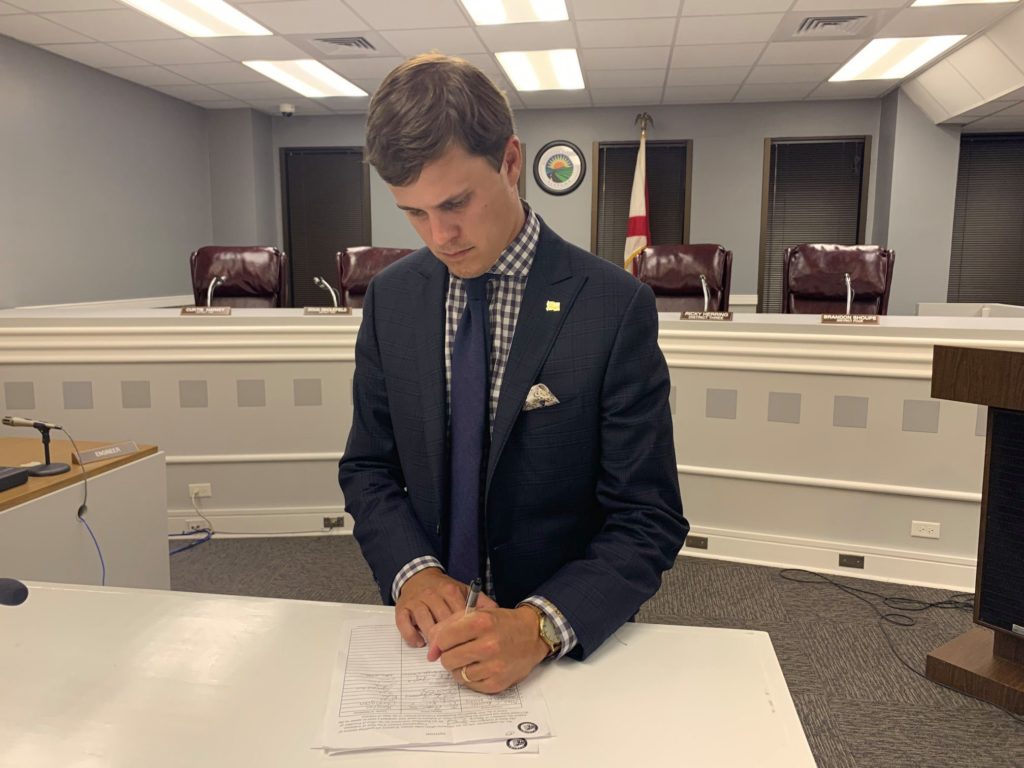
In a statement released today State Representative, Will Dismukes announced that he is ending his bid to replace Martha Roby for congressional district 2. According to an AL.Com story, Dismukes announced his run on Aug. 1, 2019 after the news broke that Roby would not be seeking reelection. Read his statement in full below” “It is with a heavy heart that I announce today that I am withdrawing from the 2nd congressional district race. I want to give a sincere thanks to everyone who supported me and contributed to the campaign. The encouragement I received from across the district in this race has been the biggest honor of my life; I will treasure that for the rest of my days. Unfortunately, I was not able to raise the funds necessary to make this a viable effort. I have commitments to my family, my business, my community, my church, and house district 88 that proved too much to fulfill by staying in the congressional race. Gathering the resources necessary to win meant sacrificing each of those to an extent that I did not expect when I got in the race. Even though the election result won’t end up how I wanted it to when I got in, I don’t regret running. Whoever the Republican nominee in this race is will have my full support, and I’ll be working hard to get President Trump re-elected. I want to thank my wife, Amber, who was with me every step of the way. No man has ever had a better wife than Amber, and getting to spend more time with her and my son, Pratt, is one of the few silver linings to getting out of the race. This experience has not soured me on politics. I am excited to represent the people of Alabama House District 88 in the legislature this spring.”
Daniel Sutter: Did we win the Chinese trade war?
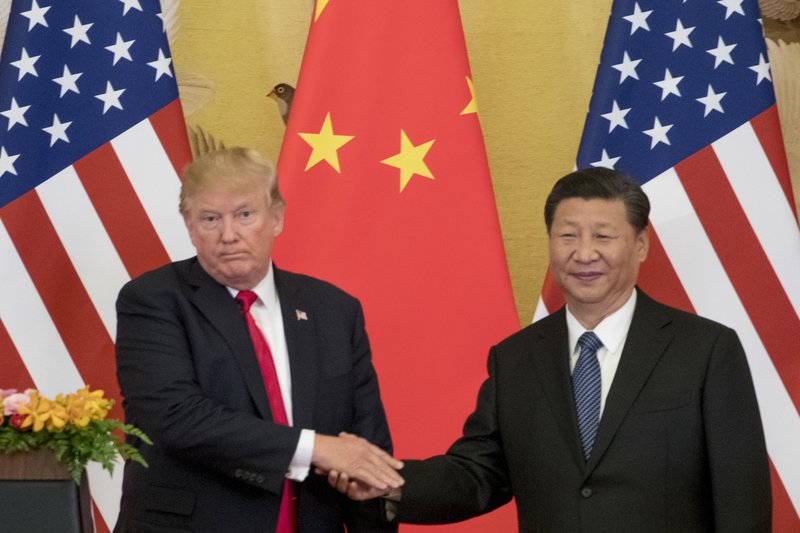
President Donald Trump recently announced a partial trade settlement with China. Does this mean we have won the trade war? Details remain sparse, and the present deal may merely forestall further tariff hikes. It may be a truce rather than a peace treaty. Nonetheless, avoiding escalation of the trade war is good news. To think about trade with China or other nations, we should not view nations as trading. Individuals and businesses trade through buying. As consumers, we face a range of options for cars, clothes, phones, and so forth. Sometimes a “foreign” product better serves us, or offers comparable value at a better price. Businesses similarly consider who can best supply the inputs they use. Today’s global supply chains make the difference between foreign and domestic manufacturers a matter of degree. Viewing trade as individual action helps us recognize that trade makes consumers better off. Overseas sales boost American firms’ revenues and make their customers across the globe better off too. Voluntary trade in markets benefits all involved, even when they live in different countries. All nations’ governments limit their citizens’ freedom to trade internationally. This is unfortunate; a world economy with everyone participating would be more prosperous. And governments use their tax dollars to help their companies sell in foreign markets. These export subsidies hurt the world economy by making products artificially attractive to consumers. What can we do if other nations keep their citizens from buying American products? As a rule, I think we should engage in trade to the extent possible. Limited trade still produces benefits. The charitable interpretation sees President Trump’s trade war as trying to make China open their markets. Tariffs on Chinese imports threaten the profits Chinese companies earn selling here. A trade war tries leveraging this pressure for a better deal. If successful, the costly trade war would yield future benefits. Yet pressuring governments on trade is problematic. A government which restricts imports demonstrates relatively little concern for their citizens’ well-being. For many years Japan limited rice imports, an important staple of their national diet. If Japanese rice growers were so important that politicians were willing to make households (who could vote against the politicians in elections) pay more for rice, could we possibly have enough leverage to force a policy change? The dispute with China also involves allegations of unfair trade. One element of unfairness is government assistance to companies exporting to the U.S. Another component is currency manipulation, or keeping the value of China’s currency, the yuan, low to make exports artificially cheap. (Intellectual property and technology transfer are also concerns but these issues are sufficiently involved to warrant separate treatment.) Government export assistance raises fairness concerns and harms the world economy. We might accept it when American companies lose out in fair competition against companies from Canada, Europe, or Asia. Export subsidies inflict pain on Americans with no gains for the world economy. Why should we let American companies go out of business and American workers lose their jobs due to government-assisted exporters? Yet establishing the unfairness and even existence of specific forms of assistance when governments are extensively involved in the economy is exceedingly difficult. Are the tax breaks and worker training provided by Alabama and other states unfair assistance in international trade? International finance economists do not agree whether China is currently manipulating the yuan to aid exports. Absent some way to clearly identify unfair assistance, every American company facing international competition will seek protection. The details on this agreement and any follow up agreements will tell us if President Trump’s trade war have increased the freedom of Americans and Chinese to trade. Wars sometimes result in bloody stalemates, with leaders then peddling a deal restoring the status quo ante as victory. The cost of trade wars and shooting wars makes peace with honor, if possible, an attractive alternative. Daniel Sutter is the Charles G. Koch Professor of Economics with the Manuel H. Johnson Center for Political Economy at Troy University and host of Econversations on TrojanVision. The opinions expressed in this column are the author’s and do not necessarily reflect the views of Troy University.
Sherry Lewis former Birmingham water board member found guilty on ethics charge

An Alabama official has been found guilty of using her position to get free trips, meals and jobs for her son. News outlets report 57-year-old Sherry Lewis was found guilty Wednesday of using her position on the Birmingham Water Works Board for personal gain. She was found not guilty of solicitation. Jones was arrested in 2017 along with former Arcadis Vice President Jerry Jones, and Mt. Vernon Mayor Terry L. Williams, who also owns Global Solutions International LLC. Court records say Jones and Williams bought Lewis expensive meals and paid for her vacations leading up to several profitable contracts for their companies. Lewis’ attorney Brett Bloomston says it’s “preposterous” to believe Lewis exerted influence over anyone. Lewis’ sentencing is set for December. Trials for Jones and Williams are next year. Republished with the permission of the Associated Press.
Matthew Stokes: If faith practices are ‘discriminatory,’ do we really still have free speech?
Modern political candidates spend a lot of time presenting themselves as culturally acceptable to voters. That means a lot of talk about God, faith, and family, and often the winning candidate is the one who looks best driving a well-worn pickup truck. This is nothing new in American politics, but it’s a practice that is not without its shortcomings. For those voters who care very much about policy and legislation, and the deeper philosophies of governance that uphold those things, all of this cultural signifying can grow old in a hurry. Yet there are a few cultural considerations that populist candidates are right to protect. It’s easy to dismiss the bluster about how we Alabamians “dare protect our rights,” but it’s worth remembering that rights must be defended or else they risk becoming something more like a privilege dispensed by those in power, and less like a freedom granted by and preserved in nature. Political observers have watched a number of court cases in recent years over the matter of religious freedom, particularly as it pertains to same-sex marriage. A number of plaintiffs have alleged discrimination when a wedding vendor refused to provide service on the grounds that to do so would violate their conscience. Plaintiffs have responded that conscience protections do not allow for discrimination, while defendants have in turn argued that the state cannot compel the creative work (i.e., speech) of the defendant in question. Court rulings thus far have varied in their application, though the United States Supreme Court ruled in the 2018 Masterpiece Cakeshop v. Colorado Civil Rights Commission case that the state did, in fact, violate the rights to free exercise of Masterpiece Cakeshop owner Jack Phillips, though the court demurred on some deeper questions of freedom of speech and freedom of religion. Those questions are sure to be asked again in future court cases. Alas, there is another element to religious freedom that is worth considering. While much of this fight will concern the application of specific laws in the various states and municipalities, the preconditions for such arguments are often established in the rhetoric commonly employed in the public square. A recent decision in one of Alabama’s federal courts sheds some light on this problem. Just a few weeks ago, United States District Judge Myron Thompson dismissed a lawsuit brought against the Southern Poverty Law Center by D. James Kennedy Ministries, a Christian ministry based out of Florida. The SPLC has, for many years, labeled DJKM a hate group due to its stance on LGBTQ issues. Judge Thompson dismissed the case, noting that while the court was not offering comment on the specifics of the SPLC’s charge, the organization was well within its protected First Amendment rights to make such a claim. In a broad sense, it’s hard to disagree with the ruling. No one should be comfortable with a federal judge stepping out and saying “you can’t say that” to any person or organization. Yet the SPLC, an organization that has long outlived its usefulness as a neutral arbiter of justice, is playing a dangerous game with its Manichean practice of labeling hate groups. Of course, there are clear instances of hate groups; the noxious alt-right, neo-Nazis, racists and bigots of various stripes, and anti-Semites, though the latter finds increasing oxygen on both the far right and the far left these days. Indeed, thoughtful Christians must admit that however unfair the charge may be against D. James Kennedy Ministries, there are certainly some within the church who wield Christian orthodoxy as a cudgel against others in a way that is unsound on the merits of Scripture as well as public perception. To that point, religious organizations concerned about the changing outlook on human sexuality should recognize that their own rhetoric often affects real people with real struggles; they should exercise their First Amendment freedoms with great prudence and caution. Still it must be recognized that laws are upheld beyond the mere text on a page. There is a rhetorical function to our laws; if they are not upheld in custom then they are not likely to be upheld in practice. Put another way, our cultural practices are often the precondition for the structure of our laws. The writers of the Bill of Rights had no qualms about enshrining those freedoms in the Constitution because they already believed those things in the deepest fiber of their beings. While Judge Thompson’s ruling may be technically correct, the practice of labeling the orthodox Christian stance of human sexuality as hateful poses a real risk not just to religious freedom, but freedom of speech, as well. Speech that is slowly but surely regarded as socially unacceptable may in time become legally unacceptable as well, and at that point, the First Amendment will have been stripped of all of its cultural and legal power. Matthew Stokes, a widely published opinion writer and professor of the classics, is a Resident Fellow of the Alabama Policy Institute, alabamapolicy.org.
