
Bradley Byrne: The facts about Ukraine
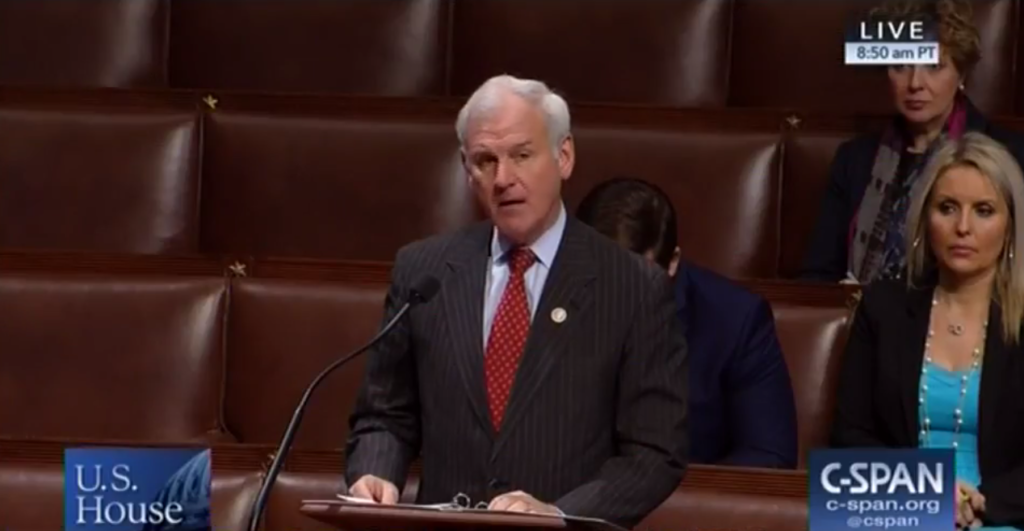
With all the allegations being made against President Donald Trump, it’s important to examine some background and facts. First, let’s talk about what has been going on in Ukraine since the fall of the Soviet Union. Ukraine is one of the most corrupt countries on earth. Like many former Soviet countries, oligarchs control almost all the political power. Corruption is so rampant that many American business people refuse to operate there. For nearly 30 years, Republican and Democrat Presidents have pressured Ukraine to reform without much success. Part of that outreach was aimed at preventing Russia from gaining influence there. But five years ago, Russia invaded Ukraine, and the two countries have been at war ever since. After the invasion, President Barack Obama rightly began providing them non-lethal aide. But to maintain goodwill with the Russians, he would not sell them weapons. Now let’s move to 2016. During the 2016 campaign, President Trump ran on a deep skepticism of foreign aid. Partly as a result, senior members of the Ukrainian government took Secretary Hillary Clinton’s side. After his victory, Ukrainian officials scrambled to make amends with President Trump. Despite President Trump’s understandable skepticism towards Ukraine, he pursued policies towards Ukraine that began leading to progress. He began selling real weapons to Ukraine to help them fight the Russians, with enormous positive effects. However, a few individuals in the Administration tried to convince President Trump he should forget Ukraine’s past and immediately embrace its new President. They began, in their own words, working to change President Trump’s mind. It was office gossip among a handful of these individuals that led to the impeachment investigation. The drama started with the “whistleblower” (who lacked firsthand knowledge of what he reportedly blew the whistle on) alleging that President Trump made “demands” on President Zelensky on a phone call. He alleged President Trump threatened to withhold security assistance to Ukraine for political favors. But despite this allegation, President Zelensky has publicly, clearly, and repeatedly denied any demands were ever made on him. And the Justice Department reviewed this allegation and declined to pursue a criminal investigation. Further, President Trump released the transcript, and it showed that neither person said one word about the hold on that call! You would think that if President Trump were trying to use the aid for extortion, he would have at least mentioned it. President Zelensky did not mention the funds either because he did not know they were on hold and, as the transcript confirms, President Trump never told him! If that is the case, this would be a very strange quid pro quo indeed. Let’s use common sense here. With President Trump’s clear skepticism of foreign aid and Ukraine’s reputation for corruption, is it surprising his Administration would want to review millions in aid to a new Ukrainian President and parliament? In contradiction to the bureaucratic gossip fueling this latest Democrat impeachment fantasy, not one person has testified that they had any direct knowledge that President Trump ordered aid held in exchange for a political favor. Witnesses have speculated about the reason for the hold, but when pressed, they’ve all said some version of “I don’t know.” Despite this sham process, we have no evidence that President Trump ordered any kind of quid pro quo. The Ukrainians got the aid money, within days of even finding out it was on hold, and they got the meetings with President Trump and the Vice President that they wanted. There is no impeachable offense here, but most Democrats know that. This is all about defeating President Trump in the 2020 election, but I think their efforts will backfire as the American people learn the truth. Armed with the facts, I won’t quit fighting against this sham impeachment scheme.
Could Nikki Haley’s role in Donald Trump’s administration taint a 2024 bid?
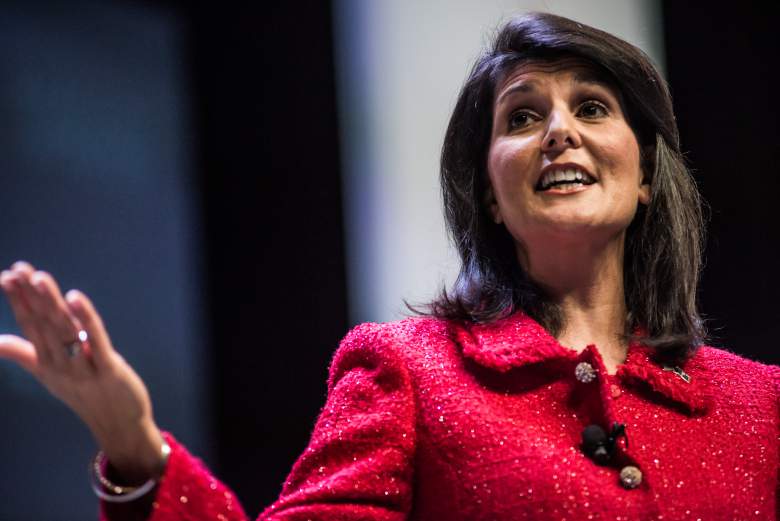
With the launch of her new memoir, former U.N. Ambassador Nikki Haley has again ignited speculation that she may be gearing up for a possible bid for the White House, perhaps as early as 2024. But even though the former South Carolina governor left the Donald Trump administration on her own terms, a rarity in a White House that has seen its share of turmoil, some strategists say that in a post-Trump era, she could struggle to win back GOP traditionalists who aren’t fans of the polarizing president. “She gets credit for getting out without being too stained by the Trump administration,” said Chip Felkel, a South Carolina-based Republican strategist. “Everybody seems to get stained by this guy, and they all get thrown aside when they aren’t useful. … She’s really walking a fine line, a balancing act, and so far she’s been successful, but she’s got to be careful.” Haley has been navigating her way through that balancing act since the 2016 campaign cycle, when there was initially no love lost between then-Gov.Haley and then-candidate Donald Trump. When Haley called for the release of Trump’s tax returns, and he called her an embarrassment to South Carolina, Haley’s tweeted response of “Bless your heart” epitomized tongue-in-cheek Southern shade. In her two years at the United Nations, Haley managed to tread a careful path of occasionally speaking out against Trump while not directly drawing his ire. That balancing act came into view, Haley writes in her memoir, in clashes with then-Secretary of State Rex Tillerson and then-White House chief of staff John Kelly, who she alleges once tried to get her to join them in opposing some of Trump’s policies, a move she called “offensive.” Conversely, Haley wrote that she was “deeply disturbed” by the president’s comments that there were “very fine people on both sides” at the white nationalist rally and counterprotest in Charlottesville, Virginia, in 2017, saying that she “was certain he didn’t understand how damaging his remarks were.” At the end of 2018, she left on her own terms, a decision that spawned speculation — which Haley quickly squelched — that she might challenge her soon-to-be-former boss in 2020. Since then, Haley has demurred when asked about politics, even in news cycles that floated the notion of Trump replacing Vice President Mike Pence with Haley on the 2020 ticket. She hit the speaking circuit, reportedly commanding as much as $200,000 per appearance. Earlier this year, she joined the Boeing Co. board, founded a nonprofit and, in September, announced a return to her native South Carolina with the purchase of a home on Kiawah Island, a tony golf community near Charleston. With Trump still the titular head of the Republican Party, Felkel said Haley remains well positioned with the constituency that sent her former boss to the White House, though any Republicans turned off by Trump’s presidency may not know how to view her now. “She’s made the base really happy, and that serves her well in a primary, but she’s angered and dismayed some independents and disaffected Republicans who saw her as someone who might get the party back to some sense of normalcy,” Felkel said. “So what she gained might not last, might not be worth what she needs, when she really needs it.” Others saw the situation differently, arguing that Haley’s loyalty to the administration when asked to serve will bode well for her as she seeks her own political successes. “Nikki has remained her own person while serving the president,” said Catherine Templeton, who served Gov. Haley as head of two state agencies. “No one, regardless of how they feel about Trump now or later, will begrudge loyalty and intelligent service. I just don’t think it is an issue.” Time could also prove a hindrance. With presidential cycles having stretched from months to several years ahead of the election itself, the competition for attention in what have recently been massive candidate fields makes it difficult to maintain visibility and favor during an extended campaign season, warned GOP strategist Terry Sullivan. “It’s tough to stay the bright, new shiny object for an extended period of time, especially when the attention spans of voters are so short,” said Sullivan, who managed Marco Rubio’s 2016 Republican presidential bid. “She’s working very hard to position herself as the Goldilocks candidate, where she’s just pro-Trump enough and loyal enough to the president that the supporters are for it, but just independent enough so that all the Never Trumpers can hang their hopes and dreams on her nomination.” Haley, who has launched a book tour and is making the media rounds to promote “With All Due Respect,” was not made available for an interview with The Associated Press. For Felkel, only the end of the Trump era — whether in 2020 or 2024 — will reveal Haley’s political staying power. “For Haley and for many others, when Trump is gone, whenever that is, we’ll find out whether this thing has legs or whether it was a flash in the historical pan.” he said. By Meg Kinnard Associated Press Meg Kinnard can be reached at https://twitter.com/MegKinnardAP Republished with the permission of the Associated Press.
Nancy Pelosi invites Donald Trump to testify as new witnesses prepare

House Speaker Nancy Pelosi invited President Donald Trump to testify in front of investigators in the House impeachment inquiry ahead of a week that will see several key witnesses appear publicly. Pushing back against accusations from the Republican president that the process has been stacked against him, Pelosi said Trump is welcome to appear or answer questions in writing, if he chooses. “If he has information that is exculpatory, that means ex, taking away, culpable, blame, then we look forward to seeing it,” she said in an interview that aired Sunday on CBS’ “Face the Nation.” Trump “could come right before the committee and talk, speak all the truth that he wants if he wants,” she said. Senate Democratic leader Chuck Schumer echoed that suggestion. “If Donald Trump doesn’t agree with what he’s hearing, doesn’t like what he’s hearing, he shouldn’t tweet. He should come to the committee and testify under oath. And he should allow all those around him to come to the committee and testify under oath,” Schumer told reporters. He said the White House’s insistence on blocking witnesses from cooperating begs the question: “What is he hiding?” The comments come as the House Intelligence Committee prepares for a second week of public hearings as part of its inquiry, including with the man who is arguably the most important witness. Gordon Sondland, Trump’s ambassador to the European Union, is among the only people interviewed to date who had direct conversations with the president about the situation because the White House has blocked others from cooperating with what it dismisses as a sham investigation. And testimony suggests he was intimately involved in discussions that are at the heart of the investigation into whether Trump held up U.S. military aid to Ukraine to try to pressure the country’s president to announce an investigation into Democrats, including former Vice President Joe Biden, a leading 2020 candidate, and Biden’s son Hunter. Multiple witnesses overheard a phone call in which Trump and Sondland reportedly discussed efforts to push for the investigations. In private testimony to impeachment investigators made public Saturday, Tim Morrison, a former National Security Council aide and longtime Republican defense hawk, said Sondland told him he was discussing Ukraine matters directly with Trump. Morrison said Sondland and Trump had spoken approximately five times between July 15 and Sept. 11 — the weeks that $391 million in U.S. assistance was withheld from Ukraine before it was released. And he recounted that Sondland told a top Ukrainian official in a meeting that the vital U.S. military assistance might be freed up if the country’s top prosecutor “would go to the mike and announce that he was opening the Burisma investigation.” Burisma is the gas company that hired Hunter Biden. Morrison’s testimony contradicted much of what Sondland told congressional investigators during his own closed-door deposition, which the ambassador later amended. Trump has said he has no recollection of the overheard call and has suggested he barely knew Sondland, a wealthy donor to his 2016 campaign. But Democrats are hoping he sheds new light on the discussions. “I’m not going to try to prejudge his testimony,” Rep. Jim Himes, Democrat-Conneticut, said on “Fox News Sunday.” But he suggested, “it was not lost on Ambassador Sondland what happened to the president’s close associate Roger Stone for lying to Congress, to Michael Cohen for lying to Congress. My guess is that Ambassador Sondland is going to do his level best to tell the truth, because otherwise he may have a very unpleasant legal future in front of him.” The committee also will be interviewing a long list of others. On Tuesday, it’ll hear from Morrison along with Jennifer Williams, an aide to Vice President Mike Pence, Alexander Vindman, the director for European affairs at the National Security Council, and Kurt Volker, the former U.S. special envoy to Ukraine. On Wednesday the committee will hear from Sondland in addition to Laura Cooper, a deputy assistant secretary of defense, and David Hale, a State Department official. And on Thursday, Fiona Hill, a former top NSC staffer for Europe and Russia, will appear. Trump, meanwhile, continued to tweet and retweet a steady stream of commentary from supporters as he bashed “The Crazed, Do Nothing Democrats” for “turning Impeachment into a routine partisan weapon.” “That is very bad for our Country, and not what the Founders had in mind!!!!” he wrote. He also tweeted a doctored video exchange between Rep. Adam Schiff, the Democratic chairman of the Intelligence Committee, and Republican Rep. Jim Jordan, in which Schiff said he did not know the identity of the whistleblower whose complaint triggered the inquiry. The clip has been altered to show Schiff wearing a referee’s uniform and loudly blowing a whistle. In her CBS interview, Pelosi vowed to protect the whistleblower, whom Trump has said should be forced to come forward despite longstanding whistleblower protections. “I will make sure he does not intimidate the whistleblower,” Pelosi said. Trump has been under fire for his treatment of one of the witnesses, the former ambassador to Ukraine, Marie Yovanovitch, whom Trump criticized by tweet as she was testifying last week. That attack prompted accusations of witness intimidation from Democrats and even some criticism from Republicans, who have been largely united in their defense of Trump “I think, along with most people, I find the president’s tweet generally unfortunate,” said Ohio Republican Rep. Mike Turner on CNN’s “State of the Union.” Still, he insisted that tweets were “certainly not impeachable and it’s certainly not criminal. And it’s certainly not witness intimidation,” even if Yovanovitch said she felt intimidated by the attacks. Rep. Chris Stewart, Republican-Utah, said Trump “communicates in ways that sometimes I wouldn’t,” but dismissed the significance of the attacks. “If your basis for impeachment is going to include a tweet, that shows how weak the evidence for that impeachment is,” he said on ABC’s “This Week.” And the backlash didn’t stop Trump from lashing out at yet another witness, this time Pence aide Williams. He directed her in a Sunday tweet
