
Congress pushes ahead on Donald Trump impeachment with nation split
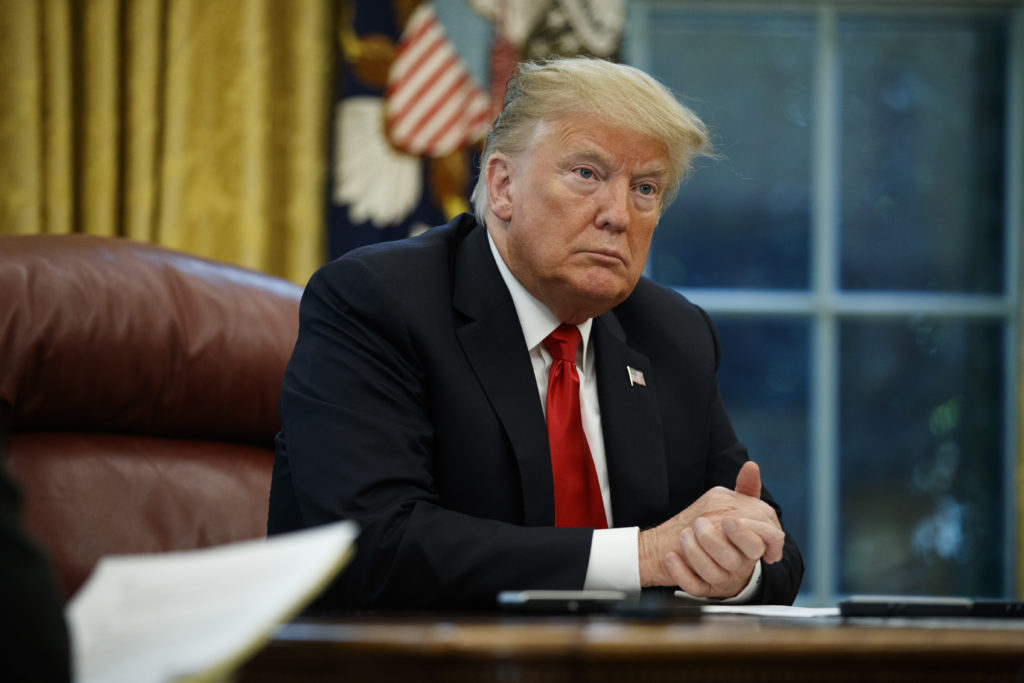
The House is plunging into a landmark impeachment week, with Democrats who once hoped to sway Republicans now facing the prospect of an ever-hardening partisan split over the question of removing President Donald Trump from office. Lawmakers were getting their first look at the House Intelligence Committee’s impeachment report Monday night behind closed doors. The findings are expected to forcefully make the Democrats’ case that Trump engaged in what Chairman Adam Schiff calls impeachable “wrongdoing and misconduct” in pressuring Ukraine to investigate Democrats and Joe Biden while withholding military aid to the ally. For Republicans offering an early rebuttal ahead of the report’s public release, the proceedings are simply a “hoax,” with Donald Trump insisting he did nothing wrong and his GOP allies in line behind him. Trump tweeted his daily complaints about it all and then added a suggestive, if impractical, question: “Can we go to Supreme Court to stop?” With the Judiciary Committee set to launch its first hearing Wednesday, the impeachment proceedings are presenting a historic test of political judgment in a case that is dividing Congress and the country. Departing for a NATO meeting in London, Trump criticized the House for pushing forward Monday with proceedings while he was heading overseas, a breach of political decorum that traditionally leaves partisan differences at the water’s edge. He predicted Republicans would actually benefit from the entire impeachment effort against him, though “it’s a disgrace for our country.” For the Democrats, House Speaker Nancy Pelosi faces a critical moment of her leadership as she steers the process ahead after resisting the impeachment inquiry through the summer, warning it was too divisive for the country and required bipartisan support. Speaking to reporters at the international climate conference in Madrid, Pelosi declined to engage with impeachment questions. “When we travel abroad, we don’t talk about the president in a negative way,” she said. “We save that for home.” Possible grounds for impeachment are focused on whether Trump abused his office as he pressed Ukrainian President Volodymyr Zelenskiy in a July 25 phone call to launch investigations into Trump’s political rivals. At the time, Trump was withholding $400 million in military aid, jeopardizing key support as Ukraine faced an aggressive Russia at its border. The report, which the Intelligence panel will vote on Tuesday and make public, also is expected to include evidence the Democrats say suggests obstruction of Congress, based on Trump’s instructions for his administration to defy subpoenas for documents and testimony. The next step comes when the Judiciary Committee gavels open its own hearing with legal experts to assess the findings and consider potential articles of impeachment ahead of a possible vote by the full House by Christmas. That would presumably send it to the Senate for a trial in January. The Democratic majority on the Intelligence Committee says its report, compiled after weeks of testimony from current and former diplomats and administration officials, will speak for itself in laying out the president’s actions toward Ukraine. Republicans pre-empted the report’s public release with their own 123-page rebuttal. In it, they claim there’s no evidence Trump pressured Zelenskiy. Instead, they say Democrats just want to undo the 2016 election. Republicans dismiss witness testimony of a shadow diplomacy being run by Trump lawyer Rudy Giuliani, and they rely on the president’s insistence that he was merely concerned about “corruption” in Ukraine — though the White House transcript of Trump’s phone call with Zelenskiy never mentions the word. “They are trying to impeach President Trump because some unelected bureaucrats chafed at an elected President’s ‘outside the beltway’ approach to diplomacy,” according to the report from Republican Reps. Devin Nunes of California, Jim Jordan of Ohio and Michael McCaul of Texas. Rep. Jim Jordan, Republican-Ohio, appeared to be the only lawmaker who viewed the Democratic report Monday evening when it became available behind closed doors for members of the intelligence panel. He said it was “long.” Jordan declined to discuss details, but said it’s the same “lame case” Democrats presented throughout impeachment hearings. “The president did nothing wrong,” Jordan said. “The facts are on our side.” Trump on Monday pointed to Zelenskiy’s recent comments as proof he did nothing wrong. The Ukrainian president said in an interview he never talked to Trump “from the position of a quid pro quo,” but he didn’t say Trump did nothing wrong. In fact, he had strong criticism for Trump’s actions in the Time magazine interview. With Ukraine at war with Russia, he said, its partners “can’t go blocking anything for us.” Schiff said the GOP response was intended for an audience of one, Trump, whose actions are “outside the law and constitution.” The finished Intelligence Committee report sets up the week’s cascading actions. Democrats could begin drafting articles of impeachment against the president in a matter of days, with voting in the Judiciary Committee next week. Republicans on the committee, led by Rep. Doug Collins of Georgia, plan to use procedural moves to stall the process and portray the inquiry as unfair to the president. The White House declined an invitation to participate, with Counsel Pat Cipollone denouncing the proceedings as a “baseless and highly partisan inquiry” in a letter to Judiciary Chairman Jerrold Nadler, Democart-New York. Trump had previously suggested that he might be willing to offer written testimony under certain conditions, though aides suggested they did not anticipate Democrats would ever agree to them. Cipollone’s letter of nonparticipation applied only to the Wednesday hearing, and he demanded more information from Democrats on how they intended to conduct further hearings before Trump would decide whether to participate. Nadler said Monday if the president really thought his call with Ukraine was “perfect,” as he repeatedly says, he would “provide exculpatory information that refutes the overwhelming evidence of his abuse of power.” House rules provide the president and his attorneys the right to cross-examine witnesses and review evidence before the committee, but little ability to bring forward witnesses of their own. Asked why not have his lawyers participate, Trump said
Sheriff John Williams remembered as dedicated peace officer

A slain Alabama sheriff was remembered Monday as a dedicated peace officer who loved serving the people of his county. More than 2,000 mourners filled an auditorium for funeral services for Lowndes County Sheriff John Williams. Williams was shot and killed Nov. 23 at a gas station in the county where he served as sheriff. William Chase Johnson, 18, is charged with murder in the sheriff’s death. Sometimes known as “Big John” for his towering frame, the 62-year-old sheriff was remembered as a selfless law enforcement officer who showed respect to everyone. “He didn’t care if you were rich or poor. He didn’t care if you were black, white, green, purple…. John was going to treat you like family. John was going to do everything in his power to help you,” said Russell County Sheriff Heath Taylor, who serves as head of the state sheriffs association. Taylor said Williams was example to follow, both as a man and a law enforcement officer. “When this call for assistance came in, he didn’t pass it to a deputy… he took it himself, just like he had done thousands of times,” Taylor said. Speakers at the services described Williams’ big laugh and bigger heart. They remembered him as a man who freely gave out his cellphone number to folks in his county so they could reach him if they needed, doted on his grandchild and patrolled his county in his truck with a distinctive air raid siren-sounding horn that always let people know he was coming. Williams was elected as sheriff in 2010 after decades working in law enforcement in his home county. Williams’ flag-draped coffin sat at the front of the coliseum that was selected for the funeral because of the expected large crowd. A black wreath was placed on the hood of a sheriff’s truck at the back of the coliseum. Montgomery County Sheriff Derrick Cunningham said his friend was a “true peace maker.” “He would give you the shirt off his back. He’s a true law enforcement officer,” Cunningham said. “He loved y’all. He loved Lowndes County and he loved being sheriff.” U.S. Sen. Doug Jones said Williams was keeping the peace in Lowndes County “until his last breath.” Republished with the Permission of the Associated Press.
Steve Bullock ends presidential campaign
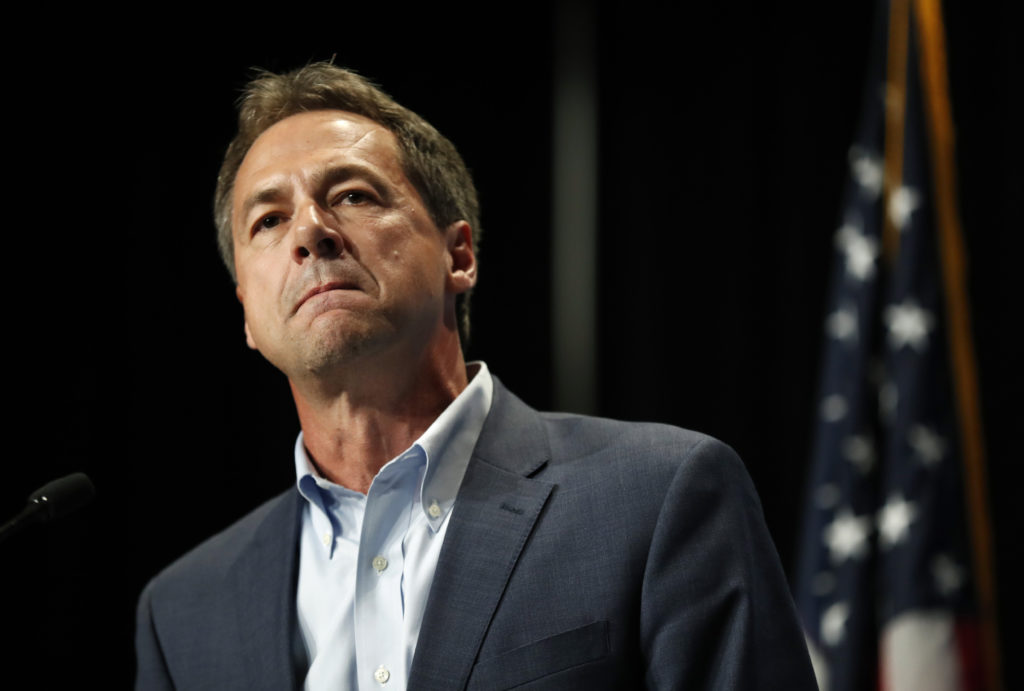
Montana Gov. Steve Bullock announced Monday that he’s ending his Democratic presidential campaign, saying it’s become clear that he won’t have a shot at being his party’s nominee. The two-term governor and former state attorney general tried to make the case that he was the best bet to beat President Donald Trump because he was the only Democratic candidate to win in a state that Trump won in 2016. But he got a late start, announcing his candidacy in May and joining nearly two dozen other Democratic candidates competing for attention and campaign donations. “While there were many obstacles we could not have anticipated when entering this race, it has become clear that in this moment, I won’t be able to break through to the top tier of this still-crowded field of candidates,” Bullock said in a statement. The governor said that he ran to win back places Democrats have lost and end the influence of “dark money” in politics. Those concerns have not changed, he said, but he leaves the race “filled with gratitude and optimism, inspired and energized by the good people I’ve had the privilege of meeting over the course of the campaign.” The 53-year-old struggled to raise money and register in the polls, managing to meet qualification thresholds for only one Democratic National Committee debate in July. He’s the third Western governor or former governor to drop out of the 2020 race after struggling to build a national profile and donor base against well-known alternatives like former Vice President Joe Biden and Vermont Sen. Bernie Sanders. Former Colorado Gov. John Hickenlooper dropped out in August to instead run for the Senate. His departure was followed quickly by that of Washington Gov. Jay Inslee, who is seeking reelection. Democrats had been pushing Bullock to give up his presidential bid and run instead for Senate, where first-term Republican Steve Daines is running for reelection. But Bullock has consistently and repeatedly said he has no interest in the Senate seat and that there are already strong candidates running against Daines. Bullock’s spokeswoman Galia Slayen reiterated that Monday. “While he plans to work hard to elect Democrats in the state and across the country in 2020, it will be in his capacity as a governor and a senior voice in the Democratic Party — not as a candidate for U.S. Senate,” Slayen said in a statement. Bullock had been exploring a presidential run since 2017, but he said he couldn’t announce his candidacy until he had finished his work in Helena, where the state legislature was meeting. He staked his presidential campaign on Iowa, and he made repeated trips to the state to campaign alongside prominent state Attorney General Tom Miller, the first statewide elected official in Iowa to endorse a 2020 candidate. Bullock stuck strictly to his campaign message of needing to win back rural Trump voters, noting he won reelection the day that Trump carried his state by 20 percentage points. He also touted his history as a crusader to eliminate the influence of anonymous and foreign money in elections. But he remained at the bottom of the polls and unfamiliar to many voters. His biggest national exposure appeared to come when he didn’t make the cut for the first debate, resulting in a slate of news stories and an appearance on “Late Night with Stephen Colbert.” Bullock was Montana’s attorney general for a term before he became governor in 2013. Before that, he worked as an assistant attorney general, as an attorney in private practice in Helena and for law firms in New York and Washington, D.C. By Michelle L. Price and Matt Volz Associated Press. Price reported from Las Vegas. Republished with the Permission of the Associated Press.
Democrats aim to catch up to Donald Trump’s 2020 cash advantage
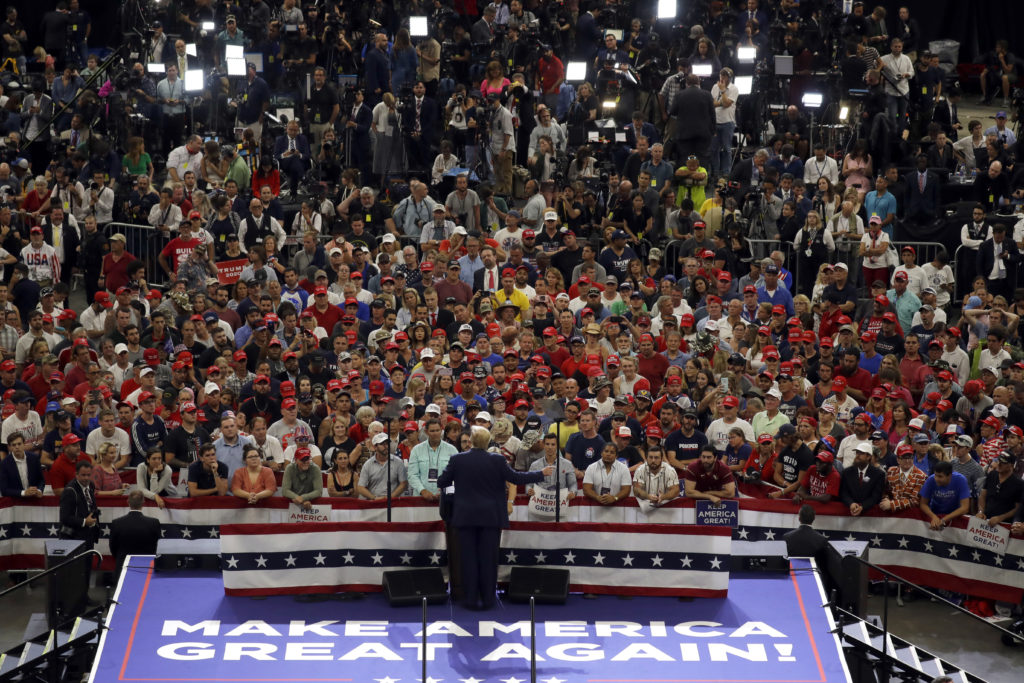
Democrats are narrowing President Donald Trump’s early spending advantage, with two billionaire White House hopefuls joining established party groups to target the president in key battleground states that are likely to determine the outcome of next year’s election. Priorities USA and American Bridge, two of the leading Democratic outside groups, are ramping up operations. The organization ACRONYM recently pledged to spend $75 million. And former New York Mayor Michael Bloomberg has pledged to spend $100 million on ads targeting Trump, while California billionaire Tom Steyer promised $50 million. The billionaires have come under fire from some Democratic rivals for trying to buy the presidency. But the influx of cash is soothing anxiety in some corners of the party that Trump, who has repeatedly broken fundraising records, was off to an unprecedented early start in the 2020 advertising wars. Some had argued that the Democrats’ overwhelming focus on the sprawling presidential primary field allowed the president to burnish a reelection narrative unchallenged ahead of what is expected to be an exceptionally close election. “It’s safe to say the gap is closing,” said David Brock, who leads several Democratic groups, including American Bridge. “People can breathe a little bit of a sigh of relief that there is a major Democratic response now and that Trump’s spending will be met.” The money has put Democrats on firmer footing in states such as Florida, Wisconsin, Michigan, Pennsylvania, North Carolina and Arizona, which will be key to victory in 2020. But it’s unclear how long it will last. Trump has built a massive money-raising machine that has fused a traditional network of big-dollar Republican donors with a sophisticated digital operation that has raked in small contributions from rank-and-file supporters. Sitting presidents have long used their office to draw a spotlight and rake in money while the party out of power fights its way through a primary. Trump, however, never really ceased campaigning and has been running for reelection essentially since taking office, giving him a far earlier head start. For months, his campaign has spent comparatively little on digital advertising in battlegrounds, while dumping money in population-dense states like New York, California and Texas, which are rich in potential donors but won’t decide the outcome of the election. Yet the money he is raising there will enable him to flood important states with advertising early next year. Over the summer, the lack of spending fueled worries — and some snipping — that not enough was being done counter Trump. “We welcome other efforts. But we also need to remember that Trump has yet to start spending money big in swing states,” said Patrick McHugh, the executive director of Priorities USA, which spent roughly $200 million during the 2016 election. “Matching dollar for dollar now would come at the detriment of matching his spending online and on television once he begins spending in earnest in states that matter.” While the economy overall has performed well during Trump’s presidency, Priorities is driving a message that aims to move beyond the toplines and connect peoples’ frustration with their own financial well-being directly to the president. The group has yet to say how much it will spend on the 2020 contest, but it has outspent Trump $6.5 million to $2.2 million since July on Facebook and Google in Florida, Wisconsin, Pennsylvania and Michigan. American Bridge, which has traditionally focused on conducting opposition research, has launched a $50 million radio, TV and digital advertising campaign in the same states that is geared toward rural and exurban voters in about 80 counties that Barack Obama carried but later switched to Trump. “It’s a margins game that we’re playing, but we think that we can get enough people to defect,” Brock said. The group ACRONYM will spend $75 million between now and Election Day on online advertising highlighting the “broken promises” and perceived corruption of the Trump administration. Recent ads have attacked Trump for failing to deliver on his pledge to bring manufacturing jobs back to the U.S. by highlighting the decision by General Motors to close its Lordstown, Ohio, plant. Organizations financed by Steyer, meanwhile, are working to register young people to vote. That includes a door-knocking campaign, as well as digital advertising by NextGen America, where he was president until stepping down over the summer to launch his campaign. An early salvo of ads run by Bloomberg accuses Trump of not caring about health care and questions his temperament and social media use. One recent Facebook ad captioned “What did he tweet today?” features an image of a man facepalming his forehead. “The president is out making his case. And we’ve got to make sure that he doesn’t make it unrebutted,” said Bloomberg chief adviser Howard Wolfson. Since Trump took office, many Democrats have celebrated an outpouring of small-dollar online contributions from an energized grassroots base. Some progressives have touted this success as a viable alternative to the party’s historic reliance on wealthy donors, whom they criticize for having outsized influence. But the reality is both streams of money will be needed against Trump. Particularly before the nominee is chosen, outside groups and the Democratic National Committee — they depend on major donors to finance their efforts — will be handling the lion’s share of general-election work. During a recent DNC fundraiser headlined by Obama, tech CEO and philanthropist Amy Rao fired up a well-heeled crowd of about 100 who gathered at the home of megadonor Karla Jurvetson, high in the hills overlooking Silicon Valley. Defeating Trump, she said, was so important that they should be digging in to their “retirement and what you thought you were going to leave to your children” to support the party regardless of who becomes the nominee. She encouraged the crowd to give “so much that it actually hurts.” “It’s only money. You’ll never miss it,” Rao said. “The biggest gift you can give to the generations that follow us is to make sure this president loses in 2020.” AP National Political Writer Steve Peoples in New
