
New Planned Parenthood Clinic in Birmingham to offer abortions
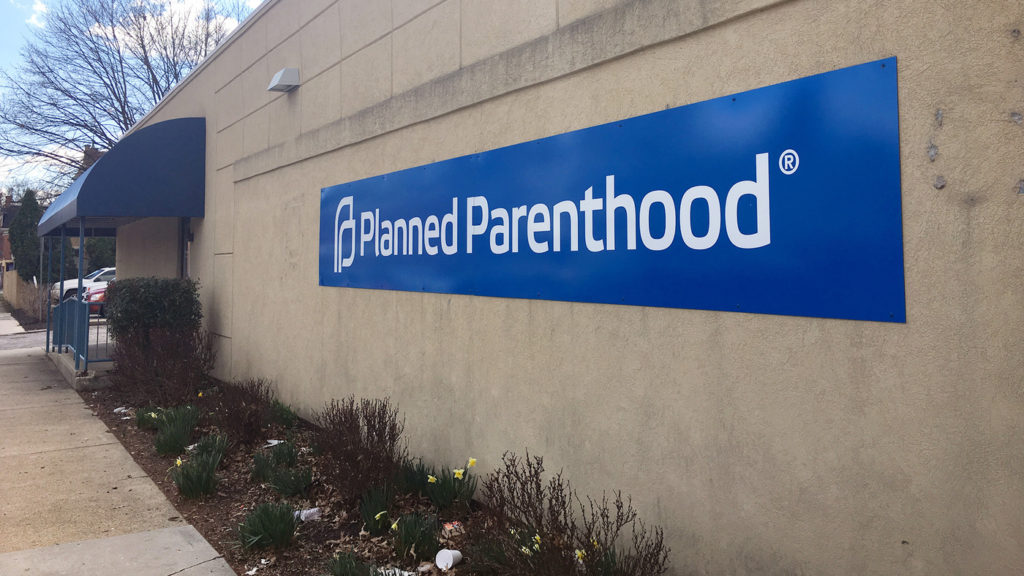
The new Planned Parenthood clinic in Birmingham will start offering abortions at their new location, 1019 First Ave. North. The clinic opened on July 14. According to AL.com, Barbara Ann Luttrell, vice president of external affairs for Planned Parenthood Southeast, said, “It’s 11,000 square feet, a state-of-the-art facility,” she said. “We will offer a full spectrum of reproductive health services.” Abortions had not been offered at the old Planned Parenthood location since 2017. The office was located in Birmingham off Highland Ave was frequently a staging area for anti-abortion protests. Pro-life groups picket abortion clinics with volunteer “sidewalk counselors,” who try to dissuade women from having an abortion. The new clinic has a fenced-in parking area with a gate and security cameras. Construction began in January 2019. Soon after, the Alabama Legislature passed the Human Life Protection Act to make abortion illegal in Alabama except when the mother’s life is in danger. Gov. Kay Ivey signed the nearly complete ban on abortion into law in May 2019. “To the bill’s many supporters, this legislation stands as a powerful testament to Alabamians’ deeply held belief that every life is precious and that every life is a sacred gift from God,” Republican Gov. Kay Ivey said in a statement. Soon after the ban, the ACLU and Planned Parenthood sued to stop the law. U.S. District Judge Myron Thompson blocked the ban with a preliminary injunction in October 2019, staying it was unconstitutional. Currently, there are three abortion clinics in Alabama. They are in Huntsville, Montgomery, and Tuscaloosa. The Birmingham office will be the fourth. Planned Parenthood provides a full array of reproductive services, including birth control, STD testing, and reproductive education. According to their website, “The majority of Planned Parenthood’s services are preventive: care that helps prevent unintended pregnancies with birth control and sex education, reduce the spread of STDs through testing and treatment, and screen for cervical, breast, and other cancers.”
White House drops payroll tax cut after GOP allies object
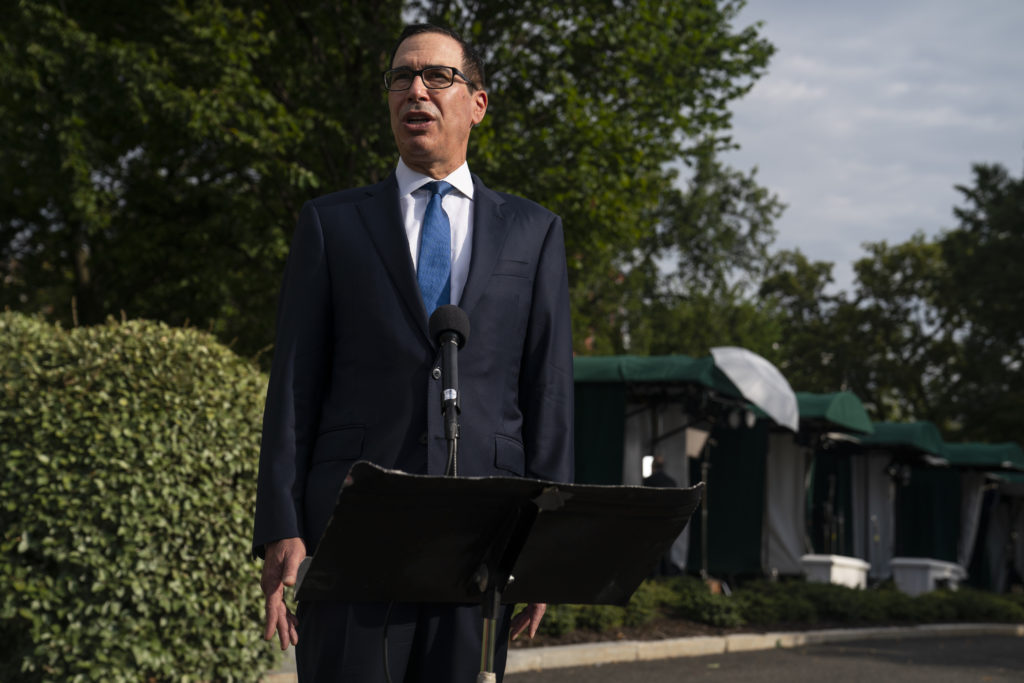
President Donald Trump on Thursday reluctantly dropped his bid to cut Social Security payroll taxes as Republicans stumbled anew in efforts to unite around a $1 trillion COVID-19 rescue package to begin negotiations with Democrats who are seeking far more. Frustrating new delays came as the administration scrambled to avert the cutoff next week of a $600-per-week bonus unemployment benefit that has helped prop up the economy while staving off financial disaster for millions of people thrown out of work since the coronavirus pandemic began. Trump yielded to opposition to the payroll tax cut among his top Senate allies, claiming in a Twitter post that Democratic opposition was the reason. In fact, top Senate Republicans disliked the expensive idea in addition to opposition from Democrats for the cut in taxes that finance Social Security and Medicare. “The Democrats have stated strongly that they won’t approve a Payroll Tax Cut (too bad!). It would be great for workers. The Republicans, therefore, didn’t want to ask for it,” Trump contended. “The president is very focused on getting money quickly to workers right now, and the payroll tax takes time,” Treasury Secretary Steven Mnuchin said at the Capitol. Only Sunday, Trump said in a Fox News interview that “I would consider not signing it if we don’t have a payroll tax cut.” The long-delayed legislation comes amid alarming new cases in the virus crisis. It was originally to be released Thursday morning by Senate Majority Leader Mitch McConnell. But the Kentucky Republican instead hosted an unscheduled meeting with Mnuchin and White House acting chief of staff Mark Meadows and delayed the planned release of the proposal until next week. The rocky developments coincide with a higher-profile role by Meadows, a former tea party lawmaker from North Carolina with a thin legislative resume. The delays increase the chances that efforts to pass the COVID rescue, the fifth coronavirus response bill this year, could drag well into August as both parties are formally nominating their presidential candidates. Mnuchin claimed there was “fundamental agreement” on the GOP side, but irritation was growing among Republicans with the Trump negotiating team, which floated the idea of breaking off a smaller bill that would be limited to maintaining some jobless benefits and speeding aid to schools. Democrats immediately panned that idea, saying it would strand other important elements such as aid to state and local governments. “We cannot piecemeal this,” declared House Speaker Nancy Pelosi of California. As a practical matter, Democrats say, the only way to prevent a cutoff of the pandemic jobless benefit next month is to simply extend it in full, at least in the short term. Balky and ancient state unemployment systems can’t be adjusted in time to immediately implement a new compromise. “Due to ancient technology, states need between one and four weeks to adjust the $600 boost. At this late hour, the only option to guarantee benefits do not lapse is the Democratic plan to extend the $600 weekly benefit,” said top Finance Committee Democrat Ron Wyden of Oregon. “Republicans rejected that plan outright. They were never serious about preventing a lapse in benefits.” McConnell scrapped a choreographed rollout that would have featured Republicans with tough reelection races claiming credit for provisions like a $15 billion appropriation for child care assistance for parents trying to go back to work while many schools will remain closed this fall. McConnell now says the rollout won’t come out until next week. “Our Republican colleagues have been so divided, so disorganized and so unprepared that they have to struggle to draft even a partisan proposal within their own conference,” said Democratic leader Chuck Schumer. The must-have centerpiece for McConnell is a liability shield to protect businesses, schools and others from coronavirus-related lawsuits. The still-unreleased GOP measure does forge an immediate agreement with Democrats on another round of $1,200 checks to most adults. The $600 weekly unemployment benefit boost that is expiring Friday would be cut back, and Mnuchin said it would ultimately be redesigned to provide a typical worker 70% of his or her income. Republicans say extending it in full would be a disincentive to work. “You can’t continue to pay people more to not work than to work,” said Sen. John Barrasso of Wyoming. The Republican package will also include tax breaks for businesses to hire and retain workers and to help shops and workplaces retool with new safety protocols. A document circulating among lobbyists claims the package would increase the deduction for business meals to 100%, offering help to the restaurant industry. Mnuchin said there is bipartisan agreement on changes to a popular subsidy program for businesses called the Paycheck Protection Program that would permit businesses especially hard hit by the pandemic — companies with fewer than 300 workers and revenue losses of 50% — to receive a second PPP payment. A breakthrough on $25 billion in virus-testing money was key after days of wrangling between Republicans on the powerful Appropriations Committee and the White House. There will also be $26 billion for vaccines and $15 billion for research programs at the National Institutes of Health. At the White House, Trump touted the GOP plan’s massive $105 billion to help schools and universities reopen. It contains $70 billion to help K-12 schools reopen, $30 billion for colleges, and $5 billion for governors to allocate. Trump said he wants the school money linked to reopenings. In McConnell’s package, the money for K-12 would be split between those that have in-person learning and those that don’t. If local public schools don’t reopen, the money should go to parents to send their children to other schools or teach them at home, Trump said. “If the school is closed, the money should follow the student,” he said. Democrats back a much more sweeping package, including almost $1 trillion for state and local governments. They also want a fresh round of mortgage and rental assistance and new federal health and safety requirements for workers — ideas strongly opposed by Republicans. Congress
Donald Trump calls off Florida segment of GOP National Convention
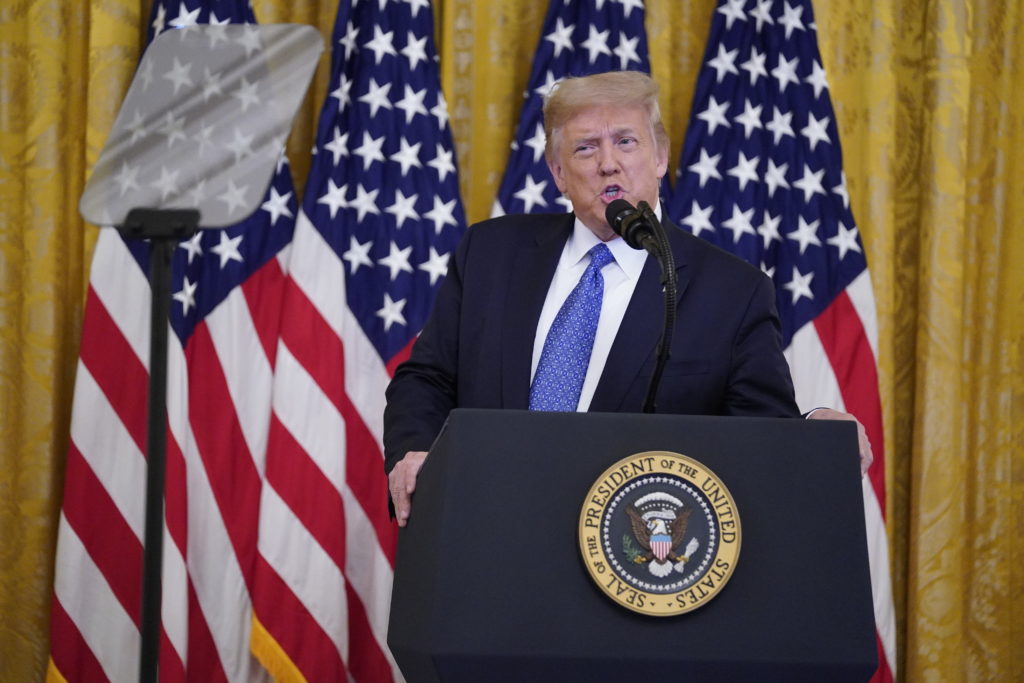
Bowing to the coronavirus threat, President Donald Trump on Thursday scrapped plans for a four-night Republican National Convention celebration in Florida that had been set to draw more than 10,000 people to a pandemic hot spot to mark his renomination. Trump had already moved the convention’s public events out of North Carolina because of virus concerns. But the spiking virus shifted south, too, and the planned gathering in Jacksonville increasingly appeared to be both a health and political risk. Trump and his advisers feared that going forward with big parties and “infomercial” programming in Florida would ultimately backfire on the president. “It’s a different world, and it will be for a little while,” Trump said, explaining his decision at a White House coronavirus briefing. “To have a big convention is not the right time.” A small subset of GOP delegates will still formally renominate Trump on Aug. 24 in Charlotte, North Carolina, at an event scheduled to last just four hours. Trump had decided last month to shift the ceremonial portions of the GOP convention to Florida because of a dispute with North Carolina’s Democratic leaders over holding an indoor gathering with throngs of supporters taking a pass on face masks. But his plans for a grand gathering in Florida starting shrinking almost as quickly as the move was announced, as virus cases spiked in the state and other parts of the country. Trump said he plans to deliver his nomination acceptance speech in an alternate form still to be determined — perhaps online. Trump campaign manager Bill Stepien said the campaign will still “provide exciting, informative, and enthusiastic programming so Republicans can celebrate the re-nomination of President Trump and Vice President Pence.” Trump said thousands of his supporters and delegates wanted to attend the events in Florida, but “I just felt it was wrong” to gather them in a virus hot spot. Some of them would have faced quarantine requirements when they returned to their home states from the convention. “We didn’t want to take any chances,” he added. “We have to be vigilant. We have to be careful, and we have to set an example.” Democrats will hold an almost entirely virtual convention Aug. 17-20 in Milwaukee using live broadcasts and online streaming, according to party officials. Joe Biden plans to accept the presidential nomination in person, but it remains to be seen whether there will be a significant in-person audience. The Biden campaign did not immediately respond to messages Thursday seeking comment on Trump’s announcement. In recent weeks, Trump aides and allies have encouraged the president to consider calling off the convention, arguing it was not worth going forward with the event if the focus would be on the pandemic. Trump acknowledged that consideration, saying, “I could see the media saying, ‘Oh, this is very unsafe.’” After a three-month hiatus, Trump has stepped back to the forefront of the government’s handling of the virus with regular briefings aiming to stanch an erosion of support in public and private polls that has followed the surge in new virus cases. Trump said he did not cancel the convention events at the request of local officials, but the Jacksonville City Council was set to meet Friday to discuss safety concerns around the gathering. Jacksonville Mayor Lenny Curry, a former chair of the Florida Republican Party, said he appreciated Trump “putting health and public safety first.” “I know this was a difficult decision and just demonstrates and reaffirms once again his commitment to Jacksonville, the state of Florida and the people of the United States of America,” he said. “I’m grateful for him and his leadership, and this was the right way to move forward.” Joe Gruters, current chair of the Florida Republican Party and a state senator from Sarasota, called it a “selfless move.” “Having our home-state candidate was going to be a really big deal for Florida, but listen, he had it right,” Gruters said. “At the end of the day, it’s about safety.” More than 10,000 people were expected in Jacksonville — already a fraction of the number that would typically attend a nominating convention. Only 336 delegates will be allowed to participate in Charlotte under extraordinary procedures approved last month by the Republican National Committee. The balance of the more than 2,500 delegates will vote by proxy. Cory Burkarth, a spokesman for the city of Charlotte, said Thursday, “We have an agreement in place with the Republican National Committee to host a substantially scaled down business meeting and that is what we are planning to do.” Republished with the permission of the Associated Press.
Alabama reports daily case record; more schools to go online

Alabama reported more than 2,200 new coronavirus cases Thursday— the highest single-day increase in cases — as health officials cautioned it will take a few weeks to see the effect of a statewide mask order. The spike came after several days of declining case numbers and as a number of school systems announced students will not immediately return to classrooms this fall. The state topped more than 2,000 daily cases for the third time and is now averaging about 1,700 new cases reported each day. Alabama Gov. Kay Ivey last week announced an order requiring face masks in public places. State health officials have cautioned it will take a few weeks to see any effect on case numbers. “For the effects of masking, at least two weeks would be necessary, but three would be best,” State Health Officer Scott Harris wrote in a reply to The Associated Press. Since the pandemic began, more than 72,000 people in the state have tested positive for the coronavirus with nearly one-third of cases being reported in the last two weeks. More than 1,300 people have died, according to numbers from the state health department. Alabama on Wednesday reported more than 50 additional deaths from COVID-19 patients. However, Harris said that spike is partly related to the state being able to work through a backlog. “That said, we have more inpatients than ever in hospitals and so deaths will be increasing,” Harris said. More than 1,500 people with COVID-19 were in state hospitals Wednesday. School systems are making their own decisions about whether to hold in-person classes, distance-learning, or a combination approach when the school year begins. Several Alabama school systems announced this week that students will not immediately return to classrooms. Birmingham City, Montgomery County, Huntsville City, Madison City, and Madison County are among the school districts that have announced students will do remote learning for the beginning of the year. Mobile County, the state’s largest school system, had already announced it would have virtual classes for the first part of the year. Republished with the permission of the Associated Press.
DOJ: Alabama inmates are subjected to excessive force
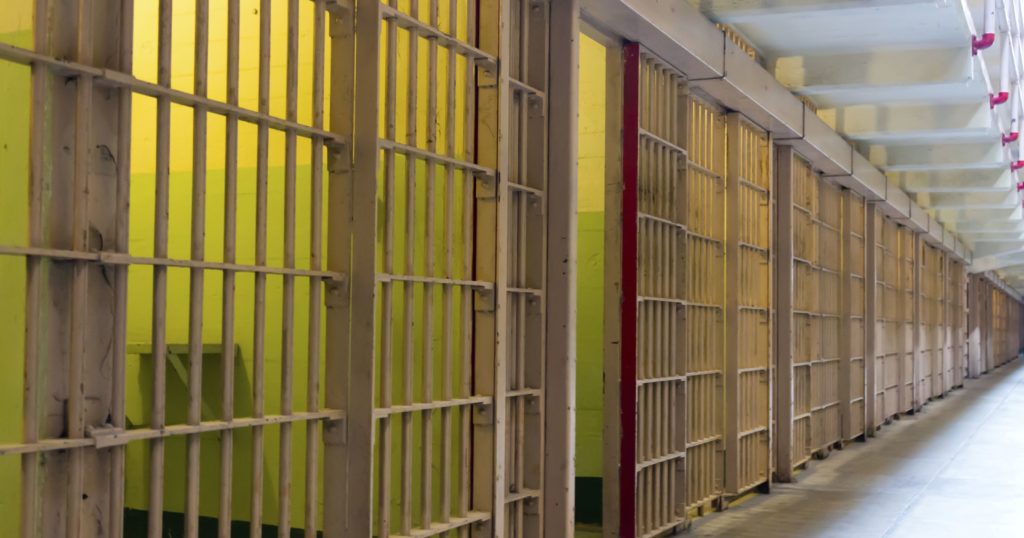
The U.S. Department of Justice announced Thursday that it believes Alabama’s prisons for men are unconstitutional because inmates are subjected to excessive force at the hands of prison staff. In its report, the Justice Department detailed a chilling litany of incidents, including a prison guard beating a handcuffed prisoner in a medical unit while shouting, “I am the reaper of death, now say my name!” as the prisoner begged the officer to kill him. It is the second time within 18 months that the Justice Department has accused Alabama of housing male inmates in unconstitutional conditions in a prison system considered one of the most understaffed and violent in the country. “Our investigation found reasonable cause to believe that there is a pattern or practice of using excessive force against prisoners in Alabama’s prisons for men,” Assistant Attorney General Eric Dreiband for the Civil Rights Division said in a statement. Dreiband said the Justice Department hopes to work with Alabama to resolve the department’s concerns. In findings sent to the state, federal investigators wrote that “uses of excessive force in Alabama’s prisons are common” and that severe overcrowding and understaffing plays a role in the violence. “The severe and pervasive overcrowding increases tensions and escalates episodes of violence between prisoners, which lead to uses of force. At the same time, the understaffing tends to generate a need for more frequent uses of force than would otherwise occur if officers operated at full strength,” federal investigators wrote. Alabama Gov. Kay Ivey said in a statement that her administration remains hopeful that they will reach a resolution to all of the department’s allegations. “I am as committed as ever to improving prison safety through necessary infrastructure investment, increased correctional staffing, comprehensive mental-health care services, and effective rehabilitation programs, among other items. We all desire an effective, Alabama solution to this Alabama problem, and my administration will put in the hard work and long hours necessary to achieve that result,” the Republican governor said. The Justice Department noted that correctional officers in multiple prisons have pleaded guilty or been convicted of using excessive force against prisoners, including one incident when at least four officers beat a prisoner to death. The 28-page Justice Department report listed multiple examples of violence by prison staff after reviewing files and visiting several state prisons. The Justice Department said: — In December 2018, a correctional officer brutally hit, kicked, and struck a handcuffed prisoner with an expandable baton in the Ventress medical unit. During the beating, all four of the nurses heard the officer yell something to the effect of, “I am the reaper of death, now say my name!” and the prisoner begged the officer to kill him. — In September 2019, a lieutenant at Ventress prison lifted a handcuffed inmate off the ground and slammed him on a concrete floor several times, knocking him unconscious. The prisoner was unable to breathe on his own, was intubated, and taken to an outside hospital, where medical personnel administered CPR several times to keep the prisoner alive. — In February 2019, a sergeant at Elmore prison beat two handcuffed prisoners, suspected of retrieving contraband, striking one prisoner with a collapsible baton approximately 19 times on his head, legs, arms, back, and body. The sergeant who assaulted the prisoners later filed a false report about the incident. The sergeant and two correctional officers pleaded guilty in federal court. “The results of the investigation into excessive force issues within Alabama’s prisons is distressing and continues to require real and immediate attention,” said Louis Franklin, the U.S. Attorney for the Middle District of Alabama. The announcement comes more than a year after the Justice Department released a scathing report that said male inmates face excessive inmate-on-inmate violence and sexual abuse in facilities that are not sanitary, safe, or secure. The department is in negotiations with the state in an attempt to reach an agreement. The finding released Thursday were the continuation of the investigation first launched in 2016. Republished with the permission of the Associated Press.
