
Georgia audit to trigger hand recount of presidential vote
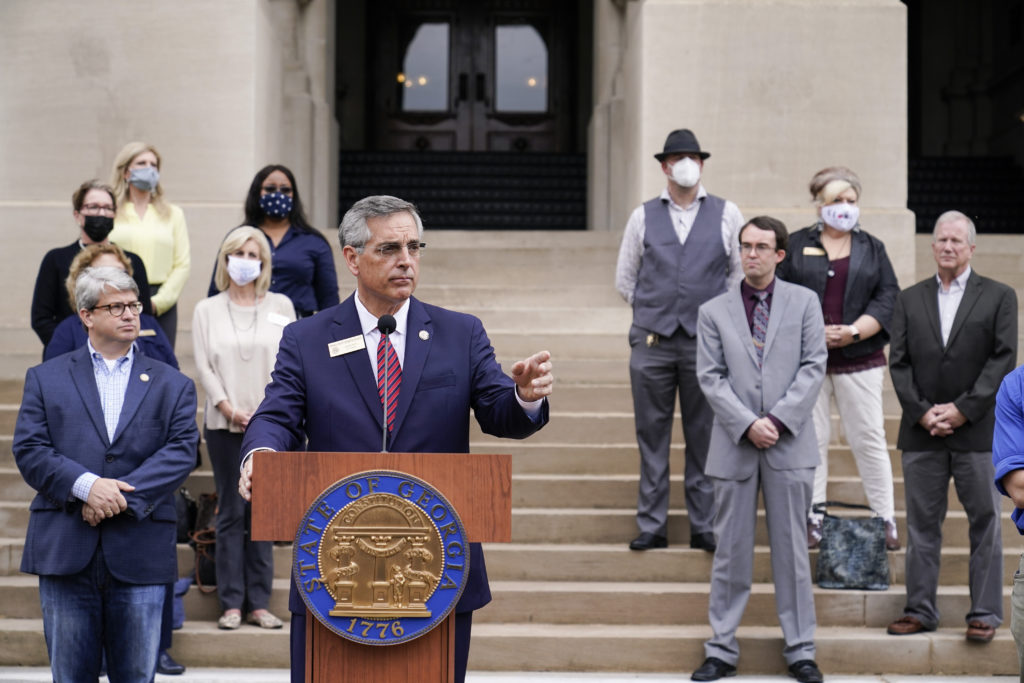
Georgia’s secretary of state on Wednesday announced an audit of presidential election results that he said will trigger a full hand recount. Secretary of State Brad Raffensperger said at a news conference that his office wants the process to begin by the end of the week and he expects it to take until Nov. 20, which is the certification deadline. President-elect Joe Biden leads President Donald Trump by about 14,000 votes out of nearly 5 million votes in the state. Nearly all ballots have been counted, though counties have until Friday to certify their results. Once county certification is complete and before the state certifies the results, the count must be audited. It is up to Raffensperger to choose which race to audit. The audit is a new requirement put in place by a law passed in 2019 that also provided for the new voting machines purchased last year. The state has chosen to do a risk-limiting audit, in which a random sample of ballots or receipts generated by voting machines are checked against results produced by vote-tallying equipment for accuracy. Raffensperger chose to audit the presidential race and said the tight margin means that the audit will result in a full hand recount. Asked if he chose the presidential race because of the Trump campaign’s call for a hand recount, Raffensperger said, “No, we’re doing this because it’s really what makes the most sense with the national significance of this race and the closeness of this race.” For the hand recount, election officers will work with the paper ballots in batches, dividing them into piles for each candidate. Then they will run the piles through machines to count the number of ballots for each candidate. The scanners will not read the data on the ballots, simply count them. Raffensperger said the process will have “plenty of oversight,” with both parties having the opportunity to observe. After results from the hand recount are certified, the losing campaign can then request another recount, which will be performed by scanners that would read and tally the votes, Raffensperger said. There is no mandatory recount law in Georgia, but state law provides that option to a trailing candidate if the margin is less than 0.5 percentage points. Biden’s lead stood at 0.28 percentage points as of Wednesday morning. U.S. Rep. Doug Collins, a Georgia Republican who’s leading Trump’s legal efforts in Georgia, called the upcoming audit a “first step.” He noted the Trump campaign had requested a hand recount. “This is a victory for integrity,” Collins said. “This is a victory for transparency.” In addition to the audit of the presidential race, Raffensperger announced that he’s consolidating runoff elections. A runoff for any state races was set to be held Dec. 1, while the runoffs for two U.S. Senate races was set for Jan. 5. Raffensperger said he’s consolidating those runoffs on Jan. 5. The one exception is the runoff for the special election to fill the remainder of U.S. Rep. John Lewis‘ term. That election will still be held Dec. 1. The person who wins that election will serve for about a month before Nikema Williams, who was just elected to succeed Lewis, who died in July. Republished with the permission of the Associated Press.
States cite smooth election, despite Donald Trump’s baseless claims
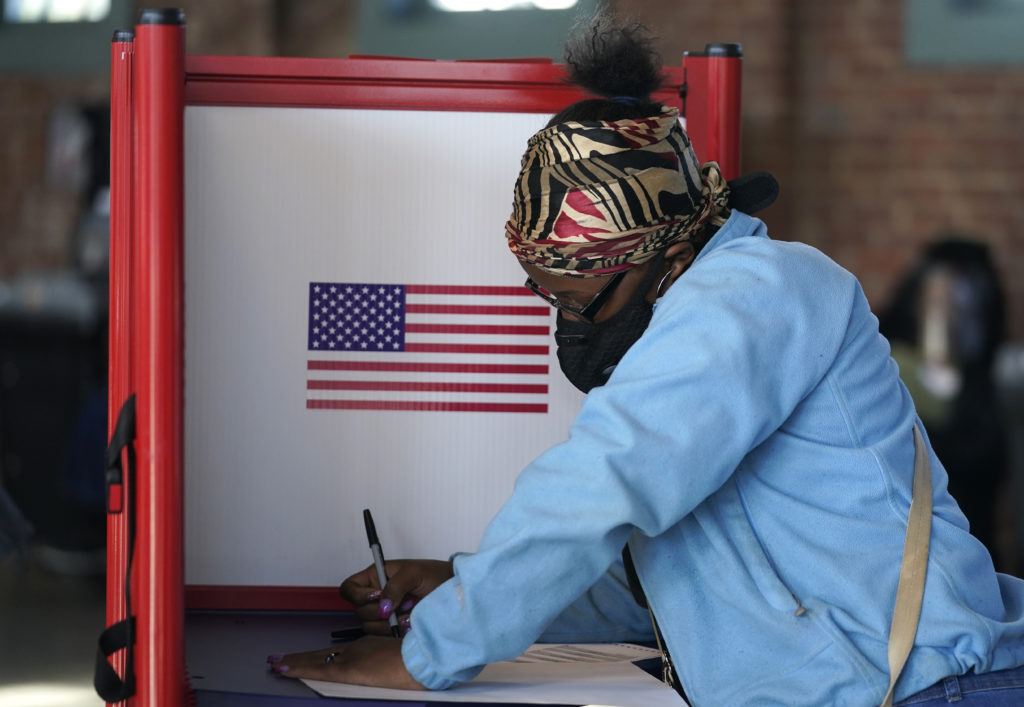
The 2020 election unfolded smoothly across the country and without any widespread irregularities, according to state officials and election experts, a stark contrast to the baseless claims of fraud being leveled by President Donald Trump following his defeat. Election experts said the large increase in advance voting — 107 million people voting early in person and by mail — helped take pressure off Election Day operations. There were also no incidents of violence at the polls or voter intimidation. “The 2020 general election was one of the smoothest and most well-run elections that we have ever seen, and that is remarkable considering all the challenges,” said Ben Hovland, a Democrat appointed by Trump to serve on the Election Assistance Commission, which works closely with officials on election administration. Following Democrat Joe Biden’s victory, Trump has sought to discredit the integrity of the election and argued without evidence that the results will be overturned. Republican lawmakers have said the president should be allowed to launch legal challenges, though many of those lawsuits have already been turned away by judges and those that remain do not include evidence of problems that would change the outcome of the race. In Wisconsin, a battleground state where Biden narrowly edged Biden, top election official Meagan Wolfe said there were no problems with the election reported to her office and no complaints filed alleging any irregularities. Michigan Attorney General Dana Nessel, a Democrat, said the same was true in her state, which Biden also won. “Let me be clear — the November elections in Michigan ran as smoothly as ever,” Nessel said, adding that there were no “instances of irregularities in the process of counting the votes, only evidence-free allegations, wild speculation, and conspiracy theories.” Ahead of Election Day, the pandemic upended longstanding voting plans and forced election officials to make systemic changes largely on the fly. They did so with limited federal money to cover increased costs for mail ballots, which take more staff and money to send, process, and count. After problems erupted during spring primaries, the nation worried whether election officials could pull off a problem-free presidential election during a pandemic while confronting the threat of foreign interference from sophisticated adversaries led by Russia. “In the spring, there were just so many challenges we were facing, and we were just wondering how we were going to manage to do it,” said Larry Norden, an elections expert with the Brennan Center for Justice. “It’s an incredible story.” Long before a single ballot was cast, Trump raised questions about the integrity of the election and railed against mail voting despite a long history of mail ballots being used successfully in this country. At one point, he claimed the only way he could lose was if the election were rigged. Some states that expanded mail-in voting to make it safer to cast a ballot during the virus outbreak lean Republican and voted for Trump — Nebraska, North Dakota and Montana. He has raised no concerns about the results there. On Monday, Attorney General William Barr authorized federal prosecutors across the U.S. to probe “substantial allegations” of voting irregularities. The groundless claims pushed by Trump and his allies about voting and ballot counting have only intensified since The Associated Press and other news organizations called the race Saturday for Biden, who leads in both the popular vote and in the Electoral College. Among the many lawsuits filed since Election Day is one in Nevada by the Trump campaign alleging voter fraud. Without explanation, Trump tweeted that the state is “turning out to be a cesspool of Fake Votes.” Such claims have put pressure on Republican election officials fielding scores of reports of fraud that so far have turned out to be human error or limited in scope. Nevada Secretary of State Barbara Cegavske, a Republican, said her office wouldn’t quantify how many complaints it had received, adding, “Many voter fraud complaints lack any evidence and are more complaints about process or policy.” In Iowa, Secretary of State Paul Pate, a Republican, ordered all counties in the state to double-check results after a data entry error was discovered in one precinct. “These human errors are unfortunate and frustrating, but the system is working,” he said. On Monday, Georgia’s two U.S. senators, both Trump supporters facing close runoff elections that could determine which party controls the Senate next year, called on the state’s top election official, a fellow Republican, to resign over unspecified claims of election mismanagement. The official, Secretary of State Brad Raffensperger, said he would not step down and assured the public there had been no widespread problems. “Was there illegal voting? I’m sure there was, and my office is investigating all of it,” Raffensperger said. “Does it rise to the numbers or margin necessary to change the outcome to where President Trump is given Georgia’s electoral votes? That is unlikely.” Studies have repeatedly shown that voter fraud is exceptionally rare. Much of Trump’s ire has centered on Pennsylvania, where the campaign has launched multiple lawsuits despite no indications of fraud or large-scale problems. “On Election Day, we didn’t have any reports of anything significant,” said Lisa Schaefer, who leads the bipartisan County Commissioners Association of Pennsylvania. “We have every reason to have confidence in the result of this election, as we do every other election.” Some incidents did get attention: In some Ohio and Texas counties, electronic poll books used to check in voters were sidelined when polls opened because they were still downloading a database update. That forced officials turn to paper backups or extend voting hours on Election Day. Some Georgia counties also grappled with poll book issues and with ballot-processing difficulties in a new statewide voting system. That said, the errors seemed to have occurred at lower rates than in most elections, University of Iowa computer scientist Doug Jones said. “The practical consequence of Trump’s call to vigilance to prevent fraud was increased scrutiny from both sides, and this increased scrutiny seems
Longtime Alabama GOP chief of staff Harold Sachs dies
The longtime chief of staff for the Alabama Republican Party has died after what his wife described as a battle with the coronavirus. The Alabama Republican Party on Tuesday announced the death of Chief of Staff Harold Sachs. His family has previously disclosed his hospitalization for COVID-19. Sachs was a longtime fixture of the state GOP. He filled many roles in the party before becoming chief of staff since 2011. “Harold was deeply invested in our mission, but mostly he loved all of the people he met. If you met Harold, you were automatically a friend,” the party said in a statement. His passing brought a multitude of condolence messages from state officials. “Harold was a conservative stalwart whose dedication to advancing the Republican mission will be dearly missed by all who knew him,” Alabama Secretary of State John Merrill said. Republished with the permission of the Associated Press.
Steve Flowers: Jim Martin father of modern Republican Party in Alabama
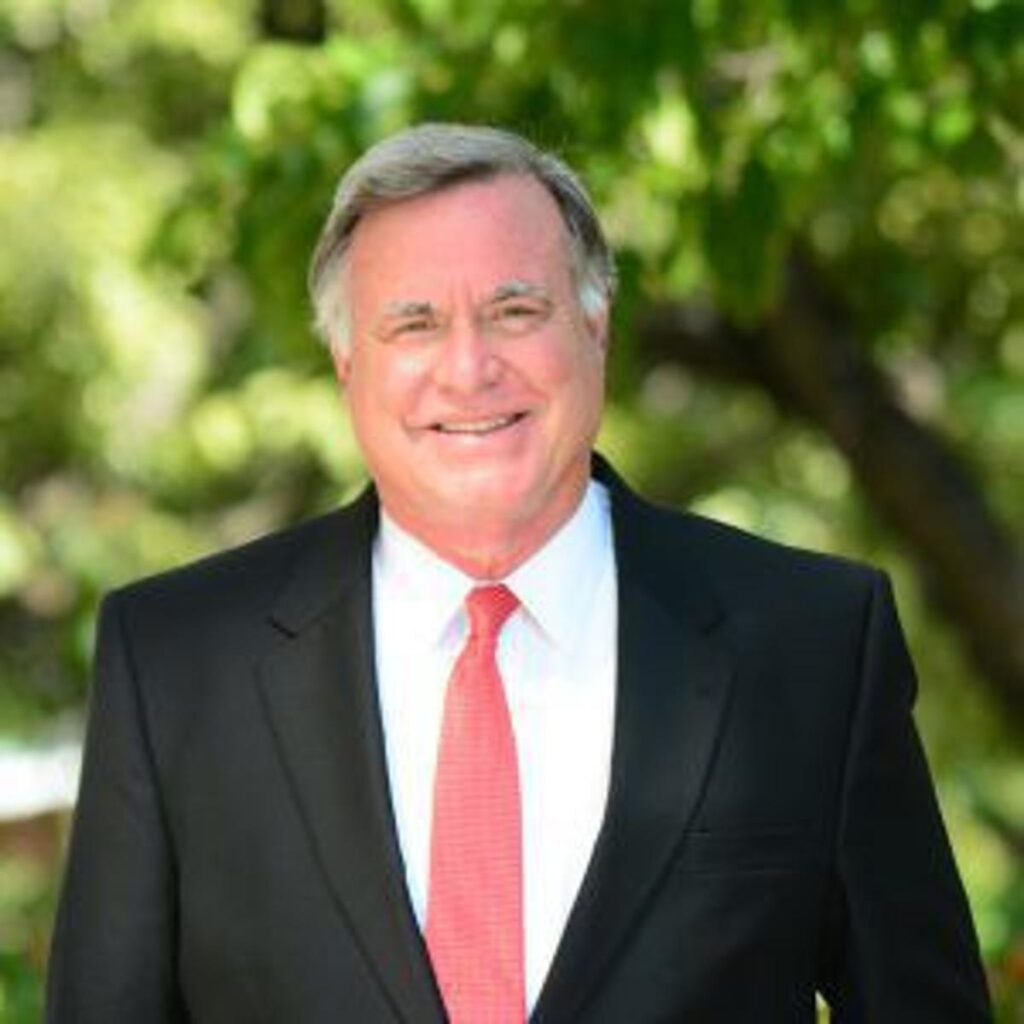
Three years ago, Jim Martin passed away in Gadsden at 99 years old. His beloved wife of 60 years, Pat, was by his side. He was a true Christian gentleman. Jim was one of the Fathers of the modern Republican Party in the south. In 1962, John Kennedy was President. Camelot was in full bloom. The Congress was controlled by Democrats only because the south was solidly Democratic. The southern bloc of senators and congressmen were all Democrats. Because of their enormous seniority, they controlled both houses of Congress. The issue of Civil Rights was a tempest set to blow off the Capitol dome. Kennedy was under intense pressure to pass major Civil Rights legislation. However, he was up against a stonewall to get it through the powerful bloc of southern senators. Race was the only issue in the south, especially in Alabama. George Wallace was riding the race issue to the Governor’s office for his first term. The white southern voter was determined to stand firm against integration and was poised to cast their vote for the most ardent segregationists on the ballot. Our Congressional delegation was Democratic, all eight Congressmen, and both Senators. Our tandem of John Sparkman and Lister Hill had a combined 40-years of service. Lister Hill had gone to the U.S. Senate in 1938. He had served four six-year terms and had become a national celebrity in his 24 years in the Senate. He was up for election for his fifth six-year term. It was expected to be a coronation. Senator Hill was reserved, aristocratic, and almost felt as if he was above campaigning. He was also soft on the race issue. He was a progressive who refused race-bait. Out of nowhere a handsome, articulate, young Gadsden businessman, Jim Martin, appeared on the scene. Martin was 42, a decorated World War II officer, who fought with Patton’s 3rd Army in Europe. He entered as a private and became an integral part of Patton’s team, rising to the rank of Major. After the war, Martin went to work for Amoco Oil and married a Miss Alabama – Pat Huddleston from Clanton. They then settled in Gadsden and he bought an oil distributorship and became successful in business. He was a business Republican and became active in the State Chamber of Commerce. When the State Chamber Board went to Washington to visit the Congressional delegation, they were treated rudely by our Democratic delegates, who were still voting their progressive New Deal, pro-union philosophy. Martin left Washington and decided that Alabama at least needed a two-party system and that he would be the sacrificial lamb to take on the venerable Lister Hill as the Republican nominee for the U.S. Senate. Martin got the nomination in a convention and the David vs. Goliath race was on. By late summer the big city newspapers could feel that Martin had some momentum. He was being perceived as the conservative and Hill as the liberal. Every Alabama courthouse was Democratic, all sheriffs, Probate Judges, as well as all statewide elected officials. It was hard to imagine that the tradition of voting Democratic would change, but the winds of segregation were strong. When the votes were counted in November of 1962, Martin had pulled off the biggest upset in the nation. NBC’s team of Chet Huntley and David Brinkley reported the phenomenon on the nightly news. Republican President Dwight Eisenhower called Martin to congratulate him. However, things were happening in rural North Alabama. Martin had won by 6,000 votes but three days later, mysterious boxes appeared with just enough votes to give Hill the belated victory. The entire country and most Alabamians knew that Jim Martin had been counted out. Jim Martin would have been the first Republican Senator from the south in a century. Some people speculate that he would have been the vice-presidential candidate with Richard Nixon in 1968. Regardless, Martin was the John the Baptist of the Southern Republican sweep of 1964, and father of the modern Republican Party in Alabama. That 1962 Senate race was a precursor of what was to come two years later. Jim Martin was one of five Republicans swept into Congress in the 1964 Goldwater landslide. He probably would have won the U.S. Senate seat of John Sparkman in 1966. However, Martin chose to run for governor against Lurleen Wallace. In 1987, Martin became Commissioner of the Alabama Department of Conservation and Natural Resources. As Commissioner, Martin helped create the Forever Wild land preservation program. Jim Martin has a special place in Alabama political history. See you next week. Steve Flowers is Alabama’s leading political columnist. His weekly column appears in over 60 Alabama newspapers. He served 16 years in the state legislature. Steve may be reached at www.steveflowers.us.
Hospitalizations, deaths from COVID-19 rise in Alabama

The number of people in Alabama hospitals with COVID-19 — as well as the number of daily deaths from the disease — are rising as health officials expressed concern about the trajectory of the pandemic headed into both the flu and holiday season. “Clearly, we are moving upward compared to where we were even a month ago but certainly compared to where we were two months ago. It’s not as sharp an increase as we see right now in other parts of the country, especially the upper Midwest, Great Plains states, certainly the Midwest, but it’s concerning to us,” State Health Officer Scott Harris said Tuesday. Harris said the Alabama numbers have been going in the wrong direction for about a month. “I think there are a number of reasons. It may be that the best explanation is that all across society people are getting back to sort of normal activity. People aren’t maybe being as concerned with social distancing or mask wearing as they were a few months ago.” He said the state has seen outbreaks associated with workplaces, a work release center, weddings, and a few in schools. Alabama ranked 27th in the nation for new cases per capita over the last two weeks, according to researchers at Johns Hopkins University. The seven-day rolling average of daily deaths in Alabama has risen over the past two weeks from 11 deaths per day on Oct. 26 to 15.86 deaths per day on Nov. 9. Alabama Department of Public Health statistics showed 1,206 people were hospitalized Tuesday with the disease, an increase of nearly 400 people over the last month. The state is still far below the summer numbers when about 1,600 people were hospitalized at a time in late July and early August when the pandemic was at its worst in the state after the Fourth of July holiday. “What I’m concerned about is the trend,” said Dr. Don Williamson, the former longtime state health officer who now heads the Alabama Hospital Association. “We’re beginning to climb at a much more rapid rate.” At least two school systems recently announced a move to virtual classes because of cases within the school and trouble finding substitutes to fill in for teachers and staff. Attalla City Schools in Etowah County announced they were moving to online classes for the next two weeks. “This decision is based on staff illness, contact tracing, and limited availability of substitutes. Student case numbers remain low,” the school system said in its announcement. Fayette County Schools also announced a move to virtual classes for one week because of the number of quarantined students, teachers, and bus drivers as well as a lack of substitutes. Alabama Gov. Kay Ivey this summer announced a statewide mask order which health officials credited with a drop in cases. Ivey last week extended a statewide mask order into December but lifted occupancy limits on stores and restaurants in the hopes of allowing retailers to make up economic ground during the holiday shopping season. Since the pandemic began in Alabama, more than 200,000 people have tested positive for the disease and more than 3,100 have died. The illness causes only mild to moderate symptoms for most people, but it can be deadly for the elderly and people with other, serious health problems. Republished with the permission of the Associated Press.
