
Correction
A correction was made to a story posted earlier. It was stated that Madison County was moving to remote learning. That is incorrect. Only Sparkman Middle School and Harvest Elementary are the schools going to online learning. We apologize for the error. 50 Department of Education employees quarantined after COVID-19 outbreak
50 Department of Education employees quarantined after COVID-19 outbreak
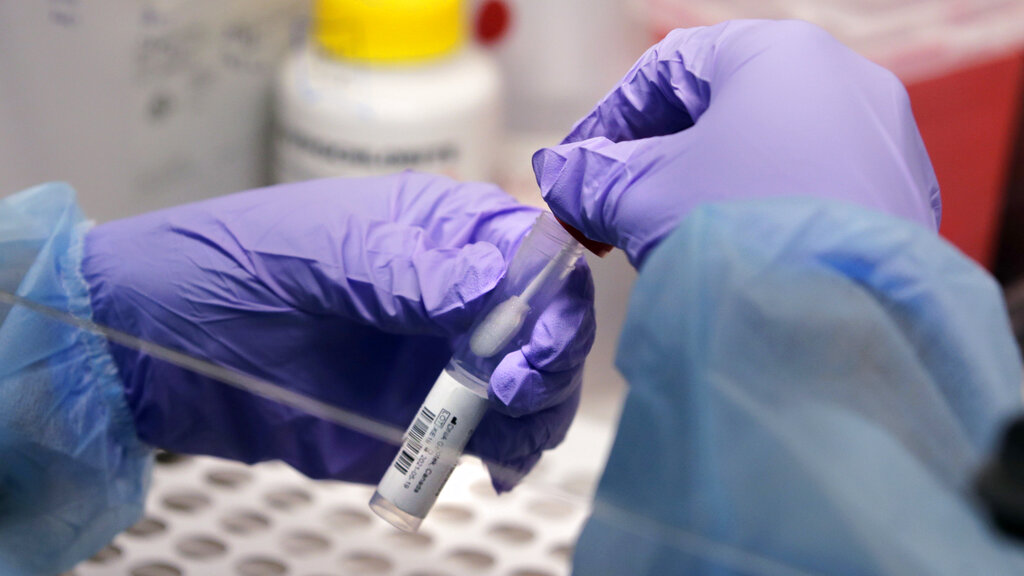
Alabama State Superintendent of Education Eric Mackey announced Thursday that 50 Department of Education employees had been placed on quarantine after a coronavirus outbreak in the DOE building. According to AL.com, most employees are from one section of the building, so the entire section was quarantined and will be working from home. One worker from another section tested positive, so that group was sent home as well. Most employees who tested positive didn’t have any symptoms. The first section of employees will be coming back into the office in the next few days. After they return, there will be fewer than 10 employees left in quarantine. However, this outbreak is definitely indicative of a spike in cases, even with steps in place to prevent the spread of the virus. Employees have been asked to stay in their sections and not walk around too much in other areas of the building to prevent the virus’s spread. “To put it in perspective, between March 13 and 11 days ago, we had 12 total cases of the virus among employees here,” Mackey commented. “So we did pretty good for seven months. And in those 11 days, we’ve had nine or ten more cases.” During the summer, the number of employees in the building was cut in half. This option is being discussed again as a way to prevent another outbreak. Mackey did note that while most state education departments haven’t returned to buildings since March, Alabama hasn’t had a problem until November. “It can happen so fast, when you go from one to two to four to eight in a day,” Mackey said. “And that’s what happened to us a couple weeks ago.” Meanwhile, other counties are responding to outbreaks as well. Sparkman Middle School and Harvest Elementary will go to online learning. All other schools will remain open. Superintendent Allen Perkins announced Thursday that students from those schools would move to virtual learning starting Monday, November 16, with students returning to school on November 30. 68 coronavirus deaths were reported on Wednesday; however, it was announced on the BamaTracker Twitter page that the deaths didn’t all happen in a single day. “Please remember that while ADPH reported 68 deaths yesterday, they were spread out over the months prior. Many many media outlets are running with the story they all occurred yesterday. Even ADPH acknowledged this was not the case.” Please remember that while ADPH reported 68 deaths yesterday, they were spread out over the months prior. Many many media outlets are running with the story they all occurred yesterday. Even ADPH acknowledged this was not the case. — Bama Tracker: Alabama COVID-19 (@BamaTracker) November 12, 2020
Top officials: Nov. 3 election most secure in U.S. history
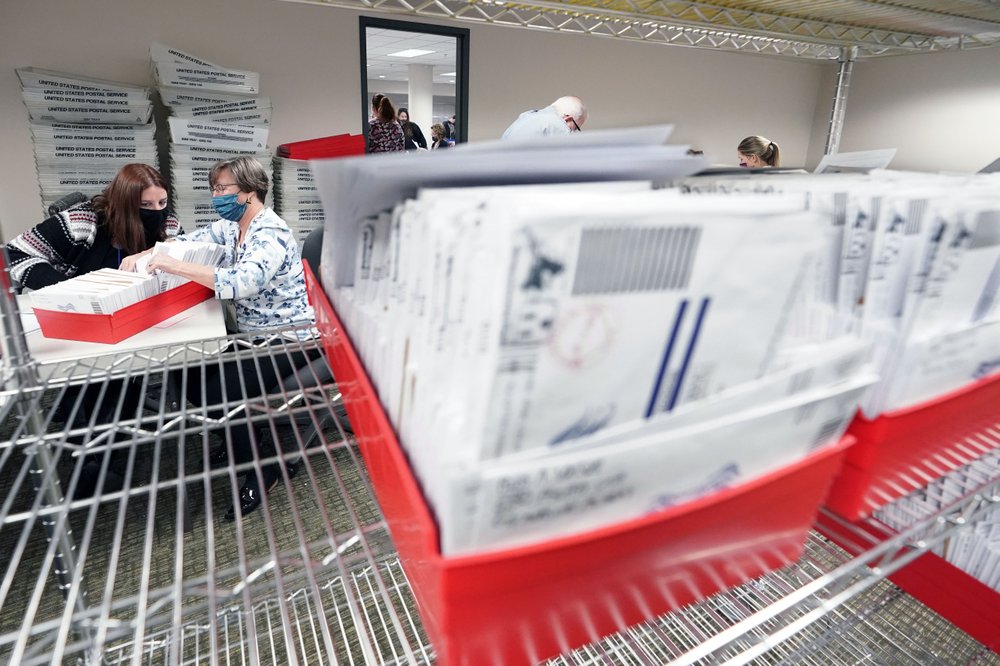
A coalition of federal and state officials said Thursday that they have no evidence that votes were compromised or altered in last week’s presidential election, rejecting unsubstantiated claims of widespread fraud advanced by President Donald Trump and many of his supporters. The statement from cybersecurity experts, which trumpeted the Nov. 3 election as the most secure in American history, amounted to the most direct repudiation to date of Trump’s efforts to undermine the integrity of the contest. It echoed repeated assertions by election experts and state officials over the last week that the election unfolded smoothly without broad irregularities. “While we know there are many unfounded claims and opportunities for misinformation about the process of our elections, we can assure you we have the utmost confidence in the security and integrity of our elections, and you should too,” the statement said. “When you have questions, turn to elections officials as trusted voices as they administer elections.” The statement was distributed by the Cybersecurity and Infrastructure Security Agency, which spearheaded federal election protection efforts. It was tweeted by the agency’s director, Chris Krebs, who just hours earlier had been the subject of a Reuters story that said he had told associates he expected to be fired by Trump. Krebs has been vocal on Twitter in repeatedly reassuring Americans that the election was secure and that their votes would be counted. “America, we have confidence in the security of your vote, you should, too,” he wrote. The officials who signed the statement said they had no evidence that any voting system had deleted or lost votes, had changed votes, or was in any way compromised. They said all of the states with close results have paper records, which allows for the recounting of each ballot, if necessary, and for “the identification and correction of any mistakes or errors.” “The November 3rd election was the most secure in American history. Right now, across the country, election officials are reviewing and double checking the entire election process prior to finalizing the result,” the statement said. The message is in stark contrast to Trump’s unsupported claims of fraud and widespread problems that he insists could affect vote totals. The issues Trump’s campaign and its allies have pointed to are typical in every election: problems with signatures, secrecy envelopes and postmarks on mail-in ballots, as well as the potential for a small number of ballots miscast or lost. With Democrat Joe Biden leading Trump by wide margins in key battleground states, none of those issues would have any impact on the outcome of the election. Trump’s campaign has also launched legal challenges complaining that their poll watchers were unable to scrutinize the voting process. Many of those challenges have been tossed out by judges, some within hours of their filing; again, none of the complaints show any evidence that the outcome of the election was affected. The statement’s authors include the presidents of the National Association of State Election Directors and the National Association of Secretaries of State — who run elections at the state level — and the executive committee of the government-industry coordinating council that includes all the major voting equipment vendors. Republished with the permission of the Associated Press.
Alabama groups ask governor to use up $1B in COVID-19 relief
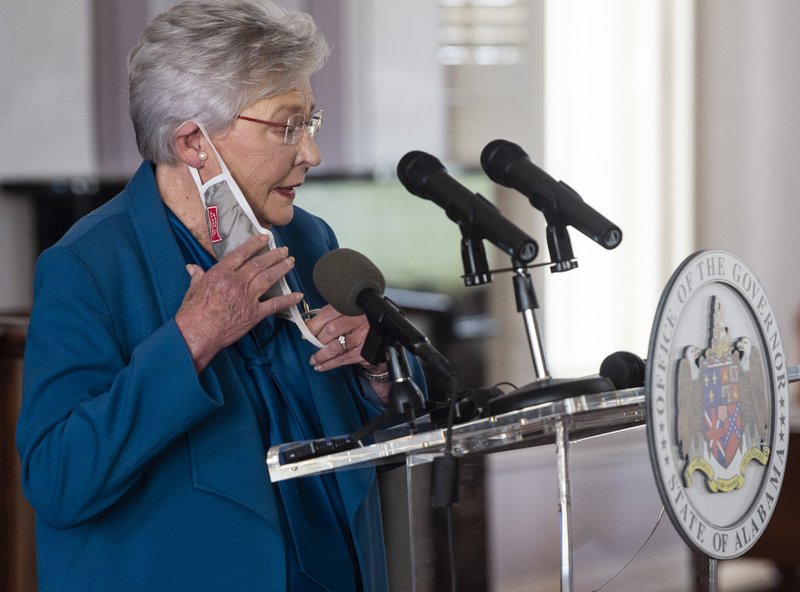
Alabama has about six weeks to spend almost $1 billion in remaining coronavirus relief funds or the money will revert to Washington, D.C., prompting concerns from advocacy groups that the state will leave money on the table that could be used to help hurting Alabamians. States have until Dec. 30 to spend their share of CARES Act dollars or the money must be returned. Alabama has so far spent about $850 million of its $1.7 billion allocation, according to a dashboard maintained by the state Department of Finance. “We’re in the same situation as all the other states,” said Rep. Steve Clouse, who heads the House General Fund budget committee. Clouse said he is concerned the state might have as much as $400 million unspent by the end of the year and added the state may not have a choice but to send the money back unless Congress extends the deadline. More than 80 organizations, including advocacy groups for low-income families and people with disabilities, sent Republican Gov. Kay Ivey a letter suggesting ways to use the money. The groups noted Alabama was one of the poorest states in the country, with 800,000 residents living in poverty “before this pandemic devastated the economy.” “These CARES Act funds provide our best hope to ensure the economic downturn does not force these families into long-term, catastrophic conditions that will impact generations to come,” said the letter signed by Alabama Arise, Alabama Appleseed, and other organizations. The groups suggested Alabama could follow the lead of states that have set up programs to help people with rent, mortgage, or utility bill assistance if their income has been impacted by COVID-19. Other possibilities they suggested were relief to keep child care centers operational and help for food banks and food assistance programs. “If Alabama had no needs made worse by the pandemic and the resulting recession, then we would say, ‘Yeah, return the money to the feds.’ But Alabama has very real, immediate needs. We still have people unemployed. We have some of the lowest unemployment benefits in the nation,” said Carol Gundlach, a policy analyst with Alabama Arise. Clouse said one possibility under discussion is to further shore up the state’s unemployment compensation fund that has taken a hit during the periods of massive unemployment. The Alabama Department of Finance said the funds have to be used for COVID-19 response expenses incurred between March 1 and Dec. 30. Gina Maiola, a spokeswoman for Ivey, said as the spending deadline approaches, the administration is urging everyone who has been allocated funds to submit their reimbursements or applications. She said they are also evaluating the “need to shift funds again to potentially address areas that will impact our economy, specifically small businesses.” “Gov. Ivey remains focused on getting this money in the hands of those who need it. … As Gov. Ivey has pointed out, $1.7 billion is a hefty chunk of money to spend in six months, but she and the team at Finance will continue working to get this spent and into the hands of Alabamians,” Maiola said. Republished with the permission of the Associated Press.
States ramp up for biggest vaccination effort in U.S. history
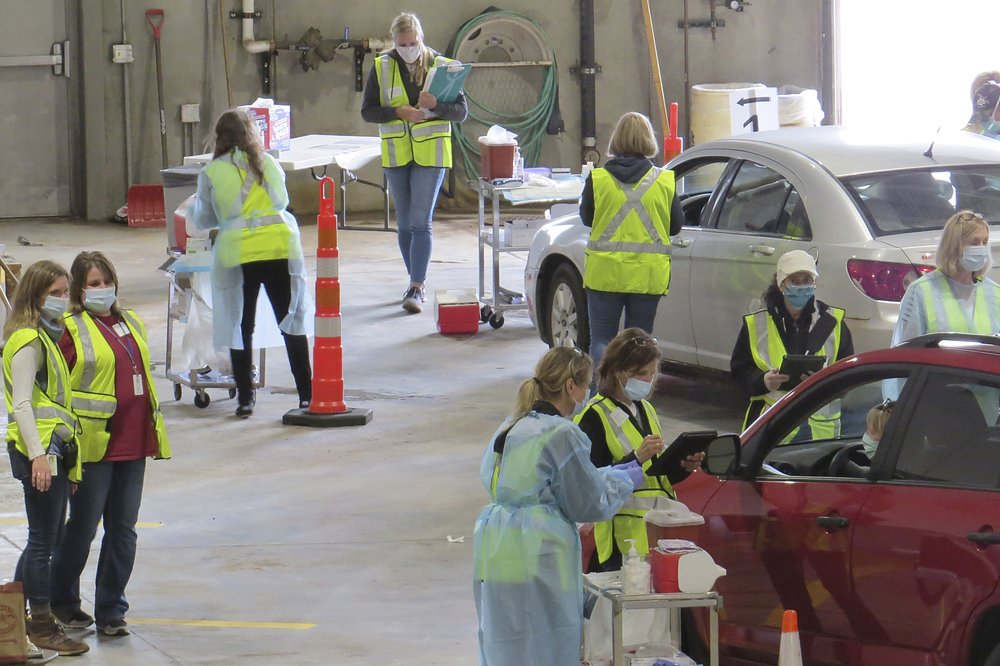
With a COVID-19 vaccine drawing closer, public health officials across the country are gearing up for the biggest vaccination effort in U.S. history — a monumental undertaking that must distribute hundreds of millions of doses, prioritize who’s first in line and ensure that people who get the initial shot return for the necessary second one. The push could begin as early as next month, when federal officials say the first vaccine may be authorized for emergency use and immediately deployed to high-risk groups, such as health care workers. “The cavalry is coming,” Dr. Anthony Fauci said Thursday on ABC’s “Good Morning America.” He said he hopes shots will be available to all Americans in April, May, and June. Pfizer also boosted hopes this week, saying early data suggests its vaccine is 90% effective. But the good news came in one of the grimmest weeks of the pandemic so far. Deaths, hospitalizations, and new infections are surging across the U.S. — and turning up the pressure to get the vaccine effort right. In Philadelphia, the health department is counting how many health care workers and others would be among the first in line. In Louisiana, officials are planning a remote exercise this week to play out different scenarios exploring how the process might unfold. “If you get 10,000 doses, what are you going to do, versus 100,000 doses?” said Dr. Frank Welch, director of Louisiana’s immunization program. State and local officials are also planning for the likelihood that the first shipments will not be enough to cover everyone in high-priority groups. Similar preparations are happening at the federal level. Welch listened in last week on a “war gaming” session by the U.S. Department of Health and Human Services. For the vaccination effort to get off the ground, state officials have been readying systems to track supplies and who has been vaccinated. That information will be fed into a national network and will be critical in giving federal health officials an up-to-date picture of vaccinations around the country. Providers such as pharmacies and doctors’ offices will also need to be able to look up records, so people do not have to return to the same place for their second shot. More than one vaccine could also become available, and doses cannot be mixed and matched. “We not only have to bring people back for a second dose but need to make sure that we have very good records of which vaccine they received the first time,” said Dr. Jinlene Chan of Maryland’s health department. States already have immunization registries, which will be used for COVID-19. To better understand whether at-risk groups are getting vaccinated, the CDC wanted providers to report the race and ethnicity of the people they vaccinate. But pharmacies and other providers that do not always collect that information objected. “We have to be careful not to put too many administrative burdens on providers that are already stressed,” said Mitchel Rothholz of the American Pharmacists Association, an industry group. He said providers have been told they will have the option to leave that information out. Providers will also have to report vaccination information daily, which will be an adjustment for those that typically enter data weekly or every couple of weeks, state officials said. To help people find doses in their area, the CDC wants to put information on a vaccine finder website, which will be updated each day with the latest inventory. Supplying that inventory information might be a staffing strain for some providers, including a hospital in Utah that said it only has one person who currently enters the information, said Jon Reid, who manages the state’s immunization registry. “And they don’t do it every day. They do it whenever,” Reid said. State officials in Utah plan to update the inventory, rather than ask each provider to enter it, he said. States are also working to expand the number of pharmacies, doctors’ offices, and other providers that can administer COVID-19 vaccines, to ensure shots are conveniently available. But enrollment can be time-consuming, Reid said, because providers often need help filling out forms, getting technical systems working, and going through inspections to ensure they can meet storage requirements. The Pfizer vaccine needs to be kept at minus 70 degrees Celsius (minus 94 F). Given the hurdles, Reid does not expect smaller pharmacies to become COVID-19 vaccine providers. Because of the likely need for two doses given three or four weeks apart, the Centers for Disease Control and Prevention is considering ways of helping Americans remember the second shot, including issuing cards that people would get with their first shot, akin to the polio immunization cards many older Americans remember carrying. Many people will likely need additional prodding. In a rural part of South Carolina, one community health center is planning multiple reminders, including text messages and calls from health workers. Still, “there will still be some that slip through the cracks,” said Ann Lewis, CEO of CareSouth Carolina, which runs the health centers. Distributing doses is another issue. The Pfizer vaccine, which could be the first to get the green light, comes in shipments of nearly 1,000 doses. “A minimum of 1,000 doses makes it very difficult to get smaller facilities vaccinated,” said Rich Lakin, director of Utah’s immunization program. Shipments might go to a hospital that is easily accessible to health care workers from multiple sites, Lakin said. “They may have to drive to that hospital to get the vaccine,” he said. In North Dakota, providers receiving fewer than 1,000 doses will have them shipped to a state warehouse that can maintain the ultra-cold storage. “We’ll break them down into the smaller quantities and then drive them to the provider,” said Molly Howell, the state’s immunization director. State and local health departments will break up and redistribute shipments of other vaccines, which are expected to require orders of at least 100 doses, for smaller providers that do not need that many. But even if distribution goes smoothly,
Schools in 2 Alabama systems move online because of COVID

A central Alabama school system and a Birmingham elementary school are shifting to online learning because of surging coronavirus infections. Alexander City schools will go online beginning Monday and stay that way until after Thanksgiving holidays, Superintendent Keith Lankford announced Wednesday. He says the 3,000-student system northeast of Montgomery has 17 students and 15 teachers who have tested positive in recent days. After contact tracing, another 241 students and 18 faculty members are in quarantine. Alexander City Middle School went to virtual learning beginning Thursday. Lankford said students who do not have access to an electronic device at home will be issued one by the school system. The district will provide breakfast and lunch for parent pickup during the period. Sports and extracurricular activities will continue at Benjamin Russell High School unless students are quarantined or isolated, district officials said, but are suspended at the middle school until Nov. 30. In Birmingham, 500-student Tuggle Elementary School will move to remote learning for the rest of the week after reporting five COVID-19 cases over the past two weeks. Mark Sullivan, superintendent of the 22,000-student Birmingham district, said the district will clean the building, and faculty and staff will work remotely until Monday. The district’s nursing staff are still tracing contacts. Republished with the permission of the Associated Press.
