
Steve Marshall slams Lee County Judge Jacob Walker for reducing Mike Hubbard sentence
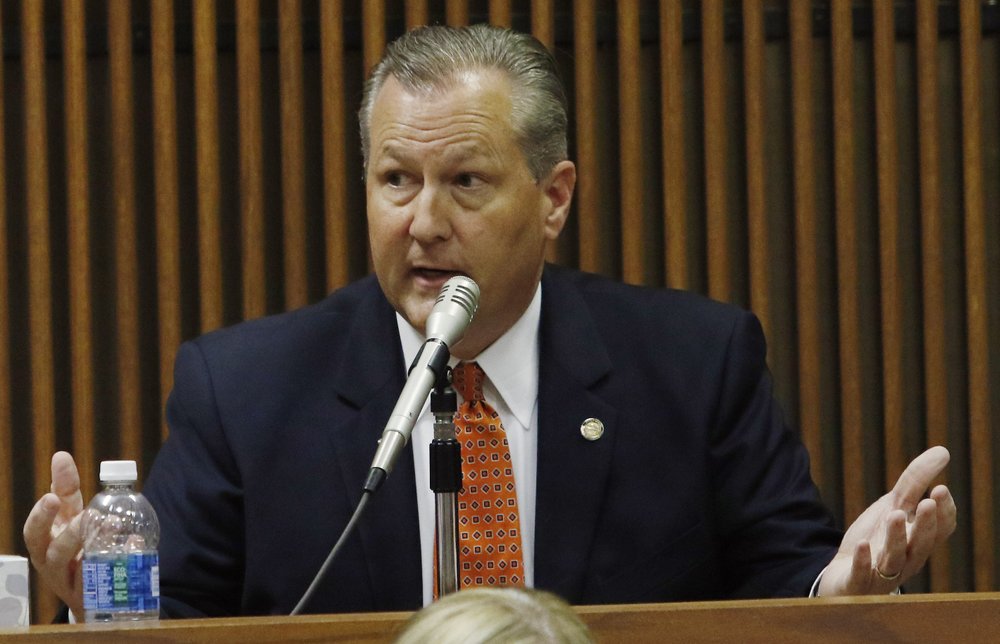
A judge on Wednesday slashed former House Speaker Mike Hubbard’s prison sentence from four years to 28 months, significantly reducing the time the once-powerful Republican will spend behind bars for an ethics conviction. Lee County Circuit Judge Jacob Walker reduced Hubbard’s sentence at the request of defense attorneys after part of his conviction was overturned earlier this year. In his order, Walker noted that Hubbard was convicted of 12 felonies when he handed down the four-year sentence, but that six counts were reversed on appeal. The action was met with swift criticism from Alabama’s attorney general and praise from Hubbard’s attorney who had argued a four-year sentence was too harsh for the reduced conviction. “While we were hoping for a more substantial reduction of sentence, we welcome this decision. We are grateful for Judge Walker’s recognition of the issues that prompted his action today,” attorney Lance Bell said in a statement. Attorney General Steve Marshall expressed disappointment in the sentence reduction. “Mr. Hubbard was convicted of the intentional violation of Alabama’s ethics laws, the same laws he championed in the legislature only later to brazenly disregard for his personal enrichment,” Marshall said in a statement. “Even as he sits in state prison as a six-time felon, Mike Hubbard continues to deny any guilt or offer any remorse for his actions in violation of the law. Reducing his original four-year sentence sends precisely the wrong message to would-be violators of Alabama’s ethics laws.” A jury in 2016 convicted Hubbard of violating the state ethics law, including using his public office for personal financial gain. Prosecutors accused Hubbard of leveraging his powerful public office to obtain clients and investments for his businesses, violating the prohibition against giving a “thing of value” to an elected official. His defense maintained the contracts were legitimate work and unrelated to his position as House speaker. In upholding the conviction this spring, justices noted that when contacting a company for one client, Hubbard “identified himself as a state legislator and as Speaker of the House of Representatives.” They also noted how one company executive wrote in an email that Hubbard could get the company, “in front of any speaker in the country regardless of party.” The Republican was one of the state’s most powerful politicians until the ethics conviction in a corruption case ended his political career. Hubbard, the architect of the GOP’s takeover of the Alabama Legislature in 2010, was a legislator from Auburn and former chairman of the Alabama Republican Party. He was elected House speaker soon after Republicans won control of both legislative chambers. Hubbard was automatically removed from office after his 2016 felony conviction. Hubbard reported to jail in September and was later moved into the state prison system. He is currently incarcerated at Limestone Correctional Facility. Republished with the permission of the Associated Press.
Steve Flowers: Doug Jones annihilation reaffirms mantra that winning the Republican nomination for statewide office in Alabama is tantamount to election
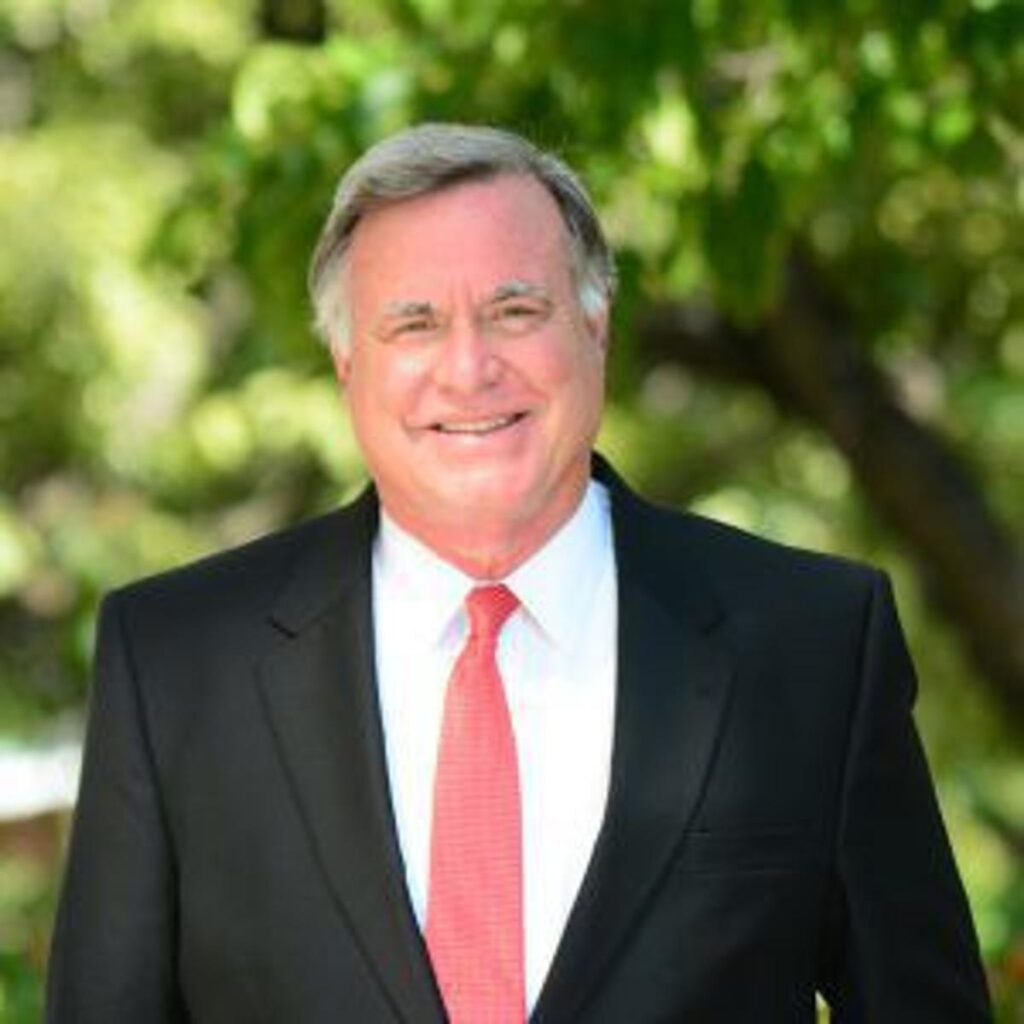
The defeat of Democrat Doug Jones in our United States Senate Seat is easy to explain. It is a Republican seat. Alabama is one of if not the most Republican states in America. The nation is totally divided into clearly defined ideological tribes. You are either a right-wing conservative Republican or a left-wing liberal Democrat. There are very few true independent voters. In Alabama, there is an overwhelming majority of conservative Republicans. These two tribes vote a straight Republican ticket or a straight Democratic ticket. A good many just pull the straight ticket lever. Jones never had a chance. Many of us, who are longtime political observers, were curious as to whether Jones would toe the liberal Democratic line when he got to Washington or moderate somewhat and try to throw the Republican conservatives a bone or two. He stuck true to his colors and philosophy. Doug Jones has always been a liberal national Democrat and he stayed true to his beliefs. Having been an upfront political observer and participant of Alabama politics for the past 40 to 50 years, I have known most of the significant political players on the Alabama political stage during those years. Even though Doug Jones and I are around the same age and attended the University of Alabama, I never got to know him well. He was on the periphery as a party politician. He was always an ardent card-carrying loyal leader of the Democratic party. He was a stalwart Democrat when they were the majority party. Then when most folks left to become Republicans, he stayed and became more avid. He was a real Democrat. Over the years, Jones never strayed from proudly espousing that he was a liberal national Democrat. He openly and ardently supported George McGovern, Walter Mondale, Joe Biden several times, Bill Clinton, Barack Obama, and Hillary Clinton. Jones is a true-blue, liberal, national Democrat. Most of us were surprised when he came out of his backroom political party role and private law practice to run for public office. He was shrewd enough to see the possibility that in a special election with a polarizing, tarnished candidate, he could squeak out a miraculous win in a special election to a U.S. Senate seat from Alabama as a Democrat. Many of us watched the irascible demagogue George Wallace dominate Alabama politics. Wallace would make numerous Don Quixote forays into presidential politics, spitting out the message, “There ain’t a dime’s worth of difference between the national Democratic and Republican parties,” and he was actually pretty close to right. However, folks, I am here to tell you that today in 2020 there is a lot of difference, philosophically, in the national Democratic party of Bernie Sanders, Nancy Pelosi, Elizabeth Warren, and Doug Jones and the national Republican party of Donald Trump, Mike Pence, Ted Cruz, and Richard Shelby. The chasm is deep and wide. Jones voted right down the line with his liberal Democratic colleagues. Even voting against Trump’s two conservative Supreme Court appointments for no reason other than they were conservative and Republican appointees. The question is, would it have made any difference in Jones’ reelection chances had he compromised his liberal Democratic philosophy and voted with the Republican majority on some key votes? The answer is a resounding no. He would not have won with a “D” behind his name in a red Republican state in a presidential year, regardless. More than likely over 60% of the votes cast in the Heart of Dixie were straight Republican ticket voting. Jones has to be respected for sticking to his principles. He is a good and honest man with a lot of character and integrity. He just thinks and believes differently than an overwhelming number of his fellow Alabamians. He stayed true to the old political maxim that you dance with the one that brung you. He got and spent $18 million dollars of left-wing money in his race against Roy Moore, mostly from California. He allied and voted with his California donors over his nearly three-year tenure. They figured he was their third senator so they rewarded him with $25 million this time. He was able to outspend Republican Tommy Tuberville $25 million to $7 million. Even with an ungodly amount of California money Jones could only garner 40% of the vote. This race reaffirms the mantra and hard fact that winning the Republican nomination for a statewide office in Alabama is tantamount to election in the Heart of Dixie. See you next week. Steve Flowers is Alabama’s leading political columnist. His weekly column appears in over 60 Alabama newspapers. He served 16 years in the state legislature. Steve may be reached at www.steveflowers.us.
‘America is back’: Joe Biden pushes past Donald Trump era with nominees
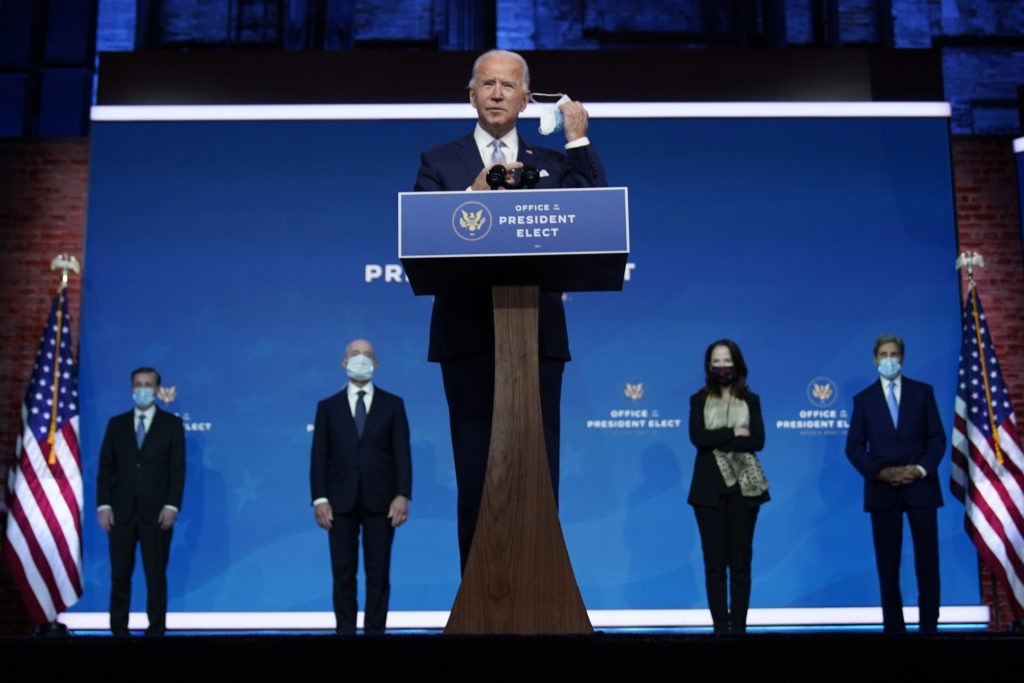
Declaring “America is back,” President-elect Joe Biden introduced his national security team on Tuesday, his first substantive offering of how he’ll shift from Trump-era “America First” policies by relying on experts from the Democratic establishment to be some of his most important advisers. “Together, these public servants will restore America globally, its global leadership and its moral leadership,” Biden said from a theater in his longtime home of Wilmington, Delaware. “It’s a team that reflects the fact that America is back, ready to lead the world, not retreat from it.” The nominees are all Washington veterans with ties to former President Barack Obama’s administration, a sign of Biden’s effort to resume some form of normalcy after the tumult of President Donald Trump’s four years in office. There are risks to the approach as Republicans plan attacks and progressives fret that Biden is tapping some officials who were too cautious and incremental the last time they held power. Still, Biden’s nominees were a clear departure from Trump, whose Cabinet has largely consisted of men, almost all of them white. Biden’s picks included several women and people of color, some of whom would break barriers if confirmed to their new positions. They stood behind Biden and Vice President-elect Kamala Harris spaced apart and wearing masks to prevent the spread of the coronavirus, a contrast with Trump and many of his top aides who have largely eschewed facial coverings. The president-elect’s team includes Antony Blinken, a veteran foreign policy hand well-regarded on Capitol Hill whose ties to Biden go back some 20 years, for secretary of state; lawyer Alejandro Mayorkas to be homeland security secretary; veteran diplomat Linda Thomas-Greenfield to be U.S. ambassador to the United Nations; and Obama White House alumnus Jake Sullivan as national security adviser. Avril Haines, a former deputy director of the CIA, was picked to serve as director of national intelligence, the first woman to hold that post, and former Secretary of State John Kerry will make a curtain call as a special envoy on climate change. Kerry and Sullivan’s position will not require Senate confirmation. With the Senate’s balance of power hinging on two runoff races in Georgia that will be decided in January, some Senate Republicans have already expressed antipathy to Biden’s picks as little more than Obama world retreads. Sen. Tom Cotton, an Arkansas Republican and potential 2024 presidential candidate, argued that Biden is surrounding himself with people who will go soft on China. Sen. Marco Rubio, another potential White House hopeful, who sits on the Senate Foreign Relations Committee that will consider Blinken’s nomination, broadly wrote off the early selections. “Biden’s cabinet picks went to Ivy League schools, have strong resumes, attend all the right conferences & will be polite & orderly caretakers of America’s decline,” Rubio tweeted. Biden said his choices “reflect the idea that we cannot meet these challenges with old thinking and unchanged habits.” He said he tasked them with reasserting global and moral leadership, a clear swipe at Trump, who has resisted many traditional foreign alliances. The president-elect said he was “struck” by how world leaders have repeatedly told him during congratulatory calls that they look forward to the U.S. “reasserting its historic role as a global leader” under his administration. Trump, who has debated recently whether to mount another presidential campaign in 2024, appeared to defend his worldview on Tuesday. “We shouldn’t go away from that — America First,” he said at the annual turkey pardon, a lighthearted pre-Thanksgiving White House tradition. While Trump expected total loyalty from his Cabinet and chafed at pushback from advisers, Biden said he expected advisers to tell me “what I need to know, not what I want to know.” Further drawing a contrast with Trump, Haines said she accepted Biden’s nomination knowing that “you value the perspective of the intelligence community, and that you will do so even when what I have to say maybe inconvenient or difficult.” Haines said she has “never shied away from speaking truth to power” and added, “that will be my charge as director of national intelligence.” Biden celebrated the diversity of his picks, offering a particularly poignant tribute to Thomas-Greenfield. The eldest of eight children who grew up in segregated Louisiana, she was the first to graduate from high school and college in her family. The diplomat, in turn, said that with his selections, Biden is achieving much more than a changing of the guard. “My fellow career diplomats and public servants around the world, I want to say to you, ‘America is back, multilateralism is back, diplomacy is back,’” Thomas-Greenfield said. Mayorkas, who is Cuban American, also offered a nod to his immigrant upbringing. “My father and mother brought me to this country to escape communism,” he said. “They cherished our democracy, and were intensely proud to become United States citizens, as was I.” But Mayorkas might pose the most difficult confirmation challenge from Biden’s early round of nominees. The Senate previously confirmed him in December 2013 by a party-line vote to be the deputy secretary of Homeland Security. The Senate was controlled by Democrats then, and all of the chamber’s Republicans voted against his confirmation mainly because he was then under investigation by the Obama-appointed inspector general in that department. At the time, the Senate historian’s office said it was unprecedented for the Senate to vote on a nominee who was under investigation. The inspector general, John Roth, found in March 2015 that Mayorkas, as director of the U.S. Citizenship and Immigration Services, appeared to give special treatment to certain people as part of the visa program that gives residency preference to immigrants who agree to invest in the U.S. economy. Meanwhile, there were signs on Tuesday that the stalled formal transition of power is now underway. Biden’s team now is in contact with all federal agencies, according to a transition official who spoke on condition of anonymity to describe developments that have not been announced. At the Pentagon, Kash Patel, chief of staff
Donald Trump vents about election as agencies aid Joe Biden transition

President Donald Trump insisted Tuesday that he is not giving up his fight to overturn the election results, but across the federal government, preparations were beginning in earnest to support President-elect Joe Biden’s incoming administration. Within hours of the General Services Administration’s acknowledgment Monday evening of Biden’s victory in the Nov. 3 election, career federal officials opened the doors of agencies to hundreds of transition aides ready to prepare for his Jan. 20 inauguration. And on Tuesday, Trump signed off on allowing Biden to receive the presidential daily brief, the highly classified briefing prepared by the nation’s intelligence community for the government’s most senior leaders. An administration official said logistics on when and where Biden will first receive the briefing were still being worked out. Biden, in an interview with “NBC Nightly News,” said he was also working out a meeting with the White House’s coronavirus task force and vaccine distribution effort. “So I think we’re going to not be so far behind the curve as we thought we might be in the past,” he said. “And there’s a lot of immediate discussion, and I must say, the outreach has been sincere. There has not been begrudging so far. And I don’t expect it to be. So yes, it’s already begun.” By Tuesday afternoon, the Biden transition had been in contact with all federal agencies about transition planning, according to a transition official. But Trump, who has not formally conceded to Biden — and may never — continued to sow doubt about the vote, despite his own administration’s assessment that it was conducted without widespread fraud, misconduct, or interference. The president has maintained a low profile since his defeat. He made a quick appearance in the briefing room on Tuesday to deliver just over one minute of remarks on the Dow Jones Industrial Average trading at record levels and later delivered the traditional pre-Thanksgiving turkey pardon in the White House Rose Garden. He has not taken questions from journalists in weeks. He did not hold back on Twitter regarding the election results. “Remember, the GSA has been terrific, and (Administrator) Emily Murphy has done a great job, but the GSA does not determine who the next President of the United States will be,” Trump tweeted Tuesday morning. His legal team continued to mount seemingly futile challenges to the votes in battleground states. Murphy acted after Michigan certified Biden’s victory in the battleground state on Monday, and a federal judge in Pennsylvania tossed a Trump campaign lawsuit on Saturday seeking to prevent certification in that state. Pennsylvania certified its results, and its 20 electors for Biden, on Tuesday morning, followed hours later by Nevada. It also came as an increasing number of Republicans were publicly acknowledging Biden’s victory, after weeks of tolerating Trump’s baseless claims of fraud. The Republican president had grown increasingly frustrated with the flailing tactics of his legal team. In recent days, senior Trump aides, including chief of staff Mark Meadows and White House counsel Pat Cipollone had also encouraged Trump to allow the transition to begin, telling the president he didn’t need to concede but could no longer justify withholding support to the Biden transition. Late Monday, Meadows sent a memo to White House staffers saying that their work was not yet finished and that the administration would “comply with all actions needed to ensure the smooth transfer of power,” according to a person who received it. At the same time, he warned staffers who are not specifically authorized to interact with the Biden team against contact with the incoming administration. Health and Human Services Secretary Alex Azar told reporters Tuesday that within hours of GSA’s ascertainment of Biden’s victory, his agency’s top career official was in contact with the Biden team on coordinating briefings, including on the Trump administration’s planning to distribute vaccines for COVID-19. “We are immediately getting them all of the pre-prepared transition briefing materials,” Azar said. “We will ensure coordinated briefings with them to ensure they’re getting whatever information that they feel they need.” The official managing the Pentagon’s transition work with the Biden landing team said that the first meeting was held virtually on Tuesday morning and that he expected daily meetings to come — some virtually and some in person. The official, Tom Muir, told reporters that normal accommodations for the Biden team have been made, including the provision of briefing materials, video-teleconferencing capabilities, and office space inside the Pentagon. “HUD career officials have begun the process of scheduling briefings with the Biden transition team in response to their requests,” said a spokesperson for the Department of Housing and Urban Development. GSA’s move frees up millions of dollars in federal support for the Biden transition and gives his team access to additional federal office space and support services, including computers, phones, and secure briefing rooms. A day after Trump said his administration should begin working with Biden’s team, Republican allies filed two more lawsuits attempting to stop the certification in two battleground states. One in Minnesota was swiftly rejected by a state court Tuesday before the state certified its results for Biden. Shortly after, another was filed in Wisconsin, which doesn’t certify until Dec. 1. Republished with the permission of the Associated Press.
Bruce Boynton, who inspired 1961 Freedom Rides, dies at 83
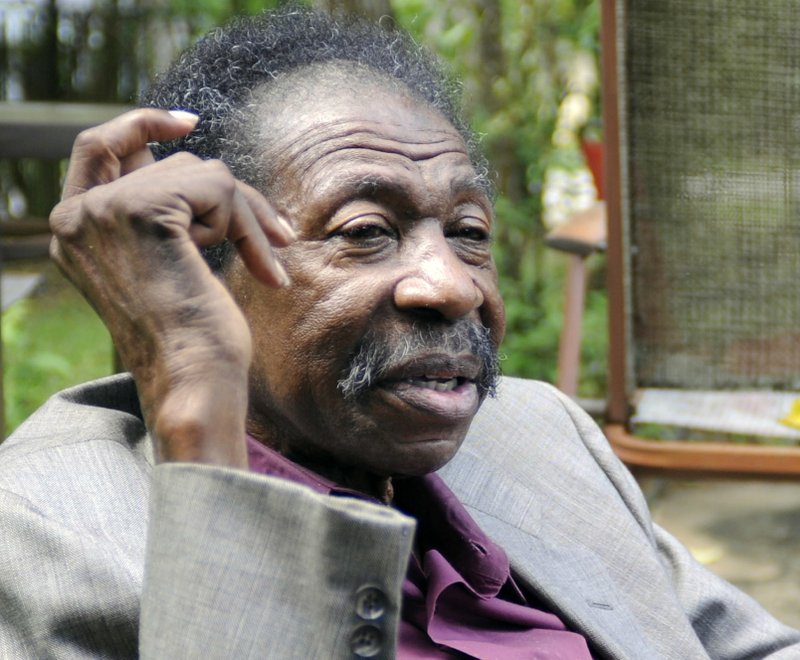
Bruce Carver Boynton, a civil rights pioneer from Alabama who inspired the landmark “Freedom Rides” of 1961, has died. He was 83. Former Alabama state Sen. Hank Sanders, a friend of Boynton’s, confirmed his passing Friday. Boynton was arrested 60 years ago for entering the white part of a racially segregated bus station in Virginia and launching a chain reaction that ultimately helped to bring about the abolition of Jim Crow laws in the South. Boynton contested his conviction, and his appeal resulted in a U.S. Supreme Court decision that prohibited bus station segregation and helped inspire the “Freedom Rides.” Despite his pivotal role, Boynton was not as well known as other civil rights figures. Yet both his mother and father were early civil rights activists. His mother, Amelia Boynton Robinson, was savagely beaten while demonstrating for voting rights in 1965 and was honored by then-President Barack Obama 50 years later. “He did something that very few people would have the courage to do. He said no,” U.S. District Judge Myron Thompson said of Boynton in 2018. “To me, he’s on a par with Rosa Parks,” the Black woman who refused to give up her bus seat to a white man. Boynton described his arrest in a 2018 interview with The Associated Press. Boynton was attending law school at Howard University in Washington, D.C. when he boarded a bus bound for Alabama in 1958. Public facilities including bus stations were separated by race across the South at the time, despite federal laws banning segregation in interstate travel. The bus pulled into a station in Richmond, Virginia, for a break, and Boynton went inside to eat. Seeing that the part of the restaurant meant for blacks had water on the floor and looked “very unsanitary,” Boynton said he sat down in the “clinically clean” white area. He told the waitress he would have a cheeseburger and tea. “She left and came back with the manager. The manager poked his finger in my face and said … move,’” using a racial slur, Boynton recalled in the interview. “And I knew that I would not move, and I refused to, and that was the case.” Convicted of trespassing, Boynton appealed and his case wound up before the Supreme Court. Thurgood Marshall, then the nation’s leading civil rights attorney and later on to become the first Black Supreme Court justice, was his counsel. Boynton contested his conviction and the Supreme Court ruled in 1960 that federal discrimination prohibitions barring segregation on interstate buses also applied to bus stations and other facilities linked to interstate travel. The next year, dozens of black and white students set out on buses to travel the South and test whether the ruling in the case, Bruce Boynton v. Virginia, was being followed. The “Freedom Riders” were arrested or attacked in Alabama, Mississippi, and South Carolina, and a bus was burned. Then-President John F. Kennedy ordered stricter enforcement of federal anti-discrimination laws. “He was a pioneer,” said Sanders. “All of the Freedom Rides sprung from this particular action.” Sanders said Boynton paid a price for what he did, and initially wasn’t able to get a law license in Alabama. He spent most of his career as a civil rights attorney before retirement. Thompson said in 2018 that Boynton’s life “is a teaching lesson for all of us about how we can make a difference.” “All he wanted was a cheeseburger, and he changed the course of history.” Republished with the permission of the Associated Press.
