Alabama lawmakers split on Covid relief and omnibus bill, passed with bipartisan support
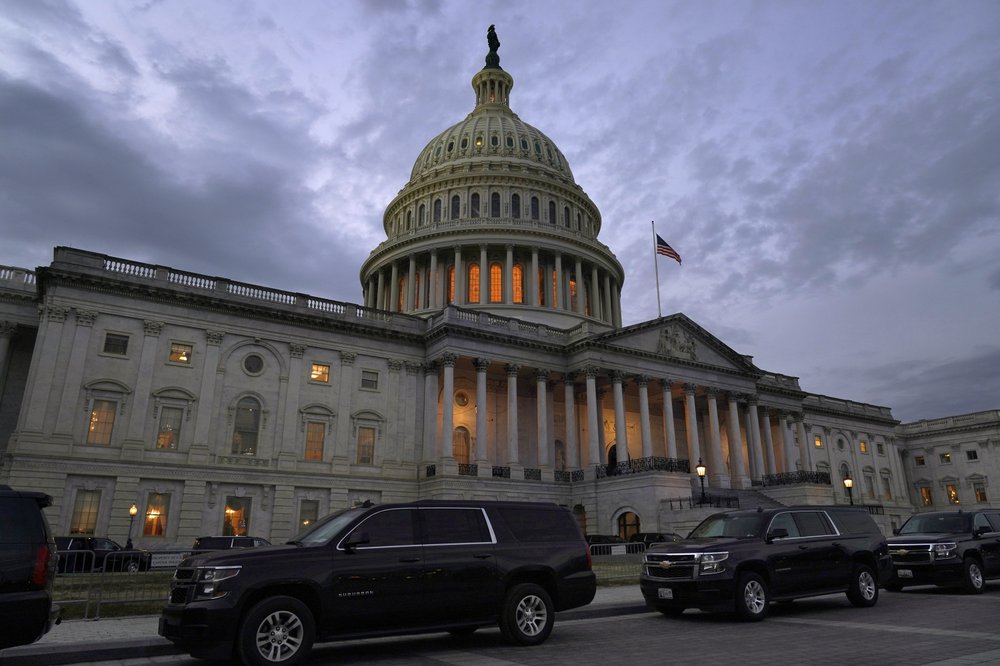
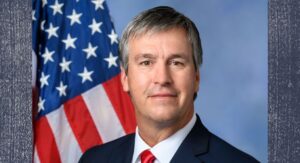
Late Monday night, both the Senate and House of Representatives passed a $900 billion relief measure designed to provide long-awaited coronavirus assistance to Americans, small businesses, and industries. The package is paired with a $1.4 trillion omnibus spending bill that funds the federal government through September reported CBS. According to govtrac.us, the bill, which is 5,593-pages, passed overwhelmingly and with bipartisan support in the House. The first portion of the bill was for the appropriations for some federal departments including Commerce, Justice, Defense, Treasury, and Homeland Security. It passed by a vote of 327 to 85. The second vote was on the remaining portion of the bill, which included appropriations for the remainder of the federal government as well as coronavirus stimulus passed by a margin of 359 to 53. The Bill was then bundled together and passed the Senate 92-6. The bill will now head to President Donald Trump for approval. Alabama Senators Doug Jones and Richard Shelby both voted in favor of the bill. Alabama House of Representatives were mostly in favor of the bill. Robert Aderholt, Bradley Byrne, Martha Roby, Gary Palmer, and Terri Sewell all voted yea for both parts of the bill. Mo Brooks voted in favor of part one of the bill and against part two. Rep. Mike Rogers did not vote. Gary Palmer posted on Twitter, “The House passed and appropriates and #COVID19 relief package today. Read more here on why I decided to support it.” The House passed an appropriations and #COVID19 relief package today. Read more here on why I decided to support it: https://t.co/kzC9tVkOlz — Gary Palmer (@USRepGaryPalmer) December 22, 2020 Terri Sewell posted on Twitter, stating, “Last night, Congress finally passed a bill to: provide $600 to each adult and child, add $300 per week in unemployment benefits, and extend the eviction moratorium. But it’s not enough- I’ll keep fighting until families get the help they need.” Last night, Congress finally passed a bill to: – provide $600 to each adult and child– add $300 per week in unemployment benefits – extend the eviction moratorium But it’s not enough — I’ll keep fighting until families get the help they need. https://t.co/0o7Arqa0ZZ — Rep. Terri A. Sewell (@RepTerriSewell) December 22, 2020
William Barr undercuts Donald Trump on election and Hunter Biden inquiries

Undercutting President Donald Trump on multiple fronts, Attorney General William Barr said Monday he saw no reason to appoint a special counsel to look into the president’s claims about the 2020 election or to name one for the tax investigation of President-elect Joe Biden’s son. Barr, in his final public appearance as a member of Trump’s Cabinet, also reinforced the belief of federal officials that Russia was behind a massive hack of U.S. government agencies, not China as the president has suggested. Barr is leaving the Justice Department this week, having morphed from one of Trump’s most loyal allies to one of the few members of the Cabinet willing to contradict the president openly. That’s been particularly true since the election, with Barr declaring in an interview with The AP that he had seen no evidence of widespread voting fraud, even as Trump continued to make false claims about the integrity of the contest. The president has also grown particularly angry that Barr didn’t announce the existence of a two-year-old investigation of Hunter Biden before the election. On Monday, Barr said that investigation was “being handled responsibly and professionally.” “I have not seen a reason to appoint a special counsel and I have no plan to do so before I leave,” he said, adding that there was also no need for a special counsel to investigate the election. A special counsel would make it more difficult for Biden and his yet-to-be-named attorney general to close investigations begun under Trump. Such an appointment could also add a false legitimacy to baseless claims, particularly to the throngs of Trump supporters who believe the election was stolen because Trump keeps wrongly claiming it was. Barr’s comments came at a press conference to announce additional criminal charges in the bombing of Pan Am Flight 103, which killed 190 Americans, an issue he had worked on in his previous stint as attorney general in the early 1990s. He’ll step down on Wednesday and be replaced by acting Attorney General Jeffrey Rosen. Barr’s statements on the special counsel may make it easier for Rosen to resist pressure from the White House to open any special counsel investigation. In his 2019 confirmation hearing for deputy attorney general, Rosen said he was willing to rebuff political pressure from the White House if necessary. He told legislators that criminal investigations should “proceed on the facts and the law” and prosecutions should be “free of improper political influences.” “If the appropriate answer is to say no to somebody, then I will say no,” he said at the time. Trump and his allies have filed roughly 50 lawsuits challenging election results and nearly all have been dismissed or dropped. He’s also lost twice at the U.S. Supreme Court. With no further tenable legal recourse, Trump has been fuming and peppering allies for options as he refuses to accept his loss. Among those allies is Rudy Giuliani, who during a meeting Friday pushed Trump to seize voting machines in his hunt for evidence of fraud. The Homeland Security Department made clear, however, that it had no authority to do so. It is also unclear what that would accomplish. For his part, Barr said he saw no reason to seize them. Earlier this month, Barr also told AP that the Justice Department and Homeland Security had looked into the claims “that machines were programmed essentially to skew the election results” and ultimately concluded that “we haven’t seen anything to substantiate that.” Trump has consulted on special counsels with White House chief of staff Mark Meadows, White House counsel Pat Cipollone and outside allies, according to several Trump administration officials and Republicans close to the White House who spoke to The Associated Press on condition of anonymity because they weren’t authorized to discuss the matter publicly. Trump was interested both in a counsel to investigate the younger Biden’s tax dealings and a second to look into election fraud. He even floated the idea of naming attorney Sidney Powell as the counsel — though Powell was booted from Trump’s legal team after she made a series of increasingly wild conspiratorial claims about the election. Federal law requires that an attorney general appoint any special counsels. Barr also said Monday the hack of U.S. government agencies “certainly appears to be the Russians.” In implicating the Russians, Barr was siding with the widely held belief within the U.S. government and the cybersecurity community that Russian hackers were responsible for breaches at multiple government agencies, including the Treasury and Commerce departments. Hours after Secretary of State Mike Pompeo said in a radio interview that Russia was “pretty clearly” behind the hacks, Trump sought to undercut that message and play down the severity of the attack. He tweeted that the “Cyber Hack is far greater in the Fake News Media than in actuality.” He also said China could be responsible even though no credible evidence has emerged to suggest anyone other than Russia might be to blame. Monday was also the 32nd anniversary of the Pan Am explosion over Lockerbie, Scotland, that killed 259 people in the air and 11 on the ground. The Justice Department announced its case against the accused bombmaker, Abu Agela Masud Kheir Al-Marimi, who admitted in an interview with Libyan officials several years ago that he had built the bomb and worked with two other defendants to carry out the attack, Barr said. Calling the news conference to announce the charges underscored Barr’s attachment to that case. He had announced an earlier set of charges against two other Libyan intelligence officials in his capacity as acting attorney general nearly 30 years ago, vowing the investigation would continue. Republished with the permission of the Associated Press.
Alabama governor gets vaccine, calls it ‘a safe thing to do’
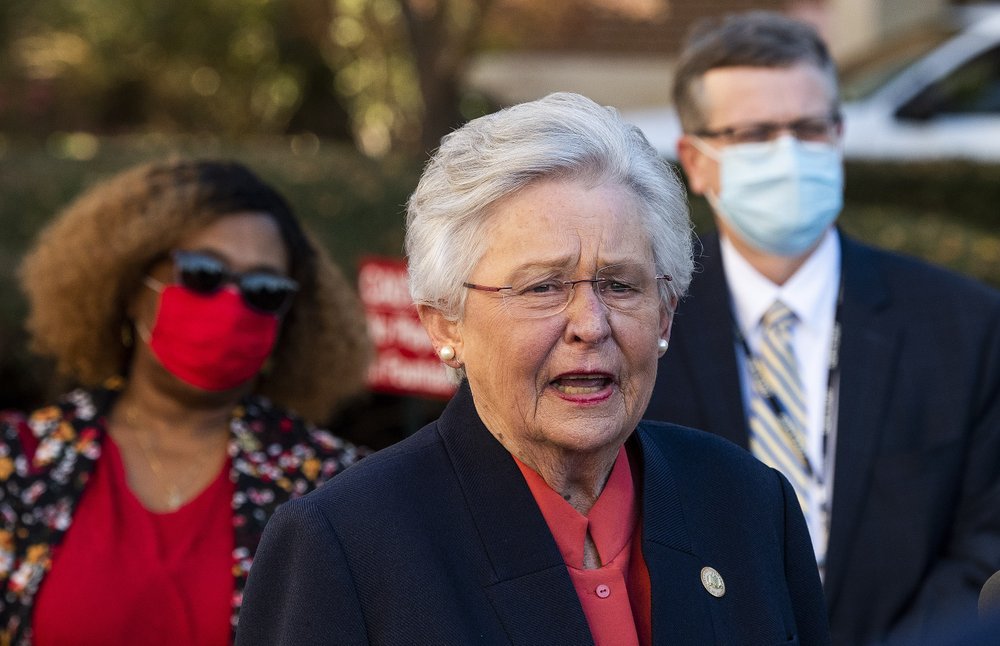
Alabama Gov. Kay Ivey became one of the first governors on Monday to receive the COVID-19 vaccine, bidding to build public confidence in the vaccinations that will have to be widely administered to ease the pandemic. “We want to send a clear message to all Alabamians that we can have confidence in this vaccine and its effectiveness. I want to assure people it is a safe thing to do and if everybody will take the vaccine voluntarily we’ll have good strong immunity and it will stop COVID-19,” Ivey said at a news conference. She spoke after getting the first of the two-shot Pfizer vaccine at Baptist Medical Center South in Montgomery. State Health Officer Scott Harris and State Chief Medical Officer Mary McIntyre also received the vaccine. The 76-year-old Republican governor, a lung cancer survivor, said she had no hesitation about taking the vaccine and urged others to take it as it becomes available. “Shoot, a sore arm for a few days is a lot better than three months on a ventilator,” Ivey said. Alabama is seeing a record-setting surge in COVID-19 in the wake of Thanksgiving and officials fear things will only get worse because of Christmas holiday gatherings. With more than 2,520 patients hospitalized statewide for COVID-19 and cases increasing steadily, Christmas week began in Alabama on Monday with health officials issuing new pleas for residents to take precautions in hope of avoiding a post-holiday catastrophe. “I’m very concerned about it. I don’t think we can stand to have a Christmas that resembles what happened at Thanksgiving. Alabama hospitals are packed,” Harris said. Ivey said she was downsizing her Christmas celebration and urged people to “just use good common sense.” Harris said about one in every 10 people who become infected with COVID-10 end up in the hospital. While the overall mortality rate is under 1.5%, it jumps to about 20% for people over age 75, Harris said. The illness caused by the new coronavirus already has killed more than 4,380 people statewide, and the 14-day rolling average for new cases is roughly double what it was in the summer at the previous high point in the state. Dr. James Boyle, a pulmonologist in Decatur, described a dire situation in north Alabama, where cases are increasing at a quicker pace than elsewhere in the state. In Huntsville alone, he said, 500 new cases were confirmed last week, and multiple people are on ventilators. More mask wearing and social distancing could help prevent an even worse spike, he said. “Our ICU is full and I am praying for a Christmas miracle,” he told a news briefing. “I hope the forecasts models are wrong. I pray the numbers of infection and death go down after Christmas.” Boyle said it’s disappointing to go inside stores and see people without face masks or any regard for social distancing after so much illness and death. While some advocate stricter measures than the state’s mandatory mask rule, Boyle said he didn’t know if that would help. “People have to decide if they care about others,” he said. More than 324,000 people in Alabama have tested positive for the coronavirus, and researchers at Johns Hopkins University said the rolling average number of daily new cases has increased by 638, a jump of almost 20%, over the last two weeks. The virus causes only mild or moderate in most people, but it can be deadly for people with underlying health problems. Republished with the permission of the Associated Press.
House passes $900 billion COVID relief, catchall measure
The House easily passed a $900 billion pandemic relief package Monday night that would finally deliver long-sought cash to businesses and individuals and resources to vaccinate a nation confronting a frightening surge in COVID-19 cases and deaths. Lawmakers tacked on a $1.4 trillion catchall spending bill and thousands of pages of other end-of-session business in a massive bundle of bipartisan legislation as Capitol Hill prepared to close the books on the year. The lopsided 359-53 vote was a bipartisan coda to months of partisanship and politicking as lawmakers wrangled over the relief question, a logjam that broke after President-elect Joe Biden urged his party to accept a compromise with top Republicans that is smaller than many Democrats would have liked. The relief package, unveiled Monday afternoon, sped through the House in a matter of hours. A Senate vote that would send the bill to President Donald Trump appeared likely to follow soon. The bill combines coronavirus-fighting funds with financial relief for individuals and businesses. It would establish a temporary $300 per week supplemental jobless benefit and a $600 direct stimulus payment to most Americans, along with a new round of subsidies for hard-hit businesses, restaurants, and theaters and money for schools, health care providers, and renters facing eviction. The 5,593-page legislation — by far the longest bill ever — came together Sunday after months of battling, posturing and postelection negotiating that reined in a number of Democratic demands as the end of the congressional session approached. President-elect Joe Biden was eager for a deal to deliver long-awaited help to suffering people and a boost to the economy, even though it was less than half the size that Democrats wanted in the fall. “This deal is not everything I want — not by a long shot,” said Rules Committee Chairman Jim McGovern, D-Mass., a longstanding voice in the party’s old-school liberal wing. “The choice before us is simple. It’s about whether we help families or not. It’s about whether we help small businesses and restaurants or not. It’s about whether we boost (food stamp) benefits and strengthen anti-hunger programs or not. And whether we help those dealing with a job loss or not. To me, this is not a tough call.” The Senate, meanwhile, was also on track to pass a one-week stopgap spending bill to avert a partial government shutdown at midnight and give Trump time to sign the sweeping legislation. Treasury Secretary Steven Mnuchin, a key negotiator, said on CNBC Monday morning that the direct payments would begin arriving in bank accounts next week. Democrats promised more aid to come once Biden takes office, but Republicans were signaling a wait-and-see approach. The measure would fund the government through September, wrapping a year’s worth of action on annual spending bills into a single package that never saw Senate committee or floor debate. The legislation followed a tortured path. Democrats played hardball up until Election Day, amid accusations that they wanted to deny Trump a victory that might help him prevail. Democrats denied that, but their demands indeed became more realistic after Trump’s loss and as Biden made it clear that half a loaf was better than none. The final bill bore ample resemblance to a $1 trillion package put together by Senate Republican leaders in July, a proposal that at the time was scoffed at by House Speaker Nancy Pelosi, D-Calif., as way too little. Majority Leader Mitch McConnell, R-Ky., took a victory lap after blocking far more ambitious legislation from reaching the Senate floor. He said the pragmatic approach of Biden was key. “A few days ago, with a new president-elect of their own party, everything changed. Democrats suddenly came around to our position that we should find consensus, make law where we agree, and get urgent help out the door,” McConnell said. On direct payments, the bill provides $600 to individuals making up to $75,000 per year and $1,200 to couples making up to $150,000, with payments phased out for higher incomes. An additional $600 payment will be made per dependent child, similar to the last round of relief payments in the spring. The $300 per week bonus jobless benefit was half the supplemental federal unemployment benefit provided under the $1.8 billion CARES Act in March. That more generous benefit and would be limited to 11 weeks instead of 16 weeks. The direct $600 stimulus payment was also half the March payment. The CARES Act was credited with keeping the economy from falling off a cliff during widespread lockdowns in the spring, but Republicans controlling the Senate cited debt concerns in pushing against Democratic demands. “Anyone who thinks this bill is enough hasn’t heard the desperation in the voices of their constituents, has not looked into the eyes of the small-business owner on the brink of ruin,” said Senate Democratic leader Chuck Schumer, a lifelong New Yorker who pushed hard for money helping his city’s transit systems, renters, theaters and restaurants. Progress came after a bipartisan group of pragmatists and moderates devised a $908 billion plan that built a middle-ground position that the top four leaders of Congress — the GOP and Democratic leaders of both the House and Senate — used as the basis for their talks. The lawmakers urged leaders on both sides to back off of hardline positions. “At times we felt like we were in the wilderness because people on all sides of the aisle didn’t want to give, in order to give the other side a win,” said freshman Rep. Elssa Slotkin, D-Mich. “And it was gross to watch, frankly.” Republicans were most intent on reviving the Paycheck Protection Program with $284 billion, which would cover a second round of PPP grants to especially hard-hit businesses. Democrats won set-asides for low-income and minority communities. The sweeping bill also contains $25 billion in rental assistance, $15 billion for theaters and other live venues, $82 billion for local schools, colleges, and universities, and $10 billion for child care. The governmentwide appropriations bill was likely