
Pro-Donald Trump mob storms US Capitol in bid to overturn election
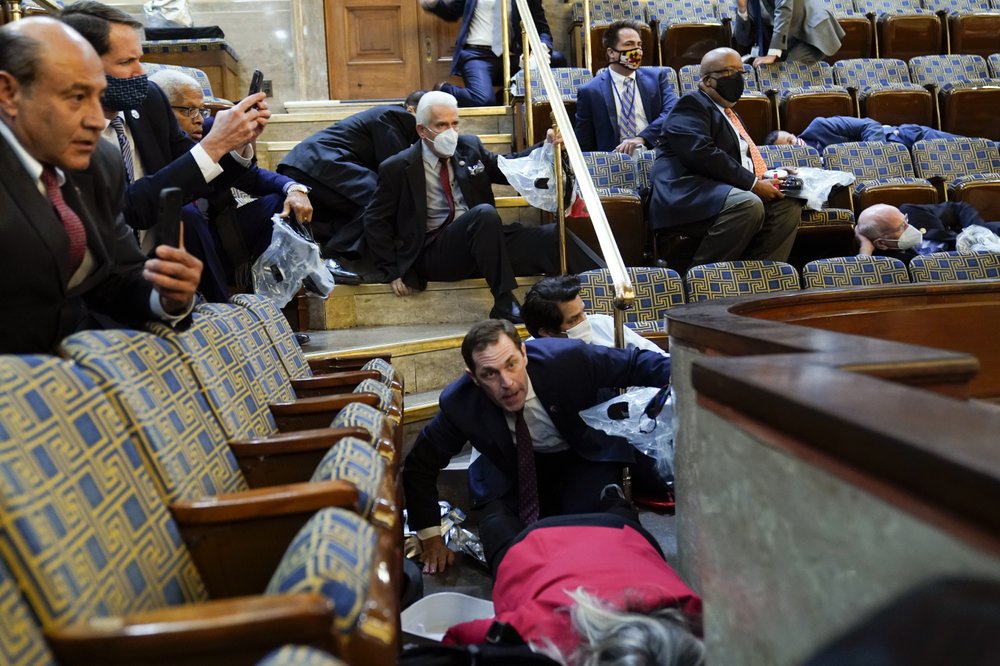
A violent mob loyal to President Donald Trump stormed the U.S. Capitol on Wednesday and forced lawmakers into hiding, in a stunning attempt to overturn America’s presidential election, undercut the nation’s democracy and keep Democrat Joe Biden from replacing Trump in the White House. The nation’s elected representatives scrambled to crouch under desks and don gas marks while police futilely tried to barricade the building, one of the most jarring scenes ever to unfold in a seat of American political power. A woman was shot and killed inside the Capitol, and Washington’s mayor instituted an evening curfew in an attempt to contain the violence. The rioters were egged on by Trump, who has spent weeks falsely attacking the integrity of the election and had urged his supporters to descend on Washington Wednesday to protest Congress’ formal approval of Biden’s victory. Some Republican lawmakers were in the midst of raising objections to the results on his behalf when the proceedings were abruptly halted by the mob. Together, the protests and the GOP election objections amounted to an almost unthinkable challenge to American democracy and exposed the depths of the divisions that have coursed through the country during Trump’s four years in office. Though the efforts to block Biden from being sworn in on Jan. 20 were sure to fail, the support Trump has received for his efforts to overturn the election results have badly strained the nation’s democratic guardrails. House Speaker Nancy Pelosi said lawmakers were resuming the counting of electoral votes Wednesday evening after the Capitol was cleared of the pro-Trump occupiers. The president gave his supporters an added boost Wednesday morning during an appearance at a rally outside the White House, where he urged them to march to the Capitol. He spent much of the afternoon in his private dining room off the Oval Office watching scenes of the violence on television. At the urging of his staff, he reluctantly issued a pair of tweets and a taped video telling his supporters it was time to “go home in peace” — yet he still said he backed their cause. Hours later, Twitter, for the first time, locked Trump’s account, demanded that he remove tweets excusing violence, and threatened “permanent suspension.” A somber President-elect Biden, two weeks away from being inaugurated, said American democracy was “under unprecedented assault,” a sentiment echoed by many in Congress, including some Republicans. Former President George W. Bush said he watched the events in “disbelief and dismay.” “What happened here today was an insurrection, incited by the President of the United States,” said Republican Sen. Mitt Romney of Utah. There were harsh words from major business organizations and the Republican National Committee, too, suggesting uneasy relations with Trump were skidding into divorce as he leaves Washington. “Our soldiers have died carrying the American flag into battle for our freedom,” tweeted RNC communications director Michael Ahrens. “To see that flag used in the name of unfounded conspiracy theories is a disgrace to the nation, and every decent American should be disgusted by it.” Trump, unrepentant, had tweeted, “These are the things and events that happen when a sacred landslide election victory is so unceremoniously & viciously stripped away from great patriots who have been badly & unfairly treated for so long.” “Remember this day forever!” The domed Capitol building has for centuries been the scene of protests and occasional violence, including a 1954 shooting involving Puerto Rican nationalists. But Wednesday’s events were particularly astounding both because they unfolded at least initially with the implicit blessing of the president and because of the underlying goal of overturning the results of a free and fair presidential election. Tensions were already running high when lawmakers gathered early Wednesday afternoon for the constitutionally mandated counting of the Electoral College results, in which Biden defeated Trump, 306-232. Despite pleas from Republican Senate Majority Leader Mitch McConnell, more than 150 GOP lawmakers planned to support objections to some of the results, though lacking evidence of fraud or wrongdoing in the election. Trump spent the lead-up to the proceedings publicly hectoring Vice President Mike Pence, who had a largely ceremonial role in the proceedings, to aid the effort. He tweeted on Wednesday: “Do it, Mike, this is a time for extreme courage!” But Pence, in a statement shortly before presiding, defied Trump, saying he could not claim “unilateral authority” to reject the electoral votes that make Biden president. Shortly after the first GOP objections, protesters fought past police and breached the building, shouting and waving Trump and American flags as they marched through the halls. Lawmakers were told to duck under their seats for cover and put on gas masks after tear gas was used in the Capitol Rotunda. Some House lawmakers tweeted they were sheltering in place in their offices. Rep. Scott Peters, D-Calif., told reporters he was in the House chamber when rioters began storming it. Security officers “made us all get down, you could see that they were fending off some sort of assault, it looked like. They had a piece of furniture up against the door, the door, the entry to the floor from the Rotunda, and they had guns pulled,” Peters said. “And they just told us to take our pins off,” he added, referring to lapel pins members wear so Capitol Police can quickly identify them. Then the lawmakers were evacuated. Staff members grabbed the boxes of Electoral College votes as the evacuation took place. Otherwise, said Sen. Jeff Merkley, D-Ore., the ballots likely would have been destroyed by the protesters. Trump supporters posting on internet forums popular with far-right fringe elements celebrated the chaos. Messages posted on one turned from profane frustration over the content of Trump’s speech to glee when supporters stormed the building. At least one leading figure was live streaming video from inside the Capitol during the siege. The mob’s storming of Congress prompted bipartisan outrage, as lawmakers accused Trump of fomenting the violence with his relentless falsehoods about election fraud. Several
Raphael Warnock, Jon Ossoff win in Georgia, handing Dems Senate control
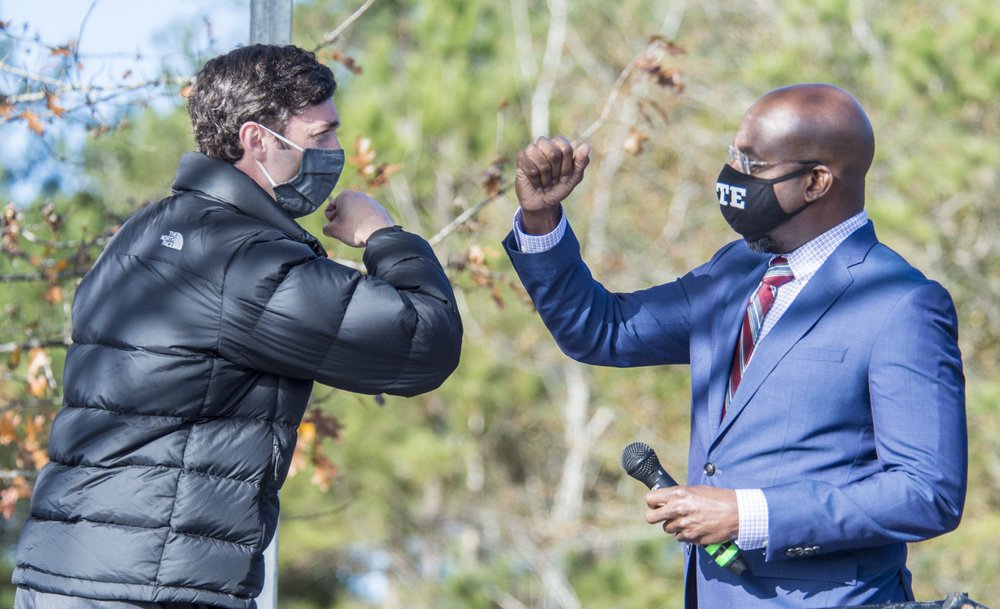
Democrats won both Georgia Senate seats — and with them, the U.S. Senate majority — as final votes were counted Wednesday, serving President Donald Trump a stunning defeat in his turbulent final days in office while dramatically improving the fate of President-elect Joe Biden’s progressive agenda. Jon Ossoff and Raphael Warnock, Democratic challengers who represented the diversity of their party’s evolving coalition, defeated Republicans David Perdue and Kelly Loeffler two months after Biden became the first Democratic presidential candidate to carry the state since 1992. Warnock, who served as pastor for the same Atlanta church where civil rights leader the Rev. Martin Luther King Jr. preached, becomes the first African American from Georgia elected to the Senate. And Ossoff becomes the state’s first Jewish senator and, at 33 years old, the Senate’s youngest member. This week’s elections were expected to mark the formal finale to the tempestuous 2020 election season, although the Democrats’ resounding success was overshadowed by chaos and violence in Washington, where angry Trump supporters stormed the U.S. Capitol to stop Congress from certifying Biden’s victory. Wednesday’s unprecedented siege drew fierce criticism of Trump’s leadership from within his own party, and combined with the bad day in Georgia, marked one of the darkest days of his divisive presidency. Still, the Democrats’ twin victories in Georgia represented a striking shift in the state’s politics as the swelling number of diverse, college-educated voters flex their power in the heart of the Deep South. They also cemented the transformation of Georgia, once a solidly Republican state, into one of the nation’s premier battlegrounds for the foreseeable future. In an emotional address early Wednesday, Warnock vowed to work for all Georgians whether they voted for him or not, citing his personal experience with the American dream. His mother, he said, used to pick “somebody else’s cotton” as a teenager. “The other day, because this is America, the 82-year-old hands that used to pick somebody else’s cotton picked her youngest son to be a United States senator,” he said. “Tonight, we proved with hope, hard work and the people by our side, anything is possible.” Loeffler, who remains a senator until the results of Tuesday’s election are finalized, returned to Washington on Wednesday morning to join a small group of senators planning to challenge Congress’ vote to certify Biden’s victory. She didn’t get a chance to vocalize her objection before the violent protesters stormed the Capitol. Georgia’s other runoff election pitted Perdue, a 71-year-old former business executive who held his Senate seat until his term expired Sunday, against Ossoff, a former congressional aide and journalist. “This campaign has been about health and jobs and justice for the people of this state — for all the people of this state,” Ossoff said in a speech broadcast on social media Wednesday morning. “Whether you were for me, or against me, I’ll be for you in the U.S. Senate. I will serve all the people of the state.” Trump’s false claims of voter fraud cast a dark shadow over the runoff elections, which were held only because no candidate hit the 50% threshold in the general election. He raised the prospect of voter fraud as votes were being cast and likened the Republicans who run Georgia’s election system to “chickens with their heads cut off” during a Wednesday rally in Washington. Gabriel Sterling, a top official with the Georgia secretary of state’s office and a Republican, said there was “no evidence of any irregularities.” “The biggest thing we’ve seen is from the president’s fertile mind of finding fraud where none exists,” he said. Both contests tested whether the political coalition that fueled Biden’s November victory was an anti-Trump anomaly or part of a new electoral landscape. To win in Tuesday’s elections — and in the future — Democrats needed strong African American support. AP VoteCast, a survey of more than 3,700 voters in Tuesday’s contests, found that Black voters made up roughly 30% of the electorate, and almost all of them — 94% — backed Ossoff and Warnock. The Democrats also relied on the backing of younger voters, people earning less than $50,000 annually, and newcomers to the state. The Republican coalition backing Loeffler and Perdue was the mirror opposite: white, older, wealthier, and longtime Georgia residents. The coalition closely resembles the one that narrowly handed Georgia’s Electoral College votes to Biden in November, making him the first Democratic presidential candidate to win the state in almost three decades. Trump’s claims about voter fraud in the 2020 election, while meritless, resonated with Republican voters in Georgia. About 7 in 10 agreed with his false assertion that Biden was not the legitimately elected president, AP VoteCast found. Election officials across the country, including the Republican governors in Arizona and Georgia, as well as Trump’s former attorney general, William Barr, have confirmed that there was no widespread fraud in the November election. Nearly all the legal challenges from Trump and his allies have been dismissed by judges, including two tossed by the Supreme Court, where three Trump-nominated justices preside. Publicly and privately, some Republicans acknowledged that Trump’s monthslong push to undermine the integrity of the nation’s electoral system may have contributed to the GOP’s losses in Georgia. “It turns out that telling the voters that the election was rigged is not a great way to turn out your voters,” said Utah Sen. Mitt Romney, a Republican and a frequent Trump critic. Even with Trump’s claims, voters in both parties were drawn to the polls because of the high stakes. AP VoteCast found that 6 in 10 Georgia voters say Senate party control was the most important factor in their vote. Turnout exceeded both sides’ expectations. Ultimately, more people cast ballots in the runoffs than voted in Georgia’s 2016 presidential election. Former President Barack Obama, the nation’s first Black president, issued a statement praising the election of Georgia’s first African American senator and his ability to improve divisions in Washington. “Georgia’s first Black senator will make the (Senate)
Joe Biden to name judge Merrick Garland as attorney general

President-elect Joe Biden has selected Merrick Garland, a federal appeals court judge who in 2016 was snubbed by Republicans for a seat on the Supreme Court, as his attorney general, two people familiar with the selection process said Wednesday. In picking Garland, Biden is turning to an experienced judge who held senior positions at the Justice Department decades ago, including as a supervisor of the prosecution of the 1995 Oklahoma City bombing. The pick will force Senate Republicans to contend with the nomination of someone they spurned in 2016 — refusing even to hold hearings when a Supreme Court vacancy arose — but Biden may be banking on Garland’s credentials and reputation for moderation to ensure confirmation. Biden is expected to announce Garland’s appointment on Thursday, along with other senior leaders of the department, including former homeland security adviser Lisa Monaco as deputy attorney general and former Justice Department civil rights chief Vanita Gupta as associate attorney general. He will also name an assistant attorney general for civil rights, Kristen Clarke, the president of Lawyers’ Committee for Civil Rights Under Law, an advocacy group. Garland was selected over other finalists including Alabama Sen. Doug Jones and former Deputy Attorney General Sally Yates. The people familiar with the process spoke on condition of anonymity. One said Biden regards Garland as an attorney general who can restore integrity to the Justice Department and as someone who, having served in the Justice Department under presidents of both political parties, will be respected by nonpartisan career staff. If confirmed, Garland would confront immediate challenges, including an ongoing criminal tax investigation into Biden’s son, Hunter Biden, as well as calls from many Democrats to pursue inquiries into Donald Trump after he leaves office. A special counsel investigation into the origins of the Russia probe also remains open, forcing a new attorney general to decide how to handle it and what to make public. Garland would also inherit a Justice Department that has endured a tumultuous four years and would likely need to focus on not only civil rights issues and an overhaul of national policing policies after months of mass protests over the deaths of Black Americans at the hand of law enforcement. It was unclear how Garland’s selection would be received by Black and Latino advocates who had advocated for a Black attorney general or for someone with a background in civil rights causes and criminal justice reform. But the selection of Gupta and Clarke, two women with significant experience in civil rights, appeared designed to blunt those concerns and offered as a signal that progressive causes will be prioritized in the new administration. Garland would also return to a Justice Department radically different than the one he left. The Sept. 11 attacks were years away, the department’s national security division had not yet been created and a proliferation of aggressive cyber and counterintelligence threats from foreign adversaries have made counties like China, Russia, and North Korea top priorities for federal law enforcement. Monaco brings to the department significant national security experience, including in cybersecurity — an especially urgent issue as the U.S. government confronts a devastating hack of federal agencies that officials have linked to Russia. But some of the issues from Garland’s first stint at the department persist. Tensions between police and minorities, an issue that flared following the 1992 beating of Rodney King in Los Angeles, remain an urgent concern particularly following a summer of racial unrest that roiled American cities after the May killing of George Floyd in Minneapolis. And the FBI has confronted a surge in violence from anti-government and racially motivated extremists. That is a familiar threat to Garland, who as a senior Justice Department official in 1995 helped manage the federal government’s response to the bombing of a government building in Oklahoma City that killed 168 people. The bomber, Timothy McVeigh, was later executed. Garland has called the work the “most important thing I have done” and was known for keeping a framed photo of Oklahoma City’s Alfred P. Murrah Federal Building in his courthouse office in Washington. At the time of the bombing, Garland was 42 and principal associate deputy attorney general, a top lieutenant to Attorney General Janet Reno. He was chosen to go to Oklahoma City, the highest-ranking Justice Department official there, and led the prosecution for a month until a permanent lead prosecutor was named. Garland was selected over other contenders for the job including former Alabama senator Doug Jones, who lost his Senate seat last month, and former Deputy Attorney General Sally Yates. It is rare but not unprecedented for attorneys general to have previously served as judges. It happened in 2007 when President George W. Bush picked Michael Mukasey, a former federal judge in Manhattan, for the job. Eric Holder, President Barack Obama’s first attorney general, had also previously been a Superior Court judge. Garland was put forward by former President Barack Obama for a seat on the Supreme Court in 2016 following the death of Justice Antonin Scalia, but Republicans refused to hold hearings in the final year of Obama’s term. The vacancy was later filled by Justice Neil Gorsuch during the Trump administration. Republican Senate Majority Leader Mitch McConnell refused to let the nomination move forward in the Senate in the final months of Obama’s tenure. He was criticized by Democrats this fall when he took the opposite approach toward confirming President Donald Trump’s Supreme Court pick, Amy Coney Barrett. He said the difference this time around was that the White House and Senate were controlled by the same political parties. One year later, after the firing of FBI Director James Comey, McConnell actually floated Garland’s name as a replacement for that position, though Garland was said to be not interested. Garland has been on the federal appeals court in Washington since 1997. Before that, he had worked in private practice, as well as a federal prosecutor, a senior official in the Justice Department’s criminal division, and as
Dividing party, Republicans poised to challenge Joe Biden win

Republicans mounting an unprecedented challenge to Joe Biden’s election win are setting up a congressional showdown on Wednesday that threatens to divide their party and the country for years to come. With protestors already gathering in Washington to support President Donald Trump, the House and the Senate will convene a joint session to count the electoral votes cast in November’s election. Trump has repeatedly said there was widespread fraud, but his claims have been roundly rejected by Republican and Democratic election officials in state after state and by judges, including at the Supreme Court, further cementing Biden’s victory. Trump sees the joint session of Congress as one of his final attempts to overturn the results, even though there is no credible path for that to happen. Echoing Trump’s baseless claims, some of his Republican allies in Congress plan to formally object to the results, focusing on six battleground states — Arizona, Georgia, Michigan, Nevada, Pennsylvania, and Wisconsin. But a growing number of their GOP colleagues, especially in the Senate, said they would not sign on. If an objection has support from both a House member and a senator in writing, then both chambers will vote on it. That could happen three or more times on Wednesday as Republican Sens. Josh Hawley of Missouri, Ted Cruz of Texas, and Kelly Loeffler of Georgia, along with at least ten other GOP senators, have indicated they will support at least some of the House challenges. It is unclear just what the Republican senators will do, but the process could drag into the night as the two chambers will have to consider each objection individually. There could be more than 100 Republicans in the House willing to object. The challenge to the presidential election is on a scale unseen since the aftermath of the Civil War, though the typically routine process of confirming Electoral College votes has been hit with brief objections before. In 2017, several House Democrats challenged Trump’s win, but Biden, who presided at the time as the vice president, swiftly dismissed them to assert Trump’s victory. In 2005, a challenge by a Democratic House member and a Democratic senator to George W. Bush’s victory in Ohio was quickly dismissed by both chambers. The effort this week is expected to be much broader but is all but certain to fail. Biden is set to be inaugurated Jan. 20. Republicans had not yet settled on a full strategy the night before the joint session. A late-night meeting on Monday convened by Cruz reached few conclusions, according to two Republicans familiar with the situation and granted anonymity to discuss it. Cruz will object to electoral results from Arizona, another Republican said — likely to be the first objection considered, in a state Biden won. Hawley has said he will object to the Pennsylvania results, and Loeffler may object to Georgia, where she was vying to keep her seat in a runoff election on Tuesday. With mounting desperation, Trump declared at a campaign rally for Loeffler and David Perdue in Georgia Monday that he would “fight like hell” to hold on to the presidency and he appealed to Republican lawmakers to reverse his election loss. Perdue is seeking another six years in the Senate, but his term expired Sunday. The days ahead will be defining for his presidency. Trump is whipping up crowds and people are gathering in Washington, where security is on alert. Lawmakers are being told to arrive early at the Capitol and some are considering sleeping overnight in their offices to ensure they can safely access the building amid the protests. Vice President Mike Pence will be closely watched as he presides over the session. He is under growing pressure from Trump and others to tip the results in Trump’s favor. But Pence has a ceremonial role that does not give him the power to affect the outcome. “I promise you this: On Wednesday, we’ll have our day in Congress,” Pence said while himself campaigning in Georgia ahead of Tuesday’s runoff elections that will determine control of the Senate. But he did not detail what that meant. The high-stakes decisions on whether to ally with Trump are splitting the Republican Party. A range of Republican officials — including Gov. Larry Hogan of Maryland; Rep. Liz Cheney of Wyoming, the third-ranking House GOP leader; and former House Speaker Paul Ryan — have criticized the GOP efforts to overturn the election. And more than a dozen Republican senators have said they will not support the effort. “The 2020 election is over,” said a statement Sunday from a bipartisan group of 10 senators, including Republicans Susan Collins of Maine, Lisa Murkowski of Alaska, Bill Cassidy of Louisiana, and Mitt Romney of Utah. Several others have said they, too, will not back objections, including Republican Sens. John Thune of South Dakota, the No. 2 Republican in the Senate who said last month he thought any challenges would go down “like a shot dog.” In a statement Tuesday, South Carolina Sen. Tim Scott said that as he reads the Constitution, “there is no constitutionally viable means for the Congress to overturn an election wherein the states have certified and sent their electors.” Senate Majority Leader Mitch McConnell has tried to prevent his party from engaging in the battle, which could help define the GOP in the post-Trump era and create lingering resentments among Republican voters. Both Hawley and Cruz are potential 2024 presidential contenders, vying for Trump’s base of supporters. Some other potential candidates, including Arkansas Sen. Tom Cotton, have chosen not to challenge the results. Cruz’s coalition of 13 senators has said it will vote to reject the Electoral College tallies unless Congress launches a commission to immediately conduct an audit of the election results. Congress is unlikely to agree to that. Facing the criticism from many in his own party, Cruz has attempted to put a finer point on his challenge. The commission remains his focus, he has said, not to undo the election
Alabama political scientist Bill Stewart dies at 80
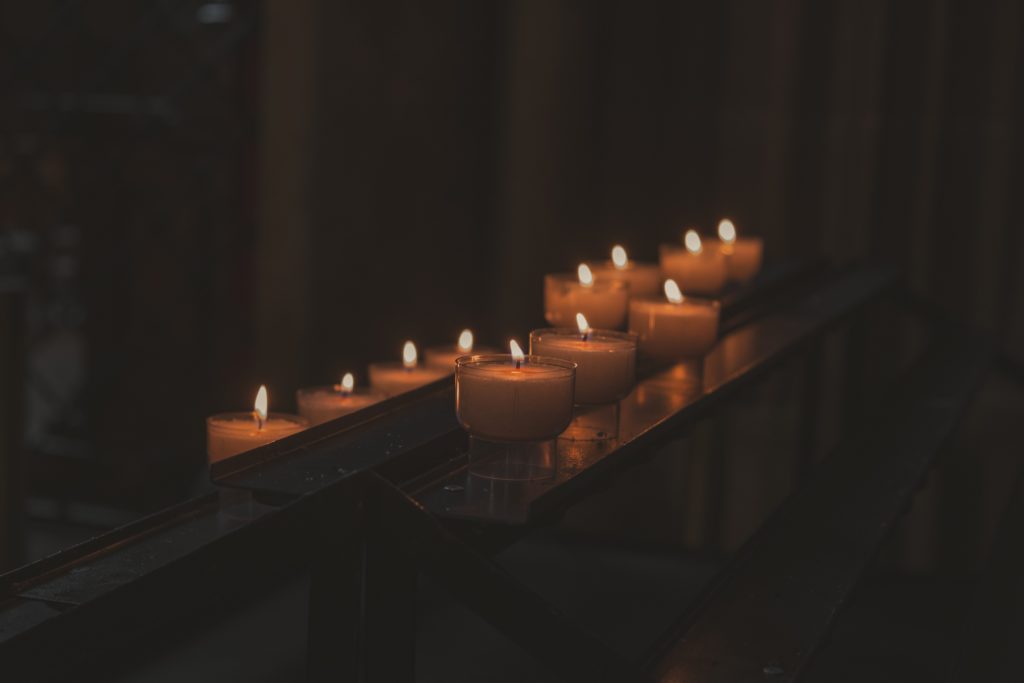
In Alabama politics, there are players and there are observers. And then, every once in a while, someone comes along to help make sense of it all. William H. “Bill” Stewart Jr. was among the best of the latter, spending the most of five decades educating students, reporters, and the voting public alike on the complexities that influenced state and local politics. Alabama lost that voice on Sunday when Stewart, after battling illness, died at the age of 80. A Hartselle native who taught political science as a University of Alabama professor for more than 40 years, Stewart continued to teach will beyond his retirement, serving as a professor emeritus in the political science department, where he was recognized as an expert on Alabama politics. Across his career, his students have gone on to hold elected offices at the highest levels, said his wife, Connie. “He was always mentoring students. That was his passion,” she said. “And he was just so proud of all of his students and the achievements that they made.” Counted among those students included governors, including Alabama’s last Democratic governor, Don Siegelman, and numerous Alabama legislators. But his influence wasn’t reserved to just one party, as Alabama’s own Republican Secretary of State, John Merrill, can attest. Merrill never had Stewart as a professor during his years as a student in the 1980s. Rather, their relationship – and his influence on Merrill’s own approach to politics – began after Merrill’s graduation, usually over dinners at an Olive Garden in Tuscaloosa. “There’s no doubt I was a better political science student (because of) Bill Stewart, even though I never had him for a class,” Merrill said. “The loss of Bill Stewart is a loss for all who aspire to have quality representatives in our local, county, state, and federal government positions. “As one of the most knowledgeable and insightful observers of politics, he was a voice of reason and objectivity that cannot be replaced.” Beyond politics, Stewart was an avid runner – he participated in several marathons and 5K runs, his wife said – and a devout Christian, attending the University Church of Christ for more than 50 years. Stewart’s son William H. Stewart III, who goes by Trey, said he didn’t catch the politics bug from his dad. Rather, it was the educator and spiritual leader that swayed him most. Trey Stewart, 38, attributed both his earning of a Ph.D. in educational psychology and his concerns for her fellow man to his dad’s guidance. “My dad was a Christian – a person of faith, sincere faith – and, for me, as his son, a lot of who I am I got from him in terms of my own religious faith,” Trey Stewart said. “And I try to be an empathetic person. Those aspects of my character I would say I got, to a large degree, from him.” But for scores of others across Alabama’s political landscape, Stewart’s legacy will be his approach to political analysis that was rooted not just in the events of the day, but also in the history of Alabama and how the echoes of years past were influencing current decisions. Much of that perspective came from Stewart growing up under his father, William H. Stewart Sr., who served in the Alabama Legislature. “That’s where he got this love of politics from,” Connie Stewart said. “He saw how the political machinations worked here in the state and was fascinated by it. And he really loved it. It was in his blood.” Republished with the permission of the Associated Press.
Birmingham’s Randall Woodfin among 4 Alabama mayors with COVID-19
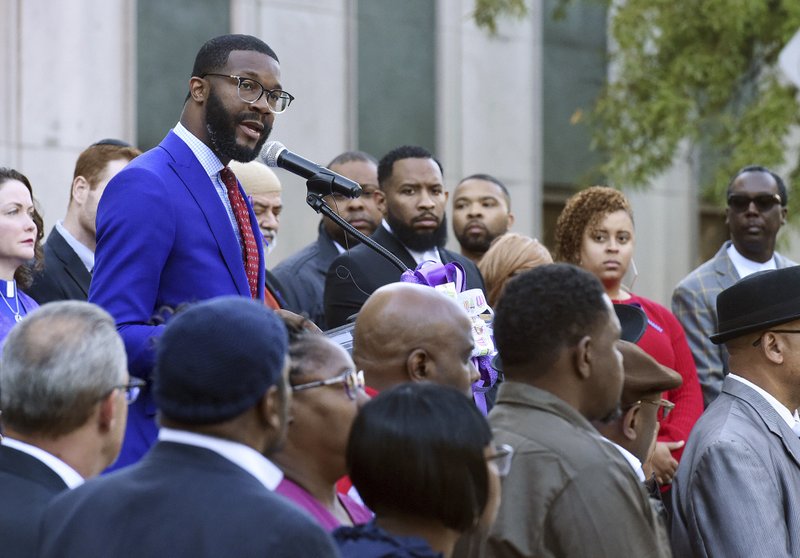
The mayors of at least four Alabama cities, including heavily populated Birmingham, have been diagnosed with COVID-19 as the illness spreads rapidly across the state following the holidays. The city of Birmingham said Mayor Randall Woodfin was admitted to a hospital with COVID-19 pneumonia Monday, five days after announcing he tested positive for the new coronavirus. Decatur Mayor Tab Bowling said he was quarantining at home after testing positive for the virus, and the city of Auburn said Mayor Ron Anders was in quarantine after testing positive. Florence Mayor Andy Betterton also was infected. Woodfin, 39, was “in good spirits and thanks everyone for the well wishes, the City of Birmingham tweeted. Bowling, 62, told the Decatur Daily he and his wife tested positive for the coronavirus and each received an infusion of monoclonal antibodies Sunday. Bowling, who has held regular news conferences to provide updates on the pandemic in the Tennessee Valley city, said felt guilty about participating in holiday family gatherings with his adult children and their families over the holidays. “I made a mistake and spent time with our family. We had Christmas together. We had meals together and sat around the table and we were not practicing the guidelines,” he said. “With that, now we have sickness. I believe that (family members outside our household) were the last to get it, so quite likely they received it from us. I certainly hope they’ll be OK.” The city of Auburn said Anders tested positive for the coronavirus over the holiday weekend. “I look forward to getting back to work for Auburn in person in the very near future, once I have tested clear,” Anders said in a statement. “I just want to remind everyone to keep your masks on, keep up your social distancing and keep those hands washed, because anyone can be exposed to this virus.” Betterton told the TimesDaily his father, Andrew Jack Betterton, died of COVID-19 before Christmas. “He had been in the nursing home, and I didn’t even get to see him,” Betterton said. Alabama on Tuesday for the second straight day hit a new high for the number of COVID-19 patients in state hospitals with 3,080 being treated. The new peak came as health officials feared a new surge of cases in the wake of the winter holidays. Since the pandemic began, the state health department has reported more than 379,000 confirmed and probable virus cases and at least 4,886 confirmed and probable virus deaths in Alabama. Republished with the permission of the Associated Press.
