
Alabama man on bond arrested in Auburn after Capitol riot
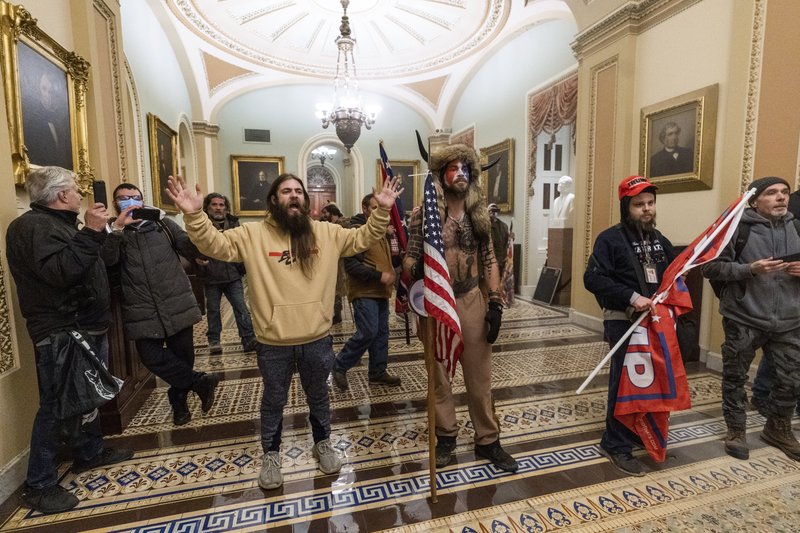
An Alabama man out on bond on drug charges has been taken into custody after being accused of participating in last week’s riot at the U.S. Capitol. Court records show that a judge on Monday revoked the bond for 23-year-old William Watson after prosecutors said he was identified in photographs and video of the riot. “Video surveillance from inside the Capital Building recorded images of protestors inside the building, including images of the Defendant dressed in a yellow sweatshirt standing next to a man with horned hat. The Defendant was identified by local authorities,” prosecutors wrote in a motion. The FBI released the image of the bearded man in the yellow sweatshirt among photos of rioters they were hoping to identify. WRBL reported that Watson was arrested Monday afternoon in Auburn. Authorities noted that they were also able to identify Watson by the distinctive tattoos on his hand, and that Watson himself appeared to describe his participation in a social media post. “They wanna call me antifa because I have a video game tattoo on my hand and I was pleading for peaceful discourse. Let em say what they will. The fake news won’t win against thousands of patriots who recorded today,” read a social media post that prosecutors attributed to Watson. Republished with the permission of the Associated Press.
Arizona man charged in Capitol riot appears in court
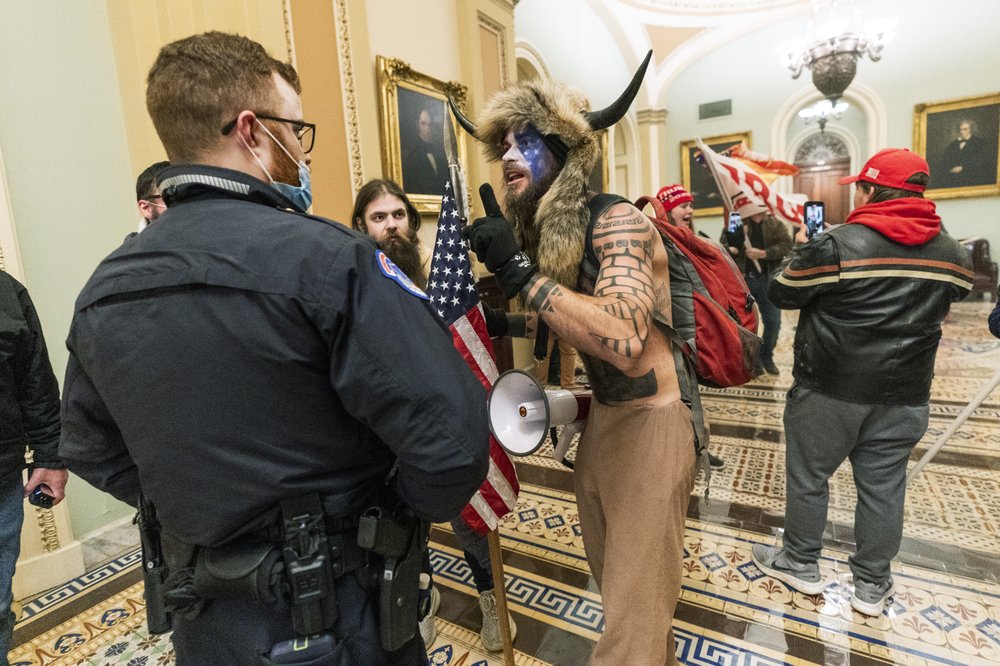
An Arizona man who took part in the insurrection at the U.S. Capitol while sporting face paint, no shirt, and a furry hat with horns made his first court appearance Monday. A judge scheduled a detention hearing Friday for Jake Chansley, who has been jailed on misdemeanor charges since surrendering to authorities over the weekend in Phoenix. He took part in the hearing by phone from a detention facility. The FBI identified Chansley from images taken during the riot showing his distinctive sleeve tattoos. Chansley was inside the Capitol and on the Senate dais as he carried a U.S. flag on a pole topped with a spear. He hasn’t yet entered a plea on charges of entering a restricted building without lawful authority, violent entry and disorderly conduct on Capitol grounds. His court-appointed attorney, Gerald Williams, told the judge that Chansley has been unable to eat since he was arrested Saturday. He said his client has a restricted diet, though it was unclear to Williams whether Chansley’s food issues were related to health concerns or religious reasons. The judge ordered Williams to work with the U.S. Marshalls Service to address the issue. Chansley’s mother, Martha Chansley, told reporters outside the courthouse that her son needs an organic diet, The Arizona Republic reported. “He gets very sick if he doesn’t eat organic food,” she said. “He needs to eat.” Williams didn’t immediately return a call seeking comment from The Associated Press. Chansley is among at least 90 people who have been arrested on charges stemming from Wednesday’s siege on the Capitol. An investigator said in court records that Chansley called the FBI in Washington the day after the riot, telling investigators that he came to the nation’s capital “at the request of the president that all ‘patriots’ come to D.C. on January 6, 2021.” Chansley has long been a fixture at Trump rallies. He also attended a November rally of Trump supporters protesting election results outside of an election office in Phoenix, holding up a sign that read, “HOLD THE LINE PATRIOTS GOD WINS.” Rioters violently clashed with officers as they forced their way in the Capitol to try to stop Congress from certifying President-elect Joe Biden’s victory. A police officer who was hit in the head with a fire extinguisher later died, and a woman was fatally shot by an officer as she tried climbing through the broken window of a barricaded doorway inside the Capitol. Three others died in medical emergencies. ___ This story has been corrected to show how people died related to the riot. Republished with the permission of the Associated Press.
Alabama mayor hospitalized with coronavirus infection
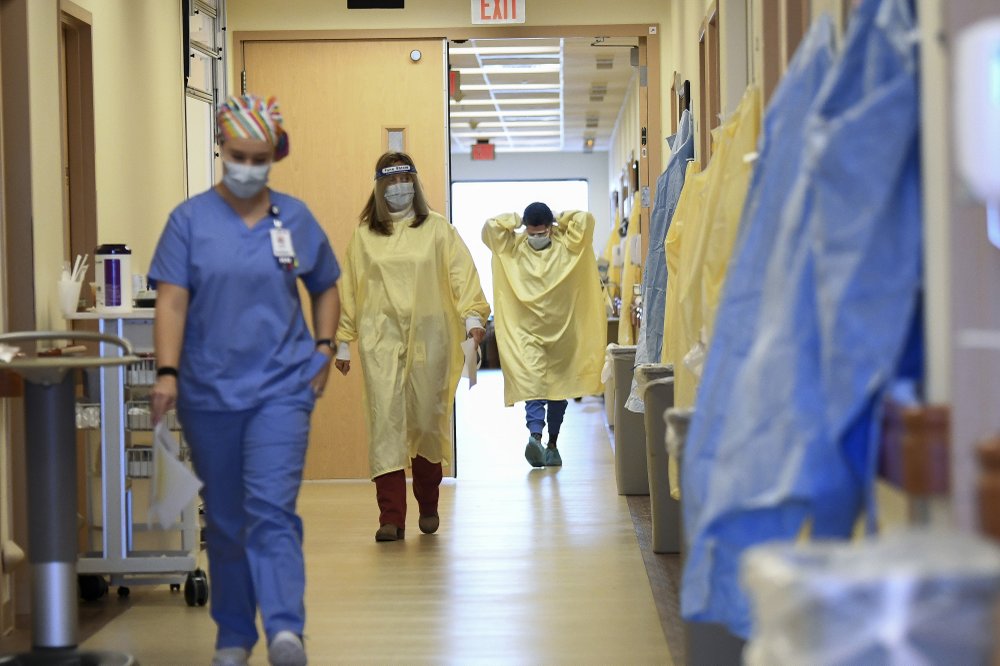
The mayor of an Alabama city said he was hospitalized over the weekend after being diagnosed with COVID-19. Northport Mayor Bobby Herndon said in a Facebook post that he was admitted to the hospital Sunday night, hours after learning he was infected with the coronavirus, The Tuscaloosa News reported. “My breathing is good,” the 67-year-old mayor wrote. “My main problem is that I developed blood clots.” He said he was scheduled to undergo tests and an ultrasound Monday. The mayor’s wife, Key Herndon, was hospitalized with COVID-19 earlier this month. He announced Friday that she had come home. Northport is a city of about 25,000 just outside Tuscaloosa. Herndon’s election in October marked his return to the office he previously held from 2008 to 2016. Republished with the permission of the Associated Press.
Alabama congressman deletes Twitter account after suspension
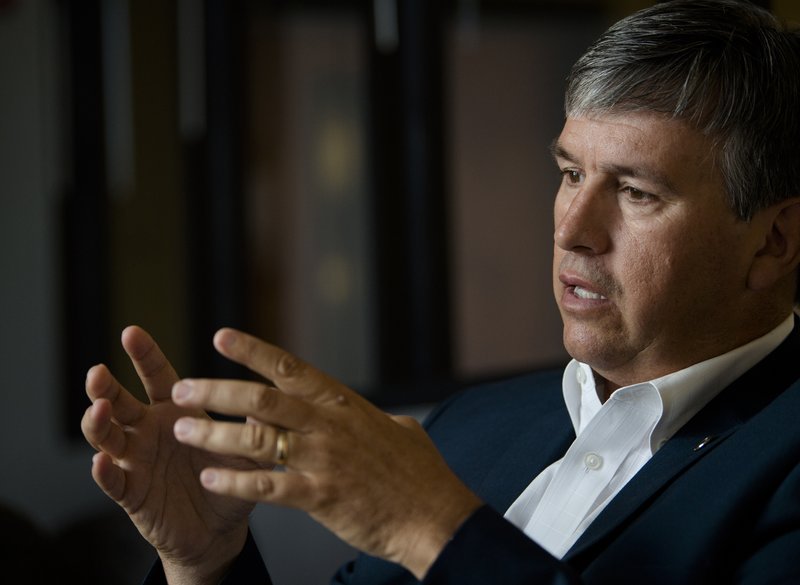
U.S. Rep. Barry Moore’s personal Twitter account was suspended — leading him to delete the account — following tweets he made in the wake of the riot at the U.S. Capitol. It was not immediately clear what led to the suspension, but the congressman for Alabama’s 2nd Congressional District tweeted, and in some cases deleted, comments about the riots that seemed to minimize the violence as rioters stormed the U.S. Capitol. “We have more arrests for stealing a podium on Jan. 6th than we do for stealing an election on November 3rd!” read one tweet from Moore’s personal account, that was captured in a screenshot by journalist Jamie Dupree. The tweet appeared to be a comment on the arrest of a man who was photographed smiling and carrying a lectern as the mob took over the Capitol. In another he wrote: “Understand it was a black police officer that shot the white female veteran. You know that doesn’t fit the narrative.” The tweet was later deleted, according to the Politwoops projects that archives the deleted tweets of politicians. Moore’s chief of staff, Shana Teehan, confirmed the suspension of Moore’s personal account to WDHN News. “Yes, he was suspended, but then deactivated his account because of the censorship of conservative voices he saw happening,” she said. Moore announced on Facebook that he had shut down his personal Twitter account. “Sunday evening, I deactivated my personal Twitter page after seeing many other conservative voices wrongfully silenced on social media,” Moore said in a statement released through his office. Moore said on Facebook that his office Twitter account would remain active and provide information about Congressional activities. Moore issued an official statement through his office that condemned the violence at the Capitol. “Wednesday was a dark day for our nation and I emphatically condemn yesterday’s tragic events,” Moore said in a statement a day after the riot. “This building belongs to the people, who – without question – deserve to be heard, but what we saw yesterday was a disgrace to the principles we have long embraced.” Republished with the permission of the Associated Press.
FBI warns of plans for nationwide armed protests next week
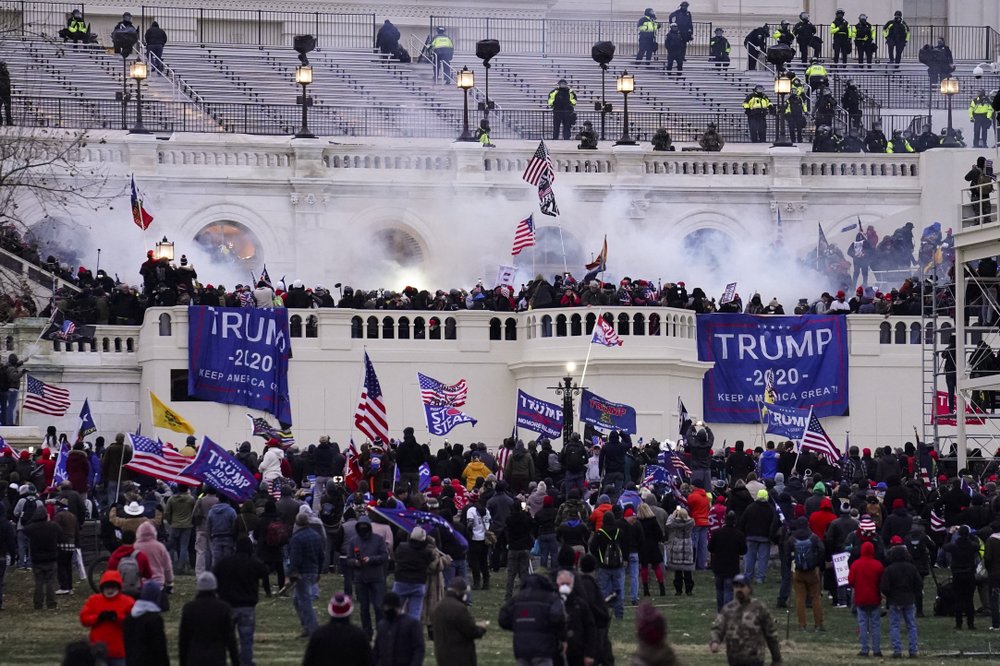
The FBI is warning of plans for armed protests at all 50 state capitals and in Washington, D.C., in the days leading up to President-elect Joe Biden’s inauguration, stoking fears of more bloodshed after last week’s deadly siege at the U.S. Capitol. An internal FBI bulletin warned, as of Sunday, that the nationwide protests may start later this week and extend through Biden’s Jan. 20 inauguration, according to two law enforcement officials who read details of the memo to The Associated Press. Investigators believe some of the people are members of extremist groups, the officials said. The bulletin was first reported by ABC. “Armed protests are being planned at all 50 state capitols from 16 January through at least 20 January, and at the U.S. Capitol from 17 January through 20 January,” the bulletin said, according to one official. The officials were not authorized to speak publicly and spoke to the AP on condition of anonymity. The FBI issued at least one other bulletin — they go out to law enforcement nationwide on the topic — before the riots last week. On Dec. 29, it warned of the potential for armed demonstrators targeting legislatures, the second official said. “While our standard practice is to not comment on specific intelligence products, the FBI is supporting our state, local, and federal law enforcement partners with maintaining public safety in the communities we serve,” the bureau said in a statement. “Our efforts are focused on identifying, investigating, and disrupting individuals that are inciting violence and engaging in criminal activity.” The FBI said it wasn’t focused on peaceful protests but “on those threatening their safety and the safety of other citizens with violence and destruction of property.” Army Gen. Daniel Hokanson, chief of the National Guard Bureau, told reporters Monday that the Guard is also looking at any issues across the country, “We’re keeping a look across the entire country to make sure that we’re monitoring, and that our Guards in every state are in close coordination with their local law enforcement agencies to provide any support requested,” he said. The riots followed weeks of online calls for violence in the nation’s capital in the waning days of Donald Trump’s presidency. There have been several arrests, and at least two Capitol police officers, one who took a selfie with rioters, and another who put on a Make America Great Again hat, were suspended. At least a dozen more are under investigation, according to lawmakers. A tweet in which Trump promised that last Wednesday’s event in Washington, D.C., “will be wild” fueled a “month-long frenzy of incitements, strategizing, and embrace of violence against lawmakers,” according to a research group that tracks online extremism activity, In a report issued Saturday, the SITE Intelligence Group also warned that the Capitol attack has emboldened Trump-supporting extremists. “No matter how all this plays out, its only the beginning,” posted a user on TheDonald message board, according to the report. Mark Pitcavage, a senior research fellow at the Anti-Defamation League’s Center on Extremism, said authorities in state capitals and other major cities besides Washington should prepare for the possibility of violent protests next week. “A lot of people were energized by what happened last week,” he said. “State capitals are a natural place where people might want to show up, especially assuming that they think there might be a huge presence of police and military in D.C. because of what happened last week.” Pitcavage tracks militia, white supremacists and other far-right extremists, but he said the Capitol siege demonstrated the emergence of a new movement of ”Trumpist extremists, so caught up in the cult of personality around Trump that they may be willing to break the law or engage in violence purely in support of Trump and whatever he wants.” The talk of armed marches next week isn’t limited to “radicalized” Trump supporters. State capital events on Jan. 17 appear to be promoted by supporters of the anti-government, pro-gun “boogaloo” movement. Boogaloo followers advocate for a second civil war or the collapse of society, and they don’t adhere to a coherent political philosophy. Posts on social media sites also have promoted a “Million Militia March” on the day of Biden’s inauguration. Pitcavage said the event, apparently organized by a promoter of the pro-Trump “QAnon” conspiracy theory, appears unlikely to draw a massive crowd. Javed Ali, a former FBI senior intelligence officer who teaches courses in counterterrorism at the University of Michigan, said it can be challenging for law enforcement to identify the line between people exercising their constitutionally protected rights to bear arms and free speech and those who pose “a real operational threat.” “The FBI just can’t passively sit in websites and forums and social media platforms, waiting to see who’s going to present a direct threat versus just someone who is being highly radicalized,” he said. “There has to be an investigative predicate for the FBI to then start even the lowest form of an investigation.” David Deitch, an attorney who was a prosecutor in the Justice Department’s counterterrorism section from 2003 to 2007, said law enforcement must recognize a “tenuous balance” between protected free speech and speech that intends to incites violence. “It’s a very fact-based, case-by-case determination,” he said. “There’s no one factor that’s going to determine all of it. It’s certainly going to be a judgment call on the part of law enforcement about whether and when to intervene.” Republished with the permission of the Associated Press.
