
Study finds COVID-19 vaccine may reduce virus transmission
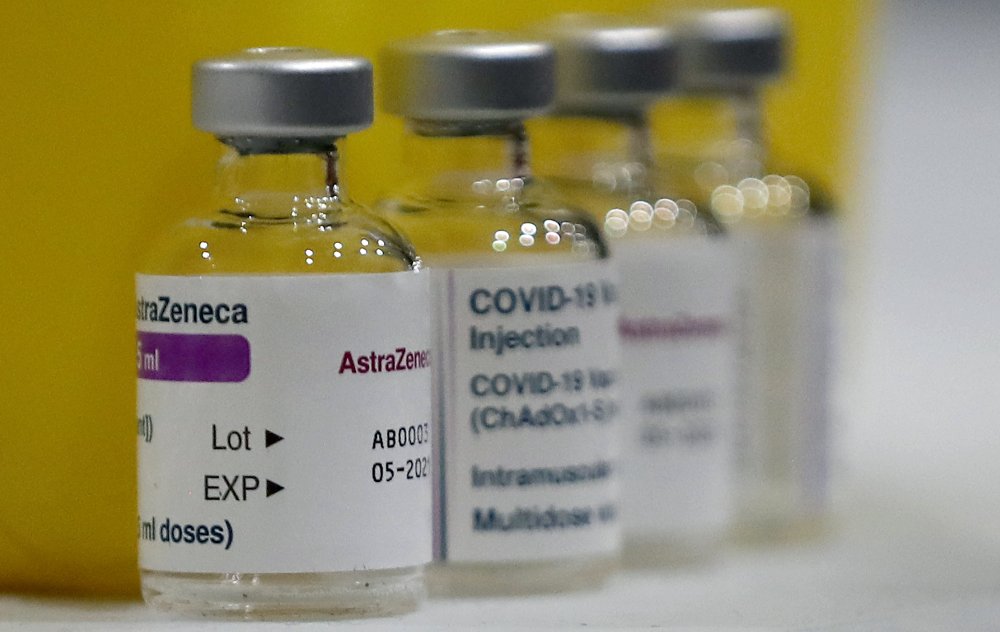
AstraZeneca’s COVID-19 vaccine shows a hint that it may reduce transmission of the virus and offers strong protection for three months on just a single dose, researchers said Wednesday in an encouraging turn in the campaign to suppress the outbreak. The preliminary findings from Oxford University, a co-developer of the vaccine, could vindicate the British government’s controversial strategy of delaying the second shot for up to 12 weeks so that more people can be quickly given a first dose. Up to now, the recommended time between doses has been four weeks. The research could also bring scientists closer to an answer to one of the big questions about the vaccination drive: Will the vaccines actually curb the spread of the coronavirus? It’s not clear what implications if any, the findings might have for the two other major vaccines being used in the West, Pfizer’s and Moderna’s. In the United States, Dr. Anthony Fauci, the nation’s top infectious disease expert, dismissed the idea of deliberately delaying second shots, saying the U.S. will “go by the science” and data from the clinical trials. The two doses of the Pifzer and Moderna vaccines are supposed to be given three and four weeks apart. Still, the research appears to be good news in the desperate effort to arrest the spread of the virus and also suggests a way to ease vaccine shortages and get shots into more arms more quickly. The makers of all three vaccines have said that their shots proved to be anywhere from 70% to 95% effective in clinical trials in protecting people from illness caused by the virus. But it was unclear whether the vaccines could also suppress transmission of the virus — that is, whether someone inoculated could still acquire the virus without getting sick and spread it to others. As a result, experts have been saying that even people who have been vaccinated should continue to wear masks and keep their distance from others. Volunteers in the British study underwent regular nasal swabs to check for the coronavirus, a proxy to try to answer the transmission question. The level of virus-positive swabs — combining volunteers who had asymptomatic infection with those who had symptoms — was 67% lower in the vaccinated group, the researchers reported. While not a direct measure, “that’s got to have a really beneficial effect on transmission,” Oxford lead researcher Sarah Gilbert told a meeting of the New York Academy of Sciences Wednesday. The researchers also looked at how likely people who have been vaccinated are to get a symptom-free infection. In one subset of volunteers, there were 16 asymptomatic infections among the vaccinated and 31 in an unvaccinated comparison group. Pfizer and Moderna also are studying the effect of their vaccines on asymptomatic infections. Only the Pfizer and Moderna vaccines are being used in the United States. Britain is using both AstraZeneca’s and Pfizer’s. AstraZeneca’s has also been authorized by the 27-nation European Union. Pfizer has not endorsed the British government’s decision to lengthen the time between doses. Mene Pangalos, executive vice president of biopharmaceuticals research and development at AstraZeneca, said that no patients experienced severe COVID-19 or required hospitalization three weeks after receiving a first dose, and that effectiveness appeared to increase up to 12 weeks after the initial shot. “Our data suggest you want to be as close to the 12 weeks as you can” for the second dose, Pangalos said. British Health Secretary Matt Hancock said the study “backs the strategy that we’ve taken” to make sure more people have gotten at least one shot. Britain’s decision has been criticized as risky by other European countries. Stephen Evans of the London School of Hygiene and Tropical Medicine said the study’s suggestion that a single dose protected people for 12 weeks was “useful but not definitive.” He said that the authors themselves acknowledged their research was not designed to investigate the vaccine’s dosing schedule and that their conclusions were based on statistical modeling, not actual patients tracked over time. “It certainly isn’t very strong evidence, but there is also no indication this is the wrong thing to do,” Evans said of Britain’s strategy. One of the Oxford researchers, Dr. Andrew Pollard, said scientists also believe the AstraZeneca vaccine will continue to offer protection against new variants of COVID-19, though they are still waiting for data on that. Fast-spreading mutant versions have caused alarm around the world. “If we do need to update the vaccines, then it is actually a relatively straightforward process. It only takes a matter of months, rather than the huge efforts that everyone went through last year to get the very large-scale trials run,” Pollard told the BBC. Meanwhile, a U.N.-backed program to supply COVID-19 vaccines to the neediest people worldwide is gearing up after a troubled start. The COVAX Facility announced plans Wednesday for an initial distribution of some 100 million doses by the end of March and more than 200 million more by the end of June to dozens of countries. Nearly all of the doses expected for the first phase are due to come from AstraZeneca and its partner, the Serum Institute of India. The rollout will be contingent on the World Health Organization authorizing the AstraZeneca shot for emergency use, which is expected to happen this month. Some 190 countries and territories are participating in COVAX, which has seen rich nations scoop up vaccine supplies, sometimes at premium prices. The pandemic’s worldwide death toll has eclipsed 2.2 million, including about 447,000 in the U.S., according to Johns Hopkins University data. New cases per day in the U.S. and the number of Americans in the hospital with COVID-19 have dropped sharply in the past few weeks, but deaths are still running at close to all-time highs at an average of around 3,100 a day. Deaths often lag behind the infection curve, because it can take weeks to sicken and die from COVID-19. As the Super Bowl approaches, Fauci is warning people against inviting others over
Bills on pandemic power, virus lawsuit protection advance
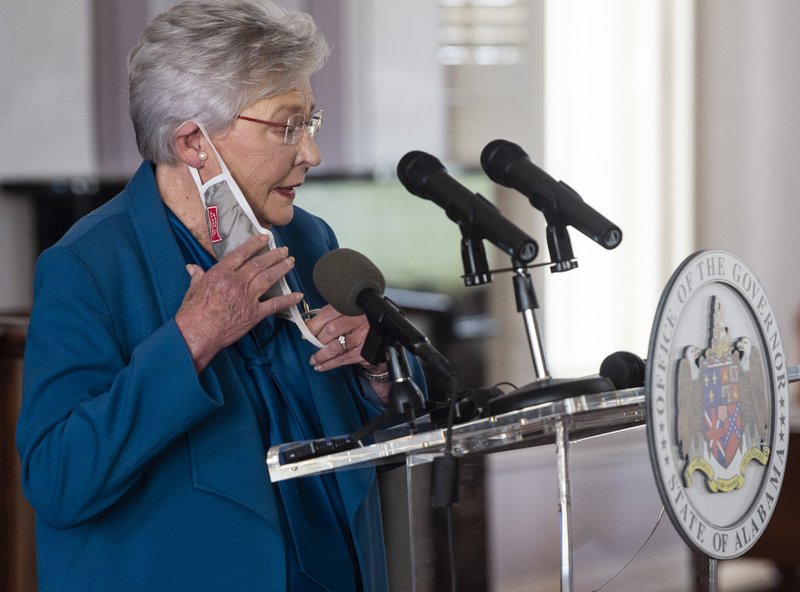
An Alabama Senate committee on Wednesday advanced bills related to the COVID-19 pandemic, including a proposal to limit the power of the state health officer and another to extend liability in virus-related lawsuits. The Senate Judiciary Committee voted 7-4 to approve a bill by Republican Sen. Tom Whatley of Auburn that would give elected politicians oversight of emergency decisions currently made by the state health officer. The proposal would require the state governor to approve the state health officer’s emergency health orders during a pandemic. It also would require legislative approval to extend an emergency declaration beyond 14 days. “It still maintains emergency powers in emergency situations for the governor. It just transfers the authority for making those decisions from an unelected person to a person elected by the people of Alabama,” Whatley said. Whatley said he did not bring the bill in response to any particular actions by State Health Officer Scott Harris, but said there should be a “check and balance.” Democratic Sen. Vivian Davis Figures of Mobile said lawmakers should not interject themselves when “dealing with life and death situations.” Alabama Gov. Kay Ivey expressed skepticism about the bill on Wednesday. “I don’t know that we need to limit the hands of decision-makers, especially when they’re guided by health people trying to give us good advice too,” Ivey told reporters. “We’ll just have to see where that goes.” Committee members voted 9-2 to advance a bill to shield companies and others from lawsuits during the pandemic. The bill by Republican Sen. Arthur Orr could provide immunity for businesses, health care providers, and others from certain damages claimed by individuals who allege that they contracted or were exposed to the virus. Orr said the bill would give protection to companies, churches, and other entities from virus-related claims only if they were following appropriate precautions. “A business that chose to ignore that guidance and did not require, say like masks in their workplace or took no steps to try to limit the interaction of their workers being very close together then they would not have protection in that safe harbor,” Orr said. The governor and GOP leadership have said the bill is a priority and it could receive a floor vote as soon as Thursday. Opponents said they were concerned the bill would give companies too much protection for risky practices. Robin Hyden of Alabama Arise, an advocacy group for low-income people, urged lawmakers to take more steps to protect workers. “Front-line workers deserve access to health care, hazard pay, and social support programs if they are unable to work in a high-risk field. Too many workers are being driven into risky working conditions with no alternatives,” Hyden said. The Senate committee also advanced medical marijuana legislation by an 8-3 vote. The bill by Republican Sen. Tim Melson would allow people with a qualifying medical condition to purchase marijuana, in forms such as gels or tablets, for medical use from licensed dispensaries. The bill cleared the Senate last year with a 22-10 vote but did not get debated in the House of Representatives. Republished with the permission of the Associated Press.
Ivey touts prison plan, urges transparent gambling debate
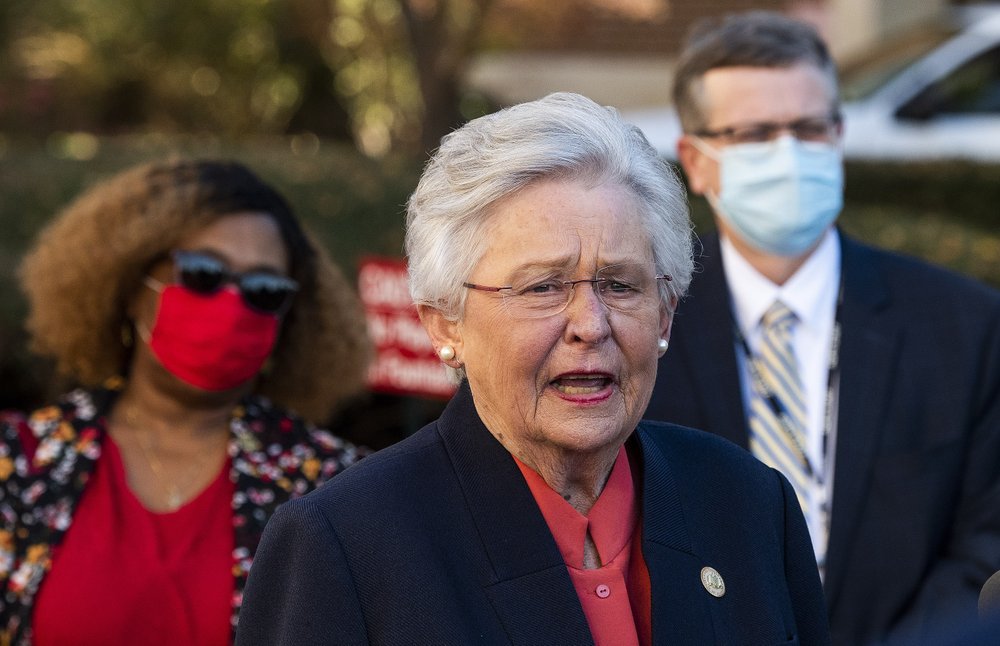
Alabama Gov. Kay Ivey on Tuesday said new leased prisons are the foundation of remaking the state’s troubled corrections system and urged lawmakers to be transparent as they head toward debate on gambling later this year. The Republican governor gave her annual State of the State address on the opening day of the legislative session. Because of the COVID-19 pandemic, Ivey addressed lawmakers by remote feed instead of standing before them in a crowded chamber at the Alabama Capitol. The Republican governor signed new leases this week for two of three planned new prisons, an idea that has met with mixed reviews from legislators. The three leases would cost an estimated $3 billion in payments over 30 years. “One of the most critical issues facing our state is the dire condition of our prisons. It’s no secret the Department of Corrections is facing significant challenges that are the result of decades of neglect,” Ivey said. She said the cornerstone of improving the system will be to replace the “state’s aging and failing prison infrastructure with safe, new, sustainable and affordable men’s prisons.” The Republican governor praised Alabamians’ resilience during the deadly pandemic in a year that “tested both our patience and perseverance.” “Despite all that was thrown at us, Alabamians remained grounded and kept our resolve. You never gave up. And while COVID-19 has proven to be a worthy adversary with no regard for class, race, or gender, the disease has shown us just how much more we can accomplish if we work together,” Ivey said. Ivey put her support behind three pieces of GOP-backed legislation that are expected to hit the fast track in the first two weeks of the legislative session, including a bill that would exempt coronavirus relief funds from state income tax. “After all, these monies were meant to tide people over until the economy recovered. It was never meant as an opportunity to grow the state’s bank account,” Ivey said. Another bill would provide lawsuit protection to businesses, medical providers, and other from certain civil lawsuit damages from virus-related lawsuits. The third bill would renew state industrial incentives. The governor thanked teachers for their work during a challenging school year and proposed a 2% pay raise for educators and state employees. One of the most controversial pieces of legislation this session is an expected bill to authorize a public vote on a state lottery and casinos. Sen. Del Marsh said Tuesday that he hopes to introduce the legislation as soon as possible. Marsh said his proposal would steer lottery proceeds to college scholarships and other gaming revenue to the expansion of high-speed internet in the state. Ivey, while not pushing the proposal, said she will monitor the debate. “I’ve never been an out-front champion on this issue, but I have always believed that the people of Alabama should have the final say.” Ivey added that “if something does not pass the smell test, I’ll sure let you know.” In response to the governor, lawmakers have given mixed reviews to Ivey’s prison lease plan. “An Alabama solution to this Alabama problem shouldn’t involve creating generational debt to give to an out of state landlord trying to make a profit off of warehousing people,’ Rep. Chris England, a Democrat from Tuscaloosa, said. “Before we spend this money, we need a process that involves the people’s elected representatives so we can have some transparency, accountability, fiscal responsibility, and also find other ways to deal with this problem than just building new prisons,” England said. Republished with the permission of the Associated Press.
Gambling, virus bills before lawmakers in 2021

Alabama lawmakers returned to Montgomery on Tuesday for the regular session that could see gambling debate later this year. Republican Sen. Del Marsh said he hopes to introduce his planned lottery and gambling bill as soon as possible. Marsh said he believes voters are “ready to address this issue.” “The gaming issue in this state has gone unresolved in my opinion for years, and I think the gaming issue is a way to resolve some of our other problems — scholarships for our young people and young adults wishing for career changes, perhaps. I think it’s a way to find a way to finally get statewide broadband for the state of Alabama,” Marsh said. Alabama voters must approve any change to the state Constitution to allow gambling. Alabamians last voted on gambling in 1999 when they defeated a lottery proposed by then-Gov. Don Siegelman. “All I’m going to do is put something before the people of Alabama,” Marsh said. The first day of the session brought a change in leadership. Marsh resigned as Senate president pro tem and was replaced by Sen. Greg Reed of Jasper. Marsh, who is not seeking reelection, previously announced his plans to resign the position to focus on his attention on certain bills, including the gambling bill and an education bill. Reed said three pieces of legislation will take priority for the first weeks of the session. Those include a bill to shield companies and others from civil lawsuit liability during the COVID-19 pandemic. The others would exempt COVID-19 relief funds from state income tax and extend state industrial incentives. “Those are going to be the three priorities,” Reed said of the first weeks. Lawmakers this year will have to draw new congressional districts but that may occur in a special session later in the year. The session is being conducted differently this year because of the COVID-19 pandemic. Members wore masks on the chamber floors and greeted each other with elbow bumps instead of the usual hugs and handshakes. Access to the Statehouse was limited and temperature scanners were installed at Statehouse entrances to monitor people for fever. Members are getting periodic COVID tests. A House of Representatives spokesman said one representative returned home after getting a positive COVID-19 test. Legislators plan to meet for two weeks and then take a break to review COVID-19 precautions. Republished with the permission of the Associated Press.
