
In Texas, attention turns to storm repairs, political peril
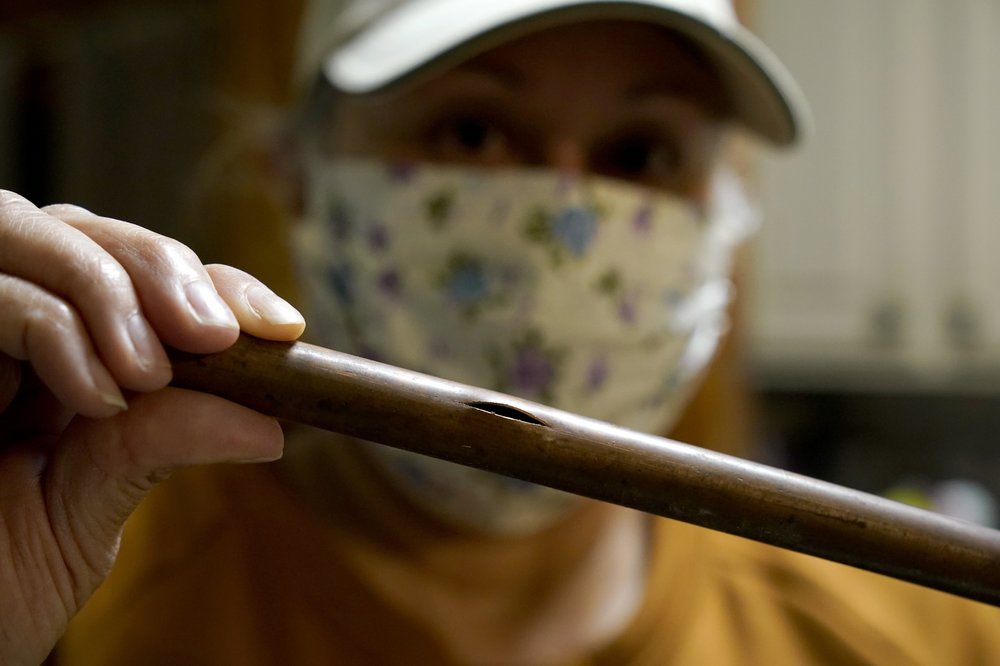
The seam that split in a pipe under Nora Espinoza’s sink during the frigid cold that gripped Texas was narrower than the edge of a dime. Her kitchen appeared mostly undamaged, but the plumber that cut into Espinoza’s wall found water had been pouring in underneath the floor. She expects the repairs to cost $15,000. Espinoza, a 56-year-old Dallas resident, is among those still getting a sense of the wreckage left by the icy blast that hit Texas and much of the Deep South last week, knocking out power to millions and contributing to nearly 80 deaths. Soaked drywall and carpet is being pulled back to give a fuller view of the destruction, and the political peril for elected leaders and energy officials who were unable to keep the heat on in places unaccustomed to freezing cold. Snow and ice melted across Texas over the weekend, but plumbers are still racing from home to home to patch uncounted stretches of burst pipe. Many residents are unsure when they’ll be able to make permanent repairs, what they’ll have to pay out of pocket or even when they’ll be able to go home. Roberto Valerio, a plumber in North Texas, said the broken pipes and other problems caused by the storm had led to “big chaos.” “We can’t find what we need easily,” he said. “There’s a great shortage of supplies.” In the Houston area, officials on Monday announced they have set up a relief fund to help cover the cost of repairs and temporary housing for vulnerable families. Gov. Greg Abbott has indicated his fiercely independent state needs help. His office encouraged out-of-state plumbers to come fix Texas pipes. For Espinoza, who said her home dropped to 38 degrees Fahrenheit (3.33 degrees Celsius) before the power was restored and the pipe burst Friday, it’s far too little, far too late “Your job is to protect us. That’s why we voted you in,” Espinoza said of Abbott as she fought tears while waiting for a plumber. “My pipes would have never burst, never, if I had power.” A rushing sound could be heard in Espinoza’s kitchen Saturday night, when Valerio turned the water back on. He made temporary repairs, but it’ll be weeks before he can come back to do more work and determine whether the floor needs to be replaced. Espinoza fears the spread of mold may do more damage in that time and is unsure what her insurance will cover. But she is nonetheless grateful: She can take hot showers and her small dogs have emerged from the pile of blankets where they spent last week’s days of frigid cold. “I do consider myself to be very lucky,” she said Monday. The Federal Emergency Management Agency has delivered more than 1 million meals to Texas, the Defense Department has delivered more than 4 million liters of water and it continues to deliver water in bulk to multiple locations in the state, White House press secretary Jen Psaki said Monday. The federal government also delivered dozens of emergency generators and more than 120,000 blankets to Texans over the weekend. President Joe Biden hopes to visit Texas as early as this week, Psaki said. Tens of thousands of people in Mississippi and Louisiana also still lacked water or had very low water pressure Monday, even with weather warming up days after a winter storm. Harris County Judge Lina Hidalgo said about $2.25 million has so far been raised to help pay for repairs and housing for Houston-area families who lack insurance or who don’t qualify for federal assistance. That includes a $1 million donation from the foundation of CenterPoint Energy, the utility that provides electricity for the Houston area, she said. Houston Mayor Sylvester Turner asked area residents with the means to donate to the fund. “Many families through no fault of their own have homes that are uninhabitable because their pipes froze during the arctic blast,” said Turner. Republished with the permission of the Associated Press.
Half a million dead in U.S., confirming virus’s tragic reach
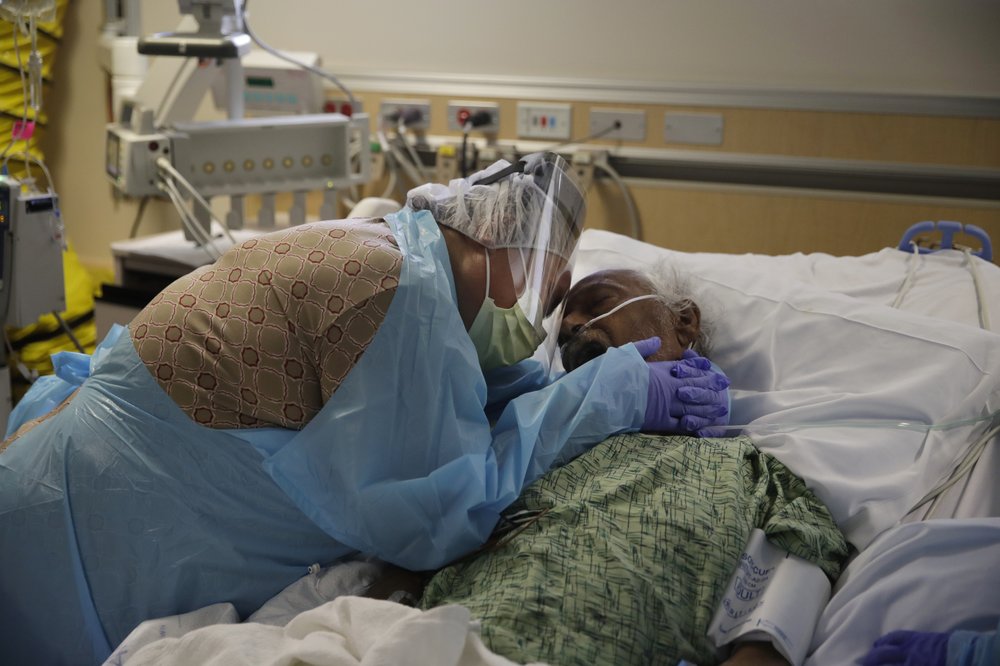
For weeks after Cindy Pollock began planting tiny flags across her yard — one for each of the more than 1,800 Idahoans killed by COVID-19 — the toll was mostly a number. Until two women she had never met rang her doorbell in tears, seeking a place to mourn the husband and father they had just lost. Then Pollock knew her tribute, however heartfelt, would never begin to convey the grief of a pandemic that has now claimed 500,000 lives in the U.S. and counting. “I just wanted to hug them,” she said. “Because that was all I could do.” Cindy Pollock poses for a portrait. (AP Photo/Otto Kitsinger) After a year that has darkened doorways across the U.S., the pandemic surpassed a milestone Monday that once seemed unimaginable, a stark confirmation of the virus’s reach into all corners of the country and communities of every size and makeup. “It’s very hard for me to imagine an American who doesn’t know someone who has died or have a family member who has died,” said Ali Mokdad, a professor of health metrics at the University of Washington in Seattle. “We haven’t really fully understood how bad it is, how devastating it is, for all of us.” Experts warn that about 90,000 more deaths are likely in the next few months, despite a massive campaign to vaccinate people. Meanwhile, the nation’s trauma continues to accrue in a way unparalleled in recent American life, said Donna Schuurman of the Dougy Center for Grieving Children & Families in Portland, Oregon. At other moments of epic loss, like the 9/11 terrorist attacks, Americans have pulled together to confront crisis and console survivors. But this time, the nation is deeply divided. Staggering numbers of families are dealing with death, serious illness, and financial hardship. And many are left to cope in isolation, unable even to hold funerals. “In a way, we’re all grieving,” said Schuurman, who has counseled the families of those killed in terrorist attacks, natural disasters, and school shootings. In recent weeks, virus deaths have fallen from more than 4,000 reported on some days in January to an average of fewer than 1,900 per day. Still, at half a million, the toll recorded by Johns Hopkins University is already greater than the population of Miami or Kansas City, Missouri. It is roughly equal to the number of Americans killed in World War II, the Korean War, and the Vietnam War combined. It is akin to a 9/11 every day for nearly six months. “The people we lost were extraordinary,” President Joe Biden said Monday, urging Americans to remember the individual lives claimed by the virus, rather than be numbed by the enormity of the toll. “Just like that,” he said, “so many of them took their final breath alone in America.” The toll, accounting for 1 in 5 deaths reported worldwide, has far exceeded early projections, which assumed that federal and state governments would marshal a comprehensive and sustained response and individual Americans would heed warnings. Instead, a push to reopen the economy last spring and the refusal by many to maintain social distancing and wear face masks fueled the spread. The figures alone do not come close to capturing the heartbreak. “I never once doubted that he was not going to make it. … I so believed in him and my faith,” said Nancy Espinoza, whose husband, Antonio, was hospitalized with COVID-19 last month. The couple from Riverside County, California, had been together since high school. They pursued parallel nursing careers and started a family. Then, on Jan. 25, Nancy was called to Antonio’s bedside just before his heartbeat its last. He was 36 and left behind a 3-year-old son. “Today it’s us. And tomorrow it could be anybody,” Nancy Espinoza said. By late last fall, 54 percent of Americans reported knowing someone who had died of COVID-19 or had been hospitalized with it, according to a Pew Research Center poll. The grieving was even more widespread among Black Americans, Hispanics and other minorities. Deaths have nearly doubled since then, with the scourge spreading far beyond the Northeast and Northwest metropolitan areas slammed by the virus last spring and the Sun Belt cities hit hard last summer. In some places, the seriousness of the threat was slow to sink in. When a beloved professor at a community college in Petoskey, Michigan, died last spring, residents mourned, but many remained doubtful of the threat’s severity, Mayor John Murphy said. That changed over the summer after a local family hosted a party in a barn. Of the 50 who attended, 33 became infected. Three died, he said. “I think at a distance people felt ‘This isn’t going to get me,‘” Murphy said. “But over time, the attitude has totally changed from ‘Not me. Not our area. I’m not old enough,’ to where it became the real deal.” For Anthony Hernandez, whose Emmerson-Bartlett Memorial Chapel in Redlands, California, has been overwhelmed handling burial of COVID-19 victims, the most difficult conversations have been the ones without answers, as he sought to comfort mothers, fathers and children who lost loved ones. His chapel, which arranges 25 to 30 services in an ordinary month, handled 80 in January. He had to explain to some families that they would need to wait weeks for a burial. Pallbearers, who were among only 10 allowed mourners, walk the casket for internment at the funeral for Larry Hammond, who died from the coronavirus, at Mount Olivet Cemetery in New Orleans. (AP Photo/Gerald Herbert) “At one point, we had every gurney, every dressing table, every embalming table had somebody on it,” he said. In Boise, Idaho, Pollock started the memorial in her yard last fall to counter what she saw as widespread denial of the threat. When deaths spiked in December, she was planting 25 to 30 new flags at a time. But her frustration has been eased somewhat by those who slow or stop to pay respect or to mourn. “I think that is part of what I was wanting,
Kay Ivey welcomes review of Space Command’s proposed home

Alabama Gov. Kay Ivey on Monday said she welcomes a federal review of the decision to move the Space Command headquarters from Colorado to Huntsville, saying she believes it will confirm the decision to move it to her state. The U.S. Department of Defense’s inspector general announced Friday that it was reviewing the Donald Trump administration’s last-minute decision to relocate U.S. Space Command from Colorado to Alabama. “Our state was chosen based on merit, and an independent review of a decision of this magnitude will confirm this. We remain confident that just as the Air Force discovered, Huntsville’s Redstone Region will provide our warfighters with the greatest space capability at the best value to the taxpayers,” Ivey said in a statement. The U.S. Air Force announced last month that the new U.S. Space Command headquarters will be in Huntsville, Alabama. The state was selected over five others competing for the project, including Colorado, where Space Command is provisionally located. The role of Space Command is to conduct operations such as enabling satellite-based navigation and troop communication and providing warning of missile launches. That is different from the Space Force, which is a distinct military service like the Army, Navy, Air Force, Marine Corps and Coast Guard. Huntsville is home to the Army’s Redstone Arsenal and NASA’s Marshall Space Flight Center. The city’s nickname is Rocket City, after Wernher von Braun and his team of fellow German-born rocketeers who settled there in the 1950s. “Deep Space Exploration is part of our DNA in Alabama, from building the rockets to first take man to the moon, to producing the Atlas V rocket that took the Perseverance Rover to Mars just last week,” Ivey said. The decision to locate in Alabama was announced in the final days of the Trump administration, and Colorado officials raised concerns that the process was flawed. On Friday, the inspector general’s office announced it was investigating whether the relocation complied with Air Force and Pentagon policy and was based on proper evaluations of competing locations. Colorado officials welcomed the review. “It is imperative that we thoroughly review what I believe will prove to be a fundamentally flawed process that focused on bean-counting rather than American space dominance,” Rep. Doug Lamborn, a Republican whose district includes Space Command, said previously. Republished with the permission of the Associated Press.
Bishop Jim Lowe: A lottery will only further set back minorities and the poor

Gambling is called the “poor man’s tax” because it takes from those who play the lottery and gives to those who control it. Many people have become enslaved to gambling, giving away their hard-earned money to take a chance on the lottery with very little chance of return. Governor Kay Ivey and state legislators know this and know it will be a problem in Alabama, too. A big one. In fact, the governor’s study group on gambling policy suggested in their report that there is potential for 66,375 “problem gamblers” if Alabama legalizes a lottery and expands gambling. 13,733 of these will be “compulsive gamblers” who will not be able to control their urge to gamble. Who exactly are these 66,375 problem gamblers and 13,733 compulsive gamblers? We know from other states that individuals in the lowest income brackets are the most regular clientele of state lotteries. We also know that black and brown people are disproportionately more likely to be in this lowest income group in Alabama. From there, we can extrapolate that black and brown people will be some of the largest funders of this operation. They’ll also be a large part of those problem gamblers. Shouldn’t these groups have the same opportunity proportionally to benefit from the government programs they’re funding to help build their communities? Shouldn’t consideration be given to help aid those putting a disproportionate amount of their income into the program as a whole? As it is right now, the lottery will take from the poor and give, in many cases, to the relatively rich. According to the bill, the lottery will fund college scholarships. Undoubtedly this is good news for many people. Education truly can make a difference in the quality of life of Alabama’s citizens. But what about the groups mentioned above and the poor? Are college scholarships the right place to start to help them? The bill does suggest that there will be an aspect of scholarship qualifications based upon income, allowing all to participate. This is a good sign. However, the entire idea of using the lottery to fund college scholarships alone is actually short-sighted. For many of the poor and disenfranchised, college is not even an option because of the lack of quality K-12 educational opportunities to prepare them for it. If a lottery is going to pass, a large portion of lottery funds should be used to offer K-12 scholarships. The building blocks of a student’s education are formed at this level, not in postsecondary classes. This small change would be a real difference-maker, empowering families to send their children to a school of their choice, leveling the playing field, and providing an opportunity typically afforded only to those with much higher means. College scholarships from a lottery sound good, but again, it falls short of actual benefit to the majority of the state’s citizens. For instance, if we follow the lead of Tennessee, which has had the HOPE Scholarship funded through its lottery since 2009, families in any income bracket will be eligible for the scholarships (though, once you turn 25, scholarships are limited to students with an annual income at or less than $36,000). To qualify for the HOPE Scholarship, students have to get a 21 or higher on the ACT in Tennessee. If you establish that requirement in Alabama, you see a vast majority of the poorest and most needy not scoring high enough to get an Alabama version of this scholarship. In Bessemer City Schools, for example, only 2.6% of students meet their college readiness benchmarks. That’s 97.4% of students not ready for college. The average ACT score? 15.1. If we follow Tennessee’s lead, which the language in the gambling bill being debated right now in the Alabama State House would allow, our scholarship system could be bent away from those who need it most. And even if we don’t follow Tennessee’s model, we are still focusing on college education when the real problem, where we are dead last and where the poor need options, is K-12 education. If the legislature is intent on passing a lottery, an inherently flawed method of raising revenue, they should at least make sure some of the funds help those who will be paying so much into the system. K-12 scholarships would do just that. As a state that supposedly is overwhelmingly Christian, I want to point out one warning from scripture for those who might be prone to ignore these concerns. “Whoever closes his ear to the cry of the poor will himself call out and not be answered.” – Proverbs 21:13 Fundamentally a lottery is immoral because it exploits the poor. If it comes to fruition, it will truly be an unjust way of raising revenue. As a state, with our history, we should work to help end the cycle of poverty and provide equal opportunity with justice for all of our citizens. We should not hastily endorse legislation that sounds good but, in actuality, continues to perpetuate and inflame the class distinctions in our society. Bishop Jim Lowe is a distinguished fellow at the Alabama Policy Institute and senior pastor of the Guiding Light Church in Birmingham.
Beyond 100M: Joe Biden team aiming for bigger vaccine numbers

It sounded so ambitious at first blush: 100 million vaccination shots in 100 days. Now, one month into his presidency, Joe Biden is on a glide path to attain that goal and pitching well beyond it to the far more ambitious and daunting mission of vaccinating all eligible adults against the coronavirus by the end of the summer. Limited supply of the two approved COVID-19 vaccines has hampered the pace of vaccinations — and that was before extreme winter weather delayed the delivery of about 6 million doses this past week. But the United States is on the verge of a supply breakthrough as manufacturing ramps up and with the expectation of a third vaccine becoming available in the coming weeks. That means the act of delivering injections will soon be the dominant constraint, and it’s prompting the Biden administration to push to dramatically expand the universe of those who will deliver injections and where Americans will meet them to get their shots. “It’s one thing to have the vaccine, and it’s very different to get it in someone’s arms,” Biden said Friday as he toured Pfizer’s manufacturing plant in Portage, Michigan. The company is set to double its pace of vaccine deliveries in the coming weeks. Since their approval in December, more than 75 million doses of the two-shot-regimen Moderna and Pfizer vaccines have been distributed, of which 63 million have been injected, reaching 13% of Americans. Nearly 45 million of those doses have been administered since Biden’s inauguration on Jan. 20. The pace of deliveries of those vaccines is about to take off. About 145 million doses are set for delivery in the next 5 1/2 weeks, with an additional 200 million expected by the end of May and a further 200 million by the end of July. That’s before the anticipated approval by the Food and Drug Administration for emergency use of a third vaccine, from Johnson & Johnson. The single-dose J&J vaccine is expected to help speed the path to immunity and requires half the vaccination resources of the two-shot regimens. But there is no massive stockpile of J&J doses ready to roll out on Day One. “We’re going to be starting with only a few million in inventory,” White House COVID-19 coordinator Jeff Zients said this past week. Still, when combined with the anticipated increases in the other vaccines, the J&J doses could prove the pivotal advance in delivering enough shots for nearly all American adults by the end of June, at least a month earlier than currently anticipated. The daily inoculation average climbed to 1.7 million shots per day last week, but as many as double that number of doses are soon expected to be available on average each day. The focus of Biden’s team is now quickly shifting to ensuring those doses can get used, though the administration has resisted the calls of some health experts to publicly set a “moonshot” target for how many daily doses it hopes to deliver. Biden first set his target of 100 million doses in 100 days on Dec. 8, days before the first vaccines received emergency use authorization. By Inauguration Day, it was clear the U.S. was on course to attain that goal. Dr. Leana Wen, an emergency physician and public health professor at George Washington University, said she would like to see the administration commit to a more ambitious 3 million shot-per-day target. “I want to see them put that stake in the ground and ask everyone to help them achieve that goal,” she said. The current pace of vaccination dipped markedly in recent days as winter weather shuttered administration sites in Texas and across the South, and icy conditions stranded supplies at shipping hubs in Louisville, Kentucky and Memphis, Tennessee. One-third of the delayed doses have already been delivered, Dr. Anthony Fauci, the nation’s top infectious disease specialist, announced Sunday. The White House anticipates that remaining delayed doses will be injected by March 1 and that the daily pace of vaccinations will continue to climb. Much of the increase, according to data from the Centers for Disease Control and Prevention, comes from people receiving their second dose of the Moderna or Pfizer vaccine. The pace of first-dose vaccinations, meanwhile, has been largely steady over the past several weeks, hovering around an average of 900,000 shots per day. Increasing both the rate of first-dose administrations and the rate of overall vaccinations will be key to achieving herd immunity — estimated to require vaccination of about 80% of the population — in hopes of ending the pandemic and curtailing the emergence of potentially even more dangerous “mutant” strains of the coronavirus. That means keeping demand high. The administration has expressed concerns about public surveys showing that tens of millions of Americans are reluctant to get the vaccine and it is stepping up public outreach to overcome that hesitancy as the U.S. death toll nears 500,000 — “a terribly historic milestone in the history of this country,” as Fauci put it, and “we’re still not out of it.” Dr. Cyrus Shahpar, the White House COVID-19 data director, said in an interview that the administration is “focused on going out to communities and making sure people know these vaccines are safe and how they can get them, with a goal of vaccinating nearly all Americans,.” The administration has also turned its focus toward identifying new delivery paths for the vaccines beyond those already used by states, including federally-run mass vaccination sites, smaller community health centers and retail pharmacies. The White House’s goal is to stand up the sites now so that they will be ready to handle the influx of vaccine in the coming weeks. “They can push a lot more volume through those channels, through those big box stores, through the community health centers,” Scott Gottlieb, a former Trump administration FDA commissioner, told MSNBC on Friday. He praised the Biden administration for setting up those sites in advance. The Pentagon, at the request of the Federal Emergency Management Agency, has started deploying thousands of active-duty troops to open mass vaccination centers
Casino, lottery debate expected this week in Alabama Senate

Alabama state senators are expected to debate lottery and casino legislation next week amid a push to get the issue of gambling before voters for the first time since 1999. Republican Sen. Del Marsh said he expects to get a Senate vote on his bill next week. The proposal would authorize a lottery and allow eight, or possibly more, casinos in the state. The Senate debate, which could come as soon as Tuesday, will be the first major test of support for the plan. “I do believe we will have a bill that will get out of the Senate this week. Then we’ll just work it in the House,” Marsh said. The Anniston Republican has circulated a new draft of the bill but said he has not decided on the number of casino sites after other areas made a push to be included. Marsh said he is getting polling on that issue. The bill proposes establishing a state lottery and five casinos offering table games, slot machines and betting on sports games. The casinos would be located at four existing dog tracks plus a fifth site in north Alabama that would be run by the Poarch Band of Creek Indians, Alabama’s only federally recognized Native American tribe. The proposal also would encourage the governor to negotiate with the Poarch Band for a compact involving their three other sites that currently have electronic bingo machines. Some lawmakers said they are concerned their districts were not included in five casino locations spelled out in the bill. Marsh said the latest draft still has five locations, but it might change. Marsh’s bill would shut down electronic bingo sites, although card and paper games could continue. Democratic Sen. Malika Fortier sent a letter to the Senate Tourism Committee saying an electronic bingo casino in impoverished Lowndes County would be shut down under the current proposal. Fortier, who disclosed this week that she is seeking treatment for cervical cancer, sent a letter since she could not attend the public hearing. “How can we forcibly close the doors of a business that has existed for 20 years (in one form or another) in a small rural impoverished community like Lowndes County where jobs are few and the people have passed a Constitutional amendment to locate it there, but then gladly allow it in other areas where they aren’t hurting for jobs like Lowndes County,” Fortier wrote in the letter read at the meeting. Republican Sen. Donnie Chesteen of Geneva earlier expressed concern that a Dothan-area facility was also left out. Marsh’s proposal would have to be approved by a three-fifths majority of each chamber of the Alabama Legislature and then a majority of voters in a statewide vote. Alabama is one of just five states without a state lottery. Alabamians last voted on gambling in 1999 when they defeated a lottery proposed by then-Gov. Don Siegelman. Gambling bills introduced since then have fallen short under a mix of conservative opposition to gambling as a revenue source and a turf war over which entities could offer casino games or electronic bingo machines. Republished with the permission of the Associated Press.
Inspector general reviews Donald Trump’s relocation of Space Command
The Department of Defense’s inspector general announced Friday that it was reviewing the Trump administration’s last-minute decision to relocate U.S. Space Command from Colorado to Alabama. The decision on Jan. 13, one week before Trump left office, blindsided Colorado officials and raised questions of political retaliation. Donald Trump had hinted at a Colorado Springs rally in 2020 that the command would stay at Peterson Air Force Base in Colorado Springs. But the man with whom Trump held that rally, Republican Sen. Cory Gardner, lost his reelection bid in November, and Colorado, unlike Alabama, voted decisively against Trump. The Air Force’s last-minute relocation of command headquarters to Huntsville, Alabama — home of the U.S. Army’s Redstone Arsenal — blindsided Colorado officials of both parties, who have urged the Biden administration to reconsider the decision. On Friday, the inspector general’s office announced it was investigating whether the relocation complied with Air Force and Pentagon policy and was based on proper evaluations of competing locations. Colorado officials of both parties were thrilled. “It is imperative that we thoroughly review what I believe will prove to be a fundamentally flawed process that focused on bean-counting rather than American space dominance,” said Rep. Doug Lamborn, a Republican whose district includes Space Command. The state’s two Democratic U.S. senators, Michael Bennet and John Hickenlooper, also hailed the probe. “Moving Space Command will disrupt the mission while risking our national security and economic vitality,” the senators said in a joint statement. “Politics have no role to play in our national security. We fully support the investigation.” Among other duties, the Space Command enables satellite-based navigation and troop communication and provides warning of missile launches. Also based at Peterson are the North American Aerospace Defense Command, or NORAD, and the U.S. Northern Command. The Space Command differs from the U.S. Space Force, launched in December 2019 as the first new military service since the Air Force was created in 1947. The Space Command is not an individual military service but a central command for military wide space operations. It operated at Peterson from 1985 until it was dissolved in 2002, and it was revived in 2019. The Air Force accepted bids from locations for the command when it was revived and was considering six finalists, including Huntsville, when Trump hinted it’d stay in Colorado Springs. Republished with the permission of the Associated Press.
Laid off Shoal Creek Mine workers may be eligible for benefits

Workers and former workers of Peabody Southeast Mining, LLC, Shoal Creek Mine in Oakman, Alabama may be eligible for benefits under the Trade Adjustment Assistance Reauthorization Act of 2015 (TAARA 2015). According to the U.S. Department of Labor website, the act “provides aid to workers who lose their jobs or whose hours of work and wages are reduced as a result of increased imports.” A petition was filed on behalf of the workers and was certified by the U.S. Department of Labor on January 19, 2021, according to Secretary Fitzgerald Washington, Alabama Department of Labor. The Shoal Creek mine, which spans three counties, closed in October 2020. The closing was due to revenue loss and weakening demand for coal, according to Larry Spencer, the district vice president for the union representing the miners. According to the press release, the petition covers periods of unemployment occurring on or after October 30, 2019, through January 19, 2023. Under the TAARA 2015 Act, displaced workers may be eligible for benefits such as training, job search and relocation assistance, and Health Coverage Tax Credit (HCTC). For additional information on the HCTC, they can visit the IRS website at www.irs.gov/HCTC. If workers have used all their cash benefits under other programs, they could be eligible for additional benefits. In order to receive Trade Readjustment Allowance (TRA) benefits, workers “must enroll in training within 26 weeks of the certification date or their last qualifying separation, or a waiver of the training requirement must be granted by the state Employment Service Division of the Alabama Department of Labor.” Additionally, because Peabody Southeast Mining, LLC, Shoal Creek Mine was certified for Reemployment Trade Adjustment Assistance (RTAA), workers 50 years of age and older, who obtain full-time employment after their separation from the affected employer, may be eligible for training and allowances under the RTAA program. Washington stated that potentially eligible individuals will be notified individually as soon as they are identified.
‘Obviously a mistake’: Ted Cruz returns from Cancun after uproar
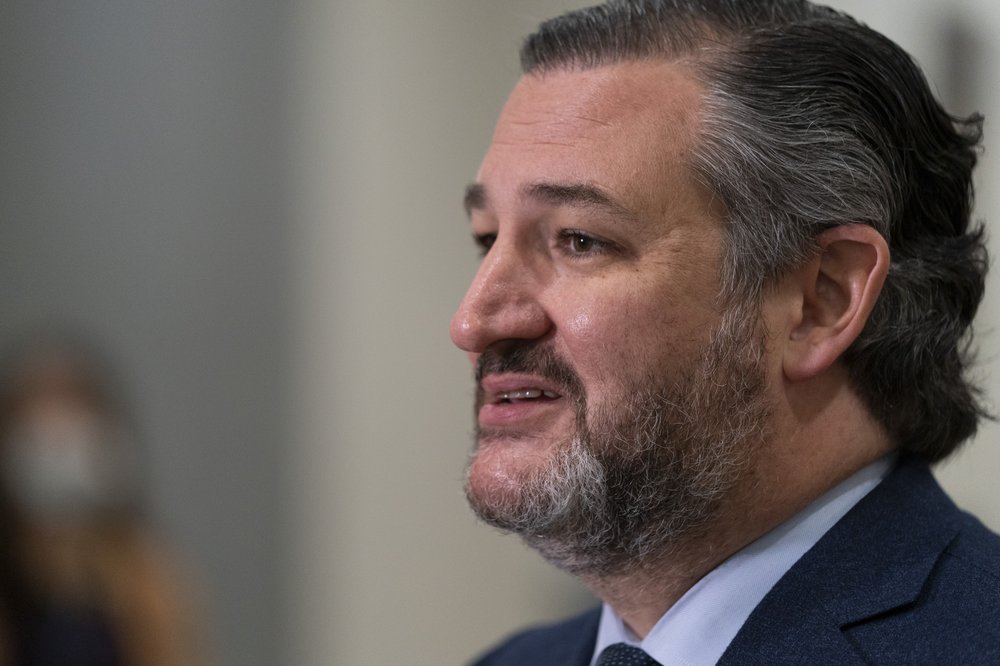
Texas Sen. Ted Cruz said his family vacation to Mexico was “obviously a mistake” as he returned stateside Thursday following an uproar over his disappearance during a deadly winter storm. The Republican senator said he began second-guessing the trip since the moment he first got on the plane Wednesday. “In hindsight, I wouldn’t have done it,” he told reporters. The Associated Press and other media outlets reported that he had traveled out of the country with his family as hundreds of thousands of Texans were still grappling with the fallout of a winter storm that crippled the state’s power grid. The trip drew criticism from leaders in both parties and was seen as potentially damaging to his future political ambitions. Cruz said in an earlier statement Thursday that he accompanied his family to Cancun a day earlier after his daughters asked to go on a trip with friends, given that school was canceled for the week. “Wanting to be a good dad, I flew down with them last night and am flying back this afternoon,” Cruz wrote. “My staff and I are in constant communication with state and local leaders to get to the bottom of what happened in Texas,” he continued. “We want our power back, our water on, and our homes warm.” Cruz told reporters Thursday night that he returned to the U.S. because he realized he needed to be in Texas. He said he had originally been scheduled to stay in Mexico through the weekend. “I didn’t want all the screaming and yelling about this trip to distract even one moment from the real issues that I think Texans care about, which is keeping all of our families safe,” Cruz said. “It was obviously a mistake, and in hindsight, I wouldn’t have done it,” he said. The fierce political backlash comes as Cruz eyes a second presidential run in 2024. He was already one of the most villainized Republicans in Congress, having created adversaries across the political spectrum in a career defined by far-right policies and fights with the establishment. More recently, he emerged as a leader in former President Donald Trump’s push to overturn the results of the November election. Billboards calling for his resignation stood along Texas highways earlier in the month. Even the state Republican Party chair declined to come to Cruz’s defense on Thursday. “That’s something that he has to answer to his constituents about,” Texas GOP Chair Allen West said when asked whether Cruz’s travel was appropriate while Texans are without power and water. “I’m here trying to take care of my family and look after my friends and others that are still without power,” West said. “That’s my focus.” Hundreds of thousands of people in Texas woke up Thursday to a fourth day without power, and a water crisis was unfolding after winter storms wreaked havoc on the state’s power grid and utilities. Texas officials ordered 7 million people — one-quarter of the population of the nation’s second-largest state — to boil tap water before drinking the water, after days of record low temperatures that damaged infrastructure and froze pipes. In Austin, some hospitals faced a loss in water pressure and, in some cases, heat. News of Cruz’s absence quickly rippled across the state. Livia Trevino, a 24-year-old whose Austin home was still without water Thursday, said she felt abandoned by government leaders. “They are taking vacations and leaving the country, so they don’t have to deal with this, and we are freezing to death. We don’t have water and we don’t have food,” she said. In his statement, Cruz said that his family had lost heat and power as well. “This has been an infuriating week for Texans,” he said. While the situation will not help Cruz’s political future, the two-term senator is not in any immediate political danger. His current term expires in early 2025, and the unofficial beginning of the next Republican presidential primary election is two years away. Still, Democrats across Washington were eager to talk about the controversy. One of Cruz’s most aggressive critics on the left, Rep. Alexandria Ocasio-Cortez, encouraged her supporters on Thursday to volunteer for a “welfare check phone bank” to help Texans affected by the storm. “So many elected leaders in Texas have failed their constituents,” the New York Democrat wrote in an email. “Instead of focusing on relief, they’ve chosen to go on Fox News to spread lies or to board a plane to Cancun.” Earlier in the day, White House press secretary Jen Psaki leaned into a question about Cruz’s “whereabouts.” “I don’t have any updates on the exact location of Sen. Ted Cruz nor does anyone at the White House,” Psaki said, adding that President Joe Biden’s administration is focused on “working directly with leadership in Texas and surrounding states on addressing the winter storm and the crisis at hand.” Cruz’s office declined to answer specific questions about the family vacation, but his staff reached out to the Houston Police Department on Wednesday afternoon to say the senator would be arriving at the airport, according to department spokesperson Jodi Silva. She said officers “monitored his movements” while Cruz was at the airport. Silva could not say whether such requests are typical for Cruz’s travel or whether his staff had made a similar request for his return flight. U.S. Capitol Police officials and the Senate sergeant-at-arms have encouraged lawmakers and their staff to be conscious of potential threats and to consider advising law enforcement about their travel at airports and other transportation hubs. Cruz’s office did not immediately say whether the senator would self-quarantine. The Centers for Disease Control and Prevention advises people who have traveled during the pandemic to get a coronavirus test three to five days after their return and to quarantine for a full week, regardless of the test results. Cruz checked in for his return flight Thursday afternoon in Cancun and walked briskly through the terminal pulling a roller bag to security. He wore a
Alabama virus hospitalizations hit lowest point since fall
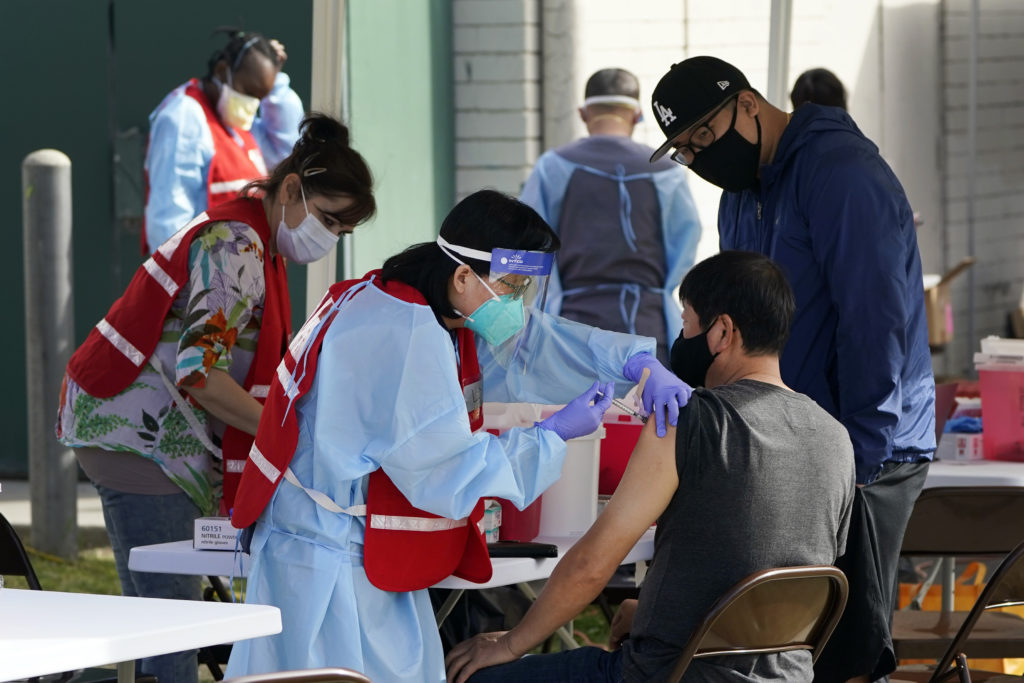
The number of people in Alabama hospitals with COVID-19 dipped Thursday to around 1,000, the lowest since late autumn. The decline in hospitalizations, daily new cases and the percent of tests coming back positive — three major barometers of the pandemic’s severity — is an encouraging sign that the state has emerged from the record-setting winter surge, said Dr. Don Williamson, the president of the Alabama Hospital Association. An unknown, however, is if the state will see another spike from the spread of variants. COVID-19 hospitalizations have declined from more than 3,000 on Jan. 11 to 1,003 on Thursday, the lowest level since early November “These are the best numbers we’ve seen certainly since November,” “We are headed in the right direction if we don’t do anything to mess it up,” Williamson said. Williamson attributed the drop in hospitalizations to both a drop in cases and treatment with monoclonal antibodies to lessen the severity of illness. Other states have also seen a drop in cases. Alabama ranked 22nd among U.S. states in the number of new cases per capita in the past 14 days. The seven-day rolling average of daily new cases in Alabama fell from 2,281 on Feb. 3 to 1,014 on Feb. 17, according to The COVID Tracking Project. Williamson said an unknown is if the state will see another spike from virus variants. At least eight cases of a highly transmissible variant that was first identified in the United Kingdom has been found in the state, according to the Alabama Department of Public Health. The department said many infectious disease experts have indicated that the current vaccines should be effective against the strain, and that the variant has not been definitively linked to worse outcomes. Since the pandemic began, more than 480,000 confirmed and probable virus cases have been reported in Alabama, and 9,424 people have died. Alabama has so far distributed about 685,000 of the 1 million vaccine doses it has received. Early numbers suggest a racial disparity in who is getting the vaccine. Thus far, whites have received about 55% of the doses compared to 12% received by Blacks. The numbers are incomplete, however, because the race of 28% of vaccine recipients was not reported. About 28% of Alabama’s population is Black. Tuskegee University and the University of Alabama at Birmingham School of Medicine have scheduled a town hall for Friday to answer questions about the vaccine and discuss vaccine hesitancy among minority communities. The event will be held via Zoom and is open to the public and the news media. The University of Alabama at Birmingham and UAB Medicine said this week that almost 21% of the 59,167 vaccinations they administered were to individuals who self-identified as Black. “While our early results are better than the national average with Black communities, we are not satisfied and will continue our efforts to increase outreach among underrepresented groups,” Dr. Sarah Nafziger, vice president of clinical operations for UAB Hospital, said in a statement.
In U-turn, feds defend including undocumented in House count
In a reversal of policy under then-President Donald Trump, Biden administration attorneys are arguing that the state of Alabama has no standing in trying to stop the U.S. Census Bureau from including people in the country illegally from the numbers used for divvying up congressional seats. A federal judge should dismiss a lawsuit from Alabama and Republican U.S. Rep. Morris “Mo” Brooks seeking the exclusion of people in the country illegally from the apportionment numbers, attorneys for President Joe Biden’s administration said in court papers Wednesday. At the very least, the judge should put the court case on hold until the Census Bureau releases apportionment figures by the end of April that will show whether Alabama keeps seven congressional seats or drops to six, they said. “The possibility that Alabama might receive only six House seats is, by definition, contingent and speculative,” Biden administration attorneys said. “After all, Alabama might well retain seven House seats regardless of whether undocumented immigrants are included in the apportionment base.” A lot has happened since Alabama first filed the lawsuit in 2018 in a preemptive move to save the state from losing a congressional seat during the process in which the House of Representatives’ 435 voting seats are divided up among the states based on a population count conducted during the once-a-decade census. Last year, Trump issued a memorandum that aligned his administration’s position with Alabama’s efforts to exclude people in the country illegally from the apportionment count. After the memorandum was challenged in multiple lawsuits, the Supreme Court ruled it was premature to decide on its legality because it wasn’t yet clear how many people would be excluded and whether the division of House seats would be affected. Finally, on his first day in office last month, Biden rescinded Trump’s memorandum, as well as a Trump order directing the Census Bureau to produce citizenship data. With all that going on, the judge in the Alabama case wanted an update this week on how to proceed from all sides, including several states and civil rights groups that are fighting Alabama’s efforts and say any harm to the Cotton State is too speculative at this point. The Alabama case is the last one pending over whether people in the U.S. illegally can be excluded from the apportionment count. The Justice Department asked a judge to dismiss the lawsuit two years ago. But it was well before Trump issued his memorandum on apportionment, putting Department of Justice attorneys in the awkward spot of defending a position in opposition to administration policy. But U.S. District Judge David Proctor allowed the case to proceed. After Trump issued his memo last July, the Alabama case was placed on hold until the Supreme Court could rule on the memo’s challenges in other lawsuits. Biden’s order has nullified Alabama’s challenge to a Census Bureau rule that says people should be counted where they live and sleep most of the time since the new president’s directive requires the apportionment count to include the total number of people living in each state regardless of immigration status, Biden administration attorneys said. If Alabama wants to continue the case, a three-judge panel needs to be appointed since it will present a challenge to the constitutionality of the apportionment process, they said. Alabama said in court papers this month that Biden’s order puts the state at risk of losing political representation. Rather than challenging the apportionment process, Alabama is merely challenging Census Bureau operations, so it’s unlike the earlier case in which the Supreme Court ruled a challenge was premature, attorneys for Alabama said. “What is more, the States holding disproportionately more illegal aliens than Alabama are the very states threatening Alabama’s representation,” attorneys for Alabama said. Any ruling would only affect the numbers used for dividing up congressional seats among the seats and not affect other ways the 2020 census figures are used, such as the distribution of $1.5 trillion in federal funding each year. Republished with the permission of the Associated Press.
Dan Sutter: Dealing with scammers
Every society must protect against those who would use violence to steal from others. After controlling criminals, swindlers become a major fear and motivates many government regulations. Yet regulations against fraud allow far worse swindling than markets. Swindling is always wrong, but most people learn to avoid pedestrian scams like the email from an exiled prince seeking to transfer millions of dollars. Many scams violate customs and laws and the courts will help victims if possible. Smart and clever people can perpetrate more serious swindles. Consider how Tom Sawyer convinced the neighborhood boys to whitewash Aunt Polly’s fence for him. The 1967 movie The Producers offers another example, with Zero Mostel and Gene Wilder soliciting investments in a play sure to flop. Such “deals” often do not violate custom or law. Indeed, the other boys happily did Tom’s chores. People who are smart enough to trick us and hurtful enough to not give us our money back threaten commerce. Asking government, which protects us from criminals, to police cheaters seems quite reasonable. Except that when tailored properly by smart, mean people, laws and regulations ostensibly protecting us can allow us to be taken advantage of. Why? In the market, we are free to not deal with anyone for any reason. Refusing to do business may seem like a pea shooter response compared to government’s ability to fine or jail. Yet aggregated over millions of consumers, walking away comprises the power of the market, which can humble any firm. If you doubt the power of the market, look up 1957’s Fortune 500. Readers younger than me will recognize few of the companies. Economist Mark Perry found that only 12 percent of companies from 1957 still make the list. If large businesses were more powerful than the market, Sears would still be America’s leading retailer. Honest people can do more, however, than just refuse to play after being cheated. We devise procedures for honest dealing and exclude those who break our rules. For example, under the “Merchant Law” in medieval Europe, merchants had to submit disputes to a hearing by another merchant. Merchants not accepting a judgment were barred from future trading fairs. Stock exchanges were formed by people recognizing the enormous potential for benefits and fraud offered by stocks. Companies wanting their stock traded had to demonstrate they were not a swindle while brokers had to trade honestly to remain members of the exchange. By contrast, laws and regulations are coercive. The Affordable Care Act required uninsured Americans to buy qualifying policies. Laws must be spelled out in detail and remain in effect until changed. Smart, mean people can shape the details to force us into disadvantageous deals, or essentially legal extortion. As an example, consider patents, which perform the economically valuable function of rewarding inventors for creating great new devices or medicines. Drug companies though create loopholes to extend their patents. Others take out patents not to protect a new product but rather sue others for patent infringement. “Patent trolls” epitomize the legal swindle. In a democracy, we think that we the people control the laws, including the details. Yet members of Congress boast about not reading the bills they pass. Even if we ensure the integrity of bills, they frequently call for hundreds of pages of regulations which can be gamed. And then come interpretations of the regulations. Like when playing chess with an opponent always two or three moves ahead, we will lose. Refusing to trade is ultimately far more effective in controlling misconduct. Not only can honest people protect themselves, smart cheaters realize that cheating does not pay. Economists Ross Levine and Yona Rubinstein found that entrepreneurs incorporating new businesses were “smart and illicit:” they broke rules when young but learned that honest business was more profitable. No one deserves to be conned out of their money. The sentiment to right such wrongs is noble. Unfortunately, laws and regulations outlawing against misbehavior enable even worse scams. Daniel Sutter is the Charles G. Koch Professor of Economics with the Manuel H. Johnson Center for Political Economy at Troy University and host of Econversations on TrojanVision. The opinions expressed in this column are the author’s and do not necessarily reflect the views of Troy University.
