
U.S. colleges divided over requiring student vaccinations
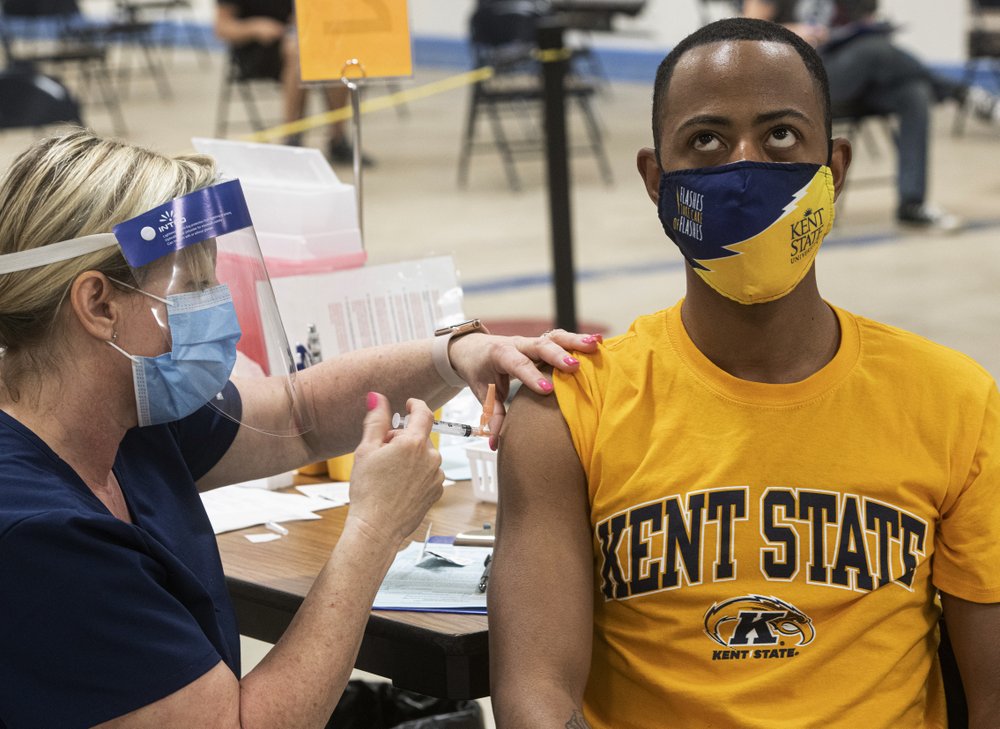
U.S. colleges hoping for a return to normalcy next fall are weighing how far they should go in urging students to get the COVID-19 vaccine, including whether they should — or legally can — require it. Universities including Rutgers, Brown, Cornell, and Northeastern recently told students they must get vaccinated before returning to campus next fall. They hope to achieve herd immunity on campus, which they say would allow them to loosen spacing restrictions in classrooms and dorms. But some colleges are leaving the decision to students, and others believe they can’t legally require vaccinations. At Virginia Tech, officials determined that they can’t because the U.S. Food and Drug Administration has only allowed the emergency use of the vaccines and hasn’t given them its full approval. The question looms large as more colleges plan to shift back from remote to in-person instruction. Many schools have launched vaccination blitzes to get students immunized before they leave for the summer. At some schools, the added requirement is meant to encourage holdouts and to build confidence that students and faculty will be safe on campus. “It takes away any ambiguity about whether individuals should be vaccinated,” said Kenneth Henderson, the chancellor of Northeastern University in Boston. “It also provides a level of confidence for the entire community that we are taking all appropriate measures.” Northeastern and other colleges requiring shots believe they’re on solid legal ground. It’s not unusual for colleges to require students to be vaccinated for other types of diseases, and a California court last year upheld a flu shot requirement at the University of California system. But legal scholars say the COVID-19 vaccines’ emergency use status moves the issue to a legal gray area that’s likely to be challenged in court, and some colleges may take a more cautious approach to avoid litigation. Harvard Law professor Glenn Cohen, who teaches health law and bioethics, said there’s no legal reason colleges wouldn’t be allowed to require COVID-19 vaccinations. It makes no difference that the shots haven’t been given full approval, he said, noting that many colleges already require students to take coronavirus tests that are approved under the same FDA emergency authorization. But there’s also no federal guidance explicitly permitting vaccination mandates. The biggest clashes could come in states taking a stance against vaccination requirements, he said. In Florida, Gov. Ron DeSantis this month banned all businesses from requiring customers to show proof of vaccination. The order raises questions about Nova Southeastern University’s plan to require students and staff to get vaccinated. The college’s president said he’s still confident in the plan, but he also promised to “respect the laws of our state and all federal directives.” The governor of Texas, the country’s second-largest state, issued a similar order. There’s a parallel debate about whether to require vaccination for faculty and staff, an issue that employers across the nation are grappling with. At the University of Notre Dame, one of the latest schools to require student vaccinations, shots are still optional for workers. Northeastern is considering whether to extend its mandate to employees. Even at schools making shots mandatory, there are exemptions. Federal law requires colleges to provide accommodations to students who refuse a vaccine for medical reasons, and most schools are also offering exemptions for religious reasons. At Brown, students who forgo shots and have no valid exemption must file a petition to study remotely or take a leave of absence next fall, the school’s president, Christina Paxson, told students in a letter last week. But enforcing vaccine mandates will bring its own challenges. Cornell and Northeastern say students will be asked to show proof of vaccination, but there is no widely accepted vaccine credential. Cornell told students they can provide the card given out at their vaccination site, but card formats vary and generally seem like they would be easy to forge. At Northeastern, officials are still deciding whether students will have to provide a medical record proving they were vaccinated or whether they will be allowed to attest to having been immunized — essentially taking their word for it. “We would expect students to be honest and forthright about any attestation they make to the university,” Henderson said. Northeastern student Tyler Lee said he thinks requiring vaccinations is the right move because it will help stop the virus’s spread and protect the community around the downtown Boston campus. There has been some pushback from parents, but little from students, he said. “It’s Northeastern’s decision,” said Lee, a senior who is awaiting his second shot. “If I didn’t like it, I would transfer. And that’s what most students feel.” Ariana Palomo, an incoming freshman at Brown, said the university’s mandate sends the message that it’s serious about keeping students safe. She was “happy and relieved” when she heard about it, she said. “I know that I’m going to feel so much safer on campus,” said Palomo, 18. “This is the next step in protecting one another and preventing more lives from being lost.” Schools expect some pushback, and Republican student groups on some campuses have opposed mandates, saying it should be a choice. Colleges are also grappling with what to expect of international students, who may not have access to vaccines in their home countries or who may get shots that are not used in the United States. Some colleges say they’re planning to develop arrangements to make shots available for international students when they arrive. Other colleges are using a lighter touch to promote shots, including at Dickinson State University in North Dakota, which is exempting students from a campus mask mandate two weeks after they are fully vaccinated. Many others are hoping a word of encouragement will be enough. Campus officials at Bowdoin College in Maine said it’s their “hope and expectation” that all students will get shots. Harvard University officials “strongly recommend” that students get vaccinated but have stopped short of a mandate. Some, including Dartmouth College, are waiting for shots to become more widely available before making
Miners continue strike in Alabama after contract rejected

A strike is continuing at two Alabama coal mines after union members rejected a contract proposal. The United Mine Workers of America says the local that represents more than 1,100 workers at Warrior Met Coal Inc. in Tuscaloosa County rejected a tentative deal in balloting on Friday. International President Cecil Roberts says members have the final say in collective bargaining agreements, so the walkout continues. The strike affects two Warrior Met coal mines and related facilities. Negotiations between union representatives and the company had produced a tentative agreement that was announced a week ago. Warrior Met says it offered employees a package that was both competitive and meant to protect jobs at the mines, which produce coal used in steel production overseas. The company reported a loss of about $35 million for last year during the coronavirus pandemic compared to net income of $302 million for 2019. The union says members have already made sacrifices that helped save Warrior Met five years ago. Republished with the permission of the Associated Press.
Alcohol delivery will become legal in Alabama in October
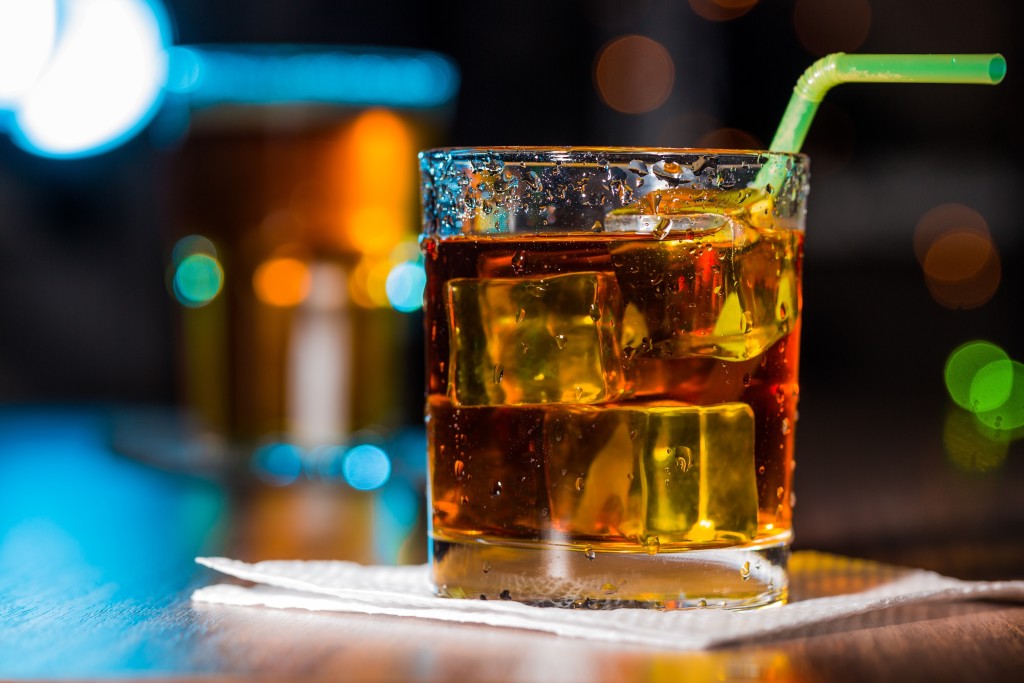
Alabama will allow people to get beer, wine and liquor delivered to their homes, under a bill signed Monday by Republican Gov. Kay Ivey. A spokeswoman announced Ivey had signed the bill. It will become law in October. The beverages would only be delivered to people age 21 and older by companies licensed to deliver. There would also be limits on how much could be delivered in a 24-hour period. For example, beer deliveries would be limited to five cases, and wine deliveries would be limited to 12 bottles. Lawmakers have debated alcohol delivery bills for years, but the proposal never won final approval until this session. Republished with the permission of the Associated Press.
Lawyer says 2 arrested had no role in Confederate chair theft
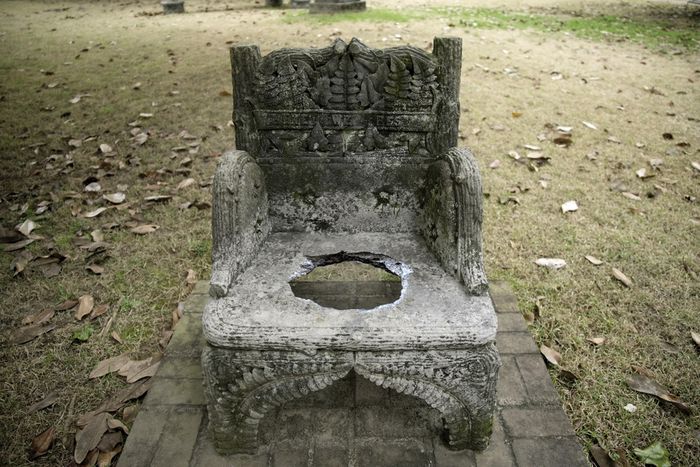
A lawyer for of the two people arrested on charges of possessing a stolen Confederate monument that was taken from an Alabama cemetery said the pair had nothing to do with the theft of the artifact, calling it a misunderstanding. The chair-shaped monument was recovered in New Orleans after it was removed from a cemetery in Selma, Alabama. Someone later sent an email signed “White Lies Matter” claiming responsibility, and then sent fake photos pretending the chair had been turned into a toilet. New Orleans police said last week that Jason Warnick and Kathryn Diionno were arrested on charges of having stolen property in their possession. Authorities said they are also searching for another man in connection with the case. “This is just a big mistake. It really is,” said attorney Michael Kennedy, who represents Warnick. “They had no role in stealing the chair. They have no ties to White Lies Matter.” The strange saga began March 20 when a representative of the United Daughters of the Confederacy reported to police that the “Jefferson Davis Memorial Chair” had gone missing from the Alabama cemetery. The chair has no direct connection to Davis, the president of the Confederacy, but it is a monument to him that sits with other Confederate monuments in a private section of the cemetery. Someone sent an email signed “White Lies Matter” to news outlets earlier claiming responsibility and saying the chair would be returned only if the United Daughters of the Confederacy agreed to display a banner at their Virginia headquarters bearing a quote from a Black Liberation Army activist. “Jefferson Davis doesn’t need it anymore. He’s long dead,” the email read. The United Daughters of the Confederacy local representative told police for the initial theft report that the chair was worth $500,000 although it was not known how the value was determined. A later email included photos of someone wearing Confederate garb posing on a chair, that looked like the missing one, with a hole cut out. And then finally an email said the chair was fake and the real chair was being returned unscathed. The Times-Picayune / The New Orleans Advocate reported that investigators received a tip that the monument was being held inside a storage room at a tattoo shop. Police obtained a search warrant and did not find it. But surveillance video showed a masked woman with a unique tattoo on her right forearm helping five people take the hulking monument out of the shop and load it into the back of a U-Haul van, cops said. Police said they determined Diionno has the same tattoo — of a candlestick — on her right forearm. Michael Jackson, the district attorney in Selma, said he anticipates that Warnick and Diionno will face additional charges in the chair’s theft. Kennedy said that would be a mistake because the two had nothing to do with the theft. “If that is the way they are going, they are very off base,” Kennedy said. A person responding from the “White Lies Matter” address last week said he, or she, couldn’t disclose why the chair was taken to New Orleans but said police were told they could recover it at a certain intersection. The person wrote that those involved in the theft wanted to make a point about residual racism and used what the writer called a bit of “comedy” to garner attention. “The chair is back now. But the racial caste system is also alive and thriving,” the person wrote. Republished with the permission of the Associated Press.
