
Alabama committee backs ban on vaccine requirements
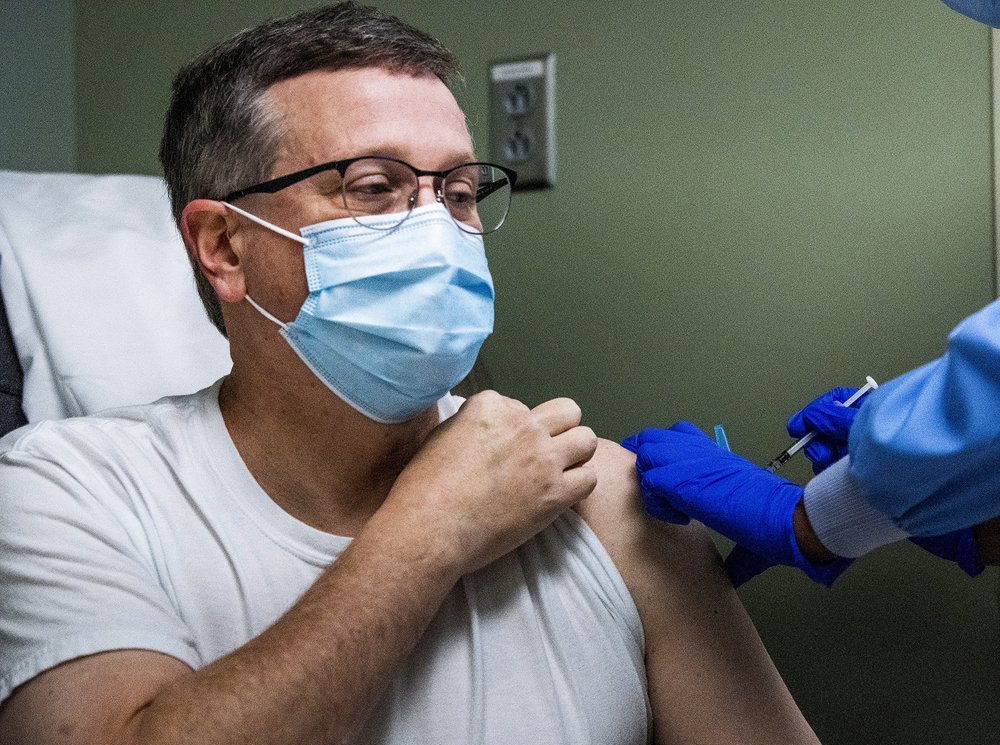
Alabama lawmakers inched closer to approving a ban on so-called vaccine passports that would require proof of coronavirus vaccination to access services from a business or state agency. The House Health Committee voted Wednesday to send the bill to House of Representatives for a vote. It has already cleared the Alabama Senate. The bill contains a number of exceptions. Surgeons, dentists, medical institutions, hospitals and other health care providers are exempted. Universities could still require students to receive a vaccine, however there would be exceptions for vaccines approved for “emergency use” by the FDA. The COVID-19 vaccines are approved for such emergency use. The idea of so-called vaccine passports is to have a document that shows you were vaccinated against COVID-19. Federal officials say there are no plans to make them broadly mandatory, but some Republican governors have issued orders barring businesses or state agencies from asking people to show proof of vaccination. The Senate approved the bill earlier this month by a 30-0 vote. Republished with the permission of the Associated Press.
Database will track officer complaints, disciplinary action

Alabama will create a database to track disciplinary actions and excessive force complaints against law enforcement officers, a measure aimed at weeding out “bad apples” in the profession. Alabama Gov. Kay Ivey on Thursday signed the bill to create a state database to track law enforcement officers’ employment history, disciplinary actions, use of force complaints, and reassignments for cause. Nationwide, there have been calls for greater transparency in policing following the high-profile shootings and deaths of unarmed African Americans with states taking a variety of actions. Former Minneapolis police officer Derek Chauvin was convicted Tuesday in the death of George Floyd, whose killing sparked nationwide protests. Democratic Rep. A.J. McCampbell, a former police officer, sponsored the Alabama bill and said it was aimed at preventing bad actors from moving “from one city to the next city.” “We have great officers. But it’s just like any other profession, you have great actors and you have bad actors. This is an opportunity to weed out the bad actors,” McCampbell, D-Demopolis, said. McCampbell said the governor had helped work on the legislation. The House of Representatives approved the bill 95-4 vote. The Senate approved the bill on a 26-0 vote. The database would not be public. It would be for law enforcement use only, including for police agencies to review a job candidate’s background. “It would make it more difficult for someone who has got a checkered past to hop from law enforcement agency to law enforcement agency. It builds a database so we can sort of weed out the bad apples that everyone continues to talk about,” state Rep. Chris England, D-Tuscaloosa, said Wednesday during a news conference of the Alabama House Democratic Caucus. Former President Donald Trump in June signed an executive order to encourage better police practices and establish a database to track officers with excessive use-of-force complaints. While Alabama lawmakers approved the database creation with few dissenting votes, other policing bills have stalled in the GOP-dominated Legislature. A bill that would establish uniform procedures for the release of police body cameras and dash-camera footage has not gotten a committee vote. Bills that would track officer-involved shootings and mandate uniform investigative procedures also stalled in past years. The Alabama Senate has approved a bill that would require police to collect racial data during traffic stops — a measure intended to prevent the targeting of minority motorists — but the bill has not gotten a vote in the Alabama House. “We support law enforcement. However, we strongly believe law enforcement should be held to a higher standard and their actions should be fair and responsible,” England said. Republished with the permission of the Associated Press.
Senate delays vote on curbside voting ban
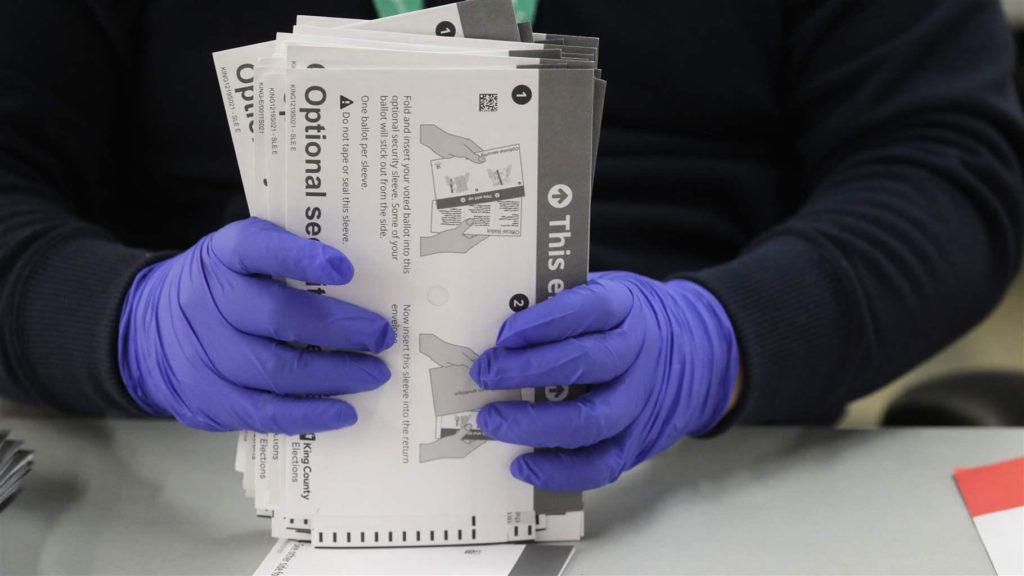
Alabama lawmakers on Thursday delayed a vote on a proposal to ban curbside voting as the state became the latest to debate new restrictions on voting. The debate in the state that was home to key events in the voting rights movement reflected divisions playing out in statehouses nationwide as Republican states seek to enact restrictions in the name of election integrity and Democrats push measures to make voting easier. The Alabama Senate delayed a vote in the face of a Democratic filibuster. No Alabama counties are known to have used curbside voting in the last election, but groups have sought the authorization of the method to make it easier for the elderly, disabled, and parents with young children to cast ballots. “I’m from Montgomery. I come from a family of individuals who literally fought for our rights to vote,” Sen. Kirk Hatcher, D-Montgomery, said. “We should be providing opportunities for people to expand the right to vote,” he said. Republicans argued that the restriction is needed because it would be harder to control the voting process outside. “We have worked to make it easy for everyone to vote. We want everyone to vote, but everyone’s ballot is a secret ballot, and the integrity of that ballot is what we are trying to protect here,” Sen. Dan Roberts, R-Mountain Brook, said. Senators did approve a series of less contentious bills, including GOP legislation, to move up the deadline to request an absentee ballot from five days before the election to seven days prior. Senators approved the bill on a 25-5 vote. It now returns to the Alabama House. Sen. Garlan Gudger, R-Cullman, said the measure is needed to accommodate postal service delays. “It takes time to get there and back … This allows more time for people to vote. That is what this bill does. It doesn’t restrict it,” Gudger said. The bill originally pushed the deadline back to 10 days prior to an election, but senators accepted a Democratic amendment to compromise on seven days. Senators voted 27-4 to approve a bill that makes it illegal for a person to vote in two states in the same election. Senators also voted 32-0 for a proposed constitutional amendment to require election law changes to take effect six months before the election. Both of those bills now move to the House of Representatives. Senate Minority Leader Bobby Singleton said he agreed that voting in two states is “100% fraud” but questioned how much of that is happening. Alabama saw record absentee voting in the 2020 election as rules were loosened during the COVID-19 pandemic, and some counties opened weekend voting to accommodate voters eager to cast ballots ahead of Election Day. Secretary of State John Merrill said people could vote absentee if they had concerns about going to polling places. Normally a person must be out-of-town, ill, disabled, or working a long shift to vote absentee. Democratic efforts to allow early voting in Alabama or make it easier to vote by absentee ballot have fallen flat in the GOP-controlled Legislature. Legislation by Rep. Laura Hall. D-Huntsville, to do away with the excuse requirement, has not gotten out of committee. Hall said allowing people to vote early by absentee ballot would be a convenience to busy voters who may have difficulty getting to the polls during the 12-hour window on election day. Hall said people were happy with the expanded opportunity to vote by absentee in November, and it is something the state should continue. “I spent a lot of time working with different groups to take people to the polls. And I don’t know whether they’re Democrats or Republicans, but they were certainly delighted that they had an opportunity to get that vote done before Nov. 3,” Hall said. Republished with the permission of the Associated Press.
Senate OKs bill to fight hate crimes against Asian Americans

The Senate on Thursday overwhelmingly passed a bill that would help combat the rise of hate crimes against Asian Americans and Pacific Islanders, a bipartisan denunciation of such violence during the coronavirus pandemic, and a modest step toward legislating in a chamber where most of President Joe Biden’s agenda has stalled. The measure would expedite the review of hate crimes at the Justice Department and provide support for local law enforcement in response to thousands of reported violent incidents in the past year. Police have seen a noted uptick in such crimes, including the February death of an 84-year-old man who was pushed to the ground near his home in San Francisco, a young family that was injured in a Texas grocery store attack last year, and the killing of six Asian women in shootings last month in Atlanta. The names of the six women killed in Georgia are listed in the bill, which passed the Senate on a 94-1 vote. Biden applauded the measure, tweeting, “Acts of hate against Asian Americans are wrong, un-American, and must stop.” The House is expected to consider similar legislation in the coming weeks. Democratic Sen. Mazie Hirono of Hawaii, the legislation’s lead sponsor, said the measure is incredibly important to Asian Americans and Pacific Islanders, “who have often felt very invisible in our country, always seen as foreign, always seen as the other.” She said the message of the legislation is as important as its content and substance. Hirono, the first Asian American woman elected to the Senate, said the attacks are “a predictable and foreseeable consequence” of racist and inflammatory language that has been used against Asians during the pandemic, including slurs used by former President Donald Trump. Illinois. Sen. Tammy Duckworth, a former Army helicopter pilot who lost her legs during a 2004 attack in Iraq, said she had been asked what country she was from while wearing her U.S. military uniform. Duckworth, the first member of Congress born in Thailand, said there is more work to be done, but the bill’s passage tells the community that “we will stand with you and we will protect you.” It’s unclear whether the bipartisan bill is a sign of things to come in the Senate, where Republicans and Democrats have fundamental differences and often struggle to work together. Under an agreement struck by Senate leaders at the start of the year, Republicans and Democrats pledged to at least try to debate bills and see if they could reach an agreement through the legislative process. The hate crimes legislation is the first byproduct of that agreement. Some said it doesn’t need to be the last. Hirono said it is her “sincere hope that we can channel and sustain the bipartisan work done on this important piece of legislation” to a larger bill that would change policing laws, which Senate Republicans are negotiating with House Democrats. South Dakota Sen. John Thune, the No. 2 Republican, said ahead of the vote that he hopes the bipartisan example of the hate crimes bill will extend to an infrastructure package that has so far divided the parties. Senate Majority Leader Chuck Schumer, D-N.Y., said the legislation shows that the chamber can work in a bipartisan fashion, and he aims to make that happen as much as possible. “That doesn’t mean we forgo our principles. It doesn’t mean we cut back on the boldness that is needed,” he said. “It means we try to work with our Republican colleagues wherever we can.” But unlike many of the larger, more controversial policy issues Democrats hope to tackle in their new majority, efforts to combat the rising violence against Asian Americans and Pacific Islanders have almost universal backing. More than 3,000 incidents have been reported to Stop AAPI Hate, a California-based reporting center for such crimes, and its partner advocacy groups since mid-March 2020. Republicans said last week that they agreed with the premise of the legislation and signaled they were willing to back it with minor changes, an unusual sign of comity amid frequent standstills in the polarized Senate. Hirono worked closely with Sen. Susan Collins, R-Maine, to incorporate some additional Republican and bipartisan provisions, including better reporting of hate crimes nationally and grant money for states to set up hate crime hotlines. The revised bill would also replace language in the original legislation that called for “guidance describing best practices to mitigate racially discriminatory language in describing the COVID–19 pandemic.” The legislation would instead require the government to issue guidance aimed at “raising awareness of hate crimes during the pandemic” to address some GOP concerns about policing speech. Republicans agreed to back the compromise bill after the Senate also voted on and rejected a series of GOP amendments, including efforts to prevent discrimination against Asian Americans in college admissions and reporting about restrictions on religious exercise during the pandemic. Only one Republican, Missouri Sen. Josh Hawley, voted against the bill. In a statement, Hawley said he believed the legislation was too broad, and “my view is it’s dangerous to simply give the federal government open-ended authority to define a whole new class of federal hate crime incidents.” Rep. Grace Meng, D-N.Y., introduced a similar bill in the House, which she says is expected to be considered in May. “For more than a year, Asian Americans all across our nation have been screaming out for help,” Meng said, and the Senate showed that “they heard our pleas.” Republished with the permission of the Associated Press.
