
Tommy Tuberville joins other leaders to change sexual assault investigations in the military
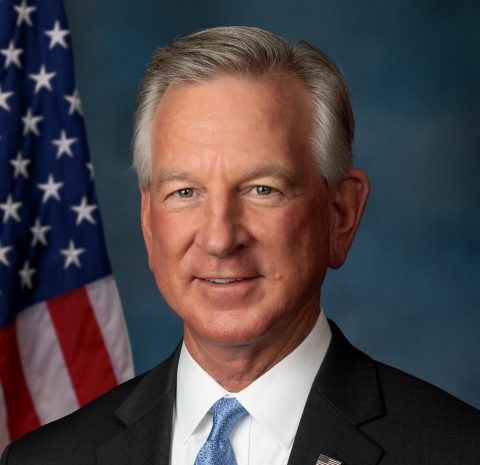
U.S. Senator Tommy Tuberville has joined a bipartisan group of senators to support a bill that will change the way the military conducts sexual assault investigations and prosecutions. Tuberville, a member of the Senate Armed Services Committee Subcommittee on Personnel, joined U.S. Senators Kirsten Gillibrand (D-NY), Chuck Grassley (R-IA), Joni Ernst (R-IA), Richard Blumenthal (D-CT), Ted Cruz (R-TX), Jeanne Shaheen (D-NH), Mark Kelly (D-AZ), and 28 other Senators to introduce the Military Justice Improvement and Increasing Prevention Act. According to the press release, the legislation “keeps the prosecution of sexual assault crimes within the military but moves the decision to prosecute to independent, trained, professional military prosecutors, and provides for several new prevention provisions such as better training for commanders and increased physical security measures, while ensuring that commanders still have the ability to provide strong leadership and ensure a successful command climate.” Tuberville stated, “Our men and women in uniform sacrifice every day to keep us safe, often working in some pretty unsafe places around the world. The last thing they should be worrying about is whether they’re unsafe within their ranks, and they certainly shouldn’t have to fear retaliation if they report a sexual assault. This bill is what happens when a bipartisan group of senators come together to get something done. I’m thankful that Senator Gillibrand and Senator Ernst have led the charge, and I’m glad to join my colleagues in support of this bill that will help improve the way the military handles sexual assaults so survivors can get the justice they deserve.” The bill was introduced in 2019, but did not receive a vote. Specifically, the legislation would: Move the decision on whether to prosecute serious crimes to independent, trained, and professional military prosecutors, while leaving misdemeanors and uniquely military crimes within the chain of command. Ensure the Department of Defense supports criminal investigators and military prosecutors through the development of unique skills needed to properly handle investigations and cases related to sexual assault and domestic violence. Require the Secretary of Defense to survey and improve the physical security of military installations– including locks, security cameras, and other passive security measures – to increase safety in lodging and living spaces for service members. Increase, and improve training and education on military sexual assault throughout our armed services. Kirsten Gillibrand stated on Twitter, “Here’s a bipartisan mission we can all support: Survivors of military sexual assault deserve justice. I’m proud to have @JoniErnst join me this week to introduce our new, improved bill to reform the military justice system and invest in prevention.” Here’s a bipartisan mission we can all support: Survivors of military sexual assault deserve justice. I’m proud to have @joniernst join me this week to introduce our new, improved bill to reform the military justice system and invest in prevention. https://t.co/pYYUL6IRyA — Kirsten Gillibrand (@SenGillibrand) April 27, 2021 The legislation is cosponsored by U.S. Senators Kirsten Gillibrand (D-NY), Chuck Grassley (R-IA), Joni Ernst (R-IA), Richard Blumenthal (D-CT), Ted Cruz (R-TX), Jeanne Shaheen (D-NH), Tammy Baldwin (D-WI), Chris Van Hollen (D-MD), Angus King (I-ME), Michael Braun (R-IN), Dick Durbin (D-IL), Tammy Duckworth (D-IL), Michael Bennet (D-CO), Rand Paul (R-KY), Chris Coons (D-DE), Mark Kelly (D-AZ), Sherrod Brown (D-OH), Bob Casey Jr. (D-PA), Maggie Hassan (D-NH), Mazie K. Hirono (D-HI), Amy Klobuchar (D-MN), Patrick Leahy (D-VT),Elizabeth Warren (D-MA), Ron Wyden (D-OR), Cynthia Lummis (R-WY), Dianne Feinstein (D-CA), Catherine Cortez Masto (D-NV), Raphael Warnock (D-GA), Alex Padilla (D-CA), Shelley Moore Capito (R-WV), Gary C. Peters (D-MI), Tim Kaine (D-VA), Tina Smith (D-MN), Bob Menendez (D-NJ), and Martin Heinrich (D-NM).
A look at what’s next in the release of 2020 census data
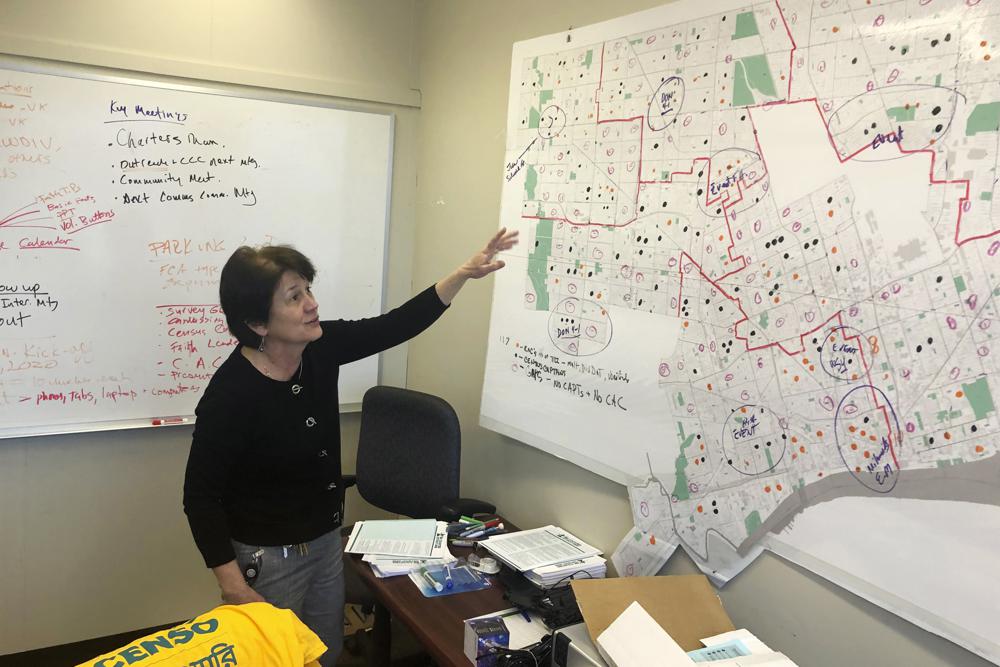
There were some genuine surprises in the first batch of data from the nation’s 2020 headcount released this week by the U.S. Census Bureau. Officials in some Sun Belt states were bewildered they did not gain more congressional seats from the apportionment numbers used for divvying up congressional seats among the states. Officials in states like Alabama, Minnesota, and Rhode Island were relieved they did not lose seats they had been expecting to forgo, with some eking out a save by the slimmest of margins. But the 2020 census is far from over. Here’s what to expect over the next several months. WHAT’S NEXT? To quote The Carpenters’ 1970s song, “We’ve Only Just Begun.” The 2020 census data released this week — state population counts of every resident — were just the tip of the iceberg of what’s coming later. More detailed data on households’ racial, ethnic, and gender makeup, whether they rent or own their homes, and how everybody is related in their homes, at geographic levels as small as neighborhoods, will be released sometime in August and September. States use this granular data to redraw congressional and legislative districts in a process that often leads to bitter, drawn-out, partisan fights. States are in a tizzy this year since the redistricting data won’t be ready until months past the original March 31 deadline because of the pandemic and the discovery of anomalies the Census Bureau needed to iron out. Twenty-seven states are required to finish redistricting this year. States with tight deadlines this year have gone to court to extend them, changed deadlines through constitutional amendments, and talked about using other data sources. Ohio and Alabama have sued the Census Bureau, trying to force the agency to release the redistricting data sooner. ___ IT WAS MY UNDERSTANDING THERE WOULD BE NO MATH The biggest task facing the Census Bureau between now and the release of the redistricting data in August and September is implementing a new, controversial statistical technique for protecting the privacy of people who participated in the 2020 census. The method, differential privacy, adds mathematical “noise,” or intentional errors, to the data to obscure any given individual’s identity while still providing statistically valid information. Opponents say it will result in inaccurate data. Supported by at least 16 other states, Alabama’s lawsuit on the redistricting data timeline also challenges the use of differential privacy. Bureau officials say the change is needed to prevent data miners from matching individuals to confidential details that have been rendered anonymous in the massive data release. The Census Bureau is still tweaking the technique, and this week the bureau said its most recent updates meet its criteria for accuracy. ___ ARE THE NUMBERS ACCURATE? Experts say it’s too early to pass judgment on the accuracy of the apportionment numbers derived from a count challenged by the pandemic, hurricanes, wildfires, and the Trump administration’s failed attempt to add a citizenship question. Three Sun Belt states with large Hispanic populations — Arizona, Florida, and Texas — fell short of earlier estimates, raising concerns among some advocates that Latino communities were missed. Census Bureau officials say they are confident in the accuracy of the apportionment data and that early analyses show the numbers are consistent with what has been seen in the past. Still, because of the difficulties with the count, the Census Bureau has allowed three outside statisticians to review the numbers for their accuracy. The researchers said Thursday that they will issue an initial report in June. ___ CAN A STATE OBJECT? The Census Bureau allows state, local or tribal governments to request a review of the numbers if they believe the figures are off base. The catch, though, is the Census Bureau won’t make any changes to the figures used for divvying up congressional seats among the states or the redistricting data. Any changes made after a review only would be applied starting in 2022, and that would only be helpful when it comes to getting federal funds. States that are unhappy with the apportionment numbers often sue. New York Gov. Andrew Cuomo hinted at legal action after the apportionment numbers came out this week, showing that 89 more people could have kept New York from losing its congressional seat — if no other states counted any more people. A lawsuit certain to disappear was one brought by Alabama in an effort to exclude from the apportionment numbers of people in the country illegally. Alabama claimed it would lose a congressional seat if undocumented residents were included, but the Cotton State defied expectations by keeping its seventh seat. Former President Donald Trump issued a directive attempting to do the same thing, but President Joe Biden rescinded it when he took office in January. Republished with the permission of the Associated Press.
Cheers! Alabama lawmakers approve wine delivery bill
Alabamians might soon be able to have a bottle of cabernet or chardonnay delivered in the mail – as a wine shipment bill, debated for years in the Alabama Legislature, obtained final passage. The Alabama Senate on Thursday voted 27-0 for the bill by Rep. Terri Collins, R-Decatur, and the House of Representatives voted 88-5 to accept Senate changes to the bill. It now goes to Alabama Gov. Kay Ivey for her signature. The bill would allow wineries to obtain a direct wine shipper license from the Alcoholic Beverage Control Board to ship limited quantities of wine directly to Alabama residents 21 and older. Retailers could not ship to residents. Alabama for years stood out as a state where alcohol could not be shipped through the mail. Collins said she began working on the legislation years ago after discovering the issue when she tried to send a present to her mother. “I wanted to send a Mothers’ Day Basket to my mother and at the disclosure at the bottom said everywhere but Alabama. I was like, ‘What? We can’t do that?’” Collins recalled. “Working with lots of interested parties, we may have maybe made that happen,” Collins said. Collins described the approved legislation as a compromise. Only wine producers could do shipments and not retailers. “You can’t go to amazon.com and get your wine,” Collins said. People could do wine of the month clubs only if the wine is shipped from the producer. Ivey’s office has not said whether she will sign the bill, but Ivey earlier this month signed into law a measure that would let people to get beer, wine, and liquor delivered to their homes by licensed delivery companies. After years of resistance, 2021 has been a good vintage for alcohol-related bills in the Alabama Legislature. One year, legislators set up a study commission to research the issues of wine delivery after the measure could not win passage. Collins said she believes there is not as much fear about the issue now. “People change. Opinions about things change,” House Speaker Mac McCutcheon, R-Monrovia, said last week. Republished with the permission of the Associated Press.
$302M in BP oil spill money budgeted to restore ecosystems
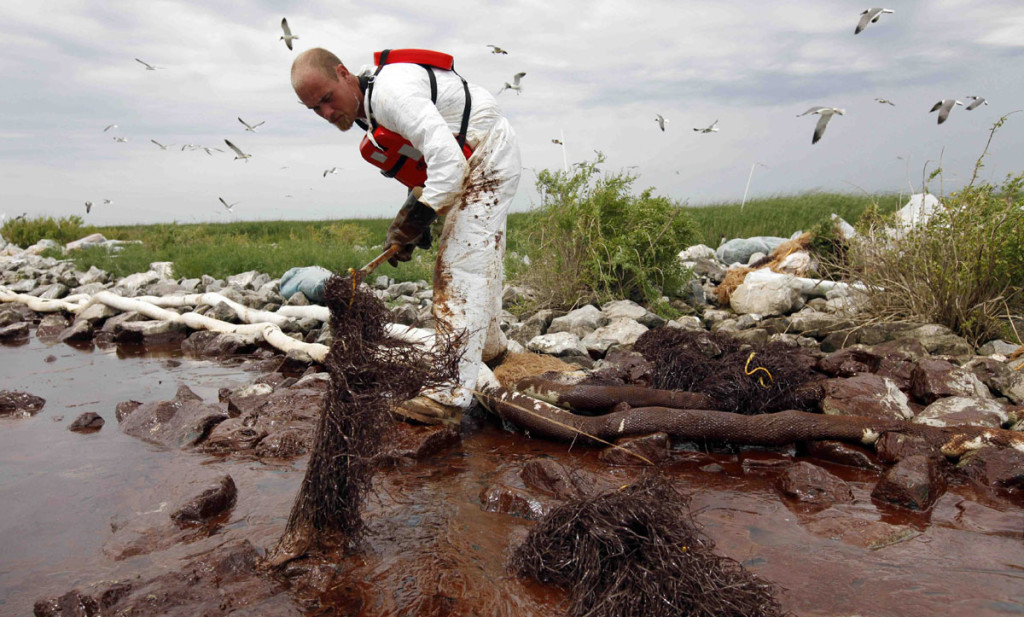
Texas can get up to $79 million in BP oil spill restoration money, Mississippi nearly $69 million, and Florida almost $74 million for ecosystem recovery projects and programs approved or extended this week. Nearly $80 million more in work crossing state lines is listed among the RESTORE Council’s $302 million worth of projects and programs made public Wednesday as part 2 in a group of proposals that brought $130 million last year to Louisiana and $26.9 million to Alabama. However, less than half of Wednesday’s total will be provided immediately. Nine of the 20 projects and programs are getting only planning money. The council said it is budgeting $161.5 million in long-term spending to put those plans into action, but they will need more evaluation and later votes. The council, which allocates money from Clean Water Act fines paid by BP and others after the catastrophic 2010 spill, is made up of officials from the five Gulf states and several federal agencies. Gulf-wide programs OK’d on Wednesday include $11.9 million to continue the Gulf of Mexico Coast Conservation Corps and $927,000 to continue the Tribal Youth Coastal Restoration Program. “Both seek to enhance the environmental vitality of the area’s natural resources while also building the local coastal restoration workforce and giving young adults the skills and experience needed to find jobs in this field,” the council’s report said. The Nature Conservancy, which runs GulfCorps with the National Oceanic and Atmospheric Administration, says its grant will create more than 400 jobs for young adults over four years. “Our TNC staff has helped train the GulfCorps participants in the highly skilled areas of prescribed burning. They also participated in building a living shoreline in Biloxi,” Alex Littlejohn, state director of The Nature Conservancy in Mississippi, said in a news release. “This is an incredible opportunity for real hands-on job training in the field of conservation.” GulfCorps works in all five Gulf states. The Native American program, sponsored by the Bureau of Indian Affairs, works on coastal tribal lands in Florida, Alabama, Mississippi, and Louisiana. It will employ about 80 high-school students each year for three years, said Nanciann Regalado, an Interior Department spokeswoman for projects related to the 2010 spill. The five Texas projects include $24.3 million given final approval to plan for and buy large, high-quality coastal zone tracts including urban green corridors, riparian, prairie and other upland, wooded wetlands, or bay and chenier wetlands. “This program aims to preserve the existing environment now rather than attempt to replace the resources once they are lost,” the report said. Florida’s five projects include $27 million — $6.8 million for planning and $20.3 million budgeted for later implementation of “a suite of linked, high-priority water quality improvement projects” along the Gulf Coast. Those may include stormwater treatment, wastewater reuse, septic tank abatement, sediment reduction, and land acquisition. Alabama is leading three projects which cross into Florida and total $40 million. The biggest is $35.1 million to plan and put into effect water quality improvements in Mobile Bay and Mobile-Tensaw Delta in Alabama, and Perdido Bay and River in Alabama and Florida. That project is getting $16.1 million in planning money, with $19 million budgeted. Alabama is also getting $1 million for more planning to improve the flow of water in Justin’s Bay, located within an island in Mobile Bay. Mississippi’s money is going into the Mississippi Sound, with $34.6 million to plan and implement habitat restoration and more than $34.2 million for water quality improvement planning and work. Nearly $7 million is available for planning of each project, with the rest budgeted for later implementation. Money is coming from a trust fund set up by the RESTORE Act for 80% of the water pollution penalties paid after July 2012 by companies involved in the nation’s worst offshore oil spill. Eleven men died when an oil well BP PLC was drilling off Louisiana in 2010 blew wild. The gusher was about a mile (1.6 kilometers) underwater and spewed an estimated 134 million gallons (507 million liters) of oil over nearly three months. Republished with the permission of the Associated Press.
