
Email Insights: Bloomberg confirms last underwriter out of Kay Ivey prison lease deal
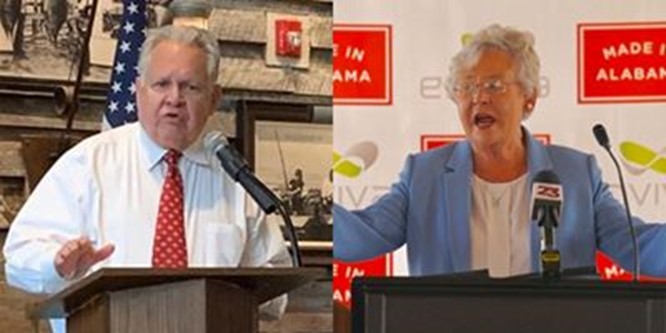
Alabama State Auditor Jim Zeigler says the last underwriter for financing an Alabama prison lease plan has backed out. Zeigler, a vocal opponent of the plan, says it “should be pronounced dead.” Stifel Bank of Cleveland, Ohio follows the two lead underwriters which withdrew from the project April 19 – Barclays of London and KeyBank of Cleveland. The project was to be led by CoreCivic, a Nashville firm in the private prison business. Stifel’s Senior Vice President of Investor Relations, Joel M. Jeffrey, said in an e-mail Monday, May 10: “…this transaction has already been withdrawn from the market. Further, you should understand that Stifel is no longer engaged with CoreCivic, any conduit, or the State of Alabama regarding the financing of the project.” Bloomberg News confirmed the contents of the email and that Stifel is out of the Alabama prison lease project. The plan would contract with three consortiums of private businesses, two led by CoreCivic. The contractors would pay to build three super-prisons in Bibb, Elmore, and Escambia Counties of Alabama. Two of the contracts were signed Feb. 1 with the one in Bibb County pending. “The Kay Ivey plan would force Alabama taxpayers to pay rents starting at $94 million a year and going up to $106 million. At the end of 30 years, the state would own equity in the prisons of zero. No equity. This is a bad business plan,” Zeigler said. “The Ivey plan does not address the problems in the prison system – safety of staff and other inmates; overcrowding; mental health; suicide; recidivism; and inadequate job training. The plan merely throws over $3.6 billion of taxpayer money into rented buildings,” Zeigler said. A bipartisan lawsuit seeking to enjoin the Ivey plan is set Friday, May 14 in Circuit Court of Montgomery County at 9 a.m. Judge Greg Griffin will hear motions to dismiss filed by the state. Zeigler is joined in the suit by three other plaintiffs – State Rep. John Rogers (D-Birmingham); Leslie Osborne, a property owner adjacent to the proposed prison site in Elmore County; and Rev. Kenny Glasgow, a prisoner rights activist from Dothan. The plaintiffs allege that the plan violates the state constitution by creating state debt and violates a law requiring legislative approval to lease a prison. (Please see E-mail below to opponent of the Ivey prison lease plan) As we have communicated, we are interested in your perspective generally and specifically regarding the correctional system in the state of Alabama. With respect to your request that Stifel withdraw from the former transaction led by Barclays, we note that this transaction has already been withdrawn from the market. Further, you should understand that Stifel is no longer engaged with CoreCivic, any conduit or the State of Alabama regarding the financing of this project. As a matter of professional conduct, we endeavor not to discuss prospective or hypothetical transactions, and, to avoid misunderstanding, we will not do so on Tuesday. If you want further information on this specific project, you should reach out to the appropriate person in the government of the State of Alabama. That aside, we look forward to our call. Sincerely, Joel M. Jeffrey Senior Vice President STIFEL | INVESTOR RELATIONS
Kay Ivey announces Alabama will end Federal Pandemic Unemployment Compensation Programs in June

Governor Kay Ivey announced today that Alabama will end its participation in all federally funded pandemic unemployment compensation programs effective June 19, 2021, including: Federal Pandemic Unemployment Compensation (FPUC), which provides for an additional $300 weekly payment to recipients of unemployment compensation. Pandemic Unemployment Assistance (PUA), which provides benefits for those who would not usually qualify, such as the self-employed, gig workers, and part-time workers, Pandemic Emergency Unemployment Compensation (PEUC), which provides for an extension of benefits once regular benefits have been exhausted, and Mixed Earner Unemployment Compensation (MEUC), which provides an additional $100 benefit to certain people with mixed earnings. Any weeks filed prior to and up to June 19 and are eligible under any of the federal program requirements will continue to be processed under these programs. ADOL has reinstated the work search requirement for all claimants, which was temporarily waived during the height of the pandemic. This requires all claimants to actively search for work to remain eligible for unemployment benefits. Ivey stated, “As Alabama’s economy continues its recovery, we are hearing from more and more business owners and employers that it is increasingly difficult to find workers to fill available jobs, even though job openings are abundant. Among other factors, increased unemployment assistance, which was meant to be a short-term relief program during emergency related shutdowns, is now contributing to a labor shortage that is compromising the continuation of our economic recovery.” “Alabama has an unemployment rate of 3.8%, the lowest in the Southeast, and significantly lower than the national unemployment rate. Our Department of Labor is reporting that there are more available jobs now than prior to the pandemic. Jobs are out there,” continued Governor Ivey. “We have announced the end date of our state of emergency, there are no industry shutdowns, and daycares are operating with no restrictions. Vaccinations are available for all adults. Alabama is giving the federal government our 30-day notice that it’s time to get back to work.” Other states including South Carolina and Montana have also announced plans to end unemployment programs in July. After the jobs report was released on Friday, Rep. Mike Rogers stated, “This is a scary time for our country, as the Biden administration and Washington Democrats incentivize people to stay home and collect a government check over seeking good paying jobs. Employers in the Third District have job openings and simply can’t find people willing to fill them. I know folks across East Alabama take pride in a hard day’s work and would rather earn a living than sit back and collect a free check. What liberal Democrats are seeking to do is increase government dependence through government handouts — this is how socialism starts and it’s not who we are as a country.” ICYMI: Rogers on dismal April Jobs Report https://t.co/PtoyM0fHYf — Mike Rogers (@RepMikeRogersAL) May 7, 2021 Alabama Department of Labor Secretary Fitzgerald Washington stated, “We have more posted job ads now than we did in either February or March 2020. Ads for workers in the leisure and hospitality industry are up by 73%. Overall, ads are up by nearly 40%. There are plenty of opportunities available in multiple industries in Alabama.” Free job services are available to all Alabamians through the Alabama Career Center System.
Kay Ivey awards $17 million for broadband services in rural areas
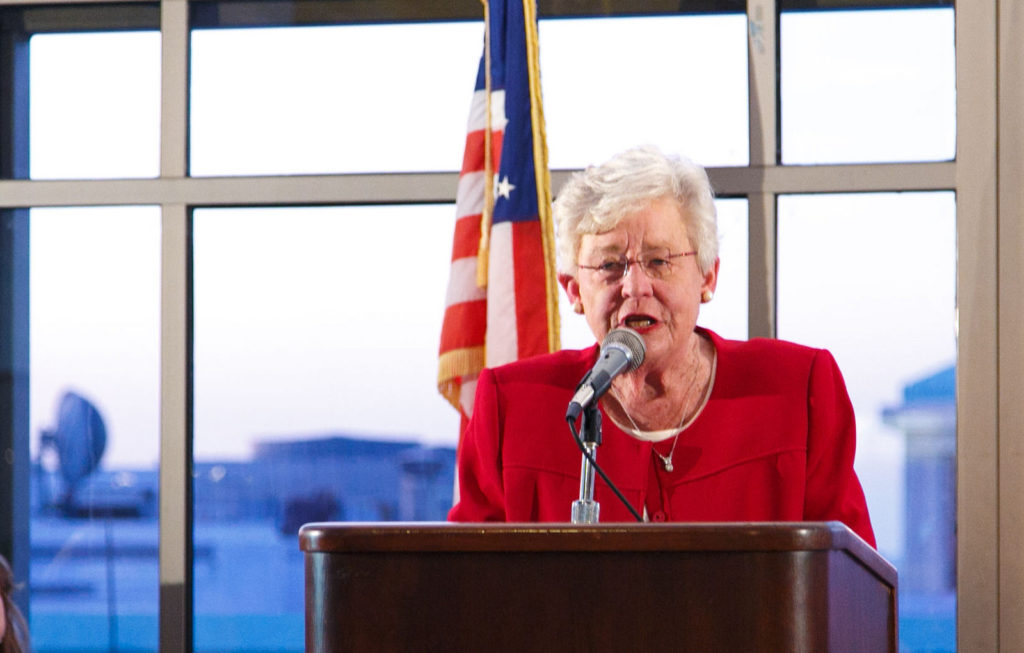
Gov. Kay Ivey has awarded nearly $17 million to help provide broadband services in primarily rural, unserved areas of Alabama. In a statement, she commented, “The COVID-19 pandemic reinforced what we already knew; that Alabama’s broadband coverage is an issue we must continue addressing. Yet, thanks to so many, we are making strides in helping to provide high-speed internet coverage throughout the state. That will make a vast difference for thousands in terms of education, economic development, health care services, and everyday life.” Ivey signed the Alabama Broadband Accessibility Act in March 2018. According to the Alabama Department of Economic and Community Affairs (ADECA) website, the funds are to help provide high-speed broadband services in unserved rural Alabama. Access to high-speed broadband services is important for economic development, education, health care, and emergency services. The fund will help extend services to households, businesses, and community anchors in areas of the state without adequate service. A community anchor usually refers to a public building like a town hall, fire or police department, school library, post office, or community center. The 36 grants awarded by Governor Ivey to multiple broadband providers across the state is the largest amount and number awarded to date from the Alabama Broadband Accessibility Fund. “Access to broadband can make all the difference in the world to a family or rural business whether it is a child being able to participate in a course not offered at their school or a farmer having to go online to order a piece of equipment vital to his operation,” ADECA Director Kenneth Boswell stated. “ADECA is pleased to join Governor Ivey in this program that is making real differences in the lives of Alabamians.” Kay Ivey stated on Twitter, “I’m pleased to award nearly $17 million to help provide broadband services in primarily rural, unserved areas of Alabama. These grants are made possible through the Broadband Accessibility Fund.” I’m pleased to award nearly $17 million to help provide broadband services in primarily rural, unserved areas of Alabama. These grants are made possible through the Broadband Accessibility Fund. #alpolitics @ADECA https://t.co/6K41pFXaqM — Governor Kay Ivey (@GovernorKayIvey) May 10, 2021 Grants awarded and coverage areas are: North Alabama JTM Broadband – $623,277 to supply internet access for 1,122 households, 32 businesses, and one community anchor in a 51-mile stretch near Lexington, Elgin, and Rogersville in Lauderdale County. Comcast Cable Communication – $453,032 to supply services to up to 540 households and five community anchors in Colbert County in vicinity of the town of Leighton and Nitrate City community. Tombigbee Electric Cooperative Inc. – $1.15 million to provide internet access for 770 households, 15 businesses and four community anchors in northeast Franklin County. Tombigbee Electric Cooperative Inc. – $1.26 million to supply internet access for 929 households, 25 businesses and one community anchor in southeast Franklin County. Tombigbee Electric Cooperative Inc. – $578,635 to provide internet service for 530 residences, 10 businesses and two community anchors in southwest Franklin County near Vina. Tombigbee Electric Cooperative Inc. – $556,678 to provide internet connectivity for 323 households and 10 businesses in the Spruce Pine area of Franklin County. Tombigbee Electric Cooperative Inc. – $324,072 to provide internet access for 227 households, 10 businesses and two community anchors near Hodges in Franklin County. Farmers Telecommunications Corp – $84,665 to provide internet access for 106 households in the Dutton area of Jackson County. Farmers Telecommunications Corp. – $116,593 to provide internet access for up to 122 households in DeKalb County in the areas of Lookout Mountain, Little River Canyon and Wade’s Gap. Spectrum Southeast (Charter Communications Inc.) – $25,966 to supply internet services for 20 residences in the Highland Drive area of the city of Arab in Marshall County. Cyber Broadband Inc. – $1.5 million to lay 86 miles of line that will provide internet access for 3,500 households, 50 businesses and 10 community anchors in the Breman and Cold Springs areas in Cullman County. Cyber Broadband Inc. – $1.5 million to provide internet access for up to 2,500 households and multiple businesses and community anchors in the Grandview and Logan areas of west Cullman County. Cyber Broadband Inc. – $581,615 to provide internet access for up to 550 household and 20 businesses in the Simpson Shores and Cold Springs Road areas in Cullman County. Spectrum Southeast (Charter Communications Inc.) – $84,072 to supply internet services for 109 households in the Bright Drive area of Blountsville in Blount County. Spectrum Southeast (Charter Communications Inc.) – $124,611 to provide internet access for 119 households in areas near the city of Jasper and the town of Dora in Walker County. Windstream Alabama – $56,534 to provide internet services to 17 households in St. Clair County in an area southeast of Springville. Windstream Alabama – $107,640 to supply service to up to 70 households and one business in an area north of Odenville in St. Clair County. Central Alabama Spectrum Southeast (Charter Communications Inc.) – $82,262 to provide internet access for 63 residences in the Beasley Road area of Gardendale in Jefferson County. Spectrum Southeast (Charter Communications Inc.) – $44,291 to provide internet access for 31 households southwest of the Fosters community in Tuscaloosa County. Coosa Valley Technologies Inc. – $1.5 million to provide internet access to 739 households, four businesses and three community anchors in an area encompassing part of east Talladega and west Clay counties near the communities of Ironaton and Chandler Springs. Roanoke Telephone Co. – $193,221 to provide internet accessibility to 150 households and two businesses in the Five Points area in Chambers County. Point Broadband Fiber Holding – $587,000 to provide broadband access capabilities to 316 households and 14 businesses in Chambers, Lee and Tallapoosa counties in the vicinity of the town of Waverly and U.S. Highway 280. Windstream Alabama – $117,161 to provide internet services to 43 households in an area south of the town of Camp Hill in Tallapoosa County. Point Broadband Fiber Holding – $71,612 to supply internet service 56 households in the Overlook Drive area southwest of the city of Dadeville in Tallapoosa County. Spectrum Southeast (Charter Communications Inc.)-
Nick Saban tapes message encouraging Alabamians to get vaccinated
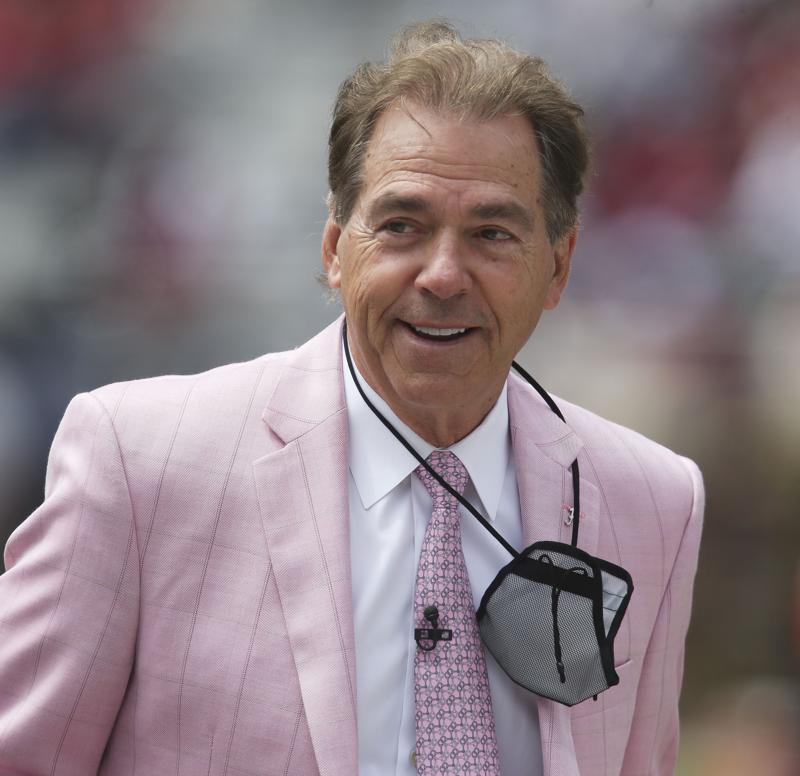
Alabama football coach Nick Saban and other sports figures have taped a public service announcement encouraging Alabamians to get the COVID-19 vaccine. The Alabama Department of Public Health says Saban and others, including former NBA star Charles Barkley, participated in the PSA saying vaccinations are the way to make sure sports stadiums are filled and “loud again” this fall. “College football fans and players both want full stadiums this fall. Let’s make sure we can safely make this happen by getting vaccinated. Please get your COVID-19 vaccine,” Saban says in the spot, according to a script provided to The Associated Press. “We want Bryant-Denny Stadium loud again this coming season and Roll Tide!” The public service announcement is expected to be released next week. It comes as state health officials are looking for ways to boost lagging vaccination rates and persuade people to sign up for shots. Less than 25% of Alabamians have been fully vaccinated, which ranks last nationally, according to the Centers for Disease Control and Prevention. The public service announcement is part of a campaign by the Alabama Department of Public Health to address vaccine hesitancy, State Health Officer Scott Harris said. University of Alabama athletic director Greg Byrne has said the school intends to allow 100% capacity next season for the defending national champions. Byrne posted a tweet saying he appreciated “Coach Saban’s leadership encouraging vaccination.” Republished with the permission of the Associated Press.
Don’t fall back: Alabama seeks permanent daylight saving

Legislators have voted to to permanently switch Alabama to daylight saving time if the U.S. Congress authorizes it. The House of Representatives on Thursday voted 93-1 for the bill. The Alabama Senate passed the bill last month without a dissenting vote. It now goes to Alabama Gov. Kay Ivey for her signature. However, the change cannot take effect unless Congress modifies federal law to allow it. Similar measures have been popular in statehouses across the country. According to the National Conference of State Legislatures, 15 states have enacted legislation or passed a resolution to provide for year-round daylight saving time, if Congress were to allow such a change. Republished with the permission of the Associated Press.
Gambling bill stalls in Alabama House as tempers flare
Lottery and casino legislation stalled in the Alabama House of Representatives on Thursday night after negotiations failed to muster enough support, leaving the outlook for the gambling bill doubtful with just a day remaining in the session. The demise of the legislation led to finger-pointing over who was responsible and an unsuccessful effort by Republicans to switch the bill for a GOP-backed lottery proposal. Republicans accused Democrats of making last-minute demands on the bill. Democrats criticized what they described as a bad-faith push by Republicans to change out the bill. House Speaker Mac McCutcheon said he believes the outlook for the bill is “doubtful” with only a day remaining in the 2021 session. “Tensions were high because people have been working so hard. Everybody was just really upset at the way things were. There was no effort to pull anything behind anybody’s back. We were trying to get a bill on the floor,” McCutcheon told reporters. Democrats criticized a push by Republicans to switch the gambling bill — after a day of negotiations — for a GOP-backed lottery bill. “If you don’t have integrity when you’re dealing with gaming, you need to give it up. And what I have seen in this room tonight, integrity is nowhere around,” Rep. Pebblin Warren, D-Tuskegee, said. The casino and lottery bill needed bipartisan support to win approval because of some conservative members’ opposition to gambling. Sticking points emerged over locations and requests from Democrats to sharpen vague language that proceeds could be used for Medicaid expansion, McCutcheon said. As the bill remained short of needed votes, Republicans pushed to bring a lottery bill to the floor instead and pass it without support from Democrats. The House Rules Committee brought a proposed calendar that included the bill and tried to set a quick vote, although that was later abandoned. House Minority Leader Anthony Daniels said Democrats weren’t involved in conversations about that bill. “We weren’t privy to those particular conversations on our side of the aisle. That was something that was quite disturbing. It was a surprise to us just like it was a surprise to most members in the chamber.” The move also angered some Republicans opposed to gambling. Rep. Rich Wingo, R-Tuscaloosa, said they were pushing a quick vote on the bill that “nobody has read.” McCutcheon said lawmakers were trying to be responsive to constituents’ desire to vote on a lottery bill. Alabama is one of five states without a lottery. Alabamians last voted on a state lottery in 1999 when voters rejected a lottery proposed by then-Gov. Don Siegelman. Republican Rep. Chris Blackshear of Phenix City, who handled the Senate-passed bill in the Alabama House, said Alabamians want to vote on a lottery, but said putting together a bill has proven difficult. “If you’ve ever watched one of those football quarterback contests when they’re having to throw and the targets is the back of a four-wheeler, that’s what we’re doing right now. By the time we get there, the target moves,” Blackshear said Thursday morning before the bill fell apart. The original legislation, which would have to be approved by both lawmakers and state voters, would establish a state lottery to fund college scholarships and nine casinos locations that would be located primarily at existing state dog tracks and sites owned by the Poarch Band of Creek Indians. That bill faced opposition from a mix of Republicans opposed to legalized gambling and lawmakers arguing the bill picks winners and losers by naming casino locations. Some opponents argued it is unfair to exclude existing electronic bingo locations in Greene and Lowndes counties operating under current constitutional amendments. The final day of the legislative session is May 17. “It’s going to be difficult to get it passed now,” McCutcheon said of the gambling bill. Republished with the permission of the Associated Press.
State moves to impeach Alabama sheriff
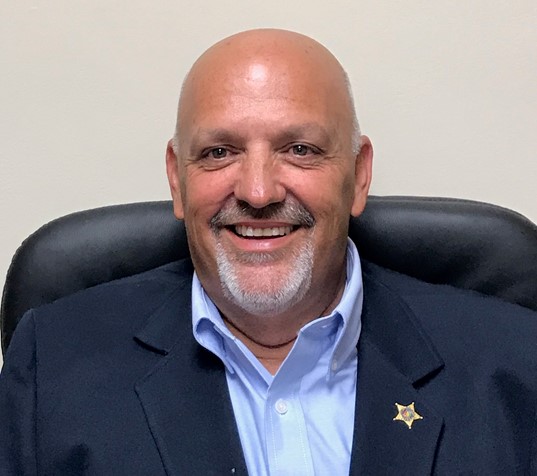
The Alabama attorney general’s office said Friday it had started impeachment proceedings against Clarke County Sheriff Ray Norris, who was accused of multiple acts of malfeasance. Norris first came under investigation last year and papers were served on Friday, Attorney General Steve Marshall said in a statement. First elected in 2010, Norris allegedly used his office to obtain thousands of dollars from a company whose owner got about $140,000 in payments from the sheriff’s office, the attorney general’s office said. Norris also was accused of filing false financial disclosure forms and failing to file a tax return for 2019. That year, Norris failed to disclose $12,700 in contributions from 16 different sources and numerous expenditures, the state alleged. Norris can remain in office until an impeachment trial is held. He did not immediately return a message seeking comment. The Alabama Supreme Court, which will consider the impeachment against Norris, has ordered him to appear on June 2, prosecutors said. Republished with the permission of the Associated Press.
