
Kay Ivey joins 19 other governors urging action at the U.S. border
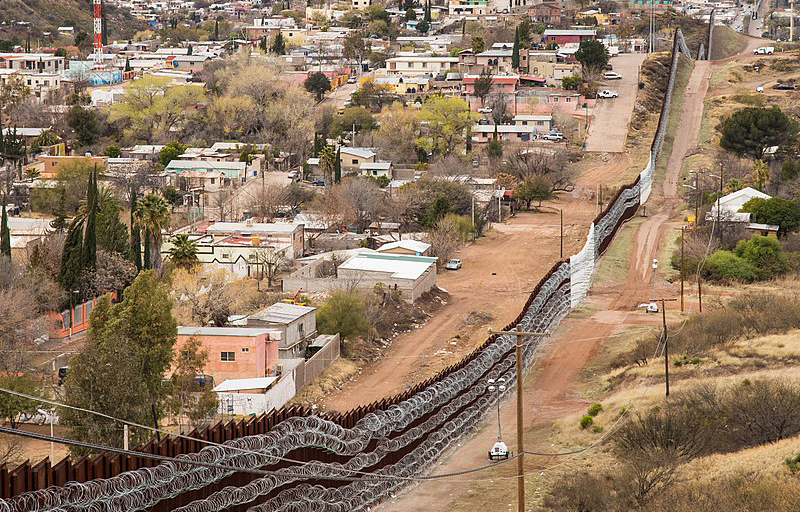
Today Gov. Kay Ivey joined 19 other governors in a call for Joe Biden to take action and reverse their policies regarding the U.S. border. The group wrote a letter to President Biden and Vice-President Kamala Harris describing worsening conditions at the border. In April, Arizona’s governor Doug Ducey declared a state of emergency at the southern border and deployed the Arizona National Guard to support law enforcement agencies in border regions. In May, the Associated Press reported that the State Emergency Council voted to allocate approximately $2.5 million to help pay for the deployment of 250 National Guard personnel to free up law enforcement officers in border towns along the Arizona-Mexico border. Part of the letter states, “This Administration has enticed a rush of migrants to our border and incentivized an influx of illegalcrossings by using irresponsible rhetoric and reversing a slew of policies—from halting border wall construction to eliminating asylum agreements to refusing to enforce immigration laws.” The letter concluded, stating, “At a time when our country is trying to recover from a once-in-a-generation pandemic, the last thing weneed is a self-created crisis that exploits families, undermines public safety, and threatens our national security. We urge you to take action to end the humanitarian crisis and secure our southern border immediately.” Gov. Ivey stated on Twitter, “I’m proud to sign on to this letter with fellow governors urging @POTUS & @VP to take immediate action on the crisis happening at America’s southern border. The crisis is too big to ignore & is now spilling over the border of all of our states.” I’m proud to sign on to this letter with fellow governors urging @POTUS & @VP to take immediate action on the crisis happening at America’s southern border. The crisis is too big to ignore & is now spilling over the border of all of our states. #alpolitics @WhiteHouse pic.twitter.com/lyX6AQsyaE — Governor Kay Ivey (@GovernorKayIvey) May 11, 2021 Other governors who signed the letter are Governors Bill Lee, Tennessee; Doug Ducey, Arizona; Asa Hutchinson, Arkansas; Brian Kemp, Georgia; Brad Little, Idaho; Eric Holcomb, Indiana; Kim Reynolds, Iowa; Tate Reeves, Mississippi; Mike Parson, Missouri; Greg Gianforte, Montana; Pete Ricketts, Nebraska; Chris Sununu, New Hampshire; Doug Burgum, North Dakota; Kevin Stitt, Oklahoma; Henry McMaster, South Carolina; Kristi Noem, South Dakota; Greg Abbott, Texas; Spencer Cox, Utah; and Mark Gordon, Wyoming.
Steven Reed and Randall Woodfin: Hope is on the horizon in Alabama thanks to the American Jobs Plan
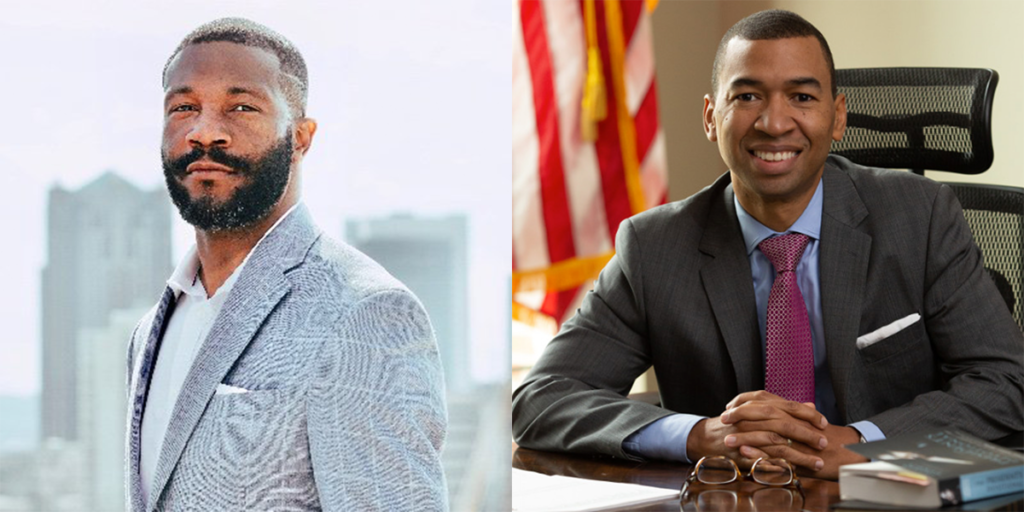
As our country and our communities continue their response to and recovery from the COVID-19 pandemic, hope is on the horizon, thanks to the American Jobs Plan. The Biden Administration’s American Rescue Act is helping with our nation’s continued recovery, but it is not enough to just recover. We need to address systemic inequities in our economy to create a more prosperous future for all residents. The American Jobs Plan is the overhaul our cities need to position our country for long-term success. President Joe Biden has put forth a plan that will ease the undue financial burdens facing many of our families, friends, and neighbors. And while many are struggling to survive week to week amid financial uncertainties, the American Jobs Plan offers the solutions that will ensure we have the opportunity to thrive long into the future. When Alabama entered into a stay-at-home order on April 3, 2020, we could not fathom the devastating human, social and economic impacts the COVID-19 virus would have on our residents and communities. Lives and livelihoods have been destroyed. Nearly 10% of Alabama’s population has been infected with the virus, and over 10,000 of our family members, friends, neighbors, and coworkers have died as a result of Coronavirus. The unemployment rate has almost doubled. 13 percent of adults in our state report not having enough food to eat. 21 percent of those renting their place to live report being behind on their rent payments. Almost 40 percent of adults in Alabama report having difficultly covering normal household expenses. Thousands of our young people have fallen behind academically from a lack of reliable internet. Too many of our small businesses have closed completely or laid off employees. These hardships were not caused by a lack of individual responsibility on the part of our residents; these were the tragic consequences of the pandemic. But hope is here. The American Jobs Plan will complement our local recovery efforts by solidifying the path forward to help fully heal those who have suffered immense loss, layoffs, shuttered businesses, or any measure of financial hardship due to the COVID-19 pandemic. Instead of fraught attempts to reignite the United States’ economy through stagnant or outdated systems, the Jobs Plan brings bold ideas and decisive action. It calls for investing in innovation and infrastructure to position us for the workforce and jobs of tomorrow. During the heights of the pandemic, we stood strong together in one of the greatest tests of our generation – a time that would have tested the mettle of any generation. Now, President Biden’s plan seeks to unify and mobilize our nation to meet the challenges ahead. We will overhaul our roads, bridges, highways, airports, rail lines, and ports to modernize the corridors of commerce throughout our country. In doing so, we will get Americans moving again. We will see the expansion of high-speed broadband access for all Alabamians and critical upgrades to information systems at core institutions like Maxwell-Gunter Air Force Base and Red Stone Arsenal, both of which play a major role in Alabama’s economy. We will be makers and creators again as President Biden’s Jobs plan stands alongside his Made in America Plan to foster growth and job creation at home. It will inspire an entirely new generation of entrepreneurs while encouraging proven innovators in our communities, like Chaymeriyia Moncrief. Chaymeriyia is a young Black woman from Montgomery whose vision and courage led to the creation of Tesix Wireless. Today, Tesix Wireless is valued at $10 million. Or like Selena Rodgers Dickerson, a Black woman from Birmingham who created her own engineering services firm in 2010 after getting laid off from her job during the nation’s worst economic crisis since the Great Depression. Selena’s firm, SARCOR, built a niche working in civil engineering and inspection services, primarily in the government/transportation space. Their stories shouldn’t be the exception but the rule. The American Jobs Plan – along with the Made in America Plan – will empower those with actionable ideas who live and work among us to stay in our communities and keep living and working with us. These are just some of the many ways the American Jobs Plan will help our local economies in Alabama, as well as those throughout the nation, rebound together. Challenges create opportunity, and tragedy begets triumph. We will overcome these challenging times to realize a more prosperous and equitable future for all. Steven L. Reed is mayor of Montgomery, and Randall L. Woodfin is mayor of Birmingham.
Congressmen Mo Brooks, Robert Aderholt, and Gary Palmer agree: America needs to ‘get back to work’

Tuesday, Congressman Mo Brooks praised states that are rejecting federal government unemployment payouts. On Tuesday, Gov. Kay Ivey announced that Alabama would end its participation in all federally funded pandemic unemployment compensation programs in June. Other states like South Carolina and Montana have already announced similar plans as well. Brooks stated, “In America, we believe in working for a living. No able-bodied working age person should be living off the hard work of others. Predictably, paying people more not to work than to work has created an unnecessary worker shortage. Joe Biden’s claim that the abysmal April unemployment report isn’t tied to paying people more not to work than to work is an affront to common sense. Employers and small business owners across America are closing or operating at reduced hours because they cannot afford to compete against the federal government’s increased unemployment payments. As I travel the state, I’ve seen examples on nearly every street corner of employers offering good jobs that they are unable to fill. I’m glad economically responsible states are wising up and ending the asinine policy of paying the takers more taxpayer money to stay home rather than work for a living.” Congressman Gary Palmer also praised Ivey’s unemployment decision as well, stating on Twitter, “I applaud @GovernorKayIvey for taking this step towards allowing business to fully open in Alabama. Continued dependence on federal unemployment benefits will only hinder our economic recovery.” I applaud @GovernorKayIvey for taking this step towards allowing businesses to fully open in Alabama. Continued dependence on federal unemployment benefits will only hinder our economic recovery. My full statement here:https://t.co/Tdr2yWk8cf — Gary Palmer (@USRepGaryPalmer) May 10, 2021 According to CNBC, the unemployment rate rose to 6.1% amid an escalating shortage of available workers. Economist Jason Furman stated to CNBC, “I think this is just as much about a shortage in labor supply as it is about a shortage of labor demand. If you look at April, it appears that there were about 1.1 unemployed workers for every job opening. So there are a lot of jobs out there, there is just still not a lot of labor supply.” Montana Governor Greg Gianforte stated, “I hear from too many employers throughout our state who can’t find workers. Nearly every sector in our economy faces a labor shortage.” Robert Aderholt also agrees with Brooks, Palmer, and Ivey on the move away from increased federal unemployment benefits. Aderholt commented on Twitter, “I applaud @GovernorKayIvey for this decision. With so many jobs available across our state, there is no need for endless unemployment benefits. As the recent jobs report shows, this is hurting our economy, not helping it.” I applaud @GovernorKayIvey for this decision. With so many jobs available across our state, there is no need for endless unemployment benefits. As the recent jobs report shows, this is hurting our economy, not helping it. https://t.co/94CDG5F9Kv — Robert Aderholt (@Robert_Aderholt) May 10, 2021
Pfizer COVID-19 shot expanded to U.S. children as young as 12
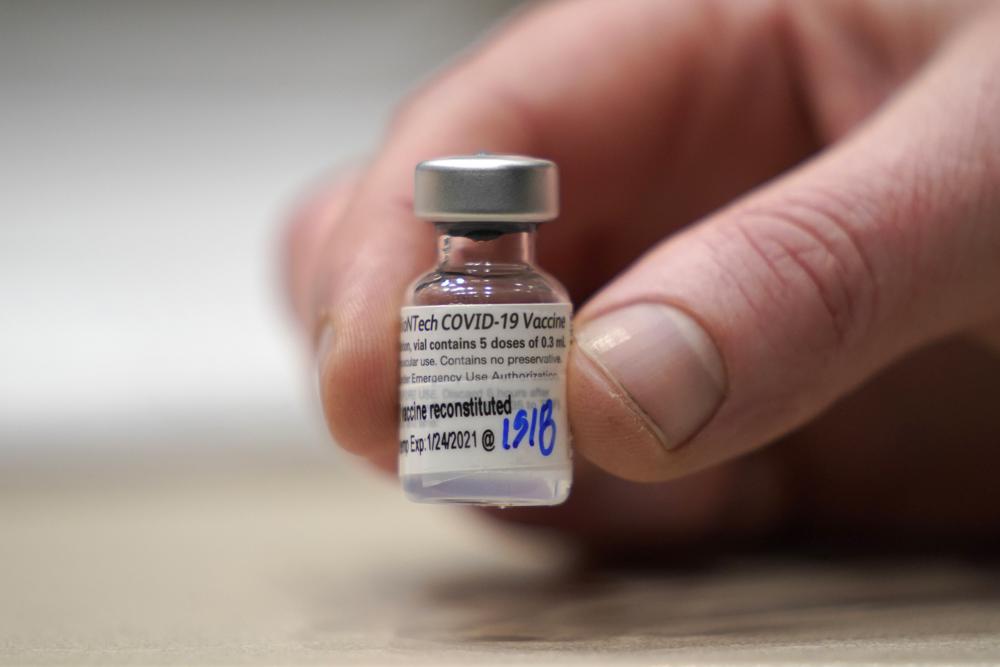
U.S. regulators on Monday expanded the use of Pfizer’s COVID-19 vaccine to children as young as 12, offering a way to protect the nation’s adolescents before they head back to school in the fall and paving the way for them to return to more normal activities. Shots could begin as soon as Thursday, after a federal vaccine advisory committee issues recommendations for using the two-dose vaccine in 12- to 15-year-olds. An announcement is expected Wednesday. Most COVID-19 vaccines worldwide have been authorized for adults. Pfizer’s vaccine is being used in multiple countries for teens as young as 16, and Canada recently became the first to expand use to 12 and up. Parents, school administrators, and public health officials elsewhere have eagerly awaited approval for the shot to be made available to more kids. “This is a watershed moment in our ability to fight back the COVID-19 pandemic,” Dr. Bill Gruber, a Pfizer senior vice president who’s also a pediatrician, told The Associated Press. The Food and Drug Administration declared that the Pfizer vaccine is safe and offers strong protection for younger teens based on testing of more than 2,000 U.S. volunteers ages 12 to 15. The agency noted there were no cases of COVID-19 among fully vaccinated adolescents compared with 16 among kids given dummy shots. More intriguing, researchers found the kids developed higher levels of virus-fighting antibodies than earlier studies measured in young adults. The younger teens received the same vaccine dosage as adults and had the same side effects, mostly sore arms and flu-like fever, chills or aches that signal a revved-up immune system, especially after the second dose. Pfizer’s testing in adolescents “met our rigorous standards,” FDA vaccine chief Dr. Peter Marks said. “Having a vaccine authorized for a younger population is a critical step in continuing to lessen the immense public health burden caused by the COVID-19 pandemic.” Pfizer and its German partner BioNTech recently requested similar authorization in the European Union, with other countries to follow. The latest news is welcome for U.S. families struggling to decide what activities are safe to resume when the youngest family members remain unvaccinated. “I can’t feel totally comfortable because my boys aren’t vaccinated,” said Carrie Vittitoe, a substitute teacher and freelance writer in Louisville, Kentucky, who is fully vaccinated, as are her husband and 17-year-old daughter. The FDA decision means her 13-year-old son soon could be eligible, leaving only her 11-year-old son unvaccinated. The family has not yet resumed going to church, and summer vacation will be a road trip so they do not have to get on a plane. “We can’t really go back to normal because two-fifths of our family don’t have protection,” Vittitoe said. President Joe Biden said Monday’s decision marked another important step in the nation’s march back to regular life. “The light at the end of the tunnel is growing, and today it got a little brighter,” Biden said in a statement. Pfizer is not the only company seeking to lower the age limit for its vaccine. Moderna recently said preliminary results from its study in 12- to 17-year-olds show strong protection and no serious side effects. Another U.S. company, Novavax, has a COVID-19 vaccine in late-stage development and just began a study in 12- to 17-year-olds. Next up is testing whether the vaccine works for even younger children. Both Pfizer and Moderna have begun U.S. studies in children ages 6 months to 11 years. Those studies explore whether babies, preschoolers, and elementary-age kids will need different doses than teens and adults. Gruber said Pfizer expects its first results in the fall. Outside of the U.S., AstraZeneca is studying its vaccine among 6- to 17-year-olds in Britain. And in China, Sinovac recently announced that it has submitted preliminary data to Chinese regulators showing its vaccine is safe in children as young as 3. Children are far less likely than adults to get seriously ill from COVID-19, yet they represent nearly 14% of the nation’s coronavirus cases. At least 296 have died from COVID-19 in the U.S. alone, and more than 15,000 have been hospitalized, according to a tally by the American Academy of Pediatrics. That’s not counting the toll of family members becoming ill or dying — or the disruption to school, sports and other activities so crucial to children’s overall well-being. The AAP welcomed the FDA’s decision. “Our youngest generations have shouldered heavy burdens over the past year, and the vaccine is a hopeful sign that they will be able to begin to experience all the activities that are so important for their health and development,” said AAP President Dr. Lee Savio Beers in a statement. Experts say children must get the shots if the country is to vaccinate the 70% to 85% of the population necessary to reach what’s called herd immunity. In the meantime, the Centers for Disease Control and Prevention says unvaccinated people — including children — should continue taking precautions such as wearing masks indoors and keeping their distance from other unvaccinated people outside of their households. Republished with the permission of the Associated Press.
Alabama yoga ban repeal comes down to session’s last day

A bill to repeal Alabama’s ban on yoga in public schools will be decided on the final day of the legislative session. The Alabama Senate on Thursday voted 23-7 for the House-passed bill but added additional restrictions. The bill’s sponsor Rep. Jeremy Gray, D-Opelika, said he is weighing whether to accept the changes or go to conference committee and risk running out of time to pass the bill on the busy final legislative day. Alabama lawmakers meet for the final day of the session on May 17. Gray said he thinks some of the Senate changes show phobias or “blatant disrespect to the Hindu culture.” The amendments included a definition of meditation to ban anything “associated with or derived from mystical traditions of the East.” It also requires parents to sign a permission slip. Gray said his first instinct is to reject the Senate changes because there are things he doesn’t like about the amendments. “I’m trying to weigh the pros and cons because there is a great chance I will kill the bill if I don’t concur,” Gray said. Lawmakers are attempting to undo a decades-old ban on yoga in public schools. The Alabama Board of Education voted in 1993 to prohibit yoga, hypnosis, and meditation in public school classrooms. The bill by Gray says school systems could authorize yoga if they choose. Yoga done in school would be limited to poses and stretches, and all poses would have to have English names. The use of chanting, mantras, and teaching the greeting “namaste” would be forbidden. Gray, a former cornerback at North Carolina State University, said he was introduced to yoga through football and said the exercises can provide mental and physical benefits to students. Many professional and college sports teams incorporate yoga into their training because of the benefits to flexibility and concentration, he said. Republished with the permission of the Associated Press.
