
Former Gov. Don Siegelman regains law license

Former Alabama Gov. Don Siegelman has regained his state law license, years after being released from federal prison in a government corruption case. The Alabama Bar Association on Monday confirmed that Siegelman’s license was restored in December after he went through an application process. The former governor, 75, told The Associated Press that he expects to do a mix of criminal and civil work. He said he would like to work with public defenders or advocacy groups to take on criminal defense cases. “I look forward to finding those special cases in which I believe and feel like I can make a difference and working either pro-bono or with another lawyer,” Siegelman said in a telephone interview. Siegelman has become an advocate for making changes to the criminal justice system, including “providing a measure of justice to families who lose someone to the abuse of power or use of excessive force by police.” Siegelman, for decades, was a dominating figure in Alabama politics, holding the offices of secretary of state, attorney general, lieutenant governor, and governor. He served as Alabama’s governor from 1999 to 2003. He was the last Democrat to hold the position in the conservative state. Siegelman was released from prison in 2017 after serving a six-year sentence for his conviction on charges of bribery and obstruction of justice. A federal jury in 2006 convicted Siegelman on charges that he sold a seat on a state regulatory board to HealthSouth founder Richard Scrushy in exchange for $500,000 in donations to Siegelman’s signature political issue — his 1999 campaign to establish a state lottery. Siegelman was convicted on a separate obstruction of justice charge that he tried to hide money he received from a lobbyist. Siegelman maintained his innocence and unsuccessfully waged a lengthy battle in court and in the media to try to overturn his conviction. His lawyers argued his prosecution was motivated by Republicans upset by the Democrat’s political success and that the conviction was backed up by scant evidence. Republished with the permission of the Associated Press.
Jefferson County Court clerk charged with stealing $38,000
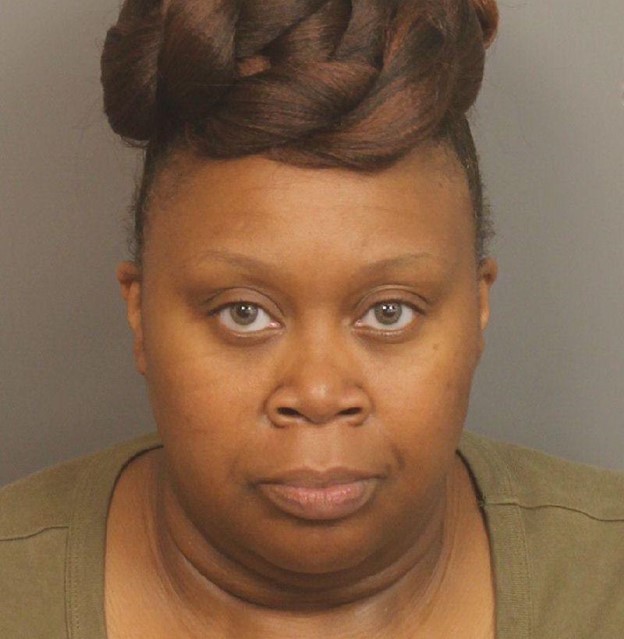
Jefferson County court employee Taraneicha Carmichael was arrested for stealing $38,000 paid to the court system. The arrest happened on Monday, May 10, 2021 after a lengthy investigation. Carmichael was charged with Theft of Property 1st Degree Warrant with a bond of $30,000, WBRC reported. The money was stolen from payments made for name changes, wills, and motions for records. It does not appear that any of the thefts were for court costs or restitution. Carmichael allegedly would void the cash payments and keep the money for herself. Sheriff’s Sgt. Joni Money said they believe some of the thefts may have taken place as far back as 2019, reported al.com. Carmichael has resigned from the Probate Court of Jefferson County. She turned herself into the Jefferson County Jail and was released on a $30,000 bond. She will return to court in June.
Alabama leads nation in eliminating Chinese Communist Party influence in higher education

Lawmakers hailing from both sides of the aisle in Washington are shifting their focus to an increasingly relevant threat towards national security and academic freedom: Confucius Institutes. Funded by the Chinese Communist Party (CCP), these institutes have expanded to over 67 individual university campuses nationwide, with an additional 500 Confucius Classrooms at K-12 schools. Ambiguously labeled as cultural centers, Confucius Institutes have simultaneously proven themselves to be a vehicle of China’s political agenda through propaganda and intelligence gathering. Within these classrooms, historical events are only permitted to be discussed through a rosy lens towards the Chinese government, while documented events such as the 1989 Tiananmen Square protests, or the current human rights abuses against the Uyghurs, are prohibited from the entirety of classroom discourse. During a U.S. Senate Intelligence Committee hearing, Federal Bureau of Investigation (FBI) Director Christopher Wray confirmed that the FBI has observed China use “nontraditional collectors, especially in the academic setting” to engage in espionage and will continue to take “investigative steps” at Confucius Institutes. Additionally, the U.S. Department of State designated Confucius Institutes as “an entity advancing Beijing’s global propaganda and malign influence campaign on U.S. campuses and K-12 classrooms.” The state of Alabama has hosted two Confucius Institutes in its history; with established institutes at Alabama A&M University, Auburn University at Montgomery, and Troy University. Alabama A&M University’s Confucius Institute successfully closed in April 2021 after receiving notification of a potential loss of eligibility for federal funds. Other key actors in the state who advocated for the closure of Confucius Institutes include groups such as the College Republican Federation of Alabama as well as legislators Congressman Mo Brooks and State Representative Tommy Hanes (R-Bryant). Congressman Mo Brooks, a member of Alabama’s congressional delegation, was one of the initial Washington lawmakers to bring attention to the influence of Confucius Institutes. Brooks has served as an original cosponsor for the Higher Education Transparency Act, the Transparency for Confucius Institutes Act, the Foreign Influence Transparency Act, in addition to bipartisan effort, the Concerns Over Nations Funding University Campus Institutes in the United States (CONFUCIUS) Act. While the state of Alabama has made national headway in approaching the closure of Confucius Institutes within its state, not all of Alabama’s leading figures are zealous to join the national movement to limit foreign influence in the U.S. education system. Alabama House Bill 9 and Senate Bill 280, respectively, intended to cease funding of Confucius Institutes and were both opposed by Chair of the House Education Policy Committee, Terri Collins (R-Decatur), and Senator Jim McClendon. It was later revealed that Senator McClendon embarked on a 2015 Confucius Institute-sponsored trip to China. A number of former Alabama legislators, including a Troy University board of trustees member, also participated in the same Confucius Institute-sponsored international trip. Troy University continues to defend its relationship with its Confucius Institutes in a written statement, “Troy University’s association with the Confucius Institute has been positive, and we have seen no evidence of undue political influence from the Chinese government nor has there been any evidence of intellectual theft.” Time will tell if the state of Alabama will continue to lead the nation in defending national security and preserving academic freedom through the closure of the state’s last remaining Confucius Institute at Troy University.
Will Sellers: Loyalty still matters
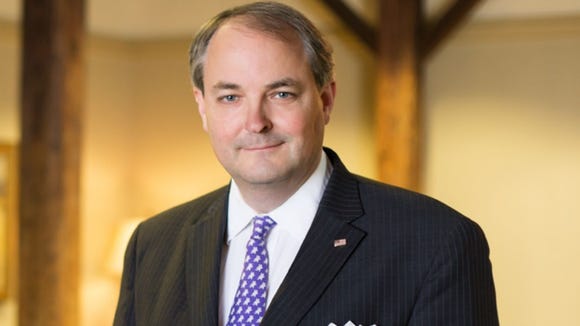
Always the catch-all political crime, an accusation of treason is used to punish rivals and remove them from civic engagement. Autocrats use the insinuation of treason with brutal efficiency to banish, if not execute, a political problem or inconvenient idea. While treason is bandied about to characterize someone with whose political beliefs we disagree, our founders made treason a particularly difficult crime to prove. As with so much of the Constitution, the terms were specifically written to prevent abuses witnessed by colonials. Article III, Section 3 not only provides safeguards that treason not be used to silence political opponents, but it also limits the extent of any punishment. Because of these strictures, we often forget what real treason looks like and fail to fully appreciate loyalty to country or creed. While national ties are not unlike family bonds, this intrinsic loyalty to place or relations is often weakened by opportunity or ideology. Few people today really know a traitor to their country. There may be disagreements on any number of levels, but seldom do acts fully rise to the level of treason within the Constitutional definition. Treason in the United States is more than a lazy term of derision occasioned by mere policy disagreements. Seventy years ago, when highly placed British diplomats surreptitiously defected to the Soviet Union, treason was made manifest. In May 1951, the Cold War was escalating between the capitalist West and the communist East. The United States had witnessed hearings before the House Un-American Activities Committee, and citizens were rocked by allegations of Soviet agents operating within our nation’s government. Alger Hiss had been convicted of perjury, which fanned the flames that other government employees had divided loyalties and worked for the Russians. But many of the accused denied any involvement in espionage; for every accusation, there was denial and not always crystal-clear evidence of treason. In a sensational trial held in March 1951, Julius and Ethel Rosenberg were convicted of espionage, but there was hardly uniform consensus that they were significantly guilty, and there was enough evidence to question the appropriateness of the death penalty. In similar cases, the accused were defiant and vociferously expressed innocence. Thus, the county was divided about whether the treason was actual and if those accused were more political dissenters than disloyal Americans. The actions of the British diplomats and the subsequent revelations after their defection left no doubt that our former allies, the Russians, had for years spied on us and penetrated both British and American governments at a very high level. At Cambridge University in the 1930s, several undergraduates, including Guy Burgess and Donald MacLean, were recruited by the Soviets to provide information about Great Britain. They were from privileged families and considered among the elite attending a premier university. Nothing in their background gave the slightest hint that their loyalties had shifted from King and Country to Joseph Stalin and the Bolsheviks. MacLean joined the British foreign office in 1934 and almost immediately began supplying information to the Russians. Until his defection in 1951, he delivered more than 4,500 documents to his Soviet handlers. Burgess was initially employed by the BBC and British Secret Service and, later, with the foreign office. While working as a spy, he supplied the Soviets with more than 4.600 confidential or top-secret documents. Using information obtained from MacLean, the Russians leaked a copy of a letter from Winston Churchill to President Harry Truman, which included an embarrassing assessment of Stalin. The FBI believed the leak had come from the British Embassy and suspected MacLean, but they were unable to confirm their suspicions. Later, as Western intelligence services began decrypting old Soviet traffic between Washington and Moscow, MacLean emerged as a leading suspect, given his access to a host of sensitive documents about the US, British, and Canadian committee on the development of atomic weaponry. Recalled to London, MacLean was tipped off by fellow Cambridge spy Kim Philby (who was stationed in DC with knowledge of the investigation) that he was under suspicion. Given the stress of his dual identity, MacLean started drinking heavily and was viewed as so unstable that, once accused, he would confess and implicate others. Not wanting to risk exposure, Burgess and Philby explained to Moscow that MacLean must leave Britain, and Burgess began making plans for MacLean to defect. At this same time, Burgess was dismissed from the foreign service based on conduct unrelated to his espionage. With his career at an end, he decided to accompany MacLean. Moscow felt a dual defection with mutual support could be successful. Others disagreed and argued that 2 defections would prompt counterintelligence to begin connecting dots to uncover seemingly loyal British citizens who served Stalin’s workers’ paradise. By a series of feints and head fakes, Burgess and MacLean successfully defected and were noticeably absent, prompting the secret service and other agencies to assess the situation. They soon realized their slow response to American inquiries had given the spies time to depart without exposing their accomplices. The situation quickly began to unravel as guilt by association caused suspicion to fall on others who had served with Burgess and MacLean. Most importantly, trust between the U.S. and British intelligence agencies deteriorated, which may have been even more significant than the disclosure of state secrets. The instability caused by these defections led both the CIA and MI-6 into a frenzied self-examination, placing former colleagues under suspicion and disrupting normal operations in search of disloyalty. An inordinate amount of time was consumed by Western allies chasing spies who either did not exist or were not in positions to supply actionable intelligence. Burgess, MacLean, and their ilk committed treason by being unambiguously disloyal to their country. There remains no question that their actions lead to deaths and seriously compromised military and diplomatic secrets. They also sowed seeds of discord among Western security agencies. While many in the
Alabama jobless rate drops to 3.6%, wages rise

Alabama’s unemployment rate dropped to 3.6% last month, and a hiring surging prompted by renewed business activity as the pandemic eases is driving up wages in the state, labor officials said Friday. The preliminary, seasonally adjusted jobless rate for April was 3.6%, down a bit from March and nearly 10 percentage points below April 2020, when shutdowns prompted by the coronavirus outbreak decimated businesses. The number represents about 80,000 unemployed people statewide compared to nearly 290,000 at the same time a year ago. The number of people employed increased by 253,632 over the year to 2.2 million, according to a statement from the Alabama Department of Labor. With more open jobs than unemployed people, average weekly earnings for business rose to $968 in April, up more than $67 over the year. “Wage growth is astounding in Alabama,” said Labor Secretary Fitzgerald Washington. “We hit record highs in both hourly and weekly wages for all sectors, and the leisure and hospitality sector, which has been clamoring for workers, also hit record highs. Employers in Alabama are responding to labor shortages by raising wages, as to be expected.” Shelby County in metro Birmingham had the lowest jobless rate at 1.9%, followed by Marshall, Limestone, and DeKalb counties at 2%. Rural Wilcox County in Alabama’s Black Belt region had the highest unemployment in the state at 8.8%, followed by neighboring Lowndes County at 8.1%. Republished with the permission of the Associated Press.
Markers to honor fight for female suffrage in Alabama
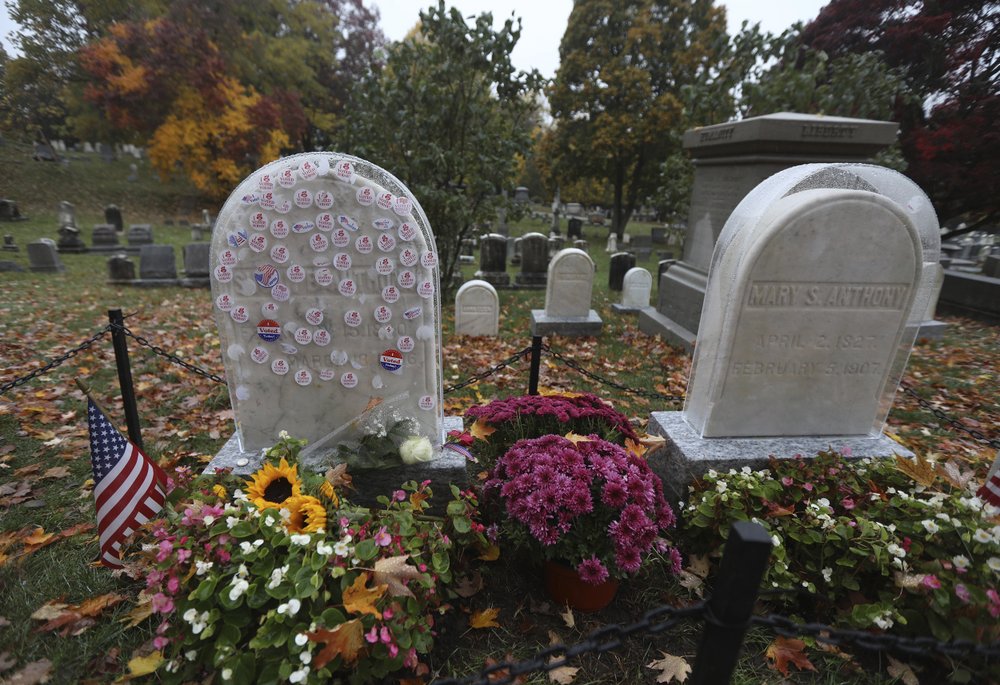
The fight to allow women to vote in Alabama, an issue that became snarled in white supremacist efforts to bar Black people from the polls, will be recalled in a series of historical markers across the state. The first “Votes for Women” marker was dedicated Wednesday in downtown Huntsville, and additional ones are planned in Birmingham, Decatur, Mobile, Selma, and Tuskegee, al.com reported. The markers are white with writing in purple, which was the color of the women’s suffrage movement. The markers are funded by the William Pomeroy Foundation, a New York-based organization that promotes and preserves local history. Congress approved the 19th Amendment in 1919, and it took effect the following year after Tennessee became the 36th state to vote for ratification. Alabama didn’t officially vote in favor of the amendment until 1953, but thousands of women already had registered and were voting in the state by then. The Huntsville Equal Suffrage Association formed in 1895 when Susan B. Anthony and Carrie Chapman Catt spoke in the city. The movement suffered “fits and starts” because of the concerns about Black votes, said Donna Castellano, chief executive of the Historic Huntsville Foundation. Some of the problems were linked to the 1901 Alabama Constitution, which was designed to prevent Blacks from gaining voting rights and political power. “Since Alabama had spent so much time and energy disenfranchising its Black citizens in 1901, the last thing they wanted to do was open a door that would allow more Black people to vote through an equal suffrage amendment,” said Castellano. After a period of dormancy, she said, the Huntsville Equal Suffrage Association reformed in 1912 at the old downtown YMCA, where the Pomeroy monument is located. Once women achieved the right to vote they began altering Alabama by supporting measures that including restricting the employment of children in coal mines and textile mills and funding education and teacher training. They also supported an end to Alabama’s system of leasing inmates to industry, “which was a form of institutionalized slavery through Alabama’s prison system.” “Things began to change when Alabama women got the vote,” Castellano said. “They certainly made an impact.” Republished with the permission of the Associated Press.
New COVID-19 cases plummet to lowest levels since last June

New coronavirus cases across the United States have tumbled to rates not seen in more than 11 months, sparking optimism that vaccination campaigns are stemming both severe COVID-19 cases and the spread of the virus. As cases, hospitalizations and deaths steadily dropped this week, pre-pandemic life in America has largely resumed. Hugs and unmasked crowds returned to the White House, a Mardi Gras-style parade marched through Alabama’s port city of Mobile and even states that have stuck to pandemic-related restrictions readied to drop them. However, health experts also cautioned that not enough Americans have been vaccinated to completely extinguish the virus, leaving the potential for new variants that could extend the pandemic. As the seven-day average for new cases dropped below 30,000 per day this week, Rochelle Walensky, the director of the Centers for Disease Control and Prevention, pointed out cases have not been this low since June 18, 2020. The average number of deaths over the last seven days also dropped to 552 — a rate not seen since July last year. It’s a dramatic drop since the pandemic hit a devastating crescendo in January. “As each week passes and as we continue to see progress, these data give me hope,” Walensky said Friday at a news conference. Health experts credit an efficient rollout of vaccines for the turnaround. More than 60% of people over 18 have received at least one shot, and almost half are fully vaccinated, according to the CDC. But demand for vaccines has dropped across much of the country. President Joe Biden’s administration is trying to convince other Americans to sign up for shots, using an upbeat message that vaccines offer a return to normal life. White House health officials on Friday even waded into offering dating advice. They are teaming up with dating apps to offer a new reason to “swipe right” by featuring vaccination badges on profiles and in-app bonuses for people who have gotten their shots. Ohio, New York, Oregon, and other states are enticing people to get vaccinated through lottery prizes of up to $5 million. Across the country, venues and events reopened after shuttering for much of the last year. On Saturday, Karen Stetz readied to welcome what she hoped would be a good crowd to the Grosse Pointe Art Fair on Michigan’s Lake St. Clair. With natural ventilation from the lake and mask and capacity restrictions easing, Stetz was optimistic that artists who make their living traveling a show circuit that ground to a halt last year would begin to bounce back. The event usually draws from 5,000 to 10,000 people. “I feel like most people are ready to get out,” Stetz said by phone shortly before opening the fair. “It seems like people are eager, but it’s hard to know still. I’m sure there’s a percentage of people that are going to wait until they’re comfortable.” In Mobile, thousands of joyful revelers, many without masks, competed for plastic beads and trinkets tossed from floats Friday night as Alabama’s port city threw a Mardi Gras-style parade. But only about a quarter of the county’s population is fully vaccinated. Many went without masks, though health officials had urged personal responsibility. Alabama’s vaccination rate — 34% of people have received at least one dose — is one of the lowest in the country. It’s part of a swath of Southern states where vaccine uptake has been slow. Health experts worry that areas with low vaccination rates could give rise to new virus variants that are more resistant to vaccinations. “My biggest concern is new strains of the virus and the need to remain vigilant in the months ahead,” said Boston College public health expert Dr. Philip J. Landrigan. A medical center in Louisiana reported Friday it has identified the state’s first two cases of a COVID-19 variant that has spread widely since being identified in India. The COVID-19 variant has been classified as a “variant of concern” by Britain and the World Health Organization, meaning there is some evidence that it spreads more easily between people, causes more severe disease, or might be less responsive to treatments and vaccines. The variant has also been reported in several other states, including Tennessee, Nebraska, and Nevada. Though Landrigan said the big drop in cases nationwide was “the best news we’ve had on the pandemic” and showed that vaccines are working, he warned that people should remain vigilant for local flare-ups of new cases. Many states have largely dropped orders to wear masks and stay distanced from other people. Meanwhile, even places such as California — the first state to issue a statewide shutdown as the virus emerged in March 2020 — prepared to remove restrictions on social distancing and business capacity next month. State health director Dr. Mark Ghaly said Friday the decision was based on dramatically lower virus cases and increased vaccinations. But in Vermont — the state with the highest percentage of people who have received one shot — Gov. Phil Scott has tied the lifting of restrictions to the vaccination rate. He offered to lift all remaining restrictions before a July 4 deadline if 80% of those eligible get vaccinated. Landrigan figured it will take a nationwide vaccination rate of at least 85% to snuff out the virus. But for now, the steep drop in cases gave him hope that pandemic-level infection rates will soon be a thing of the past. “It is getting to the point to where by the Fourth of July we might be able to declare this thing over,” he said. Republished with the permission of the Associated Press.
