
City of Mountain Brook to be first city in the South to receive AGZA Green Zone® Certification

The City of Mountain Brook announced that it will be the first city in the state of Alabama and the first in the South to receive AGZA Green Zone Certifications for Crestline Village, English Village, Mountain Brook Village, and Overton Park. AGZA will present the certifications to Mayor Stewart Welch and City Council on Monday, June 7 at 5 p.m. in the City Council Chambers. An AGZA Green Zone is a defined area of land on which all routine maintenance is performed with battery electric equipment and/ or manual tools. The minimal requirements for an AGZA Certified Green Zone are the complete elimination of two-stroke equipment used for routine maintenance. Gas blower concessions are made for heavier and seasonal workloads. Other states that have AGZA Certified Green Zones include California, Illinois, and New York. ,, The transition away from fossil fuel equipment creates a cleaner, quieter, and healthier environment for workers, visitors, and residents by reducing toxic and carcinogenic emissions, noise, greenhouse gases, fuel spillage, and waste. The American Green Zone Alliance (AGZA) is the global leader in low-impact land care practices and a recognized certification agency. The program is designed to achieve an enduring transition to low-impact landscape maintenance practices and includes education, training, and certification of land care professionals, equipment selection recommendations, ELF™ (Environmental Landscape Footprint) reporting of impact metrics, and property certification. It is implemented through a collaboration between AGZA and Quiet Communities Inc, a national non-profit organization. The program establishes municipalities, academic institutions, school districts, and private industry as models of low-impact land care for their communities. Certification also strengthens environmental leadership and sets examples.
Alabama native announces candidacy as first Republican in Arizona’s race for U.S. Senate
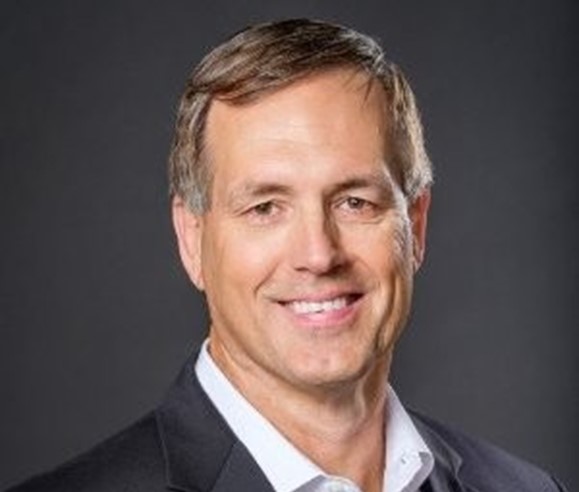
Energy Executive Jim Lamon’s candidacy marks the first Republican to jump into the race to become Arizona’s next Senator in 2022. He is gearing up to restore the GOP’s Senate majority by defeating incumbent Senator Mark Kelly (D-Ariz.), a Democrat and former NASA astronaut. Lamon jumps into the race with a background as the founder and CEO of Scottsdale-based firm DEPCOM Power. Launched in 2013, the company is responsible for the engineering, construction, and operation of one gigawatt (GW) of utility solar plants for companies stretching from Oregon to Mississippi to North Carolina. DEPCOM Power was situated at number five on the 2018 Inc. 5,000 list of fastest-growing private companies and, in December 2018, made the Top 20 Best Places to work in Phoenix list. Raised on a family farm in Alabama, Lamon recounted his early experiences growing up in the state, “Everybody has their responsibilities on a family farm, and I learned a lot about the importance of that kind of regimen,” he says. “My parents came from nothing. Dad grew up with no electricity or indoor plumbing. He then worked three jobs, getting a college education at night, with my mom right there by his side, working herself and raising two kids.” “Our home, as well as those of my aunts and uncles who lived nearby, were built by the families with love and help from all the cousins, uncles, and aunts. There’s a great photo of me at seven years old, up on the roof laying tiles. It’s things you learn early on a farm.” Lamon studied civil engineering and played college football at the University of Alabama under the direction of legendary Coach Paul “Bear” Bryant. Formally ranked by ESPN as America’s greatest college football coach, Coach Bryant’s influence and teachings continue to guide Lamon. Following his time in Alabama, Lamon served as an engineer airborne officer for the U.S. Army, including a deployment in pre-unification Germany. “Serving in Germany during the Cold War showed me that American freedom is so powerful, people would risk their lives to escape communism,” he shares in a campaign announcement video depicting scenes of the historic fall of the Berlin wall, a barrier between the communist East and free West. Lamon has touched on familiar Republican themes as he has publicly criticized the “political and media elites” who he expressed have “the power to divide us and distract us, to amplify the angry, the lies, and suppress the reasonable.” His official campaign website states, “It’s time to end ‘BUSINESS AS USUAL’ in Washington,” with Lamon using his considerable experience in the power industry to drive home a “power to the people” message in his campaign announcement video. Lamon’s campaign will be centered around putting America First, securing the Border, and streamlining the Federal Government.
Dan Sutter: Discovery, COVID, and Policy
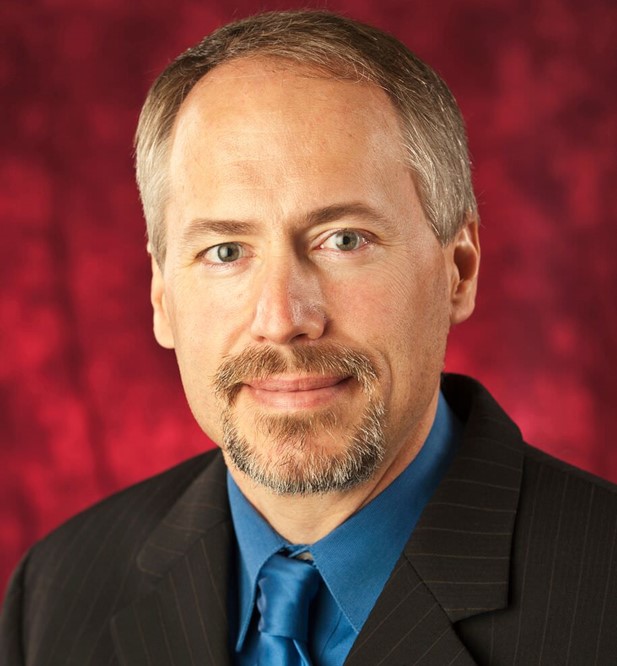
In early April, the Centers for Disease Control (CDC) changed its guidance on surface transmission of the SARS-CoV-2 virus. After more than a year of cleaning and disinfecting, the CDC now believes surface transmission is relatively infrequent. This case illustrates the role of discovery in public policy. The CDC says, “surface transmission is not the main route by which SARS-CoV-2 spreads, and the risk is considered low.” Most transmission occurs through respiratory droplets in poorly ventilated indoor spaces. (Outdoor transmission is also rare.) Contact with a surface contaminated with the virus has “less than a 1 in 10,000 chance of causing an infection.” We normally think of discovery as something which occurs in science, but all human knowledge must be discovered. The emergence of SARS-CoV-2 highlights the role of discovery in public policy. As a new virus, experts initially knew nothing about it with certainty. Such a position of complete ignorance is rare but illustrating. The fields of virology and epidemiology provided most discoveries about SARS-CoV-2. But economic knowledge must also be discovered and is more problematic than scientific knowledge. Economic knowledge generally depends on consumer preferences. The best car or computer can only be judged by users. Economists refer to this type of knowledge as subjective. Economic knowledge also depends on time and place, as economist Friedrich Hayek noted. The best, meaning here most profitable, way to produce things varies over time and at different places today. Auto factories used to employ thousands on assembly lines. Now robots do most of the work. Grocery stores pay workers to bag customers’ groceries where wages are low but use only self-checkout lanes in high-wage cities. Any society hoping to progress must discover new knowledge. Yet discovery provides a special challenge for a system where government experts’ recommendations get codified into binding rules. The argument for such paternalism is that the experts’ rules will lead us to make better decisions than we would ourselves. Government paternalism is controversial but ultimately only justified if it makes us, the citizens, better off. Let’s now consider the details of COVID-19 and surface transmission. SARS-CoV-2 was novel, but virologists began with knowledge acquired from studying other viruses, including coronaviruses. Viruses and bacteria can survive on surfaces, and “fomite” transmission does occur. Scientists discovered that SARS-CoV-2 does not persist on surfaces as well as other viruses. Discovery did occur. Yet, the rarity of surface transmission was discovered well before April; the new guidance cites research published in 2020. The CDC took months to change its message. Businesses have spent billions of dollars on cleaning supplies, employees’ time spent cleaning and disinfecting, and reduced hours of operation to allow cleaning. Paternalistic guidance needs to change as we learn, but government is frequently slow to change its rules. Discovery undermines the rationale for a system of paternalistic experts. Depending on the volume and frequency of discovery, the experts may not know much more than the rest of us. Of course, experts naturally downplay this and contend that they know enough to tell us what we should do. Trial-and-error is our most effective means of learning. Yet experiments generally require freedom, specifically permissionless and decentralized decision-making. Because countries like Sweden never closed their elementary and middle schools and states like Alabama reopened schools last fall, we learned that schools could reopen safely. We would not have learned if all schools stayed closed. In principle, paternalistic government expert systems can experiment, but in practice, little experimentation occurs. In part, this is due to experts’ overestimating how much they know. And many successful experiments in science and business were dismissed as hopeless. Nobody gives permission to conduct crazy experiments. We have repeatedly heard the refrain, “Follow the science!” Good scientists know that the discovery of new knowledge is imperative. And science requires freedom to experiment and question everything we think we know. Daniel Sutter is the Charles G. Koch Professor of Economics with the Manuel H. Johnson Center for Political Economy at Troy University and host of Econversations on TrojanVision. The opinions expressed in this column are the author’s and do not necessarily reflect the views of Troy University.
Alabama man charged with bringing guns to D.C. had militia ties
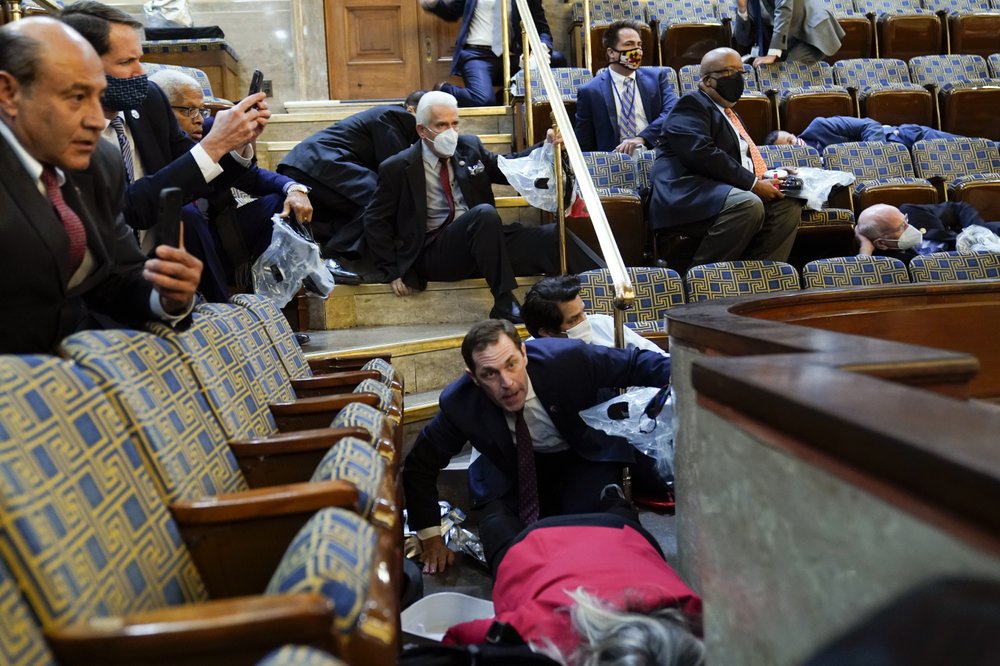
A Vietnam veteran charged with bringing 11 molotov cocktails and other weapons to Washington on the day of the U.S. Capitol riot had driven around the area a month prior, kept lists of officials, and tried to find Republican Sen. Ted Cruz to discuss election fraud, a judge wrote in a court document. U.S. District Judge Colleen Kollar-Kotelly on Monday ordered that 71-year-old Lonnie Coffman of Falkville, Alabama, should remain jailed until his trial on firearms charges. The federal judge cited Coffman’s training at a Texas militia camp, his large stockpile of weaponry and actions, before and during the Jan. 6 insurrection, in the decision to deny him release. “This evidence of lists of political officials and public figures, Mr. Coffman’s access to significant weaponry and his demonstrated ability to travel to Washington, D.C., raises serious concerns about Mr. Coffman’s intentions and the danger he presents to the community,” Kollar-Kotelly wrote. Manuel J. Retureta, a defense lawyer representing Coffman, declined to comment about the case. The FBI in 2014 identified Coffman as a participant at Camp Lonestar, a reported gathering place for Texas militia groups and had information about two other militia groups, the judge wrote. Coffman had kept lists of officials at his home with disparaging descriptions such as “ex Dem. Senator, traitor” and “radical Dem. Senator.” The court order said GPS from Coffman’s truck indicated he had visited Washington at the end of 2020 and driven around the Capitol, and attempted to contact Cruz about his concerns over purported election fraud by both calling his office and looking for his home. A Cruz staff member told police that Coffman did not seem threatening but had seemed “unbalanced” or “not 100% there,” according to the judge’s order. Police on Jan. 6 found Coffman’s truck in Washington packed with eleven mason jars containing a flammable liquid, several loaded guns, a crossbow with bolts; several machetes; camouflage smoke devices; and a stun gun, according to the order. Coffman was arrested the evening of Jan. 6 when law enforcement officers discovered the weapons in his truck after authorities swept the area following the discovery of pipe bombs near two buildings. Prosecutors said Coffman left his truck in the morning during that day of chaos and rioting and was arrested when he returned to the vehicle in the evening. Coffman is an Army veteran who served two tours during the Vietnam War. According to family members, he dealt with depression and “often spoke about the difficulty he had dealing with the experiences from the war,” the court document said. A family member said Coffman “became a hermit after he separated from his wife,” according to the court document. Republished with the permission of the Associated Press.
GOP poised to block bipartisan probe of January 6 insurrection
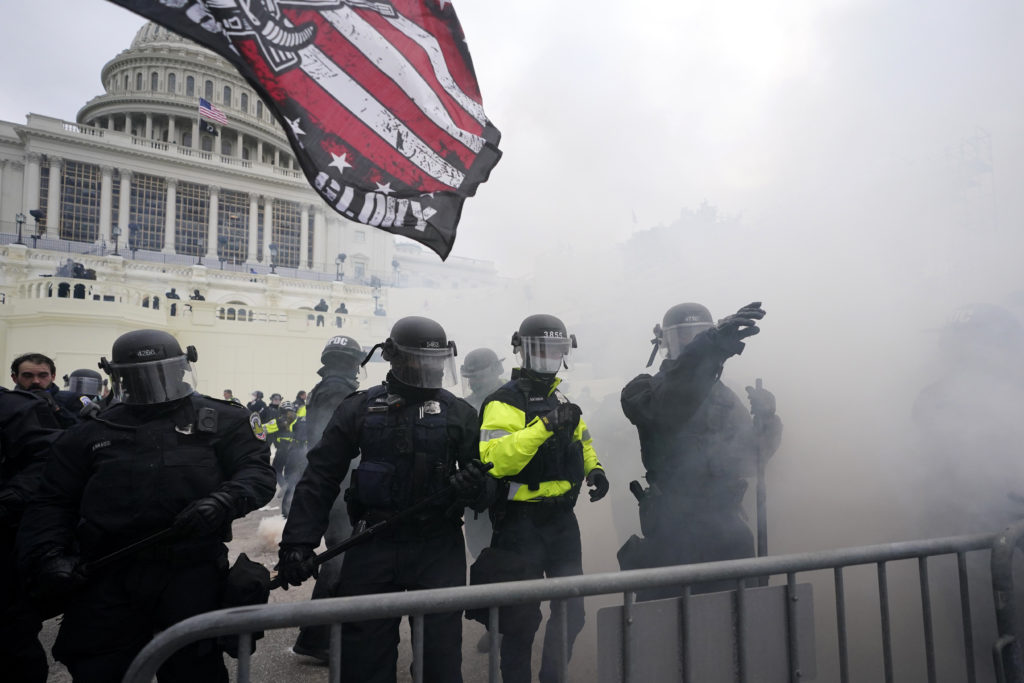
Senate Republicans are poised to block the creation of a special commission to study the deadly Jan. 6 attack on the Capitol, dashing hopes for a bipartisan panel amid a GOP push to put the violent insurrection by Donald Trump’s supporters behind them. Broad Republican opposition was expected in what would be the first successful Senate filibuster of the Biden presidency, even as the family of a Capitol Police officer who died that day and other officers who battled rioters went office to office asking GOP senators to support the commission. The siege was the worst attack on the Capitol in 200 years and interrupted the certification of Democrat Joe Biden’s win over Trump. Though the bill passed the House earlier this month with the support of almost three dozen Republicans, GOP senators said they believe the commission would eventually be used against them politically. And former President Trump, who still has a firm hold on the party, has called it a “Democrat trap.” The expected vote is emblematic of the profound mistrust between the two parties since the siege, which has sowed deeper divisions on Capitol Hill even though lawmakers in the two parties fled together from the rioters that day. The events of Jan. 6 have become an increasingly fraught topic among Republicans as some in the party have downplayed the violence and defended the rioters who supported Trump and his false insistence that the election was stolen from him. While initially saying he was open to the idea of the commission, which would be modeled after an investigation of the 9/11 terrorist attacks, Senate Republican leader Mitch McConnell turned firmly against it in recent days. He has said he believes the panel’s investigation would be partisan despite the even split among party members. McConnell, who once said Trump was responsible for “provoking” the mob attack on the Capitol, said of Democrats: “They’d like to continue to litigate the former president, into the future.” Biden, asked about the commission at a stop in Cleveland, said Thursday, “I can’t imagine anyone voting against” it. The Republican opposition to the bipartisan panel has revived Democratic pressure to do away with the filibuster, a time-honored Senate tradition that requires a vote by 60 of the 100 senators to cut off debate and advance a bill. With the Senate evenly split 50-50, Democrats need the support of 10 Republicans to move to the commission bill, sparking fresh debate over whether the time has come to change the rules and lower the threshold to 51 votes to take up legislation. The Republicans’ political arguments over the violent siege — which is still raw for many in the Capitol, almost five months later — have frustrated not only Democrats but also those who fought off the rioters. Michael Fanone, a Metropolitan Police Department officer who responded to the attack, said between meetings with Republican senators that a commission is “necessary for us to heal as a nation from the trauma that we all experienced that day.” Fanone has described being dragged down the Capitol steps by rioters who shocked him with a stun gun and beat him. Sandra Garza, the girlfriend of Capitol Police Officer Brian Sicknick, who collapsed and died after battling the rioters, said of the Republican senators: “You know they are here today and with their families and comfortable because of the actions of law enforcement that day.” “So I don’t understand why they would resist getting to the bottom of what happened that day and fully understanding how to prevent it. Just boggles my mind,” she said. Video of the rioting shows two men spraying Sicknick and another officer with a chemical, but the Washington medical examiner said he suffered a stroke and died from natural causes. Garza attended the meetings with Sicknick’s mother, Gladys Sicknick. In a statement on Wednesday, Mrs. Sicknick suggested the opponents of the commission “visit my son’s grave in Arlington National Cemetery and, while there, think about what their hurtful decisions will do to those officers who will be there for them going forward.” Dozens of other police officers were injured as the rioters pushed past them, breaking through windows and doors and hunting for lawmakers. The protesters constructed a mock gallows in front of the Capitol and called for the hanging of Vice President Mike Pence, who was overseeing the certification of the presidential vote. Four protesters died, including a woman who was shot and killed by police as she tried to break into the House chamber with lawmakers still inside. More than 400 people among the protesters have been arrested. “We have a mob overtake the Capitol, and we can’t get the Republicans to join us in making historic record of that event? That is sad,” said Sen. Dick Durbin of Illinois, the No. 2 Senate Democrat. “That tells you what’s wrong with the Senate and what’s wrong with the filibuster.” Many Democrats are warning that if Republicans are willing to use the filibuster to stop an arguably popular measure, it shows the limits of trying to broker compromises, particularly on bills related to election reforms or other aspects of the Democrats’ agenda. For now, though, Democrats don’t have the votes to change the rule. West Virginia Sen. Joe Manchin and Arizona Sen. Kyrsten Sinema, both moderate Democrats, have said they want to preserve the filibuster. Manchin said Thursday that there is “no excuse” for Republicans to vote against the commission, but that he is “not ready to destroy our government” by doing away with the procedural tactic. The commission has received support from government officials outside of Congress, as well. On Thursday, four former secretaries of Homeland Security who served under Presidents George W. Bush and Barack Obama — Tom Ridge, Michael Chertoff, Janet Napolitano, and Jeh Johnson — issued a statement saying a commission is necessary to “ensure the peaceful transfer of power in our country is never so threatened again.” In a last-ditch effort to convince some of her Republican colleagues to save
Shell Oil sells Alabama refinery to Vertex for $75 million

Shell Oil Co. said Thursday it will sell an Alabama refinery designed to produce 90,000 barrels of crude oil and other products daily to Texas-based Vertex Energy for $75 million. Shell said the cash deal was part of its plan to shed refineries that aren’t aligned with trading hubs, chemical plants and marketing businesses. “The sale of the Mobile refinery shows that we are making good progress delivering on our manufacturing strategy,” Robin Mooldijk, an executive vice president for manufacturing, said in a statement. “We’re becoming better positioned to deliver resilient returns and meet the increasingly diverse needs of our customers.” Located on the northern end of Mobile Bay, the refinery will offer jobs to its current workforce as it changes hands. Aside from the refinery complex, Vertex will purchase its hydrocarbon inventory at the time the sale is complete, which could add from $65 million to $85 million to the deal. Republished with the permission of the Associated Press.
Kay Ivey vetoes delay of 3rd grade reading promotion requirement

Alabama Gov. Kay Ivey on Thursday vetoed legislation to delay next year’s high-stakes requirement to hold back third graders who aren’t reading at grade level, a postponement lawmakers wanted after the COVID-19 pandemic disrupted classrooms. The veto means that the promotion requirement will take effect at the end of the 2021-22 school year. The governor said it is “hasty and premature” to delay the requirement before education officials can review the newest test scores. “As a former teacher and even more so as governor, I believe early literacy is the gateway to all learning,” Ivey said in a statement. The governor said she is asking the state superintendent to brief the public on spring test scores when available and for the Alabama Committee on Grade Level Reading to make recommendations regarding any future action. “Everyone agrees that the past 15 months of the COVID-19 pandemic have been hard on all Alabamians, including school personnel, students, and parents. However, to establish any delay at all in the Alabama Literacy Act prior to analyzing the 2020-2021 summative assessment data for reading would be hasty and premature,” she said. Because Ivey did not sign the bill, which was approved by lawmakers on the last day of the legislative session, the bill died by what is known as a pocket veto. Alabama lawmakers in 2019 approved several initiatives to try to boost reading scores. Beginning in the 2021-22 school year, third graders would be required to meet reading benchmarks before moving to the fourth grade. Students would have to make a minimum score on a reading assessment or demonstrate mastery of all third-grade state reading standards as evidenced by a student reading portfolio. The vetoed bill by Sen. Rodger Smitherman, a Democrat from Birmingham, would have pushed back the promotion requirement from the 2021-22 school year to the 2023-24 school year. Supporters of a delay argue it will be unfair to force the requirement on students who were out of the traditional classroom for long stretches during the pandemic. The Alabama Education Association, the state lobby representing public school employees, said Wednesday that teachers have called and emailed asking Ivey to sign the bill and approve the delay. The group said many Alabama teachers have not received the training required under the 2019 law. “Students also need more time to make up for learning loss. It is not feasible to implement the law as it currently stands while students and educators are trying to recover from this unprecedented school year,” the AEA said in a statement on the legislation. But opponents argue it will be a disservice to students to delay the promotion requirement — a part of a broader state program to boost literacy — or that the state should wait until the latest test scores are available to decide. Republican Rep. Terri Collins of Decatur, who sponsored the original measure in 2019, had urged Ivey to veto the bill. The representative said she was “very very pleased” with Ivey’s decision. “I am just so thrilled for our children,” Collins said Thursday. The Republican representative said lawmakers will have “plenty of time” to approve a delay in the 2022 legislative session if the test scores show large numbers of children might be held back. “Let’s look at the scores,” Collins said. Republished with the permission of the Associated Press.
