
Senators eye $579B in new infrastructure spending, $1T plan
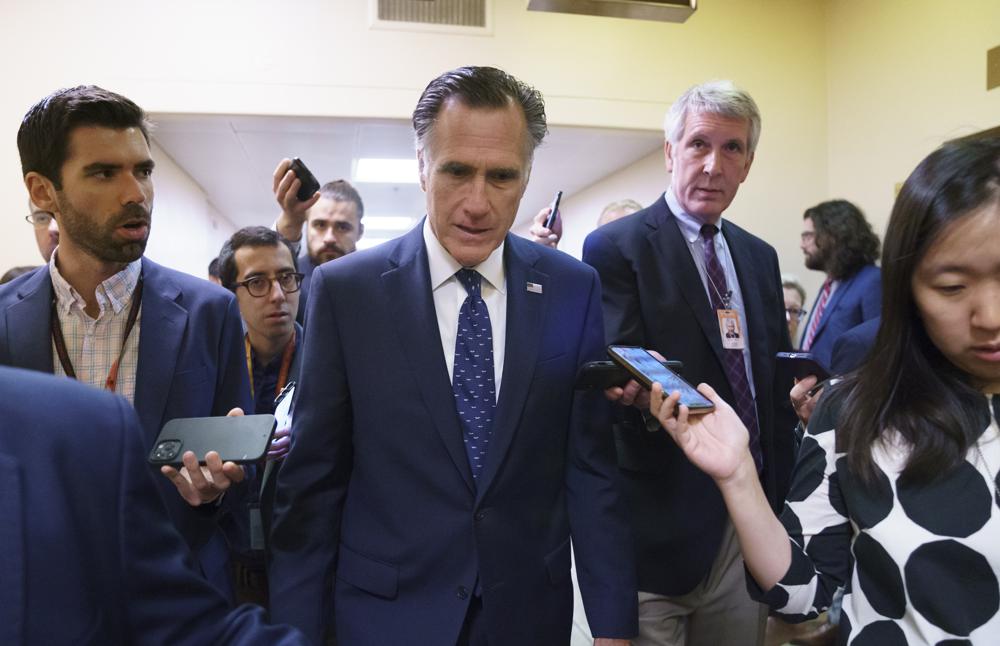
A bipartisan group of senators is eyeing an infrastructure deal with $579 billion in new spending as negotiators try to strike a nearly $1 trillion deal on President Joe Biden’s top priority, according to those briefed on the plan. The 10 senators have been huddling behind closed doors, encouraged by Biden to keep working on the effort after he walked away from a Republican-only proposal this week, unable to resolve differences. The senators are briefing their colleagues privately and cautioned changes could still be made. “Our group – comprised of 10 Senators, 5 from each party – has worked in good faith and reached a bipartisan agreement on a realistic, compromise framework to modernize our nation’s infrastructure and energy technologies,” the senators said in a joint statement. “This investment would be fully paid for and not include tax increases,” they added. “We are discussing our approach with our respective colleagues and the White House and remain optimistic that this can lay the groundwork to garner broad support from both parties and meet America’s infrastructure needs.” The White House said Democratic senators briefed the administration on the emerging plan, but questions remain. “The President appreciates the Senators’ work to advance critical investments we need to create good jobs, prepare for our clean energy future, and compete in the global economy,” said deputy press secretary Andrew Bates. “Questions need to be addressed, particularly around the details of both policy and pay-fors, among other matters.” The president and Congress have been straining to reach an agreement on his ideas for infrastructure investment, stuck over the scope of the package of road, highway, and other projects and how to pay for it. Lawmakers say the group’s tentative agreement represents important progress in fashioning a bill that can pass such an evenly divided Congress this year, but they are also aware that it could easily unravel. A person familiar with the negotiations but unauthorized to discuss them publicly said the cost would be $974 billion over five years, as is standard for highway spending, or $1.2 trillion if spread over eight as Biden proposes. At that size, the new package would be more than the previous Republican-only effort of $330 billion in new spending in a $928 billion package, but still short of the $1.7 trillion over eight years Biden is seeking. It appears the group is running into the same problems that Biden and lead Republican negotiator Sen. Shelley Moore Capito confronted in agreeing on how to pay for it. Sen. Bill Cassidy, R-La., a lead negotiator, would not disclose the final tab. Asked if the new spending was at $600 billion, he said, “the president said that was his goal. So I don’t think anybody felt like they had to exceed his goal.” Another member of the group, Sen. Jon Tester, D-Mont., said they are “fairly close” on a topline amount but are still debating how to pay for it. One option is to include potential revenue from uncollected income taxes, he said. “We still have to talk,” Tester said. One Republican not in the group, Sen. Mike Braun of Indiana, said he was told the package would provide nearly $1 trillion — including $579 billion in new spending over the baseline for transportation projects. Braun also said parts of it would be paid for with untapped COVID-19 relief funds, which has been a nonstarter for the White House. “They have come up with similar to what I think Capito was working on, but my understanding is it would be a little more money,” he said. Biden tasked the senators to keep working as he set out for his first overseas trip after talks collapsed this week with Capito and the GOP senators. The president is seeking a sweeping investment in not just roads, highways, and bridges but also broadband, electric vehicle charging stations, and other aspects of what he views as the new economy paid for with a hike in the corporate tax rate from 21% to 28%. Republicans prefer a more narrow focus on fixing existing transportation systems, with more modest investments elsewhere. They oppose any tax hikes to pay for the new spending. With the Senate narrowly split, 50-50, and most legislation requiring 60 votes to advance past a filibuster, Biden is seeking a bipartisan agreement to ensure passage. At the same time, he is also instructing Democrats who control the House and Senate to prepare to pass portions of the package on their own, under special budget rules that enable approval with 51 votes in the Senate. In the evenly-divided Senate, Vice President Kamala Harris serves as a tie-breaking vote. Meanwhile, a House panel advanced legislation early Thursday that serves as an important building block for that chamber’s infrastructure efforts. The bill aims to boost federal spending on roads, bridges, transit, and rail. The $547 billion package passed mostly along party lines by a vote of 38-26 and will likely be considered by the full House later this month. Republished with the permission of the Associated Press.
Striking Alabama coal miners say they’re targets of violence
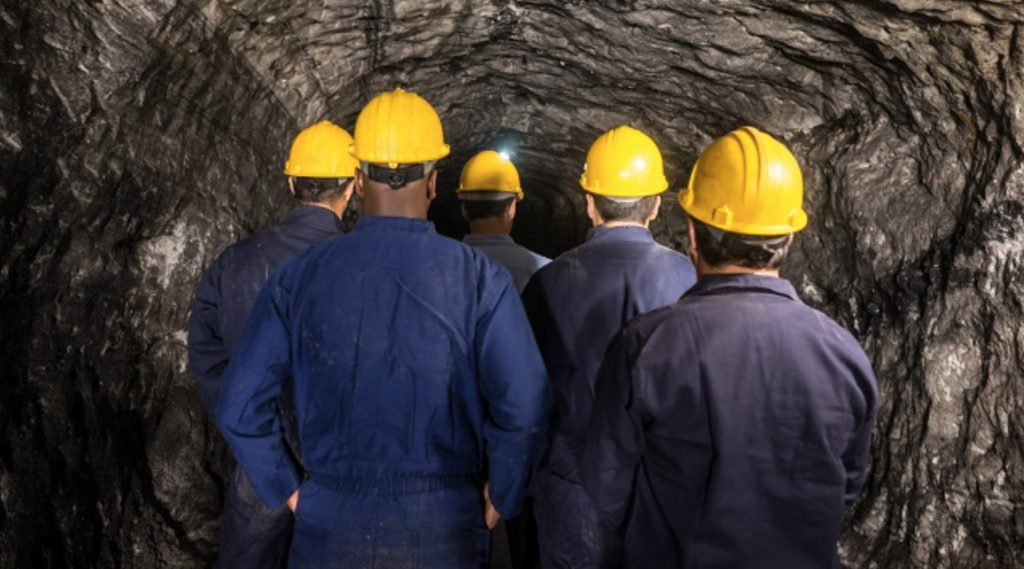
Miners striking against an Alabama coal company say they’re being targeted on the picket line. In a video on YouTube, a red truck can be seen hitting one picketer, while another view shows a black truck driving through a line with one striking miner barely getting out of its path, al.com reported. The incidents have occurred over the last few days, said Larry P. Spencer, United Mine Workers of America International vice president for District 20. “It looks like there are guys coming off the road pretty fast,” Spencer said. “Our people don’t have any time to get out of the way.” The Alabama Law Enforcement Agency and the Tuscaloosa County Sheriff’s Office told al.com that they were unaware of any reports related to the incidents. In a statement, Warrior Met Coal said it was granted a court-ordered injunction to maintain a safe environment for its employees, “including those actively at work and those currently on strike.” “This injunction was put in place due to unlawful activity on the picket lines early during the strike, to allow for peaceful ingress and egress to our facilities, as well as maintain public safety,” the company said. “Among other items, the injunction specifically prohibits picketers from interfering, hindering, or obstructing ingress and egress to the company’s properties. This is a stressful situation for all individuals involved, and continued violations of the injunction have resulted in recent incidents.” A walkout by 1,100 workers at the company began on April 1 after contract talks failed. Members said they made sacrifices to save the company a few years ago and want better pay and health benefits. Miners rejected the company’s initial offer less than two weeks after the strike began, and Mine Workers International President Cecil Roberts said the company has refused to engage in “meaningful negotiations.” Warrior Met Coal has continued with operations during the strike. The company produces coal used in steel production in Asia, Europe, and South America. UMWA International President Cecil Roberts blamed the company for the alleged attacks, saying members are “concerned about their families and potential of violence against them if they come to the picket line.” “We have been to court on multiple occasions regarding what we can and cannot do on the picket lines, and our members respect the guidance of the court,” Roberts said. “Warrior Met seems to believe that it is all right to strike people with cars as they engage in legal, protected activity. This is a dangerous course of action that can swiftly lead to events spiraling out of control. That is the last thing anyone should want.” Warrior Met Coal’s statement said the company does not “condone any acts of violence.” “We are thankful for the support of local law enforcement as we navigate through these issues,” the company said. “We remain committed to active negotiations with the goal of reaching a fair contract that protects jobs and ensures the longevity of the company.” Republished with the permission of the Associated Press.
Alabama city, officer convicted of murder seek lawsuit delay
The city of Huntsville is again siding with a police officer convicted of murder and asking a federal court to delay action on a wrongful death lawsuit filed by relatives of the victim. The city and officer William Darby, who has been on leave since being convicted last month of killing a mentally disturbed man while on duty in 2018, asked a judge to keep the lawsuit on hold until after Darby’s sentencing, set for Aug. 20, news outlets reported. Relatives of Jeffrey Parker, who Darby shot to death while the man was holding a gun to his own head, contend it is time for the lawsuit, which was filed last year and delayed at Darby’s request, to move ahead. The city and Darby argue the criminal case won’t be over until the sentencing hearing, and Darby is busy helping with a pre-sentencing investigation, which a judge will review to help determine his penalty. The city, in papers filed Wednesday, said it needs to know the final outcome of the criminal case to properly defend itself in the civil suit. A hearing is set for June 21 on whether the case should go ahead. The city initially cleared Darby of wrongdoing and then helped fund his defense after grand jurors indicted him on a murder charge. Both Mayor Tommy Battle and Police Chief Mark McMurray publicly criticized the verdict after jurors convicted Darby. The city has started personnel hearings that could lead to the firing of Darby, who is free on bond and not working while using leave time. Darby was stripped of his police certification because of the murder conviction. Two officers went to Parker’s home in 2018 after he called 911 saying he was suicidal and had a gun. The officers found Parker seated on a couch and holding a gun to his own head when they arrived, evidence showed. One of the officers told jurors she was talking to Parker, 49, when Darby entered the house, ordered Parker to drop his weapon and shot him with a shotgun within seconds. Prosecutors argued that Darby had no justifiable reason to open fire. Darby faces a prison sentence of 20 years to life, prosecutors have said. Republished with the permission of the Associated Press.
