
Congress approves bill to make Juneteenth a federal holiday; Mo Brooks and Mike Rogers voted against
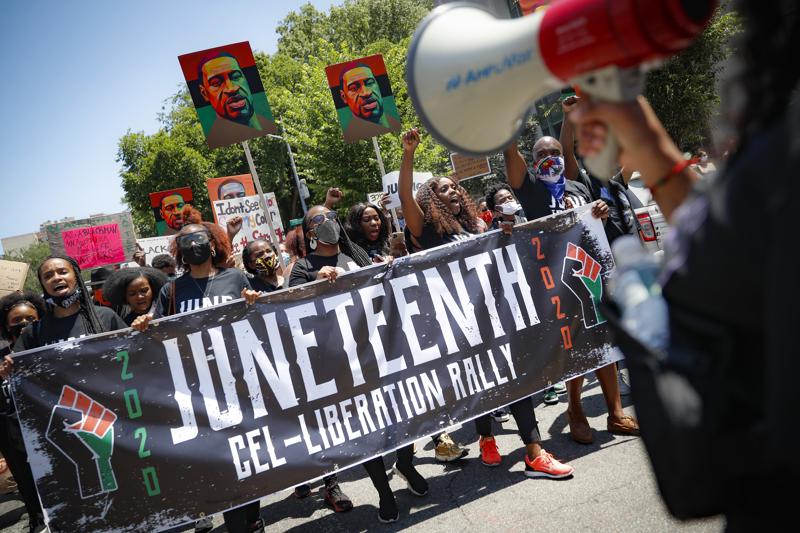
The United States will soon have a new federal holiday commemorating the end of slavery in the nation. The House voted 415-14 Wednesday to make Juneteenth, or June 19th, the 12th federal holiday. The bill now goes to President Joe Biden’s desk, and he is expected to sign it into law. Juneteenth commemorates the day the last enslaved African Americans learned they were free. Confederate soldiers surrendered in April 1865, but word didn’t reach the last enslaved Black people until June 19, when Union soldiers brought the news of freedom to Galveston, Texas. That was also about 2 1/2 years after the Emancipation Proclamation freed slaves in the Southern states. It’s the first new federal holiday since Martin Luther King Jr. Day was created in 1983. “Our federal holidays are purposely few in number and recognize the most important milestones,” said Rep. Carolyn Maloney, D-N.Y. “I cannot think of a more important milestone to commemorate than the end of slavery in the United States.” Rep. Sheila Jackson Lee, D-Texas, speaking next to a large poster of a Black man whose back bore massive scarring from being whipped, said she would be in Galveston this Saturday to celebrate along with Republican Sen. John Cornyn of Texas. “Can you imagine?” said the rather short Jackson Lee. “I will be standing maybe taller than Sen. Cornyn; forgive me for that because it will be such an elevation of joy.” The Senate passed the bill a day earlier under a unanimous consent agreement that expedites the process for considering legislation. It takes just one senator’s objection to block such agreements. “Please, let us do as the Senate. Vote unanimously for passage,” Rep. David Scott, D-Ga., pleaded with his colleagues. The vote comes as lawmakers struggle to overcome divisions on police reform legislation following the killing of George Floyd by police and as Republican state legislators push what experts say is an unprecedented number of bills aimed at restricting access to the ballot box. While Republicans say the goal is to prevent voter fraud, Democrats contend that the measures are aimed at undermining minority voting rights. Several members of the Congressional Black Caucus took to the floor to speak in favor of the bill. Rep. Bonnie Watson Coleman, D-N.J., said she viewed Juneteenth as a commemoration rather than a celebration because it represented something that was delayed in happening. “It also reminds me of what we don’t have today,” she said. “And that is full access to justice, freedom, and equality. All these are often in short supply as it relates to the Black community.” The bill was sponsored by Sen. Edward Markey, D-Mass., and had 60 co-sponsors. Democratic leaders moved quickly to bring the bill to the House floor after the Senate’s vote the day before. Some Republican lawmakers opposed the effort. Rep. Matt Rosendale, R-Mont., said creating the federal holiday was an effort to celebrate “identity politics.” “Since I believe in treating everyone equally, regardless of race, and that we should be focused on what unites us rather than our differences, I will vote no,” he said in a press release. The vast majority of states recognize Juneteenth as a holiday or have an official observance of the day, and most states hold celebrations. Juneteenth is a paid holiday for state employees in Texas, New York, Virginia, and Washington. Under the legislation, the federal holiday would be known as Juneteenth National Independence Day. Rep. Clay Higgins, R-La., said that he would vote for the bill and that he supported the establishment of a federal holiday, but he was upset that the name of the holiday included the word “independence” rather than “emancipation.” “Why would the Democrats want to politicize this by co-opting the name of our sacred holiday of Independence Day?” Higgins asked. Rep. Brenda Lawrence, D-Mich., replied, “I want to say to my white colleagues on the other side: Getting your independence from being enslaved in a country is different from a country getting independence to rule themselves.” She added: “We have a responsibility to teach every generation of Black and white Americans the pride of a people who have survived, endured, and succeeded in these United States of America despite slavery.” The 14 House Republicans who voted against the bill were Andy Biggs of Arizona, Mo Brooks of Alabama, Andrew Clyde of Georgia, Scott DesJarlais of Tennessee, Paul Gosar of Arizona, Ronny Jackson of Texas, Doug LaMalfa of California, Thomas Massie of Kentucky, Tom McClintock of California, Ralph Norman of South Carolina, Mike Rogers of Alabama, Rosendale of Montana, Chip Roy of Texas, and Tom Tiffany of Wisconsin.
Mo Brooks calls for Anthony Fauci’s termination in midst of controversial email release
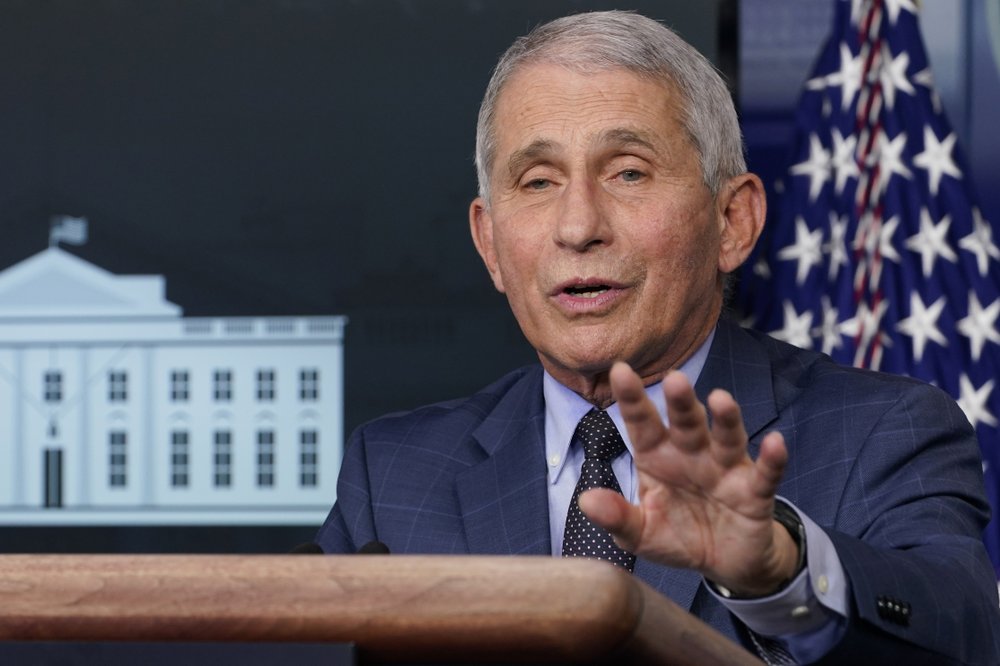
Dr. Anthony Fauci, arguably America’s most well-recognized health official in the battle against COVID-19, assumed a central role in political controversy following a newly released slough of last year’s emails, giving rise to concerns about COVID-19’s origin and the controversial scientific research U.S taxpayers have funded. Yesterday, Congressman Mo Brooks (AL-05) joined several of his colleagues in a news conference to discuss auditing the correspondence and financial statements of Dr. Fauci. Fauci is no stranger to the spotlight, as the immunologist was one of the world’s most frequently-cited scientists across all scientific journals from 1983 to 2002, in addition to the world’s 10th most-cited HIV/AIDS researcher from 1996-2006. He has advised seven Presidents and was awarded a Presidential Medal of Freedom by President George H.W. Bush in 2008 for his efforts on an AIDS relief program. Serving as director of the National Institute of Allergy and Infectious Diseases (NIAID) since 1984, Fauci is perhaps more widely recognized for leading the nation’s COVID-19 response as a White House coronavirus advisor during the Trump Administration. He continues to lead the nation’s pandemic response during his current role as chief medical advisor in the Biden Administration. However, Fauci’s consistently shifting narratives throughout the pandemic, in addition to frequent opposition towards President Donald Trump’s leadership, resulted in a sizable number of public critics, many of which included Trump White House officials. Peter Navarro, a Harvard-trained economist and China hawk who served as a top trade and economic policy advisor to President Trump, publicly criticized Dr. Fauci in a USA Today op-ed, outlining the many instances Fauci was mistaken during the pandemic. USA Today promptly attached a remorseful precursor to the article; an apologetic note addressed to readers for publishing any criticism of Fauci. One of the most notable examples Navarro specifies is the predictive memos he sent in January and February 2020, which grimly anticipated COVID-19 to be a deadly and impactful global pandemic. Senior officials shrugged off these warnings, including Fauci, due to Navarro’s hawkish views on China. “The lack of immune protection or an existing cure or vaccine would leave Americans defenseless in the case of a full-blown coronavirus outbreak on US soil,” Navarro’s January 29 memo to the National Security Council states. “The lack of protection elevates the risk of the coronavirus evolving into a full-blown pandemic, imperiling the lives of millions of Americans.” Weeks after Navarro’s warning was sent out, Fauci assured the media just how worried the American people should be about the pandemic when he expressed, “The danger of getting coronavirus now is just minusculely low,” Fauci stated. “As of today, on the 17th of February, the risk is really relatively low.” Since then, public criticism of Fauci continues to escalate as 3,000 pages of his emails from March and April 2020 were obtained under the Freedom of Information Act (FOIA) following a lawsuit filed by taxpayer watchdog group, the White Coast Waste Project. “Taxpayers have a right to know what the NIH knew about how its money was being spent at the Wuhan animal lab, and what NIH knew about a potential lab leak in late 2019 and early 2020,” stated Justin Goodman, vice president of advocacy and public policy at the White Coat Waste Project. “Transparency and accountability at home and abroad are critical in the quest to identify the origin of the COVID-19 pandemic in order to prevent another outbreak.” Fauci’s obtained emails point to the fact that he was indeed warned of the possibility that COVID-19 was engineered, a theory he remained adamantly opposed to throughout the pandemic. Kristian Andersen, the head of a viral genomics lab at Scripps Research in La Jolla, CA, emailed Fauci in February 2020 entertaining the possibility of COVID-19’s lab-based origin, “The unusual features of the virus make up a really small part of the genome (<0.1%) so one has to look really closely at all the sequences to see that some of the features (potentially) look engineered.” This week, Anderson addressed his involvement in these recently released emails, assuring that his newfound research discourages any lab-based scenarios while also claiming it is scientifically impossible to determine the origins of the pandemic, “As we stated in our article last March, it is currently impossible to prove or disprove specific hypotheses of SARS-CoV-2 origin.” Additionally, these emails raise questions surrounding the type of research U.S. taxpayers are funding. Under Fauci’s four-decade-long leadership, the NAIAD resides within the National Institute of Health (NIH), which allocates 80% of its federal funds to scientific research, including grants to foreign organizations. Fauci swore under oath that no taxpayer funds were used to fund research in Wuhan. However, in a later congressional hearing, he stated that the NIH earmarked $600,000 to study coronaviruses in Wuhan. NIH Director Dr. Francis Collins confirmed that $3.7 million in federal funds were sent to EcoHealth Alliance, a global nonprofit, of which $600,000 went to the Wuhan Institute of Virology (WIV). Fauci’s emails show a message received from the President of EcoHealth Alliance, Peter Daszak, thanking him for rejecting any lab-leak theories in April 2020. Daszak wrote to Fauci, “I just wanted to say a personal thank you on behalf of our staff and collaborators, for publicly standing up and stating that the scientific evidence supports a natural origin for COVID-19 from a bat-to-human spillover, not a lab release from the Wuhan Institute of Virology.” Daszak adds, “Your comments are brave, and coming from your trusted voice, will help dispel the myths being spun around the virus’ origins.” These concerns have led Congressional Republicans, including House Minority Leader Kevin McCarthy (R-CA), to call for Fauci’s dismissal from his role as NIAID director. Yesterday, Congressman Mo Brooks joined GOP lawmakers in a press conference to announce his support of the Fire Fauci Act. The bill would bring Dr. Fauci’s taxpayer salary to $0 and will require the Senate to confirm another individual to fill his position. “Dr. Fauci is consistent in just one thing and that is inconsistency,” Brooks said. “Why
Alabama judge censured after cursing, threatening defendant
A state ethics panel on Wednesday censured a municipal judge who cursed and threatened a traffic court defendant, telling her that he would “bust her ass” if she sued his adult son. The Alabama Court of the Judiciary ruled that Leeds Municipal Judge Clifton Price had violated the canons of judicial ethics with the 2020 courtroom outburst. Price was censured and ordered to apologize to the woman. The panel said the outburst occurred after a traffic court defendant asked for a new judge because she believed that Price’s son was a passenger in a vehicle that hit her car in 2018 and then left the scene. Kimberly Farranto told Price she was requesting a new judge. When he asked why, she said she had been trying to find the driver and may have to sue his son to get the information. Price then “yelled profanity; threatened the defendant that he would take action against her if she sued his adult son; and called the defendant multiple disparaging names,” the court wrote. “If you mess with my son, I’ll bust your ass,” Price said, according to the complaint. According to the complaint, he asked Farranto, who was a Waffle House waitress, if she was the “waffle woman” who liked to sue people and called her a “scam flim-flam artist.” Farranto replied that she wanted to know the name of the driver, which Price eventually gave her. After Farranto left the courtroom, Price told a court clerk that he “might have lost my cool,” the complaint said. The clerk responded, “You think?”
