
Kay Ivey awards $2.6 million in CARES Act funds to six counties

Governor Kay Ivey announced she has awarded $2.6 million to six Alabama counties to help them overcome the COVID-19 pandemic. Etowah, Lee, Clarke, Coffee, Houston, and Pike counties are receiving this money as part of a special Community Development Block Grant program funded from the Coronavirus Aid, Relief and Economic Security (CARES) Act. More than $40 million has been allocated to Alabama for this program. Gov. Ivey will announce additional grants to other Alabama cities and counties as applications are processed. The grant funds are required to be used on projects relating to the recovery from or preventing the spread of the COVID-19 virus or any future infectious diseases. The funds were made available to the state by the U.S. Department of Housing and Urban Development. The funds can be used to support COVID-19 testing and vaccinations, rental, mortgage and utility assistance, and assistance to food banks and pantries. Additionally, it can be used for job creation, business assistance, and related projects to provide pandemic relief. Alabama counties receiving the CDBG-COVID funds are required to make an application with the Alabama Department of Economic and Community Affairs. Gov. Ivey stated, “It is imperative for our own safety and welfare and for the sake of the economy that we put COVID-19 behind us and get on with our lives. I am hopeful these funds will be beneficial in assisting these counties to help their residents as we continue to take great steps to overcome the pandemic.” It’s imperative for our own safety & welfare & for the sake of the economy that we put #COVID19 behind us & get on with our lives. I’m hopeful this $2.6 million will be beneficial in assisting 6 more counties to help their residents overcome the pandemic. https://t.co/pO52kjspyM — Governor Kay Ivey (@GovernorKayIvey) June 18, 2021 ADECA Director Kenneth Boswell stated, “The list of projects may differ, but the overall goal of everyone involved in this grant process is to ensure our recovery and to get Alabama back on the move. I am delighted at the cooperative spirit displayed by Alabama’s counties, towns, and cities in formulating their needs and concerns in this grant process.” Etowah County was awarded $500,000 to provide relief grants to small businesses and provide rental and utility assistance to qualified low and moderate-income people. Lee County was awarded $500,000 to allocate funds for assistance with rent and utility bill payment assistance and food distribution. Clarke County was awarded $300,000 to provide rent and utility bill assistance to low- and moderate-income families and provide personal protective equipment for first responders. Coffee County was awarded $500,000 to construct an emergency operations center. Houston County was awarded $400,000 to supply the county with a mobile testing and vaccination unit and construct a storage area for personal protection equipment. Pike County was awarded $400,000 to purchase two ambulances for its fire department.
BCA announces three internal promotions
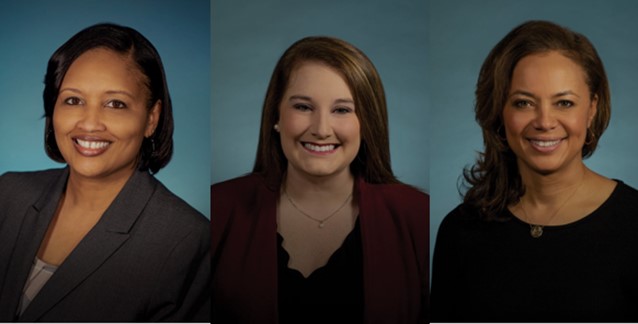
The Business Council of Alabama (BCA) recently announced three internal promotions. Michelle Hopson has been named Vice President of Finance, Kellie Hope has been moved to Vice President of Community Engagement and Director of Regional Affairs, Southern Region, and Andrea Hutchings has been promoted to Manager of Political Affairs. These internal changes will enhance the organization’s overall effectiveness in membership, political advocacy, and economic development activities. Robin Stone, interim executive director of BCA stated, “BCA has a tremendous team that is focused on supporting our members and serving as the organization that brings businesses of all sizes and sectors in the state together. Kellie, Michelle, and Andrea are dedicated to our members and our mission, and these promotions are reflective of the quality of their work and the expanded roles that these new titles carry.” Hopson has been with BCA since 2020 as the Director of Finance. A graduate of Troy University, she has 24 years of experience in finance and accounting. Hopson stated, “I am honored by this recognition and am proud to work alongside this great team at BCA. I’m excited to continue in my role as we work to support Alabama and its business community.” Hope worked for the Mobile Area Chamber of Commerce prior to becoming BCA’s Director of Regional Affairs, Southern Region, in 2019. Hope earned a bachelor’s degree in accounting and a Master of Social Work from Tulane University. Hope commented, “I’m excited to continue our mission through this new role and honored to work with our team and many partners throughout the state.” Hutchings joined BCA in 2020 as Executive Assistant to the President and CEO and previously served in Governor Kay Ivey’s administration as Director of Scheduling. Hutchings graduated from Auburn University Montgomery with focuses in Criminal Justice and Political Science. Hutchings stated, “It is an honor to continue to serve BCA and begin serving ProgressPAC in this new capacity. I look forward to working alongside the PAC, ensuring that BCA stands ready to support and endorse pro-business candidates.” BCA is a non-partisan, statewide business association representing the interests and concerns of working Alabamians.
Voting bill showdown looms as GOP rejects Manchin plan
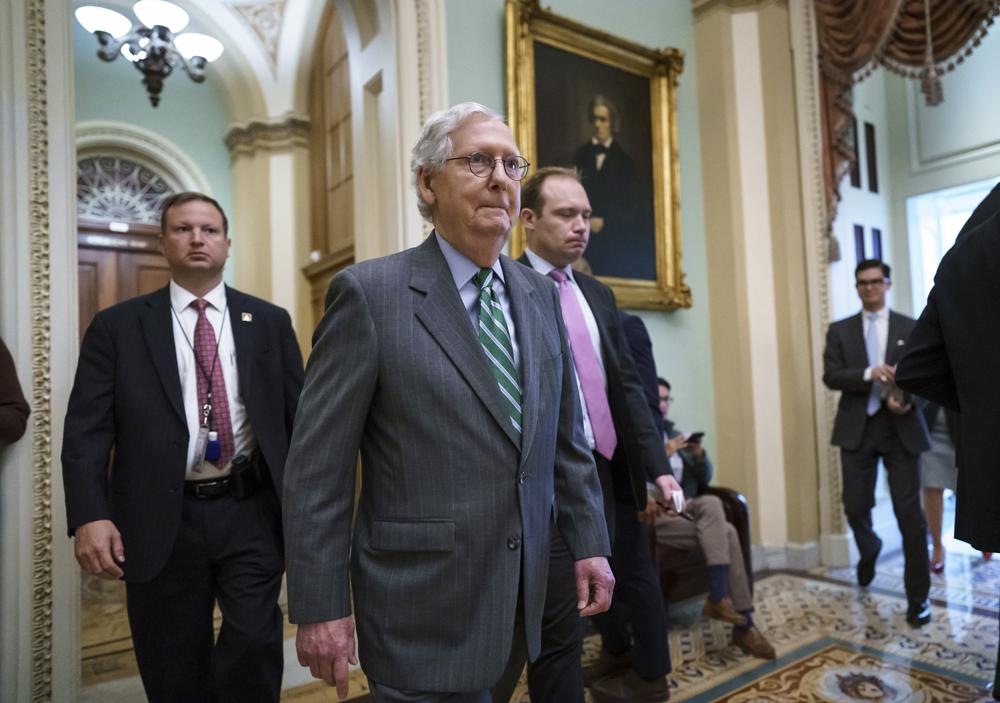
The Senate is set for a key vote Tuesday on a sweeping rewrite of voting and election law, setting up a dramatic test of Democratic unity on a top priority that Republicans are vowing to block. Democrats appeared to be coalescing Thursday around changes to the bill that could win the support of moderate West Virginia Sen. Joe Manchin, the lone Democratic holdout on the legislation. Yet, they still faced lockstep Republican opposition that will likely leave Democrats back where they started: lacking the votes to overcome a Republican filibuster. Senate Minority Leader Mitch McConnell, R-Ky., called Manchin’s proposal “equally unacceptable.” “Republicans are digging in their heels,” said Sen. Chris Murphy of Connecticut. “They’ve made it pretty clear this week that there’s nothing they’re willing to support.” The bill, known as the For the People Act, has been touted as Democrats’ answer to a state level-GOP push to enact voting restrictions following the 2020 election. It passed the House in March but has bogged down in the Senate as Democrats have debated among themselves — with Manchin ultimately declaring he couldn’t vote for it because it lacked bipartisan support. Yet Manchin’s position has evolved, and compromise appeared to be nearing after he proposed a series of changes this week to narrow its scope. His proposal received a boost Thursday when Stacey Abrams, a former Georgia gubernatorial candidate who is a leading Democratic voice on voting rights, said she “absolutely” supported it. “What Sen. Manchin is putting forward are some basic building blocks that we need to ensure that democracy is accessible,” Abrams told CNN. Still, in a narrowly divided Senate where Democrats must count on Vice President Kamala Harris to cast tie-breaking votes, any compromise will likely be for naught unless changes are made to Senate filibuster rules, which Manchin and others oppose. For now, it takes 60 votes to overcome a filibuster and advance legislation. Over a dozen Senate Republicans took turns at the microphone during a Thursday news conference to denounce the bill, which they view as a federal overreach into state and local elections. McConnell predicted all Republicans would remain in lockstep opposition regardless of what changes are made. Sen. Roy Blunt, the No. 4 ranking Senate Republican, noted the endorsement by Abrams, who is a lightning rod for GOP criticism. “I actually think when Stacey Abrams immediately endorsed Sen. Machin’s proposal, it became the Stacey Abrams (bill), not the Joe Manchin (bill),” he told reporters Thursday. As written, the Democrats’ bill would bring about the largest overhaul of U.S. voting in a generation, touching nearly every aspect of the electoral process. It would blunt laws erected in the name of election security, like voter ID requirements, while curtailing the influence of big money in politics. It would create a nonpartisan process for redrawing congressional districts, expand mail voting and early voting, restore the rights of felons to cast a ballot, and scores of other provisions. Manchin’s counter-offer, which is intended to entice GOP support, would leave significant portions of the sprawling bill intact while curtailing, rewriting, or eliminating other key parts. “Color me a little a little skeptical,” Democratic Sen. Tim Kaine of Virginia said of the possibility of bipartisanship. What will ultimately come to the floor for a vote Tuesday remains unclear. Also not certain: whether Manchin will vote for it. “We’ll see what bill we have,” he told reporters Thursday. “We don’t know what bill we’re going to have.” A national voter ID requirement favored by Manchin has emerged as one sticking point with some Democrats. Manchin’s proposal is far softer than the strict photo ID requirements adopted by some states. It would require all states to check ID, but various documents, including a utility bill, could be used instead of a photo ID, a requirement already adopted by 15 states, including Manchin’s West Virginia. “That is what we’re negotiating,” said Minnesota Sen. Amy Klobuchar, who is playing a lead role in guiding the legislation. Polls have shown notable bipartisan support for voter ID requirements, and Democrats in their elections overhaul focused on the strictest ID laws. In the current Senate bill, Democrats would require states with an ID law to allow voters who show up without identification to cast a regular ballot as long as they sign an affidavit under penalty of perjury. “We might squabble about one or two things,” said Sen. Raphael Warnock of Georgia. “But I am not about to sacrifice the good in the pursuit of the perfect.” Klobuchar said she would continue to work on the bill over the weekend and was optimistic all 50 Senate Democrats would support it. “If we reach unity on a voting bill in the Democratic Party, with all of the debates we’ve been having over the last few months, I don’t think anything’s over yet,” she said. Republished with the permission of the Associated Press.
‘Obamacare’ survives: Supreme Court dismisses big challenge

The Supreme Court, though increasingly conservative in makeup, rejected the latest major Republican-led effort to kill the national health care law known as “Obamacare” on Thursday, preserving insurance coverage for millions of Americans. The justices, by a 7-2 vote, left the entire Affordable Care Act intact in ruling that Texas, other GOP-led states, and two individuals had no right to bring their lawsuit in federal court. The Biden administration says 31 million people have health insurance because of the law, which also survived two earlier challenges in the Supreme Court. The law’s major provisions include protections for people with existing health conditions, a range of no-cost preventive services, expansion of the Medicaid program that insures lower-income people, and access to health insurance markets offering subsidized plans. “The Affordable Care Act remains the law of the land,” President Joe Biden, said, celebrating the ruling. He called for building further on the law that was enacted in 2010 when he was vice president. Also left in place is the law’s now-toothless requirement that people have health insurance or pay a penalty. Congress rendered that provision irrelevant in 2017 when it reduced the penalty to zero. The elimination of the penalty had become the hook that Texas and other GOP-led states, as well as the Trump administration, used to attack the entire law. They argued that without the mandate, a pillar of the law when it was passed, the rest of the law should fall, too. And with a Supreme Court that includes three appointees of former President Donald Trump, opponents of “Obamacare” hoped a majority of the justices would finally kill the law they have been fighting for more than a decade. But the third major attack on the law at the Supreme Court ended the way the first two did, with a majority of the court rebuffing efforts to gut the law or get rid of it altogether. Trump’s appointees — Justices Amy Coney Barrett, Neil Gorsuch, and Brett Kavanaugh — split their votes. Kavanaugh and Barrett joined the majority. Gorsuch was in dissent, signing on to an opinion from Justice Samuel Alito. Justice Stephen Breyer wrote for the court that the states and people who filed a federal lawsuit “have failed to show that they have standing to attack as unconstitutional the Act’s minimum essential coverage provision.” In dissent, Alito wrote, “Today’s decision is the third installment in our epic Affordable Care Act trilogy, and it follows the same pattern as installments one and two. In all three episodes, with the Affordable Care Act facing a serious threat, the Court has pulled off an improbable rescue.” Alito was a dissenter in the two earlier cases in 2012 and 2015, as well. Like Alito, Justice Clarence Thomas was in dissent in the two earlier cases, but he joined Thursday’s majority, writing, “Although this Court has erred twice before in cases involving the Affordable Care Act, it does not err today.” Because it dismissed the case for the plaintiff’s lack of legal standing — the ability to sue — the court didn’t actually rule on whether the individual mandate is unconstitutional now that there is no penalty for forgoing insurance. Lower courts had struck down the mandate, in rulings that were wiped away by the Supreme Court decision. With the latest ruling, the Supreme Court reaffirmed that “the Affordable Care Act is here to stay,” former President Barack Obama said, adding his support to Biden’s call to expand the law. Texas Attorney General Ken Paxton pledged to continue the fight against “Obamacare,” which he called a “massive government takeover of health care.” But it’s not clear what Republicans can do, said Larry Levitt, an executive vice president for the nonprofit Kaiser Family Foundation, which studies health care. “Democrats are in charge and they have made reinvigorating and building on the ACA a key priority,” Levitt said. “Republicans don’t seem to have much enthusiasm for continuing to try to overturn the law.” Republicans have pressed their argument to invalidate the whole law even though congressional efforts to rip out the entire law “root and branch,” in Senate GOP leader Mitch McConnell’s words, have failed. The closest they came was in July 2017 when Arizona Sen. John McCain, who died the following year, delivered a dramatic thumbs-down vote to a repeal effort by fellow Republicans. Chief Justice John Roberts said during arguments in November that it seemed the law’s foes were asking the court to do work best left to the political branches of government. The court’s decision preserves benefits that have become part of the fabric of the nation’s health care system. Polls show that the law has grown in popularity as it has endured the heaviest assault. In December 2016, just before Obama left office and Trump swept in calling the ACA a “disaster,” 46% of Americans had an unfavorable view of the law, while 43% approved, according to the Kaiser Family Foundation tracking poll. Those ratings flipped, and by February of this year, 54% had a favorable view, while disapproval had fallen to 39% in the same ongoing poll. The health law is now undergoing an expansion under Biden, who sees it as the foundation for moving the U.S. to coverage for all. His giant COVID-19 relief bill significantly increased subsidies for private health plans offered through the ACA’s insurance markets, while also dangling higher federal payments before the dozen states that have declined the law’s Medicaid expansion. About 1.2 million people have signed up with HealthCare.gov since Biden reopened enrollment amid high levels of COVID cases earlier this year. Most of the people with insurance because of the law have it through Medicaid expansion or the health insurance markets that offer subsidized private plans. But its most popular benefit is protection for people with preexisting medical conditions. They cannot be turned down for coverage on account of health problems or charged a higher premium. While those covered under employer plans already had such protections, “Obamacare” guaranteed them for people buying
Alabama asks court to dismiss part of suit over prisons
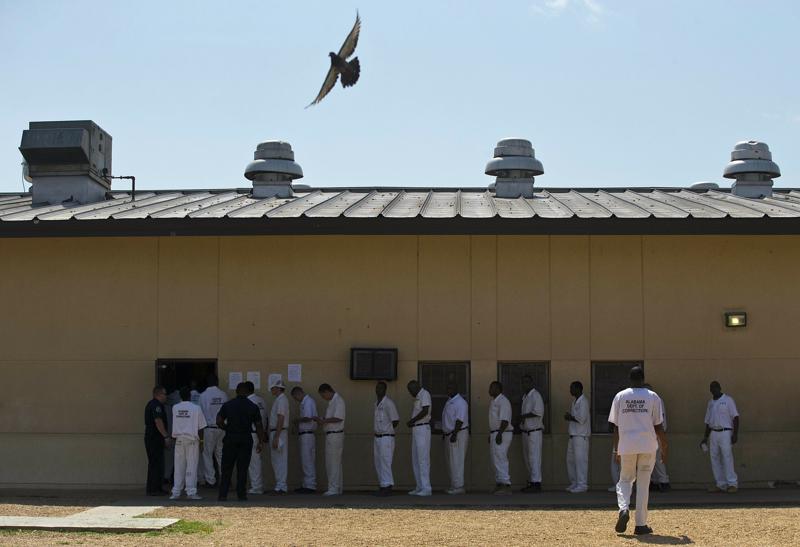
A Justice Department lawsuit challenging sanitation and safety concerns in Alabama’s men’s prisons is too vague and should not be allowed to go forward, the state said in asking a court to dismiss part of the case. The federal government has not specified which prisons are troubled by problems like broken locks, insufficient or faulty surveillance cameras and flooding caused by poor plumbing, the state argued in documents filed Wednesday, so the Department of Corrections can’t defend itself. Even if the Justice Department spelled out specific problems, there’s no evidence they are a pattern in the state prison system, the state argued. And, it said, allegations about inadequate staffing are covered in other litigation and should not be included in the lawsuit, which claims Alabama prisons are so bad they violate the rights of inmates. The state has acknowledged problems with its prisons for years while denying they were so bad that conditions are unconstitutional. The government sued the state in December after warning in 2019 and again in 2020 about conditions in state prisons, which are designed to hold 12,388 people but were overcrowded with 16,810 prisoners in April, according to a state report. The population dropped by about 3,700 during the pandemic. In May, the government claimed in an updated lawsuit that state prisons remain deadly, noting that inmate-on-inmate homicides had increased from already high levels. The state asked a judge to dismiss parts of the complaint dealing with unsafe and unsanitary conditions and staffing, which are key parts of the lawsuit. The Justice Department said the homicide rate in Alabama’s prisons for men in 2018 was more than seven times the national average for prisons and in fiscal year 2020, at least 16 prisoners were killed by other prisoners, according to available state data. Federal officials also said the prison system is not accurately reporting prison deaths. A plan for private companies to build new prisons and the state lease them fell apart amid opposition from communities and activists and questions over financing, and Gov. Kay Ivey said earlier this month the state is looking at other options. Republished with the permission of the Associated Press.
Jim Zeigler opposed to Kay Ivey’s last-minute declaration of paid state holiday for Friday
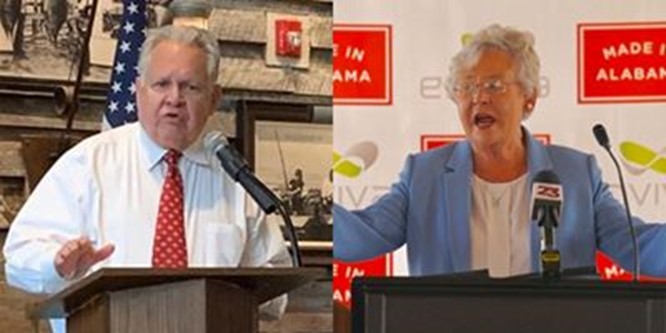
Gov. Kay Ivey announced Thursday that state offices will be closed on Friday, June 18, to recognize the newly created federal holiday for Juneteenth, reported WKRG. The House voted 415-14 Wednesday to make Juneteenth, or June 19th, the 12th federal holiday. President Joe Biden signed the bill today. Jim Zeigler is opposed to the declaration by Ivey, saying it’s “political game-playing at its worst.” Ivey made a proclamation recognizing Juneteenth last week, on June 10, stating it was to “recognize the painful origins of this significant day and to promote healing and unity.” Juneteenth is Saturday, June 19, a day that state workers already have off, Zeigler argues. He also stated that the cost alone would be in the hundreds of thousands of dollars and that only the Alabama Legislature has the authority to declare state holidays. Zeigler stated, “This is a most un-businesslike way to run a state government. The Ivey move was totally political to get brownie points with state workers.”
