
Paul DeMarco: Push to ban critical race theory from being taught in Alabama schools gaining momentum

The debate over critical race theory has swept the nation and has become a contentious issue at school board meetings in almost every state. At least four states have banned the controversial plan that arose from Marxist ideology and is being used by some educators to advocate that the United States was established on racist beliefs and systemic racism is inherent in every organization and government body. Critical race theory teaches that the American concept of a color-blind society and that judging one by the content of their character and the color of their skin as espoused by Martin Luther King, Jr. is flawed. Alabama has also joined the debate and there are already efforts to stop these types of programs from being taught in state schools. The state school board has already debated a resolution that may be considered in August to prohibit discussions of critical race theory from taking place in Alabama public schools. And Alabama State Representative Chris Pringle from Mobile will be introducing a bill next during the next legislative session in 2022 that would prohibit public K-12 schools from teaching critical race theory. Parents of Alabama students around the state are already taking this up with local school boards so I anticipate that this bill will be addressed and passed early next year by the Alabama Legislature. Paul DeMarco is a former member of the Alabama House of Representatives.
‘Protected them to death’: Elder-care COVID rules under fire
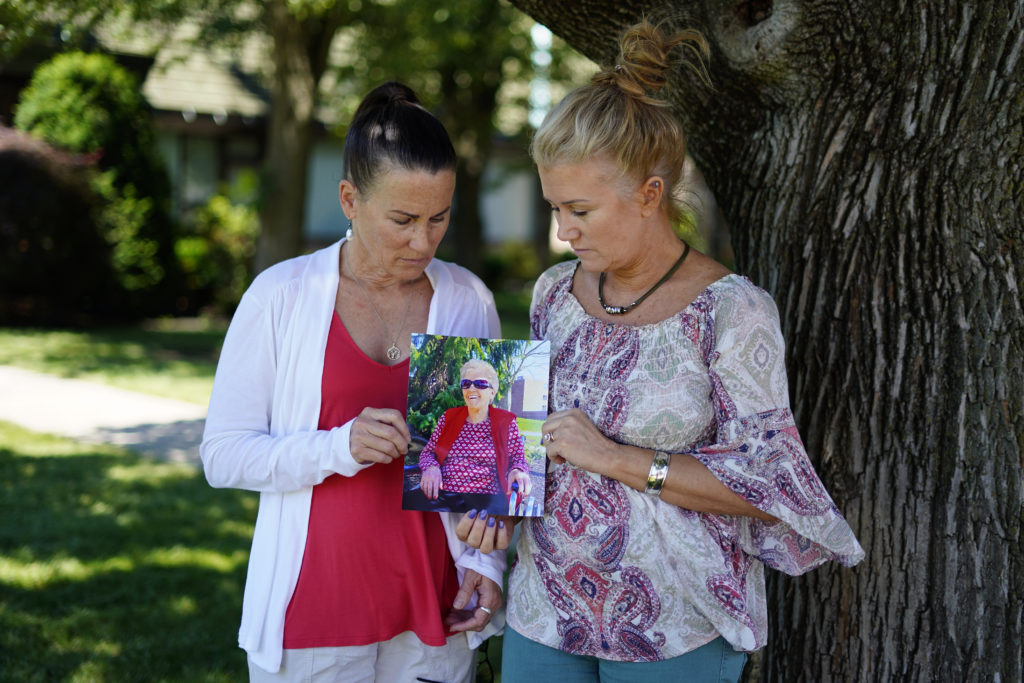
Barbara and Christine Colucci long to remove their masks and kiss their 102-year-old mother, who has dementia and is in a nursing home in Rochester, New York. They would love to have more than two people in her room at a time so that relatives can be there too. “We don’t know how much longer she’s going to be alive,” Christine Colucci said, “so it’s like, please, give us this last chance with her in her final months on this earth to have that interaction.” Pandemic restrictions are falling away almost everywhere — except inside many of America’s nursing homes. Rules designed to protect the nation’s most vulnerable from COVID-19 are still being enforced even though 75% of nursing home residents are now vaccinated and infections and deaths have plummeted. Frustration has set in as families around the country visit their moms and, this Father’s Day weekend, their dads. Hugs and kisses are still discouraged or banned in some nursing homes. Residents are dining in relative isolation and playing bingo and doing crafts at a distance. Visits are limited and must be kept short, and are cut off entirely if someone tests positive for the coronavirus. Family members and advocates question the need for such restrictions at this stage of the pandemic, when the risk is comparatively low. They say the measures are now just prolonging older people’s isolation and accelerating their mental and physical decline. “They have protected them to death,” said Denise Gracely, whose 80-year-old mother, Marian Rauenzahn, lives in a nursing home in Topton, Pennsylvania. Rauenzahn had COVID-19 and then lost part of a leg to gangrene, but Gracely said what she struggled with the most was enforced solitude, going from six-day-a-week visits to none at all. Rauenzahn’s daughters eventually won the right to see her once a week, and the nursing home now says it plans to relax the rules on visits for all residents in late June. But it has not been not enough, as far as Gracely is concerned. “I believe it’s progressed her dementia,” Gracely said. “She’s very lonely. She wants out of there so bad.” Pennsylvania’s long-term care ombudsman has received hundreds of complaints about visiting rules this year. Kim Shetler, a data specialist in the ombudman’s office, said some nursing homes’ COVID-19 restrictions go beyond what state and federal guidelines require. Administrators have been doing what they feel is necessary to keep people safe, she said, but families are understandably upset. “We’ve done our darndest to advocate for folks to get those visitation rights,” she said. “It’s their home. They should have that right to come and go and have the visitors that they choose.” A recent survey by National Consumer Voice for Quality Long-Term Care, an advocacy group, found time limits on visits remain commonplace, ranging from 15 minutes to two hours. Some facilities limit visiting hours to weekdays, making it difficult for people who work during the day, or restrict visits to once or twice a week. Rauenzahn’s Pennsylvania nursing home has been limiting most residents to a single, 30-minute visit every two weeks. Federal authorities should “restore full visitation rights to nursing home residents without delay,” Consumer Voice and several other advocacy groups said in a June 11 letter to the Centers for Medicare & Medicaid Services. Residents are “continuing to suffer from isolation and decline because of the limited visitation permitted in the current guidance,” the letter said. Advocates also take issue with federal guidance on how nursing homes deal with new COVID-19 cases. The guidance says most visits should be suspended for at least 14 days. Some family members, administrators, and advocates complain that the recommendation has led to frequent lockdowns because of one or two cases. “We’ve never had a real long, lengthy period of time where we’re able to have visitors,” said Jason Santiago, chief operating officer at The Manor at Seneca Hill in Oswego, New York. He said continued isolation is inflicting a heavy toll. “We’ve got to do things that make more sense for these residents, make more sense for these families.“ While the federal government recently eased restrictions for vaccinated nursing home residents, New York state has not gone along. Those who eat together in communal spaces must remain socially distanced, for example, and they have to be masked and 6 feet apart during activities, no matter their vaccination status. That makes crafts, bingo, music — “a lot of what nursing home life is about” — more difficult, said Elizabeth Weingast, vice president for clinical excellence at The New Jewish Home, which runs elder-care facilities in and around New York City. “We prioritized vaccinating nursing home residents and that’s wonderful, but they’re not getting the same liberties that you or I have now,” said Weingast, who recently published an opinion piece calling for a loosening of restrictions. Her co-author, Karen Lipson of LeadingAge New York, which represents nonprofit nursing homes, said the rules “force this kind of policing of love that is really, really challenging.” With the virus infecting more than 650,000 long-term-care residents and killing more than 130,000 across the U.S., nursing homes had a duty to take precautions when COVID-19 was out of control, said Nancy Kass, a public health expert at Johns Hopkins University. But she said she is baffled by the continued heavy emphasis on safety at the expense of residents’ quality of life, given “we’re not in that state of affairs anymore.” In Ohio, Bob Greve was desperate for a change of scenery after being cooped up in his Cincinnati-area nursing home for most of the last year. But the administrator wouldn’t permit a visit to his son’s house because of COVID-19 concerns — even though both men are fully vaccinated. The policy led Greve to a “breaking point,” according to his son, Mike Greve, who said his 89-year-old father called six, eight, even 10 times a day out of boredom and frustration and talked constantly about getting out. Mike Greve said he pressed the nursing home
Tuscaloosa seeks to cut water use because of leaking pipe

Tuscaloosa is ordering most of its water customers to use less, saying a leak in a key water line is reducing how much water it can pump out. Mayor Walt Maddox on Sunday ordered conservation measures for areas south of the Black Warrior River, including the University of Alabama, the Mercedes-Benz assembly plant, and four rural water systems outside the city limits. City officials believe pipes that carry untreated water from Lake Tuscaloosa to a water treatment plant are leaking somewhere along a 2-mile (3-kilometer) stretch. But floodwaters from Tropical Storm Claudette are covering much of the low-lying areas where the pipes run. Maddox said at a televised news conference that it could be several days before workers can find the leak. Water treatment capacity has fallen from 40 million gallons (150 million liters) a day to 22 million gallons (83 million liters), the mayor said. He ordered people to turn off sprinkler systems, not wash cars, not wash pavement and not fill swimming pools until further notice. “That should sustain us with water conservation,” he said. Maddox said storage tanks are full, and customers shouldn’t see any difference in pressure at home right now. No boil-water notice was issued. However, he warned things could get worse if the leaking pipe collapses or the area had a major fire. “We don’t want to be alarmist, but we don’t want to sugar-coat it and say all is well,” Maddox said. Republished with the permission of the Associated Press.
Alabama jobless rate drops to 3.4% as recovery continues

Alabama’s unemployment rate dropped to 3.4% in May, down sharply from a year earlier as the economy added jobs while it recovered from the pandemic, the state said Friday. The jobless rate fell from 3.6% in April, while wage and salary employment increased by 4,700, the Department of Labor said in an announcement. The rate was a substantial improvement from the 7.9% recorded in May 2020, when nearly 175,000 were jobless compared to about 79,000 last month. Labor Secretary Fitzgerald Washington said nearly all sectors of the economy were recovering, and paychecks were getting fatter. “Once again, our average weekly wages are at new record high, representing an almost $67 per week over-the-year increase. Both the leisure and hospitality and manufacturing sectors are showing record high wages as well, with significant yearly increases,” he said. Shelby County in metro Birmingham had the lowest unemployment rate at 1.8%, followed by Blount County at 1.9%. Located in rural western Alabama, Wilcox County was highest in the state by far at 8.8%, followed by neighboring Lowndes County at 8.2%. Republished with the permission of the Associated Press.
FAA considering plan to land space vehicles in Alabama

The Federal Aviation Administration is considering a plan to land commercial space vehicles in Alabama. The agency recently released information about a proposal by the Huntsville airport and Nevada-based Sierra Space to use the site roughly 15 miles (24 kilometers) west of downtown to land ships that resemble a small space shuttle with upswept wings WHNT-TV reported. The spacecraft would be launched elsewhere and land on an existing runway in Huntsville, which has the largest commercial airport in north Alabama and is a hub for the aerospace industry. The Huntsville-Madison County Airport Authority said the FAA is conducting a preliminary review of the proposal. A study completed in 2015 found the airport compatible for the so-called Dream Chaser, which Sierra Space describes as a spaceplane designed to take crew and cargo into low-Earth orbit. It would be launched on an Atlas V rocket. Both the airport and the company would need licenses before any landings could occur. Republished with the permission of the Associated Press.
