
Katie Britt: Let’s not just celebrate our freedom this July 4, let’s preserve it
“We hold these truths to be self-evident, that all men are created equal, that they are endowed by their Creator with certain unalienable Rights, that among these are Life, Liberty, and the pursuit of Happiness.” Two hundred forty-five years later, these words that powered a revolution continue to fuel America, the greatest power for good that humankind has ever known. As we celebrate our great nation’s independence, we’re proudly celebrating the freedom, the dignity, and the hope that the American Dream promises – the hope of opportunity for all – the hope that is America’s heartbeat. This Dream lives on today not just because of our principles and our values, but because of the sacrifices of our brave men and women in uniform. While we celebrate what it means to be American with family and friends this weekend, we must never forget the heroes who are away from their loved ones preserving the flame of liberty and keeping us safe and free. Growing up in the Wiregrass with the sound of helicopters constant overhead, going to school with classmates who had a parent overseas for months at a time, I know the importance of our military and extended defense community, as well as the sacrifice made by entire families. We’re at a pivotal time in our nation’s history, as we continue our daily march to form a more perfect Union. The past year has certainly reminded us how important our freedom is – that we must stand at the ready to fight to defend it at all times. That’s a call that our service members and law enforcement officers choose to answer every day. They do it not for fanfare or fortune, but for us — our freedom, our safety, our independence, and our very existence. They’re the very best of America. And America owes them our best in return. Unfortunately, the Biden Administration’s Fiscal Year 2022 budget proposal is anything but. By failing to even keep pace with inflation, the Biden budget is failing those who have never failed us and effectively cutting defense spending. It’s incumbent on us to ensure our military service members remain the best equipped and trained fighting force the world has ever known. I firmly believe in the principle of peace through strength, and as China, Russia, and other bad actors ramp up their military and defense spending, we cannot afford to shortchange our heroes. As we celebrate July 4, please join me in praying for them and their families. Our service members personify the true power and meaning of freedom for the world to see, shining a beacon of liberty that no external foe will ever be able to extinguish – unless we let them. This weekend, let us all proudly say, “God Bless America and God Bless our heroes who keep our country safe and free.” Katie Britt is a Republican candidate to serve as the next U.S. Senator for Alabama. An Enterprise native, Katie resides in Montgomery with her husband, Wesley, and their two children, Bennett and Ridgeway.
‘Orange skies’: Joe Biden raising federal pay to fight wildfires

The Biden administration said Wednesday it is hiring more federal firefighters — and immediately raising their pay — as officials ramp up response efforts in the face of a severe drought that is setting the stage for another destructive summer of intense wildfires across the West. President Joe Biden announced the moves during a virtual meeting with governors from Western states and as a huge swath of the Pacific Northwest endures one of the worst heat waves in recent memory. Temperatures in Portland, Oregon, soared to a record 116 degrees Fahrenheit on Monday, a fact Biden cited as “a wake-up call to the rest of the public” about the realities of climate change. “The truth is we’re playing catch-up″ on preparing for extreme heat and wildfires, Biden said, calling federal efforts “under-resourced″ compared with the deadly threat posed by climate change and extreme drought. “That’s going to change and we have to do it,″ Biden told the governors. “We can’t cut corners when it comes to managing our wildfires or supporting our firefighters. Right now we have to act and act fast.″ Recalling horrific scenes from wildfires in California and other states last year, Biden said, “Orange skies look like end-of-days smoke and ash.″ Biden’s plan would ensure that no one fighting wildland fires is making less than $15 per hour and would add or convert to full-time nearly 1,000 firefighters across a host of agencies. “Because of climate change, wildland firefighting is no longer a seasonal endeavor,″ the White House said in a statement. “With fire seasons turning into fire years, it is imperative to have a year-round workforce that is available to respond at any time … and is available to undertake preventive actions” such as cutting down small trees and brush that serve as fuel to fires that are increasing in size and intensity. Western states have been parched by severe drought and record heat that has burned more than 2,300 square miles (5,900 square kilometers) this year. That’s ahead of the pace in 2020, which saw a near-record 15,000 square miles (40,000 square kilometers) burned, killing dozens of people and destroying more than 17,000 homes and other structures. “Climate change is driving a dangerous confluence of extreme heat and prolonged drought,″ Biden said. “We’re seeing wildfires of greater intensity that move with more speed.” Biden has expressed dismay at the starting pay for federal firefighters, which is significantly lower than at many local and state fire agencies. Pay for new federal firefighters typically starts at $13 per hour. The pay raise will come in the form of retention incentives and by providing additional bonuses to those working on the front lines. More experienced permanent firefighters could also be eligible for a 10% retention incentive. Temporary firefighters will be eligible to receive some incentive pay under the plan. Wednesday’s meeting included eight Western governors, including six Democrats and two Republicans. California Gov. Gavin Newsom, a Democrat, said he was pleased to be working with the White House, rather than as “sparring partners,″ as he described his state’s relationship with the Trump administration. “We were debating raking policies″ in forests, Newsom said, referring to comments by then-President Donald Trump that the state should “rake” its forests to reduce the risk of wildfires. With climate change, the wildfire seasons are only to get worse, Newsom and other governors said. “The hots are getting hotter, the dries are getting drier,” Newsom said. Three Republican governors, Greg Gianforte of Montana, Brad Little of Idaho, and Doug Ducey of Arizona, said they were disappointed at their exclusion from the White House meeting. “It is critical to engage governors fully and directly to have a productive discussion about how the federal government can improve its wildfire response and prevention efforts,″ Gianforte and Little wrote in a letter to Biden. A White House spokesman said the invited governors represented “a cross-section of states impacted by wildfires” and said Biden will continue to work with governors from both parties on the issue. The meeting with the governors came as the White House released a memo confirming its commitment to a clean energy standard, tax credits, and 500,000 charging stations for electric vehicles, among other climate goals as officials pursue a two-track approach on infrastructure. A memo by climate adviser Gina McCarthy and White House senior adviser Anita Dunn also pledges at least $10 billion to conserve and restore public lands and waters, address environmental injustice and create a Civilian Climate Corps to complete projects related to climate change and clean energy. The memo responds to criticism from environmental groups and other progressives who are frustrated that many climate-related initiatives were cut out of a bipartisan infrastructure plan announced last week. “We know more work needs to be done, which is why President Biden will continue championing″ the nearly $1 trillion bipartisan infrastructure bill and a separate, larger plan Biden and fellow Democrats aim to approve along party lines, the memo said. On wildfires, administration officials have pledged to work with Congress to find a permanent fix to increase firefighter pay and convert more seasonal wildland firefighters to year-round workers. The U.S. Forest Service and Interior Department combine to employ about 15,000 firefighters. Roughly 70% are full-time and 30% are seasonal. Those figures used to be reversed, but have changed as fire seasons have grown longer and more severe. Oregon Sen. Ron Wyden, a Democrat who has pushed the administration to ramp up its wildfire response, said Congress “can and should bolster these efforts” with legislation to lift a cap on overtime pay, create a permanent firefighting workforce and expand work to remove hazardous fuels to lessen fire risk. “The ongoing infrastructure debate in Congress gives us an essential chance to get this and other wildfire prevention efforts done,″ Wyden said. The meeting with governors came as Arizona marked the eighth anniversary of a 2013 wildfire that killed 19 members of an elite firefighting team. First lady Jill Biden, visiting a middle school in Phoenix, said
Charges expected Thursday for Donald Trump’s company, top executive

Donald Trump’s company and his longtime finance chief are expected to be charged Thursday with tax-related crimes stemming from a New York investigation into the former president’s business dealings, people familiar with the matter told The Associated Press. The charges against the Trump Organization and the company’s chief financial officer, Allen Weisselberg, appear to involve non-monetary benefits the company gave to top executives, possibly including the use of apartments, cars, and school tuition. The people were not authorized to speak about an ongoing investigation and did so on condition of anonymity. The Wall Street Journal was first to report that charges were expected Thursday. The charges against Weisselberg and the Trump Organization would be the first criminal cases to arise from the two-year probe led by Manhattan District Attorney Cyrus Vance Jr., a Democrat who leaves office at the end of the year. Prosecutors have been scrutinizing Trump’s tax records, subpoenaing documents, and interviewing witnesses, including Trump insiders and company executives. A grand jury was recently empaneled to weigh evidence and New York Attorney General Letitia James said she was assigning two of her lawyers to work with Vance on the criminal probe while she continues a civil investigation of Trump. Messages seeking comment were left with a spokesperson and lawyers for the Trump Organization. Weisselberg’s lawyer, Mary Mulligan, declined to comment. The Manhattan district attorney’s office declined to comment. Trump’s spokesperson did not immediately respond to a request for comment, but Jason Miller, a longtime former senior adviser to the Republican, spun the looming charges as “politically terrible for the Democrats.” “They told their crazies and their supplicants in the mainstream media this was about President Trump. Instead, their Witch Hunt is persecuting an innocent 80-year-old man for maybe taking free parking!” Miller tweeted, apparently referring to Weisselberg, who is 73. Trump, who’s been critical of President Joe Biden’s immigration policies, was in Texas visiting the U.S.-Mexico border on Wednesday. He did not respond to shouted questions about the charges as he participated in a briefing with state officials. Trump had blasted the investigation in a statement Monday, deriding Vance’s office as “rude, nasty, and totally biased” in their treatment of Trump company lawyers, representatives, and long-term employees. Trump, in the statement, said the company’s actions were “things that are standard practice throughout the U.S. business community, and in no way a crime” and that Vance’s probe was an investigation was “in search of a crime.” Trump Organization lawyers met virtually with Manhattan prosecutors last week in a last-ditch attempt to dissuade them from charging the company. Prosecutors gave the lawyers a Monday deadline to make the case that criminal charges shouldn’t be filed. Ron Fischetti, a lawyer for the Trump Organization, told the AP this week that there was no indication Trump himself was included in the first batch of charges. “There is no indictment coming down this week against the former president,” Fischetti said. “I can’t say he’s out of the woods yet completely.” Weisselberg, a loyal lieutenant to Trump and his real estate-developer father, Fred, came under scrutiny, in part, because of questions about his son’s use of a Trump apartment at little or no cost. Barry Weisselberg managed a Trump-operated ice rink in Central Park. Barry’s ex-wife, Jen Weisselberg, has been cooperating with the investigation and turned over reams of tax records and other documents to investigators. “We have been working with prosecutors for many months now as part of this tax and financial investigation and have provided a large volume of evidence that allowed them to bring these charges,” Jen Weisselberg’s lawyer, Duncan Levin, said Wednesday. “We are gratified to hear that the DA’s office is moving forward with a criminal case.” Allen Weisselberg has worked for the Trump Organization since 1973. The case against him could give prosecutors the means to pressure the executive into cooperating and telling them what he knows about Trump’s business dealings. Prosecutors subpoenaed another long-time Trump finance executive, senior vice president and controller Jeffrey McConney, to testify in front of the grand jury in the spring. Under New York law, grand jury witnesses are granted immunity and can not be charged for conduct they testify about. Prosecutors probing untaxed benefits to Trump executives have also been looking at Matthew Calamari, a former Trump bodyguard turned chief operating officer, and his son, the company’s corporate director of security. However, a lawyer for the Calamaris said Wednesday that he didn’t expect them to be charged. “Although the DA’s investigation obviously is ongoing, I do not expect charges to be filed against either of my clients at this time,” said the lawyer, Nicholas Gravante. Republished with the permission of the Associated Press.
Census on track for August data release after court ruling
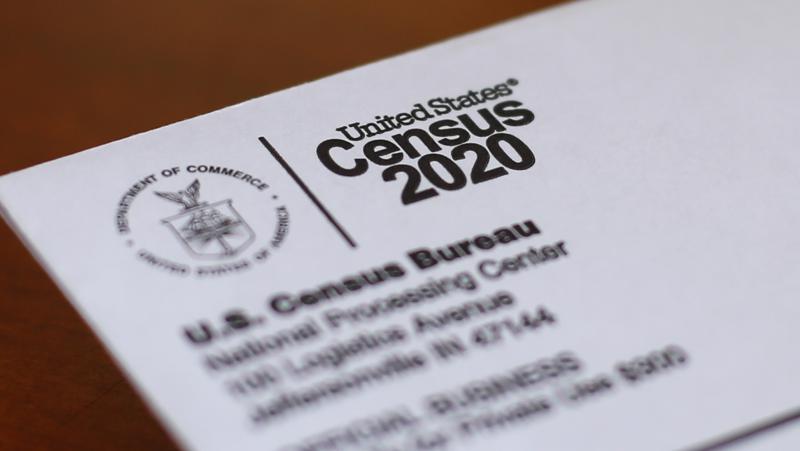
The U.S. Census Bureau said Wednesday that it’s on schedule to deliver the numbers used for redrawing congressional and legislative districts by mid-August after federal judges rejected a challenge that could have delayed the data release even further. The panel of three federal judges on Tuesday denied the state of Alabama’s request for a preliminary injunction to halt the Census Bureau from using a statistical method aimed at keeping people’s data private in the redistricting numbers. The decision in federal court in Opelika, Alabama, allows the Census Bureau, for now, to proceed toward its goal of releasing the redistricting data by Aug. 16. Alabama and three Alabama politicians had sued the Census Bureau, arguing the method known as differential privacy would produce inaccurate data. But the judges said it was too soon to pass any judgments since the numbers hadn’t yet been released. “It may very well be that the individual plaintiffs will return here once the final redistricting data are actually delivered to the states,” the judges wrote. “But we cannot know whether differential privacy will inflict the harm alleged by the individual plaintiffs until the bureau releases a final set of redistricting data.” The federal judges dismissed counts brought by Alabama that argued the method would produce inaccurate data and was unconstitutional. The state of Alabama and the politicians argued in the lawsuit that the Census Bureau violated proper decision-making rules when coming up with differential privacy, and the judges allowed those counts to move ahead. Bureau officials had said that the release of the redistricting data, already postponed from an earlier March 31 deadline because of the pandemic, would be held up for several more months if they were required to employ an alternative method to protect privacy. The delay has sent states scrambling to change redistricting deadlines or contemplate using other data to redraw political districts. “We note the court’s ruling and will proceed accordingly,” the Census Bureau said in a statement. Differential privacy adds intentional errors to the data to obscure the identity of any given participant in the 2020 census while still providing statistically valid information. The Census Bureau says more privacy protections are needed than in past decades as technological innovations magnify the threat of people being identified through their census answers, which are confidential by law. Civil rights groups have raised concerns that differential privacy could hamper voting rights enforcement and make it harder for the creation of districts where racial or ethnic minorities are the majority. If you picture the privacy tool as a dial with lower settings offering the most privacy and higher settings providing the most accuracy, the Census Bureau dialed up the accuracy in final guidelines issued earlier this month. The statistical term for this dial is “epsilon,” and the bureau settled on an epsilon of 19.61, significantly higher than where the dial was set in earlier test versions that critics raised concerns about. In a statement provided by the state’s legal team, Alabama Attorney General Steve Marshall said they were disappointed by the decision but would decide how to proceed after the redistricting data is released in August. The judges’ ruling failed to answer if redistricting data must be based on the actual headcount produced during the once-a-decade census and if the “unprecedented level of error” the Census Bureau plans to inject into the data is lawful, Marshall said. “We think the answers to those questions are clear: the Bureau has no authority to manipulate population data states use for redistricting, and the Bureau’s decision to dramatically skew redistricting data is patently unnecessary and unlawful,” Marshall said. “Those issues remain live in this case.” Republished with the permission of the Associated Press.
2nd Oath Keeper pleads guilty to conspiracy in Jan. 6 riot
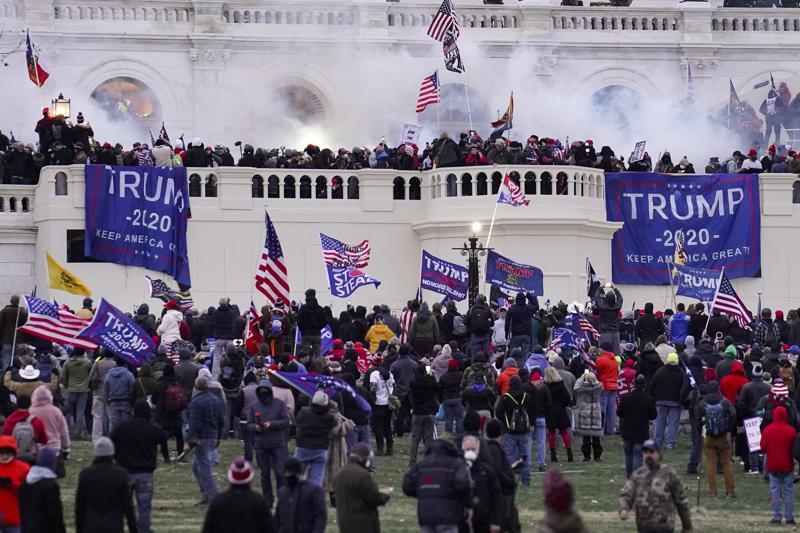
An Alabama man who stormed the U.S. Capitol with other members of the Oath Keepers extremist group pleaded guilty Wednesday to conspiracy and is cooperating with prosecutors in another major boost for the Justice Department in its sweeping Jan. 6 investigation. Mark Grods, 54, is the second member of the far-right Oath Keepers group to admit to participating in a conspiracy to block the certification of President Joe Biden’s victory and agree to cooperate in the Department of Justice’s massive investigation. Grods’ case was kept secret until Wednesday to protect the investigation and his safety before he testified in front of a grand jury, according to court documents. The cooperation agreements are certain to put pressure on the more than a dozen other defendants associated with the far-right Oath Keepers who are still fighting the allegations. It’s the largest conspiracy case that authorities have brought so far in the Jan. 6 attack. Grods, of Mobile, pleaded guilty to charges of conspiracy and obstruction of an official proceeding. U.S. District Judge Amit Mehta said Grods would likely face around four to five years in prison under federal sentencing guidelines. But prosecutors are likely to ask for even less time in exchange for his cooperation against others. Grods and his attorney did not speak to reporters as they left federal court in Washington on Wednesday. The judge told Grods he could not have any contact with other people associated with the Oath Keepers. Last week, prosecutors secured the first guilty plea in the Oath Keepers conspiracy case with defendant Graydon Young, 55, of Englewood, Florida, who was arrested in February. Young has also agreed to cooperate with investigators. Authorities say members of the Oath Keepers came to Washington intent on stopping the peaceful transition of power and were ready to use violence if necessary. Prosecutors have said members of the group prepared in the weeks leading up to Jan. 6 as if they were heading to war and dressed that day in battle gear, like helmets and tactical vests. Oath Keepers leader Stewart Rhodes, who has not been charged, communicated with some of the defendants over a Signal chat called “DC OP: Jan 6 21,” which prosecutors have said shows the group was “activating a plan to use force on Jan. 6.” Defense attorneys have argued that any discussions their clients had before Jan. 6 were in reference to providing security at the rally before the riot or protecting themselves against possible attacks from Antifa activists. They have denied that there was any plot to attack the Capitol or halt the certification of the vote. Grods on Jan. 2 sent a message over Signal that read: “So I guess I am taking full gear less weapons? Just reading through all the posts. Would rather have it and not need it,” according to court documents. Authorities say he brought guns to Washington and gave them to another person to store at a hotel in Virginia. Grods rode in a golf cart to the Capitol and was among those who joined the military-style “stack” formation seen marching toward the building, according to court documents. He went inside with a large stick and left after officers shot pepper balls at a wall near him, prosecutors say. Another defendant told him afterward to “make sure that all signal comms about the op has been deleted and burned,” according to court documents. More than 500 people across the U.S. have been arrested on federal charges so far in the Jan. 6 riot. Grods is the 11th person to plead guilty. A third member of the Oath Keepers group, Jon Ryan Schaffer, has also pleaded guilty and agreed to cooperate with prosecutors, but he wasn’t charged in the conspiracy case. Most of the other plea deals have been for defendants who were charged only with misdemeanors for illegally entering the Capitol. The only defendant who has been sentenced so far is an Indiana woman who pleaded guilty to a misdemeanor charge. She was ordered to serve three years of probation, perform 120 hours of community service and pay $500 in restitution. Republished with the permission of the Associated Press.
