
Butler County school system goes high tech with Hi.Ed eligibility tracking service

Teachers, coaches, and school administrators in Butler County now have a new tool to help track student progress towards qualifying for graduation while also making NCAA eligibility easier. Alabama-based Hi.Ed announced on Wednesday that Butler County Schools (BCS) will be the latest schools to use their online guidance management system to benefit students and their families. Montgomery County Public Schools also utilize this technology. Hi.Ed stands for Hyper-Individualized Education Design. The program offers a comprehensive educational resource with five core components: Academics, Virtual Life, Compresults Tracking Tool, The Market and Athletics/NCAA Eligibility. The company is a member of Birmingham’s renowned Innovation Depot community. Hi.Ed founder Duwan Walker summarized that the web-based platform is a way “to deliver students to careers,” allowing students to identify, explore and prepare for career pathways. This includes not only four-year degrees but also two-year degrees and skills training. Walker, a former football player, developed the program with his wife. “I had the opportunity to play football and to coach at every level,” Walker stated to Al.com. “I saw the need for this type of software. There is a big gap in understanding what a student needs to graduate and what they need to be eligible to play NCAA sports. I felt like we needed something to bridge that gap, and that is where God laid it upon our hearts to develop Hi.Ed.” “We are thrilled and honored to partner with the City of Greenville, Butler County Schools, and the Butler County Commission for Economic Development as we continue to improve the educational path to success for every student,” commented Walker. “Our system will assist with bridging the gaps of confusion and uncertainty and serve all students, parents, administrators, and other stakeholders by joining one another under one practical platform, creating a clear line of transparency from school to home, and then later connecting students to the workforce. Hi.Ed will stand alongside the City of Greenville, Butler County Schools, and the Butler County Commission for Economic Development, and together, we will be a catalyst in helping guide our future leaders to a world full of opportunities.” “Hi.Ed is an effective educational tool that will significantly impact how we serve our high students and parents,” added Rheta McClain, Career Tech Director for BCS. “At the same time, it simultaneously helps us refocus how we interact with colleges and the local workforce. School and district personnel can utilize data from Hi.Ed to partner with community organizations, colleges, and workforce companies to provide information and post-high school opportunities that align closely with students’ interests. Progress toward graduation, NCCA eligibility, progress towards college admission, workforce readiness, and more will be easily accessible by high school students and parents in one centralized location. This program will enhance our ability to ensure that all high school students feel supported as they progress towards becoming Butler County School System graduates prepared for the next level of their choosing – whether for the military, college, or the workforce.”
Matt Clark: Montgomery’s non-discrimination ordinance is bad for religious freedom, free speech, and public safety

On June 24, 2021, the Montgomery Advertiser reported that Montgomery Mayor Steven Reed would be submitting an ordinance to the city council that would punish discrimination on the basis of sexual orientation or gender identity. This city council will likely vote on this ordinance during its next meeting. The Alabama Center for Law and Liberty obtained a copy of the proposed ordinance and posted it on its website. While claiming to protect the civil rights of all, Mayor Reed actually deprives religious adherents of their civil rights and the most vulnerable among us of their right to safety. Let’s start with the implications for churches. One would think that churches would be completely off-limits to the government, but think again. The ordinance forbids anyone from abridging “the right to full enjoyment of any of the accommodations, advantages, facilities, or privileges of any place of … assemblage … without discrimination.” A church, by definition, is an assembly. Therefore, it appears this ordinance will force churches to let transgender people use the restroom of their choice or face fines if they don’t. This ordinance also has implications for public safety. Because it defines gender identity as “the actual or perceived gender-related identity, expression, appearance, or mannerisms, or other gender-related characteristics of an individual,” an establishment cannot question whether an individual is actually transgender if that person merely expresses, appears, or acts that way. Consequently, to gain access to women’s restrooms, locker rooms, or showers, a sexual predator will merely have to act like he is transgender. For all its claims about wanting to protect the weak, liberalism is alarmingly willing to subject women and children to severe trauma. This ordinance will also hurt Christians who want to run their businesses in accordance with their faith. You may have heard of Jack Phillips, the Christian cake baker in Colorado who was sued after politely declining to create a custom cake for a same-sex wedding. You may have also heard of Catholic Social Services, a Catholic adoption agency to whom the City of Philadelphia issued an ultimatum after they refused to place children in homes with same-sex couples. The Supreme Court ruled in favor of both Mr. Phillips and Catholic Social Services on narrow grounds, but the issue of whether Christians can run their businesses in accordance with their faith is far from settled. Thus, Christians in Montgomery may be facing similar suits. Homeowners will face similar problems. The ordinance applies to “obtaining housing for rental or sale.” This seems innocuous at first glance since gay and transgender people obviously need housing in order to live. However, this ordinance appears to cover not only basic housing needs but also transactions like reserving a room in a bed and breakfast or a trip on Airbnb and the like. In Hawaii, for instance, a Catholic woman who ran a bed and breakfast out of her house was fined for refusing to rent a room to a same-sex couple. She insisted that everyone, gay or straight, comply with Christian teachings about sex in her house. Undoubtedly, she should have had the right to do that, but Hawaii didn’t care. Apparently, neither does Mayor Reed. Finally, this ordinance is bad for free speech. LGBT advocates like the Human Rights Campaign argue that people should not face discrimination for who they are, and therefore people like Jack Phillips should have to praise a same-sex marriage even if they disagree with it. However, if we turn the tables, we should ask whether a gay bakery should be forced to bake a cake for a religious person with the words, “You shall not lie with a male as one lies with a female; it is an abomination.” (Leviticus 18:22.) By the same logic, the religious person should not have to face discrimination since his religion is as essential to his identity as the gay person’s sexuality is to his. Mayor Reed and his allies would probably believe that the gay cake baker should not be forced to say that—and they would be right. But neither should the Christian be forced to say something contrary to his beliefs. “Speech for me, but not for thee” is incompatible with the First Amendment. Finally, forcing this ordinance on one of the most religious cities in the United States is political suicide. If the city council passes it, then the voters will remember how the city put most of them in the crosshairs. Matt Clark serves as the Alabama Center for Law & Liberty’s Executive Director. ACLL is the non-profit litigation arm of the Alabama Policy Institute.
Feds will keep definition of metro at 50,000-person minimum
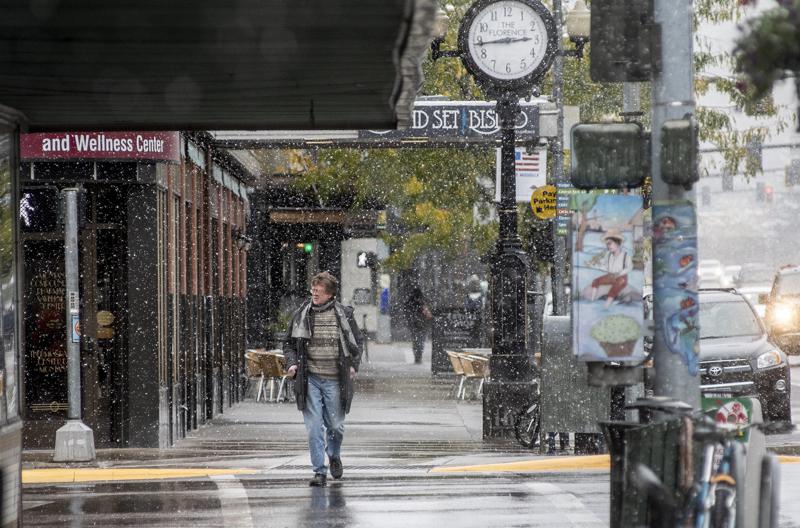
Facing criticism from small cities that feared losing status and funding, the federal government said Tuesday that it won’t raise the population threshold for what qualifies as a metro area. The Office of Budget and Management said it will keep the minimum population needed in a community’s core city at 50,000 residents in order to be designated a “metropolitan statistical area,” also known as an MSA. The federal government had been considering doubling that threshold to 100,000 people. Under that earlier proposal, 144 cities with core populations of 50,000 to 99,000 were at risk of becoming “micropolitan statistical areas” instead. The proposal would have changed the designation of more than a third of the current 392 MSAs. Leaders of metro areas like Bismarck, North Dakota; Cheyenne, Wyoming; and Auburn, Alabama, had worried the change would cause real harm, preventing urban areas from getting designated federal funding and making them less attractive for economic development. “That is great news!” said Alex McElroy, executive director of the Southeast Metropolitan Planning Organization in Cape Girardeau, Missouri, when told of Tuesday’s decision. “Overall, it’s a great designation to have because you get a lot more attention from the federal government with that designation.” Sens. John Thune, a Republican from South Dakota, and Mark Kelly, a Democrat from Arizona, introduced legislation in June that would have stopped the Office of Budget and Management, also known as the OMB, from making the change. “The fact that the OMB will not be pursuing the change at this time will ensure that essential community services, funded by various federal agencies which consider population size and MSA status, will continue into the foreseeable future,” said Bismarck Mayor Steve Bakken. “We are very grateful the current threshold will remain in place at 50,000 people.” Federal statisticians who originally had recommended the change said it was long overdue, given that the U.S. population has more than doubled since the 50,000-person threshold was introduced in 1950. Back then, about half of U.S. residents lived in metros; now, 86% do. The committee of federal statisticians that made the recommendation said Tuesday that it would now support putting it on hold pending additional research and outreach to municipalities and others. Updates to these standards are considered every decade. Even though the proposal was made during the Trump administration, and put on hold in the Biden administration, statisticians say any changes to the standards aren’t based on politics. Of the 734 public comments the Office of Budget and Management received about the proposed change, 97% opposed it, the agency said Tuesday in a notice of its decision. “Of the commenters who did cite a rationale for their opposition, almost all cited a non-statistical rationale, such as concerns about loss of federal or other funding; concerns about other programmatic consequences; and concerns about economic development for individual areas that would be reclassified from metropolitan to micropolitan,” the notice said. Officials in places like Corvallis, Oregon, need more resources, not fewer, as residents look to them to solve everyday problems, said Patrick Rollens, a spokesperson for the city that is home to Oregon State University. “I think this is an acknowledgment that cities, particularly small to medium-sized metros, are punching above their weight in terms of the issues they tackle and the expectations of the communities they serve,” he said. Republished with the permission of the Associated Press.
Judge OKs media request for access to Alabama sheriff trial

A judge on Tuesday reversed course and will allow reporters to witness jury selection in the corruption trial of a longtime north Alabama sheriff. Retired Criminal Appeals Judge Pamela Baschab, who is presiding over the case against Limestone County Sheriff Mike Blakely, granted the request from media organizations. They included the Alabama Press Association and the Alabama Broadcasters Association, joined with newspapers and television stations. Baschab had initially barred reporters and the public from attending jury selection. Members of the public have a constitutional right to attend criminal court proceedings, the media groups said, adding that Baschab’s decision to hold jury selection “in secret is unconstitutionally overbroad.” Referring to reports that the judge closed the selection process for the comfort of potential jurors, media members argued that the judge failed to take less restrictive steps that could include asking potential jurors sensitive questions in her office. In office since 1983 and indicted in 2019, the 70-year-old Blakely has pleaded not guilty to a dozen felony counts alleging he stole campaign donations, got interest-free loans, and solicited money from employees. Deputies who work for Blakely were used to guard doors and keep the public and media members out of his trial, news outlets reported. The public presumably will be allowed once testimony begins. Blakely has continued to work since Alabama law doesn’t require that an indicted sheriff be suspended or removed. A felony conviction would result in his automatic removal from office. Republished with the permission of the Associated Press.
Lawsuit says Alabama blocking solar power with unfair fees

The fees imposed by the Alabama Power company on customers who generate their own electricity with rooftop or on-site solar panels are now the subject of a federal lawsuit against the state’s regulators. Environmental groups argue that punishing fees are purposely discouraging the adoption of solar power in the sun-rich state. Alabama Power maintains that the fees are needed to maintain the infrastructure that provides backup power to customers when their solar panels don’t provide enough energy. The Southern Environmental Law Center and Ragsdale LLC filed the lawsuit on Monday against the Alabama Public Service Commission on behalf of four Alabama Power customers who installed solar panels on their properties and the Greater-Birmingham Alliance to Stop Pollution, or GASP. “We’re asking the court to require the Commission to follow the law so that Alabama Power will stop unfairly taxing private solar investments,” said Keith Johnston, director of SELC’s Alabama office. “Alabama is being left behind by other Southern states when it comes to solar generation, and the jobs, bill savings, and other benefits that come with it,” SELC’s statement said. “These charges are a significant roadblock to our state’s success.” A spokesperson for the Public Service Commission wrote in an email that “it would not be appropriate for the Alabama Public Service Commission to comment on pending litigation.” Alabama Power charges a $5.41-per-kilowatt fee, based on the capacity of the home system, on people who use solar panels or other means to generate part of their own electricity. That amounts to a $27 monthly fee on a typical 5-kilowatt system. The average solar panel setup for home costs about $10,000, according to the law center, and the fees add another $9,000 or so over a system’s 30-year lifespan, dramatically increasing costs and reducing any financial benefit for the homeowner. Alabama Power maintains that the fees are needed to maintain the infrastructure that provides backup power. A spokesperson for Alabama Power said, “We believe Alabama law and sound rate-making principles were followed in reaching a fair determination of the cost for this service.” “It is important to us that all of our 1.5 million customers are treated fairly. There is nothing about the lawsuit that changes our position – we believe the lawsuit is without merit. Customers who want to rely on the company to back up their own generation should pay their share of associated costs,” Alabama Power spokesperson Alyson Tucker wrote in an email. The Federal Energy Regulatory Commission rejected the environmental groups’ request to take enforcement action last month against the Public Service Commission. However, two members of the five-member panel issued a separate statement expressing concern that Alabama regulators may be violating federal policies designed to encourage the development of cogeneration and small power production facilities and to reduce the demand for fossil fuels. Republished with the permission of the Associated Press.
Steve Flowers: The story of Charles Henderson, Alabama’s 35th governor and one of the state’s greatest philanthropists
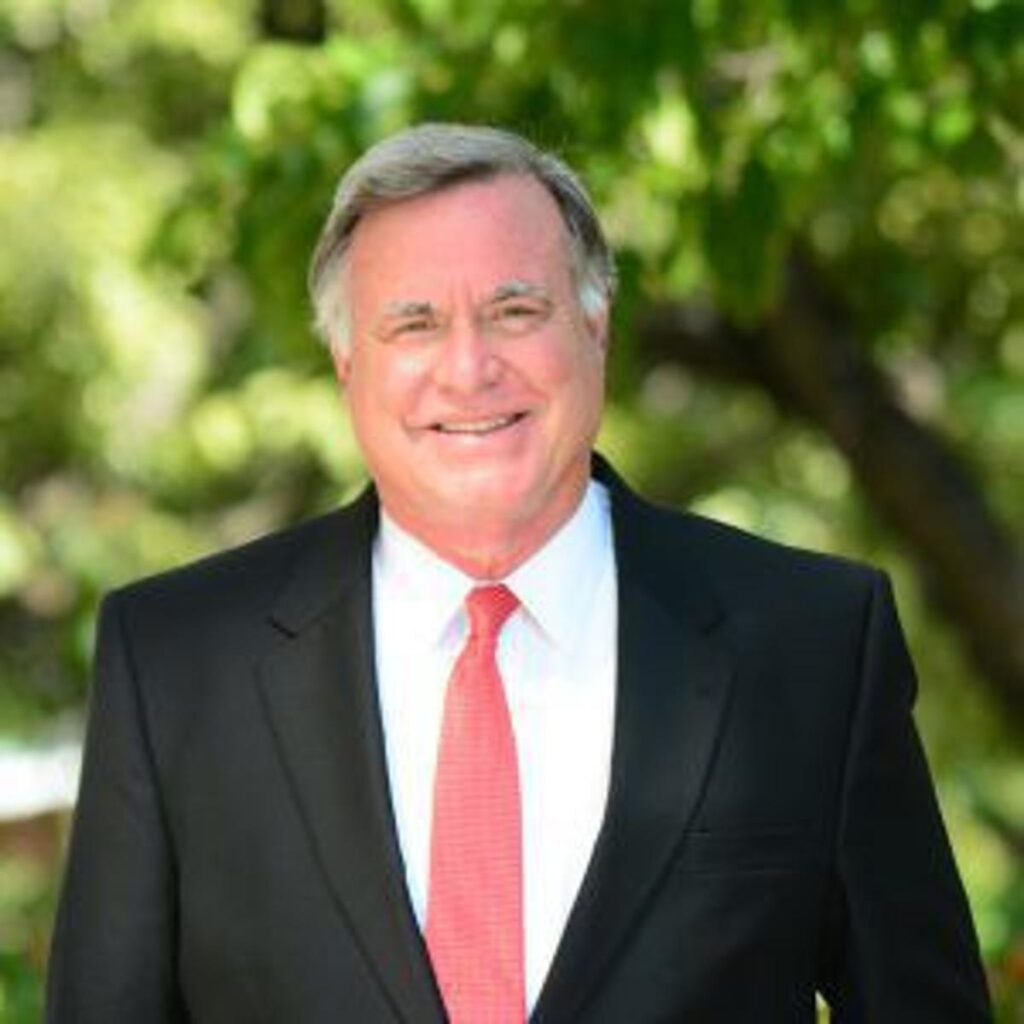
Since I hail from Troy, Alabama, allow me to share with you the story of our only governor. Charles Henderson was not only the 35th Governor of Alabama, but he may also be one of the most profound philanthropists in Alabama history. He is unquestionably the greatest philanthropist to grace Pike County. Soon after Alabama’s 1901 Constitution was enacted, a pattern of electing well-heeled governors began. From 1910-1946 Alabama elected what we referred to as bourbon governors. They were usually successful businessmen who looked at the job as a civic role for four years. The big mules of Birmingham and the big planters of the Black Belt would meet in a board room and anoint their candidate, who they would privately back financially. There would be no other business candidate. These big mules would team up with the probate judges, who were the power brokers and usually could dictate who carried each county. Charles Henderson epitomized the governors of this bourbon era. He was governor from 1915-1919. Henderson is generally regarded as Alabama’s wealthiest governor. In fact, it was said that while he was governor, he was also the richest man in Alabama. At age 44, he founded and owned the Troy Bank and Trust Company in Troy. Additionally, he owned a myriad of banks all over Alabama, including the largest bank in Huntsville. He also owned or co-owned every major business in Troy. Charles Henderson was born in 1860 in Pike County. His father owned a mercantile business and died when Charles was 16. By 17, Charles Henderson was running his father’s business and by 20 had turned it into the largest wholesale grocery company in Southeast Alabama. By the age of 27, he had formed his own railroad company, established the Troy Normal School, which later became Troy State University and now Troy University, and started the Standard Chemical Company. By the way, he was elected the Mayor of Troy at age 26. He resigned as Mayor of Troy in 1906 after being appointed President of the Alabama Railroad Commission, which not only regulated railroads but utilities also. It is now known as the Public Service Commission. During this era, he brought telephone and electricity to Troy. He owned both entities. He also owned the Pea River Utility Company. At 54, Charles Henderson was elected Alabama’s 35th Governor. He is known in history as Alabama’s Business Governor. When he took office, the state was broke. When he left in 1919, the state coffers were flush, which was apropos for the state’s “Business Governor.” Charles Henderson’s greatest legacy is not as governor but as the most altruistic philanthropist in Pike County’s history. Henderson left a will that set up trusts before they were common. He set up a trust foundation with his vast wealth that is simply remarkable. He and his wife, Laura, were childless. He took care of her financially. However, he also took care of the children of Pike County. He understood the power of compound interest. He left a corpus of money in trust with the directions that it should be left alone to compound for 20-years. At that time, the money was to be used to build schools for Pike County. The interest off of his trust built every school in Pike County. The high school I graduated from was appropriately named Charles Henderson High School. His will called for the interest of his trust to go to medical care for Pike County children after it had built all the schools. In 1979 the Charles Henderson Child Health Center was built in Troy. It is a state-of-the-art health clinic that allures the best pediatricians and pediatric dentists from throughout the country. Every child in Pike County can receive medical and dental care equal to that seen by children in Manhattan, free of charge, thanks to Governor Charles Henderson. Governor Henderson died on January 7, 1937, at age 77, from a stroke caused by influenza. He was buried in Oakwood Cemetery in Troy. An eternal flame illuminates his grave 24 hours a day. Appropriately, it is furnished by the City of Troy utilities which he founded. Charles Henderson was indeed a remarkable man. See you next week. Steve Flowers is Alabama’s leading political columnist. His weekly column appears in over 60 Alabama newspapers. He served 16 years in the state legislature. Steve may be reached at www.steveflowers.us.
