
Alabama city leader won’t quit after using racial slur
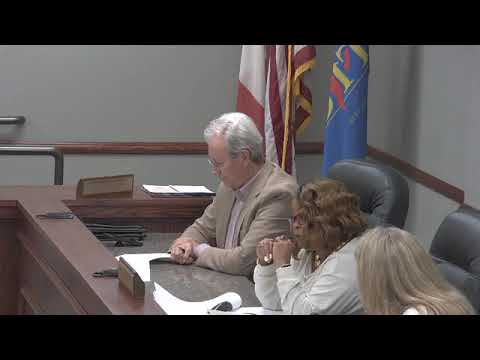
A white city leader captured on video using a racial slur toward Black people during a council meeting said he won’t apologize and might run for mayor. Others are calling for his resignation. Tarrant City Council member Tommy Bryant told news outlets his use of the word Monday night reflected something the city’s Black mayor, Wayman Newton, had said during an earlier private meeting. Standing up from his council seat during a public session, Bryant used the slur to refer to a Black female council member, Veronica Freeman. Some in the audience gasped at his use of the slur, which was broadcast on Facebook Live, and Freeman left crying, but Bryant was unapologetic. “I did what needed to be done. It needed to be brought to light what kind of a person the mayor is,” Bryant told WVTM-TV. The mayor said the video speaks for itself and, in an interview with al.com, denied using the same slur Bryant uttered during the meeting. Asked whether he is a racist, Bryant demurred. “It’s according to what your definition of the word racist is. What a lot of the public’s definition is, I might be a racist. But according to what the true definition of a racist is, absolutely not,” he told the station. Bryant did not respond to an email sent to the city by The Associated Press on Wednesday seeking additional comment. The Alabama NAACP called for Bryant’s resignation, saying he had “disgraced himself and has stained the position he holds.” While city elections are nonpartisan in Alabama, the state Democratic Party issued a statement calling for Bryant’s resignation, and the Alabama GOP noted that Newton is a Republican and said Bryant’s remark was “completely unacceptable.” Tarrant, which adjoins Birmingham, has a population of about 6,100 and is about 53% Black, Census statistics show. Republished with the permission of the Associated Press.
Anthony Fauci, Rand Paul clash on virus origins, trade charges of lying
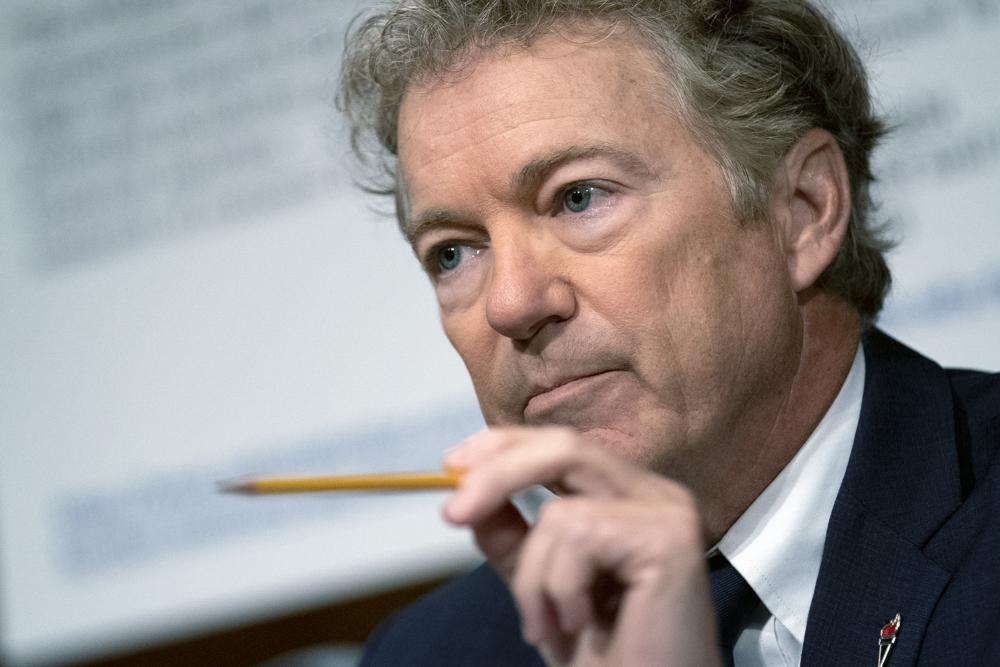
Dr. Anthony Fauci, the nation’s top infectious disease expert, angrily confronted Kentucky GOP Sen. Rand Paul on Tuesday in testimony on Capitol Hill, rejecting Paul’s insinuation that the U.S. helped fund research at a Chinese lab that could have sparked the COVID-19 outbreak. Paul suggested that Fauci had lied before Congress when in May, he denied that the National Institutes of Health funded so-called “gain of function” research — the practice of enhancing a virus in a lab to study its potential impact in the real world — at a Wuhan virology lab. U.S. intelligence agencies are currently exploring theories that an accidental leak from that lab could have led to the global pandemic. “I have not lied before Congress. I have never lied. Certainly not before Congress. Case closed,” Fauci told Paul before the Senate Health, Education, Labor, and Pensions Committee, saying a study the senator mentioned referenced a different sort of virus entirely from the one responsible for the coronavirus outbreak. “Senator Paul, you do not know what you’re talking about, quite frankly,” Fauci said. “And I want to say that officially. You do not know what you’re talking about.” He added, “If anybody is lying here, senator, it is you.” It was the latest in a series of clashes between Paul and Fauci over the origins of the virus that caused the global pandemic. Republished with the permission of the Associated Press.
Alabama sheriff’s trial resumes after question about witness
The theft and ethics trial of a north Alabama sheriff resumed Tuesday with testimony about the state’s ethics law after a judge considered questions about a state witness who also is under investigation. Cynthia Raulston, general counsel for the Alabama Ethics Commission, told jurors in Sheriff Mike Blakely’s trial about the law, which prohibits public officials from using their office for personal gain, news outlets reported. Another witness, former sheriff’s office clerk Romona Robinson, testified that money belonging to inmates was kept in a safe and that Blakely sometimes would ask for money and leave an IOU inside but not repay the amounts for an extended period. Earlier, Judge Pamela Baschab refused to throw out testimony from another witness who was revealed as being under investigation after he took the stand on behalf of the state. Trent Willis, a political consultant whose firm Red Brick Strategies worked for Blakely’s campaign in 2014, testified that an Athens attorney agreed to pay the $3,500 monthly charge to Red Brick on behalf of Blakely’s campaign. After getting checks from the lawyer for months, Red Brick received a $7,500 check from Blakely’s campaign account, evidence showed. Blakely later deposited a $4,000 refund check from Red Brick Strategies into his personal bank account, according to prosecutors, rather than sending the money to his campaign account. Before the defense could begin cross-examination, Deputy Attorney General Clark Morris told Baschab that Willis himself was under investigation. A defense lawyer said Willis was being reviewed in the theft of $100,000 from a campaign account of a state lawmaker, state Rep. Richie Whorton. While the defense claimed it didn’t know Willis was under investigation, prosecutors said Blakely’s lawyers actually knew about the review before them because different sections of the attorney general’s office are separated to prevent conflicts of interest. Baschab denied a defense request for a mistrial but told the prosecution and defense to file motions about Willis’ testimony before the trial resumed. She refused a defense request to tell jurors to ignore the testimony. Blakely, 70, has continued serving as sheriff since being indicted in 2019 on multiple charges. He would automatically be removed from office with a felony conviction. Republished with the permission of the Associated Press.
Alabama suffers ‘self-inflicted wound’ of worsening COVID-19
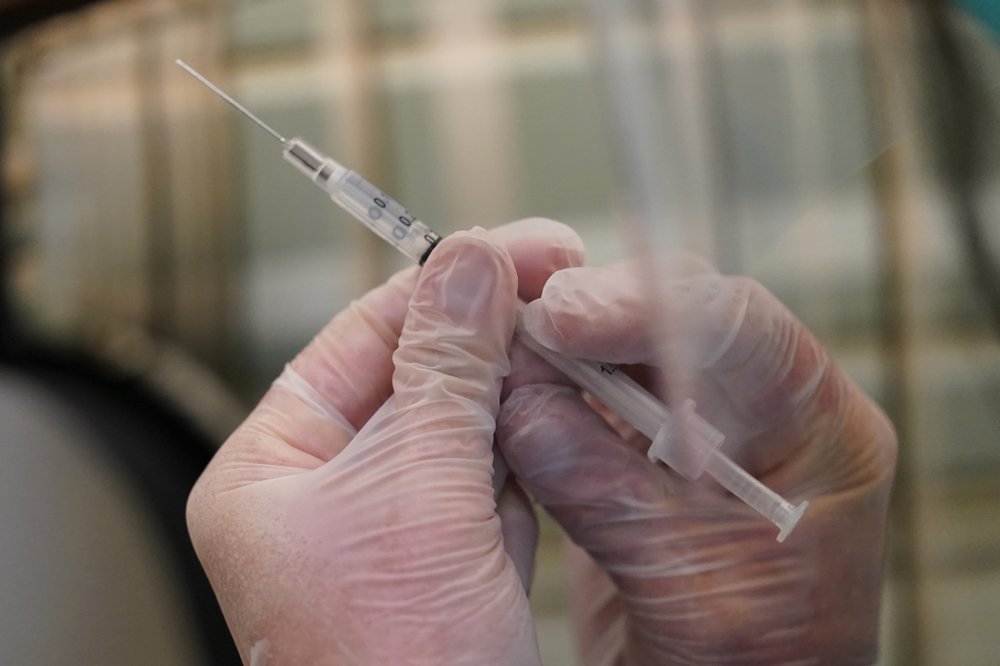
Alabama is suffering a “self-inflicted wound” from COVID-19, with hospitals again filling up as the state trails the nation in vaccinations and pandemic precautions like face masks and social distancing are all but forgotten, a health leader said Tuesday. Only 166 people were hospitalized statewide a month ago with COVID-19 after thousands were vaccinated and before a new variant took hold. But that low point has been followed by a rapid rise, and more than 550 people were being treated for the virus now, statistics showed. Hospitals are far from the critical point they reached in January when some 3,000 people were being treated at one time, but the fast-spreading Delta variant threatens to worsen the situation barring a rapid increase in vaccinations, said Dr. Donald Williamson, president of the Alabama Hospital Association. “There’s just a sense of frustration,” said Williamson, who used to head the Alabama Department of Public Health. “The fact that cases are rising is a self-inflicted injury.” Statistics show that only 50 people would currently be hospitalized if everyone who is eligible for a shot had gotten one, Williamson said, and chances are their illnesses wouldn’t be as severe. “This is the plague of our generation, and certainly of our lifetime. And now it could be so easily averted, but we’re failing to do that,” he said. Only 38% of the state’s population has gotten at least one vaccine dose, and just 31% is fully vaccinated, state statistics showed, yet the daily pace of vaccinations has slowed to roughly the same amount that were being given months ago when doses were scarce. Relatively few people still take precautions in public, and businesses full of people are a common sight. Without a rapid turnaround in vaccinations, Williamson said, health officials worry that cases will continue increasing as highly contagious virus variants spread through the population at stores, churches, restaurants, bars, sports contests, and other public events. Rather than reimposing restrictions like mandatory mask-wearing, capacity limits for businesses, or shutdowns, Gov. Kay Ivey has said the only thing she supports is encouraging people to use their “common sense,” show personal responsibility and get shots. To encourage vaccinations, the city of Gadsden said it would offer $100 to residents who received the first dose Tuesday or later and are fully vaccinated by Oct. 15. Two drawings for $5,000 will be held for every 500 residents who qualify. The three-campus University of Alabama system, with more than 70,000 students total, said anyone not fully vaccinated would be expected to wear a face mask and practice social distancing inside campus buildings this fall. Vaccines won’t be required in accordance with state law, however. “Data continue to show that vaccinated individuals remain protected from COVID-19. Widespread vaccination is the best way to sustain continued on-campus operations,” said Dr. Selwyn Vickers, dean of the medical school at the University of Alabama at Birmingham. Over the past two weeks, the rolling average number of daily new cases in Alabama has increased by 694, a spike of 573%. There were about 197 new cases per 100,000 people during the period, which ranked 11th nationally, with the largest increases along the coast in Mobile and Baldwin counties. Some 11,460 people have died of COVID-19 in Alabama, giving the state the 17th highest death rate nationally. Alabama has reported more than 560,000 positive tests, and the percentage of tests coming back positive is on the rise. Republished with the permission of the Associated Press.
Steve Flowers: Bibb Graves, the Education Governor
Most states have one General Fund Budget. We are only one of five states that have two. Some of you have asked why we have two budgets – one for the General Fund and one for Education. Here is why. During the era of the Great Depression and even afterward, education in Alabama was woefully underfunded, and that is really being generous to simply say underfunded. Our schools were similar to a third-world country. We had two separate systems, one for white students and one for black students. Many rural schools were one-room shanties like folks used in the 1800s, like Blab schools, no air conditioning, wood-burning stoves for heat. There were no buses to transport children, so they really did walk to school, barefooted, many times miles to and from. This was for the white schools. You can only imagine what an abysmal education was afforded black kids. Many times teachers were not even being paid. They were given script notes in hopes of getting paid in the future. We had a governor come along named Bibb Graves that made it his mission to make education a priority in Alabama. He and the Legislature created the Special Education Trust Fund Budget. They earmarked two tax revenues to be used for the new Education Budget. Education was to be the recipient of the state sales tax and the state income tax, which was a new tax system idea just created by the federal government. Little did Governor Bibb Graves know that today, these two revenue streams would be the largest source of revenue for the state. That little Special Education Fund Budget now dwarfs the General Fund by over a two-to-one amount. When I was first elected to the Legislature in 1982, the General Fund and Education budgets were 50/50 dead even. Today, the budgets the Legislature will pass are at least 75% Education and around 25% General Fund. Governor Bibb Graves built an indelible legacy as the Education Governor. His efforts also enhanced higher education in the state. He established teacher’s colleges at Troy, Florence, Jacksonville, and Livingston, along with enhancing funding at the State’s two flagship institutions. The University of Alabama and at the time the Alabama Polytechnic Institute, now Auburn University, were recipients of new education dollars. Every university in the State has a primary building, usually in the center of the campus, named after Governor Bibb Graves. That is quite appropriate because Governor Bibb Graves left an education legacy as governor. He may very well be Alabama’s greatest Governor. In fact, he was our only two-term governor between 1901 and 1954. Alabama law did not allow governors to succeed themselves. Therefore, they would have to wait out four years to run again. Graves was governor from 1927 to 1931 and again from 1935 to 1939. The only other two-term governor in the no succession era was James E. “Big Jim” Folsom. He also had an indelible legacy. Many of the rural roads in the state were dirt and impassable when the rains would come. Most folks in the state farmed for a living. When the roads washed out, they could not get their crops to the market, so their year-long work was washed out. Big Jim knew the plight of these farmers; he was the little man’s and rural man’s big friend. Big Jim paved almost every rural road in the state with his legendary Farm-to-Market Road Program. Ole Big Jim has a legacy as Governor. His son, Jim Folsom, Jr., has a legacy as governor. Even though he was only Governor for two years, he brought Mercedes to Alabama. The German company now builds more of their luxury automobiles at their Vance-Tuscaloosa plant than anywhere in the world. This initial Mercedes coupe by Folsom was the impetus for Hyundai, Honda, and now Toyota-Mazda making Alabama the home of automobile manufacturing. With these facilities come major spin-off accessory manufacturing plants. We are now the second-largest automobile manufacturing state in America and are poised to supersede Michigan and become number one in the next few years. Some Governors have left a legacy. Bibb Graves, “Big Jim” Folsom, and Jim Folsom, Jr. are three that have left their mark on Alabama history. Bibb Graves has a legacy as Alabama’s Education Governor. See you next week. Steve Flowers is Alabama’s leading political columnist. His weekly column appears in over 60 Alabama newspapers. He served 16 years in the state legislature. Steve may be reached at www.steveflowers.us.
