
Katie Britt pulls no punches in responding to Mo Brooks’ ‘unqualified’ accusation
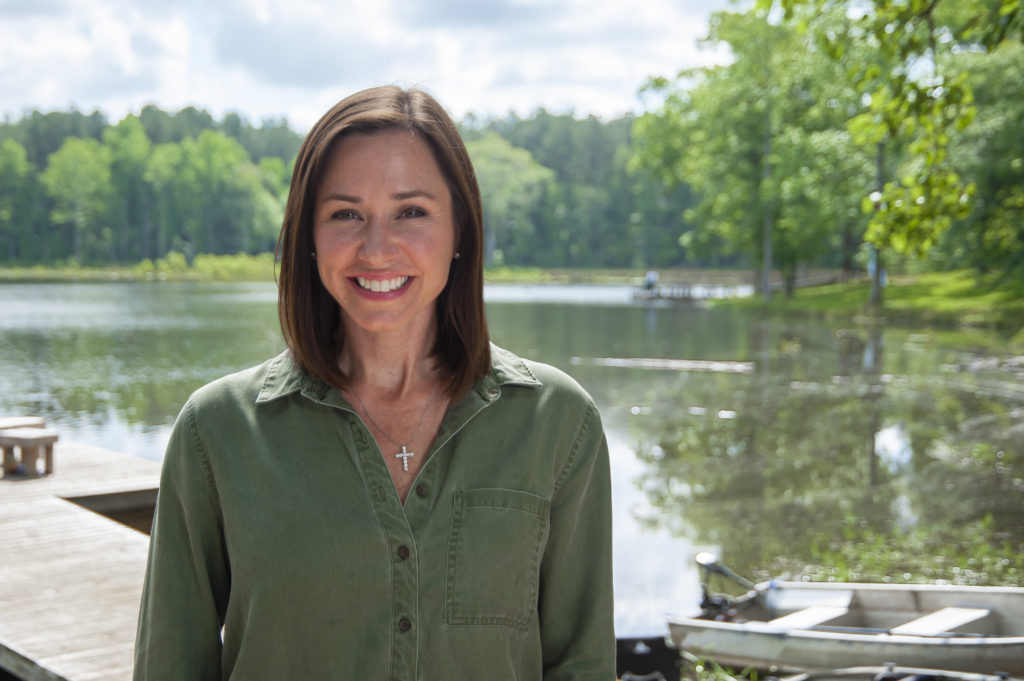
The Alabama senate race isn’t until 2022, but things are already heating up between frontrunners Katie Boyd Britt and Mo Brooks. While Brooks is betting on the power of the Donald Trump endorsement, Britt is leaning on more than just her connections to Senator Richard Shelby. According to the National Journal, Trump sent a statement through his PAC calling Shelby a “RINO.” Trump, in a statement, said Britt is “not what Alabama wants.” Trump wrote, “I see that the RINO Senator from Alabama, close friend of Old Crow Mitch McConnell, Richard Shelby, is pushing hard to have his ‘assistant’ fight the great Mo Brooks for his Senate seat.” In an interview with National Journal last week, Shelby suggested that Brooks is “feeling the momentum” of Britt’s candidacy. “Katie’s really just getting started. They’re showing a lot of interest, and they’re probably nervous about it,” Shelby commented. Britt has brought in $2.2 million in the second quarter of 2021 and had $2.1 million cash on hand. Brooks only brought in $824,000 in the second quarter. Brooks sent an email to the National Journal responding to Shelby’s comments. “I get that Richard Shelby wants to bequeath Alabama’s Senate seat to his former, relatively inexperienced employee. But U.S. Senate seats should never be inherited or bought, they should be earned and decided by the people of Alabama,” Brooks stated. “In any event, ‘rationality’ and ‘irrationality’ are in the eye of the beholder. I am 100% certain that, to Washington’s Swamp and special interest groups who routinely buy Congressmen and Senators, I appear very irrational because I put America First and special interest groups and their Swamp money dead last!” Brooks continued, “No person in Alabama history has been elected more times to public office as a Republican than has Mo Brooks. As such, I respectfully submit that Alabama voters have a much different perception of rationality than do Washington’s Swamp critters.” Apryl Marie Fogel, guest host of the Dan Morris Show on NewsTalk 93.1 Montgomery, spoke to Britt on her radio show on Thursday. When asked to respond to comments from the Trump organization and Brooks’ thoughts on her qualifications, Britt responded, “I know my opponent is a career politician, and he is clearly experienced at running for office and drawing a check off the taxpayer dime, honestly. I think as far as qualifications go, I believe qualifications are fighting tirelessly for Alabamians and listening to what issues they have and looking at what we’re facing in our country and knowing how to achieve results.” “Putting Alabama first and delivering real results for hard-working Alabamians is what I’ve done day in and day out throughout my career, Britt continued. “I define success through results, and it looks like my opponent, particularly given his words there, seems to define success through how many times he can put his name on a ballot in a lifetime. I guess I respectfully disagree.” There are also two other candidates in the senate race: former Ambassador to Slovenia Lynda Blanchard and former House candidate Jessica Taylor. *Apryl Marie Fogel is the owner and publisher of Alabama Today.
Dan Sutter: The cost of stopping global warming
In 2018 the Intergovernmental Panel on Climate Change set a new goal to limit global warming to 1.5 degrees Celsius. The costs and consequences of aggressive action against global warming basically exceed comprehension. Recent research in sustainability buttresses this point. Estimates put the level of energy use “compatible with avoiding 1.5ºC of global warming without relying on negative emissions technology” at around 7,500 kilowatt-hours per person per year. Americans currently use more than ten times this level, so our energy use would need to decline drastically. A new paper in Global Environmental Change examines whether adequate quality of life is possible with low energy use. The research uses six quality of life measures from the World Bank: life expectation, food consumption, safe drinking water, safe sanitation, education, and poverty. Acceptable levels of the six measures were specified. The 29 of 106 nations examined achieving all six life quality targets use at least double the sustainable energy threshold. Since adequately performing economies use too much energy, other research has formulated low energy consumption levels satisfying human needs. What would low energy life be like? For starters, an end to private transportation, not just switching to electric vehicles. People will have to rely on public transit and “active” transport (e.g., walking). A family of four could have a residence of not more than 650 square feet illuminated for 6 hours a day. People could have 9 pounds of new clothes and less than 200 pounds of clothes washing annually. (The clothes people typically wear weigh about 2 pounds.) Each family would be allowed one laptop computer and one refrigerator; everyone 10 years or older would get a cell phone. The society envisioned differs fundamentally from ours, and not just due to energy use. Markets involve voluntary exchanges between willing buyers and willing sellers. Anyone willing to pay can buy a second refrigerator to chill beer. In the economy designed to halt global warming, sustainability experts will tell us what we can have. Halting global warming also means ending growth: “Abandoning the pursuit of economic growth beyond moderate levels of affluence appears ecologically necessary.” I find this profoundly immoral. People work and sacrifice so their children and grandchildren can have a better life. Economic growth enables this better life. Modern prosperity enables a high quality of life. Consider life expectancy, which has increased in the U.S. from less than 50 years in 1900 to nearly 80 today. Medical research eliminated premature deaths from causes like pneumonia and heart disease. We could afford to train enough doctors that some could specialize in studying diseases. Prosperity gave medical researchers the needed tools, facilities, and resources. Medical research will further improve health if economic growth continues. Researchers’ ability to analyze DNA is yielding tremendous advances. Gene editing has cured a case of sickle-cell disease. Researchers have only recently begun studying the aging process to see if it can be prevented. Numerous criticisms could be raised against sustainability research. The energy use threshold mentioned above makes no allowance for differences in greenhouse gas emissions across energy sources. The threshold needlessly rules out “negative emissions” technologies to remove carbon dioxide from the atmosphere. And the 1.5ºC warming limit is ultimately political. The redesign of society is totally at odds with Americans’ stated willingness to spend to limit global warming. As Bjorn Lomborg notes, “while more than three-quarters of all Americans think climate change is a crisis or enormous problem, a majority was unwilling to spend even $24 a year on fixing it.” If we do not want to end modern life to combat global warming, now is the time to tell our elected officials. Although we might dismiss sustainability research as irrelevant academic scribbling, the government response to COVID-19 cautions against this. For years, some epidemiologists advocated using nonpharmaceutical interventions during a pandemic, although they figured such measures would never be tolerated in the U.S. or Europe. Given the right circumstances, seemingly irrelevant academic research can enormously change our lives. Daniel Sutter is the Charles G. Koch Professor of Economics with the Manuel H. Johnson Center for Political Economy at Troy University and host of Econversations on TrojanVision. The opinions expressed in this column are the author’s and do not necessarily reflect the views of Troy University.
Vaccinations rise in some states with soaring infections
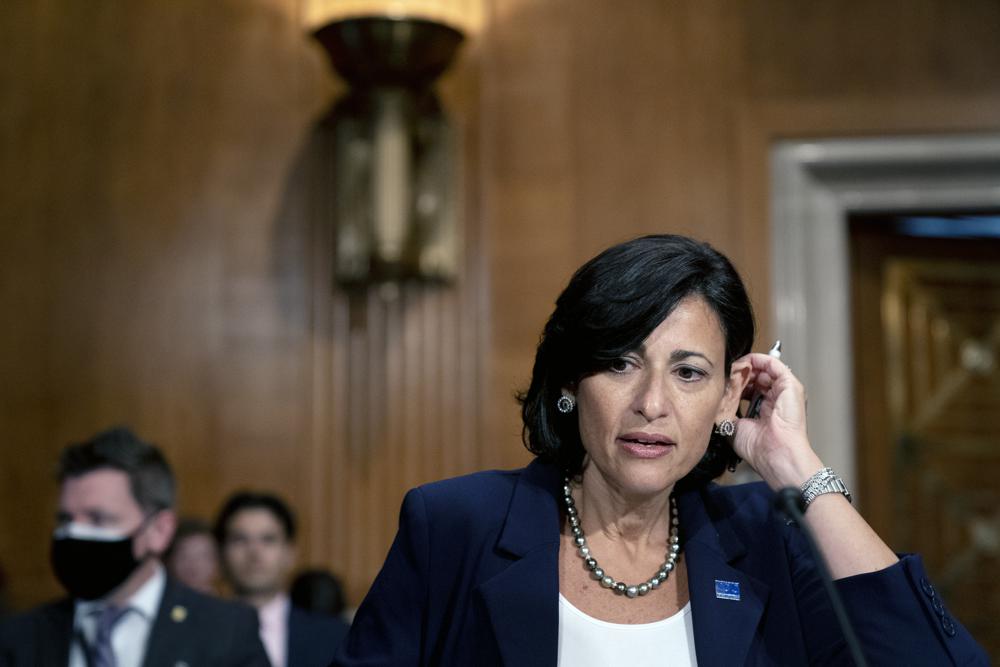
Vaccinations are beginning to rise in some states where COVID-19 cases are soaring, White House officials said Thursday in a sign that the summer surge is getting the attention of vaccine-hesitant Americans as hospitals in the South are being overrun with patients. Coronavirus coordinator Jeff Zients told reporters that several states with the highest proportions of new infections have seen residents get vaccinated at higher rates than the nation as a whole. Officials cited Arkansas, Florida, Louisiana, Missouri, and Nevada as examples. “The fourth surge is real, and the numbers are quite frightening at the moment,” Louisiana Gov. John Bel Edwards said on a New Orleans radio show. Edwards, a Democrat, added: “There’s no doubt that we are going in the wrong direction, and we’re going there in a hurry.” Louisiana reported 2,843 new COVID-19 cases Thursday, a day after reporting 5,388 — the third-highest level since the pandemic began. Hospitalizations are up steeply in the last month, from 242 on June 19 to 913 in the latest report. Fifteen new deaths were reported Thursday. Just 36% of Louisiana’s population is fully vaccinated, state health department data shows. Nationally, 56.3% of Americans have received at least one dose of the vaccine, according to the Centers for Disease Control and Prevention. Aly Neel, a spokesperson for Louisiana’s health department, said the state has seen “a little bump” in vaccinations recently, adding that details would be available Friday. Warner Thomas, president and CEO of the Ochsner Health system serving Louisiana and Mississippi, said the system had seen a 10% to 15% increase in people seeking vaccination over the past week or two. It has administered vaccines at churches, the New Orleans airport, basketball games, and the mall. “We see each person we get vaccinated now as a victory,” said Dr. Katherine Baumgarten, director of infection prevention and control for the 40-hospital system, noting that it has been bringing in traveling nurses and that projections show its ICUs could fill up at the current rate of infection. Dr. Catherine O’Neal, chief medical officer and an infectious disease specialist at Our Lady of the Lake regional medical center, said Thursday that the most shocking aspect of the surge has been its speed. The caseload has roughly tripled in the course of a week, she said. On Sunday, the medical center stopped taking transfers of coronavirus patients from hospitals in other parts of the state because they simply did not have the capacity, she said. In Missouri, which is second only to Arkansas and Louisiana in the number of new cases per capita over the past 14 days, officials have rolled out a vaccine incentive program that includes $10,000 prizes for 900 lottery winners. The state lags about 10 percentage points behind the national average for people who have received at least one shot. Hospitals in the Springfield area are under strain, reaching pandemic high and near pandemic high numbers of patients. “Younger, relatively healthy, and unvaccinated. If this describes you, please consider vaccination,” tweeted Erik Frederick, chief administrative officer of Mercy Hospital Springfield, noting that half of the COVID-19 patients are ages 21 to 59, and just 2% of that group is vaccinated. The surge that began in the southwest part of the state, where some counties have vaccination rates in the teens, has started to spread to the Kansas City area, including at Research Medical Center. “I don’t want to keep putting my life on the line just because people don’t want to get vaccinated or listen to what health care professionals are recommending,” lamented Pascaline Muhindura, a registered nurse who has worked on the hospital’s COVID-19 unit for more than a year. “A lot of them don’t even believe in COVID-19 to begin with. It is incredibly frustrating. You are helping someone that doesn’t even believe that the illness that they have is real,” Muhindura said. Dr. Jason Wilson, an emergency physician with Tampa General Hospital, also has watched the rise in cases with frustration. Unlike earlier in the pandemic, when many patients were in their 70s, he has seen the median patient age fall to the mid-40s. “I spent a lot of time this fall and last summer saying, ’We’ve got to do these things, these social mitigation strategies until we get that vaccine. Just hang in there,” Wilson said. Hospitals initially were hopeful as cases declined. But then, he said, “Things just fell flat.” Conservative Utah reported Wednesday that almost 300 people were hospitalized due to the virus — the highest number in five months. Intensive care units reached 81.5% capacity. Health officials renewed their pleas for residents to get vaccinated. One of Arizona’s biggest hospital systems issued its own call for vaccinations, citing an increase in seriously ill COVID-19 patients in just a few weeks. Dr. Michael White of Valleywise Health said doctors were mostly treating people with moderate symptoms, but that began to change two weeks ago. Now patients arrive acutely ill. “This delta at the moment it is honing in on largely unvaccinated persons,” said Dr. William Schaffner, a professor of infectious diseases in the health policy department at the Vanderbilt University School of Medicine in Nashville. The variant, which originated in India, now accounts for an estimated 83% of coronavirus samples genetically identified in the U.S. It is the predominant strain in every region of the country and continues “spreading with incredible efficiency,” the director of the CDC, Dr. Rochelle Walensky, told reporters at the White House. She said the mutation is more aggressive and much more transmissible, calling it “one of the most infectious respiratory viruses we know of.” “We are yet at another pivotal moment in this pandemic,” she warned. “We need to come together as one nation.” The CDC has not changed its guidance that vaccinated people do not need to wear masks. But in Georgia, Atlanta Public Schools announced Thursday that it will implement a “universal mask-wearing” policy in all of the system’s school buildings when fall classes begin. Just 18%
Employees testify about loaning money to sheriff on trial

A clerk who works for an Alabama sheriff on trial on corruption charges testified she sent him $1,000 after he claimed to have lost money gambling at a casino when he was supposed to be at a law enforcement conference. Debbie Davis, who described herself as a longtime friend of longtime Limestone County Sheriff Mike Blakely, testified Wednesday as a reluctant witness for the state, news outlets reported. Blakely, 70, went to the gambling center of Biloxi, Mississippi, while he was on the Gulf Coast for a conference in Gulf Shores in 2016, testimony showed. Davis said Blakely called her from Biloxi and said it was no fun being there after losing all your money. Testimony about that trip continued Thursday, with a casino employee saying Blakely bought about $20,000 in chips over a few days and cashed in just $1,000. But the sheriff’s lawyer asked the employee if he knew Blakely won $975,000 playing the lottery weeks before the trip. Davis testified that she offered the sheriff money and he repaid it following the trip. Blakely is charged with violating state ethics law by asking Davis to send him the money, but she said they’d been friends before he became sheriff and she wired him the $1,000 because she wanted to do so. Under defense questioning, Davis testified she wasn’t aware that Blakely had been invited to play golf in Biloxi with three Limestone County commissioners. She told a prosecutor she didn’t want to see Blakely convicted. Lt. Johnny Morrell and Jeff Kilpatrick, who both work as sheriff’s office investigators, testified about a trip they took with Blakely to law enforcement in Las Vegas. Both testified they loaned money to the sheriff during the trip. “I would do it any day of the week,” Morrell said. Blakely has continued working as sheriff since being indicted in 2019 on multiple charges but would automatically be removed from office with a felony conviction. Republished with the permission of the Associated Press.
Town of Ozark fires police chief amid misconduct claims

An Alabama city fired its police chief and another ranking officer over what the mayor described as allegations of inappropriate, unprofessional behavior. Ozark Mayor Mark Blankenship told a news conference Wednesday that an investigation preceded the removal of Chief Marlos Walker and Capt. Tim Hicks. Without providing details on what had occurred, Blankenship said the violations involved more of a policy issue and a legal or criminal matter. Blankenship said he and the city clerk had questioned several current and former city workers, and the findings resulted in a City Council vote to remove Walker on Tuesday night. Hicks was then removed because of “policy and procedural violations,” the mayor said. Neither Walker nor Hicks has commented publicly. A retired state trooper, Charles Ward, was appointed interim police chief. Ozark is a city of about 15,000, located in southeast Alabama.
Health officer: Face mask requirement may be needed indoors

Cases of COVID-19 are rising exponentially in Alabama’s largest metro area because a new, highly contagious variant is spreading among the unvaccinated, and public places should consider a return to requiring face masks, the head of the area health department said Thursday. Dr. Mark Wilson, the health officer for Jefferson County, said studies have shown that the delta variant that’s taken hold in Alabama can spread between people in less than a minute, so any indoor area where people gather might need a face mask requirement or at least a strong recommendation that people wear them. The seven-day rolling average for new cases of COVID-19 has risen eightfold from 13 to 107 a day, he said, and additional new cases and more deaths linked to the pandemic are inevitable, she said. “The tragic thing is that almost all of these deaths will have been prevented if only those people had been vaccinated,” Wilson said. The problem isn’t isolated to Jefferson County: Only eight of Alabama’s 67 counties aren’t considered at high risk for the illness caused by the coronavirus, and roughly 50 more patients a day are being admitted to state hospitals with COVID-19, which already has killed more than 11,460 people in Alabama. With only 31% of the population fully vaccinated and nearly all the new, most serious cases among people who aren’t inoculated, Wilson said the state’s vaccination rate is “way, way below” what is needed to control the pandemic. Gov. Kay Ivey told reporters Thursday the blame for the new surge in cases is with people who refuse to get vaccinated. “The few cases of COVID are because of unvaccinated folks. Almost 100% of the new hospitalizations are unvaccinated folks. And the deaths certainly are occurring with unvaccinated folks. These folks are choosing a horrible lifestyle of self-inflicted pain. We’ve got to get folks to take the shot,” Ivey said during an appearance in Birmingham. The governor said she doesn’t like another mask mandate, but she also doesn’t know how to convince more people to get their COVID-19 shots. “Get a shot in your arm. I’ve done it. It’s safe. The data proves it. It doesn’t cost anything. It saves lives,” Ivey said. Cases have surged since the July 4 holiday, which officials feared would lead to new outbreaks, Dr. Scott Harris, the head of the Alabama Department of Public Health, said in a video update released by the Medical Association of the State of Alabama. “Right now we are seeing some pretty difficult times here in Alabama,” Harris said. Some of the infections are occurring after the type of large gatherings that generally didn’t occur until the state lifted health restrictions. Dr. David Thrasher, who practices in Montgomery, said a doctor friend told him about a church in the Birmingham suburb of Trussville that recently held a large celebration for its 200th anniversary which was followed by a massive disease outbreak. “Seventy people in that congregation have tested positive,” he said. Thrasher said a friend of his died recently and two people who attended the funeral became infected even though they were vaccinated. Over the past two weeks, the rolling average number of daily new cases has increased by 772, a spike of 280%, according to researchers from Johns Hopkins University. There were about 226 new cases per 100,000 people in Alabama over the past two weeks, which ranks ninth in the country. Republished with the permission of the Associated Press.
