
Kay Ivey interviews Scott Harris to help answer COVID-19 vaccine questions and concerns
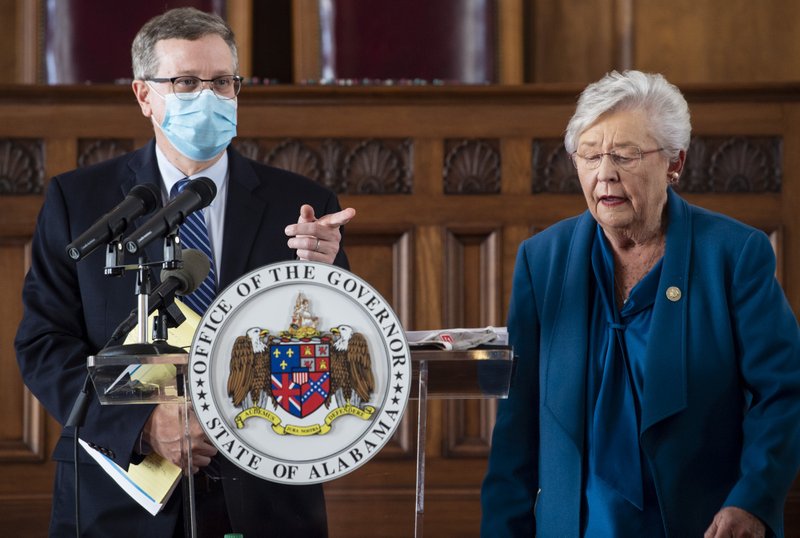
Gov. Kay Ivey posted a video on Twitter, interviewing state Health Officer Dr. Scott Harris to ask questions related to COVID-19 vaccine hesitancy. Only 34% of Alabama’s population is fully vaccinated, which is the lowest in the nation reported the Associated Press. There has been an increase in the vaccination rate recently, but it’s unknown if it will help stem the flood of new cases since it takes weeks for a newly vaccinated person to be fully protected. Kay Ivey stated on Twitter, “In honor of #ImmunizationAwarenessMonth, I sat down with State Health Officer Dr. Scott Harris to ask some #COVID19 questions related to vaccine hesitancy.” Ivey has come under fire for not promoting shot incentives more heavily. Despite Ivey’s refusal to offer incentives to the public, the state prison system is offering $5 in commissary credits for inmates who get vaccinated. The University of Alabama is giving $20 credit on a student debit card to any student who proves they are vaccinated by Aug. 28. Additionally, the Montgomery-area government, public schools, and the state health department are providing free state fair tickets to people who get fully vaccinated in the capital. In an opinion piece published Tuesday by The Washington Post, Ivey defended her approach. “There are those who believe that government should mandate the vaccine or that we should bribe people to take it. That’s not going to happen in my state, no matter how many times the media ask me,” Ivey wrote. The Alabama Department of Health is also sponsoring a TikTok contest to encourage younger people to get vaccinated.
Jim Zeigler announces filing of gubernatorial election committee with Secretary of State

State Auditor Jim Zeigler will speak to the ‘Common Sense Campaign’ of Baldwin and Mobile counties tonight. He says he will announce the official filing of his campaign for governor with the Secretary of State. He formed the “Zeigler for Governor Exploratory Committee” last month. He says he is now required to file it with the Secretary of State due to receiving campaign donations over the legal threshold. He would face incumbent Gov. Kay Ivey, who last month announced for re-election to another term. He says the race would be “Zeigler and the Taxpayers vs. Ivey and the Insiders.” The qualifying deadline for candidates is January 28, six months away. The Republican primary is on May 24. Zeigler has led four citizen campaigns against Ivey initiatives, winning three. “I led the citizen movement against the Ivey gas tax. I located funds to pay for our infrastructure needs without the gas tax increase. Gov. Ivey and the Insiders did not listen to our ‘Plan Z’ and boldly ran over us – and ran over you,” Zeigler said. “The gas tax increase was supposed to go for roads and bridges. But Gov. Ivey proposed adding toll roads and bridges on top of the gas tax. Double taxation. The initial Ivey toll road was to be on Interstate 10 over Mobile Bay between Mobile and Baldwin counties. It was a horribly flawed plan. It would have harmed over 15,000 families that daily cross the Bayway bridge going to work. It would have hurt small businesses. It would have awarded outsiders a 55-year lease on this vital section of an Interstate highway so used by commuters. “We figured out a legal way to block the toll plan, and by the grace of God, it worked. We, the taxpaying public, backed down Gov. Ivey and the Insiders. Score one for us taxpayers “Then, Gov. Ivey rammed through the legislature her Amendment One. It would have taken away your right to vote for school board members and made them all appointed by the governor. My wife and I chaired the statewide campaign to defeat Amendment One in the March 2020 referendum of state voters. We – and you – defeated Amendment One with a resounding 75% ‘no’ vote. Score two for us taxpayers. “Then, Gov. Ivey concocted a $3 billion prison lease scheme. We taxpayers would have paid rent of about $100 million a year for 30 years. At that time, we would have owned equity in those prisons of – ZERO. The Ivey prison plan would have gotten us into a 30-year mistake. “I was blessed to lead citizen opposition to the Ivey prison plan. We pointed out fatal flaws in the plan, and the investors did something that the Ivey Insiders will not do – they listened. All the investors pulled out, and the flawed Ivey prison rental plan failed. Score three for us taxpayers.” Zeigler is term-limited and cannot run again for State Auditor. His wife Jackie Zeigler is the elected member of the State Board of Education in the seven counties of the First District. She has led the fights to repeal Common Core and to block Critical Race Theory in Alabama schools.
Still waiting, Senate grinds away on $1T infrastructure bill
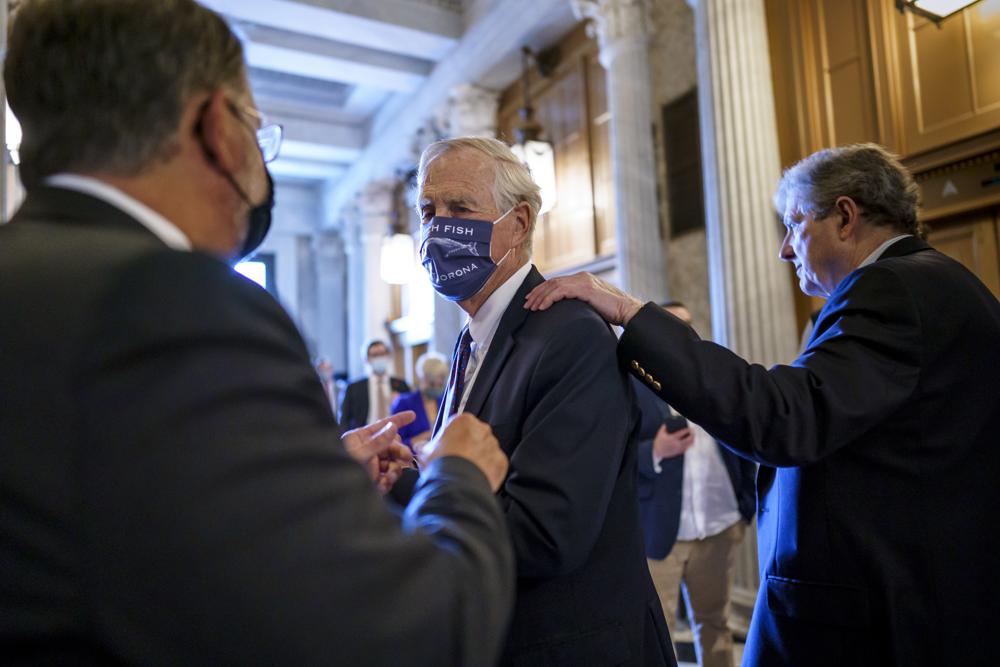
The vote on a $1 trillion bipartisan infrastructure package could be held “in a matter of days,” Senate Democratic leader Chuck Schumer said Sunday. But first, senators still need to finish writing the vast legislation. Schumer opened the rare Sunday session by saying that the text of the bill would be released “imminently.” To be called the Infrastructure Investment and Jobs Act, it is swelling to 2,700 pages. But as glitches were caught and changes made, the start-and-stop day was turning into an evening Senate session. Two of the negotiators said Sunday morning that action could come soon. Sen. Susan Collins, R-Maine, said on CNN, “We really are just about finished.” Sen. Joe Manchin, D-W.Va., said on CNN that there will likely be “text today and by this evening, hopefully, we can start the process.” Like Schumer, both said the bill could be finished this week. Senators and staff have been laboring behind the scenes for days to write what is certain to be a massive piece of legislation and a key part of President Joe Biden’s agenda. It calls for $550 billion in new spending over five years above projected federal levels, which could be one of the more substantial expenditures on the nation’s roads, bridges, waterworks, broadband, and the electric grid in years. To prod the work along, Schumer is keeping senators in over the weekend to finish drafting the bill so that senators can begin offering amendments. But it has been a weekend of fits and starts as senators. “They need a little more time,” Schumer said late Saturday. “I’m prepared to give it to them.” Schumer warned Saturday that he was prepared to keep lawmakers in Washington for as long as it took to complete votes on both the bipartisan infrastructure plan as well as a budget blueprint that would allow the Senate to begin work later this year on a massive, $3.5 trillion social, health and environmental bill. ”The longer it takes to finish, the longer we will be here, but we’re going to get the job done,” he said. Sen. John Cornyn, R-Texas, predicted: “It’s going to be a grind.” Among the major investments in the bipartisan package are $110 billion for roads and bridges, $39 billion for public transit, and $66 billion for rail. There’s also $55 billion for water and wastewater infrastructure as well as billions for airports, ports, broadband internet, and electric vehicle charging stations. After negotiators rejected ideas to raise revenue from a new gas tax or other streams, the package is being financed from funding sources that might not pass muster with deficit hawks, including repurposing untapped COVID-19 relief aid and relying on projected future economic growth. But so far there bipartisan support from Republican and Democratic senators have pushed the process along. Schumer wants the voting to be wrapped up on both the bipartisan package and the $3.5 trillion blueprint to start on the bigger package before senators leave for the August recess. The outcome with the bipartisan effort will set the stage for the next debate over Biden’s much more ambitious $3.5 trillion package, a strictly partisan pursuit of far-reaching programs and services including child care, tax breaks, and health care that touch almost every corner of American life. Republicans strongly oppose that bill, which would require a simple majority, and may try to stop both. Final votes on that are not expected until fall. Last week, 17 GOP senators joined all Democrats in voting to start work on the bill. That support has largely been held, with Senate Minority Leader Mitch McConnell, R-Ky., voting yes in another procedural vote to nudge the process along. Whether the number of Republican senators willing to pass the bill grows or shrinks in the days ahead will determine if the president’s signature issue can make it across the finish line. Cornyn said he expects Schumer to allow all senators to have a chance to shape the bill and allow for amendments from members of both parties. “I hope we can now pump the brakes a little bit and take the time and care to evaluate the benefits and the cost of this legislation,” Cornyn said. As time dragged awaiting the bill, Sen. Mark Warner, D-Va., said Saturday that negotiators were finalizing the last few pieces. “There’s been some of the sense of, well, infrastructure, that shouldn’t be hard to do. If it wasn’t hard to do, why has it taken 30 years to get to this moment?” Warner said. Republished with the permission of the Associated Press.
Anthony Fauci: More ‘pain and suffering’ ahead as COVID cases rise
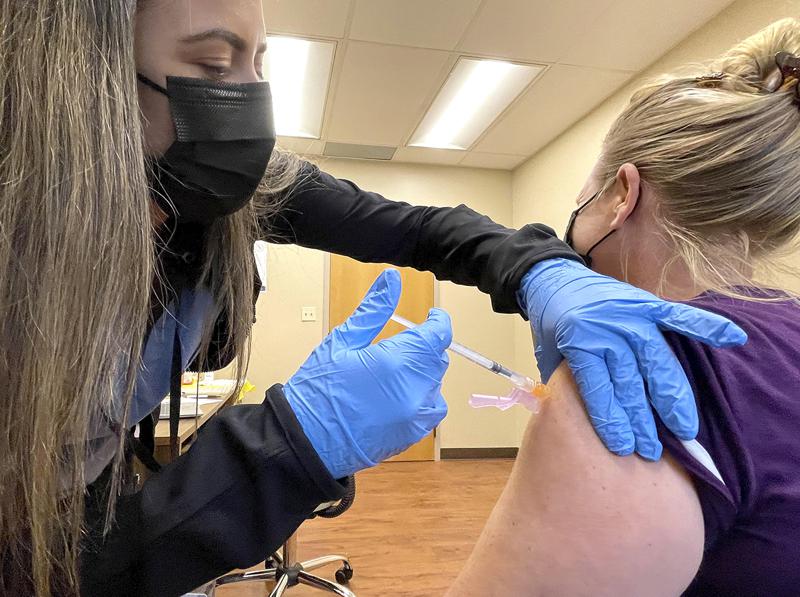
Dr. Anthony Fauci warned Sunday that more “pain and suffering” is on the horizon as COVID-19 cases climb again and officials plead with unvaccinated Americans to get their shots. Fauci, the nation’s top infectious disease expert, also said he doesn’t foresee additional lockdowns in the U.S. because he believes enough people are vaccinated to avoid a recurrence of last winter. However, he said not enough are inoculated to “crush the outbreak” at this point. Fauci’s warning comes days after the Centers for Disease Control and Prevention changed course to recommend that even vaccinated people return to wearing masks indoors in parts of the U.S. where the delta variant is fueling infection surges. With the switch, federal health officials have cited studies showing vaccinated people can spread the virus to others. Most new infections in the U.S. continue to be among unvaccinated people. So-called breakthrough infections can occur in vaccinated people, and though the vast majority of those cause mild or no symptoms, the research shows they can carry about the same amount of the coronavirus as those who did not get the shots. “So we’re looking, not, I believe, to lockdown, but we’re looking to some pain and suffering in the future because we’re seeing the cases go up, which is the reason why we keep saying over and over again, the solution to this is get vaccinated, and this would not be happening,” Fauci said on ABC’s “This Week.” According to data through July 30 from Johns Hopkins University, the seven-day rolling average for daily new cases in the U.S. rose from 30,887 on July 16 to 77,827 on July 30. The seven-day rolling average for the country’s daily new deaths rose over the same period from 253 on July 16 to 358 on July 30, though death reports generally lag weeks after infections and even longer after hospitalizations. Currently, 58% of Americans 12 years and older are fully vaccinated, according to the CDC’s data tracker. However, people are “getting the message,” and more are rolling up their sleeves amid the threat of the delta variant, according to the director of the National Institutes of Health. Dr. Francis Collins said on CNN’s “State of the Union” that vaccinations are up 56% in the U.S. in the last two weeks. Louisiana, which has the most new cases per capita among states in the past 14 days, has seen vaccinations up threefold over that period, Collins said. “That’s what desperately needs to happen if we are going to get this delta variant put back in its place because right now it’s having a pretty big party in the middle of the country,” Collins said. Collins also said that even with the prevalence of the delta variant, the shots are working “extremely well” and reduce a person’s risk of serious illness and hospitalization “25-fold.” The guidance for vaccinated people to start wearing masks indoors again in certain places with worsening outbreaks, he said, is mostly meant to protect unvaccinated and immunocompromised people. The CDC has also recommended indoor mask-wearing for all teachers, staff, students, and visitors at schools nationwide, regardless of vaccination status. Republished with the permission of the Associated Press.
Jurors begin weighing fate of longtime Alabama sheriff
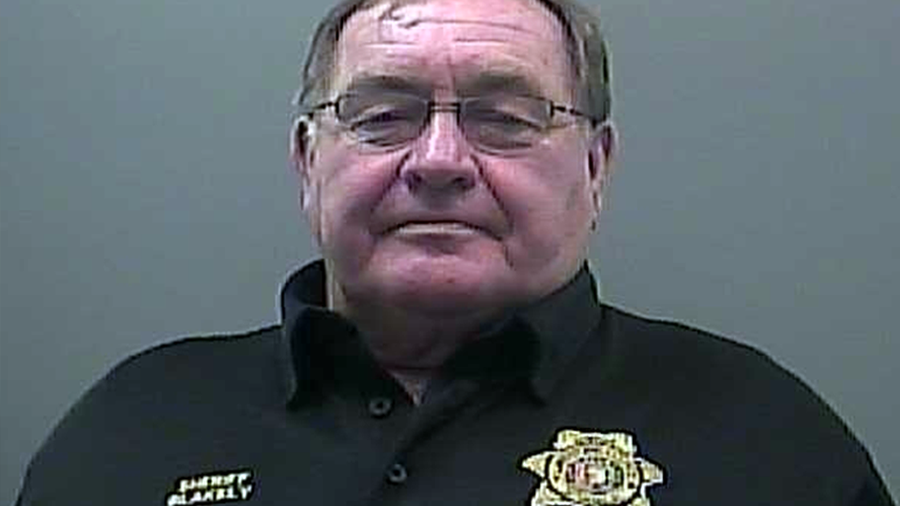
Jurors on Friday began deliberating charges against a longtime Alabama sheriff who took the stand to deny accusations that he took money from public and campaign accounts and gambled in casinos at taxpayer expense. Prosecutors and defense lawyers finished closing arguments in the corruption case against Limestone County Sheriff Mike Blakely, and jurors got the case around 2 p.m. News outlets reported the jurors were sent home for the weekend late Friday afternoon and will resume their deliberations Monday morning. Blakely faces charges of using his office for personal gain, theft of campaign funds, and taking money held by the sheriff’s office. He has continued working as sheriff since being indicted in 2019 on multiple charges but would automatically be removed from office with a felony conviction. Prosecutors began their closing arguments to jurors by stepping through allegations that the sheriff took thousands of dollars illegally, news outlets reported. “He swore an oath not just to enforce the law but to obey the law,” Kyle Beckman, a state assistant attorney general, told the jury. “He swore it 10 different times. Mike Blakely violated that oath.” Defense lawyer Robert Tuten told jurors that there is a simple explanation for each of these charges if they just look. Tuten said no money is missing and all of the accounts balance. “The criminal case against Sheriff Blakely died in the courtroom floor,” Tuten said in his closing arguments. Judge Pamela Baschab rejected a defense request to end the trial with a verdict of acquittal. Blakely, 70, testified Thursday about a series of transactions and checks that prosecutors say are evidence of wrongdoing, and the defense contends show nothing but normal campaign finances, news outlets reported. First elected in 1982 and rarely seen without boots and a cowboy hat, Blakely said he sometimes deposited campaign funds into his personal account because his campaign treasurer lived hours away and encouraged him to deposit the money as reimbursement for campaign expenses. While testimony showed Blakely sometimes left IOUs and took money from a jail safe used to hold inmates’ money, he said that wasn’t a crime. He also said nothing illegal occurred when county prisoners worked at a business where a part-owner gave him a check for $50,000. Blakely didn’t deny gambling at casinos during trips to the Gulf Coast and Nevada for law enforcement conferences, but he said the outings didn’t cost taxpayers extra and denied accusations that an employee sent him money because he was broke from losses. In one case, Blakely said, he asked an employee to send him money because he thought he might not have enough money to drive back to Alabama from Nevada. “Did you run short of money because you gambled in a casino?” asked defense lawyer Robert Tuten. “No, sir,” Blakely replied. Republished with the permission of the Associated Press.
Kay Ivey appoints new district attorney for Alabama county
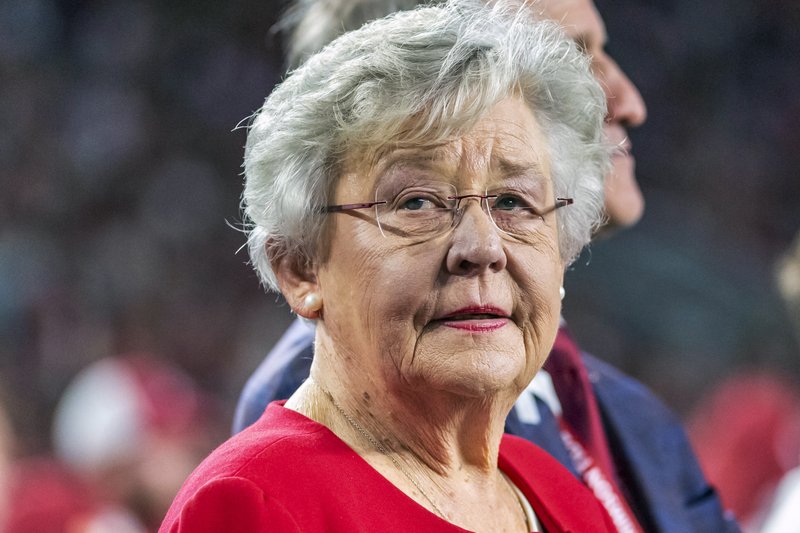
An Alabama county has a new top prosecutor. Gov. Kay Ivey on Thursday appointed Jessica Ventiere as Lee County’s new district attorney after its last district attorney, Brandon Hughes, pleaded guilty to two felonies, The Opelika-Auburn News reported. “I am humbled by this opportunity, and I look forward to continuing to serve the citizens in Lee County,” Ventiere said in a statement. Ventiere formerly served as the chief assistant district attorney under Hughes before becoming the county’s district attorney pro tem following Hughes’ indictment Nov. 6, 2020, on multiple felony charges, which included five counts of using a position for personal gain, one count of conspiracy to commit theft and one count of first-degree perjury. After a two-day trial in which Ventiere testified, Hughes pleaded guilty to first-degree perjury and using his public office for personal gain and agreed to a three-year sentence for both counts and is expected to spend 10 months in jail according to his plea agreement. In the governor’s letter to Ventiere, she asked her to be a good steward of the taxpayers’ money and work to instill trust in government. “I have made honesty and integrity a priority in my Administration, and I know that you will embody these two virtues while serving the people of Alabama,” Ivey said. “The responsibility that comes with this appointment is not to be taken lightly. I trust that you will rise to the occasion and set a standard for others to follow.” Barry Matson, executive director of the Alabama District Attorneys Association, said Ivy made a stellar choice. “Jessica has proven her (mettle) by keeping that office focused on its mission of seeking justice and public safety during a very difficult period. I appreciate Gov. Ivey choosing such an honest, dedicated and hard-working district attorney,“ he said. Republished with the permission of the Associated Press.
