
Legislature passes new poll worker requirements
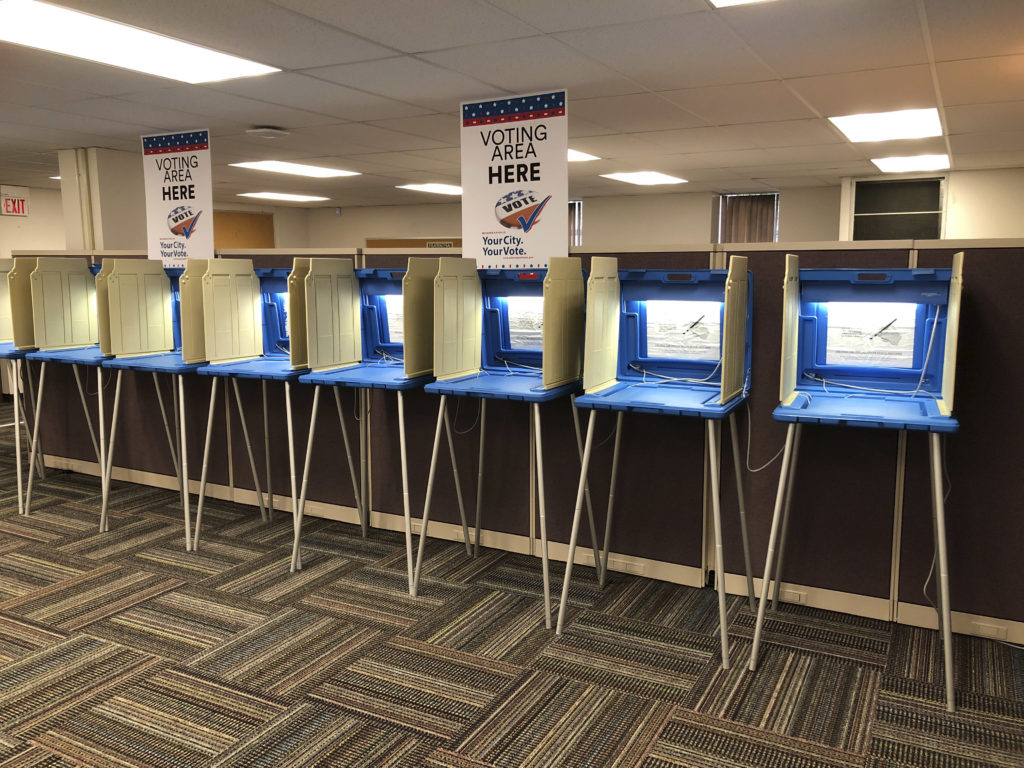
The Alabama Secretary of State announced that new legislation has been passed to allow precinct election officials who are registered to vote in a given county to now serve in any precinct in that county. This new flexibility took effect on August 1 and was led by Rep. David Wheeler and Senator Will Barfoot. Previously, poll workers served only in the precinct they are registered to vote at. Now, the most qualified individuals will be working in any polling location in the county to ensure our elections are safe and secure. First priority may still be given to those who are registered to vote in the precinct they wish to work at as long as they are qualified for the position. “Poll workers protect the election process and the rights of each and every eligible voter,” stated Secretary of State John Merrill. “These citizens are a vital part of election administration, and we want the best people working in all 1,980 polling locations in the state.” Poll workers are paid election officials who staff local polling places to carry out assigned Election Day procedures. Requirements to be a poll worker are: Must be a registered voter in the State of Alabama Must be registered to vote in the county in which they desire to act as a poll worker Must attend a mandatory poll worker training Cannot be a member of a candidate’s immediate family or the second degree of kinship, and cannot be a member of a candidate’s political committee The application should be returned to the county Probate Judge for consideration.
Steve Flowers: Kay Ivey should coast to reelection
For over a year, I have been touting the fact that the 2022 election year in the Heart of Dixie was going to be the busiest and most monumental in history. Folks, it looks like it is not going to be as eventful as anticipated. Yes, everything is on the ballot, but the power of incumbency is thwarting the drama. It appears the U.S. Senate race is going to be the marquee event. Most states have their big election years in the same year as the presidential contest. Not so in Alabama; our carte blanche election year is in between presidential elections in what is referred to nationally as off years. All our constitutional officers are on the ballot next year, as well as all 105 state house seats, 35 state senate seats, all 67 sheriffs, all state school board members, along with all seven of our Congressional seats. Historically, the biggest race in Alabama is governor. In fact, throughout history, the governor’s race year has been the largest turnout year in Alabama. That is probably because it was not until the 1970s that a governor could succeed themselves. Therefore, there was an open governor’s race every four years. The inherent advantage of incumbency has cut down on the every four years gubernatorial circus and theater. This incumbency advantage is playing out to the nines as we head towards next year’s May 24 election day. All four of our top-tier Constitutional offices are held by popular incumbents, and all four are running for reelection virtually unopposed. All of our statewide elected offices are held by Republicans. A Democrat cannot win a statewide race in Alabama. They can get 40%, but that appears to be the ultimate threshold. Therefore, winning the May 24 GOP Primary is tantamount to election. Governor Kay Ivey is the prohibitive favorite to win a full second term next year. She has done a good job as governor despite the gigantic obstacles of having to fight through a once-in-a-lifetime COVID pandemic, which completely shut down the world’s economy for over 15 months. She did a good job of steadying the ship of state during the crisis. It was thought and even anticipated that Kay Ivey would run for only one four-year term when she was elected in 2018. She, herself, probably thought she might only run one time because, coupled with her serving as governor the last two years of Robert Bentley’s tenure, would give her a six-year reign. That mindset of striving to govern for four years rather than run for reelection has made her a successful governor. Kay has rolled up her sleeves and tackled the job and diligently governed. She has gubernatorially addressed many of the problems that have plagued the state and been swept under the rug or kicked down the road for decades. Addressing the problems of repairing the state’s roads and infrastructure and the prison problems has not been an exciting agenda, but she has been a workhorse governor rather than a show horse governor. She will coast to reelection. It would be difficult for a candidate to run negative ads against your grandmother. The only thing that could prevent Kay Ivey from serving another term is if she changes her mind. She relies a lot on her Chief of Staff, former Mobile/Baldwin Congressman Jo Bonner. There is speculation that Bonner may accept the position of President of the University of South Alabama. Gov. Ivey would very much miss her “little brother” from Wilcox. However, she has a brilliant and loyal youthful staff that have been with her all four years. She will probably stay the course and be reelected. Speaking of youth, our young Lt. Governor, Will Ainsworth, is poised to win reelection to a second four-year term essentially unopposed. He is waiting in the wings, ready to run for governor. Attorney General, Steve Marshall, is also going to coast to reelection with only token or no opposition. Marshall has tackled his job well and diligently over his first four-year term. He, like Ivey, has strived to delve into his job rather than politick full time. He has staked out a position as being a bona fide conservative Alabama Republican. Rick Pate has done an excellent job as Alabama Agriculture Commissioner and will deservedly win a second four-year term as the head of this important constitutional office. He is perfectly suited and qualified for this job. So, folks, it looks like it may be a dull year. However, don’t fret; we have 67 local sheriff races and all 140 legislative seats, all running under new lines. See you next week. Steve Flowers is Alabama’s leading political columnist. His weekly column appears in over 60 Alabama newspapers. He served 16 years in the state legislature. Steve may e reached at www.steveflowers.us.
CDC issues new eviction ban for most of U.S. through Oct. 3

The Centers for Disease Control and Prevention issued a new eviction moratorium that would last until Oct. 3, as the Biden administration sought to quell intensifying criticism from progressives that it was allowing vulnerable renters to lose their homes during a pandemic. The ban announced Tuesday could help keep millions in their homes as the coronavirus’ delta variant has spread, and states have been slow to release federal rental aid. It would temporarily halt evictions in counties with “substantial and high levels” of virus transmissions and would cover areas where 90% of the U.S. population lives. The announcement was a reversal for the Biden administration, which allowed an earlier moratorium to lapse over the weekend after saying a Supreme Court ruling prevented an extension. That ripped open a dramatic split between the White House and progressive Democrats who insisted the administration do more to prevent some 3.6 million Americans from losing their homes during the COVID-19 crisis. Speaking at the White House on Tuesday, Joe Biden said he pushed the CDC to again consider its options. But he still seemed hesitant as to whether the new moratorium could withstand lawsuits about its constitutionality, saying he has sought the opinions of experts as to whether the Supreme Court would approve the measure. “The bulk of the constitutional scholarship says that it’s not likely to pass constitutional muster,” Biden said. “But there are several key scholars who think that it may, and it’s worth the effort.” The president added that the moratorium — even if it gets challenged in court — “will probably give some additional time” for states and cities to release billions of dollars in federal relief to renters. Politically, the extension could help heal a rift with liberal Democratic lawmakers who were calling on the president to take executive action to keep renters in their homes. The administration had spent the past several days scrambling to reassure Democrats and the country that it could find a way to limit the damage from potential evictions through the use of federal aid. But pressure mounted as key lawmakers said it was not enough. Top Democratic leaders joined Rep. Cori Bush, D-Mo., who has been camped outside the U.S. Capitol for several days. The freshman congresswoman once lived in her car as a young mother and pointed to that experience to urge the White House to prevent widespread evictions. As she wiped her eyes before a crowd at the Capitol after the CDC’s announcement, Bush said she was shedding “joyful tears.” “My God, I don’t believe we did this,” she said. “We just did the work, just by loving folks to keep millions in their homes.” House Speaker Nancy Pelosi said it was a day of “extraordinary relief.” “The imminent fear of eviction and being put out on the street has been lifted for countless families across America. Help is Here!” Pelosi said in a statement. Administration officials had previously said a Supreme Court ruling stopped them from setting up a new moratorium without congressional backing. When the court allowed the eviction ban to remain in place through the end of July by a 5-4 vote, one justice in the majority, Brett Kavanaugh, wrote that Congress would have to act to extend it further. But on Tuesday, the CDC cited the slow pace of state and local governments disbursing housing aid as justification for the new moratorium. Aside from the moratorium, Biden has insisted that federal money is available — some $47 billion previously approved during the pandemic — that needs to get out the door to help renters and landlords. “The money is there,” Biden said. The White House has said state and local governments have been slow to push out that federal money and is pressing them to do so swiftly. Treasury Secretary Janet Yellen briefed House Democrats Tuesday about the work underway to ensure the federal housing aid makes it to renters and landlords. She provided data so that lawmakers could see how their districts and states are performing with distributing the relief, according to a person on the call. The treasury secretary tried to encourage Democrats to work together, even as lawmakers said Biden should act on his own to extend the eviction moratorium, according to someone on the private call who insisted on anonymity to discuss its contents. Yellen said on the call, according to this person, that she agrees “we need to bring every resource to bear” and that she appreciated the Democrats’ efforts and wants “to leave no stone unturned.” The CDC put the initial eviction ban in place as part of the COVID-19 response when jobs shifted, and many workers lost income. The ban was intended to hold back the spread of the virus among people put out on the streets and into shelters, but it also penalized landlords who lost income as a result. National Apartment Association president and CEO Bob Pinnegar said the organization “has always held the same position — the eviction moratorium is an unfunded government mandate that forces housing providers to deliver a costly service without compensation and saddles renters with insurmountable debt.” Democratic lawmakers said they were caught by surprise by Biden’s initial decision to end the moratorium even though the CDC indicated in late June that it probably wouldn’t extend the eviction ban beyond the end of July. Rep. Maxine Waters, the powerful chair of the Financial Services Committee, has been talking privately for days with Yellen and urged the treasury secretary to use her influence to prod states to push the money out the door. But Waters also called on the CDC to act on its own. After the CDC’s announcement Tuesday, Waters released a statement thanking Biden “for listening and for encouraging the CDC to act! This extension of the moratorium is the lifeline that millions of families have been waiting for.” Republished with the permission of the Associated Press.
Virus hospitalizations in Alabama approach 1,600 amid surge

The number of coronavirus patients in Alabama hospitals rose to its highest levels in six months Monday as health officials urged schools to require masks and other measures during a “critical juncture” in the pandemic. Dr. Don Williamson, the former state health officer who now heads the Alabama Hospital Association, said the 1,583 hospitalized people include 38 children. The state last saw numbers that high in early February. A month ago, there were a little over 200 people hospitalized. The 1,583 patients in state hospitals is a little more than half of the number in January when there were 3,000 hospitalized. But Williamson said he is concerned the state is rapidly approaching the previous high-water mark. Alabama’s status as one of the two least vaccinated states in the country — plus studies suggesting that the delta variant is just a contagious as chickenpox and that even vaccinated people can spread the illness to others — have caused health officials to worry about what is ahead and to emphasize the need for mask-wearing and vaccinations. Alabama, in the last two weeks, has seen one of the sharpest rises in COVID-19 cases in the country, ranking eighth among the states, according to researchers at Johns Hopkins University. The seven-day rolling average of daily new cases in Alabama has risen over the past two weeks from 799.57 new cases per day on July 17 to 2,391.14 new cases per day on July 31. Only 34.4% of Alabama’s population is fully vaccinated, which is the lowest percentage in the nation, according to numbers from the U.S. Centers for Disease Control and Prevention. Mississippi has 34.5% of its population fully vaccinated. The Alabama Department of Public Health Monday officially released guidance that encourages K-12 public schools to implement universal masking, including on school buses, when classes resume. Dr. Karen Landers, a medical officer and pediatrician with the Alabama Department of Public Health, wrote that it is imperative for adults to take action since children under age 12 are not eligible for the vaccine. “With low vaccine rates in Alabama, it will be a matter of a few weeks after school resumes before we see a rise in cases in the educational system,” Landers wrote in the document. “Alabama is at a critical juncture. All of us want our children to be able to learn and thrive,” she wrote. Gov. Kay Ivey Monday also released a video with State Health Officer Scott Harris answering questions about the vaccine and encouraging people to get vaccinated. “Because we have this delta variant circulating, it is so infectious that anybody who gets it is likely to spread it to three or four other people,” Harris said. Republished with the permission of the Associated Press.
Alabama Law Enforcement partners with Kulture City, become 1st LEOs to be sensory-inclusive
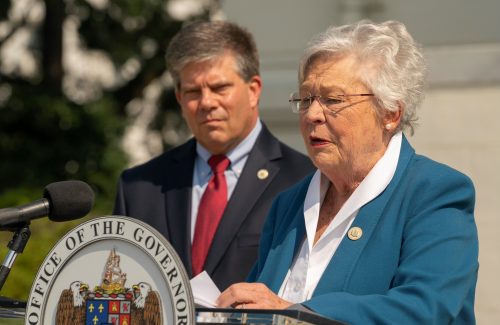
Governor Kay Ivey announced Tuesday, Aug. 3, a statewide partnership between the Alabama Law Enforcement Agency (ALEA) and KultureCity, making ALEA the nation’s first state law enforcement agency to train and become sensory-inclusive. KultureCity is a non-profit organization recognized throughout the nation for utilizing its resources to revolutionize and effect change in the community for individuals with sensory needs or those with invisible disabilities. KultureCity began its training with a primary focus on entertainment and social venues across the United States. Since the program’s inception, they have created more than 700 sensory-inclusive venues in four countries with personnel trained on interacting with individuals who have sensory needs or invisible disabilities. The program’s training focuses on instilling understanding, acceptance, and empathy in first responders toward those who have sensory needs. The goal of this training is to enhance future interactions between law enforcement and the community to create the best outcomes. Ivey stated, “Individuals with sensory issues have often been misdiagnosed or received delayed assistance due to the lack of understanding of their sensory issues. I’m proud ALEA took initiative to train all sworn officers to be aware of and properly identify those with invisible disabilities. KultureCity training goes hand in hand with my administration’s goal to make mental health a priority and provide critical support to those that need it the most.” ALEA’s Secretary Hal Taylor commented, “We are committed to continuously developing new ways to improve our overall operations and interactions with all citizens, and today’s partnership is a testament to that commitment. As we move forward, it is my deepest and sincerest hope that ALEA becomes known throughout the nation as an agency that is devoted to training and equipping personnel for responding to situations with empathy, compassion, and the necessary skills to interact with all citizens, but particularly those who are most vulnerable.” Secretary Taylor added, “I want to thank Governor Ivey for her dedication to law enforcement and for supporting this partnership. We are honored to work with the Governor and KultureCity in a combined effort to deepen and diversify training within our agency.” Founder and CEO Dr. Julian Maha commented, “A trial phase for first-responder training was initiated and completed in Alabama. Since then, KultureCity has expanded to local law enforcement departments around the nation; however, ALEA is our first state law enforcement agency to become sensory certified.” KultureCity aligns with the mission of the Alabama Department of Mental Health as crisis services are stood up across the state, ensuring that individuals in crisis will have someone to talk to, someone to respond, and someplace to go. “I want to thank Governor Ivey and Secretary Taylor for leading the way to better outcomes for Alabamians with an invisible disability or a sensory need. This training is essential to creating a positive interaction between law enforcement and individuals with disabilities. I am excited Alabama law enforcement officers will have the tools they need to serve our most vulnerable citizens.” “We appreciate Governor Ivey and ALEA’s dedication to ensure Alabama’s first responders are equipped with the necessary resources to assist individuals with sensory needs,” Alabama League of Municipalities Executive Director Greg Cochran said. “The League encourages municipalities to take advantage of proven programs that address specific challenges within their communities.”
