
Mayor Steven Reed pushes ordinance opponents say infringe on business, property, and religious rights
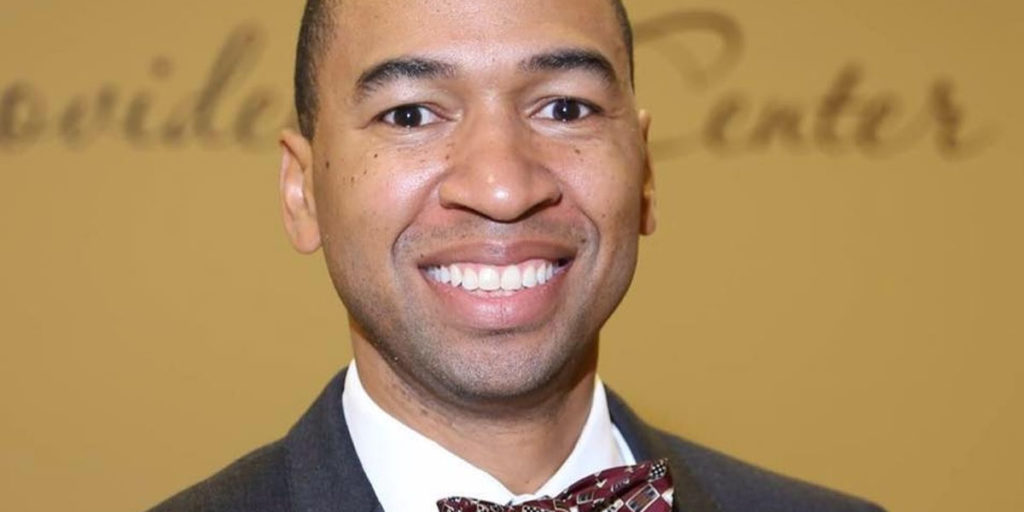
In June, Montgomery Mayor Steven Reed’s office unveiled plans to create a law to protect LGBTQ residents from discrimination. However, the move to ban discrimination against LGBTQ people in Montgomery has expanded into a wider non-discrimination ordinance, and it’s being delayed by pushback that city officials blame on misinformation, Montgomery Advertiser reported. According to the mayor’s office, the ordinance would ban discrimination based on “real or perceived race, color, religion, national origin, sex, sexual orientation, gender identity, age, disability, marital status, familial status, or veteran status.” Specifically, it would make it illegal to discriminate against any of those groups in the areas of public accommodation, housing, employment, and in all city practices, including contracting. In August, members of the public were allowed to address the council on non-agenda items for the first time since March 2020. Multiple speakers have lobbied against the ordinance. Matt Clark of the conservative Alabama Center for Law and Liberty warned the council that voting for the ordinance would force their Christian residents to become criminals because their faith would require them to break the non-discrimination law. In a recent op-ed, Clark wrote, “Because it defines gender identity as “the actual or perceived gender-related identity, expression, appearance, or mannerisms, or other gender-related characteristics of an individual,” an establishment cannot question whether an individual is actually transgender if that person merely expresses, appears, or acts that way. Consequently, to gain access to women’s restrooms, locker rooms, or showers, a sexual predator will merely have to act like he is transgender. For all its claims about wanting to protect the weak, liberalism is alarmingly willing to subject women and children to severe trauma.” Reed said the ordinance remains a priority and that he hopes it will pass. “It’s important to make sure we’re in line with our principles and values that we say we profess as the birthplace of the civil rights movement,” Reed stated. “We also want to make sure that we’re doing things in the fashion of the new Montgomery that we want to be. That means making sure that we consider and pass ordinances like this that are not only integral to the quality of place that we have right now, but the quality of the city that we want to become.”
Justin Branum: The 2020 Tokyo Olympics showed our resiliency, allowing the 2022 Beijing Olympics to go as scheduled would be a denial of human rights
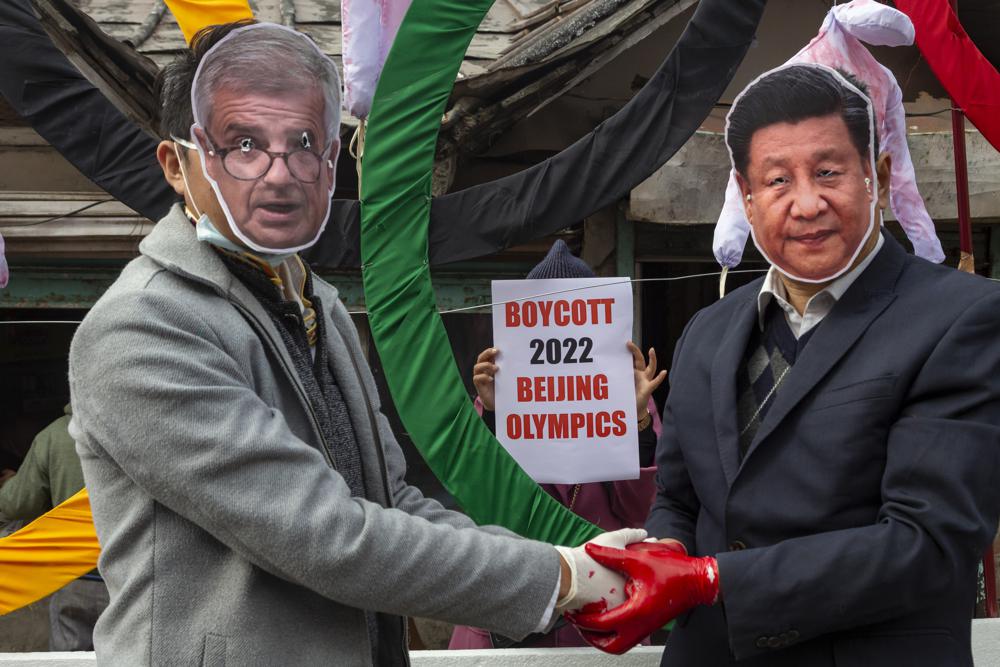
The 2020 Tokyo Olympic Games, although held a year later than originally scheduled, showcased a level of perseverance that had never before existed on the world stage. Despite Tokyo being in a state of emergency and under a quasi-lockdown for the duration of the games due to the COVID-19 pandemic and the rapidly spreading Delta variant, the games went on as smoothly as one could imagine, given the circumstances. Only 29 out of the over 11,000 athletes were forced out of the games due to a positive COVID-19 test, a number far lower than what organizers projected. The games provided us with many memorable moments, such as Simone Biles bringing her mental health issues to the forefront and showing the world that “it’s OK to not be OK,” Katie Ledecky and Caeleb Dressel leading Team USA’s continued dominance in the pool, and Alyson Felix overcoming a traumatic pregnancy to become the most decorated American Track & Field Olympian of all-time. Under most circumstances, we would have a roughly 18-month wait for the Winter Olympics, but due to the postponement of the Tokyo Games, the 2022 Beijing Olympics are set to begin in under 200 days. It is in this period where we must decide just how far we are willing to go in the protection of human rights. The proverbial elephant in the room surrounding the 2022 event is the treatment of Uyghur Muslims in China’s Xinjiang province at the hands of the increasingly powerful Chinese Communist Party. The treatment, categorized as a genocide by both former Secretary of State Mike Pompeo and current Secretary of State Antony Blinken, has included rape, forced labor, indoctrination, forced abortion, and sterilization. As a result, a bipartisan coalition including Speaker Nancy Pelosi (D-CA), Senator Mitt Romney (R-UT), Chair of the House Rules Committee Representative Jim McGovern (D-MA), and former US Ambassador to the United Nations Nikki Haley (R) have called for a boycott of the games over China’s treatment of the Uyghurs. Calls in favor of boycotting the games have not only stemmed from China’s treatment of the Uyghurs but also from China’s shady actions in the early days of the COVID-19 pandemic and a rise in questions regarding the origin of the virus. Former Director of National Intelligence Dan Ratcliffe (R) called for a boycott of the games due to his belief that China covered up the origins of the virus after it leaked from the Wuhan Institute of Virology. A report recently released by the House Foreign Affairs Committee GOP lends credence to Ratcliffe’s claim, coming to the conclusion that COVID-19 likely leaked from the laboratory. The report also notes that a number of athletes from Western countries returned home from the 2019 Military World Games in Wuhan in October of 2019 with symptoms one would now associate with COVID-19. These athletes’ infections fell nearly two months before the first COVID-19 infection was reported to the World Health Organization by the Chinese Communist Party. Fittingly, this event was the last time China hosted a major international athletics competition. With the introduction of numerous bipartisan bills calling for a boycott of the 2022 Beijing Winter Olympics in both chambers of Congress, it is clear that there is a significant appetite for taking action related to the games. While a boycott is the most popular call surrounding the games, history has shown that a boycott of the games does not always have the intended consequences. First, politicians and the federal government have no formal decision in whether the United States boycotts the Olympics—that decision lies solely in the hands of the United States Olympic & Paralympic Committee (USOPC). In 1979, President Jimmy Carter launched an intense pressure campaign on the USOPC to boycott the 1980 Moscow Summer Olympics over the Soviet invasion of Afghanistan. The issue quickly became domestic political fodder in the United States, becoming a contentious issue in the ongoing 1980 Republican Presidential Primary with Ronald Reagan and George H.W. Bush both taking mixed stances on the issue while arguing that a USOPC refusal to boycott the games would be a sign of Carter’s weak leadership. The USOPC eventually endorsed a boycott of the 1980 Olympic Games and was joined by sixty-four other countries, including China, in not attending the games. The boycott ended with no change regarding the Soviet’s invasion of Afghanistan—they would remain in the nation until 1989. The Soviets suffered minimal national embarrassment, and the games still went on with eighty nations participating. While the Soviets suffered little, the would-be Olympians of the boycotting nations suffered significantly. Statistically, nearly 75% of Olympians only participate in one Olympic Games, leading many to see their one opportunity to live out their dreams crushed in an instant by the boycott. A 2020 documentary from the Washington Post detailed the heartbreaking stories of the “invisible Olympians” who likely would have made up Team USA at the 1980 Olympic Games. With the failure of the United States’ only previous boycott of an Olympic Games, it is clear that a similar boycott of the 2022 Beijing Olympic Games would likely meet a similar fate. A significant number of nations would likely still attend the games, allowing for the Chinese Communist Party to still conduct a full slate of Olympic events and festivities. With rising COVID-19 cases across the globe, uncertainty over future variants, questions surrounding China’s handling of the early days of the pandemic, and China’s horrendous treatment of the Uyghur Muslims, it is clear that the 2022 Olympics must be relocated and reorganized into a multi-site and multi-national event. Planning and carrying out an Olympic Games is a tremendous task that takes over a decade, as evidenced by the ongoing planning of the 2032 Olympic Games in Brisbane, Australia. With less than 200 days until the scheduled start of the games, finding a location with the suitable facilities to plan and host an Olympic Games on the fly, in the middle of a pandemic, is impossible. Asking a handful of nations across
Jim Zeigler: New plan for state prisons uses his ideas, ‘and they are welcome to’

Rumors flying around Montgomery are that legislative leaders and the governor’s office have reached a tentative plan aimed at fixing the state’s prison problems. Meetings on a new prison plan started after Gov. Kay Ivey’s $3 billion prison lease plan fell apart in June. It had drawn intense opposition from State Auditor Jim Zeigler, taxpayers, and a lingering lawsuit started by the Trump Justice Department. The investors poised to fund the plan all backed out, and the plan died. While Zeigler was never invited to any of the meetings to develop a new plan, he developed ten points on his own named “Operation Fresh Start.” He sent those to the 140 legislators. “The points in Operation Fresh Start are being used, and they are welcome to. It is amazing what can be accomplished if no one cares who gets the credit,” Zeigler said.“Operation Fresh Start would be about one-third the cost of the Ivey plan,” he said. Zeigler says points in his plan that appear to be adopted in the new plan are: -Use low-cost state bonds to build the prisons instead of leasing them. -Build only one new men’s super-prison to begin with. -Build the prisons on land the state already owns, saving millions and avoiding disruption of neighborhoods near Tallassee, Alabama, and Brierfield in Bibb County. -Refurbish existing prisons -Upgrade mental health and drug treatment -Use the vacant private prison building in Perry County. The new prison plan could be the subject of a special session called by the governor or the January 2022 regular session.
Calling bullsh*t on mask theatre would save lives
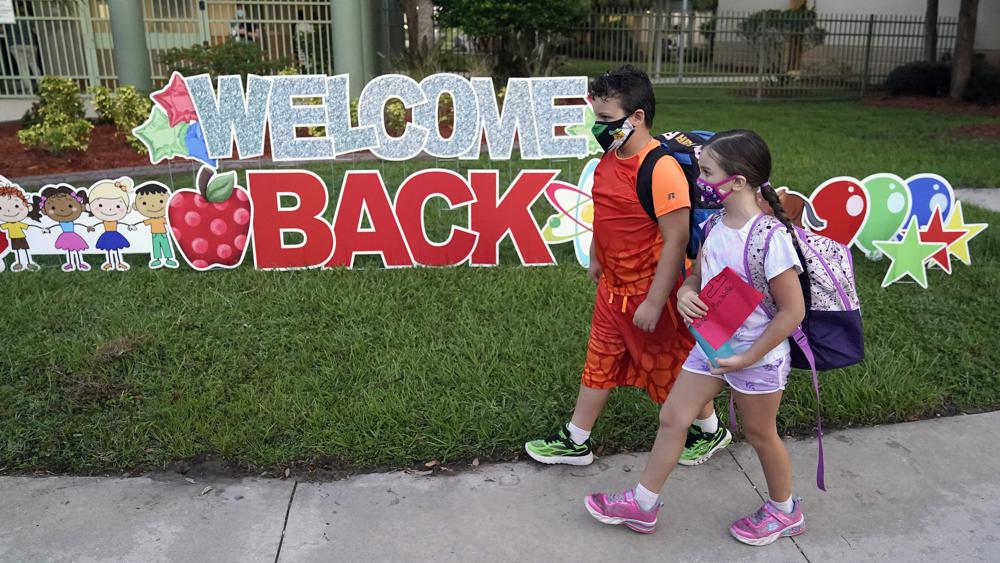
From Day 1 of COVID, I’ve focused on saving lives and protecting others. I don’t say this to toot my own horn; I say this because now, after a year and a half of supporting masks, flattening the curve, getting and promoting vaccinations, and pulling out masks again, there are people who are saying I want to kill kids. Some people believe that parents, teachers, and even elected officials who are discussing facts, peer-reviewed studies, and quoting doctors and researchers whose conclusions are contrary to the CDC and AAP are all conspiratorial COVID deniers. This is a stupid and harmful lie. Let me speak plainly for those confused: COVID is real. Vaccinations help protect against getting/spreading the virus and lessen the chances of death/hospitalization for someone who does get it. When worn properly by adults and older children (teens), Masks help the spread by limiting the percentage of respiratory droplets someone infected spreads. There is some value though it’s not as high for those wearing a mask if exposed to someone else. Seniors, preemies, people of all ages with underlying conditions such as obesity, heart or lung conditions, diabetes, or other immune system are at the greatest risk from COVID complications or death. Now back to the point at hand: Mask theatre is stupid and undermines the credibility of physicians and other medical experts who promote and support it. What qualifies as mask theatre you may well let me give you some examples: Masking as you walk to your table at a restaurant, only to get there, take it off and talk and eat for hours. Masking when walking or biking alone outdoors. Masking when in your car alone (extra points if the windows are down and double points if you’re a smoker masking between cigarettes). Masking in a home without someone sick or at high risk (extra points if you mask while watching t.v. then sleep next to someone unmasked). Masking when socially distancing outdoors under any circumstances that doesn’t involve an at-risk person. Worse than masking theatre is the fact that these guidelines or recommendations are harmful to those who want to take rational precautions. Starting today, my 2-year-old is being forced to mask. My other son has been masked since turning 3 and will start his kindergarten year in a mask, and my daughter went through second and is starting third in a mask. What’s worse? The health experts advising their school are requiring them to mask outdoors. I went to a kindergarten ‘meet the students’ playdate on a playground where children swinging, climbing, and sliding in 90 degree heat were forced to wear masks. I had to leave early because my son was overheated 20 minutes in. It took all I had not to shout at the adults in charge. Adults who I generally respect in a school I treasure. Children should be able to trust us as parents.Parents should be able to trust school officials.We all should be able to trust the medical community. WHO says masking under 5 is not recommended. When Governor Kay Ivey instituted a mask mandate, she and Dr. Scott Harris started it at 5. CDC and AAP have always said 2, but why? They’ve never once said why two. Not a single study supports the idea of toddlers being responsible for community spread. CDC reports that as of 08/07/2021 165 children in the nation under 14 have died of COVID. So tell me then why 2-5 year olds all over the state are being masked? Let me tell you. “Follow the science” has been lost to “following the guidance” and a system of peer pressure where doctors and parents alike have confided in me that they are scared to speak up to their peers or school administrators. Fear that is grounded in a world where those of us opposed to masking children are being accused of being selfish, reckless or even as bad as segregationist. So our toddlers and young children pay the price wearing masks except when they snack, eat lunch, nap/rest, snack again. What is gained in terms of protection that isn’t lost when they are in downtime? Nothing. It’s illogical, inhuman, and unscientific to think there will be no talking (or breathing) during these breaks or nap times. Masking any children outdoors is also ridiculous. Every life is precious but, and yes, I too can hardly believe I’m adding a “but” here, but we should not upturn healthy young children’s lives for a virus that, for the overwhelming majority, will be mild and not as deadly as the flu. Wait, did I just deny the deadly nature of COVID? No. I didn’t. Reread my statement. I want experts to follow the science. Beyond COVID, the costs of masking are high. The social and emotional costs of teaching our children to live in fear, having them miss years of developmental speech skills, the general risk to the immune system (hello, summer RSV), and childhood are high too high to be silent about. So what’s the right age to mask? Now that’s a topic I’d like to hear the data parsed out on. Not “just because they can talk, they can catch/spread COVID.” Actual, risk/costs and don’t tell me comfort and convenience are the only costs with a straight face. Most spread is happening within families and at home. I’m still waiting for one piece of evidence of swing set spread. Families need to consider their children, loved ones, and individual risk and make informed decisions. That choice shouldn’t be made for everyone by “experts” who refuse to acknowledge data, statistics, and risk factors. Protecting and keeping my children safe is my number one priority, but we can’t keep them alive at the cost of not letting them live. This is an opinion piece by Apryl Marie Fogel. Fogel is the editor and publisher of Alabama Today. She is the host of Straight Talk with Apryl Marie on News Talk 93.1 Radio on air 12pm-3pm central.
Taliban sweep into Afghan capital after government collapses
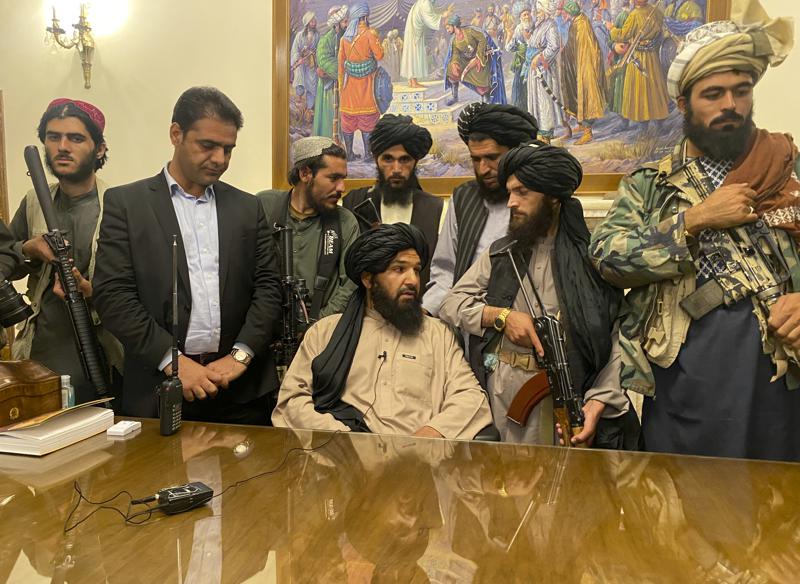
The Taliban swept into Afghanistan’s capital Sunday after the government collapsed, and the embattled president joined an exodus of his fellow citizens and foreigners, signaling the end of a costly two-decade U.S. campaign to remake the country. Heavily armed Taliban fighters fanned out across the capital, and several entered Kabul’s abandoned presidential palace. Suhail Shaheen, a Taliban spokesman, and negotiator told The Associated Press that the militants would hold talks in the coming days aimed at forming an “open, inclusive Islamic government.” Earlier, a Taliban official said the group would announce from the palace the restoration of the Islamic Emirate of Afghanistan, the formal name of the country under Taliban rule before the militants were ousted by U.S.-led forces in the wake of the 9/11 attacks, which were orchestrated by al-Qaida while it was being sheltered by the Taliban. But that plan appeared to be on hold. Kabul was gripped by panic. Helicopters raced overhead throughout the day to evacuate personnel from the U.S. Embassy. Smoke rose near the compound as staff destroyed important documents, and the American flag was lowered. Several other Western missions also prepared to pull their people out. Fearful that the Taliban could reimpose the kind of brutal rule that all but eliminated women’s rights, Afghans rushed to leave the country, lining up at cash machines to withdraw their life savings. The desperately poor — who had left homes in the countryside for the presumed safety of the capital — remained in parks and open spaces throughout the city. Though the Taliban had promised a peaceful transition, the U.S. Embassy suspended operations and warned Americans late in the day to shelter in place and not try to get to the airport. Commercial flights were suspended after sporadic gunfire erupted at the Kabul airport, according to two senior U.S. military officials. Evacuations continued on military flights, but the halt to commercial traffic closed off one of the last routes available for fleeing Afghans. Many people watched in disbelief as helicopters landed in the U.S. Embassy compound to take diplomats to a new outpost at the airport. U.S. Secretary of State Antony Blinken rejected comparisons to the U.S. pullout from Vietnam. “This is manifestly not Saigon,” he said on ABC’s “This Week.” The American ambassador was among those evacuated, officials said. He was asking to return to the embassy, but it was not clear if he would be allowed to. The officials spoke on condition of anonymity to discuss ongoing operations. As the insurgents closed in, President Ashraf Ghani flew out of the country. “The former president of Afghanistan left Afghanistan, leaving the country in this difficult situation,” said Abdullah Abdullah, the head of the Afghan National Reconciliation Council and a longtime rival of Ghani. “God should hold him accountable.” Ghani later posted on Facebook that he left to avert bloodshed in the capital, without saying where he had gone. As night fell, Taliban fighters deployed across Kabul, taking over abandoned police posts and pledging to maintain law and order during the transition. Residents reported looting in parts of the city, including in the upscale diplomatic district, and messages circulating on social media advised people to stay inside and lock their gates. In a stunning rout, the Taliban seized nearly all of Afghanistan in just over a week, despite the billions of dollars spent by the U.S. and NATO over nearly 20 years to build up Afghan security forces. Just days earlier, an American military assessment estimated that the capital would not come under insurgent pressure for a month. The fall of Kabul marks the final chapter of America’s longest war, which began after the Sept. 11, 2001, terror attacks. A U.S.-led invasion dislodged the Taliban and beat them back, but America lost focus on the conflict in the chaos of the Iraq war. For years, the U.S. sought an exit from Afghanistan. Then-President Donald Trump signed a deal with the Taliban in February 2020 that limited direct military action against the insurgents. That allowed the fighters to gather strength and move quickly to seize key areas when President Joe Biden announced his plans to withdraw all American forces by the end of this month. After the insurgents entered Kabul, Taliban negotiators discussed a transfer of power, said an Afghan official. The official, who spoke on condition of anonymity to discuss details of the closed-door negotiations, described them as “tense.” It remained unclear when that transfer would take place and who among the Taliban was negotiating. The negotiators on the government side included former President Hamid Karzai, leader of Hizb-e-Islami political and paramilitary group Gulbudin Hekmatyar, and Abdullah, who has been a vocal critic of Ghani. Karzai himself appeared in a video posted online, his three young daughters around him, saying he remained in Kabul. “We are trying to solve the issue of Afghanistan with the Taliban leadership peacefully,” he said. Afghanistan’s acting defense minister, Bismillah Khan Mohammadi, did not hold back his criticism of the fleeing president. “They tied our hands from behind and sold the country,” he wrote on Twitter. “Curse Ghani and his gang.” The Taliban earlier insisted that their fighters would not enter people’s homes or interfere with businesses and said they would offer “amnesty” to those who worked with the Afghan government or foreign forces. But there have been reports of revenge killings and other brutal tactics in areas of the country the Taliban have seized in recent days. Reports of gunfire at the airport raised the specter of more violence. One female journalist, weeping, sent voice messages to colleagues after armed men entered her apartment building and banged on her door. “What should I do? Should I call the police or Taliban?” Getee Azami cried. It wasn’t clear what happened to her after that. An Afghan university student described feeling betrayed as she watched the evacuation of the U.S. Embassy. “You failed the younger generation of Afghanistan,” said Aisha Khurram, 22, who is now unsure of whether she will be able to graduate in two months. She
Joe Biden calls school chiefs, lauds defiance of anti-mask rules
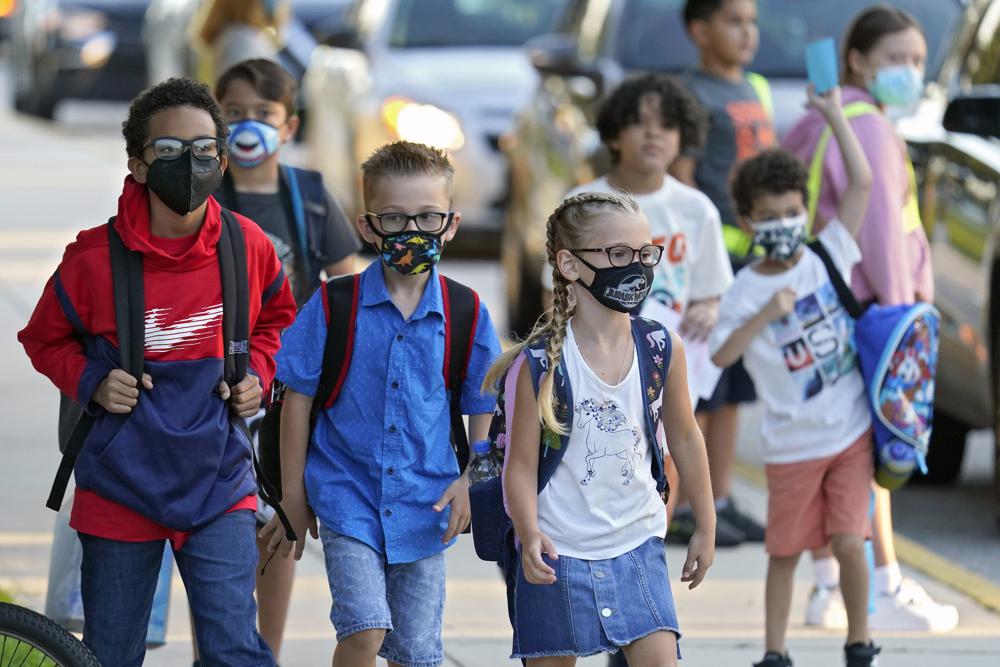
President Joe Biden called school district superintendents in Florida and Arizona to praise them for doing “the right thing” after their respective boards implemented mask requirements in defiance of their Republican governors amid growing COVID-19 infections. The White House said in a Saturday statement that the Democratic president had spoken with interim Broward Superintendent Vickie Cartwright in Florida and Phoenix Union High School District Superintendent Chad Gestson in Arizona “to thank them for their leadership and discuss their shared commitment to getting all students back in safe, full-time in-person learning this school year.” “The President commended their leadership and courage to do the right thing for the health and well-being of their students, teachers, and schools,” the statement said. Biden’s phone calls of support come as tensions build over whether local school districts can and should require face coverings for students and school staff as in-person classes resume. In Texas, several school districts — along with the state’s most populous county — won temporary legal victories Friday in seeking to override Republican Gov. Greg Abbott’s ban on mask mandates, which they argued is making the COVID-19 pandemic worse. Similar lawsuits by school districts in other states have also been filed. Clashes over mandatory mask-wearing have already occurred. Officials at a suburban Chicago high school on Friday sent a freshman student home for refusing to put on a face covering, a decision her mother contends violates her 14-year-old daughter’s rights. Sheri Urlacher said her daughter was sent home from Fremd High School in Palatine after officials at the door of the school handed her a mask and asked her to put it on. She told the Chicago Tribune she was called after her daughter “politely declined” to pull the mask up over her mouth and nose. While the girl was back in school wearing a mask later in the day, Urlacher said she was bothered by the school’s initial decision to send her daughter home. “She’s OK, but she knows she has the right to make decisions about her own body, and it’s not the right of the school and government,” she said. The incident comes days after Illinois Gov. J.B. Pritzker, a Democrat, ordered face coverings for all school children from preschool through 12th grade in the hopes of slowing the spread of a virulent delta variant of the virus, which has surged in recent weeks. Meanwhile, Biden’s call to the leader of the Broward County schools in Florida escalated the president’s partisan battle with Republican Gov. Ron DeSantis over how his state’s schools should operate as the COVID-19 pandemic worsens in the state. The Biden administration has promised Broward federal money if Florida’s governor carries out a threat to withhold some state funds from any school district that imposes a mask mandate. Using a law passed this year, DeSantis has barred schools and other local governments from imposing mask mandates. The governor has said he believes masks are not needed for children, who are less likely than adults to catch the coronavirus, and that they interfere with learning. He also has said it should be up to parents to determine if their child wears a mask. The state’s board of education recently said students forced to wear masks over their parents’ objections could be eligible for a voucher that would pay for their transfer to a private school. Broward school officials did not respond to an email Saturday seeking comment. Earlier this week, its school board voted 8-1 to impose the mask mandate over DeSantis’ objection. DeSantis is running for reelection next year and is considering a 2024 run against Biden, with the two sniping at each other in recent weeks. His press office also did not respond to a call and email Saturday seeking comment. Meanwhile, Arizona Gov. Doug Ducey, in June, signed into law budget legislation enacted by the Republican-led Legislature to prohibit school districts from requiring mask-wearing. Phoenix Union is one of Arizona’s largest school districts, with about 28,000 students and 4,000 employees. After its governing board decided to enforce indoor mask-wearing when classes resumed Aug. 2, six elementary school districts that feed students to the high school districts followed its lead. The Arizona legislation that includes the prohibition on mask-wearing mandates by districts takes effect Sept. 29. It includes a clause making it retroactive to July 1, but Phoenix Union contends it isn’t binding yet, and that’s being argued in court. Arizona on Saturday reported more than 3,000 additional COVID-19 cases for the second straight day. The state last reported that many additional cases six months ago as the winter surge wound down. Republished with the permission of the Associated Press.
Huntsville now Alabama’s largest city, overtakes Birmingham
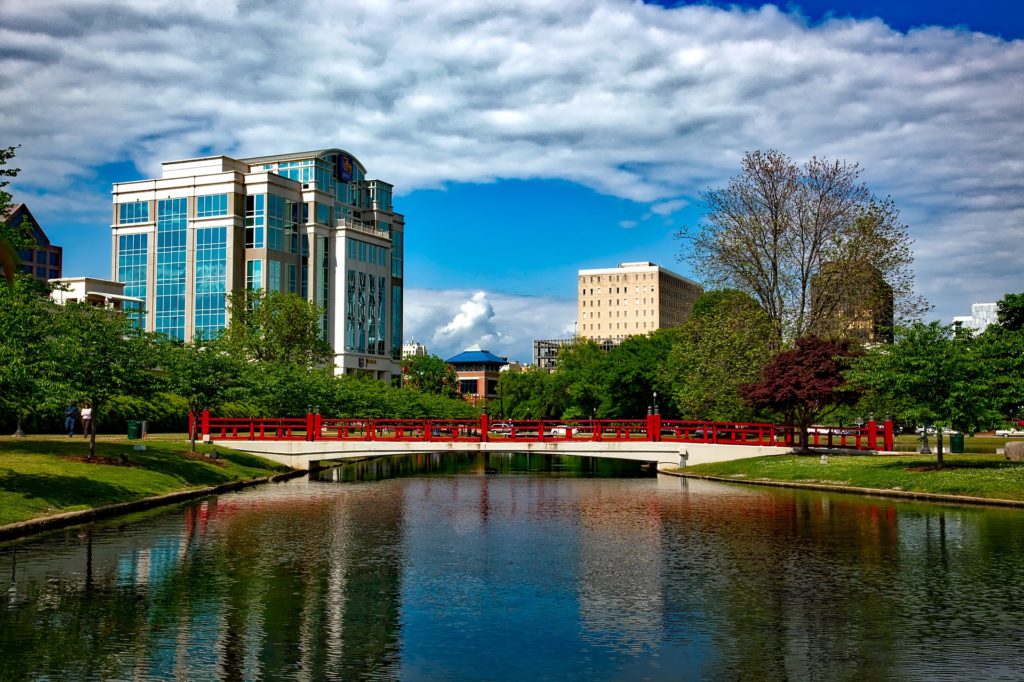
Huntsville has overtaken Birmingham as Alabama’s largest city, according to new Census numbers. Huntsville is now slightly more populous than Birmingham, according to U.S. Census numbers released Thursday. Huntsville has a population of 215,006. Birmingham, which had long been Alabama’s largest city, has a population of 200,733. However, the Birmingham metro area remains the largest in the state. The Birmingham-Hoover Metro Statistical Area has 1.1 million people, while the Huntsville Metro Area has 491,723. Huntsville, nicknamed the Rocket City for its historical ties to the space industry, has seen rapid growth over the last ten years, partly fueled by the tech and manufacturing sectors. The population of the city has jumped by 19% since 2010. “I’m proud that the great things we have going on in Huntsville have grown our city,” Huntsville Mayor Tommy Battle wrote in a tweet. “To tell the truth, we’re more focused on being the best than the biggest. That is what my team and I are going to continue to work on every day.” Birmingham got the nickname the Magic City for its rapid growth and had long been Alabama’s largest city. Much of the recent growth around Birmingham has been concentrated in the surrounding suburban areas rather than in the city itself. “Growth in any city is good for Alabama, good for Birmingham and for our metro region,” Birmingham Mayor Randall L. Woodfin said in a statement in response to media questions about the change to being Alabama’s second-largest city. He said city officials plan to analyze the data. “Birmingham is the nucleus of the state’s largest metro population and economic center. The Magic City continues to evolve as a diverse urban center and leader in regional growth. Our strength as a medical center, an emerging hub for tech start-ups and logistics center keeps Birmingham positioned for positive growth in the future,” Woodfin said. Montgomery is Alabama’s third-largest city, with a population of 200,603. Republished with the permission of the Associated Press.
Kay Ivey issues state of emergency as hospitals face COVID surge
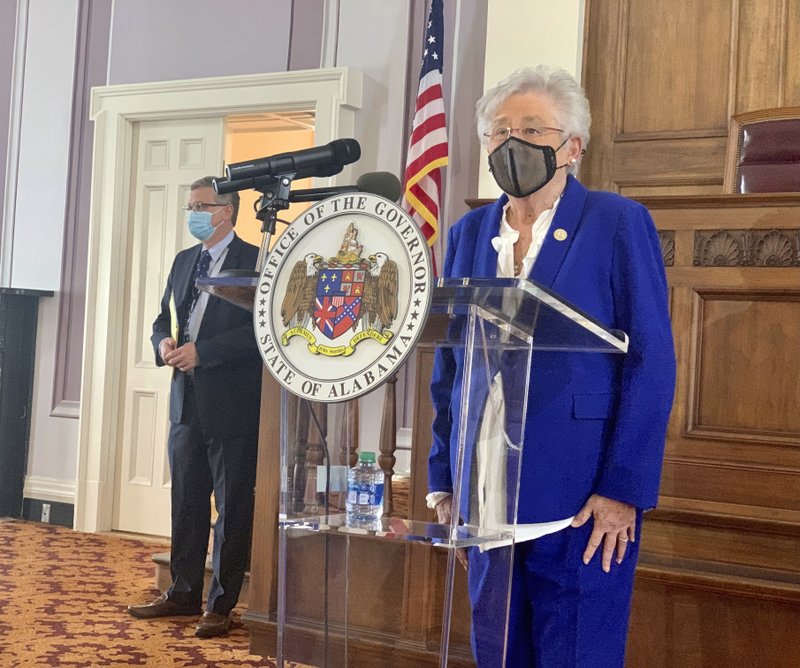
Alabama Gov. Kay Ivey on Friday issued a state of emergency as state hospitals face a surge in COVID-19 cases, an order that came the same day the state tied a record low for available intensive care unit beds. Ivey issued a limited state of emergency aimed at giving medical providers flexibility on staffing and capacity decisions and easier shipment of emergency equipment and supplies. The Republican governor stressed she would not be issuing any closure orders or mask mandates. ”I want to be abundantly clear: there will be absolutely no statewide mandates, closures, or the like. This state of emergency is strategically targeted at removing bureaucracy and cutting red tape wherever we can to allow our doctors, nurses, and hospital staff to treat patients that come through their doors,” Ivey said in a statement. The order came as medical providers described a “tidal wave” of COVID-19 cases that is putting severe stress on Alabama hospitals. The state on Friday tied the record low for available intensive care unit beds with just 39 vacant beds statewide, said Dr. Don Williamson, the former state health officer who now heads the Alabama Hospital Association. “The system is slowly becoming overwhelmed,” Williamson said. Of the state’s 1,567 intensive care unit beds, 689 are filled with COVID-19 patients, and just 39 are empty. Alabama ranks fifth in the country for new cases per capita, according to researchers at Johns Hopkins University. The state on Friday also saw a record number of pediatric cases with 40 children hospitalized with COVID-19, Williamson said. Williamson said the emergency declaration will allow hospitals to take steps such as expanding facilities or opening an antibody infusion center without getting state permission. It will increase the number of nurse practitioners and other staff positions that a doctor can supervise. Medical officials have said a surge in cases is being driven by low vaccination rates and the highly contagious delta variant and implored people to get vaccinated and wear masks to combat the spread and prevent severe illness. Alabama has one of the lowest vaccination rates in the country. “Unlike last year when we were hoping for a miracle, our greatest weapon against COVID-19 today is the vaccine, so, if you can, roll up your sleeve and get the shot,” Ivey said. Dr. Sarah Nafziger, vice president of the University of Alabama at Birmingham Hospital Clinical Services, said Thursday that the hospital has had to limit the number of procedures they are doing and decline transfers to the hospital. “We are seeing an absolute tidal wave,” Nafziger said. She said the hospital is providing care and emergency services, but she said the trends and projections are alarming. “When you think about running out of hospital beds and running out of health care resources, that is the path that we are on.” Republished with the permission of the Associated Press.
